Category: Lifestyle

The lifestyle of millennials is underreported in our mainstream media. The Current’s lifestyle news covers social events and issues that are unique.

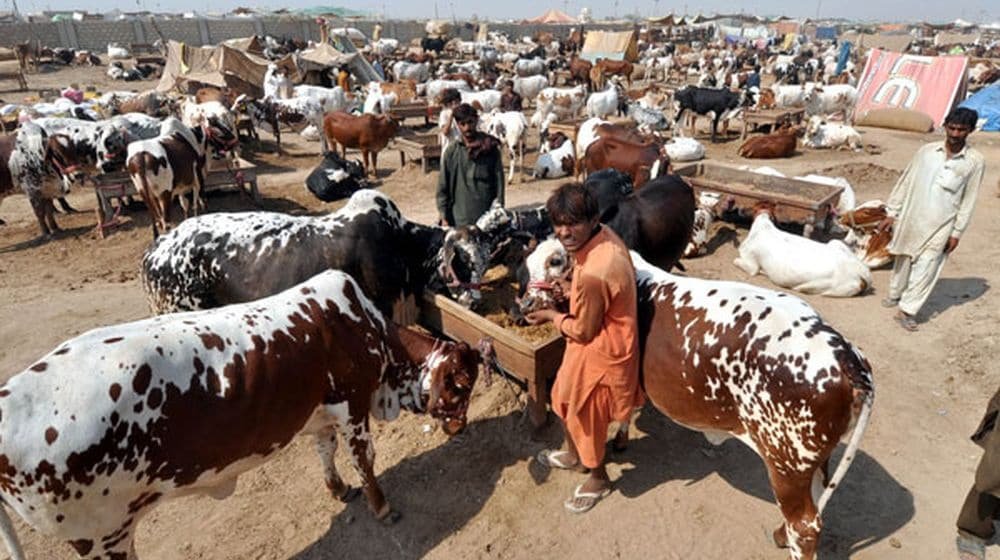
  • Eidul Azha: Govt issues guidelines for cattle market to curb Covid-19 spread

    Eidul Azha: Govt issues guidelines for cattle market to curb Covid-19 spread

    The Federal Ministry of National Health Services, Regulation, and Coordination on Tuesday issued guidelines for Eidul Azha in line with the government’s Covid-19 standard operating procedures (SOPs).

    As per reports, the document has been issued to provide health guidelines to the general public, cattle vendors and customers to control the spread of COVID-19 by practicing social distancing and  following precautionary measures at the cattle market while buying or selling a sacrificial animal.

    Guidelines for sellers:

    • Animal vendors will have to follow the following guidelines while selling an animal at the cattle market.
    • It is necessary for all animal vendors and sellers to get vaccinated with any of the available COVID-19 vaccines in the country. Those without proof of vaccination (first dose or complete course) may not be allowed to do business in the market.
    • Every seller must wear a face mask covering nose and mouth all the time.
    • The seller should wash their hands with soap and water frequently or use an alcohol-based (70%) hand sanitiser.
    • Stalls should be set up at a distance of at least two metres from each other while ensuring enough space between animals. The supporting arrangements must be made by the local authority.
    • Seller and customers should try and maintain a safe distance of two metres. 
    • Seller and customer must not shake hands and avoid any other physical contact 
    • The seller must keep a disinfection formulation with 0.5% diluted bleach or 60%-80% dilute alcohol solution to disinfect the most frequently used surfaces by customers. 
    • Each salesperson must wear gloves for touching the animals. 
    • Any seller with symptoms of cough, sore throat, fever etc., would not be allowed to sell animals in the market. They will have to arrange a replacement for themselves.
    • Each seller must ensure queue control and maintaining the advised two metres distance in his allocated space in the market/ mandii. 
    • The sellers must keep themselves aware of the updated instructions issued by the government and should strictly follow them.

    Read More: Eid ul Azha: 5 things that can only happen in Pakistan

    Guidelines for Customers:

    • The buyer must wear a surgical/medical mask properly (cover nose and mouth) at all times.
    • The customers should not go to the market/ mandii if they are feeling any flu-like symptoms, cough, sore throat or fever.
    • Sanitise hands properly before and after going to the market.
    • Buyers should also wear gloves if they plan to touch the animals.
    • People visiting the market should avoid touching the surfaces in the market unnecessarily. 
    • Maintain two metres distance from the seller or other peoplepresent in the market.
    • Follow the safety guidance provided by the local management and cooperate with the staff
    • If a customer observes non-compliance to the guidelines by the individual seller, remind them and/or report to the local authorities.

  • VIDEO: Groom carries bride on shoulders across a flooded river

    VIDEO: Groom carries bride on shoulders across a flooded river

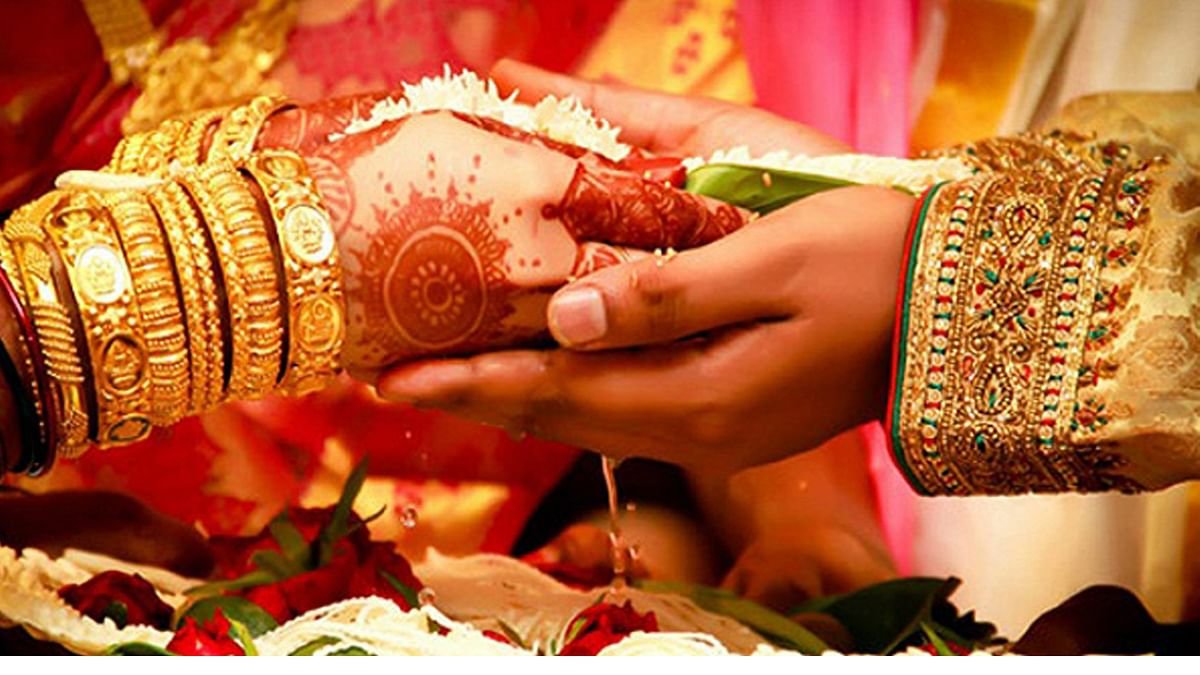
    A groom in Bihar, India carried his new bride on his shoulder to carry her across a monsoon river in spate.

    As per reports, the incident happened in Sindgmari Ghat in Dighalbank block in Bihar’s Kishanganj district. The entire area has been flooded by the overflowing Kankai river.

    The groom, Shiv Kumar Singh and his relatives were returning from a village located on the other side of the river. After the marriage ceremony, the couple and all the guests were travelling on a boat. After travelling some distance, the boat got stuck in the sand.

    “We had no option but to travel by boat to dry place on the bank of river. So I immediately decided to travel the distance carrying her on my shoulder,” Singh said.

    “The bridge on Kankai river near Singhmari was proposed some 10 years ago. The people of Kishanganj and adjoining districts are forced to use boat to cross the river. The state government is callous,” the groom’s relative Rahul Singh said.

    Read More: Bride slaps groom after getting out of car at in-laws’ house on wedding day

    “This incident is an example of development of Bihar claimed by the Nitish Kumar government. Road connectivity to most of the villages adjoining rivers is cut off from the rest of the state. Hence, boat is the only option for us. Such a situation is arising in almost every place affected by the monsoon flood,” Rahul Singh said.

  • Karachi among world’s 10 most stressful cities to live in for 2021

    Karachi among world’s 10 most stressful cities to live in for 2021

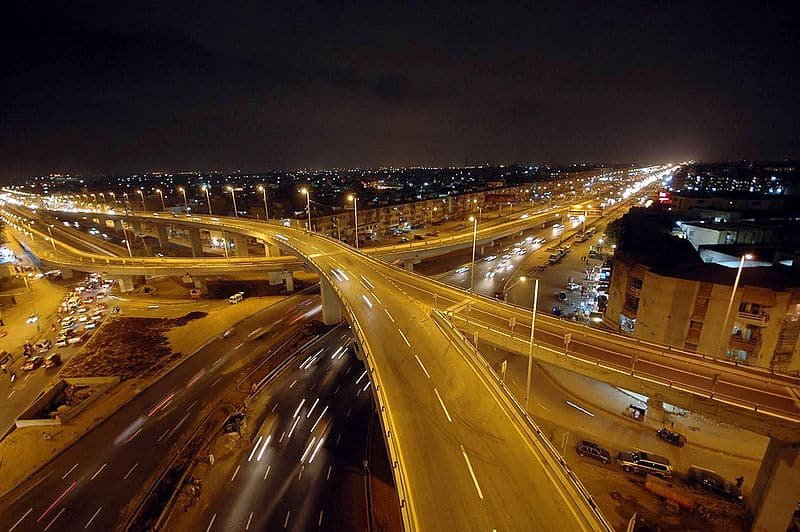
    Karachi is listed among the world’s top 10 most stressful cities to live in, according to a list by German company VAAY.

    The index is made by analyzing 15 important stress indicators including governance, environment, finance and security.

    As per reports, the list claims cities are selected for their size and significance as well as for the accessibility of comparable and reliable information.

    The cities with the most stressful social, environmental and economic conditions make it to the bottom while the most stable and happy ones top the list.

    Karachi is at number 93 on the list, which is slightly better than Baghdad ranking at 94, Kabul at 95 and Moscow being on the 96th position.

    Iceland’s serene capital, Reykajavik, tops the list as the least stressful city, followed by Bern (Switzerland), Helsinki, (Finland), Wellington, Melbourne, Oslo, Copenhagen, Innsbruck (Austria), Hannover (Germany) and Graz (Austria).

    Mumbai ranks at 100 as the most stressful urban centre. Ranks of other major international cities are Sydney at 19, Abu Dhabi at 28, Toronto at 30, Singapore at 33, Tokyo at 34, Berlin at 36, Chicago at 40, Rome at 42, Los Angeles at 45, Washington at 47, Buenos Aires at 48, Cape Town at 51, Prague at 52, Budapest at 54, Tel Aviv at 55, Paris at 62, Doha at 65, Kuwait at 66, Rio de Janeiro at 67, London at 69, Kuala Lumpur at 76, Riyadh at 77, Shanghai at 83, Tehran at 86, Bangkok at 87, Cairo at 88 and Istanbul at 90.

    The selected cities are not necessarily the most and least stressful cities in the world; instead, they were chosen for their global comparability.

    The list aims to showcase good governance to inspire and pave way for cities lagging behind.

  • ‘Humans can’t live there,’ Jacobabad heat intolerant for human body

    ‘Humans can’t live there,’ Jacobabad heat intolerant for human body

    Jacobabad, the city with 200,000 citizens in the Sindh province has long been known for its severe heat but recent research has conferred an unwelcome scientific distinction.

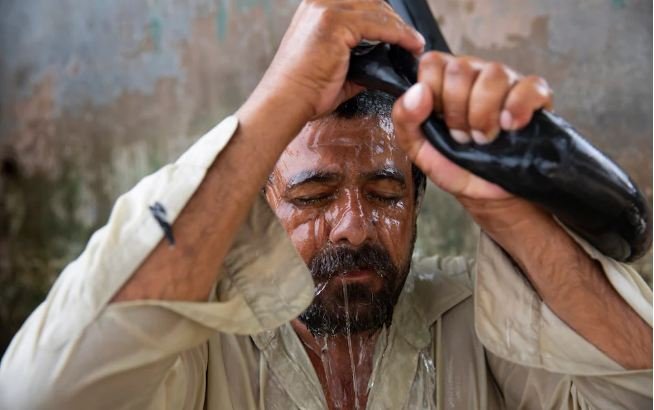
    The mixture of heat and humidity in the city has made it one of the hottest places on earth. The temperature there is hotter than the human body can handle.

    The city’s temperature rises to 52 degrees Celsius forcing its residents to remain inside their homes. Few have air conditioners in their homes and loadshedding in the city worsens the situation. The hospital fills with heatstroke cases from those whose livelihoods demands them to step out.

    Speaking to the telegraph, a resident, Zamir Alam said, “When it gets that hot, you can’t even stay on your feet.”

    “It’s a very, very difficult time when it goes beyond 50°C. People do not come out of their houses and the streets are deserted,” Abdul Baqi, a shopkeeper, added.

    Mr. Matthews, who is a lecturer in climate science at Loughborough University with his colleagues analysed global weather station data last year and found that Jacobabad and Ras al Khaimah, northeast of Dubai in the United Arab Emirates, have both temporarily crossed the deadly threshold. The milestone had been surpassed decades ahead of predictions from climate change models.

    The researchers inspected what are called wet bulb temperatures. These are taken from a thermometer covered in a water-soaked cloth so they take into account both heat and humidity.  Wet-bulb thermometer readings are significantly lower than the more familiar dry bulb readings, which do not take humidity into account.

    Researchers say that at a wet-bulb (thermometer covered in a water-soaked cloth) reading of 35 degrees Celsius, the body can no longer cool itself by sweating and such a temperature can be fatal in a few hours, even to the fittest people. 

    Read More: How to beat the heat without AC

    According to reports, Jacobabad crossed the 35 degrees Celsius wet-bulb threshold in July 1987, then again in June 2005, June 2010 and July 2012. Each time the boundary may have been breached for only a few hours, but a three-day average maximum temperature has been recorded hovering around 34°C in June 2010, June 2001 and July 2012. The dry bulb temperature is often over 50 degrees Celcius in the summer.

    As temperatures rise and rainfall patterns shift, difficulties with farming, irrigation, disease and labour are predicted by 2050 to badly hit people’s quality of living in parts of India, Pakistan and Bangladesh.

  • Registration of pet dogs starts in Karachi

    Registration of pet dogs starts in Karachi

    The Cantonment Board on Monday made registration of pet dogs compulsory, days after two dogs attacked a lawyer in the Karachi’s Defence area.

    The CBC, in a notification, said under section 119 and the Cantonment Act 1924, it is now mandatory for all dog owners to get their pets registered. The rate of the form has been fixed at Rs250 while the registration fee will be Rs2,000 per dog.

    The form requires the name of the dog owner, ID card number, address of the place where the dog is kept, mobile number, email ID, the colour of the dog, breed, sex, and why the owner is keeping it.

    As per details, the date of vaccination of the dog will also be written in the form.

    A vaccination card, with the signature of the dog owner, a photograph of the dog, a copy of the owner’s ID card, the vaccination report given by the doctors and a copy of the fee payment challan will be attached with the form.

    Once the form is submitted, it will be the choice of the CBC whether it will allow the citizens to keep the dog or not.

    The CBC said the non-registration of a dog will make it impossible for the board to determine whether the dog has been muzzled and is disease-free or not.

    Thus, keeping an unregistered dog will be illegal and it will lead to the detention or culling of the dog, imposition of fines, or legal actions.

    The dog registration form will be available at the cantonment board’s office.

    Last week, a video went viral that showed two dogs attacking a resident in DHA.

    On Saturday, a Karachi court had ordered the police to arrest the owner of two pet dogs who attacked a lawyer five days ago.

    The Additional District and Sessions Judge South issued the orders after rejecting the appeal for pre-arrest bail of the owner, Humayun Khan, whose two dogs had attacked the lawyer Mirza Ali Akhtar leaving him severely injured.

    The court said that “it was due to the negligence of the owner that the dogs attacked the lawyer, whose life is now in danger”.

  • Meet Manu Bebo, first transgender makeup artist in occupied Kashmir

    Meet Manu Bebo, first transgender makeup artist in occupied Kashmir

    Manu Bebo, Kashmir’s first transgender makeup artist is breaking barriers in her area. Manu is winning hearts all over social media with her flawless makeup tutorials.  

    Speaking to Geo News, Manu said, “Everyone appreciates my work. It makes me feel very happy and proud.”

    Manu was born in a middle class family in Srinagar and was raised as a boy. She had a happy childhood like other children. She enjoyed playing video games. But as she turned 13, she started feeling different.

    “After my sister got married, I was feeling very lonely. I had many female friends and I started realising that I too wanted to be a girl. I started to wonder why God didn’t make me a girl,” Manu said.  

    She said with time she understood that she had the “soul” of a girl.

    She received backlash from family, friends and relatives for thinking like this. She faced rejection and society made fun of her.

     “I was badly bullied during my high school days and I felt mentally tortured to such an extent that I decided to quit my studies. Later on, I got used to it, and eventually, I didn’t care.”

    She said that even her family was ridiculed because of her. But as the time passed, they too stopped caring about what others said.

    Manu was not able to continue her studies after the 12th grade but she was ambitious to make something of herself. She decided to start her own business.

    Transgender community in Kashmir mostly earns their living by singing and dancing at weddings or by matchmaking. But Manu chose to stand out and make her own way. That is when she decided to improve her makeup skills.

    “Makeup is something that I’ve always enjoyed doing and when one has an opportunity to start a career in something that is enjoyable, then why not do that? I am totally self-taught and don’t have any professional training,” said Manu, who speaks and writes fluently in English.

    Manu started her venture four years back and with her hard work and commitment, she earned a name for herself everywhere in Kashmir. She has thousands of followers on social media.

    “I believe in doing the work that earns you respect. Why should I dance at weddings and bear people’s shameless, humiliating laughter?”

    Manu credited her mother for her success.

    “I am happy with my life. I don’t have any regrets. It doesn’t matter what anyone thinks or how they react. I earn my own money and my family is fine with whatever I do.”

    She said that people in Kashmir are supportive  and people are more welcoming and respectful of them.

    Motivating her fellow transgenders, she said, “To all the transgenders out there, or even those people who are forced to hide: be yourself, as life is too short to give weight to what people think. Whether you do good or bad, people will always have something negative to say. So just don’t pay attention to such people, and rise, like a boss.”

  • Non-farter, non-burper, Indian rishta hunt advertisement goes viral for its absurd demands

    Non-farter, non-burper, Indian rishta hunt advertisement goes viral for its absurd demands

    An Indian rishta advertisement has gone viral for its absurd demands. The ad was posted by an “opinionated feminist” and has left several people in fits of laughter.

    According to BBC, many speculated about the identity of those behind the ad and whether it was “authentic”.

    It turns out that it was a prank between a brother, a sister, and her best friend. Using the e-mail address posted on the ad, the “opinionated feminist” — Sakshi — and her brother Srijan and her best friend Damyanti, are the ones who came up with the idea.

    All the names are pseudonyms — they didn’t want their identities revealed. Sakshi said, “We are all professionals with steady careers, and (hopefully) promising lives ahead of us” and don’t want to attract “bloodthirsty” social media trolls.

    The ad, Srijan said, was “a small prank we played for Sakshi’s 30th birthday”.

    “Turning 30 is a milestone, especially because of all the conversation in our society around marriage. As you turn 30, your family and society start putting pressure on you to get married and settle down,” he said.

    Sakshi said she does have short hair and piercings, works in the social sector, is opinionated, and that the burper-farter thing is a family joke.The ad appeared in a dozen northern Indian cities and cost about 13,000 Indian rupees ($175; £126) – “an amount we would have spent on presents and celebrations if there was no Covid lockdown,” Srijan said.Sakshi said she does have short hair and piercings, works in the social sector, is opinionated, and that the burper-farter thing is a family joke.

    Sakshi said the ad “seemed to have hurt a lot of egos”.

    “You can’t say such things out loud. Men ask for tall, slim beautiful brides all the time, they brag about their wealth, but when the tables are turned, they can’t stomach it. How could a woman set such criteria?”

    The ad, she added, “was a satirical statement on this narrative and I assume that the people getting triggered are the same as those who put out these kinds of ‘slim, fair, beautiful bride wanted’ type of ads in the first place”.

    And for those “triggered by obvious satire”, she had a question: “Do you send such triggered emails to all the sexist, casteist ‘bride wanted’ adverts that appear in the papers everyday? If not, then you need to curb your patriarchy.”

  • Culprit in viral video of purse snatching arrested in Rawalpindi

    Culprit in viral video of purse snatching arrested in Rawalpindi

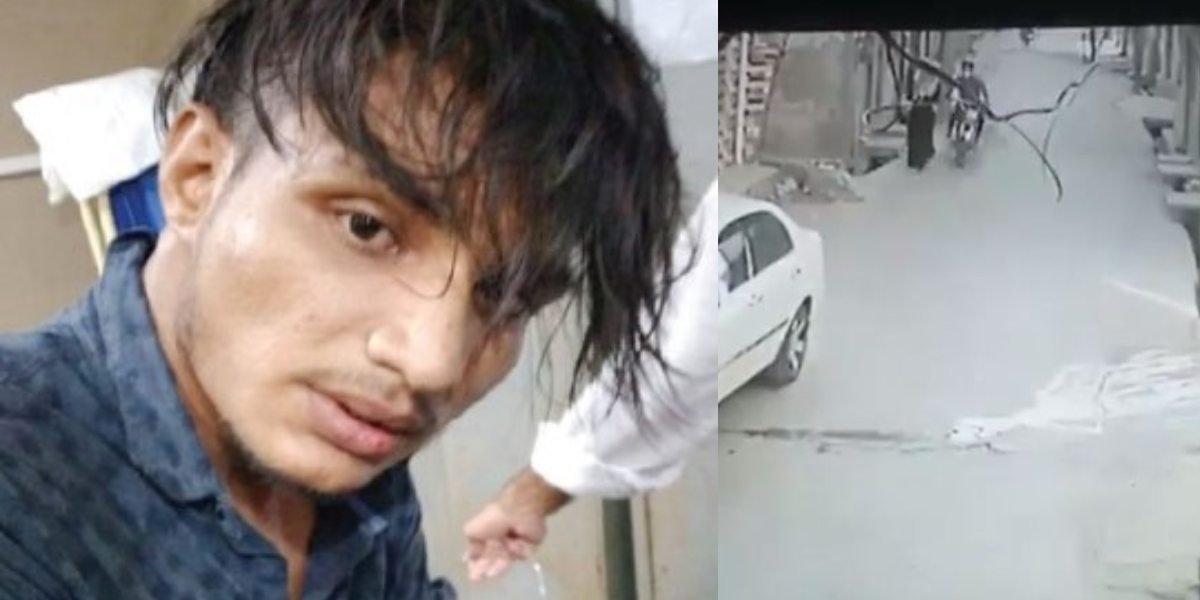
    Police arrested the culprit who snatched the purse of a schoolteacher early Friday morning in Rawalpindi.

    As per reports, the victim’s brother, Mohammad Junaid Ahmed, a citizen of Dhoke Chaudhrian, told Race Course police that his sister, a schoolteacher, was going to her school when a motorcycle rider snatched her purse.

    CCTV footage shows the suspect snatching the purse from the victim who then fell on the ground. She started collecting some of the valuables that fell from her purse. Two motorcycle riders helped her in picking up her stuff.

    The Rawalpindi police took to Twitter to announce the arrest of the culprit.

     “CPO Mohammad Ahsan Younus had taken notice of the incident and ordered the immediate arrest of the suspect. During the arrest, the suspect tried to open fire on the police due to which he got injured by his own pistol,” the tweet read.

    Read More: Prankster arrested for harassing women for not wearing dupatta

    According to a  press release, the suspect was arrested from Race Course area and had been involved in other thefts.

    Mobile phone and purse snatching cases are on a rise in the garrison city. Five snatching incidents were reported on Thursday in Rawalpindi.

  • Sajid Ali Sadpara to return to K2 to find his father’s dead body

    Ali Sadpara’s son Sajid Sadpara has announced that he will be summiting K2 once again to locate his father’s dead body and to make a documentary on his father, Geo News has reported.

    “I want to go to K2 to know what happened to my father and John Snorri,” adding, “I am going to attempt to summit K2. My father went to K2 this year but did not return.”

    He continued by saying, “A documentary on the life of Jon Snorri and Ali Sadpara is in the making. [I hope to] go to K2 to search [for the dead body] and make a documentary.”

     Ali Sadpara, went missing on February 5,2021 while attempting to summit K2. The news of his death was confirmed by his family on February 18.

  • Govt confirms tax on phone calls longer than five minutes

    Govt confirms tax on phone calls longer than five minutes

    The federal government has imposed a tax of 75 paisas on phone calls that exceed the duration of five minutes.

    This was announced by Finance Minister Shaukat Tarin while concluding the budget discussion in the National Assembly on Friday.

    Tarin said talking over the cellphone for more than five minutes will be taxed at 75 paisas, but there will be no tax on an SMS.

    Tarin added that the government will take action against tax defaulters with the help of third party. “Arrest will be made after legal formalities.”

    As per reports, the government has decided to decrease the taxes on 1000cc vehicles while tax imposed on milk and other items has also been fixed at 10 per cent, which was earlier proposed at 17pc.

    The finance minister clarified that the federal government has not proposed any tax on flour or other items.

    Property tax has been reduced to 20 per cent from the earlier proposal of 35 per cent.

    Mentioning the government’s initiatives in the housing sector, Shaukat Tarin said now every citizen can avail bank loan to purchase or construct a house. Rs3 billion have been fixed for the payment of subsidies being offered by the government on housing loans, he added.

    For Ehsaas Programme, the finance minister said Rs260 billion have been proposed for the financial grants in the upcoming financial year 2021-22.