Valentine’s Day is just around the corner and love sure is in the air…
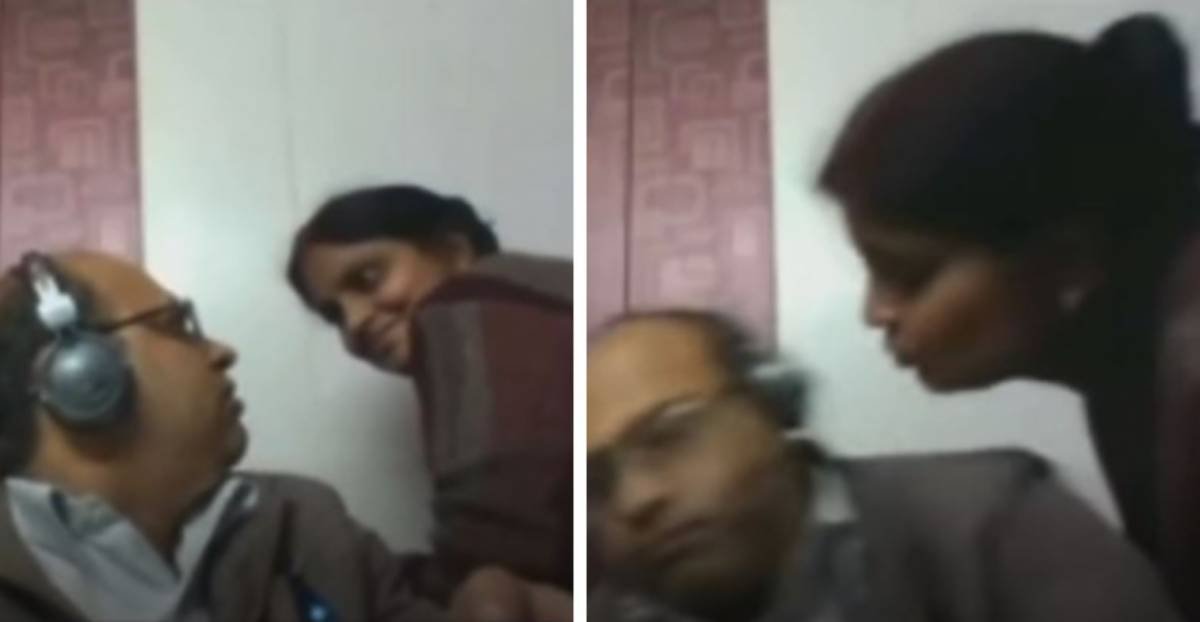
The video of an Indian professor dodging his wife’s kiss while on a Zoom conference has gone viral over the internet.
The man, who was seen talking about GDP in the video, then calls his partner’s romantic move as “foolish and nonsense”.
The wife in the clip seems unaware that the husband is in the middle of a conference.
Visibly in distress, and with the striking response, the professor quickly pulls himself away. “What nonsense you’re doing here?” he can be heard as asking his wife.
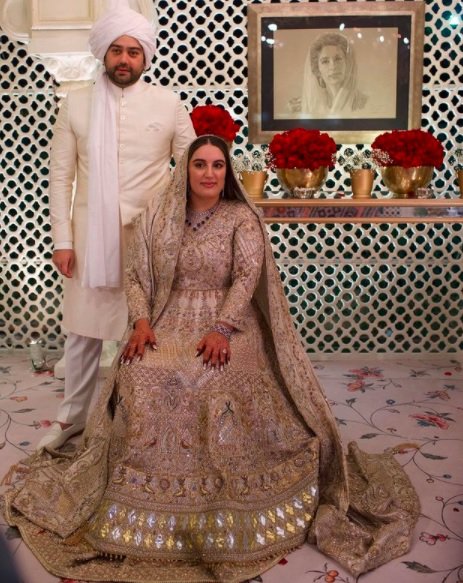
Karachi-based fashion designer Wardha Saleem who designed Bakhtawar Bhutto-Zardari’s nikkah outfit has revealed that the jora took over 7000 hours to make.
In a recent interview with BBC Urdu, the designer shared the process that went behind designing the gold outfit and also addressed rumours surrounding the dress.
“She [Bakhtawar] was very clear what she wanted,” revealed Wardha, adding that the bride wanted to wear a colour combination similar to Shaheed Mohtarma Benazir Bhutto’s white and gold wedding dress but also wanted it to reflect her own personality.
The designer also revealed that 90 craftsmen were involved in making the dress and that it took over 7000 hours to complete because it all the embroidery was done with the hand.
“If you calculate in normal working hours this goes to about 6 to 7 months,” said Wardha, adding that the craftsmen worked in double shifts of 24 hours, reducing the preparation time to two and a half months.
Wardha further said that Bakhtawar was the dream bride as she was very cooperative and did not interfere in the process, adding that she had complete trust in her [Wardha].
The designer also revealed that she also designed Aseefa Bhutto-Zardari’s outfits for Bakhtawar’s mehndi and reception.
Meanwhile, Bakhtawar’s makeup artist Shamain also opened up about her nikkah look saying: “It was a pleasure to be the wedding makeup artist for the delightful Bakhtawar.”
“Bakhtawar requested subtle and glowing looks, that felt very much in line with who she is. Getting to know Bakhtawar in the process, and her genuine love for art and culture, I was inspired to create a natural glowing look, which was complemented by sleek, modern hair- stylish and standout, like the lovely bride herself,” said Shamain further.
Bakhtawar and Mahmood Choudhry tied the knot on January 29 in an intimate nikkah ceremony at Bilawal House. The nikkah was preceded by a mehndi and followed by a grand reception.
Intact murals dating back to the 1st century have been discovered from a Buddhist site in Swat, Dawn News has reported.
Saqib Raza, who was leading the team of archaeologists on the site, while speaking about the murals said: “We have discovered some rare fresco paintings belonging to the first century from the Abbasahib-China Buddhist site in Barikot during our recent exactions. The paintings are in different poses including namaskar pose. Six of them are visible and intact.”
Director of Archaeology and Museums Dr Abdul Samad while speaking to the publication referred to the discovery of the murals as a landmark achievement, adding “there is no other example here in Gandhara of finding intact paintings”.
He further shared that rare Kharosthi script inscriptions and coins were also discovered by the archaeologists in the area.
According to Director of Italian Archaeological Mission Prof Luca M Olivieri, the discovery is really important because it provides evidence of a painting school at Swat and Gandhara “whose traces have unfortunately faded away”.
Earlier, a Hindu temple, believed to be 1,300 years ago, was discovered at a mountain in Swat district. Researchers from Shah Abdul Latif University’s Department of Archaeology also found traces of a third-century settlement in Brahmanabad, Sindh.
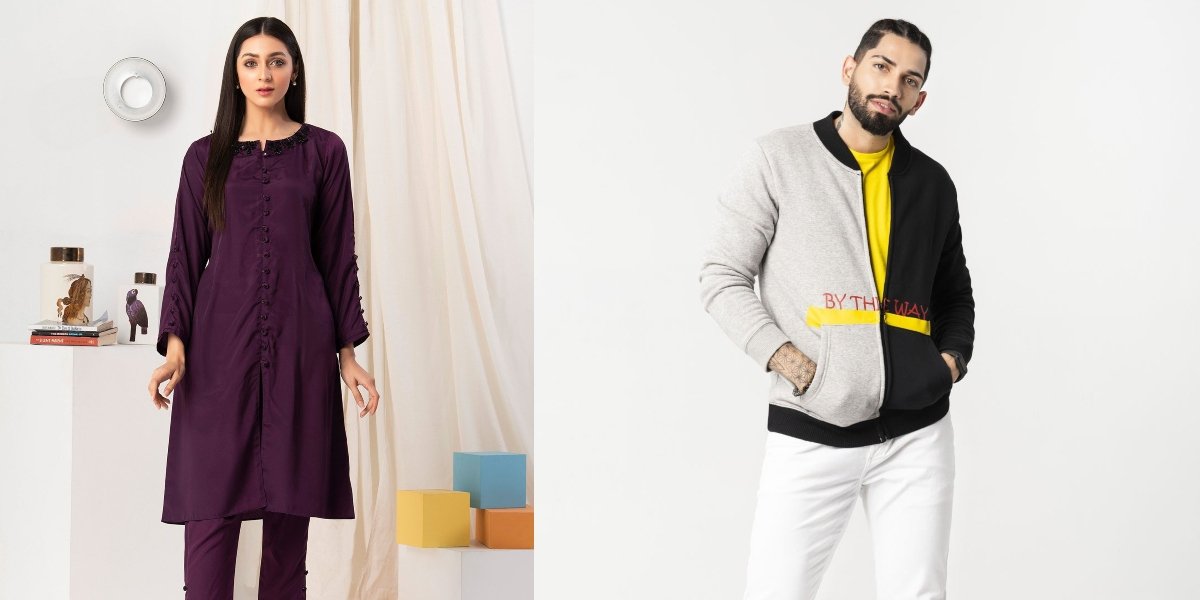
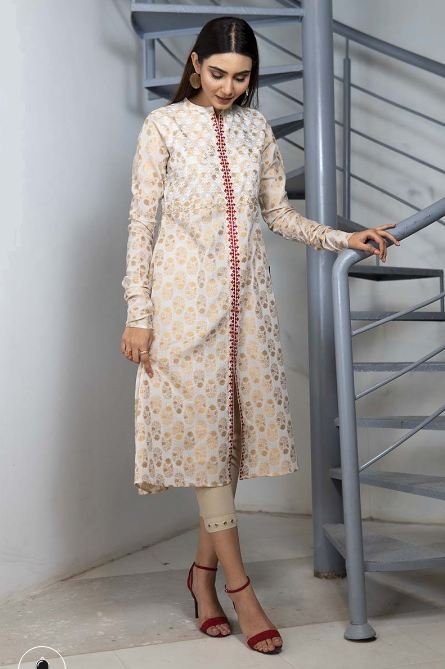
Winters may not be ending anytime soon, end of season sales are here. The Current has tried to make your shopping drill easier by compiling a list of brands that are offering discounts. Don’t miss out on these sales for a chance to grab some steals.
Gul Ahmed
Gul Ahmed is offering up to 70% off on in-stores and online. You can avail discount on pret, unstitched, sweaters and on bed sets.
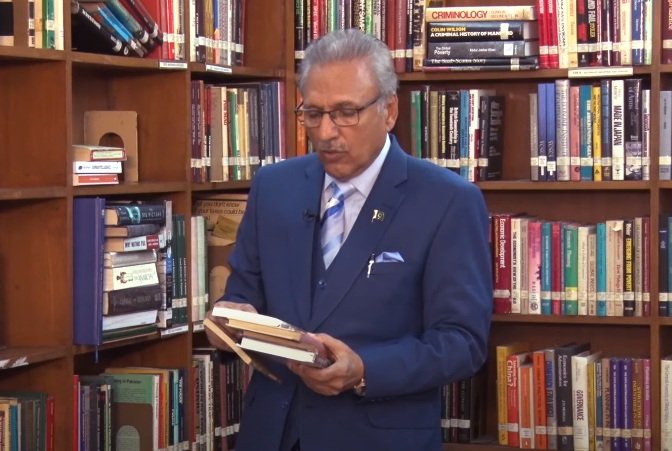
In a 14-minute-long video shot inside President House’s library, President Alvi listed his top must-read books and encouraged the youth to read them.
“I want the interest of book reading to stay alive in Pakistan,” says President Alvi in the video.
Books, reading, & search for knowledge, is real fulfillment of my hearts desires. No better hobby I can think of, to be closer to God & to understand the Whys & Hows of my existence. It is a pursuit that yields happiness & better understanding of human thought & actions الحمد لله https://t.co/ihDKkzobl0
1. Revelation: The Story of Muhammad (Peace and Blessings Be Upon Him) by Meraj Mohiuddin
2. Capital & Ideology by Thomas Piketty
3. The Anarchy by William Dalrymple
4. Upheaval (How Nations Cope with Crisis and Change) by Jared Diamond
5. Why Nations Fail by Daron Acemoglu and James Robinson
6. The Metric Society by Steffen Mau
7. The Big Picture by Sean Carroll
8. Life 3.0 by Max Tegmark
9. Superintelligence by Nick Bostrom
10. The Art of Thinking Clearly by Rolf Dobelli
Later, President Alvi’s son Awab Alvi shared that the president makes a conscious effort to include reading in his daily routine.
Depsite a very busy schedule of @PresOfPakistanI see @ArifAlvi juggling multiple books on his side table – trick to make time to read books is by entirely IGNORING his cell phone – Ringtone on perm mute & WhatsApp & Twitter addiction in control #GoodHabit#FavBooksOfPresident
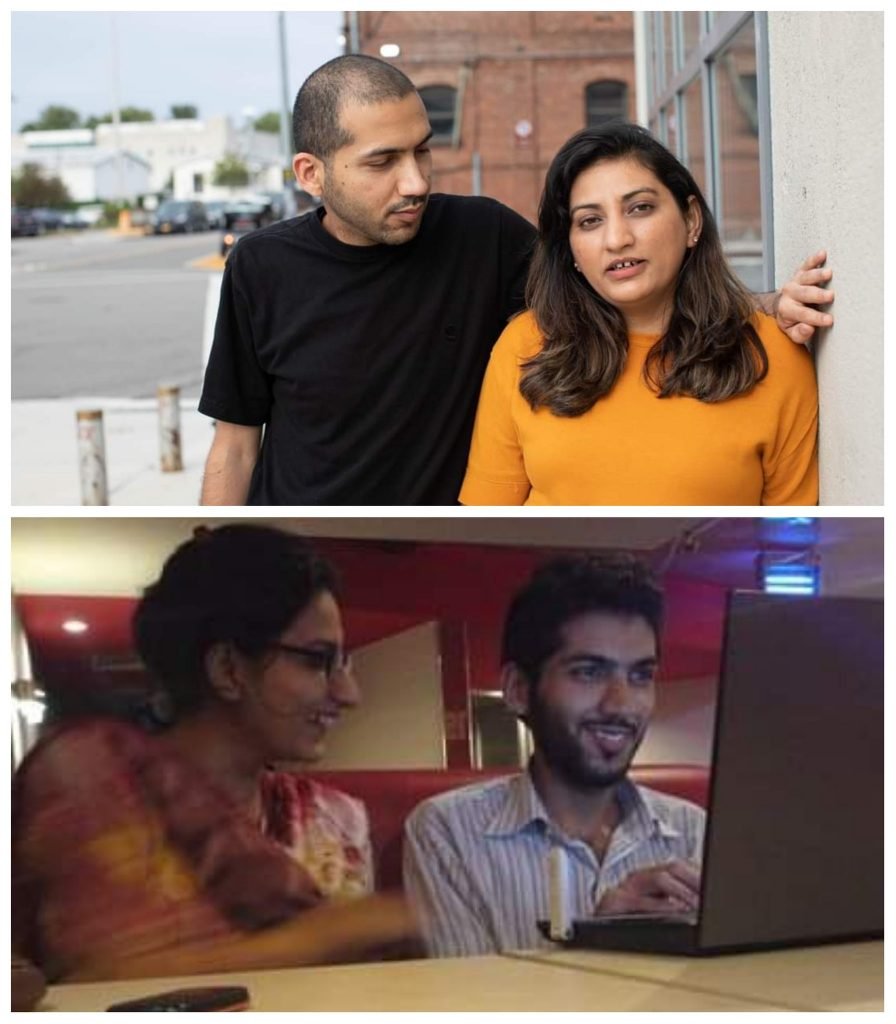
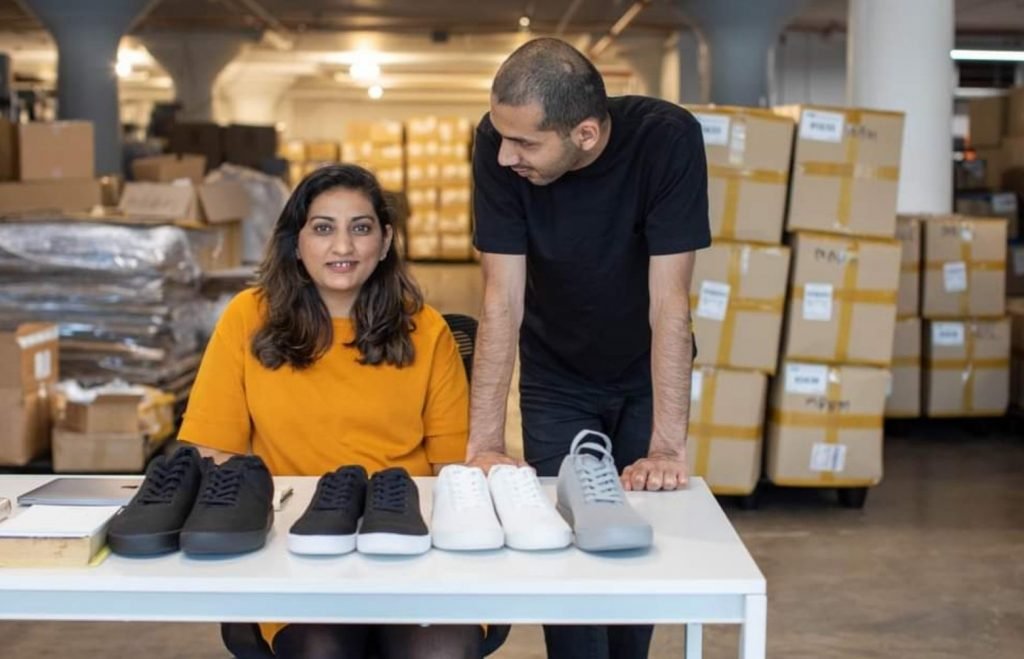
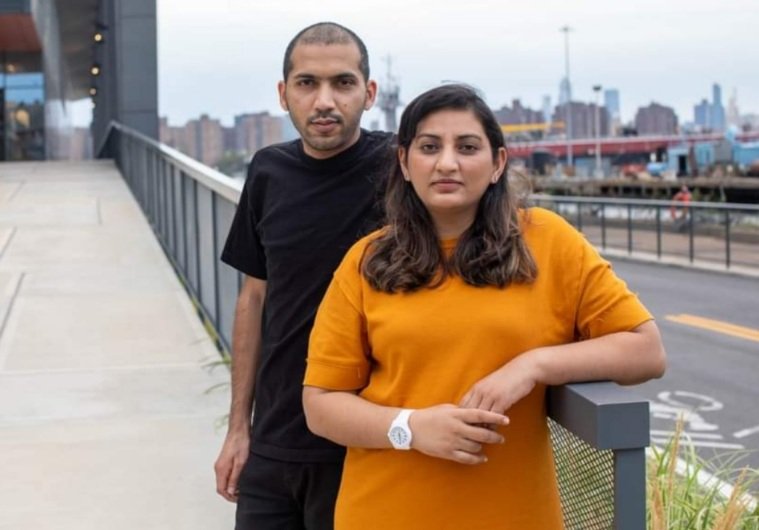
“Just two kids from a small town in Pakistan, who escaped their conservative families” is how Sidra Qasim describes herself and her husband, Waqas Ali, the power couple behind Atoms – a New York-based footwear brand known for its quarter sizes and comfortable sneakers.
However, their road to success was not an easy one. In an interview with Brandon Stanton of Humans of New York, Sidra opened up about their journey and how they set up their footwear brand.
“It’s the same story taught to every Pakistani girl. We are raised from a young age to believe that our purpose in life is to find and keep a husband,” said Sidra in the first of her 11-part interview. But even as a child, Sidra had bigger dreams, and she held on to them even as her family pressurized her to get married right out of school.
Sidra, who belongs to the small town of Okara, first met Waqas at her aunt’s house. He was one of her aunt’s students.
“We’d discuss life, and society, and human emotions. It became the only chance I had to exchange my ideas with anyone. And Waqas took my opinions seriously,” she shared.
After school, Sidra enrolled in a college and became one of the only 15 female students there. It was after she successfully produced a play to help with flood relief efforts that Waqas asked her to join him in Lahore – where he had moved to study further – and become his business partner.
“It finally felt as though my talents were being recognised, and the next day I asked for my parent’s permission. But they refused,” said Sidra.
The refusal came as a blow to Sidra, who describes lying listlessly on the couch for weeks – to the point where it scared her father. Eventually, they agreed to let her move to Lahore, where she began working with Waqas on a company called ‘Social Media Art’ which aimed to help brands establish a social media presence.
As their company struggled, Waqas and Sidra grew closer.
“We never discussed the status of our relationship, but both of us could feel a closeness. We were bonded by our journey. Both of us were defying our parents,” she said. “But after a year of rejection, we had begun to lose hope.”
A ray of hope came from unlikely quarters when Sidra and Waqas met with a group of craftsmen in the local village council of Okara.
“They were making leather shoes on the floor of a two-room workshop,” she added.
Sidra returned to the workshop again and again for a week and, in the end, the craftsmen agreed to collaborate with them.
While Waqas worked on the website, Sidra ensured that the shoes they produced met the “highest quality standards”.
“We called our collection ‘Hometown Shoes.’ And after we launched our website, the first order came in right away,” said Sidra, adding that though they made a loss on the order due to the high shipping cost to France, the couple did not give up hope.
“After a year we were selling about 50 shoes per month. We were happy to have any business at all, but it wasn’t nearly enough to survive,” said Sidra. They started a highly successful Kickstarter campaign and raised $1,07,000 in 2014 by selling over 600 pairs of shoes.
After that, Sidra and Waqas got married in a small ceremony – and immediately began to work on their application for the Y-combinator accelerator program in San Francisco. “The admissions process was more selective than Harvard, and they’d helped launch companies like Airbnb and Dropbox,” Sidra added.
Although she describes their interview as a “disaster”, they did get through and moved to the US.
Their time at Y-combinator was one of making mistakes and learning from them. “We were the only company in our group who didn’t raise money. And to make matters even worse, it had been a formal event,” said Sidra, describing Demo Day which is sort of a final exam for participants of the program. “Many of our classmates had dressed up. But none of them were wearing the shoes we had sold them.”
Doing more market research helped them understand that most people wanted shoes they could wear every day, and so Sidra and Waqas shifted their focus from formal footwear to casual.
“We researched the highest quality materials, and we put all of our findings into a document called ‘Ideal, Everyday Shoe.’ Then we gave all our notes to a talented designer. Together we built a prototype, and we called them ‘Atoms,’ because we’d gone to the atomic level in search of quality.”
It took them several months to manufacture their first collection after extensive customer feedback and market research. “By the time we were ready to launch, 45,000 people had signed up for our mailing list. On the first day of sales, our website crashed,” Sidra continued.
Their company expanded to 25 employees, but they also had to go through a round of layoffs. At the beginning of the pandemic, to stay afloat in the face of dwindling funds and investors unwilling to put in more money, Atoms expanded to making masks.
“One year later we’ve sold 500,000 of them and donated 500,000 more. Our shoe business has continued to grow, and once again investors are calling on the phone,” Sidra told Humans Of New York.
She concluded the interview by talking about the change that her business has helped brought about. She has been able to help her family back in Pakistan financially. “But more importantly I’ve provided an example,” says Sidra.
One of her younger sisters is now working as a fitness coach, the other is selling sanitary pads. But the biggest transformation, she said, has been in her mother – a school headmistress who now tells her students to be financially independent and learn technology.
“She’s telling them all the things that I needed to hear as a little girl. The road was so lonely for me, and maybe I still carry some unconscious resentment,” said Sidra.
“But my mother has apologised for not supporting me more. And consciously I have forgiven her.”
Sidra and Waqas started Atoms armed with ambition, curiosity, and a passion for making shoes. Despite coming from modest, traditionally conservative upbringings, that drive took them from Okara, Pakistan, to the closest big city—Lahore, to Silicon Valley, and then to Brooklyn, where Atoms is currently based.
Wearing a mask has now become an important part of our lives to avoid the transmission of the COVID-19. The appropriate use, storage and cleaning or disposal of masks are essential to make them as effective as possible.
There are often times when you spot people wearing two face masks at the same time, but the question is, does it help?
In theory, a virus should have a tougher time getting through two layers than just one layer. In a commentary in the journal Med, Monica Gandhi, MD, MPH, a Professor of Medicine recommended wearing at least a “high-quality surgical mask or a fabric mask of at least two layers with high thread count.” But they added that wearing a cloth mask tightly on top of a surgical mask could provide even more protection.
Anthony Fauci, MD, Director of the National Institute of Allergy and Infectious Diseases (NIAID) also favours double-masking.
“If you have a physical covering with one layer, you put another layer on, it just makes common sense that it likely would be more effective,” says Fauci.
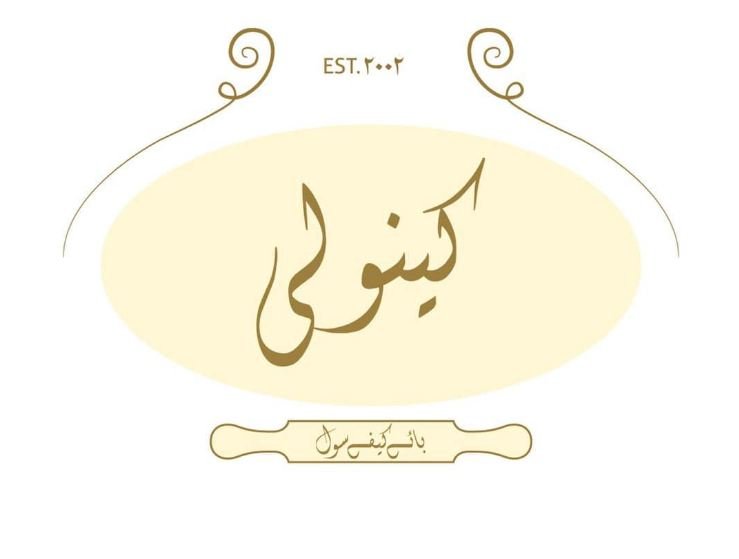
Cannoli Café Soul in Islamabad, which had been in hot waters for mocking their manager for his English speaking skills, has updated and changed the logo with Urdu typography.
The café owners, Uzma and Diya, had received a lot of backlash last week when they asked their manager Owais to introduce himself in English. When he struggled with speaking fluent English, they made fun of him by commenting on his salary.
Just got sent this. Sick to my stomach. No words for our eNgLisH fLueNt elites. Never seen more tone deaf women with this confidence. pic.twitter.com/5eIj9hWOnZ
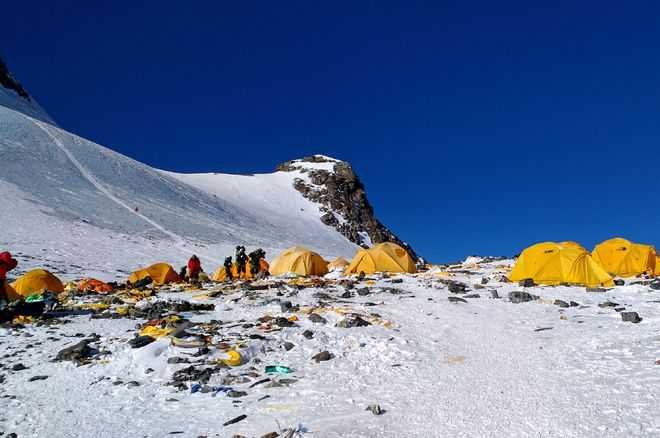
Trash collected from Mount Everest is set to be transformed into art and displayed in a nearby gallery, to highlight the need to save the world’s tallest mountain from turning into a dumping site.
Used oxygen bottles, torn tents, ropes, broken ladders, cans, and plastic wrappers discarded by climbers and trekkers litter the 8,848.86 metre (29,032 feet) tall peak and the surrounding areas.
Tommy Gustafsson, project director and a co-founder of the Sagarmatha Next Centre – a visitors’ information centre and waste up-cycling facility – said foreign and local artists will be engaged in creating artwork from waste materials and train locals to turn trash into treasures.
“We want to showcase how you can transform solid waste to precious pieces of art … and generate employment and income,” Gustafsson told Reuters. “We hope to change the people’s perceptions about the garbage and manage it.”
The Centre is located at an altitude of 3,780 metres at Syangboche on the main trail to Everest base camp, two days’ walk from Lukla, the gateway to the mountain.
It is due for “soft opening” to locals in the spring as the number of visitors could be limited this year due to coronavirus pandemic restrictions, Gustafsson said.
Products and artwork will be displayed to raise environmental awareness, or sold as souvenirs with the proceeds going to conservation of the region, he said.
Trash brought down from the mountain or collected from households and tea houses along the trail is handled and segregated by a local environmental group, the Sagarmatha Pollution Control Committee, but the task in a remote region that has no roads is a huge challenge.
Garbage is dumped or burned in open pits, causing air and water pollution as well as contamination of soil.
Phinjo Sherpa, of the Eco Himal group involved in the scheme, said under a “carry me back” initiative, each returning tourist and guide will be requested to take a bag containing one kilogram (2.2 pounds) of garbage back to Lukla airport, from where the trash will be airlifted to Kathmandu.