The Civil Aviation Authority (CAA) of Pakistan has once again extended the deadline for outsourcing Islamabad Airport.
According to ARY, the government aims to raise funds by outsourcing airport services, so the deadline is now extended by two months, until July 15. The CAA mentioned that companies from Turkey, Qatar, Malaysia, UAE, Saudi Arabia, and other countries have shown interest in the project.
CAA first announced the tender in March with deadline of May 15. But the deadline has been extend due to a lack of interest from potential bidders for outsourcing the airport.
Before this, the federal government asked for applications to outsource Islamabad International Airport for 15 years. The Civil Aviation Authority told interested bidders to submit their applications with a Rs5,000 fee by November 8.
The government also plans to outsource Karachi, Lahore, and Islamabad International Airports.
The Employee Unions of the CAA are against the decision to outsource Pakistan airports.
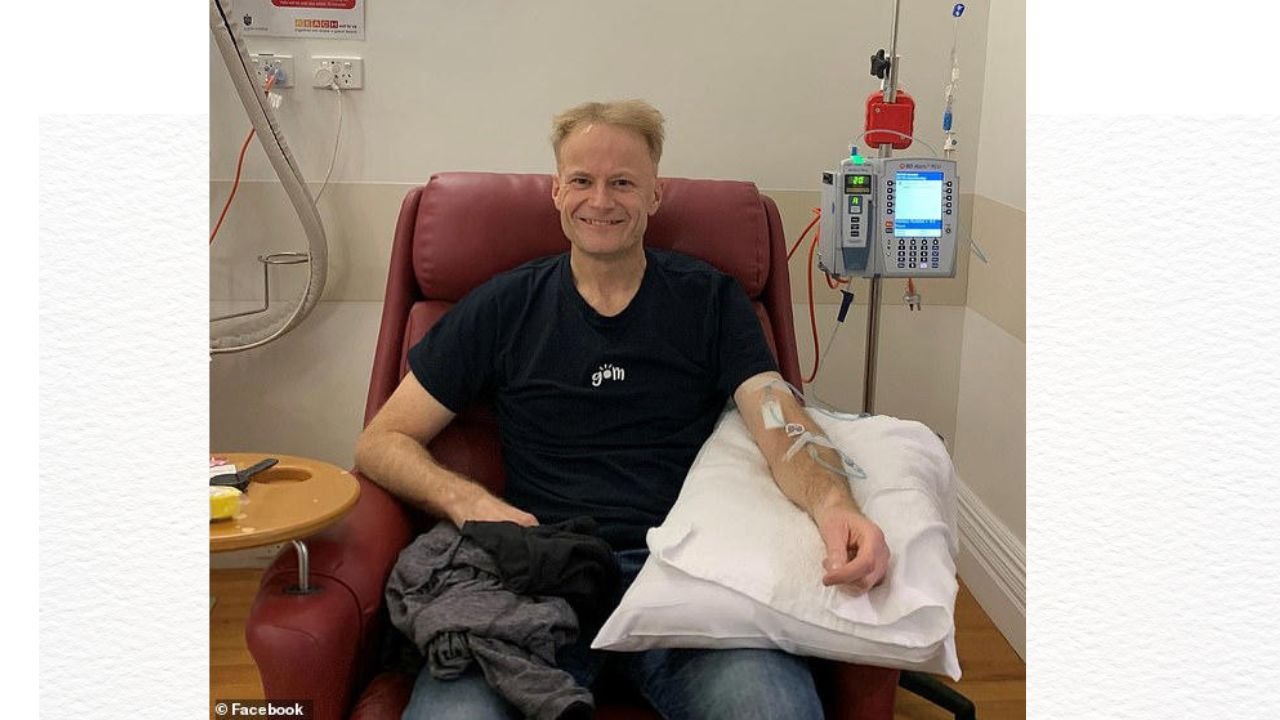
Australian doctor Richard Scolyer is cancer-free after undergoing the world-first treatment for a brain tumor based on his own pioneering research.
BBC reported about his self-treatment journey earlier this year and called it a “gamble” as the detected cancer was in its fourth stage. It was so aggressive that most patients survived less than a year.
The 57-year-old underwent experimental therapy based on his own research on melanoma, a type of cancer that starts in the skin.
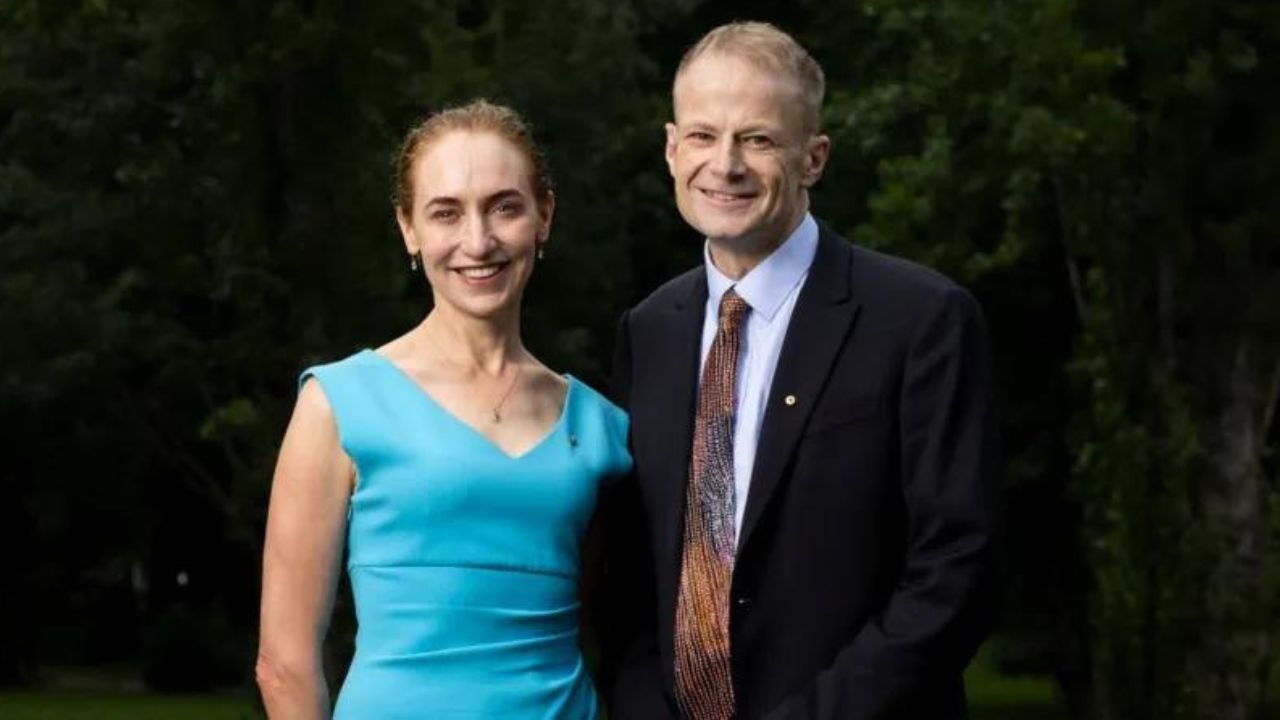
Dr. Scolyer, went ahead with the treatment, aided by his colleague and friend Professor Georgina Long. Both are co-directors of the Melanoma Institute Australia.
The team used a treatment based on immunotherapy, which teaches the body’s immune system to attack cancer cells.
Dr. Scolyer also became the first to be administered a vaccine personalised to his tumour’s characteristics.
After a tough couple of months, at the start of the year – spent dealing with epileptic seizures, liver issues, and pneumonia, Dr. Scolyer says he is feeling healthier.
The results so far have generated huge excitement that the duo may be on the cusp of a discovery that could one day help roughly 300,000 people, who aer diagnosed with brain cancer globally every year.
Students and women in South Waziristan are facing difficulties in creating online e-domicile.
On the instructions of the Home Department of the Khyber Pakhtunkhwa government, the district administration started working on creating an e-domicile from March 21, but the complicated steps of e-domicile have increased the difficulties of people instead of facilitating them.
Additionally, B-form is required for online e-domicile, another problem for the locals.
Assistant Commissioner Wana Faisal Ismail told Geo News that the district administration is receiving a lot of complaints regarding e-domicile from the citizens.
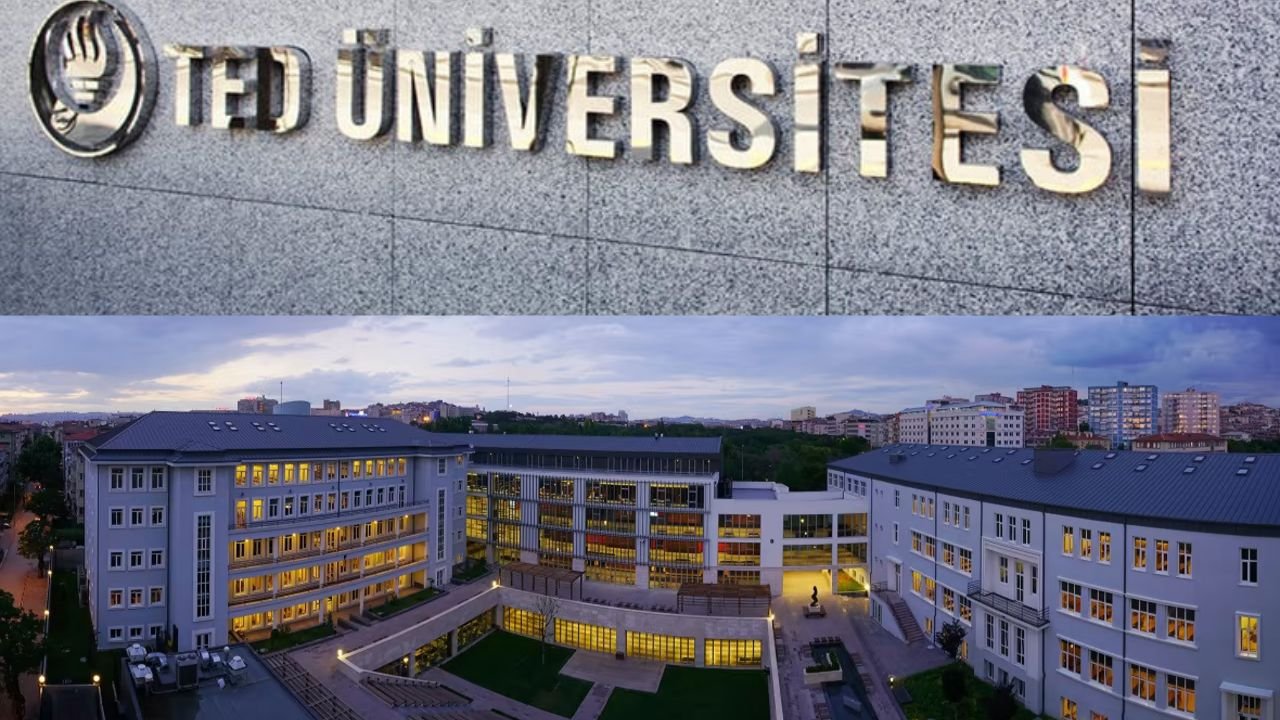
Students who want to study abroad, particularly in Turkey, can now pursue their education as Ankara-based TED University officials is offering significant scholarships in 23 undergraduate and 17 graduate programmes for Pakistanis, enrolling for the Fall 2024 semester.
TED University announced that new enrollees will receive scholarships ranging from 25 percent to 100 percent, determined by their academic achievements and other credentials.
No GRE required
Pakistani students will not be required to undergo GRE or English language tests.
TED is one of the top universities in Ankara with highly educated professional faculty members.
Free of cost housing
The university houses many facilities to support students’ education, health and recreation free of cost.
Courses offered
Undergraduate courses offered in the five faculties are architecture, city and regional planning, industrial design, interior architecture and environmental design, visual communication design, psychology, sociology, mathematics, English language and literature, business administration, economics, political science and international relations, early childhood education, primary education, guidance and psychological counseling, English language education, mathematics education, computer engineering, electrical and electronics engineering, industrial engineering, civil engineering, mechanical engineering, and software engineering.
Graduate courses
Graduate programmes include applied data science, architecture and urban studies, civil engineering, computer engineering, developmental focused clinical child and adolescent psychology, economics, economics and finance, mechanical engineering, mechatronics engineering, engineering management, English language education, industrial engineering, interactive computing and information systems, management in educational institutions, migration studies, and psychological counseling and guidance.
Students to teachers ratio
5,000 students were currently studying at the TED university at the moment while the faculty to student Ratio is 24:1 that provides guidance to the students. So far, the students have taken part in 84 research projects, 44 nationally funded projects, 23 internationally funded projects, and curated 100 industry projects.
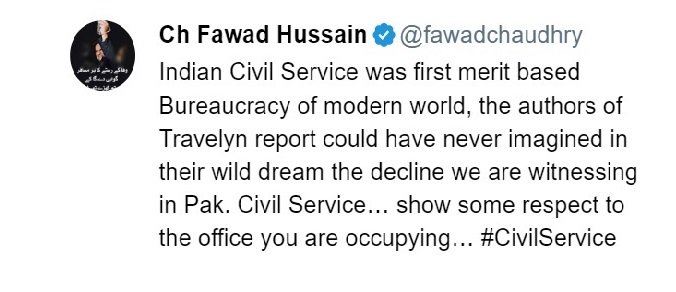
Hazim Bangwar, Assistant Commissioner for North Nazimabad, Karachi, has responded to criticism on his unconventional attire at the Hum Style Awards.
He asserted that he has carried his office “with respect and dignity and always dressed appropriately”, adding that no doctor or officer wears their uniforms outside their office.
Hazim Bangwar, has often been the subject of attention on social media — but this time he is in the spotlight for a very ludicrous reason.
He is not an average Pakistani Commissioner.
In a world full of stereotypes, he is a gritty fashion icon with a unique sense of style. He has a passion for singing and has released a few songs too. He is often attending events including the red carpet premiere of Money Heist, Korea.
And only recently, he made an appearance at the red carpet of Hum Style Awards in an all-black, sleek costume-like attire with a long, pleated neck piece.
In all this debate, the question is: does one’s attire matter? Does wearing a crisp, white shalwar kameez with a waistcoat, or the finest of suits make one more diligent in their job?
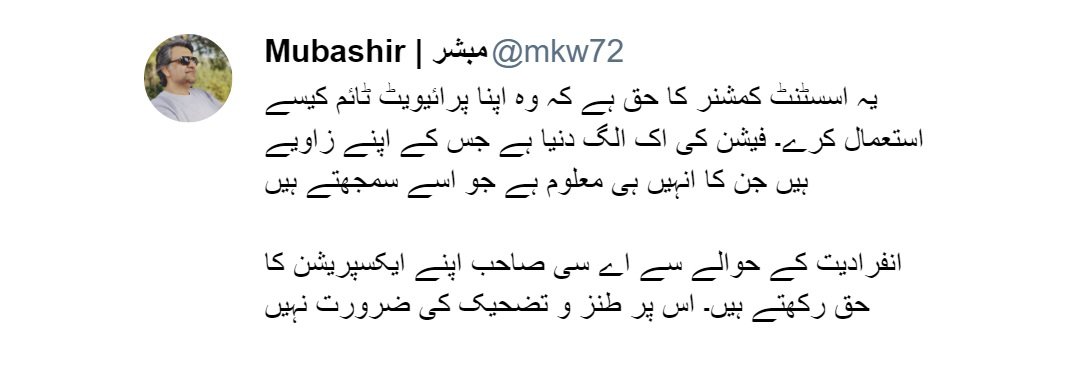
By all accounts, Hazim is doing a good job as Commissioner. Why then should we be bothered by his clothing choices, worn at a private event?
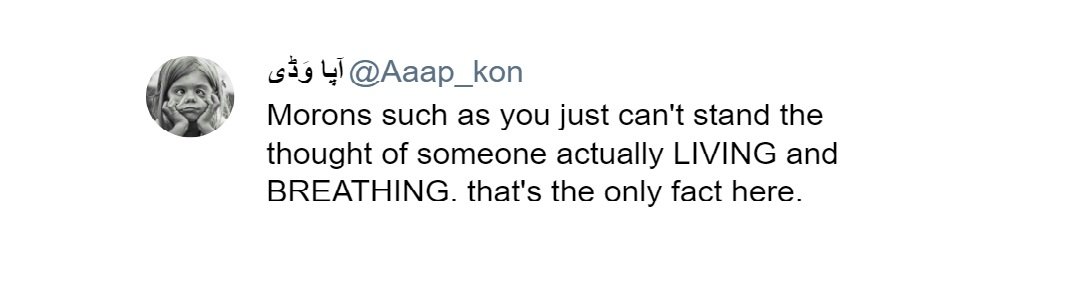
Trolls really need to come to a grip with trying to dictate their choices onto public servants.
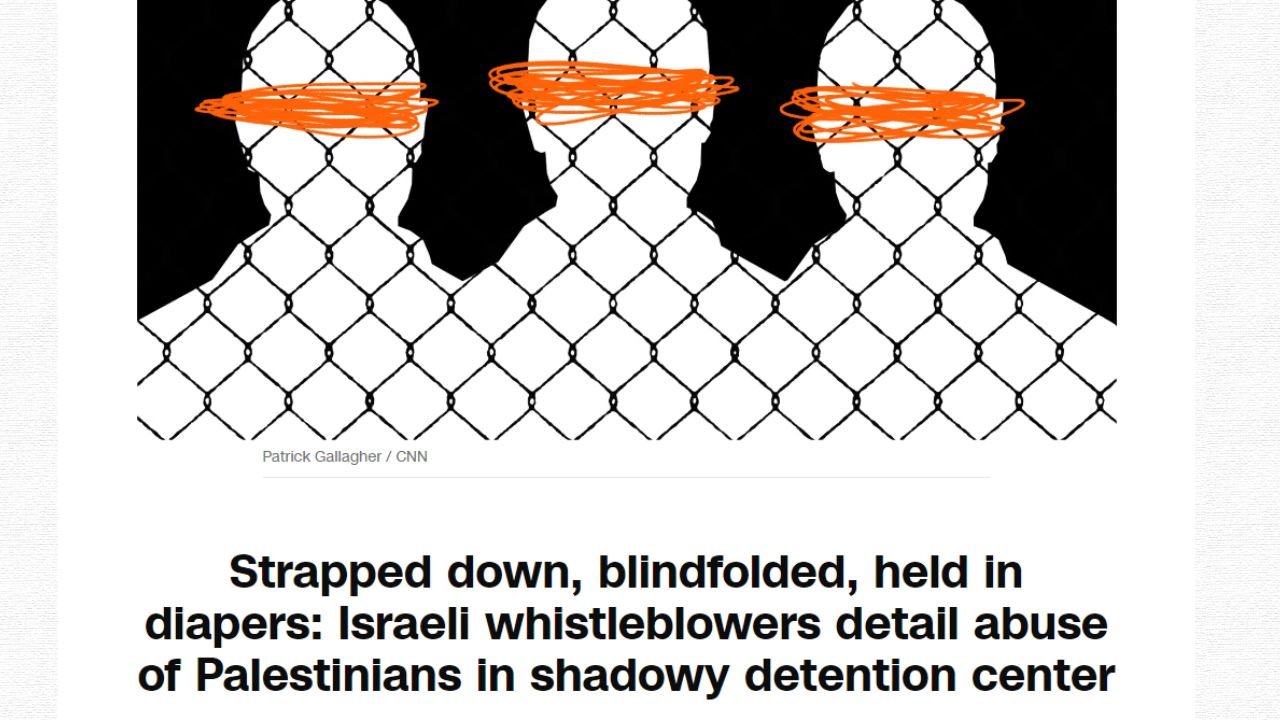
CNN has published and aired a damning report with the help of Israeli whistleblowers working at the Sde Teiman detention camp in Israel. The exposé has revealed systemic abuses by the military, including prisoners being restrained, blindfolded, and forced to wear diapers.
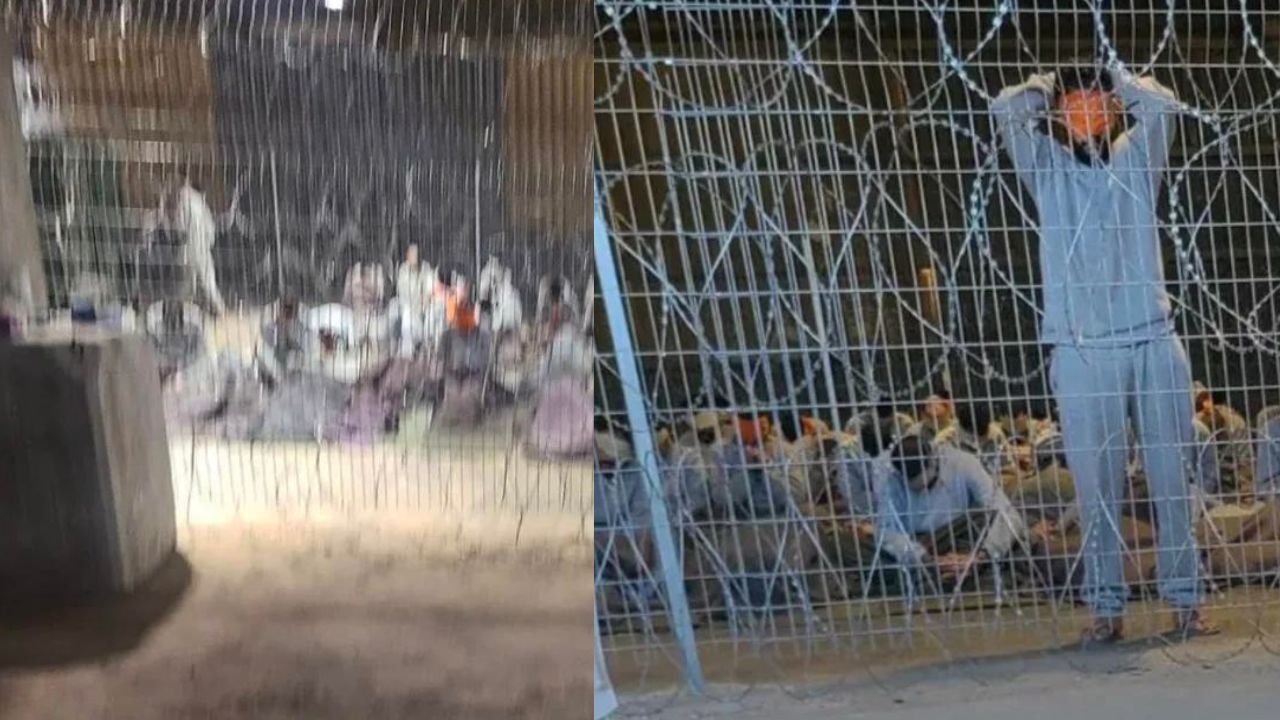
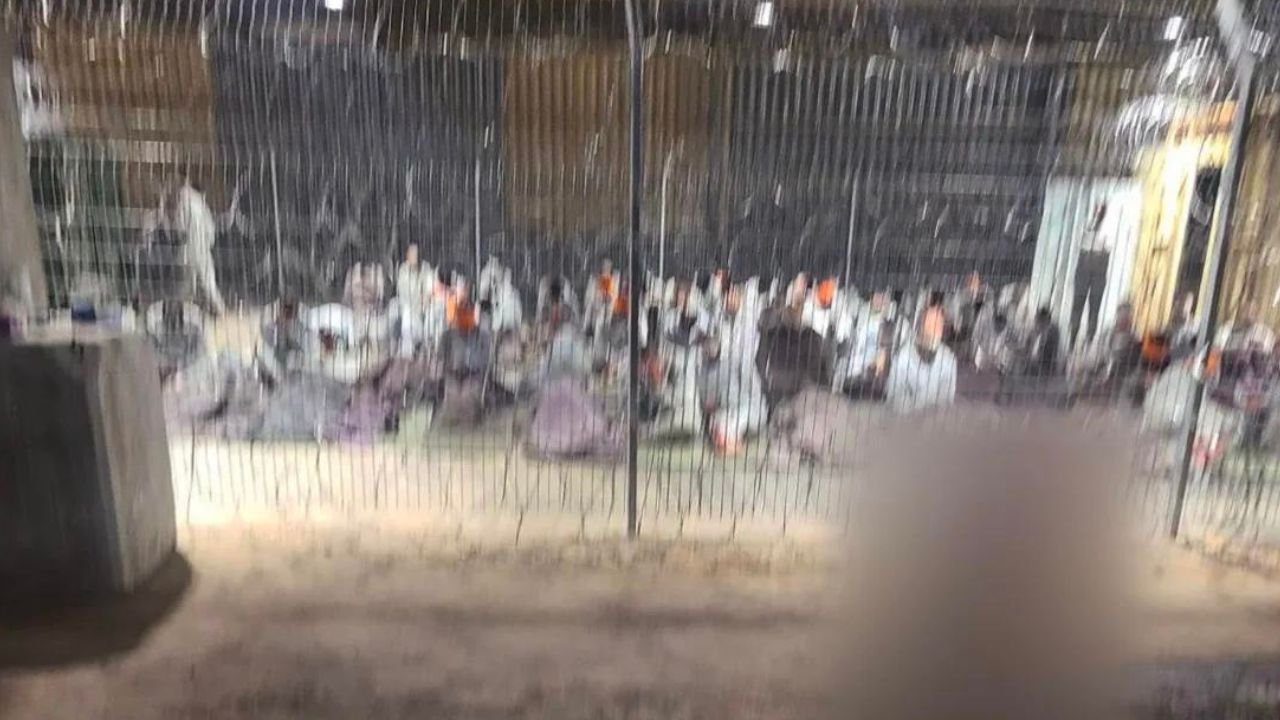
Israel’s military base, which is now a detention center in the Negev desert, was photographed twice by an Israeli worker of a scene that he says continues to haunt him.
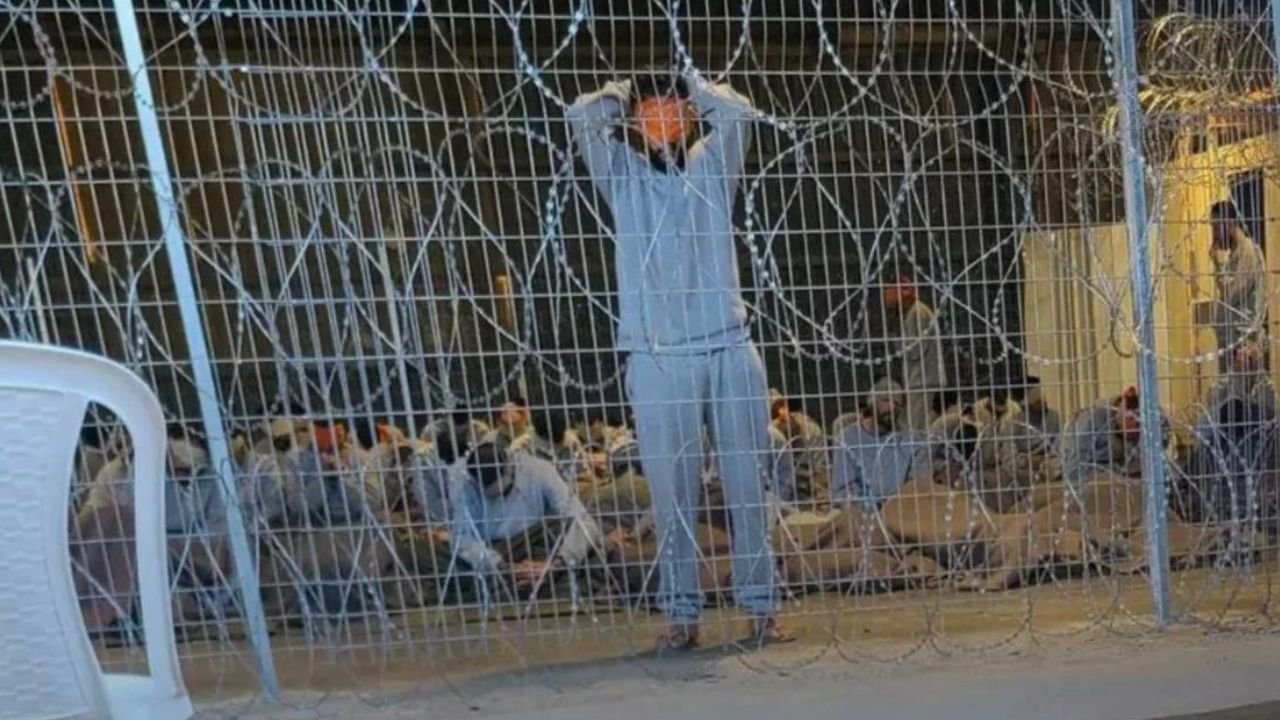
Picture showed rows of men in gray tracksuits sitting on paper-thin mattresses, ringfenced by barbed wire. The detainees were blindfolded, their heads hanging heavy under the harsh glare of floodlights.
The whistleblower told CNN about the conditions these men were kept in, detailing that they are forbidden from speaking to each other, so they mumble to themselves.
“We were told they were not allowed to move. They should sit upright. They’re not allowed to talk. Not allowed to peek under their blindfold.” Guards were instructed “to scream uskot” – shut up in Arabic – and told to “pick people out that were problematic and punish them,” the report laid out.
Where is Sde Teiman?
Sde Teiman is located some 18 miles from the Gaza frontier and is split into two parts: enclosures where around 70 Palestinian detainees from Gaza are placed under extreme physical restraint, and a field hospital where wounded detainees are strapped to their beds, wearing diapers and fed through straws. “They stripped them down of anything that resembles human beings,” said one whistleblower, who worked as a medic at the facility’s field hospital. “(The beatings) were not done to gather intelligence. They were done out of revenge,” said another whistleblower. “It was punishment for what they (the Palestinians) did on October 7 and punishment for behavior in the camp.”
Why is it a paradise for medical interns?
The whistleblowers give a peek into the very common practice of amputation of prisoners’ limbs due to injuries sustained by constant handcuffing. The detention centre is also called “a paradise for interns” because sometimes underqualified medics perform procedures here and learn through practice.
Accounts of Palestinians held in the Israeli detention centre
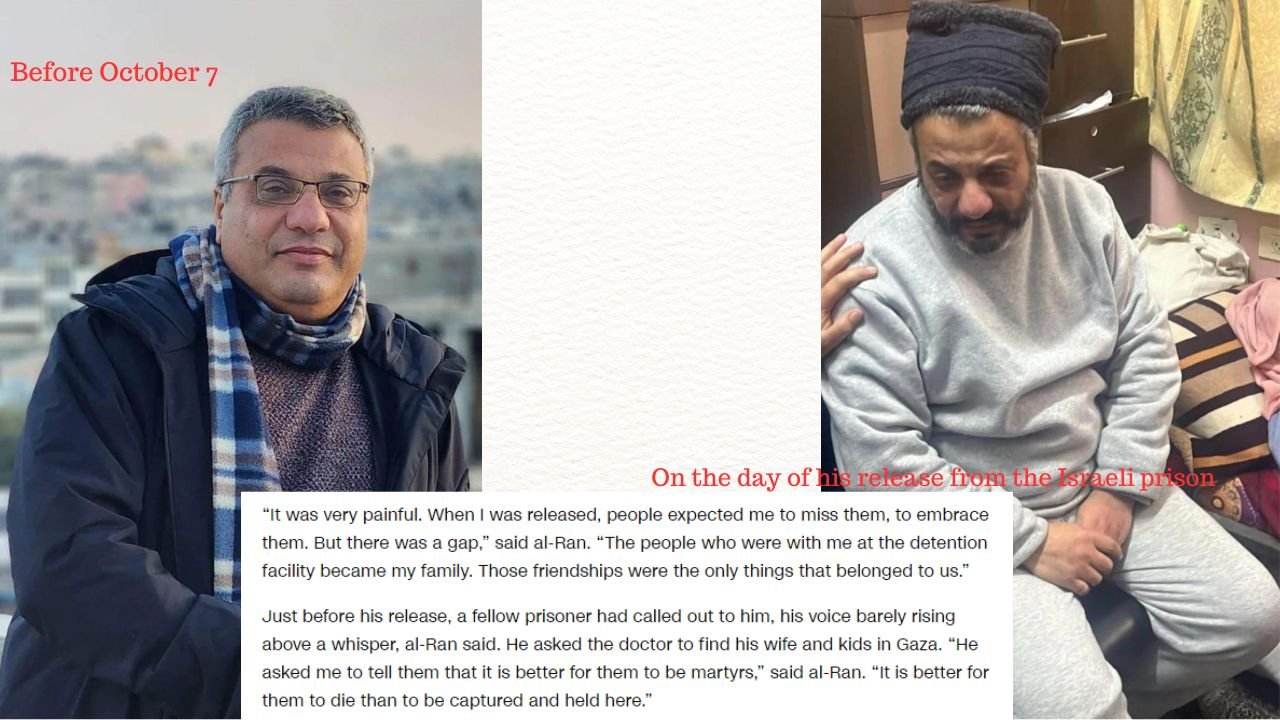
CNN interviewed Dr. Mohammed al-Ran who headed the surgical unit at Northern Gaza’s Indonesian hospital, one of the first to be shut down and raided as Israel carried out its aerial, ground and naval offensive.
He was arrested on December 18, he said, outside Gaza City’s Al-Ahli Baptist Hospital, where he had been working for three days after fleeing his hospital in the heavily bombarded north.
He was stripped down to his underwear, blindfolded and his wrists tied, then dumped in the back of a truck where, he said, the near-naked detainees were piled on top of one another as they were shuttled to a detention camp in the middle of the desert.
“We looked forward to the night so we could sleep. Then we looked forward to the morning in hopes that our situation might change,” said Dr. Mohammed al-Ran, recalled.
Al-Ran was held in a military detention center for 44 days, he told CNN. “Our days were filled with prayer, tears, and supplication. This eased our agony,” said al-Ran.
Punishment for speaking to each other
A prisoner who committed an offense such as speaking to another would be ordered to raise his arms above his head for up to an hour. The prisoner’s hands would sometimes be zip-tied to a fence to ensure that he did not come out of the stress position.
For those who repeatedly breached the prohibition on speaking and moving, the punishment became more severe. Israeli guards would sometimes take a prisoner to an area outside the enclosure and beat him aggressively, according to two whistleblowers and al-Ran.
Unleashing dogs as form of “the nightly torture”
That whistleblower and al-Ran also described a routine search when the guards would unleash large dogs on sleeping detainees, lobbing a sound grenade at the enclosure as troops barged in. Al-Ran called this “the nightly torture.”
“While we were cabled, they unleashed the dogs that would move between us, and trample over us,” said al-Ran. “You’d be lying on your belly, your face pressed against the ground. You can’t move, and they’re moving above you.”
The same whistleblower recounted the search in the same harrowing detail. “It was a special unit of the military police that did the so-called search,” said the source. “But really it was an excuse to hit them. It was a terrifying situation.”
“There was a lot of screaming and dogs barking.”
Strapped to beds in the hospital
“If you imagine yourself being unable to move, being unable to see what’s going on, and being completely naked, that leaves you completely exposed,” the whistleblower said. “I think that’s something that borders on, if not crosses to, psychological torture.”
Another whistleblower said he was ordered to perform medical procedures on the Palestinian detainees for which he was not qualified.
Response of IDF
The Israeli Defence Forces did not directly deny accounts of people being stripped of their clothing or held in diapers. Instead, the Israeli military said that the detainees are given back their clothing once the IDF has determined that they pose no security risk.
Two Palestinian prisoners associations said last week that 18 Palestinians – including leading Gaza surgeon Dr. Adnan al-Bursh – had died in Israeli custody over the course of the war.
Sde Teiman and other military detention camps have been shrouded in secrecy since their inception. Israel has repeatedly refused requests to disclose the number of detainees held at the facilities, or to reveal the whereabouts of Gazan prisoners.
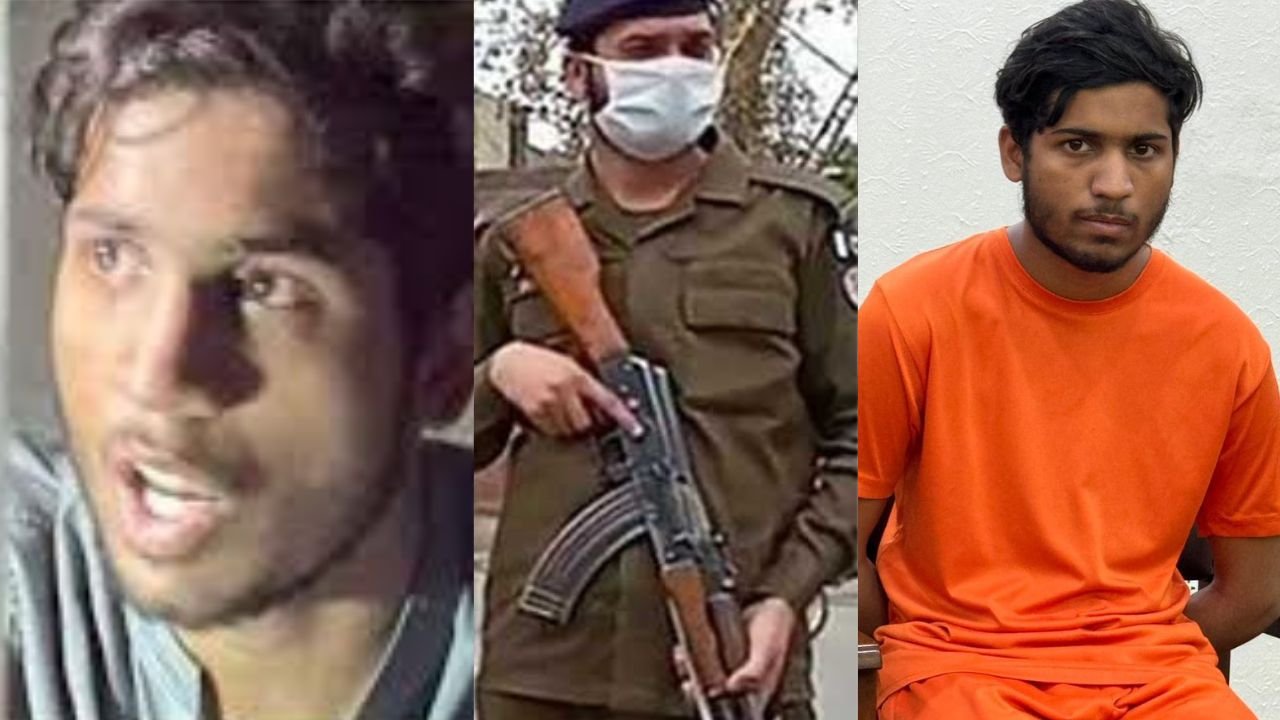
A suspected serial-killer of the police and alleged member of the banned militant group Tehrik-i-Taliban Pakistan (TTP), Faizan Butt, who was reportedly involved in three attacks on police officials in Lahore within a week, was killed along with three other terrorists during an encounter in Karol Ghatti on Sunday night.
The counter-terrorism department’s spokesperson told the media that the team took the arrested terrorists to Karol Jungle for seizure of weapons. Meanwhile, about six terrorists opened fire on the police, as a result, four of the terrorists were shot dead by the firing of their accomplices while three managed to escape.
The police seized two Kalashnikovs and a pistol from the spot, he said.
UPDATE: “The target killer involved in killings’s of Lahore police was himself killed in a gun battle with militants during a recovery operation.”
The Counter Terrorism Department Punjab in a statement claimed that Faizan Butt who went by pseudonym Usman Khurasani was taken to… https://t.co/FcHiZebeU2
— The Khorasan Diary (@khorasandiary) May 12, 2024
Faizan had shot dead a sub-inspector and a constable after following them when they were unarmed on their way back home. He had also shot and injured another police constable. Investigations revealed that he recorded the attacks by using a pen camera, ensuring that the victim was dead before leaving. He then sent the recordings to his handlers as proof.
Initial investigations suggested that the suspect was frustrated because the police had registered a case against him.
The CTD had received information that he had contacted some people in his area to help him join a militant organisation.
Later, Faizan got arrested for carrying explosives and he was sent to prison. There he met a jailed leader of a banned sectarian outfit who helped him in getting released on bail.
He went to Afghanistan where he had meetings with TTP leaders who assigned him the task of killing six policemen to prove his loyalty.
The suspect revealed in police custody that the banned group had arranged a 30-bore and a 9mm pistol for the killings.
Faizan’s father was a manager in a factory and lived in Shadbagh. His mother had separated from him and lived in the private housing society.
The World Bank has decided to pull funding from the second phase of 5.9 kilometre Mauripur Road, which is part of the Competitive and Livable City of Karachi (CLICK) project. A total of 520 harsh white LED lights installed at the road have become the bone of contention after it was noted that they were disturbing the hatching season of turtles coming to the marine beach to lay eggs.
The lights in the city of lights are surprisingly proving to be hazardous for the endangered species which visit the city to ensure their sustenance and enhance their population. Journalist Oonib Azam working for The Citizenry.pk has formulated a detailed report about the installation of the white lights as part of the rehabilitation program of the Mauripur road from Machli Chowk to the Karachi Nuclear Power Plant (KANUPP). He not just did the research but also played an instrumental role in convincing this Bretton Woods institution to rethink about their investment in this particular area.
Background of CLICK
CLICK is a development project by the World Bank to improve “urban management, service delivery and the business environment of Karachi.” Four components of the project involve capacity building of Local Councils and granting them performance-based grants, modernizing urban Property Tax administration, improvement in city competitiveness, and building capacity of local government regarding the technical assistance for solid waste management. The total project cost is a hefty 240 million dollars and it spans over 30 districts of Sindh, six divisions, 25 town municipal corporations, and 209 Karachi UCs.
Detrimental artificial lights for the turtles
Sindh Wild Life Department told Oonib that repelled by Artificial Light at Night (ALAN) in the last season, an estimated 250 female turtles turned back to the sea without laying eggs. The same artificial lights disorientate young hatchlings and they get crushed under cars or are eaten up by stray dogs.
“A female turtle travels all the way to Australian beaches and returns to Karachi’s coast, to lay its eggs at the same coordinates where she layed eggs the last time. This shows how sensitive turtles are to their natural environment,” Oonib quotes a report by Dr. Umair bin Zamir.
Mauripur road project
Oonib explained to The Current how his research about the sanctuaries lead to awareness of turtles’ sensitivity to harsh white light. People attending picnics disrupted the whole process with torch lights just for the adventure. Huts in the surrounding areas put up huge flashlights and third and most glaringly, lamppost lights installed on the roadside in the neighbourhood.
Mauripur road project is a sub-project of the World Bank’s CLICK project which costs 840 million rupees. Because it was a Category B project it required Karachi Metropolitan Corporation (KMC) to submit an Environmental and Social Management Plan (ESMP) to the World Bank. The Citizenry report lays out how the KMC blatantly missed out on the turtle sanctuaries. It also stresses that turtles were a common sight in the area since the project is surrounded by beaches.
It was in sheer contrast with the World Bank’s policy (Environment Management Framework) of explicitly protecting the environment while ensuring a sustainable poverty reduction and development of societies at the same time.
Here, Oonib contacted the World Bank via Abedalrazq F. Khalil, manager of Uraban Development, Resilience and Land Practice for the South Asian region and shared all the intel he gathered in his research. It was revealed in that email exchange that World Bank was told that the road was about 5-8 kilometres away from the turtle hatching site. In a video report by The Citizenry, Oonib and Hunain Ameen discussed how Sanspit beach, Turtle Beach and Hawksbay Beach are in a row some kilometres apart as per Sindh Wildlife department’s maps.
It is important to mention that the 520 street lights are actually installed on a road the road from Machli Chowk to KANUUP Road runs parallel to Hawksbay Beach at a few 100-meter distances.
The Current has gone through the email exchanges between the Bank’s representative and journalist Oonib Azam and it is apparent that the Bretton Wood body was not entirely aware of the possible repercussions of proceeding with the project but after concerns were raised it was concluded that it will not move forward with the second phase.
“Light shielding and use of red lights is being considered by the PIU [Program Implementation Unit] as one of the mitigation measures. After consulting with relevant expert, we would have the CLICK PIU implement them,” Abedalrazq asserted.
As he was asked by the journalist about the operation policy of the World Bank regarding critical habitats being triggered for this project only or for the entire project, the respondent answered, “when CLICK was prepared, impacts on natural habitat were not envisaged and hence the Operational Policy 4.04 was not triggered. If a certain policy is triggered during preparation or implementation, it applies to the entire project.”
Current status of the project
Unsurprisingly, the World Bank has pulled funding for the Mauripur project. As a result, local authorities are being directed to implement mitigation measures proposed by the Sindh Wildlife Marine Turtle Conservation. They have proposed the replacement of bright white lights by red lights. Ironically, the email exchange reveals that the PIU office in Karachi plans to cover the lights with a cellophane which can change the white colour to red. As this solution is not durable, the journalist requested Bank authorities to intervene who then asked authorities to change the lights to amber LEDs rather than covering them with a cellophane shield.
The Current asked Oonib about the current status of the project and he described it to be in a lull. “The current status is that city authorities are not ready to change the lights to amber/red as recommended by the World Bank”.
We reached out to Murtaza Wahab multiple times for his perspective on the issue and also the spokesperson of the KMC, Ali Hassan Sajid, yet there was no response from them. While Murtaza committed to responding to it at first, he later did not.
Sindh Wildlife Authority maintains that the lights installed on the nearby hotels and huts are more hazardous for the marine life especially turtles compared to the streetlights but it cannot be denied that these lights of 120 watts are inflicting perils on these turtles to a great extent as well.
Climate change is hitting home. Humans have been the perpetrators of the suffering of other creatures and it is time we actually employ durable techniques which can prove to be a relief for the ecosystem rather than being a pain in the name of development.
A tenth standard student was brutally murdered by her 32-year-old fiancé in Karnataka, India. The man cut off the victim’s head and threw away her body right outside her home.
The victim was identified as 15-year-old Meena, a tenth-grade student of High School who had passed the board examination recently. She was brutally murdered by the accused Onkarappa (Papu), a resident of the village because their engagement was called off.
The accused allegedly dragged the victim out of her house on Thursday night and massacred her in front of her parents. The incident has been registered at the police station.
Journalist Muhammad Zubair from ALT news posted on X that the incident is not being given coverage because elections in Karnataka are over and the suspect is not a Muslim.
A class 10 girl was brutally murdered by 32 year old man Prakash in Kodagu District of Karnataka after marriage was called off. He dragged the victim out of her house and murdered the girl in front of her parents. The man cut off the victim’s head, threw away her body and flees… pic.twitter.com/MZp8TEAjX9
A PIA flight from Islamabad to Skardu left behind the body of a six-year-old boy at the airport on Friday, while his parents continued their journey, unaware of the horrific mistake.
Six-year-old Mujtaba, a resident of Katshi village of Kharmang district, was diagnosed with a tumour at a hospital in Skardu a month ago. Doctors referred him to Rawalpindi for treatment. His father Muhammad Askari took him to Rawalpindi along with his wife for treatment at Benazir Bhutto Hospital. Mujtaba succumbed to his illness in the hospital on Thursday.
The parents decided to transport the body of their child to their native village of Katshi for burial, through a PIA flight on Friday, as a 24-hour-long journey from Islamabad to Skardu by road with the body was not possible due to hot weather.
The parents of the deceased boy were shocked and fainted at Skardu airport when they came to know that their son’s body had been left behind in Islamabad.
Ibrahim Asadi, a relative of the deceased boy, told Dawn that the body was scheduled to be transported with the parents to Skardu at 9am. He said the flight was delayed for four hours and left Islamabad at 1pm.
Upon arrival at Skardu airport at 2pm, the parents were informed that mistakenly the body was not loaded on the plane and left behind at Islamabad airport. The news sparked grief and outrage as parents were shocked and started crying while the boy’s mother and father fainted at the airport. Relatives of the boy waiting to receive the body also gathered at the airport’s lounge and started protest against the PIA management’s negligence. It continued for three hours. Officials of PIA, Civil Aviation Authority and other departments, who were on duty at Skardu airport, tried to calm down the boy’s parents and relatives and admitted their mistake. They assured the parents of bringing back the body on Saturday (today).
PIA officials said the company which handles cargos at the airport is responsible for not loading the body and assured the parents that action would be taken against it for negligence.
The boy’s parents and relatives chanted slogans against the PIA administration. They said the poor family had paid higher price to transport the body through the PIA flight, but the airline committed serious negligence. They appealed to the government to take action against those responsible.
Alleged possibility of a VIP visit causing the delay
Yousaf Kamal, another relative of the deceased boy, said the body had deliberately not been loaded on the plane. He said Minister for Kashmir Affairs and Gilgit-Baltistan Engr Amir Muqam was scheduled to fly to Gilgit from Islamabad on Friday, adding that the PIA flight from Islamabad to Gilgit couldn’t operate due to bad weather conditions. He said the federal minister had changed his plan and decided to go to Skardu and kept the passengers waiting. He said the flight was scheduled to depart from Islamabad at 9am, but was delayed till 1pm to accommodate the minister, leaving the body behind at the airport.