Category: Lifestyle

The lifestyle of millennials is underreported in our mainstream media. The Current’s lifestyle news covers social events and issues that are unique.

  • Baby girl born after pregnant mother martyred died

    Baby girl born after pregnant mother martyred died

    The daughter of a pregnant woman who was martyred in the Israeli attack at Rafah in the occupied Palestinian territory of Gaza, has also died.

    Last week, a pregnant woman, Sabrin Al-Sakini, her husband and three-year-old daughter were martyred as a result of the Israeli attack in the Rafah area of Gaza. The doctors saved the daughter of Sabrin Al-Sakini by performing an emergency operation and the new-born girl was named ‘Shaheed Sabreen’s daughter’.

    The doctors who took care of the baby girl said that the weight of the baby girl at the time of birth was 1.4 kg and that her condition was improving. However, according to the British Broadcasting Corporation, the newborn girl died yesterday and was buried next to her mother.

    More than 34,000 people have been martyred as a result of the ongoing Israeli aggression in Gaza since October 7, 2023, including more than 14,000 children and more than 9,000 women.

  • 22-year-old fakes his own kidnapping in Muzaffargarh

    22-year-old fakes his own kidnapping in Muzaffargarh

    A 22-year-old man staged his own kidnapping to trick his father into giving him two million rupees, reports Dawn News.

    Two days ago, Muhammed Ahmad, son of Mushtaq Mahra, went missing from Rohillanwali, 25 km from Muzaffargarh city. His father approached police by calling 15, complaining about his son being abducted by Katcha gangs of Sindh.

    Rohillanwali police registered a case. A day later, Mushtaq received a call from his son who told his father that he had been kidnapped by the Katcha area gangs of Sindh who demanded two million rupees as ransom for his release. He told his father that the kidnappers would kill him if they did not get the money.

    Police took action, reaching the Katcha area of Ranipur in Sindh, and located Ahmad by using modern technology and recovered him.

    The SHO said that Ahmad had faked his kidnapping and his ‘kidnapper’ kept calling his parents, demanding the ransom amount.

    During the investigation, police came to know that Ahmad wanted to marry a girl of his choice while his parents opposed it. He made a plan with his friend to get a money from his father and contract a love marriage. Police arrested Ahmad and his accomplice who was with him in Ranipur.

  • Friend kills 17-year-old for eating his girlfriend’s burger

    Friend kills 17-year-old for eating his girlfriend’s burger

    A 17-year-old young man was allegedly killed by his close friend for eating a zinger burger the suspect had ordered for his ‘girlfriend’, the police investigation has concluded in Karachi.

    The victim was identified as Ali Kerio, son of Javed Kerio, a Karachi District South sessions judge, while the suspect shooter, Daniyal Nazeer Mir Bahar, is the son of Nazir Ahmed Mir Bahar, a retired Senior Superintendent of Police (SSP), reports Danial Syed of Geo News.

    As per initial investigations, Daniyal invited his girlfriend, Shazia, to his house — located in Karachi’s Defence Housing Authority (DHA) Phase V — where his friend Ali Kerio and his brother Ahmar Kerio were also present. The suspect ordered two zinger burgers for himself and Shazia, but Ali purportedly consumed half of one burger, which enraged Daniyal so much that he seized his security guard’s assault rifle and opened fire on Ali, who later succumbed to gunshot injuries on the way to the hospital.

    The unfortunate incident happened on Feburary 8.

    The investigating officer (IO) has submitted the report to higher authorities, implicating the police officer’s son in the crime. Daniyal is currently in jail as the legal proceedings of the case continue.

  • Pakistan horror zoo is reborn as rehab centre

    Pakistan horror zoo is reborn as rehab centre

    Islamabad, Pakistan – Before it was forced to close over its “intolerable” treatment of animals, the Islamabad Zoo was home to neglected elephants and underfed lions pacing back and forth behind the bars of their enclosures.

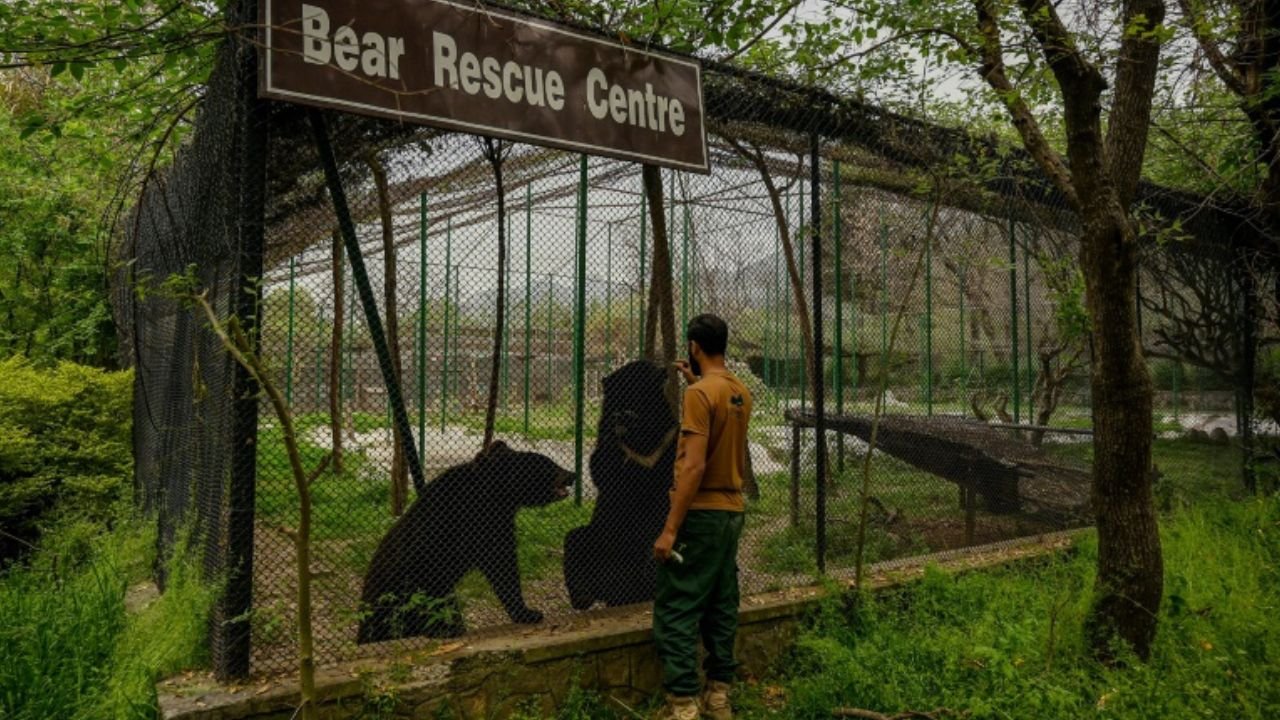
    Now, four years later, it is a rehabilitation centre for Pakistani wildlife, providing a refuge for motherless leopard cubs, tigers seized from owners who kept them as status symbols, and bears forced to dance — or fight — for the amusement of crowds.

    “The whole energy of the place has changed ever since the zoo was emptied… The care shows, look around,” Rina Saeed, the head of Islamabad Wildlife Management Board (IWMB), told AFP.

    The zoo found international notoriety in 2016, when the singer Cher launched a campaign to remove its shackled Asian elephant Kaavan, the last in the country and dubbed the world’s loneliest elephant.

    But Kaavan’s treatment wasn’t an isolated incident — two lions died at the facility when zookeepers attempted to force them from their pen by setting fire to piles of hay. And over the years, hundreds of animals listed on the zoo’s inventory simply vanished.

    Pakistan’s climate change ministry said it was “seriously concerned” about the “intolerable and inhumane” treatment of animals at the zoo in 2020 — the same year the courts ordered it shut and Kaavan was moved to Cambodia.

    Within months of its closure, a small rescue centre began to take root at the facility, and now evidence of its past as a tourist attraction is fading — silence hangs over the empty, overgrown parking lot and the shabby ticket stand sits idle next to a swing set.

    “Now it is a proper rehabilitation centre with over 50 animals,” Saeed said, adding that the team had rescued more than 380 animals.

    ‘Unrecognisable’

    The IWMB team rescues animals from across the country, recently taking in two indigenous leopard cubs poached from their mother, bears once forced to fight dogs in underground competitions and monkeys made to dance for tips.

    Amir Khalil, a veterinarian who directs the global animal welfare organisation Four Paws, which oversaw Kaavan’s relocation, recently made an emotional return to the zoo, saying it “now holds hope”.

    Vets from the Austria-based NGO had come to the centre to see after three black bears whose claws had been removed by their previous owners, treating them in the shadow of an abandoned Ferris wheel in the zoo’s former cafe — now a makeshift clinic.

    “This place is unrecognisable,” Khalil told AFP while inspecting one of the animals, an overweight former dancing bear called Anila.

    Anila was also suffering from a nose infection from a ring pierced through her snout to help keep her under control.

    “We hope this place turns out to be a place for animals with a better future,” Khalil said.

    Last year the IWMB seized a tiger cub with broken bones from a vet clinic in an upscale neighbourhood in the capital, later relocating the animal to South Africa.

    Owning a wild cat is a symbol of wealth in Pakistan even though it is illegal in some parts of the country.

    “We think animals are toys,” said Ali Sakhawat, deputy director of research and planning at the IWMB.

    The animals brought to the centre are not only physically injured but also mentally traumatised.

    “We keep them occupied to help them erase the memories of the trauma inflicted by poachers,” Aneis Hussan, a wildlife ranger, told AFP as he played with Daboo, one of the rescued black bears.

    “The bears you’ve observed here exhibit signs of joy — roaming freely, climbing trees — a stark contrast to the captivity that deprived them of happiness,” Hussan added.

    Bumpy quest for survival

    Wildlife authorities are pushing for new laws targeting poachers and bear baiters who regularly trap and traffic wild animals.

    A new Islamabad Nature and Wildlife Management Act would strengthen animal protections, but Saeed says it still “needs the president’s signature”.

    The last presidential order on animal welfare — restricting bear baiting — was passed over 20 years ago by President Pervez Musharraf.

    “No one in the government listens, I have gotten old trying to make them understand how important this is,” Safwan Ahmad, vice chairman of the non-profit Pakistan Wildlife Foundation, told AFP.

    IWMB wants to establish a permanent sanctuary at the site of the rehabilitation centre, but the local authority that owns the land intends to reopen the facility as a public zoo.

    “There is one (zoo) in almost every city worldwide,” said Irfan Khan Niazi of the environmental department of the Capital Development Authority, which oversees planning and development in Islamabad.

    “Just because rules were not followed once does not mean it would happen again”, he added.

    “No matter how many zoos we make for kids, this won’t teach them that animals are to be taken care of,” said IWMB’s Sakhawat.

    “Wild animals are to be kept in the wild, not cages”, he added.

    stm/ecl/smw/tym

    © Agence France-Presse

  • Use of alcohol and e-cigarettes among youth ‘alarming’: WHO

    Use of alcohol and e-cigarettes among youth ‘alarming’: WHO

    The widespread use of alcohol and e-cigarettes among adolescents is “alarming”, according to a report released on Thursday by the World Health Organization’s (WHO) European branch, which recommended measures to limit access.

    Based on survey data from 280,000 young people aged 11, 13 and 15 in Europe, Central Asia and Canada, the WHO said it showed a “concerning picture” of substance use among young people.

    “The long-term consequences of these trends are significant, and policy-makers cannot afford to ignore these alarming findings,” the health body said.

    The report found that 57 percent of 15-year-olds had drunk alcohol at least once, for girls the figure was 59 percent, compared to 56 percent of boys.

    The WHO noted that overall drinking had decreased for boys, while it had increased for girls.

    When it came to current use — defined as having drunk at least once in the last 30 days — eight percent of 11-year-old boys reported having done so, compared to five percent of girls.

    But by age 15, girls had overtaken boys, with 38 percent of girls saying they had drunk at least once in the last 30 days, while only 36 percent of boys had.

    “These findings highlight how available and normalised alcohol is, showing the urgent need for better policy measures to protect children and young people from harms caused by alcohol,” said WHO Europe — which gathers 53 countries including several in Central Asia.

    In addition, nine percent of teenagers reported having experienced “significant drunkenness” — having been drunk at least twice.

    The WHO said this rate climbed from five percent among 13-year-olds to 20 percent for 15-year-olds, “demonstrating an escalating trend in alcohol abuse among youth”.

    The report also highlighted the increased use of e-cigarettes — often called vapes — among teenagers.

    While smoking is declining, with 13 percent of 11-15 year-olds having smoked in 2022, two percentage points less than four years earlier, the report noted that many of them have instead adopted e-cigarettes — which have overtaken cigarettes among adolescents.

    Around 32 percent of 15-year-olds have used an e-cigarette, and 20 percent reported having used one in the last 30 days.

    “The widespread use of harmful substances among children in many countries across the European Region -– and beyond -– is a serious public health threat,” WHO Regional Director for Europe Hans Kluge said in a statement.

    Kluge called for higher taxes, restrictions in availability and advertising, as well as a ban on flavouring agents.

    “Engaging in high-risk behaviours during the adolescent years can shape adult behaviour, with substance use at an early age being linked to a higher risk of addiction,” the report said.

    “The consequences are costly for them and society,” it added.

    Cannabis use, meanwhile, was down slightly with 12 percent of 15-year-olds having ever used it, down four percentage points in as many years.

    Conducted every four years by the WHO, the HBSC (Health Behaviour in School-aged Children) survey examines the health behaviour of 11, 13 and 15-year-olds, and includes a section on substance use.

  • Islamabad High Court suspends notification of decrease in Naan and roti price

    Islamabad High Court suspends notification of decrease in Naan and roti price

    Islamabad High Court (IHC) has suspended a recent notification on the decrease in the price of roti and naan in the federal capital.

    The court has suspended the notification until May 6, seeking a detailed response from the parties on the upcoming hearing.

    Case proceedings

    The decision came during a hearing presided over by Justice Tariq Mahmood Jahangiri in response to a petition from the Naanbai Welfare Association, highlighting concerns over the legality and jurisdiction of the notification. It was argued that the federal price control fell under the supervision of the prime minister only.

    The counsel for the district administration explained that by amending the law, district coordination officers were empowered to issue notifications.

    Additionally, the Controller General of Prices and Supplies is appointed by the federal government, along with the assistant controller, appointed by the competent officer of the government, are responsible for fixing prices in accordance with district administration representation.

    The lawyer of the petitioner objected that the section under which the notification was issued does not fall under the authority of the controller general.

    Comparison with Punjab

    The court also inquired about the price of 120-gramme roti in Punjab and that if it was available for Rs25. To this petitioner explained that it was from a provincial government, while in the capital, the flour was expensive and rents high.

    The Islamabad High Court consequently suspended the notification and adjourned the hearing until May 6.

    On April 14, the Punjab government slashed the price of roti, followed by a similar decision by the Islamabad administration.

    Following a notification issued by the capital’s district administration, the new price of roti was set at Rs16, while the price of naan was fixed at Rs20. This adjustment was applicable to both 120-gram roti and naan.

  • Malala reiterates Gaza support after criticism on collaboration with Hilary Clinton

    Malala reiterates Gaza support after criticism on collaboration with Hilary Clinton

    Education activist Malala Yousafzai has issued a statement on social media, reiterating her support for Palestine and calling out Israel for committing a genocide in Gaza.

    Earlier this week, she faced severe criticism, even from those who have always defended her, after it was revealed that she was partnering with former US First Lady Hilary Clinton, who has actively spoken against a ceasefire in Gaza.

    While Malala has issued a statement in support of Palestine now, her collaboration with a warmonger remains unaffected.

    As co-producers for a new Broadway production titled “Suffs,” they will mark their debut on the Broadway stage.

    “Suffs” is a musical that depicts the suffrage movement in the United States, chronicling the campaign for women’s right to vote from 1913 to 1920, culminating in the ratification of the 19th Amendment.

    The collaboration has become questionable for the Pakistani public in the light of on-going Israeli genocide in Gaza that is financed by the US and above all, supported by Hilary Clinton herself. And people are asking: what exactly is Malala thinking by doing this collaboration at this time.

  • Rainfall expected in Balochistan, other parts of country

    Rainfall expected in Balochistan, other parts of country

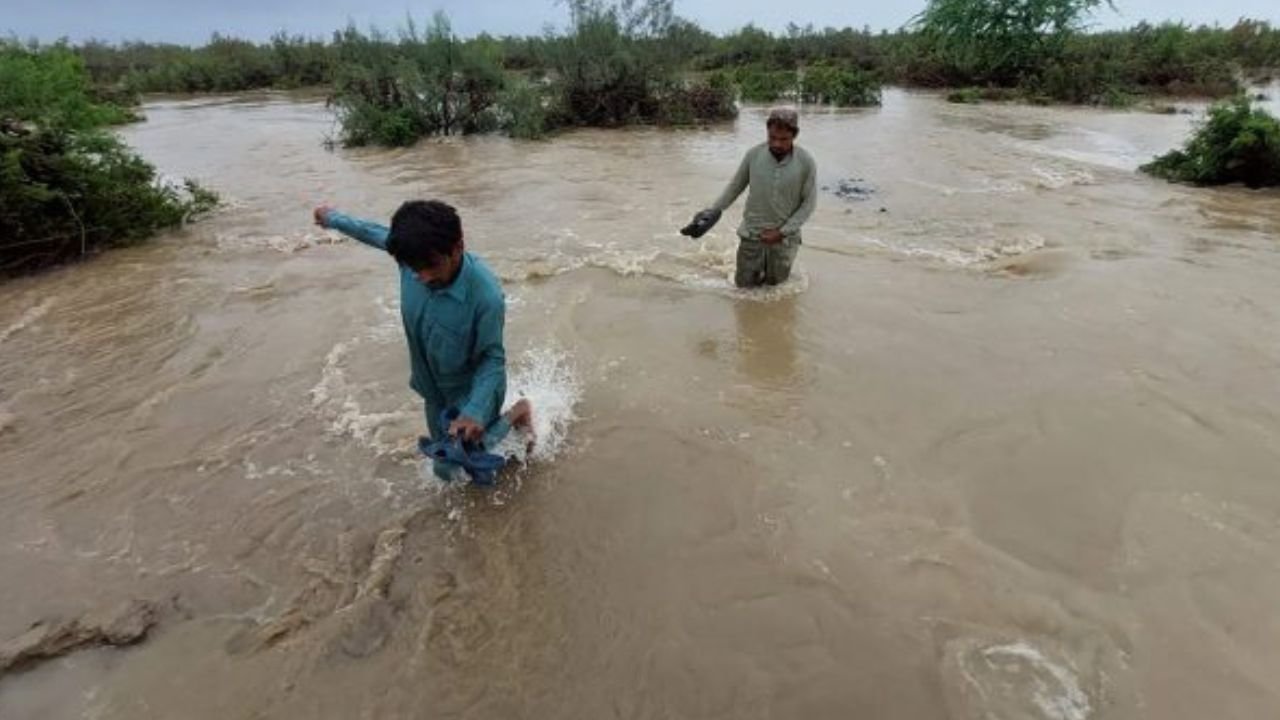
    Another western rain system has entered Balochistan under which moderate to heavy rain is expected in 24 districts of the province from today till April 27.

    There is a risk of flooding in rivers while fishermen in Pisni and other coastal areas have been prevented from going into the sea today.

    On the other hand, according to the Meteorological Department, there is a possibility of wind, thunder and rain in Khyber Pakhtunkhwa, South Punjab and Upper Sindh today.

    Meanwhile, rain is expected in Gilgit-Baltistan, Kashmir as predicted by the Metreological department.

  • Ghar ki murghi, sona barabar; chicken at all time high prices

    Ghar ki murghi, sona barabar; chicken at all time high prices

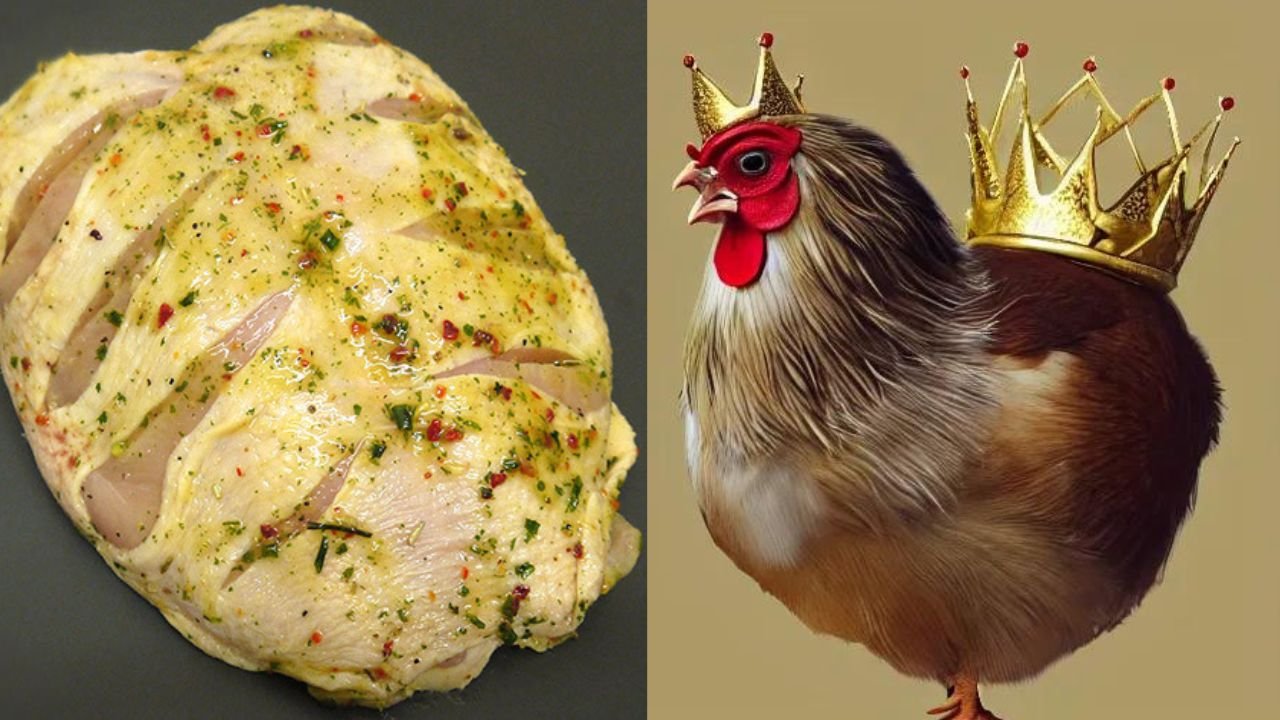
    Prices of chicken have skyrocketed in the past days in Pakistan, rising by Rs. 200 per kilogram to reach Rs 697 per kg, reports Bol News.

    Prices in Gujranwala have begun selling chicken at will, disregarding the official government rate of Rs 680 per kg, Samaa has reported.

    Like other cities in the country, in Faisalabad too, the price of chicken had soared beyond expectations.

    Within a month, after an increase of Rs25, it has reached up to Rs750 per kg.

    Chicken sellers in Rawalpindi staged a demonstration outside the Rawalpindi Press Club to reject the official prices of chicken meat. They also observed a full-fledged strike over the price mechanism.

    The rate fixed by the government is Rs. 435 while the price of chicken has surged in the open market, with live chicken selling at Rs550 per kg and chicken meat at Rs850 per kg.

  • Nearly 282 million people faced acute hunger in 2023: UN-led report

    Nearly 282 million people faced acute hunger in 2023: UN-led report

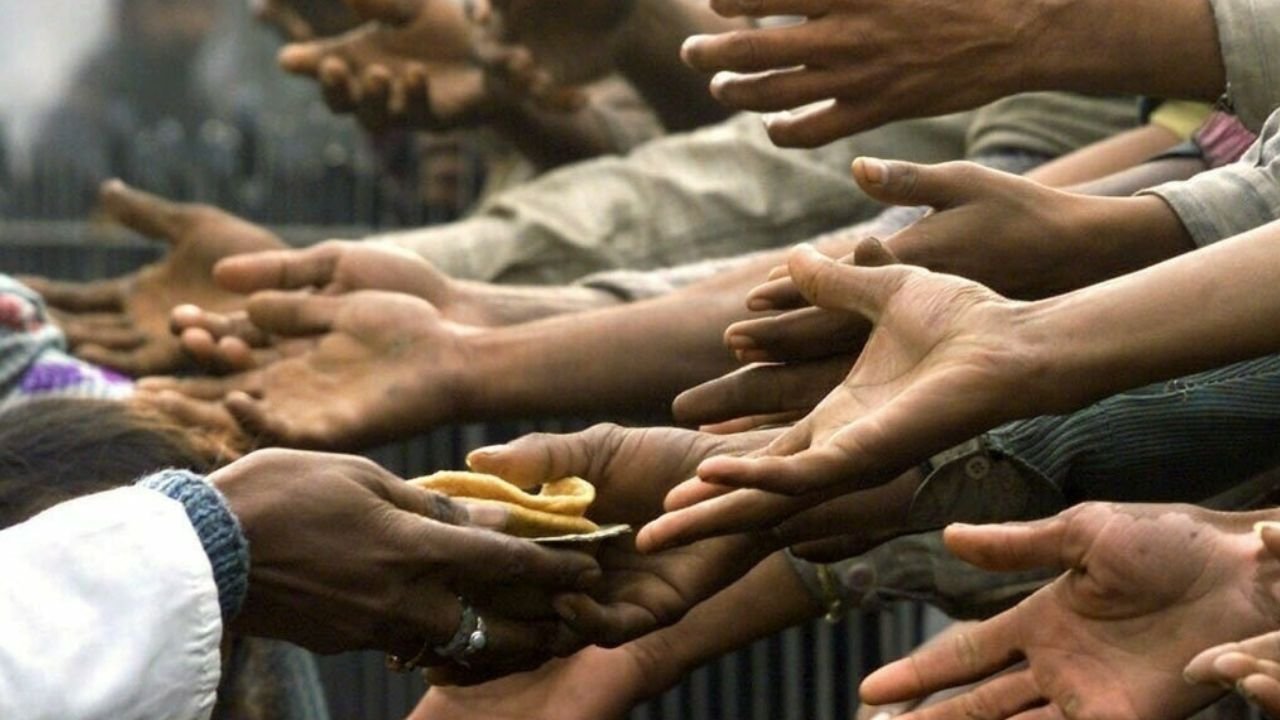
    Food insecurity worsened around the world in 2023, with some 282 million people suffering from acute hunger due to conflicts, particularly in Gaza and Sudan, UN agencies and development groups said Wednesday.

    Extreme weather events and economic shocks also added to the number of those facing acute food insecurity, which grew by 24 million people compared with 2022, according to the latest global report on food crises from the Food Security Information Network (FSIN).

    The report, which called the global outlook “bleak” for this year, is produced for an international alliance bringing together UN agencies, the European Union and governmental and non-governmental bodies.

    2023 was the fifth consecutive year of rises in the number of people suffering acute food insecurity — defined as when populations face food deprivation that threatens lives or livelihoods, regardless of the causes or length of time.

    Much of last year’s increase was due to report’s expanded geographic coverage, as well as deteriorating conditions in 12 countries.

    More geographical areas experienced “new or intensified shocks” while there was a “marked deterioration in key food crisis contexts such as Sudan and the Gaza Strip”, Fleur Wouterse, deputy director of the emergencies office within the UN’s Food and Agricultural Organization (FAO), told AFP.

    Some 700,000 people, including 600,000 in Gaza, were on the brink of starvation last year, a figure that has since climbed yet higher to 1.1 million in the war-ridden Palestinian territory.

    Since the first report by the Global Food Crisis Network covering 2016, the number of food-insecure people has risen from 108 million to 282 million, Wouterse said.

    Meanwhile, the share of the population affected within the areas concerned has doubled 11 percent to 22 percent, she added.

    Protracted major food crises are ongoing in Afghanistan, the Democratic Republic of Congo, Ethiopia, Nigeria, Syria and Yemen.

    “In a world of plenty, children are starving to death,” wrote UN Secretary-General Antonio Guterres in the report’s foreword.

    “War, climate chaos and a cost-of-living crisis — combined with inadequate action — mean that almost 300 million people faced acute food crisis in 2023.”

    “Funding is not keeping pace with need,” he added.

    This is especially true as the costs of distributing aid have risen.

    For 2024, progress will depend on the end of hostilities, said Wouterse, who stressed that aid could “rapidly” alleviate the crisis in Gaza or Sudan, for example, once humanitarian access to the areas is possible.

    Worsening conditions in Haiti were due to political instability and reduced agricultural production, “where in the breadbasket of the Artibonite Valley, armed groups have seized agricultural land and stolen crops”, Wouterse said.

    The El Nino weather phenomenon could also lead to severe drought in West and Southern Africa, she added.

    According to the report, situations of conflict or insecurity have become the main cause of acute hunger in 20 countries or territories, where 135 million people have suffered.

    Extreme climatic events such as floods or droughts were the main cause of acute food insecurity for 72 million people in 18 countries, while economic shocks pushed 75 million people into this situation in 21 countries.

    “Decreasing global food prices did not transmit to low-income, import-dependent countries,” said the report.

    At the same time, high debt levels “limited government options to mitigate the effects of high prices”.

    On a positive note, the situation improved in 17 countries in 2023, including the Democratic Republic of Congo and Ukraine, the report found.