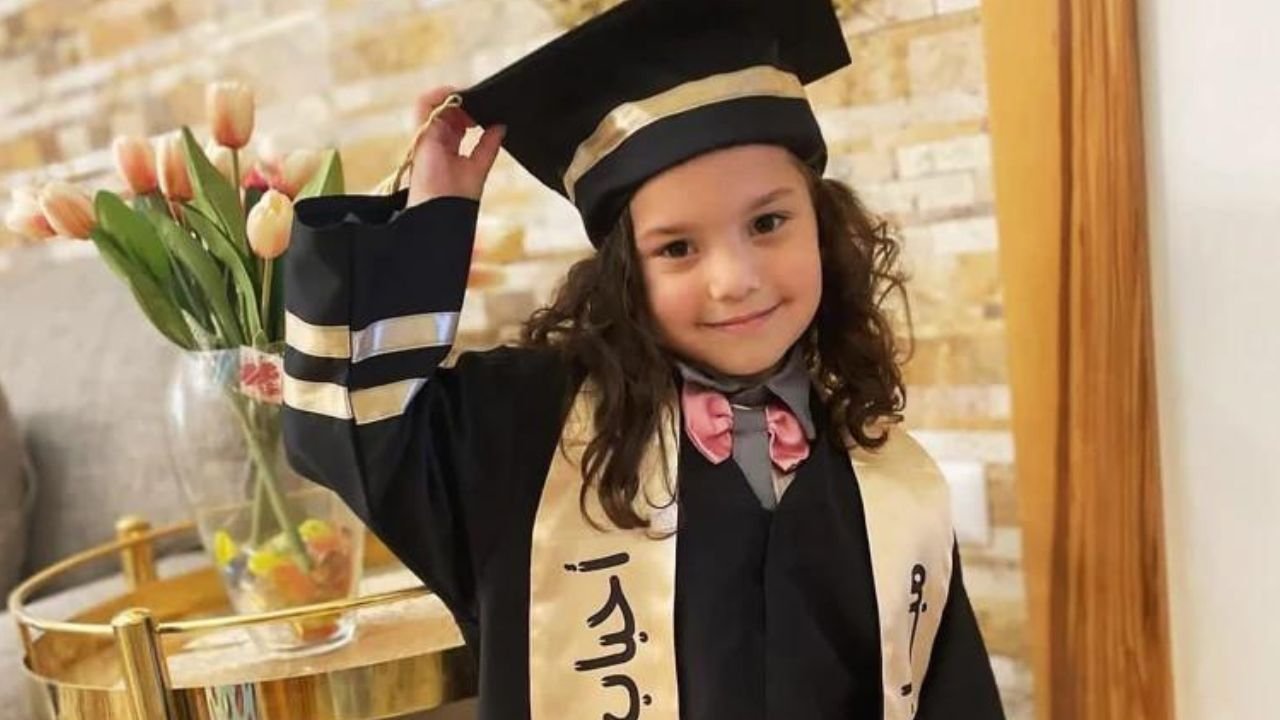
Gaza Strip (Palestinian Territories) (AFP) – A six-year-old Palestinian girl who went missing after the family’s car came under fire in war-ravaged Gaza was found dead Saturday, the health ministry and her relatives said, accusing Israel of killing her.
The last time Hind Rajab had been seen was about two weeks ago when she was surrounded by dead relatives after becoming trapped in the vehicle as they tried to flee Gaza City as Israeli forces advanced.
“Hind and everyone else in the car is martyred,” the girl’s grandfather, Baha Hamada told AFP.
A number of family members made the grim discovery when they went to Gaza City’s Tel al-Hawa area looking for the car near a petrol station where it had last been spotted, he said.
“They were able to reach the area because Israeli forces withdrew early at dawn today,” Hamada added.
The health ministry in the Gaza Strip confirmed Hind’s death.
“She was killed by (Israeli) occupation forces with all those who were with her in the car outside the petrol station in Tel al-Hawa,” the ministry said in a statement.
Earlier this week, family members had said the group found their way in the path of Israeli tanks and were fired on as they tried to flee.
Contacted by AFP, the Israeli military did not comment on the incident.
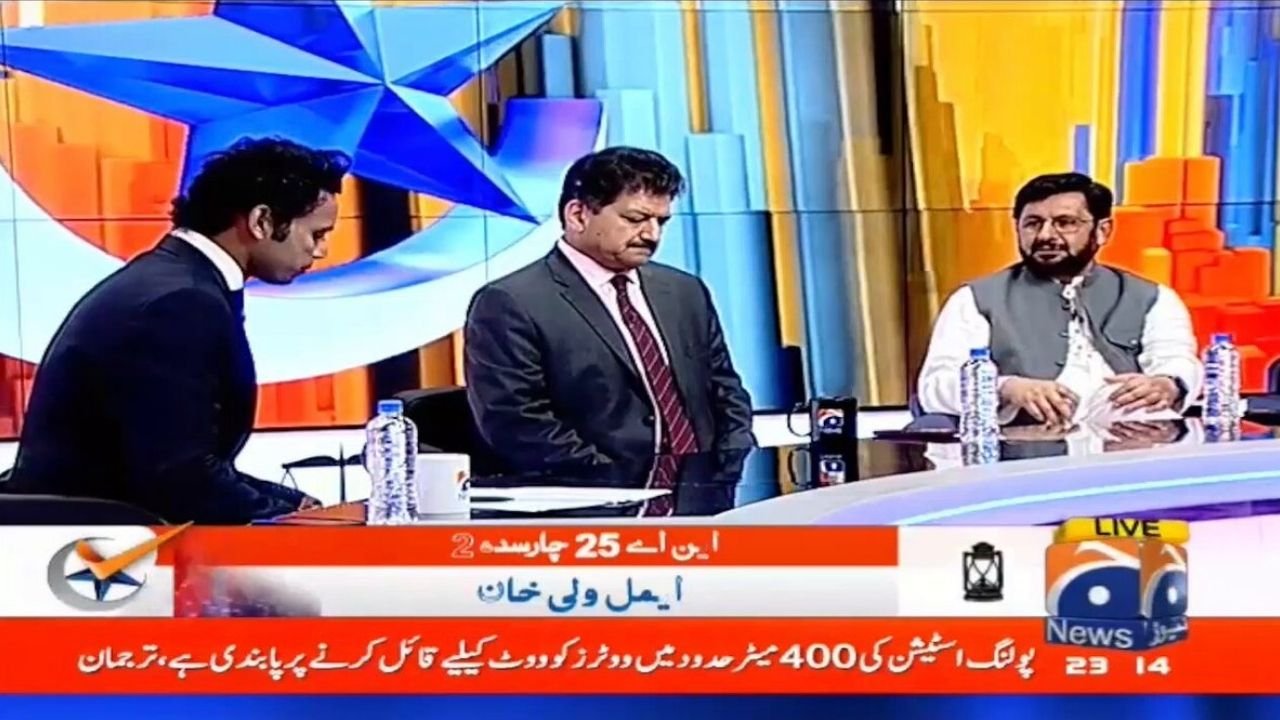
Geo News Anchors Hamid Mir and Shahzeb Khanzada are in awe of News Anchorperson Muhammad Junaid for his reporting of election results during Geo’s election transmission.
It all started with Managing Director of GEO News, Azhar Abbas who posted on Twitter, “There is a reason why Junaid is so good in Marathons, whether it’s running or marathon transmissions (almost three hours non-stop announcing results).
There is a reason why @junaidmuhammadd is so good in Marathons, whether it’s running or marathon transmissions(almost three hours non-stop announcing results) Amazing performance. Jeetay Raho!! pic.twitter.com/CBmFMNTUch
Shahzaeb Khanzada retweeted this response by writing “230 minutes and counting.. no break, no mistake, no fumble and only he knows how he manages to breathe in between.”
230 minutes and counting.. no break, no mistake, no fumble and only he knows how he manages to breathe in between. What a star. @junaidmuhammaddhttps://t.co/hY7cNQZIcv
Didn’t end there as Hamid Mir went a step ahead with the appreciation and tweeted, “Our marathon runner news anchor Junaid created a record by speaking non-stop on Geo News since last three hours without any fumble. He is announcing results of #Election2024 with full speed and energy.”
Our marathon runner news anchor @junaidmuhammadd created a record by speaking non-stop on @geonews_urdu since last three hours without any fumble. He is announcing results of #Election2024 with full speed and energy. Great athlete you are the winner pic.twitter.com/yROTC0asu8
Investigative Journalist Fakhar Durrani also posted an appreciation note stating “hats off to you.”
جیو نیوز کو محمد جنید کو تھوڑی دیر ریسٹ دے کر کسی اور کو نتائج اناونس کروانا چاہیے۔ کمال میراتھون اناونس منٹ کررہے ہیں۔ hats off to you @junaidmuhammadd بھائی۔
Uff, so exciting, aapka first vote! If you’re confused about how to do it, don’t worry, we’re here to help. Here’s a step-by-step guide for what you need to do on Feb 8 to cast a vote.
Step-I: See if you are eligible
You need to be
A citizen of Pakistan
18 years of age
Have an original CNIC
Are not declared of unsound mind by a competent court
A resident of your area.
Step 2:: Find your Polling station
To find out your constituency and polling station, text your CNIC number (without spaces or dashes) to 8300 — the only official code for the ECP.
You will receive an automated response with the name of the electoral area, block code, and serial number.
Step 3: Time to vote
Polling starts at 8 am on Thursday, Feb 8, and will typically end by 5 pm. Anyone who enters the polling station after the cut-off time will not be allowed to cast their vote so make sure you get there on time. Get it done as early as possible and enjoy the rest of the holiday.
Step 4: Dress comfortably and carry only CNIC to the polling station
On Feb 8, make sure to carry your original CNIC. Photocopies, duplicates, or any other document will not be accepted.
Another important thing to remember is that you will not be allowed to take your cell phone inside the polling station so best to leave it at home.
Step 5: Male-female segregation in a polling station
As you enter the polling station — men and women will enter separately — you will be checked by a security officer.
Step 6: Inside the polling station
Once inside, look for a list that has voter names (your name) and designated polling booths on it. Go to the polling booth listed next to your name.
You will meet the polling officer, who will ask to see your original CNIC.
The polling officer will mark your thumb with ink to obtain your thumb impression on the electoral rolls as proof that you have exercised your right to vote.
Then the assistant presiding officer will hand you two ballot papers: one for the national and one for provincial assemblies. You will stamp your thumb impression on the counterfoil.
Make sure that the assistant presiding officer has signed on the back of each ballot paper as well as on the counterfoil. If this isn’t done, a polling agent can call your votes into question and have them cancelled during the counting process. Therefore, make sure your ballots are valid before you stamp them.
Please remember that the green ballot paper is for the National Assembly, while the white ballot paper is for the Provincial Assembly.
Head to the polling booth. It is usually placed behind a screen for privacy purposes. You will not be issued a replacement ballot paper, so before you head to the polling booth, make up your mind about who you are voting for. Once the paper has been stamped, you cannot change your decision.
Precaution: Do not attach any kind of object to the ballot paper. It will be rejected. Revealing your identity on the ballot paper will also result in the ballot papers being rejected.
Let the ink dry, and fold the ballot paper according to how you are instructed. The green paper goes into the box with the green lid, and the white paper goes into the box with the white lid.
Step 7: Go home and chill
As you step out of the polling station, get some snacks, head back home chill for the rest of the day, and be happy – you voted for the Pakistan you wanted. Now you have the right to complain!
A man from Chattisgarh in India surprised the guests at his daughter’s wedding by gifting them helmets.
Sed Yadav has gifted around 60 helmets to the guests at his daughter’s wedding.
When he chose a helmet instead of expensive goods for the guests, Sed Yadav said it was to create awareness about road safety.
Speaking to reporters, Yadav said, “I felt my daughter’s wedding was the best occasion to raise awareness about road safety. I told the guests that life is precious, and I appealed to them not to drink and drive as most road accidents occur due to drunk driving.” He said twelve members of his family also decided to dance wearing helmets during the wedding to support the cause.
“I distributed around 60 helmets to guests along with sweets,” he said.
Former Prime Minister Imran Khan is among the candidates being considered to be elected the next Chancellor of Oxford University following the resignation of Chris Patten. The seat is vacant after 80-year-old Patten, who held the post for 21 years, resigned.
The position of Chancellor is largely ceremonial and is typically awarded to a former politician. Patten was the governor of Hong Kong and a Tory deputy prime minister.
For the first time, elections for the chancellor will be held online compared to the traditional process in which graduates were required to attend the process in full academic dress. The prestigious chancellorship goes to graduates of the university, usually politicians.
Among the candidates competing for the position is Imran Khan who studied Economics and Politics at Kelbe College, Oxford in 1972. He captained Oxford’s cricket team in 1974, and previously served as the chancellor of Braddford University for eight years before stepping down in November 2014.
Oxford University is looking for a chancellor. One wild card name being suggested is Imran Khan. And then there is Pakistan the country he loves, lived for and is willing to die for…they made up tons of cases and put him into jail because he threatened their lifestyles! pic.twitter.com/LVaympWaQ1
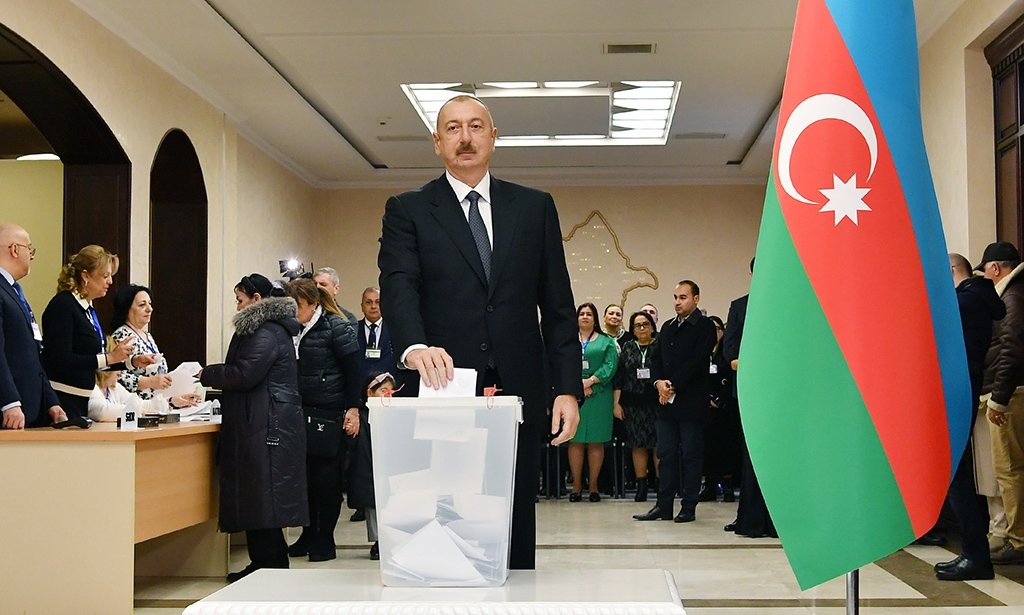
Azerbaijanis were voting in snap presidential elections on Wednesday, with a fifth term for Ilham Aliyev seen as a foregone conclusion after Baku’s historic victory over Armenian separatists.
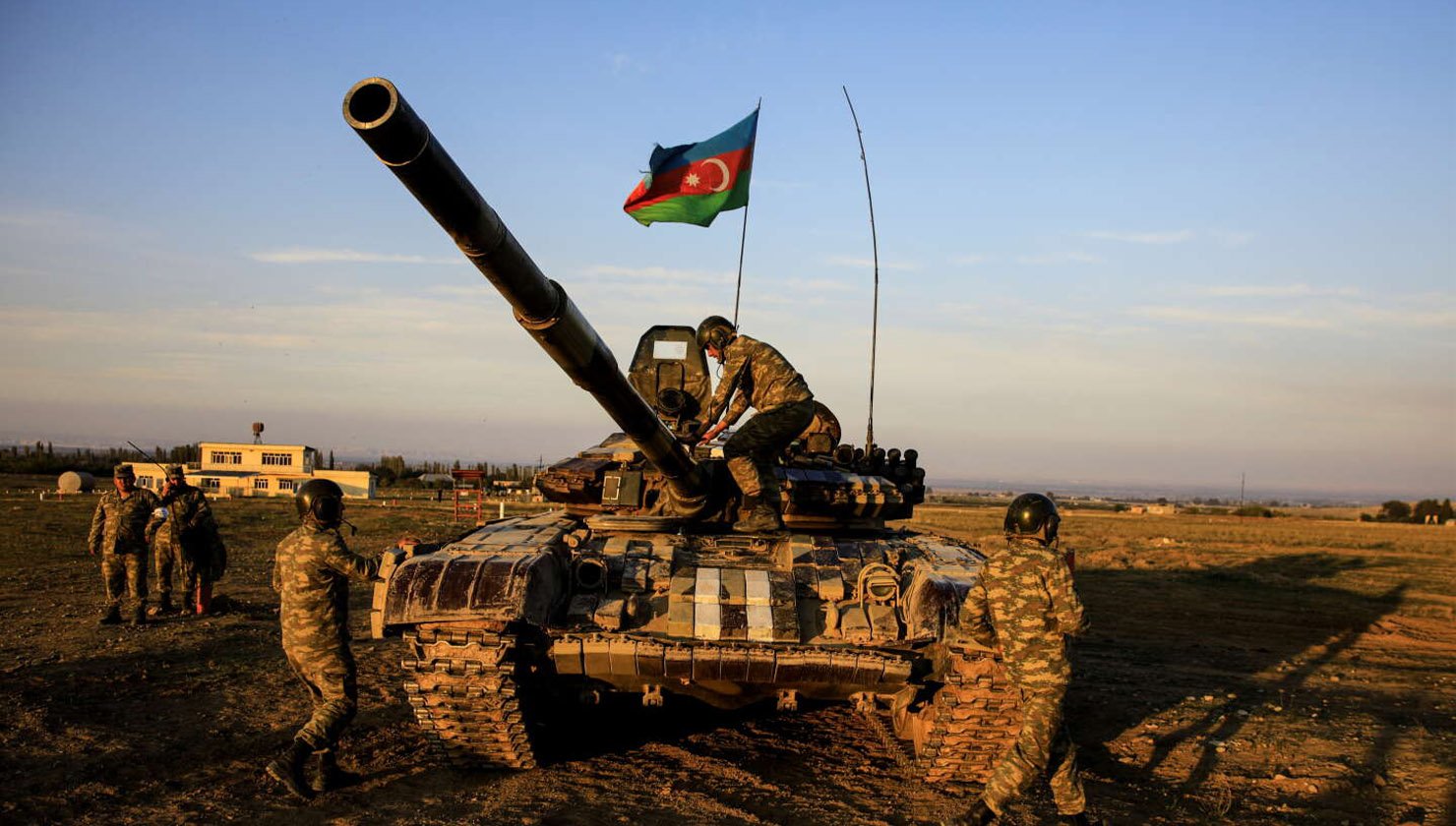
A crackdown on independent media and the absence of any real opposition have boosted the certainty of an easy win for Aliyev, whose troops recaptured the Nagorno-Karabakh enclave in September.
The oil-rich nation’s main opposition parties are boycotting the vote, which one opposition leader, Ali Kerimli of the National Front party, called an “imitation of democracy.”
“There are no conditions in the country for the conduct of free and fair elections,” he said.
The six other candidates who are running are little-known and have been busy praising Aliyev as a great statesman and a victorious commander-in-chief since he announced the elections in December, a year ahead of schedule.
The country’s Central Election Commission said turnout stood at 38.6 percent by noon, four hours after polls opened.
In a symbolic gesture, the president and first lady Mehriban Aliyeva went to Karabakh to cast their ballots in the region’s main city of Khankendi.
For the first time in Azerbaijan’s post-Soviet history, 26 polling stations opened in Karabakh, which has been largely deserted after its entire ethnic-Armenian population — more than 100,000 people — fled to Armenia after Baku’s takeover.
At a polling station in central Baku, pensioner Shalalya Abbasova, 68, said she cast her ballot for Aliyev because he “did what seemed impossible — accomplished our dream, liberated the occupied territories.”
‘Escalating crackdown’
But another Baku resident, 32-year-old IT specialist Ismet Bagirov, said he decided not to vote as “there is nobody to vote for, there are no alternative candidates”.
“I know many will vote for Aliyev today because he liberated Karabakh. I thank him for this, but there are fundamental issues in the country that remain unresolved.”
Last month, Aliyev called the Karabakh victory “an epochal event unparallelled in Azerbaijan’s history”.
“The elections will mark the beginning of a new era” for the country, he said, adding that the country would hold presidential elections on all its territory for the first time.
“The outcome of Wednesday’s elections in Azerbaijan is known beforehand, Aliyev is set to win,” said independent analyst Ghia Nodia of the Caucasus Center for Strategic and International Studies.
“There is no suspense whatsoever in these elections without a slightest sign of competitiveness.”
Supporters have praised Aliyev for turning a country once thought of as a Soviet backwater into a flourishing energy supplier to Europe.
But critics say he has crushed opposition groups and suffocated independent media.
“All fundamental rights are being violated in the country, opposition parties can’t function normally, freedom of assembly is restricted, media are under government pressure, and political dissent is being suppressed,” said Kerimli of the National Front.
In recent months, Azerbaijani authorities have intensified pressure on independent media outlets, arresting several critical journalists who have exposed graft at high levels.
“The escalating crackdown by Azerbaijani authorities ahead of the elections is not just an attack on individual rights, it’s a widespread, coordinated assault on civil society and the rule of law,” Amnesty International said on Tuesday.
Dynastic rule
Aliyev, 62, was first elected president in 2003 after the death of his father Heydar Aliyev, a former KGB officer who had ruled Azerbaijan since 1993.
He was re-elected in 2008, 2013 and in 2018, with 86 percent of the votes.
All the elections were denounced by opposition parties as rigged.
In 2009, Aliyev amended the country’s constitution so he could run for an unlimited number of presidential terms, a move criticised by rights advocates who say he could become president for life.
In 2016, Azerbaijan adopted controversial constitutional amendments that extended the president’s term in office to seven years from five.
Cementing the decades-long dynastic grip on power, the president has appointed his wife Mehriban Aliyeva as first vice president.
Around six million voters are registered for the election monitored by observers from the Organisation for Security and Cooperation in Europe (OSCE).
The Election Commission of Pakistan (ECP) has rejected the application of independent candidate Salman Akram Raja to declare his party, Pakistan Tehreek-e-Insaf (PTI) on Form 33, reports Geo.
ECP passed a reserved decision on Salman Akram Raja’s request to declare his party on Form 33.
Election Commission Deputy Director Law Saima Janjua announced the verdict.
The Commission has said in its decision that Salman Akram Raja has been given the symbol of an independent candidate, but the party he belongs to cannot be given one.
Global food chain McDonald’s came under fire when the Israel chapter announced last year it had donated thousands of free meals to Israel Defence Forces troops committing war crimes in Gaza. Consumers across the globe boycotted the fast food giant. Coffee chain Starbucks has also been hit by similar boycotts.
Now the numbers are finally out, and it seems that the McDonald’s boycott has been quite successful. The company registered its first quarterly sales miss in nearly four years on Monday, squeezed by weak sales growth in its business division that includes the Middle East, China, and India, reports The Guardian.
Comparable sales in McDonald’s International Developmental Licensed Markets segment rose 0.7 per cent in the quarter, widely missing estimates of a 5.5 per cent growth, according to London Stock Exchange Group data. The business accounted for 10 per cent of McDonald’s total revenue in 2023.
The CEO, Chris Kempczinski, last month showed concern about a “meaningful business impact“ in McDonald’s Middle East market and some areas outside the region due to the war as well as “associated misinformation” about the brand.
“The effects [of the war] on earnings durability would be our biggest concern … it looks like this is going to be an issue that persists past the next quarter or maybe even two,” said Brian Mulberry, client portfolio manager at Zacks Investment Management, which holds McDonald’s shares.
Similar boycotts have hit other brands including Zara and Starbucks, which missed market expectations and cut its yearly sales forecasts last week. It told investors that there was “significant impact on traffic and sales” in the Middle East due to the war on Gaza.
Starbucks previously said a sales recovery in China was slower than its expectations.
Meanwhile, consumer spending in China, McDonald’s second-largest market, has also remained weak despite government support measures.
Perched on her traditional charpai bed, Naeem Kausir says she would like to vote in Pakistan’s upcoming election — if only the men in her family would let her.
Like all the women in her town, the 60-year-old former headmistress and her seven daughters — six already university-educated — are forbidden from voting by their male elders.
“Whether by her husband, father, son or brother, a woman is forced. She lacks the autonomy to make decisions independently,” said Kausir, covered in a veil in the courtyard of her home.
“These men lack the courage to grant women their rights,” the widow told AFP.
Although voting is a constitutional right for all adults in Pakistan, some rural areas in the socially conservative country are still ruled by a patriarchal system of male village elders who wield significant influence in their communities.
In the village of Dhurnal in Punjab, spread across crop fields and home to several thousand people, men profess myriad reasons for the ban of more than 50 years.
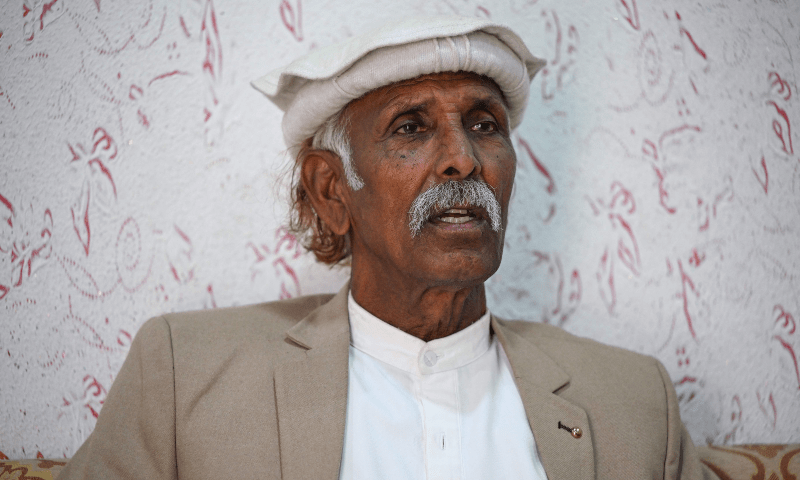
“Several years ago, during a period of low literacy rates, a council chairman decreed that if men went out to vote, and women followed suit, who would manage the household and childcare responsibilities?” said Malik Muhammad, a member of the village council.
In this photograph taken on January 29, 2024, Malik Muhammad, a member of the village council, speaks during an interview with AFP in Dhurnal of Punjab. — AFP
In this photograph taken on January 29, 2024, Malik Muhammad, a member of the village council, speaks during an interview with AFP in Dhurnal of Punjab. — AFP
“This disruption, just for one vote, was deemed unnecessary,” he concluded.
Muhammad Aslam, a shopkeeper, claims it is to protect women from “local hostilities” about politics, including a distant occasion that few seem to remember in the village when an argument broke out at a polling station.
Others told AFP it was simply down to “tradition”.
The Election Commission of Pakistan (ECP) has stressed that it has the authority to declare the process null and void in any constituency where women are barred from participating.
In reality, progress has been slow outside of cities and in areas that operate under tribal norms, with millions of women still missing from the electoral rolls.
The elders in Dhurnal rely on neighbouring villages to fill a government-imposed quota which maintains that 10 percent of votes cast in every constituency must be by women.
Those who are allowed to vote are often pressured to pick a candidate of a male relative’s choice.
In the mountainous region of Kohistan in Khyber Pakhtunkhwa province home to almost 800,000 people, religious clerics last month decreed it un-Islamic for women to take part in electoral campaigns.
Fatima Butt, a legal expert and a women’s rights activist, said women are allowed to vote in Islam, but that religion is often exploited or misunderstood in Pakistan.
“Regardless of their level of education or financial stability, women in Pakistan can only make decisions with the ‘support’ of the men around them,” she said.
Pakistan famously elected the world’s first Muslim woman leader in 1988 — Benazir Bhutto, who introduced policies that boosted education and access to money for women, and fought against religious extremism after military dictator Zia ul-Haq had introduced a new era of Islamisation that rolled back women’s rights.
However, more than 30 years later, only 355 women are competing for national assembly seats in Thursday’s election, compared to 6,094 men, the election commission has said.
Pakistan reserves 60 of the 342 National Assembly seats for women and 10 for religious minorities in the Muslim-majority country, but political parties rarely allow women to contest outside of this quota.
Those who do stand often do so only with the backing of male relatives who are already established in local politics.
“I have never seen any independent candidates contesting elections on their own,” Zara Butt added.
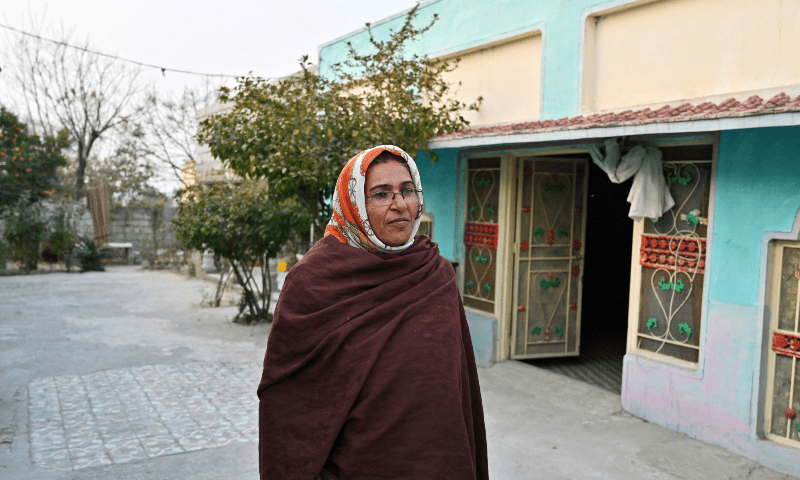
Forty-year-old Robina Kausir, a healthcare worker, said a growing number of women in Dhurnal want to exercise their right to vote but they fear backlash from the community if they do — particularly the looming threat of divorce, a matter of great shame in Pakistani culture.
In this photograph taken on Jan 29, 2024, Robina Kausir, a healthcare worker, looks on during an interview with AFP in Dhurnal of Punjab. — AFP
She credits part of the shift to access to information as a result of the rising use of smartphones and social media.
“These men instil fear in their women — many threaten their wives,” she told AFP.
Robina, backed by her husband, is one of the few prepared to take the risk.
When cricketing legend Imran Khan swept to power in the 2018 election, Robina arranged for a minibus to take women to the local polling station.
Only a handful joined her, but she still marked it as a success and will do the same on Thursday’s election.
“I was abused but I do not care, I will keep fighting for everyone’s right to vote,” Robina said.
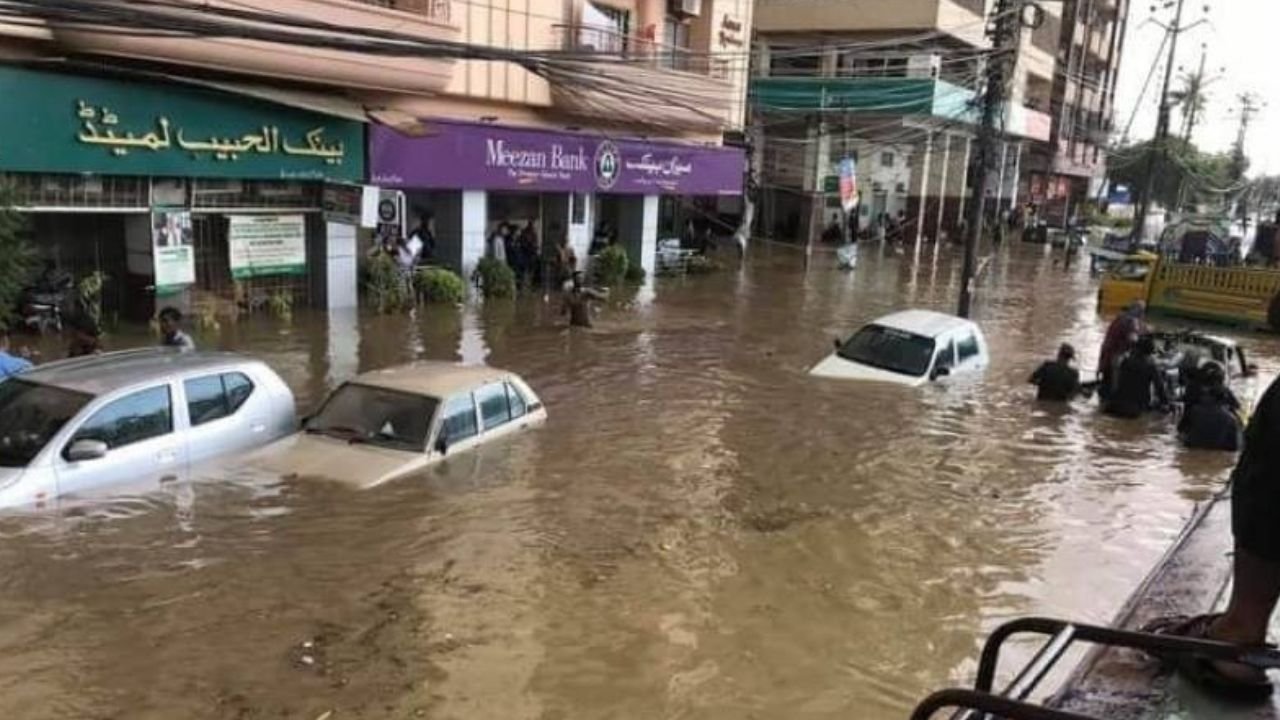
A Karachi resident, missing since the rains last weekend, was found dead in the storm drain near Baldia Town Factory.
The police said that the dead body found in the rain drain was that of Fakhar Alam, a resident of Baldia town. He left the factory where he worked after finishing his shift, but along the way, he slipped in the drain.
Fakhar was the father of five children. His body has been shifted to the morgue by the police.
The streets of Karachi got flooded after the sudden downpour while water was still standing in different places. However, the discharge of rainwater from the Korangi Causeway is underway.
Meanwhile, electricity was also suspended in several areas of the city