Category: Lifestyle

The lifestyle of millennials is underreported in our mainstream media. The Current’s lifestyle news covers social events and issues that are unique.

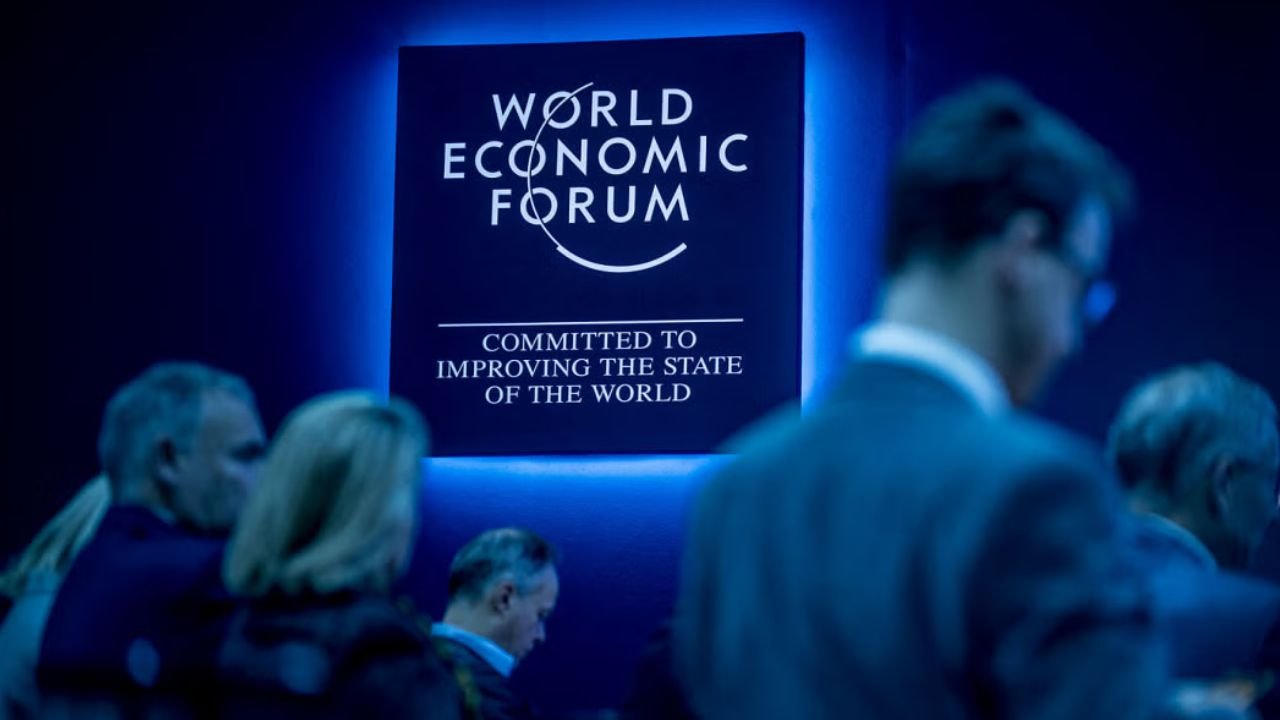
  • Fact Check: Did Damon Imani actually tell World Economic Forum to f*** new world order?

    A video circulating on the internet featuring Damon Imani allegedly hurling swear words at Klaus Schwab-Chairperson of the World Economic Forum-during the 2024 Davos Meeting, has sparked curiosity among netizens. The video claims that “A new WEF participant does the unthinkable at the 2024 Davos Meeting.” However, the video is satirical and the incident did not occur in reality.

    The video of Damon Imani was released at a time when the World Economic Forum (WEF) Annual Meeting held in 2024 brought together nearly 3,000 global leaders from over 125 countries to discuss the challenges and crises the world faces.

    Imani is an Iranian producer and artist based in Denmark. Specializing in creating video content covering a range of topics, including societal issues, news, and current events, Imani is known for his satirical approach.

    The video in question is an edited one shared by Imani. He even posted on X, “Satire but true. This video is also available on Rumble here and Klaus Schwab can go f*** himself.” As social media users came across the viral video, some of them jokingly wished that it had really happened.

    The comedian also shared a series of videos where he was apparently calling out the leadership of WEF and people appreciated him for speaking his heart out. He shared a message he received from USA Today to verify if the video is real and how people are responding to it. He replied that actually people understood the meaning of his message which was that the “World Economic Forum is a global communist party that is not elected by the people of Earth.”

  • LUMS student jumps off from 10th floor in Defence

    A 20-years-old man jumped from the tenth floor of a building in Defence B area of Lahore, killing himself instantly.

    Syed Musa was part of a group of about 20 boys and girls who were partying in a flat. Musa may have jumped in a state of intoxication, reports PNN.

    According to 24 Channel, Syed Musa had a fight with a girl during the party and then he jumped off from the fifth storey of a flat in a residential building, located at Penta Square in Defence Housing Authority (DHA) Phase 5 in Lahore. The disagreement escalated and in the heat of the argument, Syed Musa dashed towards the balcony and jumped off from the fifth floor.

    However, Express Tribune reported that whether it was an accident, murder, or a suicide, it is unclear. Musa’s father has registered a case of murder with the police.

    Syed Musa was a resident of Islamabad but was a student of B.Sc in Lahore’s LUMS University.

    Police have detained all the participants in the party and started an investigation.

  • American man asks for beer money, gets million dollars

    Daily Live Show host Ronny Chieng has shared a story of a man who in his words “went viral for the dumbest thing possible,” calling it a King Controversy.

    Carson King attended ESPN’s college game day carrying a poster “Busch Light Supply needs replenished”. He even added his original Venmo account title under the text. King thought this to be a joke that would attract a few laughs or even a little money. He was surprised when the money started pouring in as a huge number people sent him money. He eventually raised more than a million dollars in his account.

    King told the Daily Show that the episode started as a joke but then people from different states started sending him money.

    Ronny jokes that the man got a million dollars for beer and all he did was hold up a sign. “He did it on TV and he is a hero.” Had he (Ronny) asked for money like this, he would have been called a bank robber, implying how Asians are stereotyped in America.

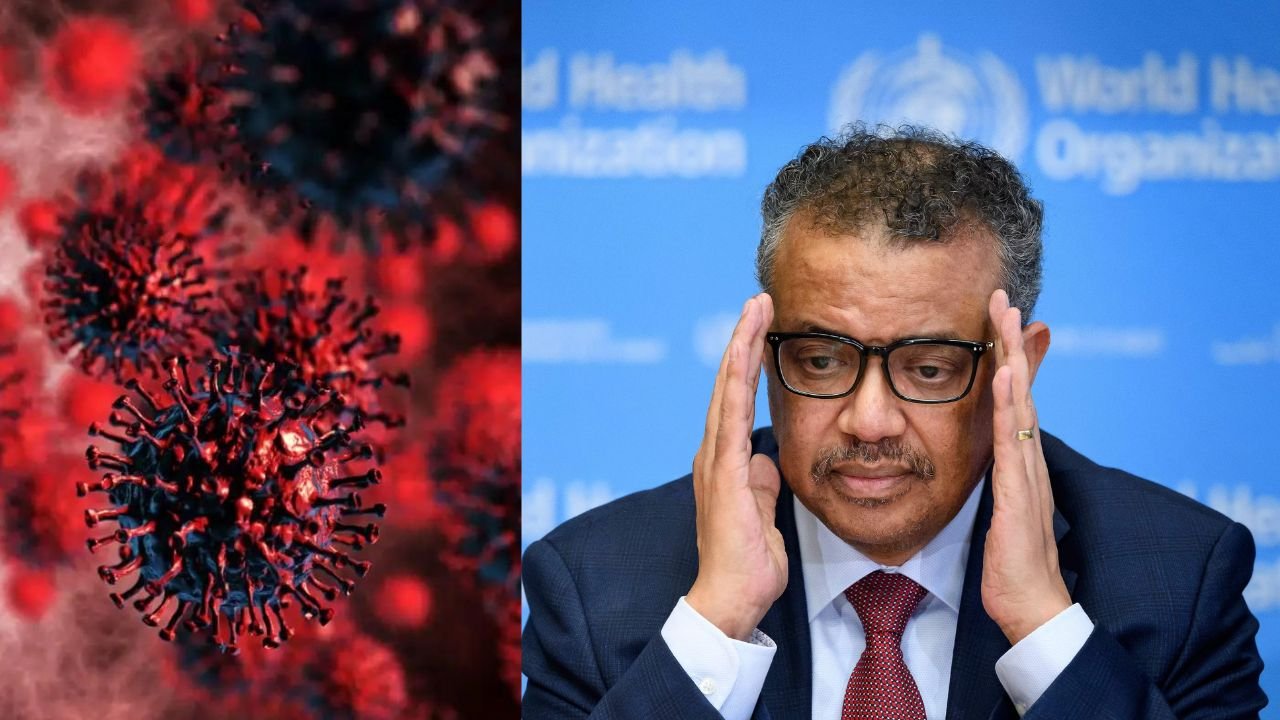
  • World must be ready to fight ‘disease X’ : WHO

    World must be ready to fight ‘disease X’ : WHO

    Director General of the World Health Organization (WHO) Dr. Tedros Adhanom has said that Disease X is a global problem that we need to be prepared for.

    Addressing the World Economic Forum in Davos, Switzerland, the WHO head talked the next possible global epidemic, dubbed Disease X.

    The name was first added to the WHO list in 2018, before the emergence of Covid-19.

    Dr. Tedros Adhanom said, “You can call Covid the first Disease X and it may happen again in the future.”

    He acknowledged that some people will say that such a warning will spread fear, but pointed out that it is better to be prepared for everything because it has happened many times in our history and now we have to start preparing for the next epidemic.

    Dr. Tedros said that the world learned from the Covid epidemic how to deal with the next epidemic.

    WHO discussed plans for a global agreement to prevent future pandemics in 2021.

    The head of the WHO said in Davos that the agreement to prevent epidemics will be the most important to protect the world from future epidemics. So far, many countries could not agree on the terms of this agreement.

    Dr. Tedros Adhanom stated that the negotiations between the member states are going on and WHO expects the agreement to be reached in time. “If our generation does not do it, we do not think the next generation will do it. Because this is about a common enemy and without a shared response, starting from the preparedness … we will face the same problem as COVID,” added the WHO chief.

    Reminding his audience that the deadline for the pandemic agreement is May 2024, he said that he hopes countries will reach this pandemic agreement by that time.

    He went on to say that if this generation who has first-hand experienced a pandemic cannot do it, he does not think the next generation will be able to do so.

    “So for our children and grandchildren’s sake, … we have to prepare the world for the future,” added Ghebreyesus.

  • Watch: An iPhone stealing monkey in India

    Watch: An iPhone stealing monkey in India

    A video of a monkey snatching an iPhone and running away has gone viral in India.

    Human encounters with monkeys incidents are common in India as a large number of the primates roam free in many states. While most incidents are peaceful, sometimes they bite humans or run away after snatching things from them.

    According to Indian media, a similar incident took place outside a temple in the city of Vrindavan in the Indian state of Uttar Pradesh, the video of which is also going viral on social media.

    In the viral video, it can be seen that two monkeys are sitting in the temple premises and one of them is holding an iPhone stolen from a person who came to the temple. A group of people can be seen trying to take the iPhone from the monkey, throwing things at the it so that it throws the phone away.

    The hard work of the people paid off and the monkey threw away the iPhone, on which the people clapped.

  • Japan Literary Laureate Unashamed About Using ChatGPT

    Japan Literary Laureate Unashamed About Using ChatGPT

    The winner of Japan’s most prestigious literary award has acknowledged that about “five percent” of her futuristic novel was penned by ChatGPT, saying generative AI had helped unlock her potential.

    Since the 2022 launch of ChatGPT, an easy-to-use AI chatbot that can deliver an essay upon request within seconds, there have been growing worries about the impact on a range of sectors – books included.

    Lauded by a judge for being “almost flawless” and “universally enjoyable”, Rie Kudan’s latest novel, “Tokyo-to Dojo-to” (“Sympathy Tower Tokyo”), bagged the biannual Akutagawa Prize on Wednesday.

    Set in a futuristic Tokyo, the book revolves around a high-rise prison tower and its architect’s intolerance of criminals, with AI a recurring theme.

    The 33-year-old author openly admitted that AI heavily influenced her writing process as well.

    “I made active use of generative AI like ChatGPT in writing this book,” she told a ceremony following the winner’s announcement.

    “I would say about five percent of the book quoted verbatim the sentences generated by AI.”

    Outside of her creative activity, Kudan said she frequently toys with AI, confiding her innermost thoughts that “I can never talk to anyone else about”.

    ChatGPT’s responses sometimes inspired dialogue in the novel, she added.

    Going forward, she said she wants to keep “good relationships” with AI and “unleash my creativity” in co-existence with it.

    When contacted by AFP, the Society for the Promotion of Japanese Literature, the Akutagawa award’s organiser, declined to comment.

    On social media, opinions were divided on Kudan’s unorthodox approach to writing, with sceptics calling it morally questionable and potentially undeserving of the prize.

    “So she wrote the book by deftly using AI … Is that talented or not? I don’t know,” one wrote on X, formerly known as Twitter.

    But others celebrated her resourcefulness and the effort she put into experimenting with various prompts.

    “So this is how the Akutagawa laureate uses ChatGPT — not to slack off but to ‘unleash creativity’”, another social media user wrote.

    Titles that list ChatGPT as a co-author have been offered for sale through Amazon’s e-book self-publishing unit, although critics say the works are of poor quality.

    British author Salman Rushdie told a press conference at the Frankfurt Book Fair in October that recently someone asked an AI writing tool to produce 300 words in his style.

    “And what came out was pure garbage,” said the “Midnight’s Children” writer, to laughter from the audience.

    The technology also throws up a host of potential legal problems.

    Last year, John Grisham, Jodi Picoult and “Game of Thrones” author George RR Martin were among several writers who filed a class-action lawsuit against ChatGPT creator OpenAI over alleged copyright violation.

    Along with the Authors Guild, they accused the California-based company of using their books “without permission” to train ChatGPT’s large language models, algorithms capable of producing human-sounding text responses based on simple queries, according to the lawsuit.

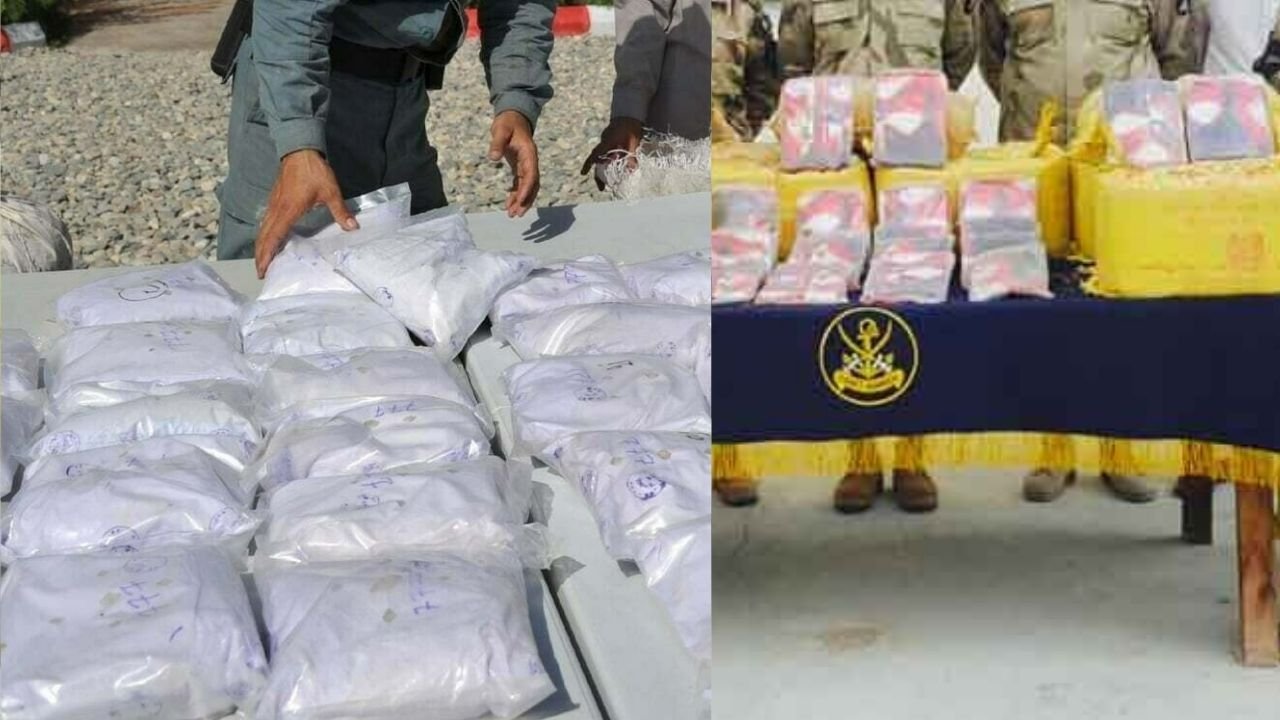
  • Doped out! Eight billion rupees ki chars pakri gai

    Doped out! Eight billion rupees ki chars pakri gai

    In a significant operation conducted by the Pakistan Coast Guard, a staggering amount of narcotics, valued at over 8 billion rupees, was seized in the Pasni district of Balochistan.

    As per Geo news, the spokesperson for the Pakistan Coast Guards said that more than 1700 kilograms of narcotics were confiscated from the mountainous region of Kulanch, a sub-tehsil of Pasni, Gwadar District.

    The estimated international market value of the seized narcotics is approximately 29.28 million dollars, equivalent to over 8 billion rupees in Pakistani currency.

    The government’s intensified nationwide anti-drug campaign continues to reap results, with the authorities seizing over 3,929 kilograms of narcotics and apprehending 26 suspects in just a week (December 31 to January 7).

    According to official data, most of the seized drugs, 3,369kg, were confiscated from Balochistan, a province long considered a key drug trafficking hub.

    Another 303kg were recovered from Khyber Pakhtunkhwa (KP), followed by 17kg from Gilgit-Baltistan, 18kg from Punjab, and 220kg from Sindh.

    The breakdown of individual drug types reveals a significant quantity of heroin (412kg) and 2,956kg of hashish seized from Balochistan, while from KP, 295kg of hashish and 8kg of heroin were seized.

    Additionally, 12kg of methamphetamine was confiscated in Punjab, 220kg of hashish in Sindh, and 12kg from Gilgit.

    These successes build upon the progress achieved since the national anti-narcotics operation began on September 1, 2023. To date, a staggering 819,388kg of drugs have been recovered from across Pakistan, and 716 criminals have been apprehended.

  • No Bat for PTI ka matlab kya, jo bhi? PTI candidate election campaigns that scream creativity

    No Bat for PTI ka matlab kya, jo bhi? PTI candidate election campaigns that scream creativity

    Pakistan Tehreek-e-Insaf (PTI) has always remained ahead of others when it comes to the use of social media in Pakistan’s political landscape.

    Data shared in a report from Digital Pakistan 2023 states that the number of internet users in Pakistan swelled to a record 87.35 million in January last year, showing a 4.4 million increase between 2022 and 2023.

    The number of social media users also increased to a record 71.70 million in 2023, including 37.30 million users of Facebook, 71.70 million users of YouTube, 12.95 million on Instagram, and 16.51 million on TikTok.

    Similarly, about 11.95 million people are using Facebook Messenger, 9.30 million Linkedin, 25.70 million Snapchat, and 4.65 million users of X — formerly Twitter — in the wake of an increase in mobile connections to 191.8 million in January 2023 in Pakistan.

    The importance of social media is made very clear by the fact that there is news circulating that the internet might be shut down two days prior to the election. Young Pakistanis will be turning to social media for the truth on election day and if the election is to be seen as free and fair, social media will be the judge and the jury, senior producer and journalist Marium Chaudhary said while talking to TheCurrent.

    The results show the importance of social media in the election arena. Its power was fully exhibited when a huge number of supporters turned up online using VPNs when the internet was down during PTI’s virtual jalsa.

    Senior Journalist Benazir Shah recently tweeted that according to a google search, PTI has emerged as the most searched political party in the last fortnight.
    As the elections are approaching in less than a month, the party is in a crisis because they have been stripped from their preferred election symbol of a cricketing bat.

    The candidates however have been issued varying symbols from a human eye to an eggplant.

    PTI’s candidate Zain Pervaiz from PS-99 has been given the symbol of human eye and he used a creative way to propagate it. He made a rip-off of the famous Tahir Shah’s song Eye to Eye.

    In another video, a clip from a cartoon film is extracted to publicise the symbol of eye.

    The same candidate, Zain Parvez, came up with a clip from a Pakistani Drama where the heroine is seen saying that she will only what Zain wants her to do.

    As a candidate was allotted the symbol of a desi bed (charpayi), he got a charpayi painted in colours of the PTI flag. Along with that they were seen chanting the slogan, “Aye Aye Charpayi”.

    The same candidate got a charpayi made adorned with fairy lights and released a song titled, “Charpayi da nishan, Rakho yad meri jan”.

    The candidate alloted the sign of brinjal has taken a huge leap of creativity by releasing a “baingan song”. This symbol of is given to the candidate of PTI from NA 46.

    The meme brigade were tickled enough to promote the different election symbols including a wheelchair where the punch line was give vote to wheelchair to be able to get the system back on foot.

    The meme for the symbol tap, that is “Nalka” shows a clip from an Indian movie.

    Summing up the whole confusion folk singer Malko released a song with lyrics implying, whatever the symbol is, vote will be cast to Khan.

    Apart from the hilarious campaigns by PTI, the party is also seriously pursuing the upcoming elections by using social media. The party has launched an online portal containing detailed information of candidate names & symbols to avoid disinformation.

  • Pakistani-French woman accused of marrying girls disguised as boy

    Pakistani-French woman accused of marrying girls disguised as boy

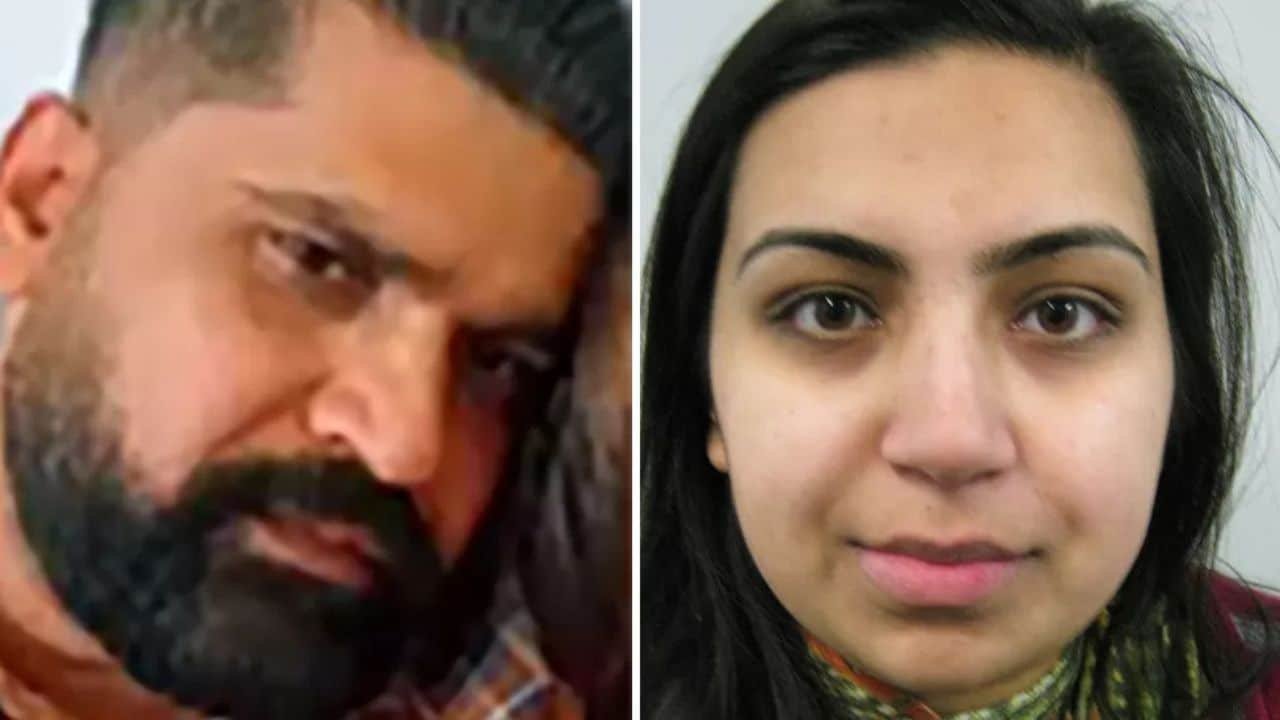
    A French girl of Pakistani origin named Nargis has been accused of disguising herself as a boy to marry girls to take them abroad. She was arrested in Mirpur city of Azad Kashmir on charges of trafficking girls abroad on the pretext of marriage.

    According to Geo News, one victim’s family had filed an application with the police, on which a case was registered and an arrest was made.

    During the investigation, it was revealed that Nargis had created a fake identity in the name of Shaaban. Dressed up as a man, she would come to Kashmir to find relationships, get married, prepare travel documents, and send the bride abroad and sell her.

    This time when Nargis reached Pakistan, the victim’s family recognized her and immediately filed a complaint with the police.

    In a request registered with the police by the victim’s family, Nargis came to Pakistan as a boy and married their daughter. After the marriage, the daughter got a visa and sent her to France via Dubai, where it was learned that the son-in-law was not a boy but a girl. She was tortured by a gang who attempted to sell her in several locations. The family barely evacuated their daughter to safety in France.

    According to the police, the suspect is a French citizen of Pakistani origin and belongs to Jhelum.

    However, according to District Headquarters Hospital Mirpur, a medical report has proved that Nargis is a girl and not a boy.

  • Women’s Health Gap Costs $1 Trillion Worldwide: Report

    Women’s Health Gap Costs $1 Trillion Worldwide: Report

    The huge gap between how women and men’s health are treated costs $1 trillion a year worldwide, the World Economic Forum said on Wednesday.

    Women spend a quarter more of their lives suffering from poor health than men, a disparity that includes an unequal focus on men across medical research, diagnosis and treatment, the report said.

    Closing this gap would boost the global economy by $1 trillion annually by 2040 — a 1.7 percent increase in per capita GDP driven by women, it added.

    The report was released as the WEF hosts its 54th annual conference in Davos, Switzerland.

    The Swiss firm Ferring Pharmaceuticals and McKinsey Health Institute also contributed to the 42-page report.

    Every US dollar invested in women’s health would return three dollars in projected economic growth, the report said.

    A large part of this growth would come from sick women getting back into the workforce.

    The gender health gap causes around 75 million years of life lost due to poor health annually, equating to a week per woman every year, the report said.

    For example, addressing the inequities related to endometriosis and menopause — which only affect women and have long been considered under-studied — could contribute $130 billion to global GDP by 2040, it estimated.

    Research also suggests that fewer than half the women living with endometriosis have been properly diagnosed, the report added.

    The study also looked at how treatment and diagnosis has benefitted men more than women.

    Asthma inhalers, for example, have been found to be significantly less effective for women than men.

    Women are diagnosed later than men for 700 different diseases, previous research has shown. It also takes women two and a half years longer to be diagnosed with cancer.

    WEF healthcare head Shyam Bishen said the analysis demonstrates that “investing in women’s health must be a priority for every country”.

    “Beyond improving women’s quality of life, ensuring women have access to innovations in healthcare is one of the best investments that countries can make for their societies and their economies,” he said in a statement.

    The WEF announced it was launching the Global Alliance for Women’s Health, with $55 million pledged for women’s health.