Category: Lifestyle

The lifestyle of millennials is underreported in our mainstream media. The Current’s lifestyle news covers social events and issues that are unique.

  • Former New Zealand Prime Minister Jacinda Arden marries long-time beau at 43

    Former New Zealand Prime Minister Jacinda Arden marries long-time beau at 43

    Former New Zealand Prime Minister Jacinda Arden has married long-time beau Clark Gayford in an intimate ceremony on January 13. The two have been together for a decade now and got engaged five years ago. Their wedding plans got cancelled after the COVID-19 pandemic.

    Ardern, 43, and Gayford, 47, had scheduled their wedding for early 2022 after getting engaged in May 2019 but had to postpone it due to the pandemic, Reuters has said.

    In a post shared on Instagram, Jacinda shared a picture from the wedding with the caption, “Worth the wait”.

    The couple’s five-year-old daughter Neve walked down the aisle with her father, wearing a dress made of fabric from her grandmother Laurell Ardern’s wedding dress, the New Zealand Herald reported.

    According to the news site Stuff, the pair’s special day was attended by some 50 to 75 guests, including opposition leader Chris Hipkins, Ardern’s successor as prime minister, the New Zealand Herald said.

    Ardern became a global icon for women in leadership and her left-leaning politics. The key events during her tenure were the attack on Christchurch Mosque and the pandemic of Covid-19.

    She was inspired by Pakistan’s Benazir Bhutto. While being Prime Minister, she paid tribute to the late Benazir Bhutto, a former Pakistani prime minister, during her Harvard University Commencement address. Bhutto was the first to give birth in office and Ardern was the second, her daughter was born on Bhutto’s birthday. “The path she carved as a woman feels as relevant today as it was decades ago, and so too is the message she shared here, in this place,” Ardern said about Bhutto’s own 1989 commencement address at Harvard entitled “Democratic nations must unite.”

    Arden gave her final speech in January last year, where she told Gayford, a New Zealand television presenter, “Let’s finally get married.”

  • ‘We love life’: Gaza couple celebrate wartime wedding

    ‘We love life’: Gaza couple celebrate wartime wedding

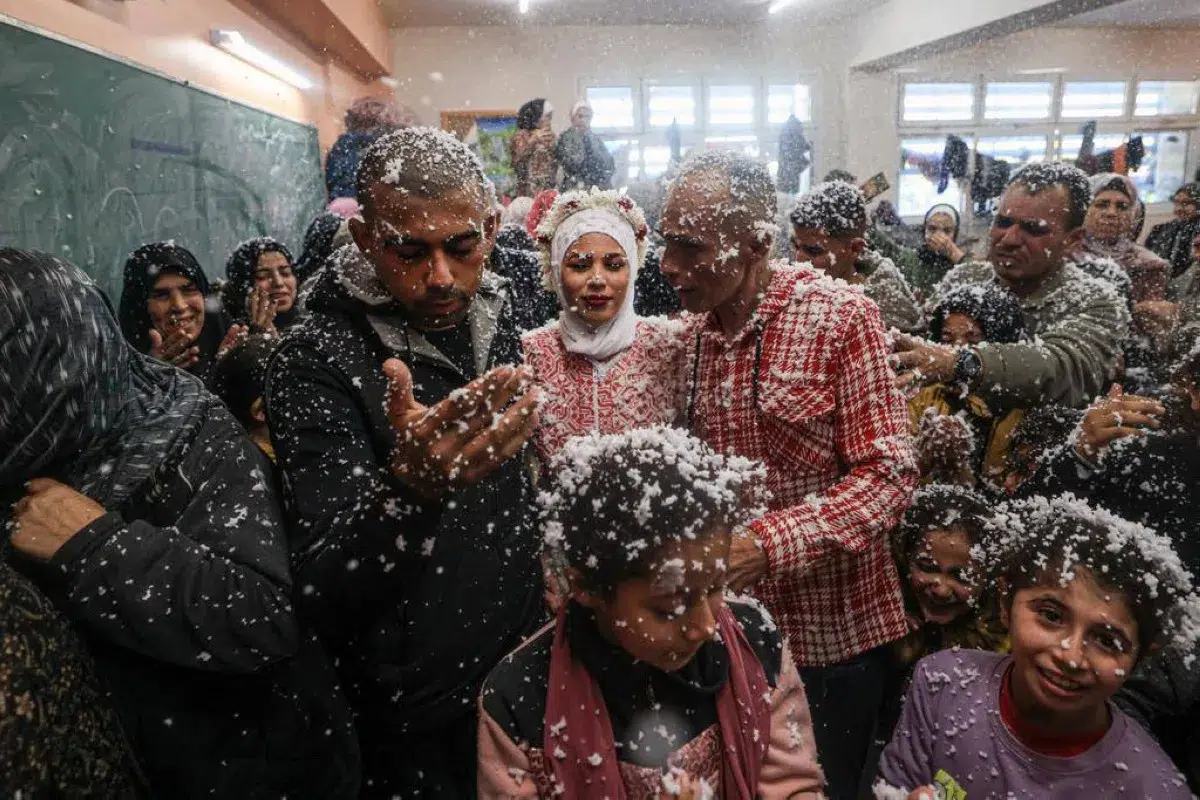
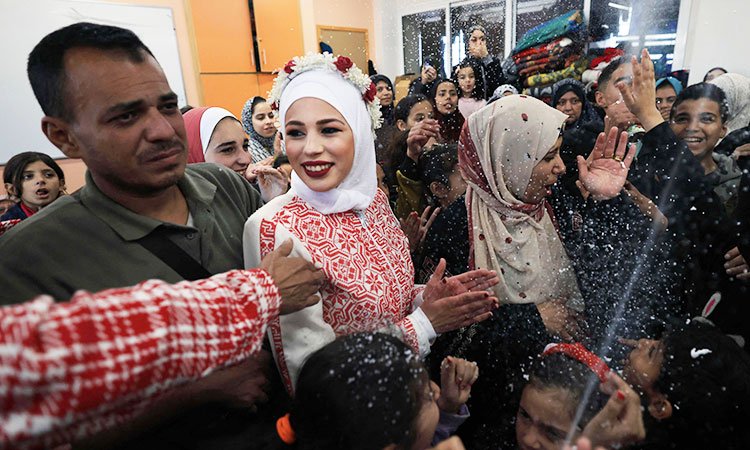
    Surrounded by family and friends, clapping and cheering, Gaza woman Afnan Jibril beams a brilliant smile on her wedding day, determined to celebrate even as war rages.

    “We are a people that love life, despite death, murders and destruction,” said her father, Mohamed Jibril.

    Relatives were gathered on Friday for the wartime wedding in a tiny room at an abandoned school building in the besieged Gaza Strip’s southern city of Rafah, near the frontier with Egypt.

    The city has suffered daily Israeli bombardment, and the families of both bride and groom are among hundreds of thousands of Palestinians who have fled the fighting further north.

    “The usual preparations for marriage are not possible, and traditional ceremonies are not feasible,” said the bride’s father. “However, clothes are available, although they are scarce and expensive.”

    Afnan, 17, donning a crown of flowers and pristine white dress with stark red embroidery, and her partner Mustafa Shamlakh, 26, want to make the most of their rare chance to celebrate.

    They dance and laugh as guests spray white mousse around the room.

    But eventually they have to face reality.

    Israel’s relentless military campaign, triggered by attacks by Palestinian militants, has killed at least 23,843 people, mostly women and children, in Gaza, according to the health ministry in the Hamas-run territory.

    The war began when Hamas militants launched an unprecedented attack on October 7, which resulted in about 1,140 deaths in Israel, mostly civilians, according to an AFP tally based on official figures.

    The newlyweds make up part of another grim tally — those displaced by the violence, which UN estimates put at 1.9 million Palestinians out of a total population in Gaza of 2.4 million.

    “The house where the groom was supposed to live was destroyed,” Ayman Shamlakh, the groom’s uncle, told AFP.

    As the war went on, both families felt there was nothing to be gained from waiting and they agreed to the marriage.

    After the school celebration, the couple head for a ceremony set to take place in a tent.

    As they dive into a waiting black SUV, surrounded by a massive crowd of well-wishers, it almost looks like any other wedding day.

    “We are all living through the same tragedy,” said Ayman Shamlakh. “However, we must continue to live, and life should go on.”

  • Afghan child killed in Karachi in fight over garbage collection

    Afghan child killed in Karachi in fight over garbage collection

    A 5-year-old child, Shehzad Gul, was beaten to death in what is being described as a dispute over garbage collection between two groups in Surjani Town, Karachi, reports Dawn.

    The horrific incident took place in Sector-4B. Shehzad Gul was one of three children and had two sisters.

    The dispute erupted between two Afghans over the collection of garbage, which led to the murder. The suspect(s) had been identified and police were waiting for the family to lodge an FIR to formally initiate legal proceedings.

    The victim’s father, Gul Mohammad, told reporters that he had been collecting garbage from houses for the last one month. On Friday, his son and a daughter accompanied him to collect the garbage.

    During the work, he left both children for a while and went to another street and when he returned, he learned that his son had been injured after being hit with a hard and blunt instrument.
    He rushed the child to Abbasi Shaheed Hospital (ASH) where doctors confirmed his death.
    The grief-stricken father said that he had been receiving “threats” from a man who had got the contract of garbage collection earlier. He suspected that his son was killed over that dispute.
    “I am a poor labourer who earns Rs13,000 on a monthly basis through garbage collection,” said the father.

  • Cashier arrested after allegedly stealing more than three crore in banking fraud

    Cashier arrested after allegedly stealing more than three crore in banking fraud

    Ghulam Muhammad, alleged to be involved in stealing more than three crores in banking fraud, has been arrested from Karachi.

    The Commercial Banking Circle of the Federal Investigation Agency (FIA) conducted a raid to arrest Ghulam Muhammad.

    According to Director FIA Karachi Zone Zaeem Iqbal, the suspect was posted as a cashier in the branch of a private bank located in Sadar area of Karachi.
    He has been accused of embezzling a total of three crore, 29 lakh and 78 thousand rupees by issuing, without permission, fake cash transits to various branches under the guise of excess cash.

    According to the initial investigation, no request for cash was received from the above branches, while the suspect did not hand over the said amount to the van used for cash transit after making cash entries last year in May, June and July.

    As per FIA, the suspect had fled after cheating. After his arrest, raids are being conducted to apprehend others from the group.

  • Flood-affected areas unlikely to produce good voter turnout in Balochistan and Sindh: Report

    Flood-affected areas unlikely to produce good voter turnout in Balochistan and Sindh: Report

    The Centre for Peace and Development Initiatives (CPDI) has stated in a report that over 10 million individuals faced displacement while 2.1 million homes were damaged in Sindh and approximately 100,000 in Balochistan in the devastating floods that hit Pakistan in 2022. The findings of the report reveal that due to financial constraints, there is a possibility that low-income migrated families will not return to cast their votes in the upcoming general elections.

    The lack of Computerised National Identity Cards (CNICs) and damaged pathways to polling stations jeopardise participation of the flood-affected communities, reports Dawn.

    A study by CPDI, conducted in Sindh and Balochistan, identifies multiple problems faced by flood-affected communities which may adversely affect voter turnout. It shows key issues, notably the absence of CNICs and damaged pathways to potential polling stations or school buildings.

    While highlighting the issues, CPDI urged authorities to take immediate measures to facilitate voter turnout in the flood-affected areas specifically in Khairpur, Naushahro Feroz, Naseerabad and Jaffarabad.

    The qualitative assessment was undertaken in the severely affected provinces of Sindh and Balochistan, highlighting various critical issues, including the absence and delays in obtaining national identity cards, damaged infrastructure such as roads and designated polling stations/school buildings, waning interest in political leaders due to insufficient post-disaster rehabilitation efforts, and concerns about the displaced community’s return to exercise their voting rights.

    Additionally, individuals with lifelong injuries may be bedridden, posing a challenge for their participation in the general election (GE) 2024. These findings underscore the multifaceted challenges affecting the electoral landscape in flood-affected regions.

    A significant number of flood victims lost their CNICs (at least one in every household), delays in renewal of CNICs are primarily because of the crowded and limited number of Nadra centres established at village level, residents added that mobile registration vans of Nadra initially helped but were later discontinued.

    “Furthermore, daily wage earners also find it financially burdensome to visit Nadra centres. CPDI urges the authorities to take immediate action to ensure that eligible voters in flood-affected regions receive their CNICs before elections. Moreover, damaged roads and access tracks force voters to take longer alternative routes to reach polling stations, reported in all villages of selected districts in Sindh and Balochistan.

    “Increased distances, combined with high transportation costs, will likely discourage voters, particularly women, elderly, differently-abled and low-income individuals, from travelling to cast their votes. With over 40 per cent of school buildings damaged and incomplete recovery efforts, newly designated polling stations may be distant, posing accessibility challenges for flood-affected residents on polling day without adequate transportation,” the report stated.

  • Woman of Pakistani origin elected as mayor of New Jersey

    Woman of Pakistani origin elected as mayor of New Jersey

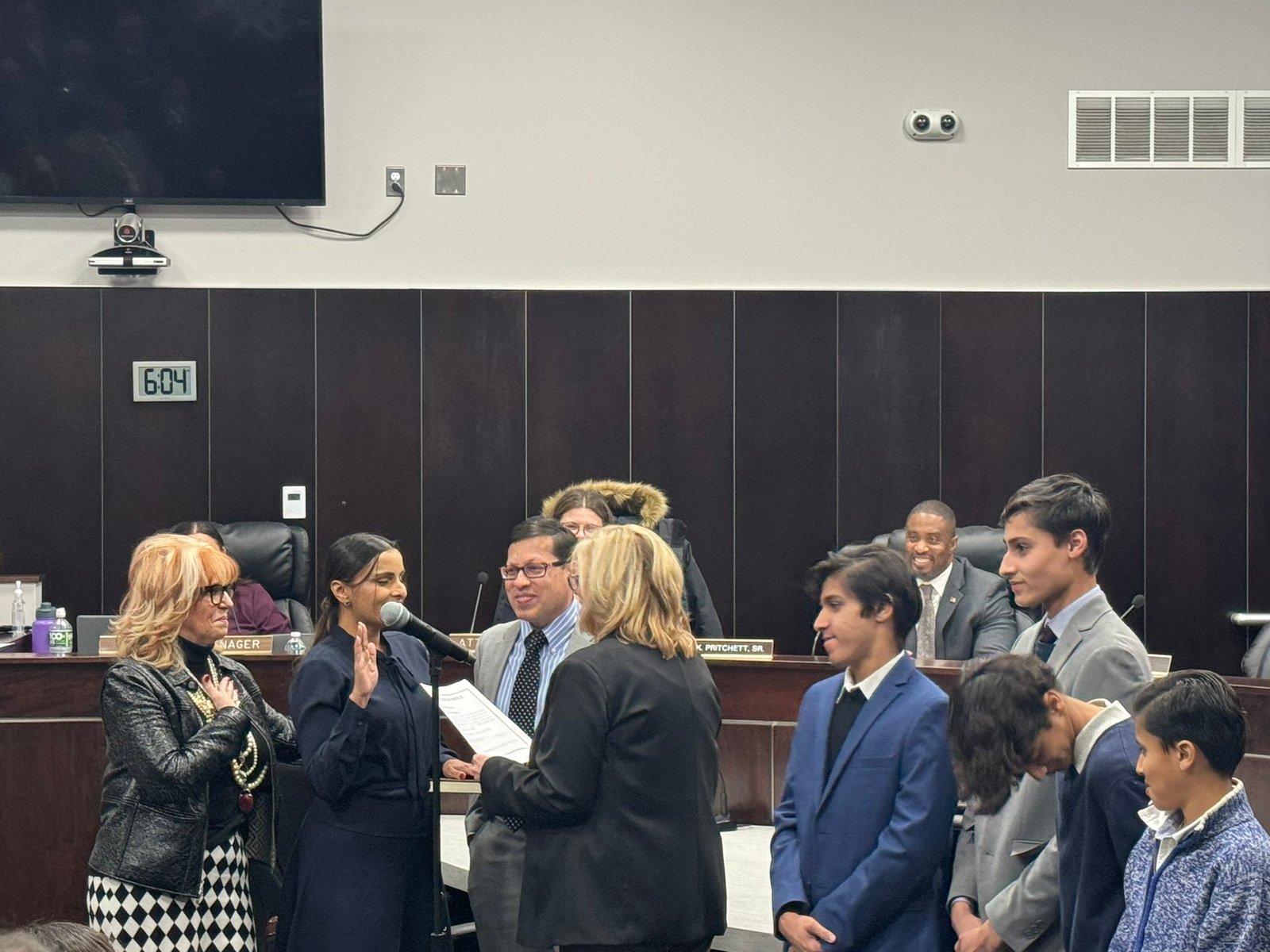
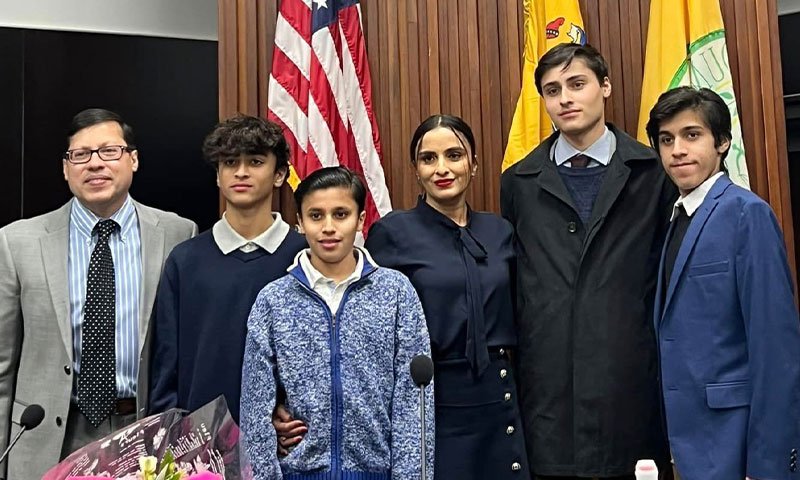
    Fauzia Janjua has become the first Muslim and Pakistani-American to take oath for the office of the mayor of New Jersey. She took an oath of her new responsibility on the Holy Quran alongside her husband and children at Township Hall.

    Fauzia’s father Idris belongs to Chakwal while her mother is from Lahore. Her father migrated to the US, where she was born, in the 1970s. She opted for community service and is imparting education to poor children and prisoners. With her election, the position of mayor has gone to Democrats for the first time in 36 years. Before her election, the mayor slot was always held by a Republican representative.

    In the speech she gave on the historic occasion, Fauzia Janjua described her election as the first Muslim lady of Pakistan origin as a moment of pride, reports The News.

    New Jersey State Representative, Carol Murphy, wrote on X: “It is such a great honour to administer the oaths of office tonight in Mount Laurel. It was extremely special to celebrate my dear friends — Mayor Fozia Janjua (1st Muslim & South Asian Mayor in township history) & Deputy Mayor Nik Moustakas on this historic occasion.”

    Her election came about just days after when the Imam of a local mosque was shot dead.

  • British police officer Rebecca Kalam wins discrimination case

    British police officer Rebecca Kalam wins discrimination case

    Former West Midlands police officer Rebecca Kalam of the United Kingdom has won a landmark case against gender discrimination, winning a reported total of £820,720 for loss of earnings and pension in what is believed to be one of the largest payouts of its kind in the country.

    Former female police officer Rebecca Kalam accused West Midlands Police of gender discrimination during training in 2012, mistreatment by male officers, and failure to provide personal protective equipment.

    In an interview with Channel 4 News, Rebecca said that she fought the case not for the money but for the changes that she wanted to see, such as the provision of women-friendly protective gear for the police.

    Rebecca Kalam was made the poster girl for the force’s firearms unit in 2012 and said she could not pass the training course unless she agreed, an employment tribunal heard.

    She was also required to pose for a photo shoot when she was five months pregnant in 2016 and complained of male officers drawing images of genitals on notice boards around the police station along with using misogynistic language.

    The tribunal heard that during training exercises in March 2012, Mrs Kalam had to strip down to her underwear and, while doing press-ups, a male trainer put his foot on the back of her neck, reports Sky News.

    After the verdict was announced, West Midlands police released a statement that condemned the previous treatment and offered assurances that changes are being made. “All female firearms officers have been issued with equipment specific to their individual needs, including formed ballistic protection.We have also introduced new arrangements to procure female-specific uniforms and equipment, and female firearms officers are now involved in trialling and assessing new uniforms and equipment,” the statement read.

  • ‘Death GPT’ is here to tell you when you will die

    ‘Death GPT’ is here to tell you when you will die

    Researchers at the University of Copenhagen and Northeastern University in Boston have developed an algorithm that can predict a person’s life course, including premature death, in much the same way that large language models such as ChatGPT can predict sentences⁠.⁠

    University of Copenhagen

    The death calculator, dubbed ‘DeathGPT’ by Financial Times, is based on narrative building just like it is in stories. According to scientists, each life story is the chronicle of a death foretold. By using Denmark’s registry data, which contains a wealth of day-to-day information on education, salary, job, working hours, housing and doctor visits, academics have developed an algorithm that can predict a person’s life course, including premature death, in much the same way that large language models (LLMs) such as ChatGPT can predict sentences. The algorithm outperformed other predictive models, including actuarial tables used by the insurance industry.

    The fact that our complex existences can be resolved in text is both exhilarating and confusing. Sune Lehmann, from the Technical University of Denmark, who led the research published last month in Nature Computational Science, does not find the idea discombobulating. “I think the similarity between text and lives is deep and multi-faceted,” he told Financial Times. “It makes sense to me that our algorithm can predict the next step in human lives.”

    Methodology

    For a first step, researchers compiled a “vocabulary” of life events, creating a kind of synthetic language, and used it to construct “sentences”. A sample sentence might be: “During her third year at secondary boarding school, Hermione followed five elective classes.”

    Loopholes

    While the paper claims that “accurate individual predictions are indeed possible”, the algorithm furnishes a probability of death over a certain period rather than an exact date. There are caveats: what applies in Denmark might not apply elsewhere, and the algorithm encodes biases in the training data. Even so, given its potential to fine-tune risk prediction, the impact on the insurance industry will be worth watching. For their part, the researchers don’t want their work to be used by insurers, and are keeping the algorithm and data under wraps for now.

    Outcomes

    In existing predictive models, researchers must pre-specify variables that matter, such as age, gender and income. In contrast, this approach swallows all the data and can independently alight on relevant factors (it spotted that income counts positively for survival, for example, and that a mental health diagnosis counts negatively). This could point researchers to previously unexplored influences on health — and may uncover new links between apparently unrelated patterns of behaviour. One of Lehmann’s growing concerns is privacy; he points out that companies such as Google are assembling muscular prediction machines, using an abundance of personal data filtered from the internet.

    This is an era of unparalleled predictability in human lives — and an era of unparalleled power for those who can read our stories before we have lived them.

  • 11 members of a family murdered: case registered against murdered daughter’s father-in-law

    11 members of a family murdered: case registered against murdered daughter’s father-in-law

    A murder case of 11 members of the same family has been registered in Lakki Marwat and the uncle of the deceased has nominated the father-in-law of one of the deceased daughters in the case.

    The murders took place in the Takhtikhel area of Lakki Marwat district in Khyber Pakhtunkhwa.

    According to the authorities, the uncle, Umar Gul, has claimed that the daughter-in-law of the accused father-in-law, Madar Khan came to her home after a fight within the family. Khan apologised for the fight and entered the home of his daughter-in-law as a guest, on the pretext of solving the matter. He spent the night with the family.

    Umar Gul stated that Khan shot and killed 11 family members after feeding them poisoned food.

    According to the police, two men, two women and six children are among those killed.

    Efforts are being made to arrest Madar Khan, according to Geo News.

  • Lahore: Man kills brother-in-laws for taking his wife home without his permission

    Lahore: Man kills brother-in-laws for taking his wife home without his permission

    A man killed two of his brothers-in-law in Hanjarwal, Lahore over a ‘personal dispute’, ARY News reported on Wednesday, citing police sources.

    As per reports, a man named Fahad married a sister of the deceased brothers, out of their own free will, but the brothers took their sister back to her home.

    Enraged, Fahad along with his accomplices, allegedly shot and killed his two brothers-in-law Muzammil and Mudassir when they were at work, at a milk shop.

    Father of the slain brothers said that he had only two sons and five daughters and both sons were killed. The police has shifted the bodies of the victims to a hospital for their post-mortem after collecting evidence from the crime scene.

    The police said that teams have been formed to arrest the accused after registration of the case.