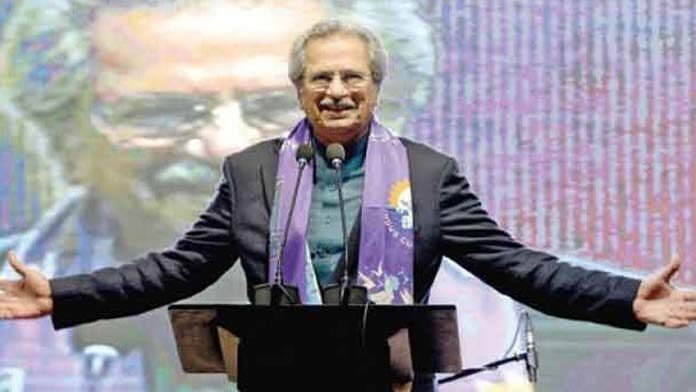
Federal Minister for Education Shafqat Mahmood said on Monday that the government has no plans to suspend educational activities. He said that examinations will be taken on time and the full curriculum will be covered in it, reports Geo.
When he was asked about the policy of the education department regarding precautionary measures against the Omicron variant, the federal minister said, “I don’t know about the new variant of coronavirus in detail, but the government wants to continue educational activities.”
The new variant named Omicron, which was first discovered in South Africa is spreading drastically into various parts of Europe including Canada and Australia. On Saturday, Pakistan imposed a complete ban on direct/indirect inbound flights from six African countries and Hong Kong.
Moreover, while talking about the smog situation in Lahore, Shafqat Mahmood said it will decrease by the closure of private and government schools thrice a week.
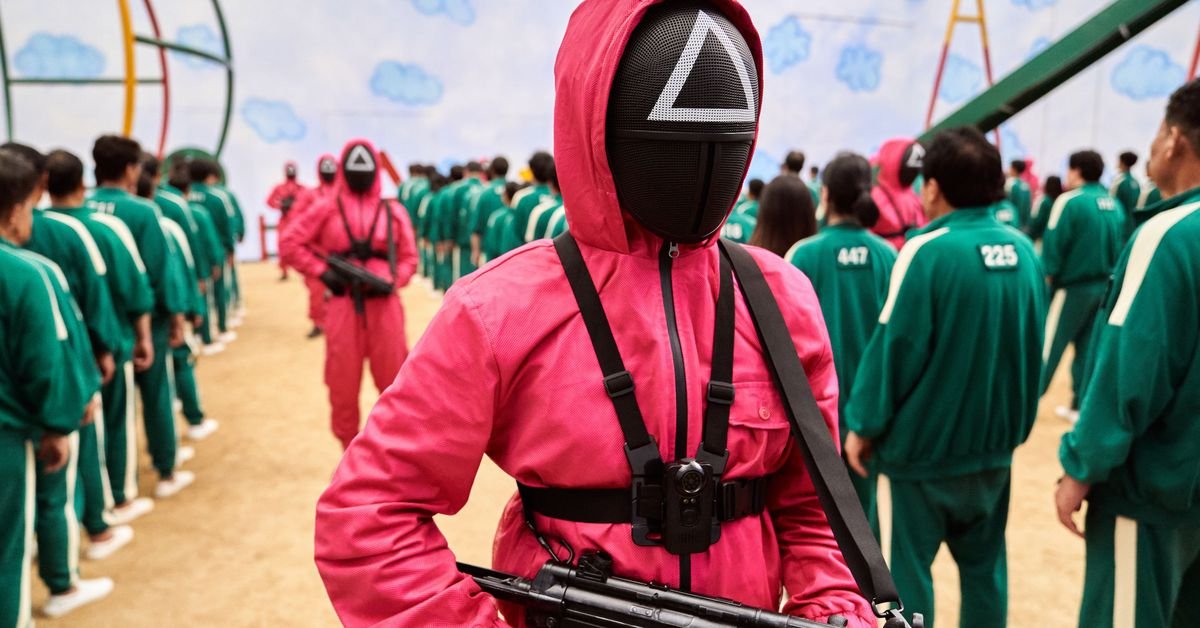
North Korea announced a death sentence to a man who smuggled and sold copies of the popular South Korean Netflix web series, ‘Squid Game’ which is banned in North Korea.
The authorities caught seven high school students watching the worldwide hit Korean show, reports the RFA.
A copy of Squid Game was smuggled from China into North Korea and was sold through the USB flash drives containing the Korean show.
One of the students who bought the banned show was sentenced to life imprisonment whereas other students, who watched the pirated show received five years of hard labour.
In schools, administration including teachers were also fired and exiled to isolate parts of the country to work in mines.
According to analysts, there is a hard censorship policy in North Korea under the Supreme Leader, Kim Jong Un to ‘prevent the influence of capitalist countries.’
A new law which is officially named “Law on the Elimination of Reactionary Thought and Culture,” was passed in North Korea last year to curb the impact of the outer world. It carries a maximum penalty of death for viewing, possessing, or delivering ‘capitalist content’, especially from South Korea and the United States of America (USA).
Valentine’s Day is just around the corner and love sure is in the air…
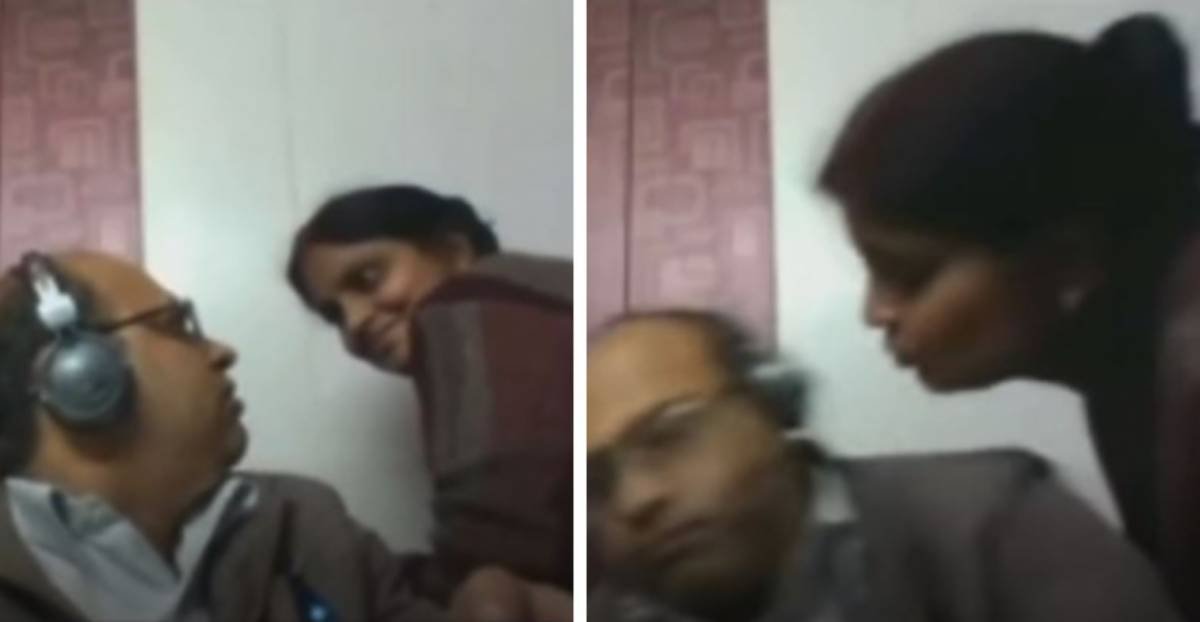
The video of an Indian professor dodging his wife’s kiss while on a Zoom conference has gone viral over the internet.
The man, who was seen talking about GDP in the video, then calls his partner’s romantic move as “foolish and nonsense”.
The wife in the clip seems unaware that the husband is in the middle of a conference.
Visibly in distress, and with the striking response, the professor quickly pulls himself away. “What nonsense you’re doing here?” he can be heard as asking his wife.
With lockdowns being lifted and offices besides all public spaces except wedding halls and educational institutions being re-opened, the threat of a sudden spike in coronavirus infections, despite the continuous drop, has once again risen its ugly head.
While many people are taking necessary precautions, some are not, owing to which all of us have found ourselves assessing our surroundings and avoiding the virus as much as possible.
Many amid the prevailing situation, among other things are wondering if one can get COVID-19 from secondhand smoke?
Here’s what we know…
Secondhand smoke isn’t believed to directly spread the virus, experts say, but infected smokers may blow droplets carrying the virus when they exhale.
Being able to smell the smoke might be a red flag that you’re standing too close to the smoker. The respiratory droplets people spray when they talk, cough or sneeze are believed to be the main way the virus spreads. And people also exhale those droplets when smoking, as well as when they’re vaping.
“Not only are they potentially spreading the virus by not wearing a mask, they are blowing those droplets to the people around them to potentially get infected,” says Dr Albert Rizzo, chief medical officer for the American Lung Association.
You should steer clear of secondhand smoke regardless. Breathing in secondhand smoke from cigarettes can cause various health problems, according to the US Centers for Disease Control and Prevention.
By the time this report was filed, the number of coronavirus infections in Pakistan stood at 294,668 with 279,630 recoveries and 6,275 deaths. Sindh continued to have the lead with 128,877 cases with Punjab trailing at 96,540 infections, followed by Khyber Pakhtunkhwa (KP) and Islamabad with 35,923 and 15,562 cases, respectively.
The number of infections in Balochistan stood at 12,721 while Gilgit-Baltistan had 2,773 cases and Azad Jammu & Kashmir (AJ&K) had 2,272.
Claim: Viral video showed that in Karachi, a man jumped into accumulated rainwater from the rooftop of his building
Fact: Video was taken from an Indian Youtube channel and was published two days earlier
With rain wreaking havoc across Sindh and flooding roads across provincial capital Karachi yet again, a viral video has shown a man jumping into rainwater from a rooftop, which according to The Current’s verification, is not from Karachi.
As per the details, the video showing a man jumping from the rooftop of a residential building into accumulated rainwater first surfaced on Sunday evening. It wasn’t later that it broke the internet by Monday afternoon as it was widely shared by people claiming it to be a scene from Karachi.
However, going the extra mile to dig out facts regarding the video, The Current ascertained that it was actually a video from the Indian city of Mumbai, and was uploaded to an Indian YouTube channel two days ago, on August 23.
While the said video is not from Karachi, the port city is still submerged owing to lack of proper monsoon infrastructure there.
Sindh Chief Minister (CM) Murad Ali Shah has declared an emergency across the province while roof-collapse, electrocution and drowning incidents make headlines.
In Karachi, Malir, Korangi, Landhi, Shah Faisal Colony, Gulshan-e-Hadeed, Saadi Town, Liaquatabad, Federal B Area, North Karachi, Surjani Town and North Nazimabad are some of the areas that are underwater after receiving heavy rainfall since Monday night.
Power outages are also spelling misery for the people of the country’s largest city.
When the COVID-19 pandemic began and I started working from home, I bought into the uproar on social media about having more free time. My first, and perhaps only, resolution for this “extra time” was to read more books, and, in line with everyone’s suggestions about learning new skills and working on one’s own self, I thought I’d try and get two birds with one stone.
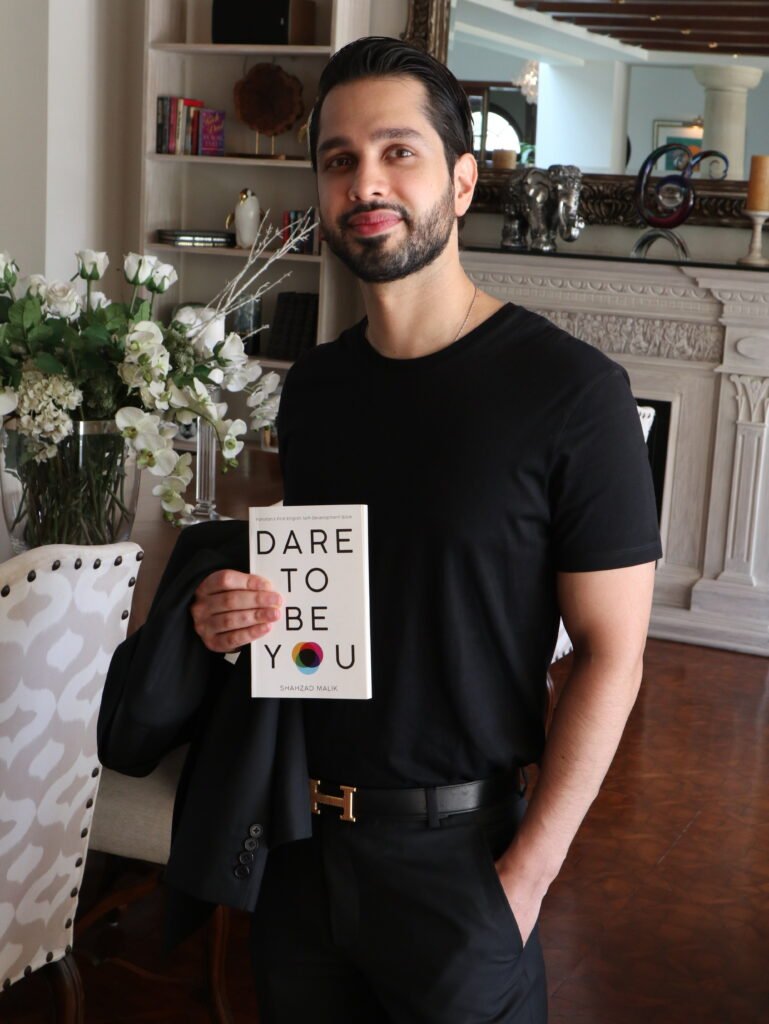
As it so happened, I came across this new book on social media: “Dare to Be You — Pakistan’s First English Self-Development Book” by Shahzad Malik. I was very intrigued and immediately went to the website and ordered it. The book arrived a couple of days later and honestly, I was blown away when I took it out of the packaging. It looked better up close than it did in the pictures. The cover design is beautiful — it’s very minimalistic and, quite like the book itself, it’s not in-your-face. It’s powerful in its subtlety.
It didn’t take me very long to finish the book once I started it. It’s not very long but, more importantly, once I started, I was hooked! I didn’t want to put it down. In fairness, I had not expected this when I bought the book or picked it up. I’m very wary of self-help books generally because they always feel very preachy to me. “You’re living life all wrong, and you must do x, y, and z if you want to be successful.” It almost always leaves a very bittersweet taste in my mouth. But, luckily, “Dare to Be You” isn’t like that at all! It’s very real and very candid. Like the author’s sitting right there talking to you. Like a conversation between friends.
I mean, of course, it isa self-development book, so of course, it’s going to include certain preferred acts and traits. But when I say the book is very real I mean that the author isn’t minimising what you’re going through. He seems to be well-aware of it. And when he talks to you, it feels like he’s talking to you as someone who has been through the things you’re currently going through, has managed to come out on “the other side”, and is now reaching back trying to pull you there too. I’m not one to take everything at face value, so I was a bit skeptical of whether the author actually “made it” and a few Google searches showed me he really had. And after reading the (deeply personal) incidents he’s narrated in the book and how he navigated through them, I really have a new-found respect for him.
“Dare to Be You” is built around one central idea that resonates throughout the book; all of us have the potential to be better and to do better, and we owe it to ourselves to try until we get to where we want to be. In certain places, the book definitely adopts a tough-love attitude, where it actively engages with the excuses we sometimes buy into. But the tough love is fair game, and, honestly? It really helps. Because it really makes you face what you’re running away from, while also guiding you to the support and confidence you need to win (think of the coach in any famous boxing movie pumping up the boxer before the big fight).
The book discusses a number of topics, all the way from overthinking to fear to finding one’s passion. It addresses the idea of mindfulness, of allowing ourselves to listen to our emotions rather than let ourselves be overwhelmed by our thoughts and the discouraging voices in our heads. This idea also flows through the book, and we are reacquainted with it at various points along the way, helping to really ground it in the reader’s mind. And in anxious times such as these, this has been game-changing. The book also lets readers explore how we can change our default way of approaching situations, by allowing for greater awareness of our internal frameworks. For instance, it allows us to explore the fears we carry, that hold us back, and lead to us minimising ourselves. This, in turn, allows us to see them for what they really are and shed them off, taking away their power over us so that we are not perpetually afraid and encumbered.
One of my key take-aways from the book has to be from the chapter on happiness. To quote from the book:
“I had become scared of feeling happy because I thought good things didn’t last. Think about it. It seems so simple when I write it down, but it was such a profound realization for me – that I could be afraid of happiness. That I could be afraid of something beautiful, simply because I was afraid I would lose it.“
The book really invites readers to give themselves a real, honest chance at happiness — both in the small everyday joys and as a mindset — that can become the basis for a more content and resilient life. And once you’re no longer afraid of happiness, the journey to discover your passion becomes a lot clearer (the book helps prevent the associated overwhelm by providing a structure to navigate your journey).
It’s been nearly a fortnight since I finished the book. And over the past two weeks, I’ve found myself thinking back to the book, and even picking it up to re-read certain parts of it. For a relatively light read, I’ve been pleasantly surprised by how it has stayed with me (almost on a subconscious level), allowing me to already start changing some of my habits that have just always been there. I find myself taking down my internal barriers one by one, and actively trying to do away with the voice inside my head that’s always more-than-happy to tell me I’m not good enough.
Granted, I haven’t yet achieved everything I wanted to and I haven’t arrived at the pinnacle of my life’s work. But “Dare to Be You” has certainly allowed me to start walking down the path I’ve been avoiding for a very long time. The path to a self-aware, authentic and meaningful life.
In a first, a ceremony was held to start construction of a Hindu temple in the federal capital, Dawn reported.
According to reports, a crematorium will also be built in Islamabad for the Hindu community, members of which earlier had to travel out of the city to perform religious rituals.
The Krishna temple will be constructed on a 20,000 sq ft plot in the H-9 sector, and has been named Shri Krishna Mandir by the Islamabad Hindu Panchayat.
According to Religious Affairs Minister Pir Noorul Haq Qadri, the government will bear the construction cost, presently estimated to be Rs100,000,000.
Parliamentary Secretary on Human Rights Lal Chand Malhi had on Tuesday performed the groundbreaking ceremony for the temple.
While addressing the gathering at the ceremony, Malhi mentioned the presence of pre-1947 era temple structures in the capital and its adjoining areas, including one in Saidpur Village and at the hill point overlooking the Korang River near Rawal Lake. However, they have been abandoned and not used.
“Besides, there is no crematorium in Islamabad,” he said, adding the Hindu population in Islamabad had increased significantly in two decades, therefore, the temple was necessary.
“The Hindu community in Islamabad has been demanding a temple for a long time now. The population has also increased while many Hindu temple structures in the capital have been abandoned,” he said. “Besides, there is no crematorium in Islamabad.”
The plot on which the temple is being built was allotted to the Hindu Panchayat by the Capital Development Authority (CDA) in 2017. However, the construction work could not begin on time because of some formalities, like the site map’s approval by the CDA and other authorities.
Continuing to keep an eye out for content that “does not go in line with social norms of Pakistani society”, Pakistan Electronic Media Regulatory Authority (PEMRA) has banned an energy drink commercial for being “vulgar, un-Islamic and unethical”.
“It [PEMRA] has monitored that most satellite television channels are airing a TVC [television commercial] of Power Full (energy drink). The content of the advertisement is considered to be indecent, vulgar and against Islamic values, social norms and ethics of Pakistani society,” read a notification by the media watchdog, a copy of which was also released by PEMRA on Twitter.
It added that they had been receiving complaints by the general public against the advert for being unethical and vulgar, and went on to direct satellite TV channels to conform to the Electronic Media (Programmes and Advertisements) Code of Conduct, 2015.
The commercial was prohibited under Section 27 of PEMRA (Amendment) Act, 2007, the notification said, warning of legal action in case of non-compliance.
While it has been taken off the air, the advert is still doing rounds over the internet.
Here is a censored version of the commercial.
What do you think of the advert and the action against it? Let The Current know in the comments.