Category: National

The Current is a trusted source for national breaking news, analysis, exclusive interviews, headlines, and videos.

  • We can save Rs 50 Billion by enduring two hours of power cuts: Energy Minister defends load shedding

    We can save Rs 50 Billion by enduring two hours of power cuts: Energy Minister defends load shedding

    Power Minister Awais Leghari has presented the unique logic of load shedding, saying that if power cuts are tolerated for two hours a day, PKR 50 billion can be saved.

    Speaking at an event in Islamabad, the minister said, “There is no doubt that we are providing the most expensive electricity in the region, but we are providing cheap electricity to poor consumers who bear the burden of expensive electricity. Due to the industry shutting down, the government has borne the burden of providing electricity to the industry at a low cost.”

    He explained the unique logic for saving money, “50 billion rupees can be saved if load shedding is tolerated for two hours. One important measure to save electricity is to switch fans to low wattage, while the government has installed new plants to end load shedding.”

    The energy minister said, “The burden on the consumer was 10 rupees per unit, which increased due to the increase in the dollar price. Currently, the average price of electricity is 44 rupees per unit. We had started working on Independent Power Producers (IPPs) quietly. Still, the ministry leaked that something related to IPPs would happen, and we got help, maybe they did what the ministry was not doing openly. We will give good news regarding IPPs, and Pakistan will move forward.”

    He also hinted at positive developments in the energy sector that could help reduce costs and improve electricity supply.

  • Pakistan successfully tests Shaheen-II ballistic missile

    Pakistan successfully tests Shaheen-II ballistic missile

    Pakistan has successfully conducted a training launch of the surface-to-surface Shaheen-II ballistic missile, Inter Service Public Relations (ISPR) said in a press release.

    The military media wing stated that it aimed at performance evaluation of different subsystems incorporated for improved accuracy and enhanced survivability.

    The training launch was witnessed by senior officers from the Strategic Plans Division, Army Strategic Forces Command, scientists and engineers of strategic organisations. ISPR noted

    Moreover, President Asif Ali Zardari, Prime Minister Shehbaz Sharif, Chairman Joint Chiefs of Staff Committee General Sahir Shamshad Mirza and the three services chiefs congratulated the scientists and engineers on this accomplishment.

  • Travelling to Saudi Arabia costs less with PIA’s new lower fares

    Pakistan International Airlines (PIA) has announced a massive reduction in fares from Karachi to Jeddah and Madinah.

    According to a statement by the national airline, one-way fare from Karachi to Jeddah and Madinah has been reduced to Rs 56,000, including tax, while the return fare has been reduced to Rs 88,000, including tax.

    The discounted fares will be effective immediately. Tickets for discounted fares will be issued until August 31, 2024, and travel on discounted fares will be possible until September 30, 2024.

    On the other hand, like every year, Saudi Airlines has announced a significant reduction in the price of airline tickets on Saudi Arabia Day, under which those who book Umrah tickets up to August 30 will be given a discount of up to 50 percent. However, they must use the purchased ticket from September 1 to November 30.

  • India’s water terrorism causes high water levels in Chenab; residents advised to evacuate

    India’s water terrorism causes high water levels in Chenab; residents advised to evacuate

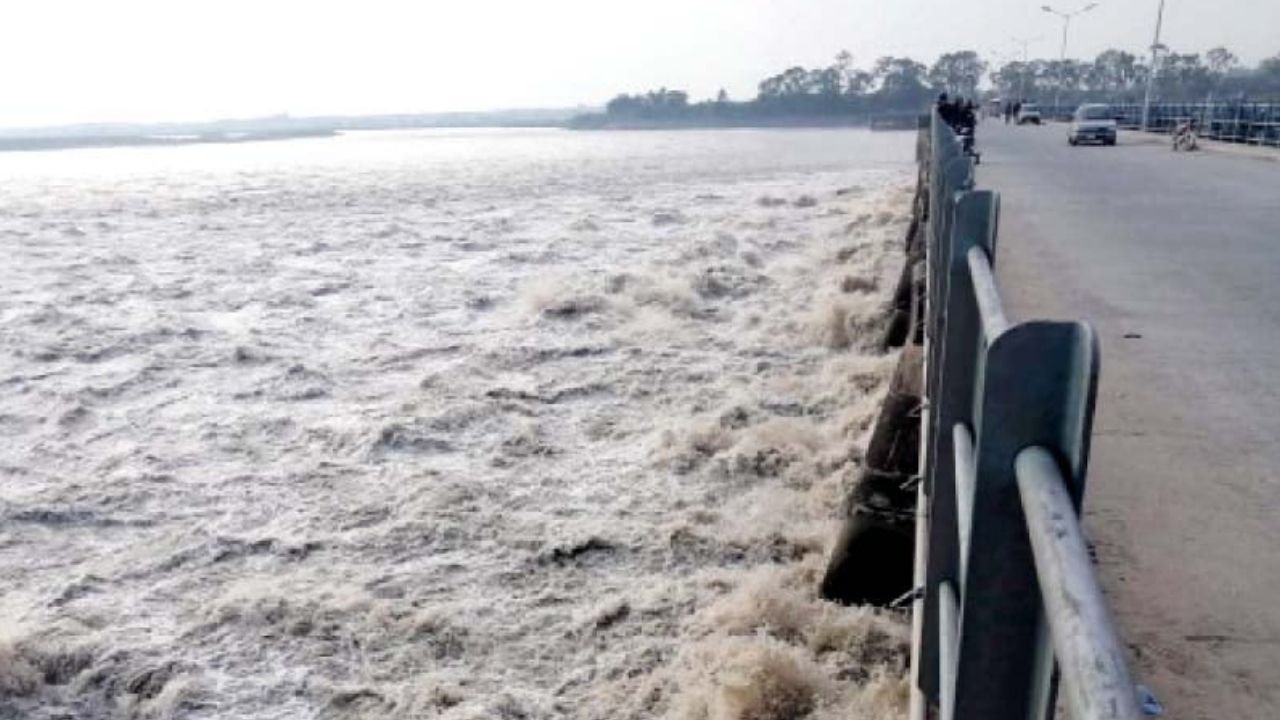
    The water level in the Chenab river is rising after India released water, and residents of the area have been advised to evacuate.

    As per the Provincial Disaster Management Authority (PDMA), the water level at Kadirabad Barrage in the Chenab River is escalating at an alarming rate, expected to reach 250,000 cusecs. A total of 40,000 to 55,000 cusecs of water is anticipated at Jasar and Shahdara in the Ravi River, prompting immediate relocation for the residents.

    Torrential rain in Rajanpur and Koh Sulaiman

    On the other hand, torrential rain has been recorded in the mountainous areas of Rajanpur and Koh Sulaiman.

    According to the Flood Control Room, the rains have raised the water levels in the rain canals, with 19,606 cubic feet of water passing through Barsati Nala Kahasultan and 11,450 cubic feet passing through Nala Chhachhar.

    2,340 cusecs of water is passing through Kalabaga, while the continuous rise in the water level in the Indus river is recording a moderate flood at Kot Mithan.

  • Sindh floods push low-income families to marry off daughters for financial help

    Sindh floods push low-income families to marry off daughters for financial help

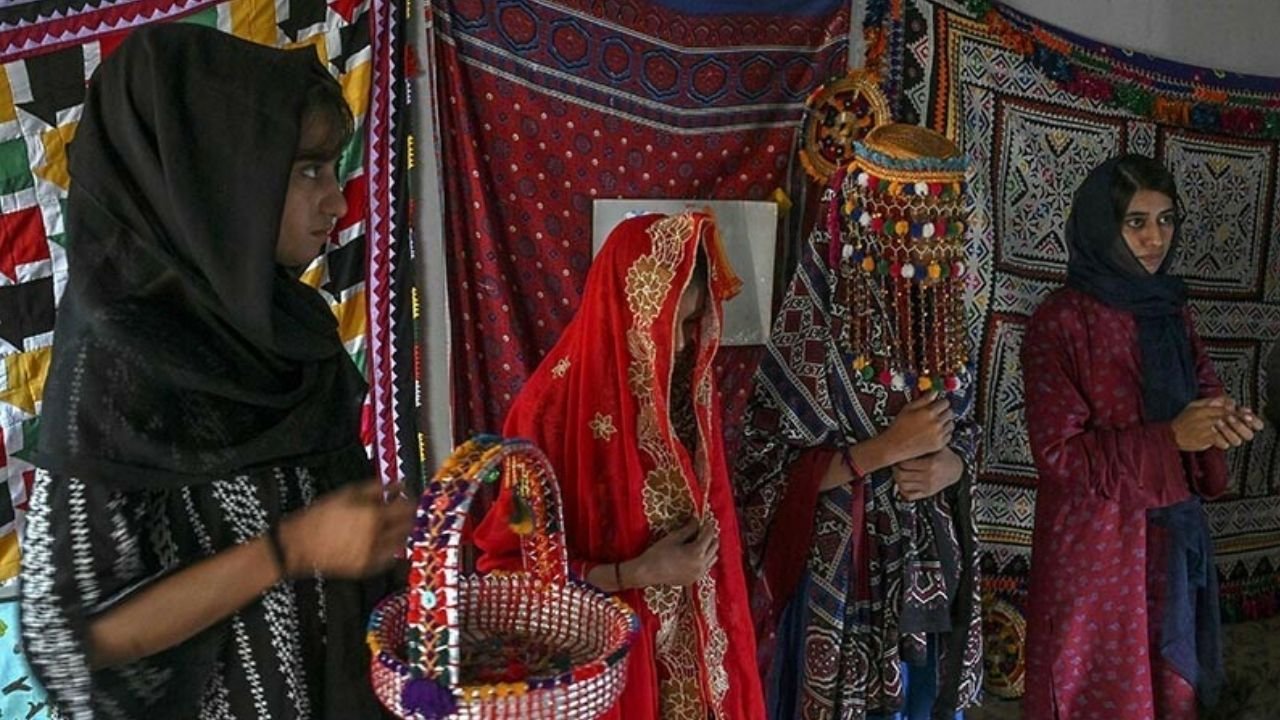
    As monsoon rains were about to break over Pakistan, 14-year-old Shamila and her 13-year-old sister Amina were married off in exchange for money, a decision their parents made to help the family survive the threat of floods.

    “I was happy to hear I was getting married… I thought my life would become easier,” Shamila told AFP after her wedding to a man twice her age in hope of a more prosperous life.

    “But I have nothing more. And with the rain, I fear I will have even less, if that is possible.”

    Pakistan’s high rate of marriages for underage girls had been inching lower in recent years, but after unprecedented floods in 2022, rights workers warn such weddings are now on the rise due to climate-driven economic insecurity.

    The summer monsoon between July and September is vital for the livelihoods of millions of farmers and food security, but scientists say climate change is making them heavier and longer, raising the risk of landslides, floods and long-term crop damage.

    Many villages in the agricultural belt of Sindh have not recovered from the 2022 floods, which plunged a third of the country underwater, displaced millions and ruined harvests.

    “This has led to a new trend of ‘monsoon brides’,” said Mashooque Birhmani, the founder of the NGO Sujag Sansar, which works with religious scholars to combat child marriage.

    “Families will find any means of survival. The first and most obvious way is to give their daughters away in marriage in exchange for money.”

    Birhmani said since the 2022 floods, child marriage has spiked in villages in Dadu district, one of the worst-hit areas that for months resembled a lake.

    In Khan Mohammad Mallah village, where Shamila and Amina were married in a joint ceremony in June, 45 underage girls have become wives since the last monsoon — 15 of them in May and June this year.

    “Before the 2022 rains, there was no such need to get girls married so young in our area,” said village elder Mai Hajani, 65.

    “They would work on the land, make rope for wooden beds, the men would be busy with fishing and agriculture. There was always work to be done”.

    Parents told AFP that they hurried the marriage of their daughters to save them from poverty, usually in exchange for money.

    Shamila’s mother-in-law, Bibi Sachal, said they gave 200,000 Pakistan Rupees ($720) to the young bride’s parents –- a major sum in a region where most families survive on around one dollar a day.

    – ‘I thought I would get lipstick’ –

    Najma Ali was initially swept up in the excitement of becoming a wife when she married at 14 in 2022 and began living with her in-laws, as is tradition in Pakistan.

    “My husband gave my parents 250,000 rupees for our wedding. But it was on loan (from a third party) that he has no way of paying back now,” she said.

    “I thought I would get lipstick, makeup, clothes and crockery,” she told AFP, cradling her six-month-old baby.

    “Now I am back home with a husband and a baby because we have nothing to eat.”

    Their village, which lies on the banks of a canal in the Main Nara Valley, is barren and there are no fish left in the polluted water — its stench overwhelms the area.

    “We had lush rice fields where girls used to work,” said Hakim Zaadi, 58, the village matron and Najma’s mother.

    “They would grow many vegetables, which are all dead now because the water in the ground is poisonous. This has happened especially after 2022,” she added.

    “The girls were not a burden on us before then. At the age girls used to get married, they now have five children, and they come back to live with their parents because their husbands are jobless.”

    – ‘I want to study’ –

    Child marriages are common in parts of Pakistan, which has the sixth-highest number of girls married before the age of 18 in the world, according to government data published in December.

    The legal age for marriage varies from 16 to 18 in different regions, but the law is rarely enforced.

    UNICEF has reported “significant strides” in reducing child marriage, but evidence shows that extreme weather events put girls at risk.

    “We would expect to see an 18 percent increase in the prevalence of child marriage, equivalent to erasing five years of progress,” it said in a report after the 2022 floods.

    Dildar Ali Sheikh, 31, had planned to marry off his eldest daughter Mehtab while living in an aid camp after being displaced by the floods.

    “When I was there, I thought to myself ‘we should get our daughter married so at least she can eat and have basic facilities’,” the daily wage labourer told AFP.

    Mehtab was just 10 years old.

    “The night I decided to get her married, I couldn’t sleep,” said her mother, Sumbal Ali Sheikh, who was 18 when she married.

    An intervention from the NGO Sujag Sansar led to the wedding being postponed, and Mehtab was enrolled in a sewing workshop, allowing her to earn a small income while continuing her education.

    But when the monsoon rains fall, she is overcome by dread that her promised wedding will also arrive.

    “I have told my father I want to study,” she said. “I see married girls around me who have very challenging lives and I don’t want this for myself.”


  • Censorship, Surveillance; mysterious firewall being installed to block content

    Censorship, Surveillance; mysterious firewall being installed to block content

    Umar Cheema, a senior investigative reporter at The News, has revealed that a national firewall is being installed on different internet service providers (ISPs) to rein in social media. The filters will block unwanted content from reaching a wider audience online.

    The Current also spoke with Shahbaz Rana, a senior journalist at The Tribune, to inquire about the details of the mysterious firewall. He stated, “This is a Chinese technology that the government is importing. It’s a $135 million project out of which some amount has been delivered and the remainder amount will be paid by next year.”

    “It is already bought. Now it is being installed and commissioned,” said sources of The News.

    “The national firewall will serve two purposes: identify the locations from where the propaganda material is being originated and the subsequent blockade or diminished coverage of those accounts”. He added: “But, I think the main focus will remain on locating the source of such propaganda to nip the evil in the bud”.

    According to Cheema, there will be a keyword filtering system to detect content that is undesirable to the state of Pakistan. That type of content will likely be hidden and made invisible to outside users. In other words, dissenting voices will likely be passed through this inspection before they’re visible.

    Preparation is also in progress to prevent the ‘misuse’ of Virtual Private Networks (VPNs) as the government can declare it mandatory for citizens to inform the PTA about the VPNs they are using. Anyone failing to do that could land in trouble.

    Previously, the government’s action against VPNs triggered a backlash from the corporate community as VPNs are primarily used by big businesses worldwide to protect their business secrets as their internal communication travels within a private network. It was due to this that action against VPNs was stopped for some time.

    Blocking social media website X (formerly Twitter) has cut the users from 4.5 million to 2.4 million, a government official told The News. It has affected Twitter’s business in Pakistan and unlike in the past, the management of the social media company has also started paying heed to government demands.

    For instance, blockade of an account of the Pakistan Ex-Servicemen Society (PESS). Maj (r) Adil Raja was using this account even after he was no longer an office-bearer of the PESS — and refused to return control of the account.
    X (formerly Twitter) wouldn’t respond to requests generated through the PTA for a block on the account. However, it is now blocked on X.

  • Bid submission date for outsourcing Islamabad Airport extended again

    Bid submission date for outsourcing Islamabad Airport extended again

    The Civil Aviation Authority (CAA) of Pakistan has once again extended the deadline for outsourcing Islamabad Airport.

    According to ARY, the government aims to raise funds by outsourcing airport services, so the deadline is now extended by two months, until July 15. The CAA mentioned that companies from Turkey, Qatar, Malaysia, UAE, Saudi Arabia, and other countries have shown interest in the project.

    CAA first announced the tender in March with deadline of May 15. But the deadline has been extend due to a lack of interest from potential bidders for outsourcing the airport.

    Before this, the federal government asked for applications to outsource Islamabad International Airport for 15 years. The Civil Aviation Authority told interested bidders to submit their applications with a Rs5,000 fee by November 8.

    The government also plans to outsource Karachi, Lahore, and Islamabad International Airports.

    The Employee Unions of the CAA are against the decision to outsource Pakistan airports.

  • ‘No compromise after November 1’, Interior Minister tells Afghan immigrants

    ‘No compromise after November 1’, Interior Minister tells Afghan immigrants

    In a recent statement, the Interim Federal Interior Minister Sarfraz Bugti has categorically stated that all illegal immigrants are to leave Pakistan before November 1. “There will be no compromise after that,” he remarked.

    He further said that it is the unanimous decision of all the stake-holders that Afghans should be given a grace period even though many of them are volunteering to leave. However, anybody who wants to leave must do that before the deadline.

    The policy is apparently for all illegal residents and is not targeted against Afghans.

    He clearly stated that illegal residents are those who do not own a visa. “Irrespective of their nationality, we are only going to send those back after the deadline,” he said.

  • Advanced bag search machine installed at Karachi Airport

    Advanced bag search machine installed at Karachi Airport

    An advanced bag search machine has been installed at Karachi Airport. The installation of the machine was inaugurated by British high commissioner Jane Marriott.

    DGCA Khaqaan Murtaza and senior officials of Karachi Airport ASF were also present. Thr machine will additional security on flights to the UK and the rest of the world.

    Read More: Petrol price increased to historic high of Rs305.36 per litre

    The same machine will be installed at Lahore airport after Karachi. “This machine has been installed at the price of 60 million,” said the British High Commissioner.

  • Greece migrant boat disaster; Pakistani survivors claim vessel was deliberately sunk

    Greece migrant boat disaster; Pakistani survivors claim vessel was deliberately sunk

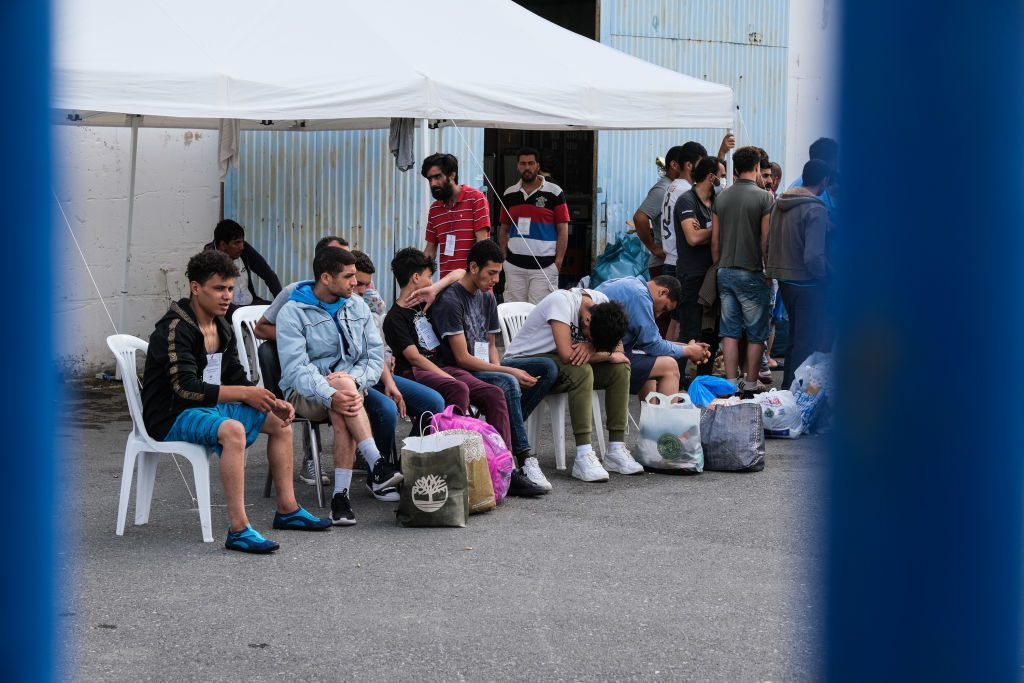
    According to video accounts of Pakistani survivors, Greek authorities deliberately sunk the vessel and provided no rescue efforts. 

    In the video, survivors can be heard saying: “They have done this [on purpose]. They have sunk it themselves.” The other added, “We did not sink for five days, so why would we sink now?”

    They recounted that the ship’s engine had broken down, leaving them still for almost a week. “We did not drown even though our engine had [completely] shut down. [the boat] sunk because of the one-maund-rope they threw into the boat.”

    In an investigation conducted by the BBC, many discrepancies were found in the statements released by the Greek authorities. For one, the coastguard claims that in the hours before the boat capsized, it was on a “steady course to Italy and not in need of rescue.” 

    However, analysis of the movement of other ships in the area suggests that the migrant boat was not moving for at least seven hours before the disaster. This corroborates eyewitness accounts of Pakistani survivors.

    The UN has called for an investigation into Greece’s handling of the disaster. Greek authorities have not yet responded to the BBC’s findings. 

    FIA arrests 10 alleged traffickers

    Calamity struck a migrant boat that capsized off the south-eastern coast of Greece last week on Wednesday, leaving hundreds of Pakistani migrants dead. On Sunday, Prime Minister Shehbaz Sharif announced a high-level investigation to trace the human traffickers behind the incident. So far 10 alleged traffickers have been arrested in connection to the tragedy.

    The Federal Investigation Agency (FIA) arrested the suspected human traffickers from Azad Jammu and Kashmir, and another one from Karachi airport who was attempting to flee abroad, Geo News has reported.

    The 10 suspected traffickers are “presently under investigation for their involvement in facilitating the entire process” according to Chaudary Shaukat, an official from Pakistan-administered Kashmir.

    Condemned Pakistanis

    Last week in the early hours of Wednesday morning, a migrant boat capsized off the Southern Peloponnese while on its course to Italy from the Libyan town of Tobruk. The Guardian reported most of the victims were men from Pakistan and Afghanistan. More sinister details have since emerged from witness accounts.

    According to witnesses, the Pakistanis onboard were ‘forced below deck’ where they had far less chance of surviving a capsize. The Observer also reported that crew members were maltreating the Pakistanis below deck when they would appear in search of fresh water or tried to escape.

    The number of Pakistani lives lost is estimated to be around 298. 135 of them are reported to be from the Kashmir region. Greek authorities have yet to release a confirmation on Pakistan’s death toll.

    Mismanagement and alleged cover-up

    Many questions have been raised since witness accounts spread across global news, specifically about the role of Greek authorities in the tragedy.

    On Friday, two days after the accident, a spokesperson of the Greek government claimed that their assistance had been refused by the migrant boat after they threw a rope to the vessel to “stabilize and check if it needed help.” This contradicted the coastguard’s earlier statements that it had kept a ‘discreet distance’ from the boat.

    According to a witness interviewed by CNN, Greek authorities were seen towing the vessel with ropes, but since the ropes were tied in the “wrong places”, the boat capsized.

    The witness, Tarek Aldroobi, had three relatives on board. He told CNN, “Their boat was in good condition and the Greek navy tried towing them to the beach but the ropes were tied in the wrong places,” Aldroobi said. “When the Greek navy tried pulling them it caused the boat to capsize.”

    Nikos Alexiou, a spokesman for the coastguard, defended their response. He said their patrol boat only used a small rope to stabilize itself while it was close to the migrant boat, and that they were unable to tow it.

    In an interview with CNN, Alexiou explained: “Regretfully there was movement of people, a shift in weight probably caused by panic and the boat capsized. As soon as we got there, we started our rescue operation to collect those who were in the water.”

    In a report by The Guardian, Maurice Stierl, from the Institute for Migration Research and Intercultural Studies at Osnabrück University in Germany, responded to the coastguard’s defense: “What caused the sudden shift in weight? Was there a panic on board? Did something happen during the attempt to provide them with something? Or was it towed? And due to this towing, did the boat go down?”

    According to Stierl, EU countries ‘weaponise time’ by delaying rescue as long as they can. “They have managed to build in delays into European engagement at sea. They’re actively sort of hiding, in fact, from migrant boats, so that they are not drawn into rescue operations. We can see how a strategy is being created, that slows down –actively and consciously slows down – rescue efforts,” Stierl explains.

    Questions arose over whether the Greek coastguard should have intervened earlier, as government officials confirmed patrol boats and cargo ships had been shadowing the migrant vessel since Tuesday afternoon.