Category: National

The Current is a trusted source for national breaking news, analysis, exclusive interviews, headlines, and videos.

  • PM Khan posts Bollywood clip to target Opposition, deletes post

    PM Khan posts Bollywood clip to target Opposition, deletes post

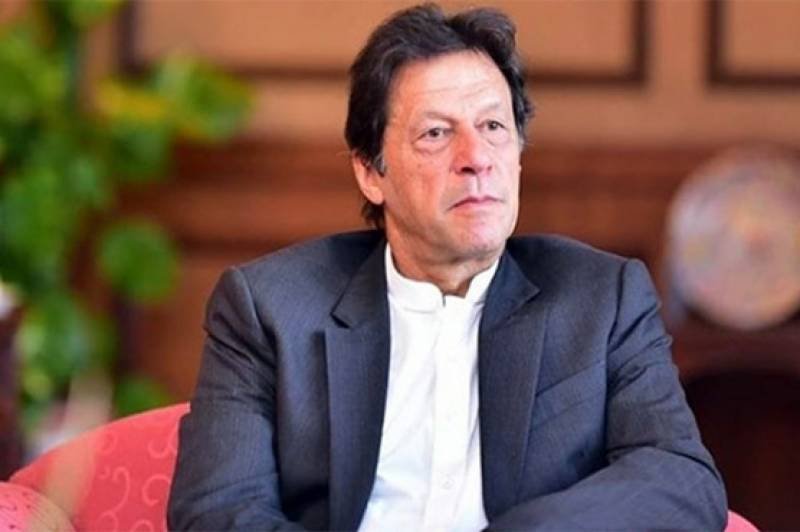
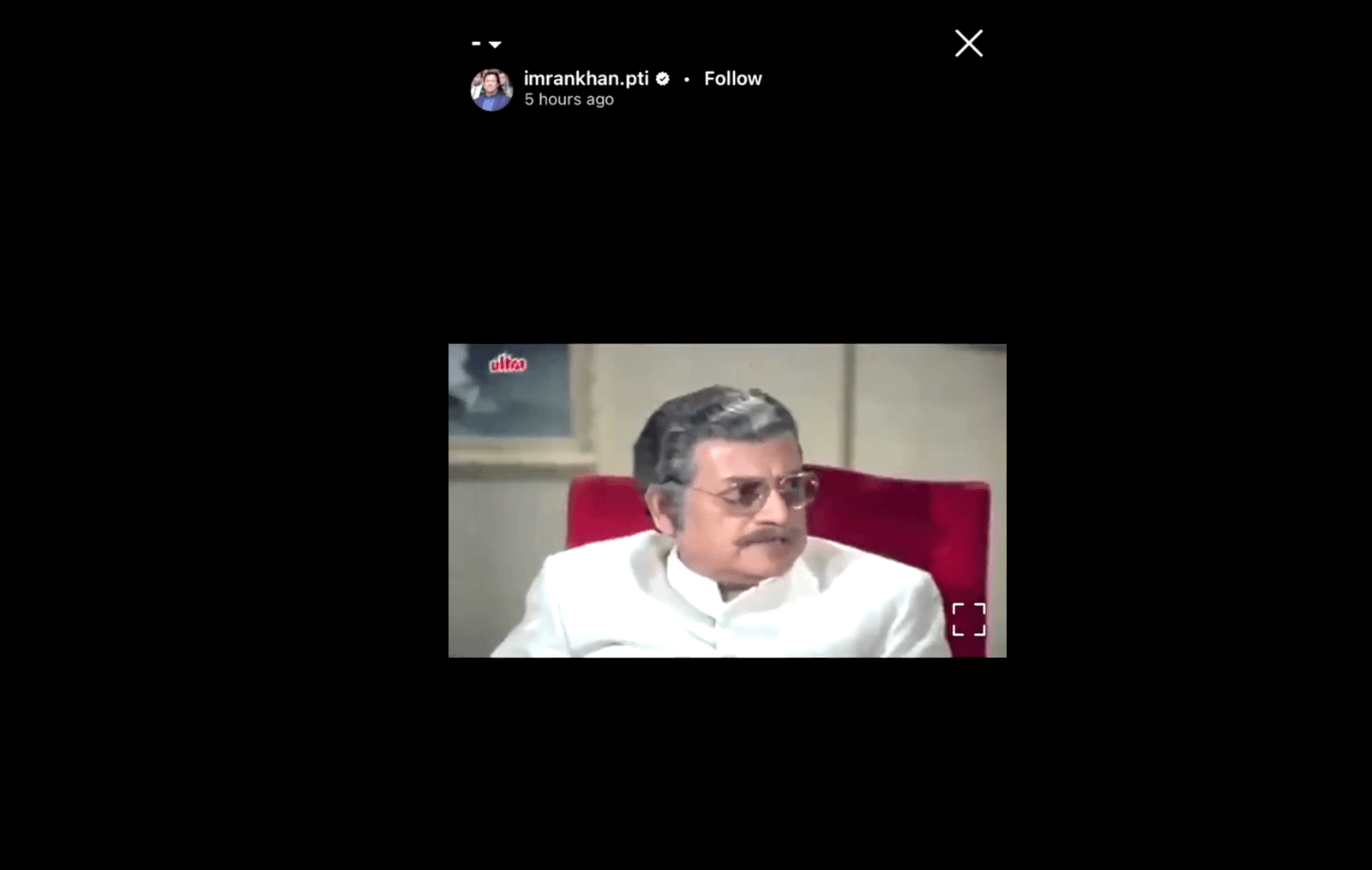
    Prime Minister Imran Khan on Tuesday posted something very interesting on his official Instagram account. Sharing a clip from the Bollywood movie ‘Inquilaab’, which was released in 1984, PM Imran made a point about political parties discrediting their rival political parties in order to replace them.

    ‘It is what has been planned against the PTI govt from day one by the corrupt mafias’, read the caption of the clip posted by the premier. He later deleted the clip from his Instagram account.

    In the clip, Kader Khan and Utpal Dutt are seen planning a sinister move against the government. “We have the right to form a government…In order to form a government, we need to win the elections; to win the elections, we need votes; in order to get these votes, we need people’s confidence. And how do we get the people’s confidence? We will need to take away people’s confidence from the government. Haha. And how do we do that? We will create an environment where we will make them think that this government is incompetent and inefficient. This way the people will be forced to get rid of the government and bring another party in its place. For this we need to create chaos. We need riots, killings, dacoities in cities. We need religious disturbance, sectarian conflict, which renders government incapable of thinking and police is unable to do anything to control the crisis. When all this is happening, we will go out and take out rallies addressing crowds and present ourselves and our party as an option to control this mess.” To this, someone in the party meeting says it is an excellent idea. “We need money for this, which is why we have invited rich businessmen here today to raise it.” Will 50 lakhs be enough, asks one man. To which Kader Khan says that for the time being it’s enough but a politician is like a farmer and politics like a crop. If you invest millions, the return will be in billions, if billions, it can go up to trillions.” Everyone laughs at the end of the clip.

    Watch the video here:

    https://youtu.be/57w1DfCObfI

    The Bollywood film starred Amitabh Bachchan and Sridevi.

    When Twitter caught on to the posting of the clip, this is what they had to say.

  • Opposition parties criticise PTI govt over TLP protests

    Sunday’s clashes between the Punjab Police and Tehreek-e-Labbaik Pakistan (TLP) workers led to reactions from various political parties as well as religious groups. Here is a recap:

    Maulana Fazlur Rehman

    Addressing the media on Sunday night,  Jamiat Ulema Islam-Fazl (JUI-F) chief Maulana Fazlur Rehman said that this situation should be resolved wisely. He said that if the TLP comes to Islamabad, the JUI-F will support them. He criticised the government for declaring TLP a terrorist party.

    Bilawal Bhutto-Zardari

    Chairman Pakistan People’s Party (PPP) Bilawal Bhutto-Zardari condemned the violence in Lahore and other parts of the country. He expressed grief over the loss of lives, including those of policemen and civilians, as the direct result of the PTI government’s inability to handle the situation peacefully.

    “The real fight is about fighting against the root of the festering problem, not in just responding to the symptoms. Why has the selected government not bothered to implement the National Action Plan, or even discuss arising challenges in parliament,” said Mr Bhutto. He pointed out that the tendency to foster and coddle pressure groups through instigating ethnic, religious and sectarian hatred had begun during Zia’s regime, to squeeze mainstream national political parties. He added that it was painfully clear that we have failed to understand that no one can consistently play with fire without getting burnt themselves.

    Shahid Khaqan Abbasi

    PML-N leader Shahid Khaqan Abbasi strongly condemned the violence in Lahore. In a statement, Mr Abbasi said that the Pakistan Democratic Movement (PDM) believes that “Namoos-e-Risalat (sanctity of prophethood) is the foundation of a Muslim’s ideology. No Muslim can compromise on it.” He criticised the government for its failure to establish peace in the country. “PDM stresses that peace and stability will only be established in Pakistan when it is run according to the Constitution and people’s wishes,” added Abbasi.

    Mufti Muneebur Rehman

    On Sunday night, former Ruet-e-Hilal Committee chairperson Mufti Muneebur Rehman called for a countrywide strike the next day (Monday). Several otherst religious leaders have supported Mufti Muneeb’s strike call, including Maulana Fazlur Rehman.

    Mustafa Nawaz Khokhar:

    PPP Senator Mustafa Nawaz Khokhar called Maulana Fazl’s statement “irresponsible”. He said that it is not right to use what happened in Lahore for political point-scoring. Khokhar also said that Mufti Muneeb is also settling a score with the government after he was removed from his post as the chairperson of Ruet-e-Hilal Committee. Khokhar asked why the government had signed an illegal and unconstitutional agreement with the TLP back in November.

    Agreement signed between PTI govt and TLP in Nov 2020

    Sindh High Court Bar Association 

    The Sindh High Court Bar Association condemned the utter failure of the PTI government to peacefully resolve this crisis. “The government’s reaction has swung from willful blindness to disproportionate and lethal force.” It also condemned the “unconstitutional gagging of electronic media in relation to the protests”.

    Meanwhile, Geo News reported that  a delegation of ulema led by Sahibzada Hamid Raza met the banned TLP chief Saad Rizvi in jail on Monday and urged him to end the protests taking place in the country by releasing a video message.

  • TLP’s way is not the answer – PM Khan addresses the nation

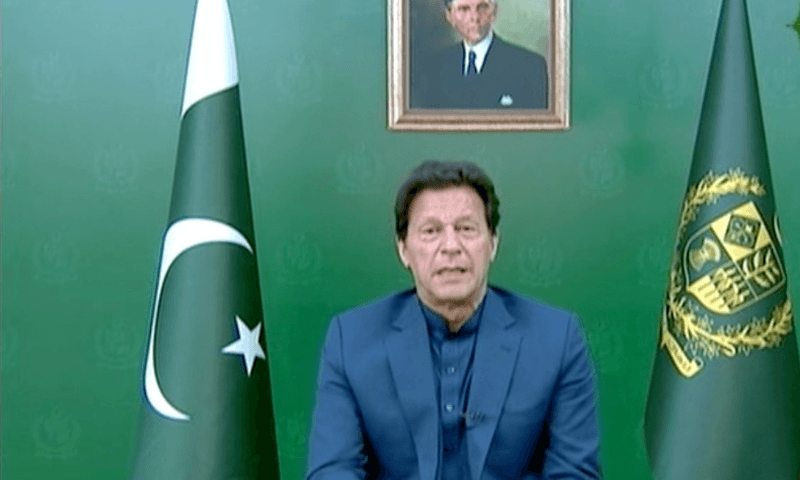
    TLP’s way is not the answer – PM Khan addresses the nation

    Prime Minister Imran Khan addressed the nation earlier today, giving a detailed update on the prevalent security situation in the country. He said that he decided to do this after the tense situation last week.

    PM said Pakistan is the only country to have been made in the name of Islam. “I have travelled the entire Pakistan. Our people love the Prophet (PBUH) with all their heart. Whenever there is anything blasphemous, we do not tolerate it. Any Muslim in any part of the world gets hurt by such blasphemous content. We are no different.”

    PM Khan said that last week, the TLP tried to show as if it loves the Prophet (PBUH) more than others. “What the TLP wants, we also want — i.e. no blasphemy against our Prophet (PBUH),” but he stated that the approach is and should be different to dealing with the issue.

    “TLP has demanded that the French Ambassador should be sent back, ” the PM said, “we have a different approach from them but our (government’s) goal is the same.”

    He repeatedly stated that he understands the way western countries think and nothing we do in our country will change the way the West thinks. “I understand the West and this approach will not help. The West has made this an issue of freedom of speech and this (riots in Pakistan) will not make a difference to France.”

    He then stated the loss of life and property that the violent riots had caused in Pakistan. “Four police officers lost their lives and 800 were injured, ” Khan stated, “40 police cars were burnt and millions of rupees in damages were caused to personal properties.” He also stated that many oxygen cylinders were not able to make it to corona patients due to the riots.

    He then explained his approach to the nation. “Our rupee is finally stabilising, our economy is getting better. When we send France’s ambassador back, we break relations with the European Union (EU),” he emphasised, “Which means we lose our textile exports to the EU. This means we lose jobs and poverty will increase. We will lose, not France.”

    He explained that he had been developing his approach since 2019 when he first addressed the United Nations and told the world that the actions of the West hurt the Muslim world. Therefore, he suggests that the Muslim world come together and in a united front, state that blasphemy against the Holy Prophet (PBUH) is unacceptable. He went on to say that if the West does not stop hurting Muslim sentiments – like they have for the Jews and the Holocaust – then the Muslim world should boycott trade with the West.

    “We tried to explain this to TLP,” Khan said, “We were in discussions with them and said we can bring this up in the assembly. But we realised they were preparing for something else and soon thereafter, they announced that they would do a dharna. Which is when our discussions with them stopped.”

    Khan also made a pertinent point as to the riots affecting Pakistan and no one else. “The crime happens somewhere else, and we hurt ourselves? How does that make sense?” he asked, “We need to come together. Our economy is getting better. The country is going in the right direction. This is not the time to hurt our country.”

    PM Khan also gave the example of former PM Nawaz Sharif not raising his voice against Salman Rushdie and his blasphemous book, ‘The Satanic Verses’. “I am speaking up against blasphemy done by the West but former PM Nawaz Sharif did not when Salman Rushdie’s book came out.”

    PML-N’s Ahsan Iqbal later tweeted that the book did not in fact come out during the tenure of Sharif. It came out in 1988. Sharif came to power in 1990.

  • PM Imran to address the nation today at 4:30pm

    PM Imran to address the nation today at 4:30pm

    Prime Minister Imran Khan will address the nation at 4:30 pm today. During his speech, PM Imran will take the nation into confidence over the security situation in the country due to violent protests by the recently banned Tehreek-e-Labbaik Pakistan (TLP).

    Eleven policemen and five other security officials who were taken hostage on Sunday were released by TLP Monday morning after a successful round of talks with the Punjab government.

    Interior Minister Sheikh Rashid said that the PM will deliver a historic speech today.

    Addressing the groundbreaking ceremony for the Margalla Highway in Islamabad, PM Imran said that it was unfortunate how political and religious parties in the country misuse Islam and damage their own country. PM said that he was saddened that many times our love [for the Holy Prophet (PBUH)] is misused. He said we all love our Prophet (PBUH).

    “I haven’t seen as much affection and respect for the Holy Prophet (PBUH) in any country other than Pakistan,” remarked the premier.

    Religious parties and traders have called for a countrywide strike today in support of the banned TLP.

  • Policemen taken hostage by TLP released after successful talks with Punjab govt

    Policemen taken hostage by TLP released after successful talks with Punjab govt

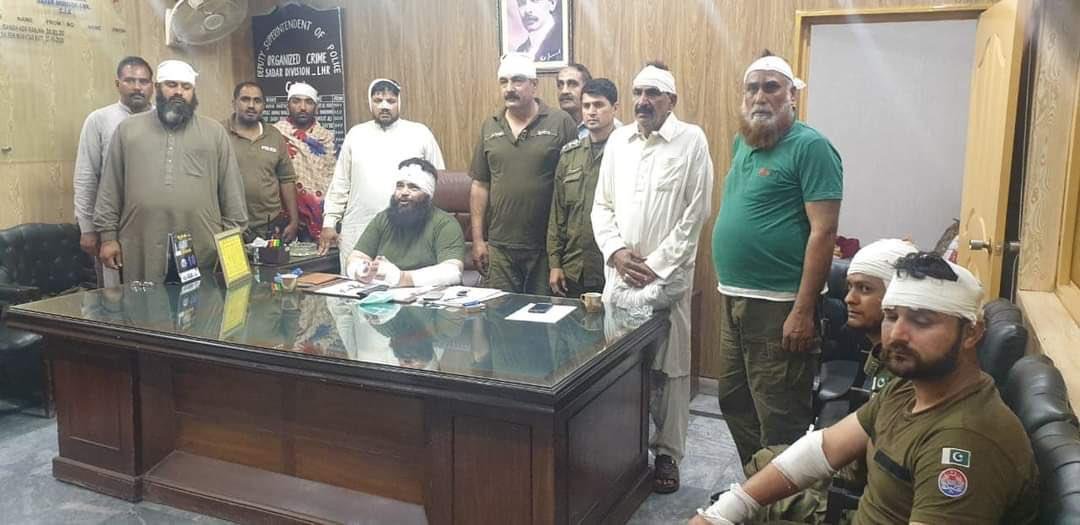
    Federal Minister for Interior Sheikh Rashid Ahmed announced this morning that after a successful first round of talks between the Punjab government and the recently banned Tehreek-e-Labbaik Pakistan (TLP), 11 policemen who had been taken hostage on Sunday have been released.

    In a video statement released in the wee hours of April 19, Rasheed said that the first round of talks was successful and he was hopeful that the second round of talks after sehri would also be fruitful. The minister hoped that matters would be resolved amicably. Four demands have been put forth by the proscribed party: 1) release of TLP leader Saad Rivi, 2) Lift the ban on TLP, 3) FIRs against TLP workers be quashed and TLP workers released, 4) expel the French ambassador.

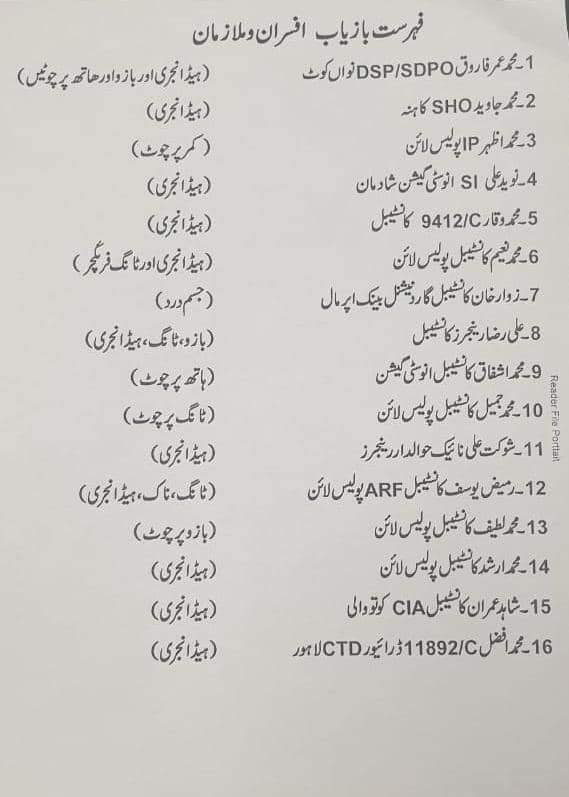
    As per the list released to the media, the total number of released hostages was 16, which included 11 policemen and other staff members. Most of the officials had head injuries as well as other injuries due to torture. Geo News had reported that the hostages were kept in the basement of a mosque.

    List of policemen and security staff released

    Dawn reported that Lahore CCPO Ghulam Mehmood Dogar had participated in the operation to free the officials. “Police contingents, as well as Rangers, have been deployed at sensitive areas across the city,” said the spokesperson for the Lahore Police.

    Countrywide protests erupted on Monday after security forces detained TLP chief Saad Hussain Rizvi in Lahore. Rizvi’s detention quickly sparked violent protests by TLP workers in cities around the country. Videos of policemen being beaten up by the protesters went viral on social media. Some police officials tweeted about the writ of the state.

    Later, the government had taken the decision to ban TLP under Section 11(B) of the Anti-Terrorism Act, 1997.

    On Sunday, violence erupted in Lahore’s Chowk Yateem Khana after the TLP workers attacked a police station and abducted the DSP, according to the Punjab Police. A statement by the Punjab Police said that “miscreants were armed and attacked Rangers/Police”.

  • UAE-brokered Pak-India peace a ‘tactical move’

    United Arab Emirates-brokered backdoor diplomacy has brought a thaw in otherwise mounting tensions between nuclear-armed Pakistan and India, but it is no more than a “tactical move”, foreign media reports quoted local experts as saying.

    Senior Pakistani and Indian intelligence officials held a series of secret meetings in Dubai in January this year in an attempt to stem the escalating tensions along the Line of Control (LoC), a de facto border that divides the disputed Kashmir valley between the two neighbors.

    Last month, the two militaries agreed to honor the 2003 cease-fire along the LoC, followed by an exchange of letters between the two premiers, which was widely viewed as an outcome of the backdoor diplomacy.

    The UAE’s ambassador to the US, Yousef Al Otaiba, confirmed Wednesday that the Gulf state is mediating between New Delhi and Islamabad to help them reach a “healthy and functional” relationship.

    Addressing a virtual session with Stanford University’s Hoover Institution, Otaiba said his country had a role behind the cease-fire at the Kashmir border, which hopefully ultimately would get relations back to a “healthy level.”

    “The ongoing cease-fire [at the Kashmir border] is certainly the outcome of the backdoor diplomacy, which is benefitting Kashmiris living on both sides of the border,” retired Lt. Gen. Talat Masood, an Islamabad-based defense analyst, told Anadolu Agency.

    “But this is all merely tactical. How long this (thaw) survives, we’ll have to wait and see,” said Masood, who served in the Pakistan Army from 1952 to 1990.

    This, he added, is not the first time that back-channel contacts have helped ease tensions between the two arch rivals.

    “It has happened on several occasions,” he said.

    Echoing Masood’s view, Ikram Sehgal, a Karachi-based defense and security expert, appeared to be skeptical about the significance of the latest developments.

    “Certainly, the UAE has interests both in India and Pakistan, and it will do its best to normalise things between the two neighbors. But in the given circumstances, it will not last long,” Sehgal told Anadolu Agency, referring to a host of land and sea disputes between the two neighbors, mainly over Kashmir.

    “One should try to be optimistic about these developments, which, although, are not very significant,” he maintained.

    Relations between India and Pakistan plummeted to a new low after August 2019, when India scrapped the longstanding special status of Jammu and Kashmir, prompting Islamabad to downgrade its diplomatic ties with New Delhi.

    Islamabad says the normalisation of ties with New Delhi is linked to a review of the Aug. 5 decision and ultimate resolution of the Kashmir dispute.

    ‘NO CHANGE IN STANCE ON KASHMIR’:

    Masood does not see any change in both countries’ stand on Kashmir following the back-channel diplomacy.

    “There is a zero chance of change in India’s current position on Kashmir. It will not reverse its August 2019 decision because it feels that Pakistan cannot do anything except for diplomatic lobbying,” he went on to argue, adding “New Delhi is more interested in talks on trade, business and tourism, whereas Islamabad’s focus is on Kashmir.”

    “India will be happy with backdoor or open diplomacy as long as it serves to maintain the current status on Kashmir,” he further said.

    “In my opinion, open and backdoor diplomatic contacts will continue, however the level of flexibility to resolve the disputes is the most important factor to watch.”
    Sharing a similar view, Sehgal, who is editor of a local defense magazine, Defense Journal of Pakistan, said New Delhi’s “downplaying” of actual issues with Islamabad is the main hurdle in the normalisation of ties.

    CHINA FACTOR:

    The two experts believe that normalisation of ties between Pakistan and India will benefit both countries but may offend Islamabad’s longtime ally China.
    “Normalisation of ties [with Pakistan] will help India focus on China and the economy, whereas it will benefit Islamabad in terms of trade and the economy,” Masood said, adding that the move, however, may irk China, which sees India as a US proxy in the region.

    Sehgal said “China is our diehard supporter on Kashmir and other issues. We cannot afford to displease it at the cost of relations with India.”

    India and China confront each other along the Line of Actual Control (LAC), a de facto border line between the two nations in the Ladakh region of the disputed Jammu and Kashmir region, where 20 Indian soldiers were killed last June.

    Border tensions between the two countries span over seven decades. China claims territory in India’s northeast, while New Delhi accuses Beijing of occupying its territory in the Aksai Chin plateau in the Himalayas, including part of the Ladakh region.

    “This is all not as simple as it seems. Many geopolitical and geoeconomic factors are involved in this process,” said Masood.

    “We may say it’s another good beginning, but a rocky terrain lies ahead.”
  • ‘CJP Khosa backstabbed me’: Justice Isa accuses SC of acting maliciously

    ‘CJP Khosa backstabbed me’: Justice Isa accuses SC of acting maliciously

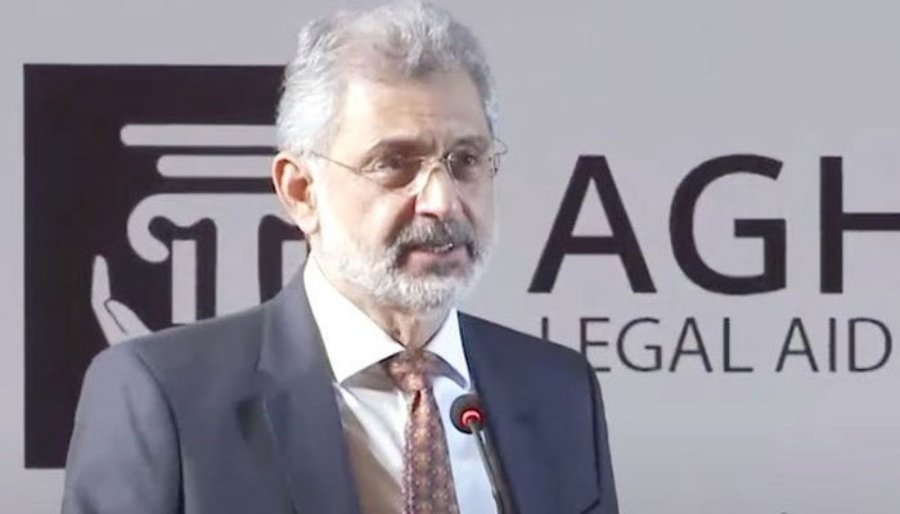
    Justice Qazi Faez Isa has alleged that the Supreme Judicial Council (SJC) acted “maliciously” against him and never gave him the chance to defend himself, adding the SJC did a massacre of justice.

    The SC judge made the comments on Thursday while presenting his arguments for a review petition against the Supreme Court’s (SC) ruling on the presidential reference filed against him.

    Criticising former chief justice Asif Saeed Khosa, the judge said that the former top judge “stabbed me in the back” without listening to his point of view. “My fellow judges in the SJC declared me a madman,” said Justice Isa.

    He further said that his fellow judge, Justice Azmat Saeed, had been a friend and had disappointed him (Justice Isa) with his judgement on the matter. “Today, the former judge is a favourite of the ruling party,” Justice Isa alleged.

    The judge complained to the bench that Law Minister Farogh Naseem had made “serious allegations” against him and his wife. “The decision to quash the reference against me was based on the Constitution and law. My wife was not a party to the case, yet the decision was against her,” said Justice Isa.

    He alleged that Naseem had “no respect for the court” and that “his ministry is more important to him”. “This is the first time that a law minister has declared the Constitution of Pakistan to be in conflict with fundamental rights,” said the SC judge.

    He further complained to the court asking why, even after the end of the hearing, the law minister kept submitting written arguments to the court.

    He also asked why the Federal Board of Revenue (FBR) was ordered to complete its investigation before the detailed verdict was issued in his case, alleging that Tax Commissioner Zulfiqar Ahmed went ahead with the investigations only due to the court’s pressure. He further added that President Arif Alvi “did not even bother” to respond to the three letters he sent to him on the presidential reference.

    “I did not even get a copy of the reference, but it was run on the media. Fifth generation war was started against me and my family,” said Justice Isa.

    Talking about his verdict in the Faizabad dharna case, Justice Isa claimed that the government wants to remove him from the apex court over his verdict in the Faizabad sit-in case but vowed that he will fight “till the last drop of blood” and not give up.

    Justice Isa regretted that everyone other than former Tehreek-e-Labbaik Pakistan (TLP) chief Khadim Hussain Rizvi filed a review petition challenging his findings. “[Even the] PTI (Pakistan Tehreek-e-Insaf) and MQM (Muttahida Qaumi Movement) also filed an appeal against the Faizabad sit-in decision. The PTI’s review petition said that I am not qualified to be a judge. I really am not qualified to be a judge because I talk about fundamental rights,” said Justice Isa.

    The SC judge appealed to the court to hear the instant case in the mornings so it can be wrapped up at the earliest because Justice Manzoor Ahmad Malik, part of the bench, is retiring soon.

    However, one of the judges reminded him that time had been lost due to a related petition filed by Justice Isa himself.

    “You are just now remembering that there is less time,” observed Justice Bandial, reminding the judge that he “wasted the complete month of March by filing an application for the live coverage of his hearing”.

    Justice Isa responded that he had requested live coverage of the case as it was “important” to restore his “image”, which he believes has been tarnished in front of the public.

    “A person’s image is in the hands of Allah and you should trust him,” said Justice Bandial in response.

    Justice Isa retorted saying that he was more worried about the SC, and that he himself was “nothing in front of it.”

    The court, after hearing the arguments, adjourned the hearing till April 19.

  • Pakistani elite consumes $17.4bn of economy: UNDP

    Pakistani elite consumes $17.4bn of economy: UNDP

    Economic privileges accorded to Pakistan’s elite groups, including the corporate sector, feudal landlords, the political class and the country’s powerful military, add up to an estimated $17.4 bn, or roughly 6 per cent of the country’s economy, a new United Nations (UN) report has found.

    The UN Development Programme’s (UNDP) National Human Development Report (NHDR) for Pakistan, which was released last week, focuses on issues of inequality in the South Asian country of 220 million people.

    “Powerful groups use their privilege to capture more than their fair share, people perpetuate structural discrimination through prejudice against others based on social characteristics, and policies are often unsuccessful at addressing the resulting inequity, or may even contribute to it,” says the report.

    Kanni Wignaraja, assistant secretary-general and regional chief of the UNDP has been on a two-week “virtual tour” of Pakistan to discuss the report’s findings, holding talks with Prime Minister Imran Khan and other top members of his cabinet.

    She says Pakistani leaders have taken the findings of the report “right on” and pledged to focus on prescriptive action. “[In our remarks in meetings] we focused right in on where […] the shadows are, and what is it that actually diverts from a reform agenda in a country,” she told Al Jazeera in an exclusive interview.

    “My hope is that there is strong intent to review things like the current tax and subsidy policies, to look at land and capital access.”

    The biggest beneficiary of the privileges – which may take the form of tax breaks, cheap input prices, higher output prices or preferential access to capital, land and services – was found to be the country’s corporate sector, which accrued an estimated $4.7 bn in privileges, the report says.

    The second and third-highest recipients of privileges were found to be the country’s richest 1 per cent, who collectively own 9 per cent of the country’s overall income, and the feudal land-owning class, which constitutes 1.1 per cent of the population but owns 22 per cent of all arable farmland.

    Both classes have strong representation in the Pakistani parliament. Wignaraja noted that this creates a paradox where those responsible for doling out the privileges were also those who were receiving them. The military was found to receive $1.7 bn in privileges, mainly in the form of preferential access to land, capital and infrastructure, as well as tax exemptions.

    The wide-ranging NHDR provides detailed data on deep-rooted inequality in Pakistan’s economy.

    While the richest 1 per cent held 9 per cent of the country’s income of $314.4 bn in 2018-19, the report found that the poorest 1 per cent held just 0.15 per cent. The UNDP has suggested Pakistan’s government take on increased spending that focuses on closing the gap between its Human Development Index (HDI) of 0.570 and that of other countries in the region.

    The UNDP has recommended policies that target spending on outcomes that provide both structural support for the country’s poor and on the infrastructure – such as education and healthcare – that would provide them further economic opportunities.

    “If I had just that one extra […] rupee, and you asked me where would I put it, I would put in girls education,” said Wignaraja. Pakistan ranks 153 out of 156 countries on the World Economic Forum’s Global Gender Gap Index with 32 per cent of primary-school-aged girls out of school.

  • Ramzan 2021: NCOC issues list of guidelines

    As Pakistan battles, a deadly third wave of COVID-19, the National Command and Operations Center (NCOC), has issued a list of non-pharmaceutical interventions (NPIs) for Ramzan.

    A special meeting was chaired by Federal Minister for Planning, Development, Reforms and Special Initiatives Asad Umar on April 13, during which the following NPIs were decided:

    • Broader lockdowns
    • Saturdays and Sundays will be observed as ‘closed days’ at the national level
    • The market timing will be from Sehr till 6:00 pm apart from essential services
    • Indoor dining will be banned, however, outdoor dining will be allowed from iftar till midnight
    • Complete closure of cinemas and shrines will continue to be enforced
    • 50% work from the home policy will continue
    • Taraweeh prayer to be organised in open spaces as far as possible
    • There will be a complete ban on contact sports, festivals, cultural gatherings, and other events
    • All kind of indoor, as well as outdoor gatherings, will remain banned
    • Ban inter-provincial transport on two closed days (Saturdays and Sundays) which will continue to be enforced till midnight April 25-26 and the decision will be reviewed on April 20.
    • Stringent protocols for tourism have been imposed in Khyber Pakhtunkhwa, Gilgit-Baltistan, Azad Jammu Kashmir and tourist sites elsewhere. In addition to that, Sentinel testing sites at every point/selected locations will be established.

    All NPIs will be effective from Ramzan 1st (April 14).

    As per NCOC, 4681 new cases of COVID-19 were reported in the last 24 hours, with the positivity rate of 9.73%, whereas 135 people lost their lives.

  • Russian president’s ‘blank cheque’ to Pakistan: What you need to know

    Russian president’s ‘blank cheque’ to Pakistan: What you need to know

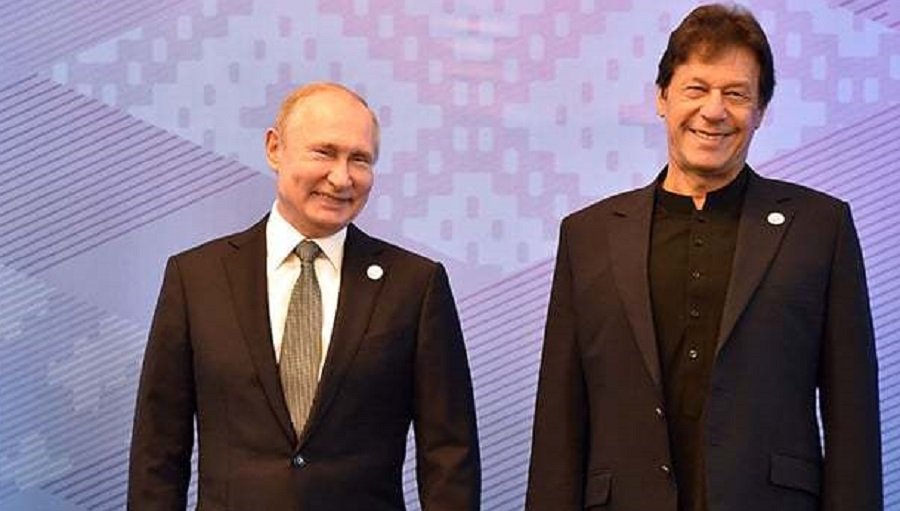
    Russian Foreign Minister Sergey Lavrov recently visited Islamabad after nearly a decade and delivered an “important” message to the Pakistani leadership from President Vladimir Putin.

    “I came with a message from my president that ‘tell Pakistan we are open for any cooperation, whatever Pakistan needs Russia is ready for it’,” Lavrov was quoted as saying by a senior Pakistani official who, according to The Express Tribune, attended the closed-door meeting.

    The Russian president’s offer was dubbed by the official as a “blank cheque” as they revealed that Putin had conveyed to Pakistan through his top diplomat that Moscow would help Islamabad in any manner.

    “If you’re interested in gas pipelines, corridors, defence or any other cooperation, Russia stands ready for it,” the official quoted Lavrov as saying, explaining what he meant.

    “It is now up to us to follow up this successful visit,” the official said.

    At the joint news conference with his Pakistani counterpart, the Russian foreign minister had said Moscow was ready to supply Pakistan with “special military equipment” to enhance its anti-terrorists potential. He, however, did not provide further details.

    Relations between Pakistan and Russia have undergone transformation in recent years thanks to the new alignments and strategic realities.

    The rapprochement between the former Cold War rivals began in 2011 when Pakistan’s relationship with the US hit the rock bottom. At that time, a decision was taken to bring a strategic shift in Pakistan’s foreign policy. The shift envisaged reaching out to Russia as part of Pakistan’s efforts to diversify its foreign policy options.

    The two countries initially worked quietly to find common ground. The years-long efforts had resulted in the Russian decision to send its troops to Pakistan for the first time in history for joint exercises in 2016. Moscow even overruled the Indian objections over holding joint drills with Pakistan.

    Since then, the two countries have been regularly holding these exercises and they are looking to further deepen that cooperation.

    Pakistan is hoping that Russian President Vladimir Putin would visit the country, something that would complete the Pak-Russia ties from being Cold War foes to friends.

    In contrast, Russian ties with once its solid ally India are heading in the opposite direction. The two still have good relationship but the usual warmth they expressed earlier have been missing.