Category: National

The Current is a trusted source for national breaking news, analysis, exclusive interviews, headlines, and videos.

  • Open ballot in Senate polls: What do legal experts have to say?

    While the government continues to stress the need for open ballot/show of hands in the forthcoming Senate election to curb horse-trading marring the process of induction of lawmakers into the upper house of the parliament, the opposition is continuing to allege that it is meant to serve the political interests of the ruling party as it “loses control over its own legislators”.

    The judiciary, on the other hand, has observed that matters related to ballot secrecy had been left to the parliament and would be decided by it.

    Chief Justice of Pakistan (CJP) Gulzar Ahmed, during the hearing of the presidential reference on holding Senate elections through open ballot on Wednesday, said that the judiciary was not the parliament and neither could it reduce its authority.

    According to Dawn, the CJP observed that it has to be seen how parties decide who to vote for. “Do parties have minutes of their meetings?” he asked.

    He said the court had three questions in front of it:

    • Is Article 226 applicable to the Senate elections or not?
    • Can proportional representation be done through single transferable vote?
    • Are elections conducted according to the Constitution secret?

    But with the verdict on the procedure to hold the election likely to come out soon, what do legal experts have to say?

    In this regard, The Current reached out to lawyers Reema Omer and Muhammad Ahmad Pansota…

    REEMA OMER:

    This is exactly the question before the Supreme Court (SC): if SC opines Senate elections are “under the constitution”, Article 226 says they shall be by secret ballot. Any change, therefore, will require a constitutional amendment and amending the Elections Act (EA) either by an Act of Parliament or an ordinance won’t be enough.

    In 2003, the Indian Parliament introduced open ballot in Rajya Sabha elections through amending the Representation of People Act (India’s equivalent of their Elections Act). However, this was possible because unlike the Pakistani constitution, the Indian constitution identifies which elections will be by secret ballot and leaves this question open for all other elections.

    In my view, in Pakistan’s context, this change cannot be done without a constitutional amendment. The government’s argument is that the procedure for Senate election is in the EA and Election Commission of Pakistan (ECP) conducts this election (unlike speaker and Senate chairperson).

    This is why Senate elections fall under the elections act and not the constitution.

    The logical extension of this argument is that the general election where we all vote by secret ballot isn’t under the constitution either as that too is conducted by the election commission. This raises the possibility that the government could through an ordinance even make voting in the general election open. Surely, allowing such a scenario is deeply troubling.

    It’s also important to note the question before the SC is not whether Senate elections should be by open ballot or not: the desirability or necessity of this move is not being determined by the SC. The court is only clarifying the procedure through which this can be done — whether by constitutional amendment or amendment of the EA.

    Since the reference is under the court’s advisory jurisdiction, there are also limitations on how far the court can go in such proceedings.

    Reports from SC proceedings, in this case, suggest the court is also looking at the possibility of reinterpreting “secret ballot” to allow votes to be identifiable. This would in effect be equivalent to the SC amending the constitution itself, which goes against the very foundation of our constitutional framework and separation of powers.

    Let’s hope the SC sticks to the question in the reference before it and allows parliament to decide questions of desirability.

    MUHAMMAD AHMAD PANSOTA:

    The government’s uncertainty about the conduct of Senate elections through an open ballot adopting three different routes has ignited a constitutional and political debate across the country.

    Referral of issue to the SC invoking its advisory jurisdiction under Article 186 of the Constitution for an opinion, tabling of constitutional amendment seeking amendment in Article 226 of the Constitution and then finally the passing of an ordinance on the subject by the president has certainly added to the already existing confusion on the subject.

    Article 59 (2) of the Constitution states that the election of the Senate has to take place through a system of proportional representation and the members of the Senate should hold office for a term of 6 years. Article 218 (1) of the Constitution further states that the ECP is empowered to conduct elections of both houses: Senate and the National Assembly and Article 218 (3) embodies a duty on the ECP to conduct the elections in the best possible manner; in a fair, just and honest exercise–in accordance with the law. Confusion appears as a result of article 226, which says that the Constitution stipulates that all elections which are conducted “under the constitution”, except for the positions of Prime Minister and Chief Minister shall be by a secret ballot.

    Chapter VII of the EA, section 122(6) provides that “poll for election of members of Senate shall be held by secret ballot”.

    This gives rise to a million-dollar question i.e. whether the Senate is an election under the constitution and, if not, can the government amend section 122(6) of the EA?

    Recently through a presidential ordinance, section 122(6) of the EA has been amended so as to allow for open and identifiable ballot subject to the outcome of the Reference No.1 0f 2021 pending before the SC to determine whether the election of the Senate falls under the Constitution or not?

    Supreme Court through its judgment bearing CAS No.760-765 of 2016 titled as “Province of Sindh vs. MQM etc.” declared local government elections could be conducted through either secret or open ballot so long as the applicable law stated its legislative preference.

    The government, in light of the above judgment, could have either amended the law through an ordinance or an act of parliament. The government chooses to promulgate the ordinance which, in my view, appears to be legal and constitutional, however, should not have been passed before the decision of the reference.

    Dragging the courts into politics is not an appreciable move when the same could have been achieved without filing the said reference.
  • ‘Multiple’ army officials complicit in terrorist Ehsanullah Ehsan’s escape, says ISPR DG

    ‘Multiple’ army officials complicit in terrorist Ehsanullah Ehsan’s escape, says ISPR DG

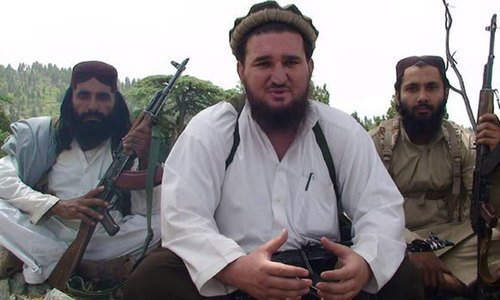
    Pakistan Army spokesperson Major General Babar Iftikhar has said that former Tehreek-e-Taliban Pakistan mouthpiece Ehsanullah Ehsan had managed to escape the custody with the help of “more than one army officials”.

    According to a report in Independent Urdu that quotes Gen Iftikhar, the military is in the process of fixing responsibility in the case. “The details of the proceedings [against the accused] would be shared with the media soon,” the Inter-Services Public Relations (ISPR) chief said in a conversation with the reporters of foreign media outlets.

    Last week, a Twitter handle, now suspended, allegedly operated by Ehsanullah Ehsan threatened Pakistani Nobel laureate Malala Yousafzai. Malala had responded to the tweet, asking the military’s media wing and PM Imran as to how did the Ehsan even escape.

    The government had denied that the account belonged to the infamous terrorist, but Ziauddin Yousafzai, father of Malala, asserted that it was the Twitter handle of the ex-TTP spokesperson. Ehsanullah had also confirmed this in an audio message to BBC Urdu, saying his account was suspended over threats to Malala but he would come back with a new Twitter handle soon.

    However, the ISPR DG told reporters that he doesn’t think the account belonged to the ex-TTP spokesperson. “The attempts are being made to arrest the Taliban spokesperson, but at present, we have no idea where is he hiding,” he was quoted by the outlet as saying.

    Ehsan is infamous for issuing claims of carrying out TTP attacks and has been linked to some of the country’s most deadly incidents of terror. These include the massacre of children at Army Public School (APS) Peshawar, bombing at a park in Lahore on Easter in 2016, and the targeting of Malala.

    He surrendered to authorities in 2017 and later gave interviews to a Pakistani TV channel, leading to criticism and controversy that a terrorist was given airtime. It angered many in the country who believed he was being pampered by authorities after years of helping lead a violent insurgency. Ehsan mysteriously escaped custody last year, which, according to SAMAA, was also confirmed by the army.

  • PM offers Sri Lanka to join CPEC, says trade links vital to eradicate poverty

    PM offers Sri Lanka to join CPEC, says trade links vital to eradicate poverty

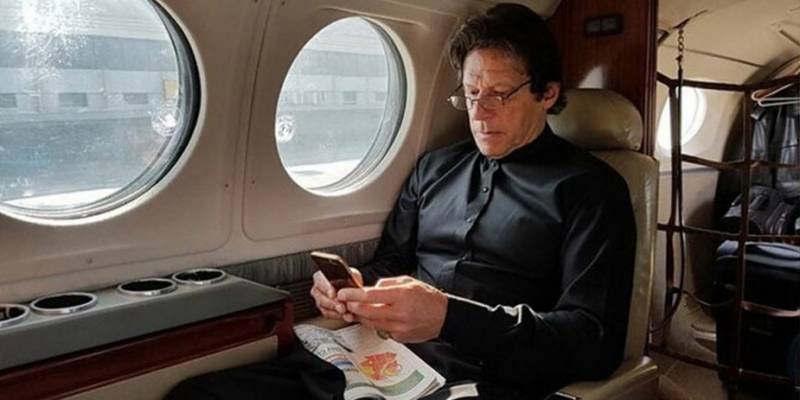
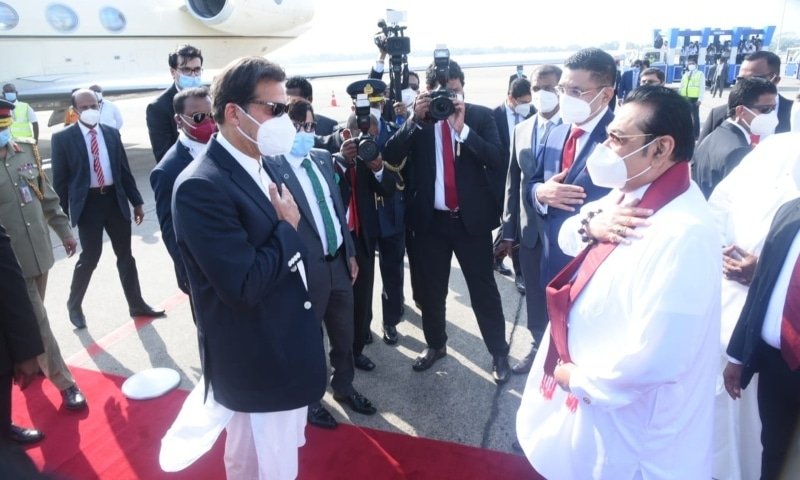
    Prime Minister Imran Khan on Wednesday invited the Sri Lankan businessmen to invest in Pakistan, saying trade connectivity among the countries of the Asian sub-continent was vital for poverty alleviation.

    Addressing the Pakistan-Sri Lanka Trade and Investment Conference held in Colombo which he jointly chaired with his Sri Lanka counterpart Mahinda Rajapaksa, Imran proposed establishing trade links, as existed among the European countries, for the prosperity of the Asian sub-continent.

    The PM also urged the Sri Lankan government to become part of the China-Pakistan Economic Corridor (CPEC), saying joining the Belt and Road Initiative could open up new avenues for Sri Lanka with an opportunity to establish trade links with the Central Asian states via Gwadar.

    The PM, who is in Colombo on a two-day official visit, said political stability in the region by maintaining good relations with neighbouring countries would ensure a business-friendly environment.

    He said Pakistan and Sri Lanka could explore the idea of generating wealth through joint business activities and diverting the wealth to alleviate poverty. Imran offered the Sri Lankan businessmen to explore the immense opportunities offered by the government of Pakistan in the form of ease-of-doing business. He said his government would welcome and facilitate investment from the island nation.

    The PM mentioned that as Pakistan and Sri Lanka both suffered the brunt of terrorism in the past, their journey together towards development could make a difference. He expressed intent for Pakistan to learn from Sri Lanka’s advanced tourism industry and mentioned that he made the tourism minister part of his delegation to explore the area.

    Imran said Pakistan has a lot of undiscovered sites of religious tourism, including the Gandhara civilization. He added that a recently discovered 40-feet-long Sleeping Buddha could be of special interest for Sri Lankan tourists.

    In an effort to maintain good relations with neighbouring states, Imran Khan recalled his offer to Indian Prime Minister Narendra Modi for a dialogue to resolve all outstanding issues including the Kashmir dispute. To encourage trade ties with neighbours, he said, “maintaining amiable relations and living like civilized nations must be a priority”.

    Imran Khan emphasized that with 1.3 billion people, the South Asian region needed to resolve its mutual conflicts through dialogue for sustainable prosperity.

    On Tuesday, Pakistan and Sri Lanka agreed to further strengthen bilateral relations in diverse areas, including trade, investment, science and technology, and culture, as Prime Minister Imran Khan urged the Sri Lankan counterpart to become part of the CPEC.

    “My visit is aimed at strengthening bilateral relationship [with Sri Lanka], especially trade and economic ties through enhanced connectivity…,” Prime Minister Imran Khan said while addressing a joint press conference with his Sri Lankan counterpart Mahinda Rajapaksa after holding one-on-one and delegation-level talks.

  • UK councillor suspended for attending wedding in Pakistan amid COVID

    UK councillor suspended for attending wedding in Pakistan amid COVID

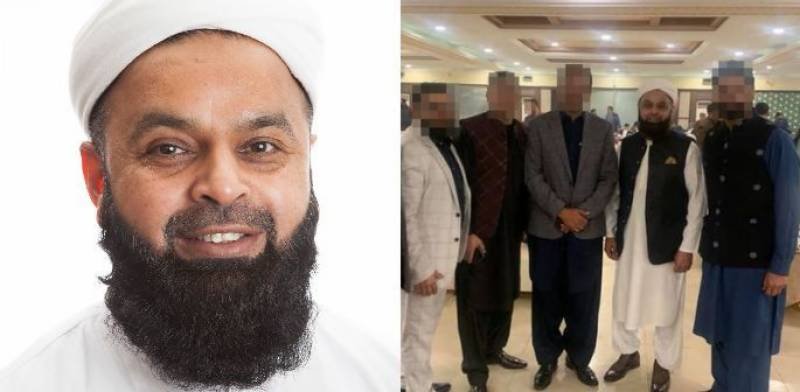
    The United Kingdom’s Labour Party has suspended Whalley Range councillor Aftab Razaq for violating coronavirus protocols after he attended a wedding in Pakistan.

    BBC reported that photos were shared on Facebook last weekend allegedly showing Manchester City Councillor Aftab Razaq at the celebration in the city of Kharian. Under the current COVID-19 rules in the UK, it is illegal to travel abroad for holidays and other leisure purposes.

    Councillor Pat Karney, secretary of Manchester Labour, explained that he would “thoroughly investigate the matter”. He told BBC that the Labour group had seen the photographs but “despite their best efforts”, they have not been able to contact the Whalley Range councillor who was vaccinated against COVID in Jan 2021.

    “All Manchester councillors must rigorously abide by Covid regulations and we will take action against any individual who does not,” Karney told BBC.

  • Karachi police pop their rollerblades on to catch criminals

    Karachi police pop their rollerblades on to catch criminals

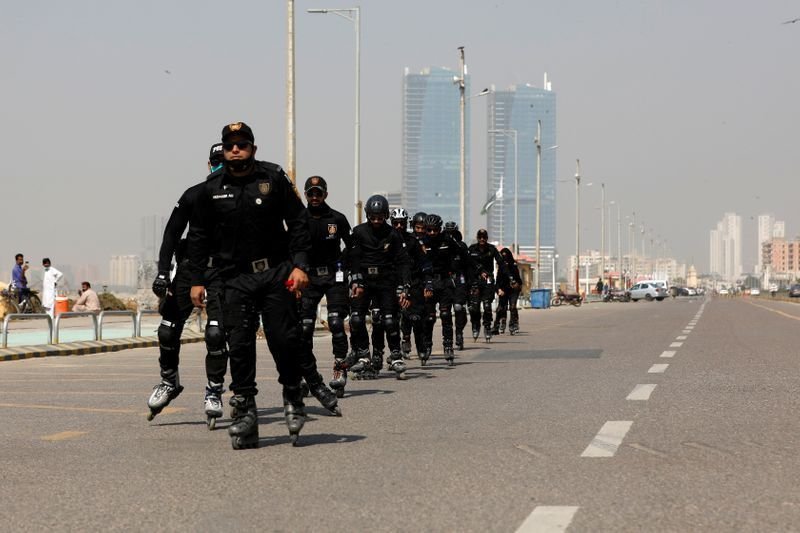
    Police in Karachi are deploying an armed rollerblading unit to curb theft and harassment on the teeming streets of the port city.

    Gliding in a circle with their weapons pointed inwards, and lifting and lowering the guns in unison, the 20-member unit clad in black undergoes rigorous training.

    “We felt we needed to come up with an innovative approach to control street crime,” said Farrukh Ali, chief of the unit, explaining that officers on rollerblades could more easily chase thieves on motorcycles through the city of 20 million.

    Ali conceded that rollerblading police could not be deployed across many parts of Karachi due to the poor road conditions and uneven footpaths, but said they would be sent to public places with a higher incidence of theft and harassment.

    “This is just the beginning,” said Aneela Aslam, a policewoman on the unit. “This rollerblading will really benefit us. With this training, we can reach narrow alleys very quickly where it is usually difficult to go.”

    Safety concerns were raised when initial footage of the Karachi unit’s training showed officers carrying heavier weapons, but Ali said the unit would only carry handguns, reducing the risk of bullets richocheting.

    The rollerblading police – who follow in the footsteps of similar units in Europe and elsewhere – are expected to begin officially next month, but they were recently spotted outside the venue of the Pakistan Super League cricket tournament.

    And they have already begun patrolling Karachi’s bustling beachfront.

    “Seeing them here in clean uniforms since the morning gives us a sense of security, as even in daytime, snatchings occur here,” said pedestrian Muhammad Azeem.

  • Countrywide blackout caused by human error, NA body told

    Countrywide blackout caused by human error, NA body told

    The inquiry committee probing last month’s countrywide blackout has held officials of the Guddu Thermal Power Plant responsible for the nationwide power outage.

    “The problem occurred due to a human error at the Guddu power station. The error led to the tripping of the entire power system. The fault occurred as some officials did not follow standard operating procedures (SOPs) during the maintenance work,” said Secretary Power Ali Raza Bhutta while briefing the members of the National Assembly Standing Committee on Energy.

    “Due to a mistake, the Guddu Thermal Power Plant tripped and there was a complete blackout. At the time of the blackout, the power consumption in the country stood at 10,000 megawatts,” he added.

    The entire country plunged into darkness on January 9 after the National Transmission and Despatch Company (NTDC) power system got hit by a major breakdown due to the tripping around midnight.

    Moreover, Netblocks monitor internet outages had said that internet connectivity in the country collapsed as a result of the blackout.

    The power secretary further said that “the officials of Guddu Thermal Power Plant along with those who have not improved the NTDC system are nominated by the inquiry committee for investigation. The committee has proposed to take measures to ensure that the failure of one plant does not trip the entire system in future”.

    On January 10, the government had blamed the old transmission system for the breakdown. Energy Minister Omar Ayub Khan had said that “during the past tenures, no attention was paid to the improvement of the transmission system on modern lines. Under the government of Pakistan Muslim League-Nawaz (PML-N), the country saw eight major power breakdowns”.

    “When the incumbent government assumed office, no work had been done to upgrade the transmission system. We are now investing in the transmission and distribution system. A $6 billion transmission line has been laid in Matiari,” added the minister at the time.

    So far, nine energy projects have been completed under the China Pakistan Energy Corridor (CPEC), contributing 5340 MW of electricity to the main grid, which would meet the vital needs for industry, agriculture, and domestic consumers.

    Out of 22 projects, another eight are about to be completed and would pump in an additional 4470 MW of electricity to the national grid. Another five projects are in the planning and implementation phase.

  • Cracks within PTI deepen as leader accuses party of selling Senate ticket for Rs35 crores

    In yet another development that suggests deepening of cracks within Pakistan Tehreek-e-Insaf (PTI) ranks, party leader and former Sindh chief minister (CM) Liaqat Jatoi has levelled accusations of selling at least one Senate ticket for Rs350 million (Rs35 crores) to newcomer and wealthy construction contractor Saifullah Abro.

    “He joined the party six months ago… on what grounds was he awarded a ticket [for the upper house of the parliament]?” Jatoi was heard as asking media persons during a brief presser on Tuesday.

    According to earlier reports, the days leading to the election for the Senate are getting difficult for the ruling party owing to differences between its leaders.

    Sindh chapter is facing a severe rift after the party leadership finalised Federal Minister Faisal Vawda and Abro for the Senate from the province, The News reported last week.

    The party’s decision generated criticism from its key leaders from three zones of rural Sindh who wrote a letter to Sindh Governor Imran Ismail to show their anger and demand the party’s high command to take back tickets from Vawda and Abro.

    Encouraged by the PTI’s recent decision to withdraw the party ticket awarded to business tycoon Abdul Qadir in Balochistan for the Senate election after opposition from the party’s provincial leadership, the Sindh leaders also initiated a campaign to pressurise the party’s parliamentary committee to review its decision of allocating tickets.

    In a letter, the PTI’s office-bearers from three regions said that they were “extremely disappointed with the entire process” of the selection of party’s candidates for the Senate polls from the province.

    The leaders who signed the letter included Liaqat Jatoi’s brother Sadaqat Ali Jatoi, Sukkur district President Mubeen Jatoi, Allah Bux Unnar and Raja Khan Jhakrani, former provincial secretary general Mehfooz Usrani, a former candidate from NA-214 Shaheed Benazirabad Gul Muhammad Rind, former provincial minister Agha Taimoor Khan Pathan, Papu Khan Chachar and other office-bearers.

    Showing severe concerns over finalising Abro for the Senate on technocrat seat, the PTI leaders asked how the Senate ticket was given to a newcomer in the party.

    They alleged that cases against Abro, who has still been working closely with the Pakistan People’s Party (PPP) leadership and famed as an “ATM”, have been pending in the National Accountability Bureau (NAB). The PTI leaders from rural Sindh asked to review the allocation of the Senate tickets from Sindh and said that the decision will harm the party in the upcoming local government polls.

    However, a senior PTI leader from Sindh was quoted as saying that awarding a ticket to Abro was the party’s strategy to stop its MPAs from selling their votes to the PPP’s candidates as the party was fearful that the ruling party in the province may buy at least 10 out of its 30 members in the provincial assembly.

    “Abro is a billionaire construction contractor and he will not only stop the PTI MPAs from selling their votes but can also buy the votes of PPP to win on technocrat seats,” the party leader, who requested anonymity, said.

    It is pertinent to note that on Monday, the nomination papers of Abro on technocrat seat were rejected by the election tribunal.

  • New Delhi allows PM Imran to use airspace, claims Indian media

    New Delhi allows PM Imran to use airspace, claims Indian media

    India has allowed Pakistan Prime Minister Imran Khan’s aircraft to use Indian airspace for his official trip to Sri Lanka, reported India media outlets on Tuesday.

    According to Indian media outlet WION, Islamabad asked New Delhi for permission 10 days ago that was granted on Monday. As a protocol, whenever heads of state or governments pass through the air space of any other country, the country is alerted and due permission is taken, it reported.

    Planes taking off from Islamabad for Sri Lanka cannot bypass Indian airspace; therefore, they require permission to use its airspace. But in case of Karachi, the flights can use another route and travel to Sri Lanka via Arabian Sea.

    According to the Foreign Office spokesperson, PM Imran has embarked on a two-day official visit to Sri Lanka on the invitation of his Sri Lankan counterpart Mahinda Rajapaksa. The premier is accompanied by a high-level delegation, including members of the Cabinet and senior officials.

    To exchange views on key regional and international issues, Prime Minister will hold meetings with President Gotabaya Rajapaksa and Prime Minister Mahinda Rajapaksa during the two-day visit. The prime minister will also participate in a joint ‘Trade and Investment Conference’ aimed at promoting trade and investment between the two countries.

  • Iranian supreme leader declares hijab for cartoons mandatory

    Women in cartoons must wear hijab, a fatwa by Iranian Supreme Leader Ayatollah Ali Khamenei has declared.

    Iranian news agency Tasnim quoted Khamenei as saying that women in cartoons and animated cartoon films should wear hijab, in response to a query by a Telegram user.

    “Is observing hijab necessary for characters in animated films (three-dimensional paintings that come from the artist’s mind)?” the user had asked.

    “Although wearing hijab in such a hypothetical situation is not required per se, observing hijab in animation is required due to the consequences of not wearing a hijab,” Khamenei responded.

    Women are bound to wear headscarves and hijab following an order passed by the authorities soon after the establishment of the Islamic regime in Iran in 1979, Global Village Space reported.

    Iranian women defying the decree set by the authorities face severe repercussions in the form of imprisonment or sanctions.

    A large number of women in Iran have been rising to protest against the hardcore laws that have now been relaxed a bit amid growing agitation.

  • PM sacks KP minister for supporting PML-N candidate in Nowshera by-polls

    Khyber Pakhtunkhwa (KP) Minister for Irrigation Liaqat Khattak has been de-notified for supporting the candidate of rival Pakistan Muslim League-Nawaz (PML-N) in by-polls for PK-63 Nowshera constituency.

    Special Assistant to KP Chief Minister (CM) on Information Kamran Bangash tweeted the notification, saying that Khattak was removed after Prime Minister (PM) Imran Khan’s approval.

    “The Governor of the Province of Khyber Pakhtunkhwa, in exercise of the powers conferred under clause 3 of Article 132 of the Constitution of Islamic Republic of Pakistan read with clause 1 of Article 105 thereof, is pleased to de-notify Mr Liaqat Khattak from his office,” read the notification.

    The PK-63 election was won by the PML-N, according to unofficial results.

    The seat had fallen vacant after the death of PTI MPA Mian Jamsheduddin, who had died of coronavirus.