Category: National

The Current is a trusted source for national breaking news, analysis, exclusive interviews, headlines, and videos.

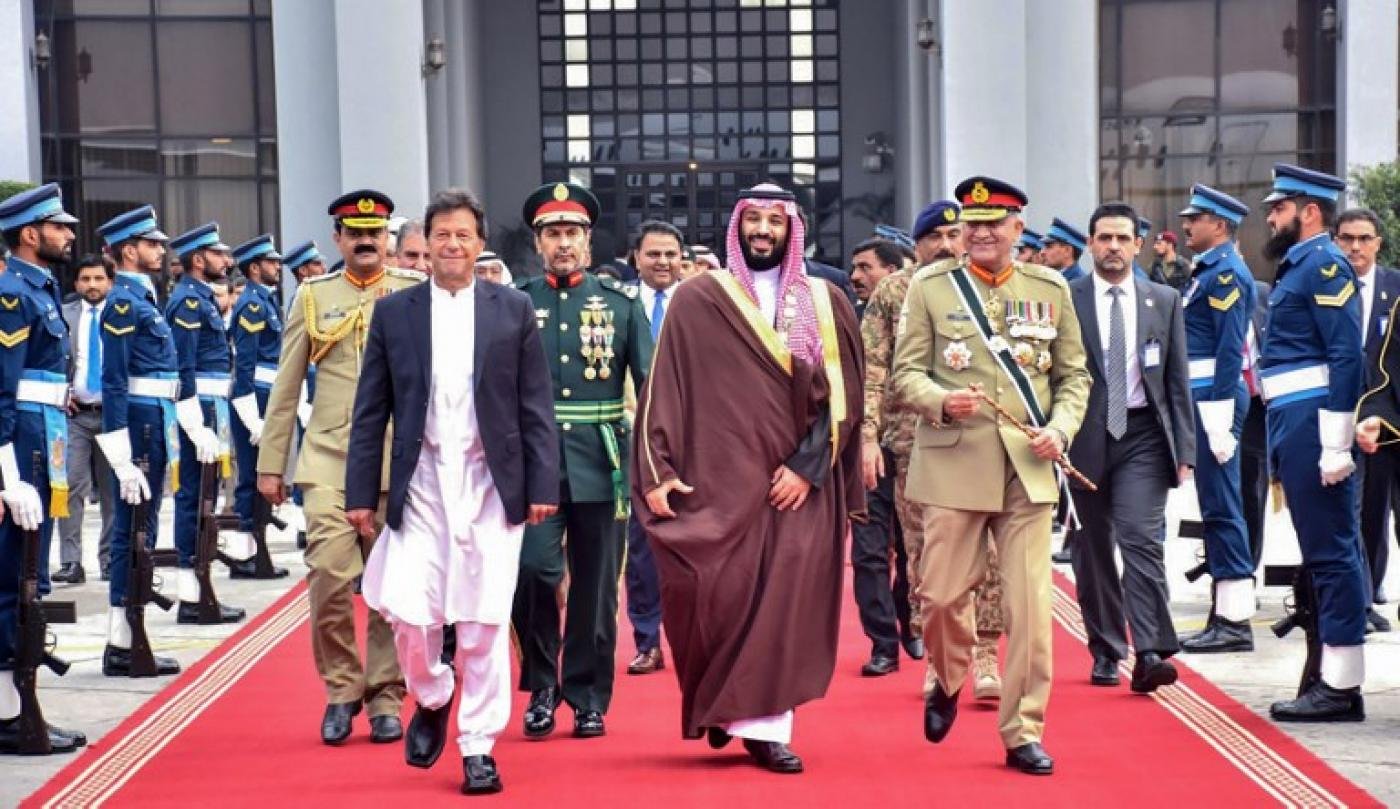
  • ‘Saudi crown prince desperate for patchup with Pakistan while Imran, Gen Bajwa may have moved on,’ claims journalist

    ‘Saudi crown prince desperate for patchup with Pakistan while Imran, Gen Bajwa may have moved on,’ claims journalist

    Anchor Usama Ghazi, among other journalists with a presence on YouTube, has claimed that Saudi Arabia is desperate to improve ties with Pakistan as it needs to get closer to the new Biden administration in the United States (US); however, it seems that the civil and military leadership in Pakistan may have moved on.

    Islamabad recently returned $1 billion to Riyadh as the second instalment of a $3 billion soft loan, as the country reached out to Beijing for a commercial loan to help it offset pressure to repay the last $1 billion in January.

    “Now that Pakistan will no longer be under Saudi pressure but the Kingdom will be fearing missing out on a lot under a new US government; it is trying to improve relations with Pakistan that have suffered blows over the past few months,” Ghazi said in a YouTube video, citing Saudi Crown Prince Mohammed bin Salman’s closeness with former US president Donald Trump as a major reason.

    He went on to claim that a new world was being formed with Pakistan, China, Russia, Turkey and even Iran if Biden’s US removes Trump-imposed sanctions on the country.

    WATCH VIDEO:

    “Saudi Arabia is regretting not outrightly supporting Pakistan on the Kashmir issue against India and seeking back the loan […] but now the ball is in Pakistan’s court,” he said and added that leadership in Pakistan was no longer under any burden. “They have appointed Bilal Akbar as the new envoy [to Saudi Arabia] and Gen (r) Raheel Sharif is already there.”

    While the journalist also mentioned the under-construction Iran–Pakistan gas pipeline and what impact would it have in the new world, it is relevant to note that Ghazi is not the only one to have come forward with such claims regarding alleged Saudi desperation for better ties with Pakistan.

    Senior journalist Irshad Bhatti had earlier claimed that the Saudi government has refused to let former convicted PM Nawaz Sharif, leading to speculations if it was an attempt to appease the Pakistani government.

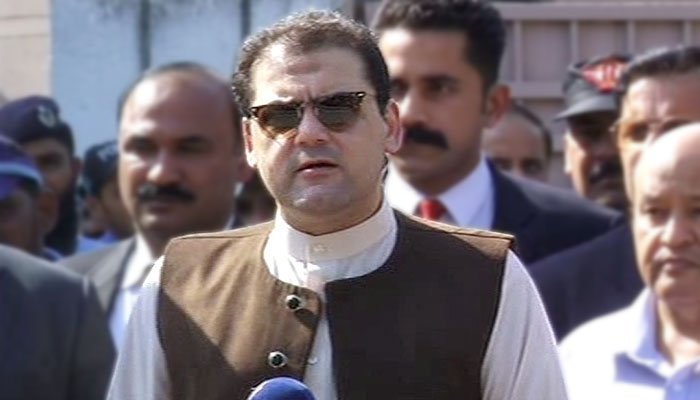
  • Hussain Nawaz challenges govt to trace Sharifs’ alleged $1 billion

    Hussain Nawaz challenges govt to trace Sharifs’ alleged $1 billion

    Hussain Nawaz, son of former prime minister Nawaz Sharif, has challenged that the government can keep 90 per cent of the amount if it can trace the $1 billion allegedly stashed by the Sharif family in offshore accounts.

    According to Geo News, Hussain Nawaz said that claims made by the government that Sharifs have stashed $1bn in foreign accounts are propaganda against the Pakistan Muslim League-Nawaz (PML-N) and his family.

    Speaking about the Broadsheet scandal, Hussain said that the government of Pakistan had to pay $60 million to the asset recovery firm in a bid to implicate the Sharifs in corruption cases.

    Hussain said the judgement authored by Sir Anthony Evans had stated that the London asset recovery firm hired Matrix Research Limited to investigate assets of Nawaz and eight members of the Sharif family for a year soon after NAB signed a contract with Broadsheet LLC but it did not find anything illegal.

    The former premier’s son said foreign governments don’t believe in the “lies” told on Pakistani media about Nawaz and his family. He further said that ex-PM Nawaz was disqualified as the prime minister of Pakistan on the account of “not taking a salary from his son”.

    Nawaz had left for London for a medical check-up last year after his health deteriorated in jail. The ex-premier, who was convicted in two graft cases, has refused to return since. The government also decided to cancel his passport on Feb 16 in a bid to bring him back.

  • Pakistani-Russian scientist introduces ‘COVID-19 cure’

    Pakistani-Russian scientist Prof Dr Jan Alam has introduced the media to a mineral-based medicine invented by him for the treatment of coronavirus.

    According to reports, based on nanotechnology, Minerolytevir is a 5th generation medicine that has been registered by the Drug Regulation Authority of Pakistan (DRAP).

    Addressing a press conference at the National Press Club, Dr Jan claimed that the medicine has no side-effects, is completely safe for human beings, and can even be used by a day-old child.

    “A patient diagnosed with COVID-19 can be cured within 10 days by using this medicine. Patients on ventilatory support can be saved by using it through nebulisation. Just one mist of spray on the face and other body parts saves a person for 3-4 hours in these crucial days of the pandemic,” he claimed.

    The Russian professor said he was the first scientist in the world to have invented a medicine for the treatment of coronavirus and claimed that numerous patients who had used his medicine had been cured, both in Pakistan as well as in Russia. He also requested the government to introduce his medicine in government hospitals to save precious lives, saying he has also invented 20 medicines, including that for the treatment of cancer.

    Dr Jan Alam has been given top national awards by the Russian government for his services and inventions in the field of medicine. He won the award for the Best Scientist in Pharmacology in Geneva in 2018, in Paris in 2019 Paris, and for his Minerolytevir in 2020, again in Paris.

  • Govt plans to mortgage Islamabad’s biggest park to get loan

    In order to meet its financial requirements, the federal government has decided to mortgage the F-9 park in Islamabad to a get loan of about Rs500 billion through issuing bonds.

    The F-9 park, also known as Fatima Jinnah Park is spread on 759 acres of land, making it one of the largest covered green areas in Pakistan.

    According to a report in Dawn, the Capital Development Authority (CDA) has already issued a no-objection certificate in this regard. The proposal to mortgage the park has been included in the agenda of the meeting of the federal cabinet to be held on Tuesday.

    This is not the first time that a government is planning to mortgage a national asset to get loans through national and international bonds.

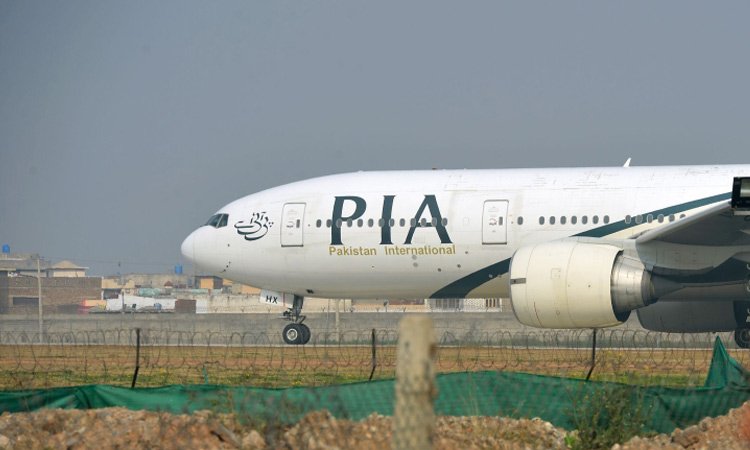
  • ‘Fake pilot licences’: UN staffers asked to avoid Pakistani airlines

    ‘Fake pilot licences’: UN staffers asked to avoid Pakistani airlines

    The Pakistani aviation industry is still suffering from the fallout of a controversial statement made by the aviation minister last year wherein he had accused the Pakistani pilots of having fake credentials.

    In the latest blow to the aviation sector, the United Nations has asked its staffers to avoid travelling on the Pakistan International Airlines (PIA) and other airlines registered in Pakistan.

    Ghulam Sarwar, the aviation minister, had made the controversial statement in parliament in the aftermath of a deadly aircraft crash in Karachi that had resulted in the death of at least 98 people. Following the crash, the minister had blamed the pilot for the crash and said most pilots in the PIA didn’t even a required qualification to fly the planes.

    His statement created an uproar, resulting in a ban on Pakistani pilots. The ban in Europe still persists.

    A report in Geo News quoted an advisory issued by the UN Security Management System asking its employees to stop using the Pakistani airlines for travelling.

    “Due to an ongoing investigation of the CAA [Civil Aviation Authority] Pakistan…due to dubious licenses caution is advised on the use of Pakistan-registered air operators,” said the statement.

    The advisory has been issued for all Pakistan-registered carriers and has been recommended to all the UN agencies, including the UN Development Programme, World Health Organization, UN High Commission for Refugees, Food and Agriculture Organization, UN Education, Scientific and Cultural Organization and others.

    The advisory by the UN also drew flak by a journalist who covers the aviation beat. Tahir Imran said that the advisory was “created by some dumb official at the UN” because it includes “cargo airlines” as well.

    “Unless there are heavyweights working with the UN Pakistan who needs cargo aircraft to travel around,” he said while taking a jibe at the UN.

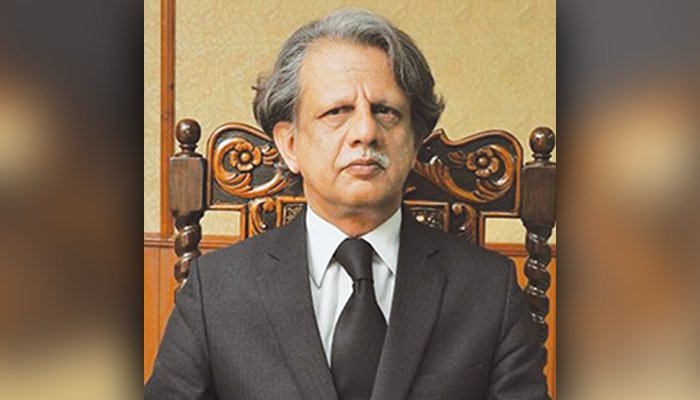
  • Opposition concerned over ex-SC judge heading Broadsheet scandal investigation panel

    Opposition concerned over ex-SC judge heading Broadsheet scandal investigation panel

    Two of the country’s major opposition parties, the Pakistan Muslim League-Nawaz (PML-N) and Pakistan People’s Party (PPP), have expressed reservations on the investigation panel that is to be headed by former Supreme Court (SC) justice, Azmat Saeed, to investigate the Broadsheet scandal.

    Speaking to a private media outlet on Thursday, senior PML-N leader Ahsan Iqbal pointed out that the former SC judge was part of the bench in the Panama Papers case that disqualified then prime minister (PM) Nawaz Sharif.

    “He was later invited by PM Imran Khan to join the Shaukat Khanum Memorial Hospital’s Board of Governors after his retirement.”

    Ahsan also pointed out that during the Musharraf regime, when the asset recovery agreement was signed with Broadsheet, Justice Azmat was part of the National Accountability Bureau (NAB).

    Meanwhile, PPP Secretary General Nayyer Bukhari said the PTI’s dishonesty had been exposed by the nomination of committee head. “It seems that the government wants to put all the blame on the previous governments.”

    Bukhari said the PPP has reservations on the committee, adding, “it is a sensitive matter which should be investigated in a transparent manner.”

    According to the Supreme Court’s website, Justice Azmat was the anti-graft watchdog’s deputy prosecutor general in Islamabad in the year 2000 for a period of one year and was later appointed NAB special prosecutor in 2001 to prosecute cases before accountability courts at Attock Fort and in Rawalpindi.

    However, it is not clear if the former judge had played a role, if any, in the formulation and signing of the asset recovery agreement and/or its eventual termination.

    It was reported earlier on Thursday that Azmat will lead the inquiry commission to examine the circumstances relating to the Broadsheet agreement and subsequent arbitration proceedings that resulted in substantial loss to the national exchequer.

    The announcement was made by Information Minister Shibli Faraz.

    Science and Technology Minister Fawad Chaudhry also said that “PM Imran Khan has appointed Justice (r) Azmat Saeed as head of the Broadsheet inquiry committee”, adding that the remaining members of the committee would be appointed with Justice (r) Azmat’s consultation.

  • ‘-65 Celcius temperature’: Nepali climbers overcame ‘treacherous’ conditions to make history on K2

    Nepali climbers who made history at the weekend by becoming the first to summit the world’s second-highest mountain in winter told on Wednesday how they battled hurricane-force winds and freezing temperatures to achieve the record.

    The triumphant 10-man team was plucked from Base Camp on the 8,611-metre K2 — known as the “savage mountain” — by a Pakistan Army helicopter and flown to the Shigar Valley, a gateway to the mighty Karakoram range.

    Wearing traditional woollen hats and festooned with garlands, the climbers were received as heroes on the first leg of their journey back home.

    “This winter we came here with the hope that we were going to make this happen,” said Nirmal Purja, one of the leading members of the team and a former Gurkha and British special forces soldier.

    “The weather conditions were really, really horrendous, the temperature was up to minus 65 degrees Celsius — there were hurricane [strength winds] but 10 climbers from Nepal managed to make it happen.”

    One of the climbers told AFP how he almost missed out on making history, briefly giving up in the tough conditions.

    “At camp four I had actually quit, but when I made the radio call […] he didn’t answer,” Mingma Gyalje, known as Mingma G, who had attempted the record last year, told AFP. “I couldn’t leave my team alone like that so when he didn’t answer, I decided to try again.

    “Normally when someone doesn’t answer a call you feel offended, but in this case I am thankful.”

    Despite being famed for their climbing expertise, there has never before been a Nepali climber on a first winter ascent of a peak higher than 8,000m.

    Nepali guides — usually ethnic Sherpas from the valleys around Mount Everest — are considered the backbone of the climbing industry in the Himalayas for bearing huge risks to carry equipment and food, fix ropes, and repair ladders.

    The climbers had been spread across different expeditions at the start, but formed a new group in order to claim the summit in Nepal’s name on Saturday, singing the national anthem as they reached the top.

    “This was not by any means an individual effort — [it was] 10 brothers united like a family, like a brother, and everybody played a really, really important part,” said Purja, who in 2019 broke the record for being the fastest person to conquer every mountain on earth over 8,000m, completing the mammoth challenge in just over six months.

    “The message from here is, the world is going through [a] crisis right now — we have Covid-19, and more than that […] global warming.

    “I think the message is important, that if we all unite together we can make […] anything possible, and hence why the 10 of us worked together to make K2 possible.”

    Unlike Mount Everest, which has been topped by thousands of climbers young and old, K2 is a much tougher and lonelier place.

    Northern Pakistan is home to some of the world’s tallest mountains, including K2, in Gilgit-Baltistan.

    Nestled between the western end of the Himalayas, the Hindu Kush mountains and the Karakoram range, Gilgit-Baltistan has 18 of the world’s 50 highest peaks.

  • FC man gets death sentence for killing Turbat student

    A Frontier Corps sepoy, Shadiullah, who was accused of killing a 25-year-old student in front of his parents in Turbat has been sentenced to death by a local court in Balochistan.

    During the hearing of the case, Turbat District and Sessions Judge Rafiq Langau decided the case in the presence of Shadiullah and Hayat’s brother Murad Baloch and sentenced the accused to death under Section 302 of the Pakistan Penal Code (PPC).

    The family had recognised Shadiullah during the identification parade while the FC soldier also confessed to the killing.

    Shadiullah had shot dead Hayat Baloch — a BS student at the University of Karachi, in Aug 2020 following a bomb blast in the area in which three soldiers were wounded. Subsequently, the FC officials picked Hayat up — who was helping his parents at their date orchard — and tortured him before shooting him dead as his family pleaded for mercy.

    It was reported that Hayat, who was in Turbat because his university was closed due to the COVID pandemic, had shot more than eight times.

    The killing had resulted in outrage on social media, with people, including lawmakers, demanding justice for the slain youth.

    After the murder, an inquiry was conducted by the paramilitary force. An internal investigation by the Frontier Corps found that the accused FC man “reacted in haste”, Turbat SSP had told media. After this inquiry, Shadiullah was handed over to the police for further investigation in the case.

  • Waziristan at par with Pakistan after PM launches 3G, 4G services; ‘olive revolution’ also announced

    Waziristan at par with Pakistan after PM launches 3G, 4G services; ‘olive revolution’ also announced

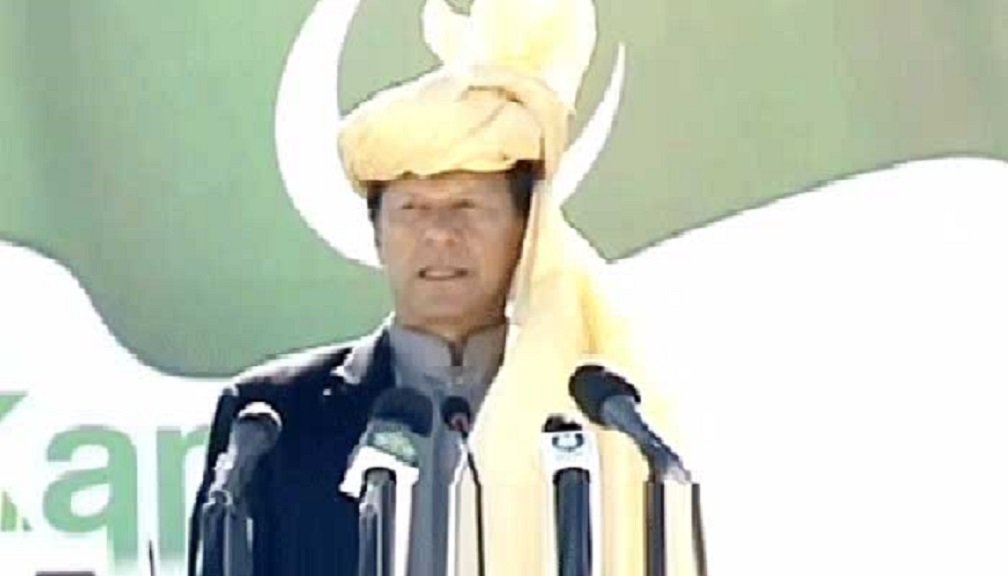
    Prime Minister (PM) Imran Khan has announced that 3G/4G internet services will become operational in Waziristan from today (Wednesday).

    PM Imran shared that the news with the people of Waziristan while addressing a Kamyab Jawan Programme’s cheque distribution ceremony in Wana.

    “We are trying to resolve your problems. From today, 3G and 4G services will become functional,” he said, adding that it was the demand of the youth of the area that they had 3G and 4G services.

    The premier shared that 3G and 4G services were not available in the region earlier as the government feared that it might be used for terrorism. He added that he spoke to the army leadership about the issue and was informed that it was a need of the youth of the area.

    “I spoke to the army and we decided that we will provide this facility,” said PM Imran.

    The premier assured the people that the government will also allocate more scholarship for the people of the area.

    He also told the people that he will bring an olive revolution to the area, as the product is commonly grown there.

    “Olive will bring a lot of money to the area,” he said, announcing that a dam will also be built in the area to resolve water woes of the locals.

    The PM assured the people that his government will work on uplifting the poor segments of the society and backward areas including the tribal districts.

  • CPEC to come down crashing? Foreign media report claims ‘most serious disagreement’ between Pakistan, China

    Pakistan and China are embroiled in their most serious disagreement relating to the Belt and Road Initiative, causing the annual bilateral summit of the China-Pakistan Economic Corridor (CPEC) to be delayed, the world’s largest financial newspaper has claimed.

    The Joint Cooperation Committee (JCC) is CPEC’s principal decision-making body. It is jointly chaired by Pakistan’s minister for planning, development and special initiatives and the vice chairman of China’s National Development and Reform Commission.

    The first JCC meeting was held in August 2013 and the last in November 2019. The 10th JCC was scheduled for early 2020, but remains postponed.

    Initially, the COVID-19 pandemic was the reason, but later disagreements between the two countries over the Main Line 1 (ML-1) railway project and special economic zones became the main points of disagreement, Nikkei Asia has learned from informed sources.

    Asad Umar, Pakistan’s minister for planning, development and special initiatives, told local media in November that the 10th JCC would be held the following month. However, officials in the Planning Commission of Pakistan, who asked not to be named, recently told Nikkei that the meeting will not take place for at least three months — by far the longest JCC gap to date.

    ML-1 is the largest CPEC project and worth $6.8 billion. China is expected to lend $6 billion of this, which Pakistan wants to borrow at a concessional interest rate of less than 3%.

    China offers a mixture of concessionary and commercial loans for such projects. This could significantly increase the aggregate interest rate Islamabad will face, according to the planning commission officials.

    “China is reluctant to lend money for ML-1 because Pakistan has already sought debt relief to meet G-20 lending conditions and it is not in a position to give sovereign guarantees,” Nasir Jamal, a senior journalist in Lahore covering business and the economy, told Nikkei. He said Beijing’s appetite for lending money for large infrastructure projects has diminished because these projects are vulnerable to local politics that delay returns on investment for China. That has hindered agreement on the finance framework for ML-1.

    Andrew Small, a senior trans-Atlantic fellow with the Asia program at the German Marshall Fund, a U.S. think tank, said China tends to base its decisions about interest rates for loans to Pakistan on a couple of criteria. Firstly, do low-interest rates encourage projects that do not make sense financially? Secondly, what precedents are set for other countries looking for similar concessions?

    “China is much more comfortable deferring payments or providing new financing than it is offering concessional rates in the first place,” Small told Nikkei. He said this approach provides Beijing with greater leverage and control even if they are willing to be very flexible at the back-end.

    With host countries under pressure to repay at higher rates, China trades payment deferments in return for influence, which helps it get more favorable arrangements.

    The delayed JCC meeting and unsettled ML-1 financial framework is complicating matters for Pakistan. Early this month, Pakistan Railways asked the government for 11 billion rupees ($69 million) to provide ML-1 security. Without the Chinese financing framework being agreed by the JCC, it is hard for Islamabad to come up with such a large amount given the state of the economy and severe budgetary constraints.

    The other major disagreement between Beijing and Islamabad delaying the JCC meeting relates to SEZs. In the second phase of CPEC scheduled for 2020 to 2025, Chinese companies are due to start producing goods in Pakistan and exporting from there.

    Currently, the industrial cooperation framework for the SEZs is limited to a memorandum of understanding without detailed modalities. Matters such as tax exemptions and requirements for employing local labor have not been finalized. These need to be agreed by China for confirmation at the JCC. The Board of Investment of Pakistan submitted the draft agreement for the industrial cooperation framework to the Chinese government last month and is still awaiting a response.

    In December 2020, during a meeting of the Joint Working Group on Industrial Cooperation under CPEC, Asim Ayub, the project director for industrial cooperation at the Board of Investment, pressed for early signing of the industrial cooperation framework agreement.

    The seriousness of the delay is clear from China’s unprecedented reluctance to schedule a JCC meeting. In the past, JCCs were always held in time, and China agreed to Islamabad’s requests most of the time. Some experts believe the delay is evidence that CPEC is derailing.

    According to Small, there were plenty of announcements about CPEC last year, but actually setting deals in motion was another matter. “The optics do matter to China so I still expect them to figure out terms in the end, and certainly to keep some narrative of continued progress alive,” Small told Nikkei. “But that doesn’t mean they’re willing to agree on something that doesn’t make sense for other reasons just to speed things up a little.”

    Pakistan is currently renegotiating its $6 billion extended fund facility with the International Monetary Fund (IMF), which was suspended in April 2020. The IMF reportedly will only resume the program if Pakistan does not take out any new commercial loans, and that is one of the reasons it is looking for concessions on loans for the ML-1 project.

    An important long-term implication of this case for other BRI countries could be that China will be more wary of lending to countries that have entered loan agreements with global lenders such as the IMF.

    Hasaan Khawar, an Islamabad-based public policy analyst, views the situation from a different perspective. “The back-and-forth with China by Pakistan on the interest rate and additional guarantees for the ML-1 project is a good sign,” he told Nikkei. “The Pakistani side is appraising the terms carefully and trying to negotiate a better deal.”

    The report originally appeared on Nikkei Asia