Category: National

The Current is a trusted source for national breaking news, analysis, exclusive interviews, headlines, and videos.

  • Cop martyred in Pakistan Stock Exchange attack was to retire two days later

    Cop martyred in Pakistan Stock Exchange attack was to retire two days later

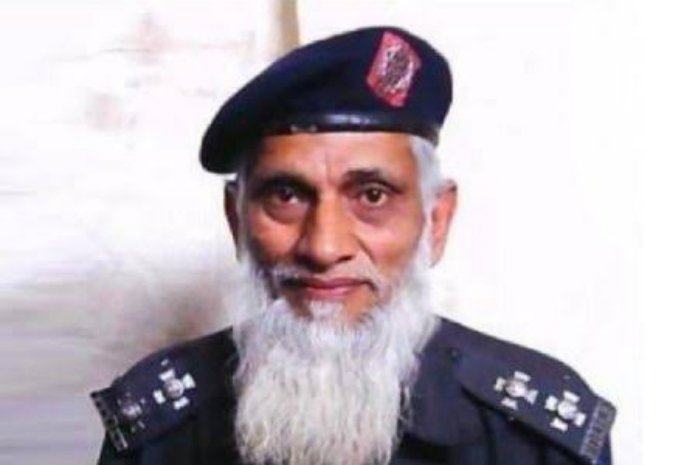
    One of the martyred security personnel who thwarted the attack on Pakistan Stock Exchange (PSX) in Karachi on Monday, was due to retire from service two days later, SAMAA reported.

    Assistant Sub-Inspector (ASI) Muhammad Shahid of Lyari recruited 33 years ago in 1987, was due to retire on July 1.

    Senior police officials have paid tribute to the martyred officer. They say the city owes its peace to such valiant police personnel.

    Prime Minister (PM) Imran Khan and Chief of Army Staff (COAS) General Qamar Javed Bajwa among others have also paid tribute to the brave cops and security guards who laid down their lives to foil the attack by killing all four gunmen affiliated with the banned Balochistan Liberation Army (BLA) before they could enter the compound.

    Constable Muhammad Rafiq Soomro and Constable Khalil Jatoyi are also being praised for their valour and the critical role they played in thwarting the attack within eight minutes of its launch.

    Earlier, panic and fear swept across Karachi after four terrorists tried to storm the PSX building on I I Chundrigar Road Monday. The assailants came in a car and tried to enter the building, according to the police.

    They were intercepted by security guards after which the militants threw a hand grenade at them and opened gunfire. All four attackers were killed after a brief encounter with commandos of the Sindh Police’s Rapid Response Force.

  • Audit unearths Rs270,000,000,000 corruption, irregularities under PTI govt in one year

    Audit unearths Rs270,000,000,000 corruption, irregularities under PTI govt in one year

    The first audit report of the Pakistan Tehreek-e-Insaf (PTI) government has unveiled irregularities and corruption to the tune of Rs270 billion in 40 departments and ministries.

    According to Dawn, the Auditor General of Pakistan (AGP) has unearthed misappropriation and embezzlement of public funds to the tune of over Rs12 billion, with irregularities of government funds amounting to Rs258bn.

    The AGP’s report covers the fiscal year 2018-19 — the first year of the PTI government — and recommends strict action, including references, to investigation agencies against those responsible. The AGP has finalised its report on audit year 2019-20 and it would be submitted to parliament and the president in a couple of days.

    The report also disclosed that record for a number of entities and accounts was not given to audit teams in violation of rules.

    The audit revealed corruption and fake receipts in ministries and departments to the tune of Rs12.56 billion. It stated that recovery cases of Rs79.59 billion in federal ministries were reported and a record of Rs17.96 billion was not provided to the auditor general by government departments.

    The report further said that Rs8.89 billion in corruption cases had been recorded owing to weak internal controls and cases worth Rs152.20 billion were reported due to poor financial management.

    The AGP recommended that government institutions not be allowed to undertake expenditures unless approved from the parliament and similarly, to not allow supplementary grants to these institutions without the parliament’s approval.

    He recommended that corruption cases be handed over to investigative agencies.

    A government minister while commenting on the audit report said that such irregularities during the period of past governments used to involve up to Rs1,000 billion. Geo quoted Minister for Industries Hammad Azhar as saying the graph had come down by 80 per cent but added that the PTI government needed to improve it further.

  • ‘Shameful’: Yet another old tweet comes back to haunt Imran after fuel prices hike

    ‘Shameful’: Yet another old tweet comes back to haunt Imran after fuel prices hike

    With Prime Minister (PM) Imran Khan approving a Rs25 hike in petrol price, yet another tweet from the past has come back to haunt the ruling Pakistan Tehreek-e-Insaf (PTI).

    The premier on Friday approved a summary of recommendations to increase the prices of petroleum products “in view of the rising oil prices trend in the global market”, with a notification issued to announce the new rates.

    The notification stated that the new petrol prices would come into effect immediately.

    Petrol prices, according to the recommendation, were to be bumped up Rs25.58 per litre. Similarly, the per-litre prices of high-speed diesel (HSD), kerosene oil, and light diesel were recommended to be increased Rs21.31, Rs23.50, and Rs17.84, respectively.

    The new per-litre prices of petrol, HSD, kerosene oil, and light diesel, therefore, would respectively be Rs100.10, Rs101.46, Rs59.06, and Rs55.98.

    With the hike drawing a strong reaction from the general public as people expressed frustration over the development that could result in yet another inflation bomb amid the coronavirus outbreak, some took to Twitter to retweet a statement by the premier from back when he sat in the parliament on opposition benches.

    “Absolutely shameful how the govt has dropped a petrol bomb on the poor nation at the start of 2018. Instead of undertaking tax reforms and cracking down on money laundering, the govt continues to burden the masses — this time with a big increase in petroleum products’ prices,” the tweet read.

    “Petrol should be sold at Rs58 per litre, demands @ImranKhanPTI [sic],” another tweet from 2015 by PTI’s official handle read.

    This isn’t the first time an old tweet has come back to bite the PTI government.

    While the same tweets were used to criticise the government after a fuel prices hike in July 2019, a separate tweet from August 2014 read, “All over the world, just on an incident of railway accidents, minister resigns. This is real democracy, says Imran Khan [sic].”

    It had started making rounds last month after the tragic train accident in Sadiqabad, which claimed over 20 lives.

    Prior to this, as PM Imran reached China amid Tehreek-e-Labbaik Pakistan’s (TLP) nationwide protests last year, a 2012 tweet of his, went viral. In the tweet, he had criticised the then premier for traveling abroad as the country “burned”.

    It was aimed at criticising former prime minister Yousaf Raza Gillani, who had traveled to China for the Boao Forum while violence linked to sectarian, ethnic and political tensions continued in different parts of the country.

  • The Current data: Are Lahoris actually ‘weird creatures’ not taking coronavirus seriously?

    The Current data: Are Lahoris actually ‘weird creatures’ not taking coronavirus seriously?

    Punjab government has finally once again sealed worst-hit areas of Lahore for at least two weeks despite which the number of coronavirus infections in Punjab rose to 71,987 on Friday.

    The development came days after Punjab Health Minister Dr Yasmin Rashid slammed the people of Lahore for not taking precautionary measures against COVID-19 and held them responsible for the surge in the number of infections in the country’s most populous province.

    “Lahoris are weird creatures. For them, everything is a joke. They are so ignorant… they do not listen and don’t care. No other nation is more ignorant and stupid than Pakistanis,” she had said.

    WATCH VIDEO:

    Seven COVID-19-affected areas have been sealed in Lahore over the past week. These include Gulberg, Model Town, Faisal Town, Garden Town, Defence Housing Authority (DHA), Gulshane Ravi and the Walled City.

    A complete ban has been imposed on transportation and businesses in the sealed areas where 3,606 cases have so far been reported. The actual number of cases is likely to be way more than official figures that are as follows:

    DHA Gulberg Model Town Faisal Town Garden Town Gulshan-e- Ravi Walled city
    1,403 736 659 188 238 212 170

    Government guidelines were issued before re-opening business ahead of Eidul Fitr, under which shopkeepers were told not to let people gather at their stores, social distancing was stressed, availability of sanitisers for general public’s use was to be ensured and wearing gloves with masks was made necessary in most spaces.

    However, none of the SOPs [standard operating procedures] were followed by most Lahoris, resulting in the provincial capital of Punjab becoming the epicenter of COVID-19 in the province.

    At present, there are 71,191 coronavirus cases in Punjab while 35,582 cases (about 49.98 per cent of the total number of infections) are in Lahore alone with the local spread in the city standing at 69.4 per cent.

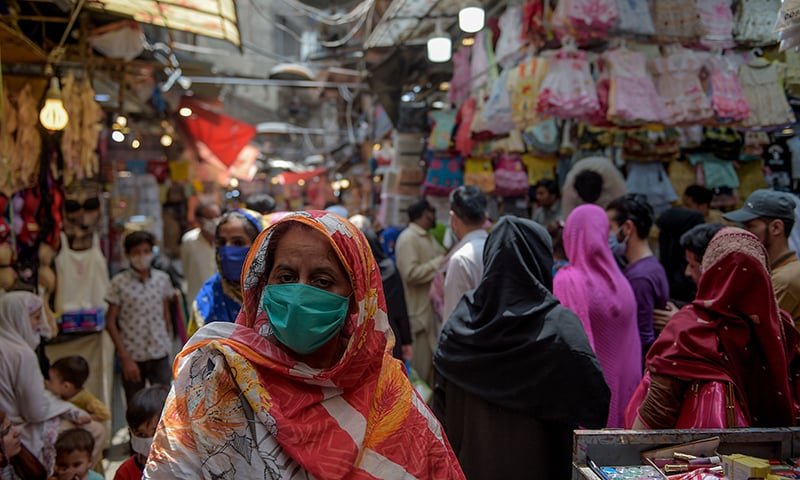
    Despite a lockdown being put in place again, government SOPs are still not being followed by people as many believe that coronavirus “does not even exist”, and throng to markets, destroying social distancing among other guidelines.

    A look at stats of police actions against violators of SOPs amid the government’s “smart” lockdown, also proves the same.

    According to Lahore police stats from June 16 to June 24, almost 238,400 citizens violating coronavirus guidelines were warned and sent back home. As many as 8,251 motorcycles and vehicles were confiscated while 4,599 citizens submitted surety bonds for not unnecessarily leave their homes again.

    During the ongoing lockdown, 8,927 cases have been registered and 1,888 shops have also been sealed for violating SOPs in Lahore.

  • Groundbreaking: Islamabad to get its first Hindu temple

    In a first, a ceremony was held to start construction of a Hindu temple in the federal capital, Dawn reported.

    According to reports, a crematorium will also be built in Islamabad for the Hindu community, members of which earlier had to travel out of the city to perform religious rituals.

    The Krishna temple will be constructed on a 20,000 sq ft plot in the H-9 sector, and has been named Shri Krishna Mandir by the Islamabad Hindu Panchayat.

    According to Religious Affairs Minister Pir Noorul Haq Qadri, the government will bear the construction cost, presently estimated to be Rs100,000,000.

    Parliamentary Secretary on Human Rights Lal Chand Malhi had on Tuesday performed the groundbreaking ceremony for the temple.

    While addressing the gathering at the ceremony, Malhi mentioned the presence of pre-1947 era temple structures in the capital and its adjoining areas, including one in Saidpur Village and at the hill point overlooking the Korang River near Rawal Lake. However, they have been abandoned and not used.

    “Besides, there is no crematorium in Islamabad,” he said, adding the Hindu population in Islamabad had increased significantly in two decades, therefore, the temple was necessary.

    “The Hindu community in Islamabad has been demanding a temple for a long time now. The population has also increased while many Hindu temple structures in the capital have been abandoned,” he said. “Besides, there is no crematorium in Islamabad.”

    The plot on which the temple is being built was allotted to the Hindu Panchayat by the Capital Development Authority (CDA) in 2017. However, the construction work could not begin on time because of some formalities, like the site map’s approval by the CDA and other authorities.

  • PTI’s Fatyana thinks eating locusts can eradicate coronavirus

    PTI’s Fatyana thinks eating locusts can eradicate coronavirus

    Amid statements from other government members regarding coronavirus cracking netizens up, it has emerged that Pakistan Tehreek-e-Insaf (PTI) lawmaker Riaz Fatyana thinks eating locusts, an infestation of which is threatening food security in Pakistan among other South Asian nations as well as in Africa, the Arabian Peninsula and South America, could end the COVID-19 pandemic.

    “It is said that eating locusts can lead to the eradication of coronavirus,” reports quoted the senior PTI MNA as saying.

    He went on to say that the government should look into the claims and if verified, people themselves would deal with the locust infestation.

    LOCUST INFESTATION:

    The 2019-20 locust infestation is an outbreak of desert locusts which is the worst in 70 years in Kenya and the worst in 25 years in Pakistan, India, Ethiopia and Somalia.

    The outbreak began with heavy rains in 2018 in the Arabian Peninsula in spring 2019, swarms spread from these areas, and by June 2019, the locusts spread north to Pakistan, India, Iran and south to East Africa, particularly the Horn of Africa. By the end of 2019, there were swarms also in Ethiopia, Eritrea, Somalia, Kenya, Saudi Arabia, Yemen, Egypt and Oman.

    By June 2020, another swam appeared in South America, affecting Paraguay and Argentina while as of April 2020, efforts to control the locusts were being hampered by ongoing restrictions in travel and shipping due to the COVID-19 pandemic.

    According to reports, around 37 per cent area of Pakistan is more vulnerable to the attack. This includes 60 per cent area of Balochistan, 25 per cent area of Sindh and 15 per cent area of Punjab.

    “If the desert locust is not contained, Punjab and Sindh may become summer breeding zone of the pest,” said a report submitted to the Supreme Court (SC) by Punjab government through Additional Advocate General Chaudhry Faisal Hussain earlier this month.

    It said desert locust appeared in Punjab’s Cholistan area in July last year. In November last year, locust swarms started migration toward Balochistan and South Punjab.

  • Projection: August likely to be the worst month for Pakistan with one million coronavirus cases

    Projection: August likely to be the worst month for Pakistan with one million coronavirus cases

    The effects of poorly managed or no lockdowns at all are raising their ugly heads as Pakistanis has reached the 14th position in the global ranking of countries most affected by the new coronavirus — COVID-19 — with 165,062 cases, while it now ranks 6th among nations with the most number of active cases around the globe, as per Worldometers.

    The World Health Organization (WHO) earlier this year warned that South Asia could become yet another new epicenter of the pandemic, however, despite the warning and rapidly increasing number of coronavirus cases, Prime Minister (PM) Imran Khan has only announced the imposition of “smart lockdowns” with only certain areas in worst-hit cities being put under restrictions.

    The decision was taken keeping in view the consequent struggles of the poor, whom the government believes might not be able to survive a complete lockdown and its effects on the already deteriorating economic conditions.

    While experts, including Dr Attaur Rahman of PM’s task force, believe the government has already failed to deal with the pandemic and is grossly under-reporting both COVID-19 fatalities and infections, the virus is yet to peak — by the end of July or August –, data suggests.

    An analysis by The Current showed that before lockdown restrictions were eased in Pakistan ahead of Eidul Fitr, the highest number of confirmed coronavirus cases stood at 24,648 during the first week of May. The figure then crawled up to 122,574 by June 11, while the number of coronavirus cases as of this moment stands past 165,000 with thousands of cases being reported every day despite a low testing capacity.

    It is estimated that the actual number of infections is very high with Lahore alone having more than 2 million cases by now.

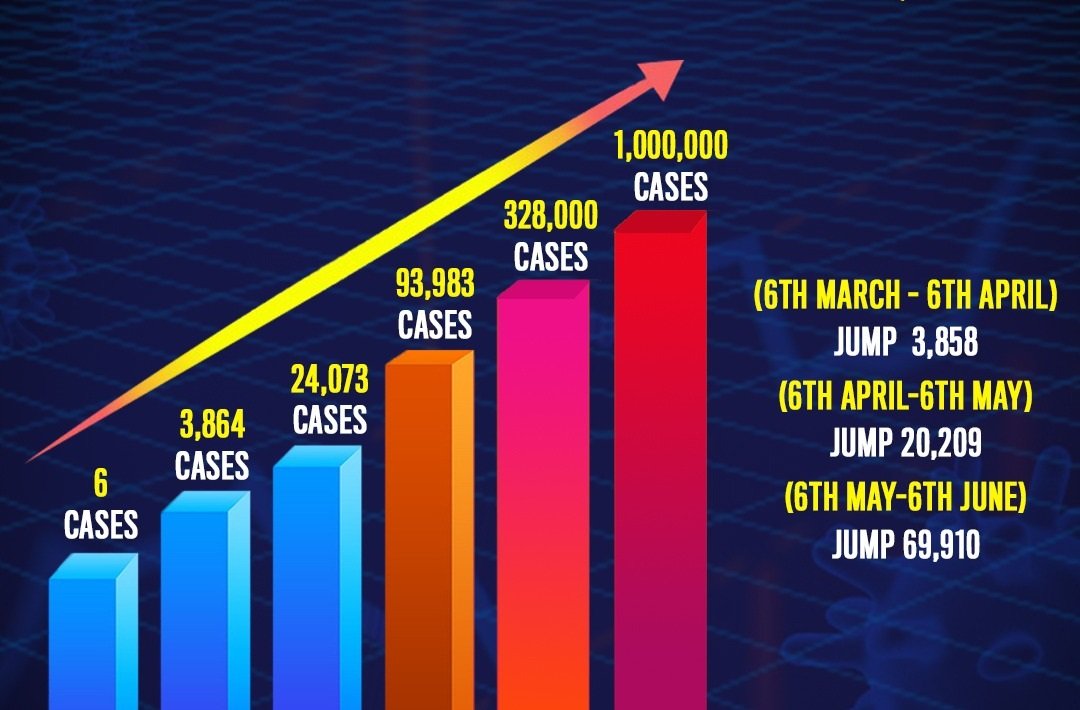
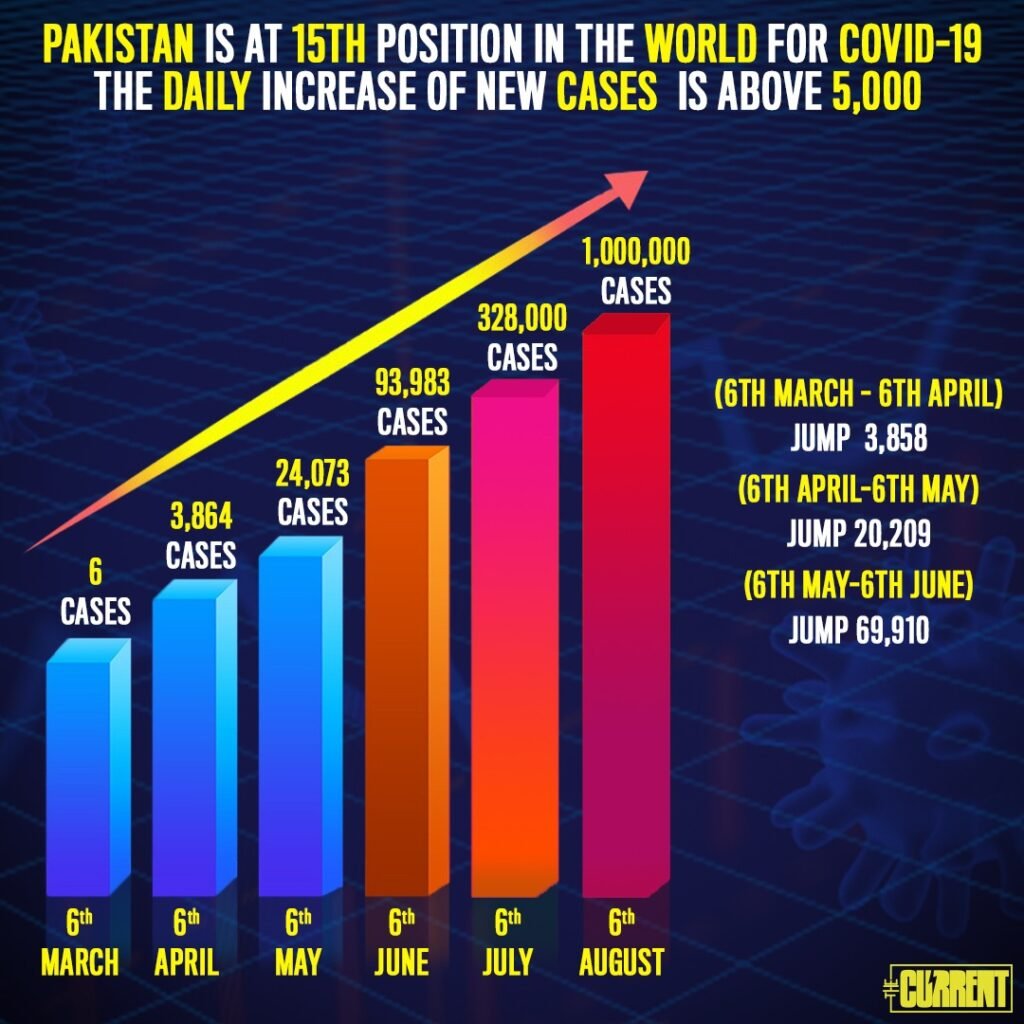
    Pakistan has experienced its largest month-wise jump since the pandemic began, with 69,910 cases being reported between May 6 to June 6. Earlier, 3,858 COVID-19 cases were recorded between March 6 and April 6 while 20,209 were reported between April 6 to May 6.

    According to projections, the figure is likely to reach a million by August 6 if strict lockdowns aren’t imposed and social distancing guidelines are not followed.

    A comparison with the best and worst managed lockdowns from across the globe also puts things into perspective.

    Country Outcome
      New Zealand
    Prime Minister Jacinda Ardern announced a strict lockdown on March 25 when 100 people had tested positive and no deaths had been reported.   After a 76-day lockdown, New Zealand lifted all restrictions, declaring the country ‘corona free’ but borders remain closed. No new case for more than two weeks has been reported in the country except three suspected ones.
    Wuhan
    The capital of Hubei province of China was the origin of the deadly virus, where 11 million residents were locked up at their homes since January. After an effective 77-day lockdown, Hubei reports zero COVID-19 infections and the country has reported zero coronavirus deaths since January.        

    On the other hand:

    Country Outcome
    India
    On March 25, India imposed a countrywide lockdown that was called a curfew by PM Narendra Modi. The development had come when 519 confirmed cases and 10 deaths had been reported across India.   A bit over two months later, with India easing lockdowns and shopping malls, restaurants as well as temples being re-opened, it has become the country with 4th highest number of coronavirus cases in the world.
    Iran
    Iran shut schools, postponed events and discouraged travel since the country reported its first COVID-19 death in February. Despite these measures, the number of deaths and infections continued to grow until a countrywide lockdown was imposed in March.   With the lockdown being eased from mid-April to May 26 when everything was reopened, including shopping malls, parks, religious shrines, restaurants and historical sites, the number of deaths has jumped to nearly 10,000 with over 200,000 infections.

    By the time this report was filed, Sindh topped the chart with most infections in Pakistan (62,269), with Punjab trailing behind at 61,678, Khyber Pakhtunkhwa (KP) at 20,182, Islamabad at 9,941, Balochistan 8,998 and Gilgit-Baltistan and Azad Jammu Kashmir (AJK) at 1,225 and 769 infections, respectively.

  • PTI caught off-guard as allied BNP-M quits coalition govt

    PTI caught off-guard as allied BNP-M quits coalition govt

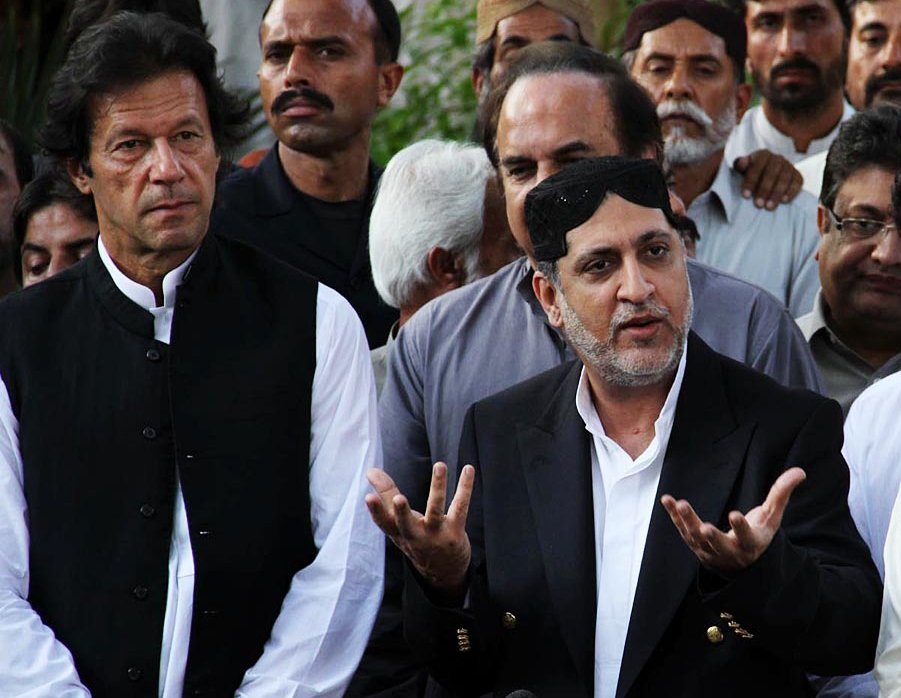
    The Pakistan Tehreek-e-Insaf (PTI) government appeared to be caught off-guard as the Balochistan National Party-Mengal (BNP-M), one of the eight political parties who either support the federal government or are a part of the ruling coalition, on Wednesday announced to end its alliance with the Imran Khan government.

    Speaking on the floor of the National Assembly (NA) during a session, party President Sardar Akhtar Mengal officially announced that his party was separating itself from the government. “We will stay in parliament and will keep talking about issues,” he said.

    The two parties had signed a six-point memorandum of understanding (MoU) in August 2018 for an alliance in centre. The six points included recovery of missing persons, implementation of the National Action Plan (NAP), implementation of six per cent quota for Balochistan in the federal government, immediate repatriation of Afghan refugees and the construction of dams in the province to resolve the acute water crisis.

    Mengal reminded the House that his party had two agreements with the ruling party, adding that it was the Imran Khan-led party which had come to him for an alliance, not the BNP-M which went to Bani Gala — the personal residence of PM Imran.

    “The first agreement was done on August 8, 2018 and signed by Shah Mahmood Qureshi, Jahangir Tareen and Yar Muhammad Rind,” recalled Mengal. 

    He added that his party had demanded that the missing persons issue be resolved and the National Action Plan be implemented in letter and spirit in the agreement.

    “Can someone tell us if there was anything unconstitutional in both these demands? Why were they not implemented?” asked the lawmaker from Balochistan. 

    He regretted that the ruling party’s mindset was “the same one running in the country since 1948”.

    “We waited for two years for the implementation of the agreement; we are ready to [wait] further, but start something,” appealed the nationalist leader. 

    He added that if the government wishes to take his province along, then they should implement their agreements with BNP-M.

    While highlighting his grievances in the assembly, the lawmaker stated that the foundations for the road from Chaman to Karachi were laid in 1973, and it has killed 4,500 in road accidents. He added that instead of giving them a six-lane road, the government gave them only a two-lane road.

    The BNP-M leader also claimed that “no one can find justice in this country” and that “justice is being sold”. 

    While hitting out at the government, he noted that Pakistan Steel Mills were being privatised and thousands were being unemployed.

    “The disappointing thing is that no one here is ready to listen to their [the laid off workers’] demands,” said Mengal. He added that if the demands could not be met, then they should at least be noted.

    “It has become a tradition here that the last government is held responsible for everything,” said Mengal.

    The alliance with the PTI was only in the centre, while the BNP-M’s alliance with the Jamiat Ulemae Islam-Fazl (JUI-F) in Balochis­tan continues at the provincial level.

    The coalition government has been struggling over “broken promises” for quite some time now as the Pakistan Muslim League (PML) and the Muttahida Qaumi Movement-Pakistan (MQM-P) also do not seem much satisfied with the ruling PTI’s performance.

    Wednesday’s development and its consequences could spell trouble for PM Imran who was elected as the leader of the house with a thin majority.
  • READ: PTI govt’s ‘corona budget’ for FY2020-21

    The Pakistan Tehreek-e-Insaf (PTI) government has presented its second federal budget in the National Assembly.

    According to Industries Minister Hammad Azhar, who delivered the budget speech on the floor of the house, the Federal Board of Revenue (FBR) revenue target for next year has been kept at Rs4.95 trillion, while defence allocations amount to around Rs1.3 trillion.

    The federal development programme has been budgeted at Rs650 billion to support growth prospects.

    The budget for fiscal year (FY) 2020-21 comes at a time when the country is battling the COVID-19 pandemic that has served a severe blow to the economy. According to reports, it has been formulated considering the impact of the virus and to give relief to the citizens, as part of which no new taxes have been imposed.

    Here’s the complete Rs7.13 trillion budget:

  • Out-and-about Nawaz now spotted at London park

    Former prime minister (PM) Nawaz Sharif, who was allowed to leave the country for treatment despite his conviction and subsequent imprisonment in a National Accountability Bureau (NAB) case against him, has been advised to engage in physical activity and take daily walks as lockdown rules have eased in the United Kingdom (UK).

    Two days after Nawaz’s personal physician Dr Adnan Khan said that the ex-PM had been in self-quarantine due to his vulnerable age and a history of cardiovascular and metabolic disease, he was seen taking a walk at a park in London, which according to Adnan, had been advised by his doctors in the UK.

    “Now, as lockdown is eased & authorities are allowing to go out for health reasons, PM #NawazSharif is medically advised to take regular physical activity & should manage walks daily for physical well-being as essential in the management of Heart Disease, Diabetes & Hypertension,” Dr Adnan had tweeted earlier this week.

    The picture doing rounds over the internet showed Nawaz with his son Hussain Nawaz, grandson and two others, taking a walk.

    He did not have a mask on.

    “Former PM Nawaz Sharif has complex cardiac and carotid artery disease with significant co-morbidities, including diabetes, hypertension and chronic renal disease,” Dr Adnan told The News.

    Due to the UK government’s previous rules on lockdown amidst coronavirus pandemic, he was in self-quarantine at residence. Since the rules have been relaxed, his consulting doctors have advised him to take regular exercise and daily walks as an essential part of the disease management.

    “It is very unfortunate that controversy is made when an under treatment patient is out for a walk. While there’s little doubt that the intent behind leaking the picture was mala fide, in reality, had an opposite effect and a glimpse of Nawaz Sharif infused new life into his followers and workers.”

    Last week, a fresh picture of Nawaz at a roadside cafe in London had sparked a debate about his health. In the picture, he was seen sitting at the roadside eatery with his granddaughters, sporting a blue shalwar kameez and a cap. As the picture went viral on social media, it sparked a debate about the former premier’s health with his detractors asking why he does not return to Pakistan if he is well and roaming on London streets, while his supporters expressed joy at seeing their leader in good health and spirits.

    Dr Adnan, who left for Pakistan two weeks ago, said that he would soon return to London, as the former PM has to undergo planned cardiac intervention and further in-hospital treatment. He said that all possible necessary precautions guided by the consultants and international health advisories have been taken by Nawaz during walks and exercises.