Category: Opinion

Diverse opinion by the best people from society, on politics, social issues, economy, sports and issues that directly affect Pakistan.

  • Blog: Knee Jerk – Plan of Action

    Blog: Knee Jerk – Plan of Action

    Typical Ration Bag: Rs1,600
    Includes: Flour, oil, sugar, rice, lentil and a soap

    “We’re building a stockpile. The word stockpile by definition means not for immediate use. It means you’re preparing for a battle to come and you have to have the equipment and you have to have it now. I can tell you this, if you wait to prepare for the storm to hit, it is too late, my friends. You have to prepare before the storm hits. And in this case, the storm is when you hit that high point, when you hit that apex. How do you know when you’re going to get there? You don’t. There is no crystal ball but there is science and there is data and there are health professionals who have studied this virus and its progress since China. Listen to them and follow the data to develop one coordinated plan,” said Governor Andrew Cuomo of New York in a press briefing on coronavirus on March 30.

    I witnessed the nation coming together when the deadly 2005 earthquake hit northern Pakistan. It devastated entire communities in Khyber Pakhtunkhwa (KP) and Azad Jammu & Kashmir (AJK). The 7.6 Richter scale quake wreaked havoc and misery to 400,000 families when at least 80,000 lost their lives. 90% of the affectees were from difficult-to-access rural areas in the mountains.

    Pakistan had in recent times not seen such extensive devastation and was hardly prepared to handle such a disaster. But the nation witnessed an unprecedented surge of sympathy for the affected communities when people from all over the country and the world rushed for assistance.

    Today, amid the coronavirus pandemic, an unprecedented lockdown is in place. And as all of us reflect on our daily lives, I hear nonprofits, independent guerrillas and civil society members coming forward and donating and collecting ration bags for daily wage affectees or families living under the poverty line. Several good-hearted folks have come together and started the drive by spreading the word on social media platforms to support the cause.

    Each cause has a different price and structure of distribution. We can select packages for a week, a month and so on. But what’s next? 

    My question is: where is the map of action for the households or the system where it’s equally, ethically and socially distributed? How are we deciding what neighbourhoods need the most? 

    Arif Hasan and I were are in an anti-encroachment WhatsApp group, where he said, “It’s frightening to see how everyone will end up washing for 20 seconds in a country where water is a contested property.”

    Celebrities and social media influencer’s are following a global practice of how to deal with COVID-19. Whereas we need to rethink of global south issues and practice a regional solution. Standards come from international forums, but they need to be localised and regionalised. 

    If today non-profit organisations and independent ration collectors are designing packages and sending mass messages to collect funds to feed the affectees, then maybe we also need to study and collect per household data and map the areas where any organisation is not distributing.

    What we need is a holistic plan for preparedness for disaster or unprecedented situational circumstances. This is the time when we need platforms to come together and work closely with local authorities and develop a strategy or a masterplan, through breaking down clusters, focusing on vulnerable communities and involving organisations.

    In our provincial context, where the Sindh government has shown a strong sense of perspective in times like these, maybe this is when we need to reflect and look for local strategic plans and grassroots level data analysis for future disaster distribution methodology, where civil society’s intervention is not just out of goodwill but equality and social systems. Where collaboration can be meaningful, and data sharing becomes a common practice.
  • The Common Good

    “Pure capitalism is basically selfish in nature and it leads to a particular attitude in the rich — that they deserve to be wealthy and the poor are poor because they are either lazy or stupid or both — or else because they are just an ‘inferior species’.”

    A friend in Karachi describes the unease that fills shoppers at an affluent Karachi supermarket when they step out of the store laden with as much as they can buy amid the coronavirus lockdown. They are faced with the sight of desperate day labourers standing outside staring quietly as they load bags of food supplies into their cars. The labourers hold the tools of their trade — shovels and pickaxes — and to the affluent shoppers, these now appear to be dangerous weapons.

    “They are starving,” says my friend, “their families don’t have food, they could be driven to despair and could easily attack shoppers to get food”.

    The public response to the crisis has been impressive in Pakistan, but can such efforts provide the scale of relief that is needed in a country where, according to a 2016 national assessment, almost 40 per cent of the population lives in poverty? People have donated generously to schemes that deliver basic rations to those in need and many organisations and individuals have mobilised their time and resources to feed the hungry but reports seem to indicate that this is proving woefully inadequate. The livelihood of so many households has been affected that the knock-on effect is totally devastating. Apart from those dependent on a daily wage, those running small business initiatives or taking on work outsourced from running businesses now have no work, no money and no food.

    And they are being told to stay in their homes and maintain social distancing in public places…

    In such circumstances, riots are a very real possibility. Not just in Pakistan but in other countries as well, particularly those with great social and economic inequality. And interestingly, it is this fear of unrest that is now leading many people to the realisation that depriving people of basic rights is not just an issue for the poor and oppressed but rather it is something that, eventually,  affects everybody — even the very rich and powerful. Pure capitalism is basically selfish in nature and it leads to a particular attitude in the rich — that they deserve to be wealthy and the poor are poor because they are either lazy or stupid or both — or else because they are just an ‘inferior species’.

    “For years the world has been veering towards a nasty form of capitalism in which the erosion of workers’ rights and social welfare is seen as an ‘efficient’ way to manage the economy. But the only thing it did efficiently was enriching and protecting a small minority that lived in a fortress bulwarked by wealth and privilege.”

    This basic lack of social empathy is rooted in the belief that wealth can buy you an island of privilege and anything outside the walls of this wealth is a) not your problem and b) does not affect you. Hence the attitude of the Pakistani glitterati, who spend millions on making their homes into palaces but then just tip their garbage onto the street corner instead of a bin; who spend thousands on fast food and designer outfits but are outraged when a staffer asks them for a salary of a few thousand rupees in advance. It is the same attitude that drives coalitions like the Conservative-LibDem one in the UK to close down public libraries or threaten the funding of the public service broadcaster. Instead of understanding that libraries and public service broadcasting can inform and educate, the attitude is that these are not essential as they have no tangible benefit i.e. profit. Public libraries, in particular, are essential to any civilised society as they provide access to learning, opportunity and advice and also provide resources like computers, printers and internet access.

    In Pakistan, schools and colleges with adequate resources have switched to online learning but what about all of those students from poorer institutions? And what about students who are expected to follow online curriculums but may not have a wifi connection or a laptop? The same question is relevant in the UK even though efforts are being made to cater to students with these sorts of disadvantages, many may fall through the cracks. Just a few months ago when the Labour Party announced a policy of free wifi for all in their election manifesto, the idea was widely derided, scoffed at and dismissed as ‘unworkable’, but now Jeremy Corbyn’s insistence that broadband access should be regarded as a basic right does not seem so ridiculous after all.

    For years the world has been veering towards a nasty form of capitalism in which the erosion of workers’ rights and social welfare is seen as an ‘efficient’ way to manage the economy. But the only thing it did efficiently was enriching and protecting a small minority that lived in a fortress bulwarked by wealth and privilege. But now a virus has illustrated that we are all connected. Ensuring access to basic rights and a proper welfare structure provides for a less insecure society and ‘feel good’ philanthropy and private charity or a mai baap approach to individual staff is simply not enough.

    Perhaps it’s time for all of us to embrace the idea of a socialist society, to recognise the importance of the dignity of labour and the protection of employee rights, to stop privatising and outsourcing and spending compulsively. It’s time for us to completely rethink the way we live.

  • Pakistani Love: Love in Expected Places

    Pakistani Love: Love in Expected Places

    I was 23 years old when I met my husband for the first time. After a whirlwind courtship of gorgeous flowers and overseas calling cards, we were married a short eight months later. By the time I was 28, I had three beautiful babies.

    Becoming a mother was the most momentous and profound turning point of my life. I realized with every sleepless night, with every poop call, every gurgle of laughter, the resilience I was capable of. It seems trite to say, but for the first time, I knew what it felt like to love unconditionally; blindly and completely. To know that forevermore, I will think of others before even beginning to consider myself.

    As the children’s demands grew, date nights were few and far in between, travelling seemed overwhelming, showering appeared to be a luxury and doing anything for myself, an unnecessary and guilty indulgence. In these years, I YouTubed fervently, teaching myself how to do my own hair. I researched to figure out the shortest and most effective forms of exercise at home and to keep my separation anxiety at bay, googled how to make my own candles while the kids were at pre-school.

    Juggling being a mother, a wife, a daughter and daughter-in-law occupied all of my time and my life was full to the brim. Occasionally, my husband and I would go out with friends. Out at dinner or to a party, in the midst of the fun and revelry I would realize that as much as I was glad to be out, I would much rather be doing something else.

    In 2014, we moved to Dubai. Being a pakka Karachite, it was emotional suicide. Outside my comfort zone, it was also when I realized I had stopped having an opinion. I began to wake up to the sudden thought that while living for others is a natural by-product of being a mother and wife, forgetting to think of yourself is not.

    But old habits die hard, and I continued delaying everything I wanted for the benefit of the greater good. It was always about what other people expected of me, what I needed to be doing, what I had to be responsible for. I seemed to be guided completely by the wants and needs of everyone around me.

    It took losing my father this year to absorb something multitudes of books and thousands of songs push on repeat: learn to love yourself.

    No one really explains how losing a parent changes you. For me, it made me reevaluate everything I have ever believed in. It’s almost as if something tangible breaks inside of you, and you have to put yourself back together again, piece by piece.

    Except now, you can decide what to put back and what not to.

    What tiny bit of yourself to leave out and what to glue back. There is also the huge piece of you that will remain forever missing, and you have to learn to factor that in too. With grief, you are irrevocably changed, in a way no motivational talk can achieve.

    Losing my father taught me that life is fleeting. You will never find the right time to be or do what you want- except now. So in the midst of my turmoil, I am learning to fall in love with myself again. To give myself time to heal, to be myself, to say no, to say yes. To teach the people around me to give me space; to learn it myself.

    I still have a long way to go, but I no longer accept invitations that I feel I have to. When I’m mired down in a conversation about clothes and jewelry, I feel no guilt in zoning out. When I really should go to that dinner, I stay in to watch Netflix. I stand up for what I believe in and no longer apologise for what I don’t. When I’m exhausted but bored, I force myself to get dressed up and go out. I make time for yoga, I order in that burger and when I get a strong feeling, I trust my instincts.

    But when my journey began to feel a tad too self-indulgent and a bit rebellious, one recent Sunday night the whole family was sitting and watching Jurassic Park. I got up to check why my seven-year-old wasn’t back from the bathroom. When I saw her peacefully coloring in her room, I asked her why she wasn’t watching the movie with the rest of us. What she said was a validation of sorts:

    “I don’t feel like watching Jurassic Park again, mama. I just want some me-time and do what I feel like”.

    I felt like clapping, loving the fact that I was teaching my daughter to love herself.

    I have learnt, until I am as giving and kind to myself as I am to others, I can never really love completely. No one will look after you, except you.

    This Valentine’s Day, let that be a priority. Today, I hold my loved ones close and pray that of all the lessons I teach my children, I really, really hope they always remember this one.

    Read the other ‘Pakistani Love’ stories here:

    Pakistani Love: The Story of Survivors

    Pakistani Love: They wanted to dream

    Pakistani love: The Pleasure Quartet and Black Ships

  • Multicultural casting now bordering on the absurd

    The opposite of blackface is not illogical casting

    A new film adaptation of David Copperfield has the central character played by Dev Patel. So here David is brown but his mother is white while his late father’s sister is a very, very pale white. The character of Agnes is played by a black actor while her father is played by a Chinese actor, Steerforth is played by a white actor while his haughty and snobbish mother is played by a black one. Should all of this matter in this age of political correctness? The answer is that to a film viewer it does matter. It really does.

    Armando Iannucci’s screen version of the Dickens classic challenges all the preconceptions that criticism of the closed nature of the industry have highlighted: its tendency to tell white people’s stories, written by white people, directed by white people and featuring white actors. But the reason it doesn’t work is, essentially, that there is no attempt to be visually convincing.

    Let’s be clear here: when you are casting a classic story you attempt to be true to both the story and to the character. Hence Laurence Olivier playing Othello blacked up his face attempting to look like a Moor as did Al Jolson attempting to look like a black American musician — yet in the Iannucci film nobody bothers to look like anything but themselves. This might work in an independent theatre production but in an ambitious feature film it just doesn’t do the trick: film is a visual medium which is fairly reliant on the intimacy afforded by the camera close-up so it’s not enough to insist on the idea that ‘any actor can play any role.’

    In any case, it’s a false premise that any actor can play any role – every casting director will tell you that. When you are casting you look for acting ability plus a degree of physical resemblance and if the latter is absent, then you try to create resemblance through various means such as make-up etc. For example, you wouldn’t have a fat, heavily built actor playing the part of a slight and undernourished character any more than you’d have an eighty-year-old actor playing a teenager… Does this make the casting either ‘fatist’ or ageist and hence reprehensible? No, it’s all just a bit of common sense.

    For the past few years every time the Oscars and BAFTA award season comes around, we are reminded anew of the issue that mainstream films tend to ignore and sideline non-white talent and that the Hollywood film industry has a bias that favours white professionals. This is a completely valid concern but the superficial way in which some people are choosing to redress the balance is fairly ridiculous. The David Copperfield film is a perfect example of this – just because men used to play female roles in 17th-century productions of Shakespeare or white actors used to play Chinese or non-white roles in early cinema, does not mean that the inverse is okay – indeed such casting defies the very basis that such criticism is based upon i.e. that casting could be more authentic and more convincing if the opportunity was opened up to more people fitting the physical description better.

    At this point, you may disagree and ask “Well, what about Hamilton?”. Hamilton is, of course, the runaway hit musical by Lin-Manuel Miranda that casts non-white actors as America’s founding fathers and other historical figures. But Hamilton works because it is theatre rather than film and the story-telling methods are non-traditional.  What works on stage doesn’t necessarily work on the large screen – and certainly not where kinship is suggested, after all, we tend to look for some sort of resemblance even between non-white actors if they are cast as blood relatives, it’s just something that’s part of our cinematic expectation.

    It’s right and timely that we recognise and deal with the issue of prejudice and marginalisation in mainstream cinema and we attempt to correct conscious and unconscious biases within the industry, but the way to do this is not through random and unconvincing casting. The multicultural nature of the casting of the new Charles Dickens adaptation proves this convincingly. I’m not sure why filmmakers keep remaking perfectly good films but in the case of Copperfield, it marks no improvement on its predecessors. (Unfortunately, it’s difficult to discuss this widely enough because so few people nowadays seem to have read David Copperfield!)

    At any rate, when you see #OscarsSoWhite trending again this year, do think about the whole issue again. Hopefully, you’ll agree that merely ticking boxes and casting without logic does not redress any sort of historical imbalance it just makes for weak cinema.

  • Mere Paas Tum Ho: A male lens into infidelity

    Mere Paas Tum Ho: A male lens into infidelity

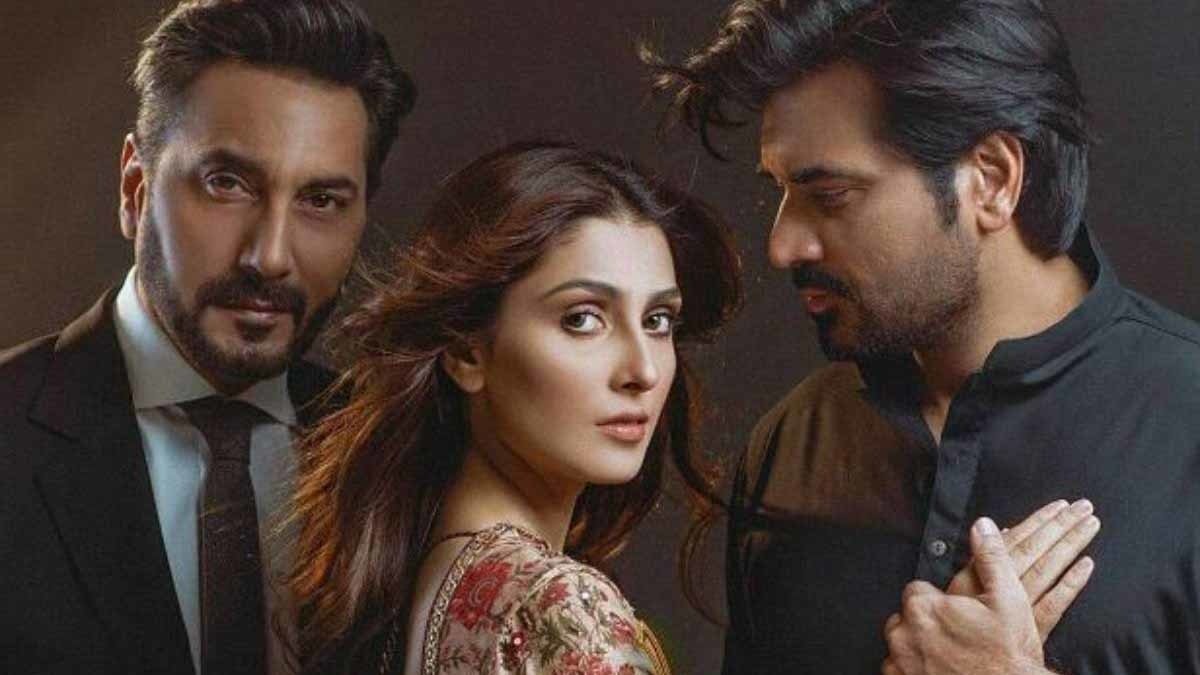
    In a story as old as time itself, a male author has, through Mere Paas Tum Ho, tapped into archaic notions of what constitutes a moral vs an immoral woman, in a topic as complex as infidelity.

    Today marks an almost historic day in Pakistani television history as “Mere Pass Tum Ho” (MPTH), which has become one of the most successful dramas in our history, is all set to end with its mega finale.

    This has become such an anticipated ending that in an unprecedented move, cinema houses have decided to showcase the entire episode, and it is expected that we will witness packed houses. However beneficial this may be for our television industry’s commercial growth, MPTH has uncovered the deeply sexist faultiness within our onscreen depiction of women, as well its widespread acceptance within society.

    More so than the actors, the drama’s writer, Khalilur Rehman Qamar, who has written hits like “Pyare Afzal’ and “Sadqay Tumhare”, has been in the limelight for the past few months due to his shockingly misogynistic views. And he has rejected, shunned and castigated his haters in a way that only someone possessing extreme male privilege would be able to do.

    There have been a few key issues in the debate surrounding MPTH — the first, and perhaps most significant, has been whether and to what degree do the on-screen portrayal of women and men, as well as the dynamics between the genders, impact the mindsets of viewers. Is the media merely a depiction of what actually happens in society, or can it be an engine that drives social change?

    This debate has been around for decades. An argument can clearly be made that media is not monolithic, and can have both a representative, as well as a progressive role. The problem, however, seems to be that the Pakistani television industry has almost one-sidedly been playing a regressive role in its portrayal of problematic cultural and social norms, where formulaic and one-dimensional characterisations of social issues are carefully depicted as a means of appeasing the audience and driving commercial success.

    Very few channels have been bold enough to tackle topics that may receive criticism or force the viewers to think outside their preconceived notions. In a country that ranks third lowest in the world on gender parity, a more responsible role by the media industry should be expected.

    In a similar vein, and in a story as old as time itself, a male author has, through MPTH, tapped into archaic notions of what constitutes a moral vs an immoral woman, in a topic as complex as infidelity. Qamar’s personal views come through very clearly via his writing, where a one-dimensionally “evil” Mahwish, is pitted against an equally one dimensional “pure” Danish. The fundamental problem lies not as much in the motivations behind infidelity, but in the consequences, which seem to be drastically different for men and for women.

    There have been countless dramas in which the male protagonist has been unfaithful to his wife, but he has received forgiveness from her, and this has satiated our audience’s desire for maintaining a warped gender dynamic especially on the issue of infidelity. In the case of MPTH, which is also perhaps one of the first-ever portrayals of a female protagonist cheating on her husband, this issue has been handled through an exclusively male lens. Mahwish’s character has been reduced to being a “2 takay ki aurat“, whereas Adnan Siddiqui has been accepted, albeit reluctantly, by his first wife.

    This issue has been made worse by the drama writer’s own personal views on gender and infidelity, where he has unabashedly stated that a woman who cheats loses her very essence and he considers her to be a “non-woman”. Unfortunately, Qamar’s opinions are not rare, and we live in a society where gender disparity is so entrenched that men have even earned the right to cheat without glaring consequences.

    The pain of infidelity has been experienced by countless individuals, but it’s the woman who is constantly expected to think of her home, her children’s future, and society’s expectations. Surely, one of the biggest indicators of gender equality should be equal punishment for the same crime. What has made this experience even more unbearable has been Qamar’s constant presence on television, where he has been outdoing himself with his own misogyny. His lack of knowledge and facts on society’s deep-rooted prejudices becomes more apparent with each interview.

    The case of MPTH depicts how badly our television writers and their characters need a touch of complexity and diversity. The tired, black and white portrayals of morality need a dash of empathy and realism. The constant parade of similar narratives written by privileged men with regressive views needs a major refreshment and a modern touch. But more so than anything, our television industry needs daring writers — those whose vision goes beyond commercial success, or what the audience will blindly accept, to actually exploring unique topics, deeper human emotions and contemporary realities. In 2020, we need a braver lot.