News stories of Politics, for the topics that matter the most to young professionals and college students, political news reported with a different angle.
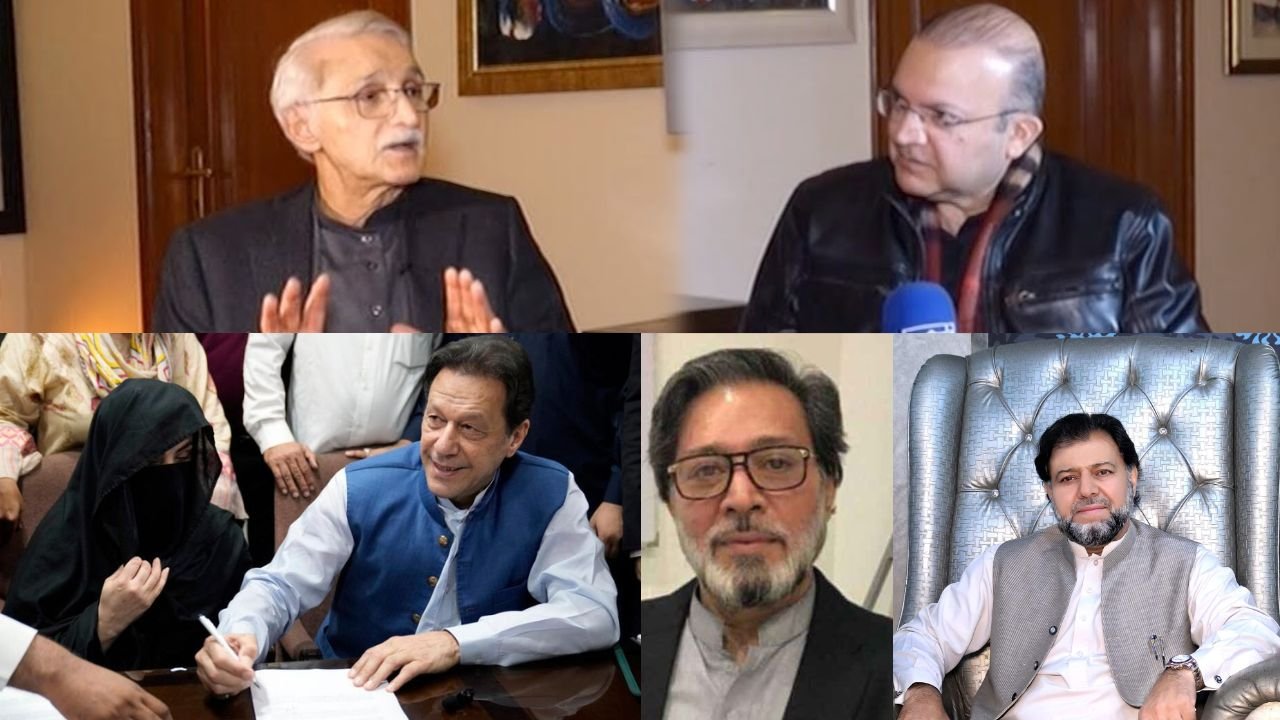
Istehkam-e-Pakistan Party (IPP) chief, Jahangir Khan Tareen, expressed regret on Tuesday for the controversial remarks he made against former Prime Minister Imran Khan’s wife, Bushra Bibi, during a recent TV interview.
“Regarding my comments on Nadeem Malik’s show, it was not my intention to malign anyone. I have always refrained from making derogatory comments about politicians’ families, even while my own family was under attack. I only shared what was said to me verbatim. In hindsight it should have been kept private,” he said on X (formerly Twitter).
Regarding my comments on Nadeem Malik’s show, it was not my intention to malign anyone. I have always refrained from making derogatory comments about politicians’ families, even while my own family was under attack. I only shared what was said to me verbatim. In hindsight it…
In an interview with Nadeem Malik, Tareen disclosed that the strained relationship between him and Imran Khan was fueled by Bushra Bibi and revealed an intriguing episode involving Khawar Maneka’s family.
“Maneka’s brother called me and asked for a private meeting,” said Tareen.
“He told me that his sister-in-law Bushra Bibi and Imran Khan have a relationship and it is creating a disturbance in his brother’s married life,” he added.
Tareen said he replied that they should approach Bushra Bibi’s husband first and said it was not his job to resolve the matter.
According to Tareen, when he relayed the entire story to Khan in another private meeting, it annoyed the PTI chief and led to clashes between them.
The discord escalated, and at a walima ceremony, Imran Khan summoned Tareen into a room where Bushra Bibi confronted him about his inappropriate remarks. Tareen expressed disbelief at the turn of events, emphasizing that he and Imran Khan were close and that he never anticipated such repercussions. Despite feeling sidelined, Tareen chose to endure the situation in silence.
As Tareen acknowledged the irreversibility of the past events, he reiterated his regret for the controversial remarks and the subsequent fallout with Imran Khan. The revelations have sparked intrigue, shedding light on the complex dynamics within political circles.
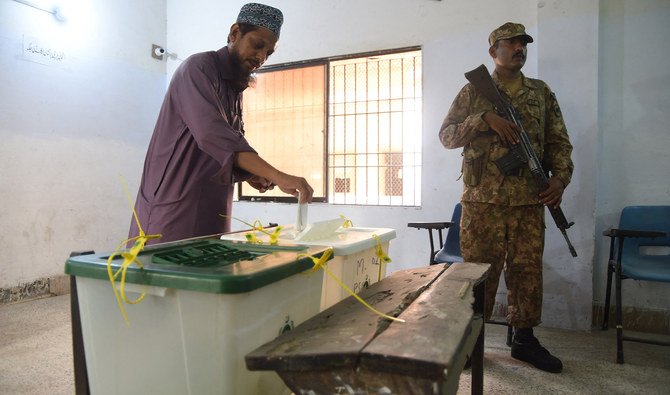
The caretaker federal cabinet on Tuesday approved a summary requesting the deployment of the Pakistan Army and civil armed forces troops to help civil institutions in ensuring the conduct of free, fair, and peaceful general elections scheduled for February 8.
The development occurred during a huddle between the caretaker cabinet and caretaker Prime Minister Anwaar-ul-Haq Kakar.
According to the statement issued by the Prime Minister’s Office, “The troops will perform duties in sensitive constituencies and polling stations and will also act as a rapid response force.”
The federal cabinet unanimously approved the deployment of Pakistan Army and civil armed forces personnel at sensitive polling stations across the country for the upcoming general elections, based on the recommendation of the Ministry of Interior. The Pakistan Army also promised to provide essential assistance for the upcoming general election set to take place on February 8 next month.
Soldiers, along with Rangers and Frontier Constabulary (FC) personnel, will perform election duties.
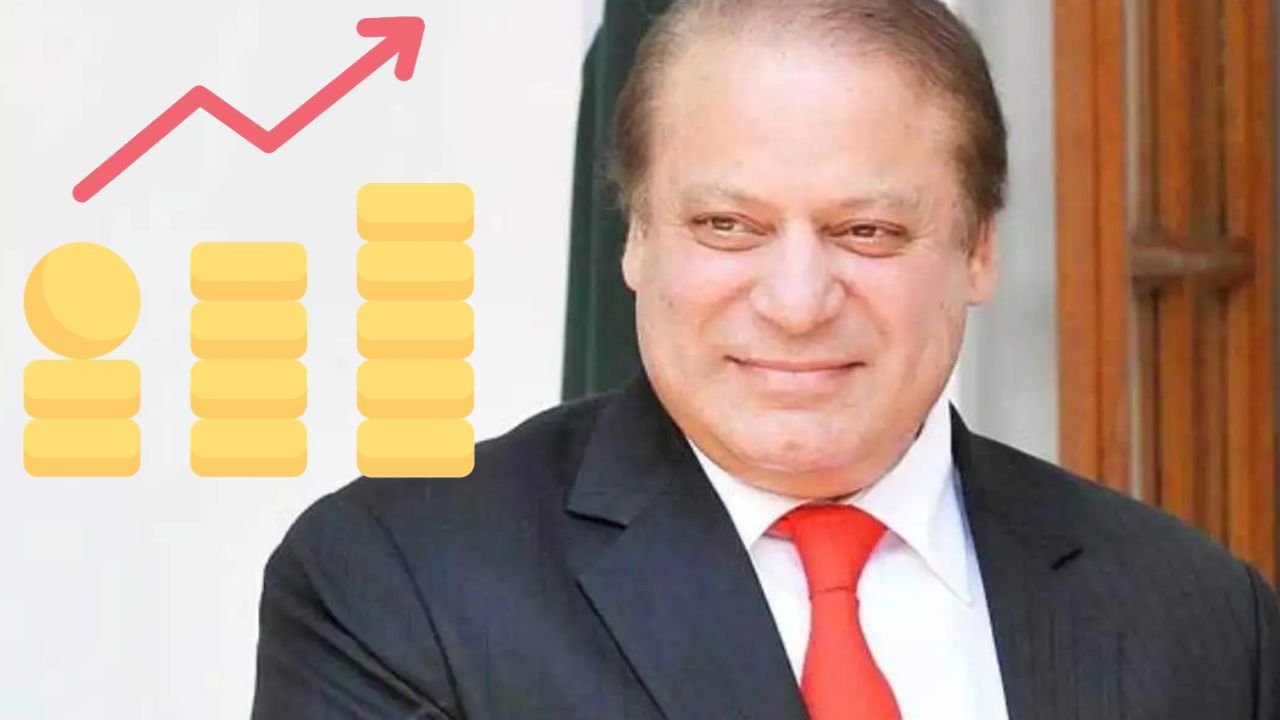
An analysis by Bloomberg Economics reveals that Pakistan’s economy witnessed its best performance in the past three decades under the leadership of Nawaz Sharif, who served as Prime Minister thrice.
The report compares economic indicators during Sharif’s tenure with those of his rivals, including Imran Khan’s Pakistan Tehreek-e-Insaf (PTI) and Bilawal Bhutto Zardari’s Pakistan Peoples Party (PPP), using a misery index that combines inflation and unemployment rates.
According to Bloomberg Economics, the analysis utilized an average of the misery index values over the years when each major political party ruled Pakistan since 1990.
The results indicate that Sharif’s Pakistan Muslim League (PML-N) outperformed both PTI and PPP in managing economic challenges.
With general elections scheduled for February 8, Bloomberg suggests that Nawaz Sharif seems poised to return to power for the fourth time, especially as Imran Khan faces legal issues and incarceration.
Despite Khan’s popularity, with a 57% approval rating according to a recent Gallup poll, Sharif has experienced a surge in popularity from 36% to 52% in the past six months.
The past three decades saw the PML-N rule Pakistan four times under Sharif and his younger brother Shehbaz Sharif. The PPP under the Bhutto dynasty has held power three times, while Khan was in office for a four-year term ending in April 2022 when he was ousted from power in a parliamentary no-trust vote.
“Bloomberg Economics used an average of the index values over the respective years when each of the major political parties ruled the country since 1990. A higher value indicates more economic hardship for citizens,” the publication said, explaining its conclusions.
Bloomberg Economics Misery Index Results for Pakistan showed the Pakistan Muslim League scored 14.5 percent, Pakistan Tehreek-e-Insaf 16.1 percent, and the Pakistan Peoples Party 17.2 percent.
Pakistan is currently grappling with economic challenges, including seeking a financial bailout from the International Monetary Fund (IMF).
Inflation is close to 30 percent in Pakistan, the currency was Asia’s worst performer last year and foreign exchange reserves have slumped.
The incoming government, as per IMF conditions, will need to implement potentially unpopular policies such as withdrawing subsidies and raising taxes. The IMF forecasts a 2% growth in Pakistan’s economy for the current fiscal year after experiencing a contraction in the previous year.
Despite the positive economic indicators during Sharif’s governance, the report underscores the formidable tasks awaiting the new government in addressing the country’s economic hardships.
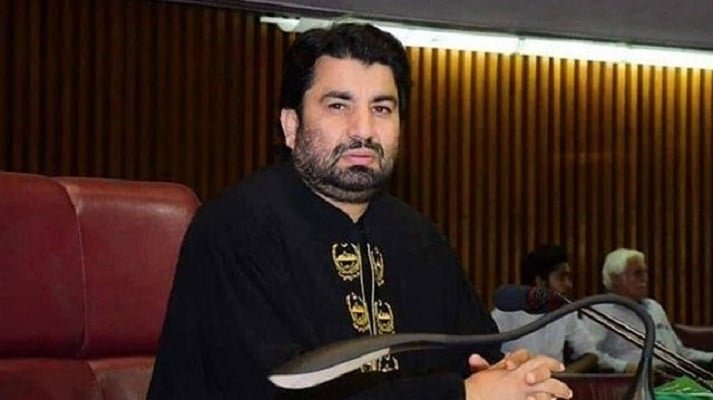
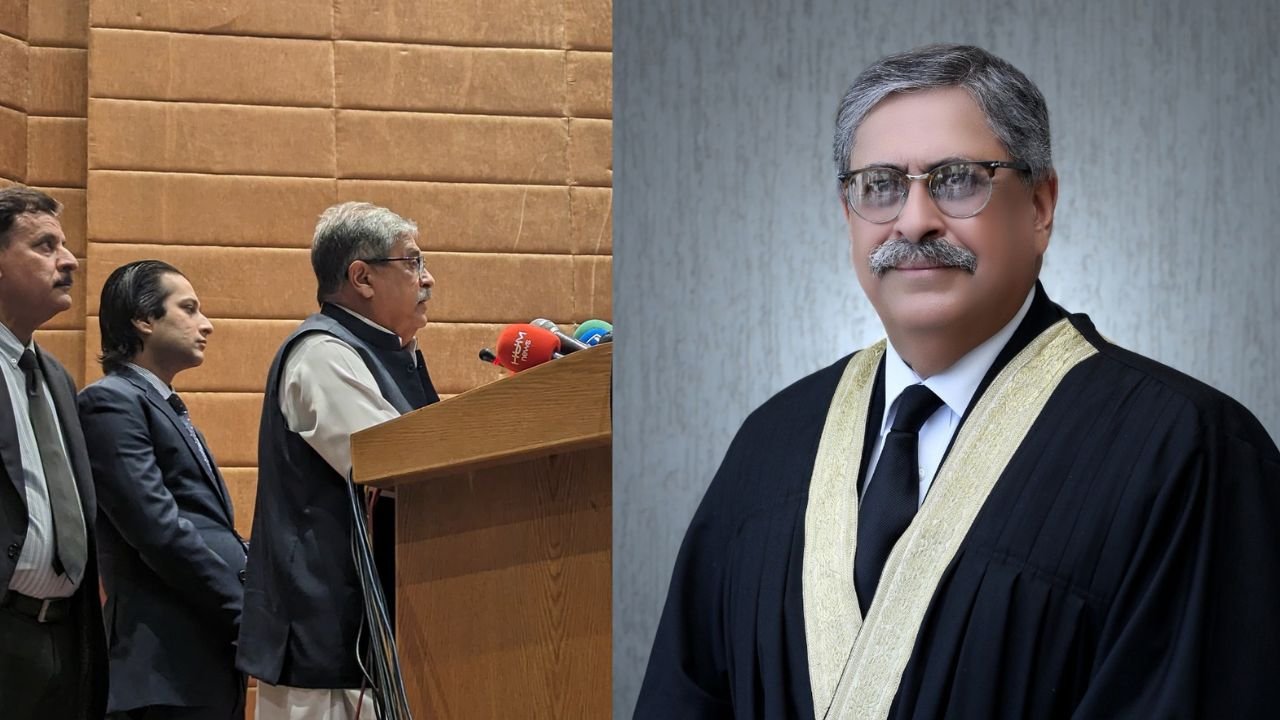
Chief Justice of Pakistan (CJP) Qazi Faez Isa has asked why the Supreme Court (SC) should not proceed against former National Assembly (NA) deputy speaker and Pakistan Tehreek-e-Insaf (PTI) leader Qasim Suri for violating the Constitution.
“Qasim Suri did not hold [voting] on the no-confidence motion. He became the cause of the constitutional crisis in the country,” the CJP remarked while referring to the 2022 crisis related to the ouster of then-prime minister Imran Khan via parliamentary vote.
The CJP also stated that it was suggested that a former NA deputy speaker should be tried under Article 6 for treason. “Then tell us, why we should not proceed against you on abrogation of the Constitution?”
The CJP passed the remarks during the hearing of Suri’s 2019 petition challenging the election tribunal’s decision to declare his election from NA-265 (Quetta-II) unlawful on September 27, that same year.
In 2019, a three-member bench of the apex court headed by Umar Ata Bandial rejected the petition of the election tribunal and restored Qasim Suri’s membership.
Baloch leader Lashkari Raisani had challenged Suri’s victory in the Quetta constituency during the 2018 elections.
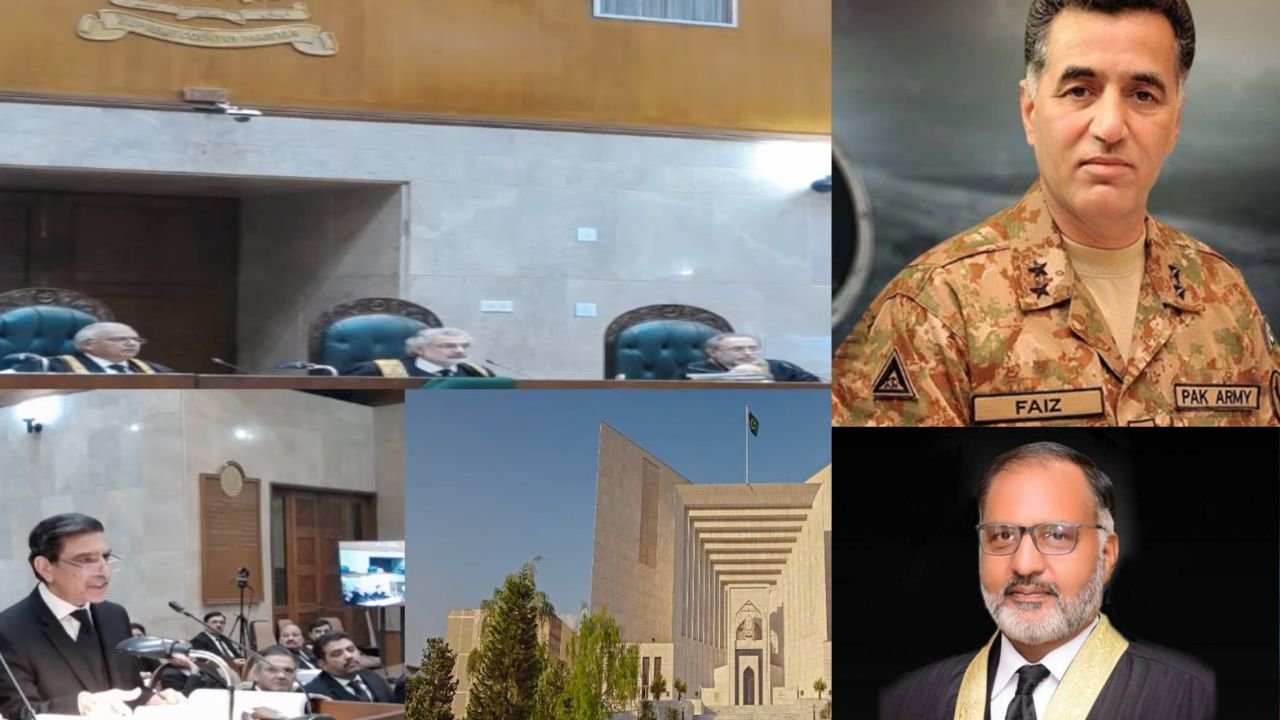
Lieutenant General (retd) Faiz Hameed, former director general of Inter-Services Intelligence (ISI), has firmly denied allegations of him meeting former Islamabad High Court judge Shaukat Aziz Siddiqui and manipulating the judicial proceedings related to the Panama Papers case, Geo has reported.
General Hameed labeled the accusations as “absolutely false, frivolous, concocted, and based on an afterthought.”
He emphasized that he neither contacted Judge Siddiqui nor engaged in any meetings with him, rejecting any involvement in discussions about the appeals filed by Pakistan Muslim League-Nawaz (PML-N) leader Nawaz Sharif in the court.
“Former judge IHC Shaukat Aziz Siddiqui’s allegations are false, frivolous, concocted, and based on afterthought and are controverted”
Said Former DGISI Faiz Hameed in his submitted response in #SupremeCourt by counsel Khawaja Haris, who also represents Brig(r) Irfan Ramay! pic.twitter.com/Kc29o2X2C3
IHC former chief justice Muhammad Anwar Khan Kasi also submitted his response to the Supreme Court rejecting Siddiqui’s allegations.
In addition, Brigadier (retd) Irfan Ramay’s reply has also been submitted to the top court, in which he denies the allegations against him and meeting Siddiqui.
Contrary to Faiz Hameed’s reply, Siddiqui claims he has concrete evidence of two meetings with Gen (retd) Faiz Hameed at his official residence in 2018.
Talking to Geo News, Siddiqui says he not only has a list of witnesses but also material evidence to prove his allegation that the then-DG ISI visited him twice when he was a senior serving judge.
Siddiqui says if required, he can furnish the evidence to the Supreme Court, which is presently hearing an appeal against his dismissal by the Supreme Judicial Council (SJC) in October 2018.
Referring to the replies of Gen (retd) Faiz and others submitted to the Supreme Court in his case, he says the replies that deny his allegations prove the point that he was dismissed from service by the SJC without inquiring about the matter.
Siddiqui says a day after his address to the Rawalpindi Bar Association on July 22, he had formally approached the then chief justice Saqib Nisar requesting him to constitute a commission to probe the authenticity and truthfulness of what he had alleged in the address.
“If an independent commission holds that there’s no reality in the facts presented in the meeting of District Bar Association Rawalpindi, I am ready to face the consequences, but at the same time, I have a right to enquire that if my presented facts proved correct, what would be the fate of those persons, be they the serving army personnel who are involved in manipulating the judicial system,” reads his letter written to the then CJP.
Siddiqui requested the issuance of directives for open proceedings of an independent commission, allowing media, civil society, and the legal fraternity to attend the inquiry into his allegations.
Expressing his distress, Siddiqui stated, “It is a matter of concern that the independence of my institution has been compromised by the intervention of a few individuals of the prestigious institution of the Army and its allied agencies.”
He noted that he had previously pointed out this intervention, leading to the initiation of a reference against him, along with another he deemed fabricated.
Siddiqui’s troubles began after he addressed the District Bar Association on July 21, 2018, at the invitation of the executive body.
During this address, he presented facts related to the Constitution’s applicability, the rule of law, the independence of the bar and bench, and the dispensation of justice.
Following his revelations, Siddiqui claimed that a false and malicious campaign was launched against him on social and electronic media.
The former judge expressed his disappointment, revealing that he learned of the Supreme Court’s instant annoyance through social media and the press release of the Supreme Court’s Public Relations Officer (PRO). Siddiqui noted that such outbursts of anger from the Supreme Court were not new and unusual in his experience.
Despite Siddiqui’s request for an independent commission to probe the authenticity of his claims, none was constituted.
The Election Commission of Pakistan (ECP) has informed all election candidates that there will be no election campaign after midnight on February 6 for the upcoming general elections set to take place on February 8.
The ECP’s spokesperson said while talking to The News that, “According to Section 182 of the Elections Act 2017, no person shall hold or participate in any public meeting, procession, corner meeting or such political activity after midnight on February 6, 2024 and February 7, 2024.”
“Therefore, legal action will be taken against any person who violates the above provision of the law,” the spokesperson added.
On the other hand, caretaker federal minister for Communications, Maritime Affairs, and Railways Shahid Ashraf Tarar briefed Chief Election Commissioner (CEC) Sikandar Sultan Raja on the preparations of federal and provincial governments for elections.
Earlier last week, the ECP released its ‘Code of Conduct for Security Personnel’ cautioning them to avoid bias when they are on election duty.
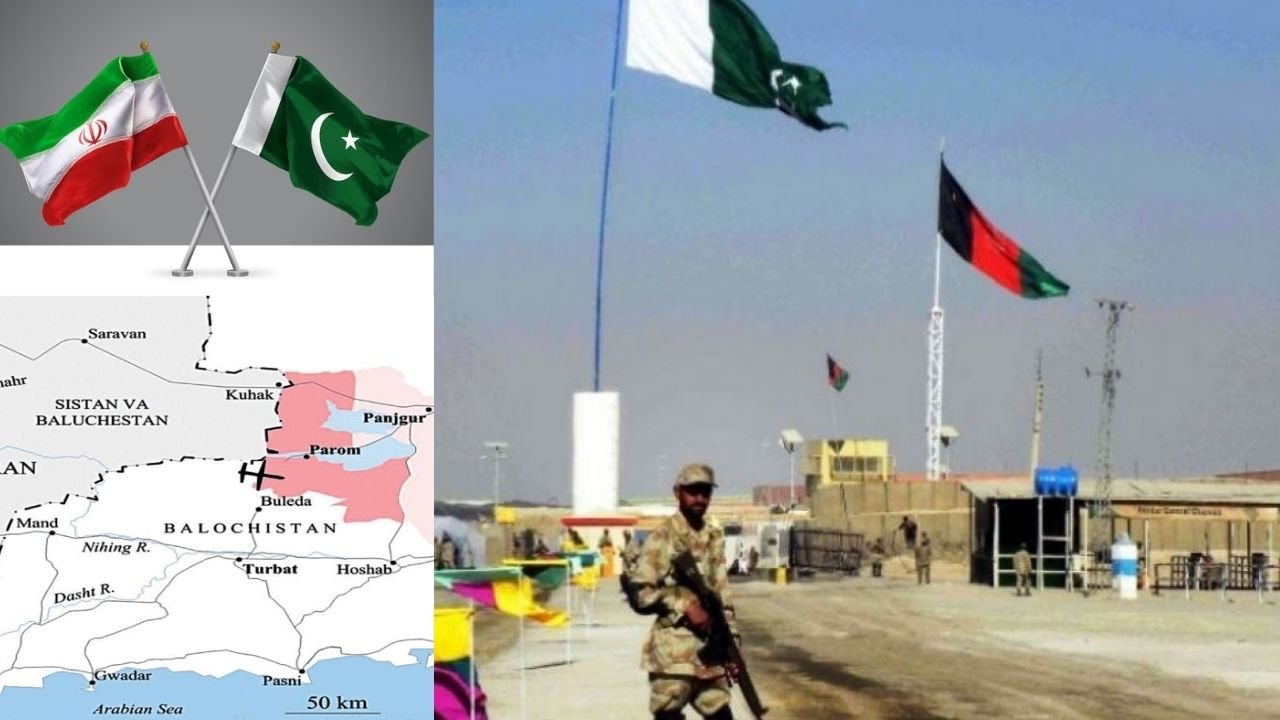
Following Operation Marg Bar Sarmachar, Pakistan and Iran have mutually agreed that ambassadors of both countries will return to their respective posts by January 26, 2024 and the Iranian Foreign Minister is going to visit on January 29, 2024.
In a joint statement issued on Monday, the Foreign Office said that at the invitation of Foreign Minister Jalil Abbas Jilani, his Iranian counterpart Hossein Amir Abdollahian will undertake a visit to Pakistan on January 29.
In a post on X, Pakistan’s Ambassador to Iran Mudassir Tipu said he was “so delighted that leaderships of both Pakistan and Iran so deftly handled a challenging moment astutely- swiftly putting relations back on track”.
I am so delighted that leaderships of both and so deftly handled a challenging moment astutely- swiftly putting relations back on track. We have great potential ahead & both brotherly countries must collectively promote peace & development in region .
Along with that the Foreign Office (FO) said on Monday that Iran’s foreign minister Hossein Amir Abdollahian would visit Pakistan on January 29.
The visit comes days after tensions escalated between the two countries following an Iranian air strike in Pakistan, leading Islamabad to strike terrorist hideouts in the neighbouring country’s Sistan-Baluchestan province.
“Following the telephone conversation between the foreign ministers of Pakistan and the Islamic Republic of Iran, it has been mutually agreed that ambassadors of both countries may return to their respective posts by January 26, 2024,” the FO said in a statement.
The FO said that the Iranian foreign minister would travel to Pakistan on Jan 29 at the invitation of FM Jilani.
: PR NO. 2️⃣3️⃣/2️⃣0️⃣2️⃣4️⃣
Joint Press Statement of the Islamic Republic of Pakistan and the Islamic Republic of Iran
Previously, Pakistan has targeted terrorist hideouts inside Iran in response to the violation of Pakistan’s sovereignty by the Iranian Revolutionary Guard that killed two children and injured three girls.
Hideouts used by terrorist organisations namely Balochistan Liberation Army and Balochistan Liberation Front were successfully struck in an intelligence based operation, code name ‘Marg Bar Sarmachar’, ISPR has stated in a recently released statement.
According to a statement by the Foreign Office (FO), a number of terrorists were killed during the intelligence-based operation codenamed ‘Marg Bar Sarmachar’. Meanwhile, Iran’s IRNA news agency reported that nine people, including seven “non-Iranian nationals”, were killed in the strike targeting a village near the city of Saravan.
The Khorasan Diary reported, that “7 BLF millitants involved in attacks in Pakistan have been killed/injured in Pakistan’s strikes in Iran.”
7 BLF MILITANTS INVOLVED IN ATTACKS IN PAKISTAN HAVE BEEN KILLED/INJURED IN PAKISTANS STRIKES IN IRAN.
A top Pakistani security official told The Khorasan Diary that 7 militants wanted to Pakistan have been killed or injured in the strike in Shamesar, Iran.
In a video posted, it can be seen the damage caused by Pakistani Strikes in approximately 200 kilometres away from PAK-Iran border.
TKD MONITORING: A video uploaded by news outlets of Saravan city at dawn shows at least one site hit by Pakistan early this morning. Multiple bodies are under the debris it states. Saravan city in Sistan wa Balochistan province of Iran is approximately 200 kilometres from… pic.twitter.com/LrLr58iMBO
Publication The Khorasan Diary also claimed that Jaishul Adal, the same militant group, Iran claimed to have targeted has taken the responsibility for the attack on Saravan Corps of Sistan Wa Baluchistan province, Colonel Hossein Ali Javadanfar, adding that the security official was assassinated along with two of his guards.”
ALERT: The deputy commander of the Saravan Corps of Sistan Wa Baluchistan province, Colonel Hossein Ali Javadanfar, was shot dead when he was returning from an administrative mission on the Khash-Zahedan road, Iran. Iranian state media reported. Jaishul Adal, a militant group… pic.twitter.com/LiizDcCVFT
Previously, The Iranian strikes were part of a series of attacks carried out by the country in recent days in Syria and Iraq as a response to recent terrorist attacks on its territory. They have heightened concerns about regional stability, particularly amid ongoing conflicts in the Middle East.
Pakistan undertook a series of highly coordinated and specifically targeted precision military strikes against terrorist hideouts in Siestan-o-Baluchistan province of Iran. A number of terrorists were killed during the Intelligence-based operation – codenamed ‘Marg Bar Sarmachar’, says the official statement released by the Foreign Office of Pakistan.
“Last night’s unprovoked and blatant breach of Pakistan’s sovereignty by Iran is a violation of international law and the purposes and principles of the Charter of the United Nations,” FO Spokesperson Mumtaz Zahra Baloch said in a statement on Wednesday.
A context to the response by the Foreign Office
Foreign Ofiice of Pakistan provided a detailed context to Operation Marg Bar Sarmachar.
“Over the last several years, in our engagements with Iran, Pakistan has consistently shared its serious concerns about the safe havens and sanctuaries enjoyed by Pakistani origin terrorists calling themselves Sarmachars on the ungoverned spaces inside Iran. Pakistan also shared multiple dossiers with concrete evidence of the presence and activities of these terrorists. However, because of lack of action on our serious concerns, these so-called Sarmachars continued to spill the blood of innocent Pakistanis with impunity. This morning’s action was taken in light of credible intelligence of impending large-scale terrorist activities by these so called Sarmachars,” the statement read.
The Foreign Office described the action as a part of its resolve to “defend its national security against all threats.” Moreover it mainatianed that “Pakistan fully respects the sovereignty and territorial integrity of the Islamic Republic of Iran. The sole objective of today’s act was in pursuit of Pakistan’s own security and national interest which is paramount and cannot be compromised.”
Strict monitoring of Air Space
Geo News’ Azaz Syed quotes Civil Aviation Authority that amid the escalation of tensions in Islamabad-Tehran ties, Pakistan has started strict monitoring of all flights from the West including Iran.
Meeting of Foreign Minister with Iranian Counterpart
Caretaker Foreign Minister Jalil Abbas Jilani Wednesday told his Irani counterpart that no country should follow its path of launching an attack on a neighbouring nation’s soil against the menace of terrorism unilaterally.
“No country in the region should tread this perilous path,” Jilani told Iran’s FM Hossein Amir-Abdollahian during a telephone call hours after Tehran claimed it had targeted “terrorists” in Pakistan.
Iranian response
There is a group called Jaishal Adal, which is an Iranian terrorist group that have taken refuge on Pakistan-Iran border. Several times we have talked to Pakistani security officials that this group killed our security personnel and we responded by killing Iranian terrorist on Pakistani soil. I have spoken to my Pakistani counterpart, the Foreign Minister of Pakistan, we do respect the sovereignty of Pakistan but we don’t allow our national security be compromised and be played with. We have no hesitations when it comes to our national interest and those terrorist groups inside Pakistan and those affiliated with Israel” the Iranian Foreign Minister Hossein Amir Abdollahian said while speaking in Davos at The World Economic Forum.
WE RESPECT PAKISTANS SOVEREIGNTY BUT WILL NOT COMPROMISE ON OUR NATIONAL SECURITY SAYS IRANIAN FOREIGN MINISTER
There is a group called Jaishal Adal, which is an Iranian terrorist group that have taken refuse on Pakistan-Iran border. Several times we have talked to Pakistani… pic.twitter.com/NHLrTyCwqn
India India in a statement from the Ministry of External Affairs said, “This is a matter between Iran and Pakistan. Insofar as India is concerned, we have an uncompromising position of zero tolerance towards terrorism. We understand actions that countries take in their self-defence.”
China, close partners of Iran and Pakistan, urged restraint, with foreign ministry spokeswoman Mao Ning saying both should “avoid actions that would lead to an escalation of tension”.
United States of America
The United States, meanwhile, condemned the Iranian strikes in Pakistan, Iraq and Syria, with State Department spokesman Matthew Miller saying Tehran had violated the “sovereign borders of three of its neighbours in just the past couple of days”.
Caretaker Information Minister Murtaza Solangi stated on Monday that the government has identified over 500 social media accounts involved in a campaign against the judiciary.
“Action will be taken against those involved in the recent malicious campaign against Supreme Court (SC) judges, in accordance with the law and constitution,” he said, talking to media in Islamabad while he was flanked by the Pakistan Telecommunication Authority (PTA) and Federal Investigation Agency (FIA) officials.
Solangi said that after the decision of the SC on the electoral symbol “bat” of Pakistan Tehreek-e-Insaf (PTI), a vicious campaign was started against the judiciary.
“Article 19 of the Constitution marks a boundary for freedom of speech,” he stated.
On the other hand, PTA officials said that it has the authority to remove objectionable content from social media. He also said that awareness regarding the use of social media is essential, as most people spread lies on social media platforms without any authentic information.
“Social media’s outreach is enormous and easy, but people are not aware of its utility,” he said.
The Election Commission of Pakistan (ECP) has confirmed that 18,000 candidates are going to contest for national and provincial assembly seats in the upcoming general elections set to take place on February 8.
ECP released its final list of candidates on Sunday.
According to the ECP, 11,785 candidates will take part as independent candidates in the polls, and 6,031 will compete under the banner of their respective political parties.
On the other hand, some well-known politicians, including founder Pakistan Tehreek-e-Insaf (PTI) Imran Khan, Chaudhry Shujaat Hussain, and Asfandyar Wali, are out of the race for multiple reasons.
After having been denied their preferred election symbol after its intra-party elections were found to be contrary to its own constitution and relevant laws, PTI has fielded its candidates as independents, and each one of them has been allotted a different symbol.
On the other hand, Pakistan Muslim League-Nawaz (PML-N) supremo Nawaz Sharif is contesting the elections from NA-15, Mansehra, and NA-130. The former prime minister and Nawaz’s brother, Shehbaz Sharif, is taking part in polls from NA-123, Kasur, and NA-132, Lahore.
Supreme Court Justice Athar Minallah, addressed a seminar on the significance of freedom of expression on Saturday, shedding light on its historical context and impact on Pakistan’s trajectory.
The seminar, a part of the second law bridge workshop on superior court reporting, provided a platform for Justice Minallah to share his insights on the intersection of freedom of expression and judicial independence.
جسٹس اطہر من اللہ کا بڑا بیان جسٹس اطہر من اللہ نے آزادی اظہار رائے پر ریاست کی غیر اعلانیہ پابندی کی مخالفت کر دی pic.twitter.com/z4v1jGvH4i
Expressing his concern over the potential influence of social media on judicial decision-making, Justice Minallah asserted the importance of maintaining judicial independence, stating that any judge swayed by social media violates his/her oath and called upon fellow jurists to remain resolute in upholding justice despite external pressures.
Justice Athar Minallah, Chief Justice of the Islamabad High Court (IHC), recently addressed the importance of freedom of expression at a seminar. He emphasized that if freedom of expression had been recognized in the past, Pakistan might not have experienced periods of…
Addressing the delicate balance between constructive criticism and trust in the judiciary, Justice Minallah emphasized that critics should retain faith in the legal system, considering it a litmus test for its strength.
He welcomed constructive criticism while underscoring the need to strike a balance in fostering trust in the judiciary.
Justice Athar Minullah’s very meaningful discussion on the current situation, pic.twitter.com/iR177hGVC0
Reflecting on the challenges of freedom of speech in the country, the Chief Justice traced the roots of censorship to historical actions following Quaid-e-Azam Muhammad Ali Jinnah’s speech on August 11, 1947. He stressed the necessity of balancing freedom of expression with responsible reporting to navigate these challenges.
Sharing a personal anecdote from his early days as a judge, Justice Minallah recounted a case involving a 16-year-old accused of displaying a banner against a senior apex court judge.
He highlighted the importance of judiciously addressing such incidents and cautioned against making blanket judgments without thorough investigations.
“When the matter of the 18th constitutional amendment was raised, many forces were against it. A reporter asked me, what will the Supreme Court do about the 18th Amendment. I replied ‘In my opinion, the SC should not interfere in the constitutional amendment’,” he said.
The apex court judge said he had said he would resign if the 18th amendment was annulled and the next day news was published that “Athar Minallah has threatened the court”.
Citing former Ugandan president and the modern world history’s most brutal dictator, Idi Amin, Justice Minallah said, “A society is ruined, if someone gags freedom of expression like Idi Amin.”