Category: Politics

News stories of Politics, for the topics that matter the most to young professionals and college students, political news reported with a different angle.

  • How many registered religious minority voters are in Pakistan?

    How many registered religious minority voters are in Pakistan?

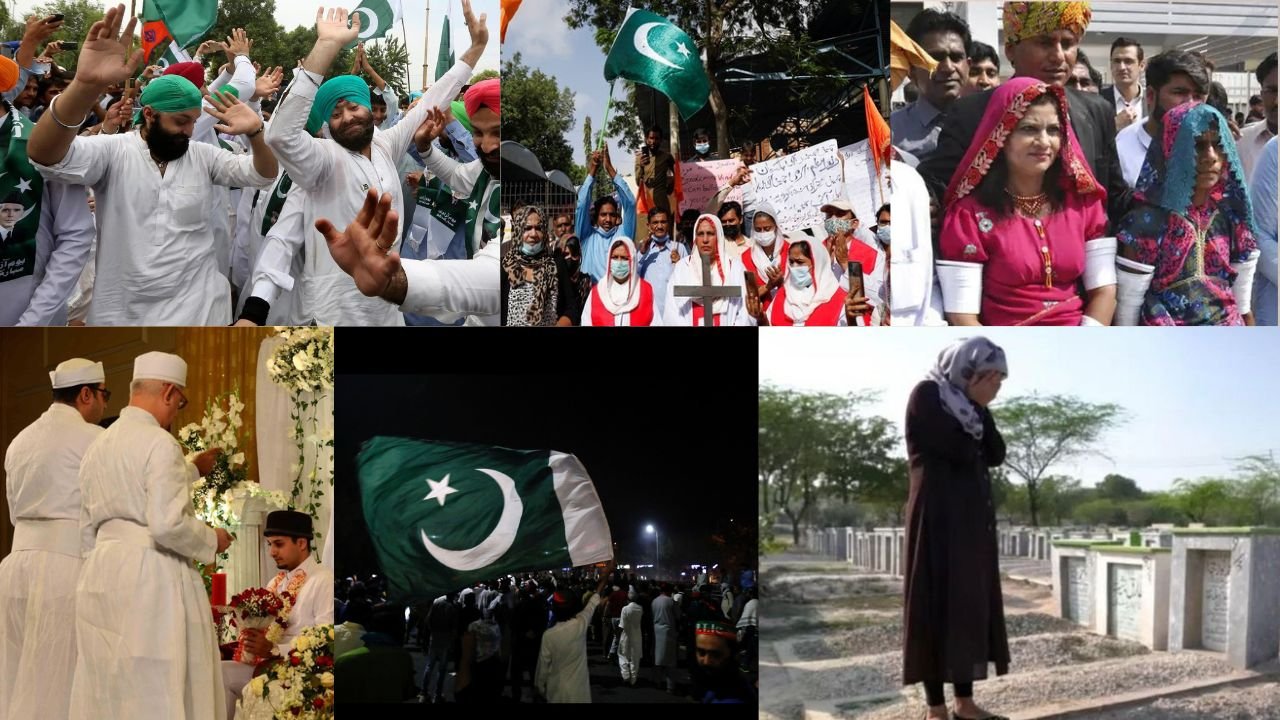
    As per the recent province-wise religion report of the Election Commission of Pakistan (ECP), there are 30 lac, 78 thousand, 3 hundred and 6 voters from religious minorities in Pakistan.

    Out of 40 thousand 781 minority voters in Khyber Pakhtunkhwa 3516 are Bahai, 220 Buddist, 28080 Christian, 4209 Hindu, 723 Parsi, 1149 Ahmadi, and 2884 Sikh.

    In former Federally Administered Tribal Areas (FATA) there are 3539 religious minority voters out of which 400 are Bahai, 41 Buddist, 1446 Christian, 669 Hindu, 16 Parsi, 23 Ahmadi, and 944 Sikh.

    For 12 lac 59 thousand 303 minority voters in Punjab, 18102 are Bahai, 786 Buddist, 1057071 Christian, 73456 Hindu, 262 Parsi, 108538 Ahmadi, and 1088 Sikh.

    In Sindh, there are 16 lac 80 thousand 582 minority voters, out of which 7269 are Bahai, 495 Buddist, 228552 Christian, 1423276 Hindu, 2787 Parsi, 16668 Ahmadi, and 1535 Sikh.

    Balochistan has 44 thousand 930 minority voters, out of which 1387 are Bahai, 1387 Buddist, 18702 Christian, 18702 Hindu, 265 Parsi, 549 Ahmadi, and 272 Sikh.

    In the Federal Capital, there are 44 thousand 783 minority voters, out of which 242 are Bahai, 41 Buddist, 40518 Christian, 276 Hindu, 16 Parsi, 3677 Ahmadi, and 13 Sikh.

    Although elections are not happening in Gilgit Baltistan and Azad Jammu and Kashmir in February 2024, ECP did share detailed data of these areas too.

    Out of 653 minority voters in Gilgit Baltistan, 472 are Bahai, 5 Buddist, 147 Christian, 8 Hindu, 16 Ahmadi, 5 Sikh, and none from the Parsi community.

    Azad Jammu and Kashmir has 3735 minority voters out of which 1083 are Bahai, 23 Buddist, 987 Christian, 45 Hindu, 13 Parsi, 1580 Ahmadi, and 4 Sikh.

    As Pakistan gears up for nationwide parliamentary elections in February 2024, a significant portion of the population, the Ahmadiyya community, faces disenfranchisement due to discriminatory provisions in the electoral law.

    Current electoral regulations in Pakistan effectively exclude Ahmadis from the voting process based on their religious beliefs.

    To register as voters, members of the Ahmadiyya community are compelled to either renounce their faith or accept placement in a distinct electoral list categorizing them as “non-Muslim.”

    However, self-identification as Muslim is a fundamental tenet of Ahmadiyya religious belief.

    This exclusionary practice has resulted in the denial of voting rights for Ahmadis, who comprise over 500,000 individuals in Pakistan.

    Despite their significant numbers, Ahmadis find themselves unable to participate in local, provincial, and national elections.

    It is noteworthy that in 2002, Pakistan discontinued an electoral system that segregated Muslims and non-Muslims into separate categories for registration and voting.

    However, discriminatory measures persist, particularly affecting the Ahmadiyya community’s ability to exercise their

    The government also created a separate category for Ahmadis. Since then, all Pakistani citizens have voted according to a single electoral list except the Ahmadis, who vote on a separate list.
  • Seat adjustment expected between PML-N, PML-Q on multiple seats

    Seat adjustment expected between PML-N, PML-Q on multiple seats

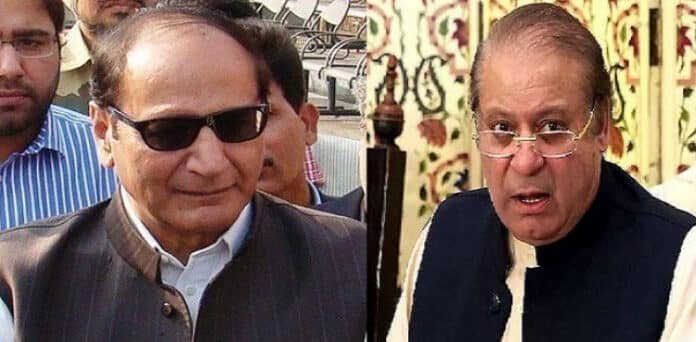
    Former rivals Pakistan Muslim League-Nawaz (PML-N) and Pakistan Muslim League-Q (PML-Q) are expected to agree to seat adjustments for the upcoming general elections set to take place on February 8, 2024, as discussions on the matter between the two Punjab-based parties is in process, The News has reported.

    According to the report, PML-Q wanted seat adjustment on multiple seats in Punjab as well as on the seats where the party won in the 2018 polls. PML-Q won four National Assembly (NA) seats and eight provincial assembly seats in 2018.

    PML-Q leaders Salik Hussain, Monis Elahi, Hussain Elahi, and Tariq Bashir Cheema succeeded in those NA constituencies.

    PML-Q chief Chaudhry Shujaat’s son Shafay Hussain submitted nomination papers for two provincial assembly seats from the family stronghold of Gujrat.

    Sources claimed that seat adjustment is expected on Salik and Shafay Hussain’s seats.

    On the other hand, PML-Q leader Tariq Bashir Cheema will face PML-N’s Saud Majeed in Bahawalpur.

    However, discussion on the matter of seat adjustment between PML-N and the Istehkam-e-Pakistan Party (IPP) are still going on.

  • Maryam Nawaz kay pass kitna paisa hai?

    Maryam Nawaz kay pass kitna paisa hai?

    Pakistan Muslim League-Nawaz (PML-N) Senior Vice President Maryam Nawaz owns assets worth more than Rs842.58 million, Geo News reported on Thursday.

    According to details submitted by Maryam Nawaz alongside her nomination papers, she owns 1500 kanal land in Lahore. Her assets increased by Rs4 million in one year.

    As per the submitted documents, Maryam Nawaz has a degree of masters in English literature. She doesn’t own a vehicle. She also has to give more than Rs 28.9 million to her brother Hassan Nawaz.

    The PML-N senior vice president also has Rs 10 million in different bank accounts, as well as shares worth Rs 12.2 million in different companies.

    The Election Commission of Pakistan (ECP) approved Maryam Nawaz’s papers from multiple constituencies in Lahore and Sargodha.

    The scion of the Sharif family had submitted nomination papers for two National Assembly constituencies—NA-119 and NA-120—and four Punjab Assembly constituencies—PP-159, PP-160, PP-165, and PP-80.

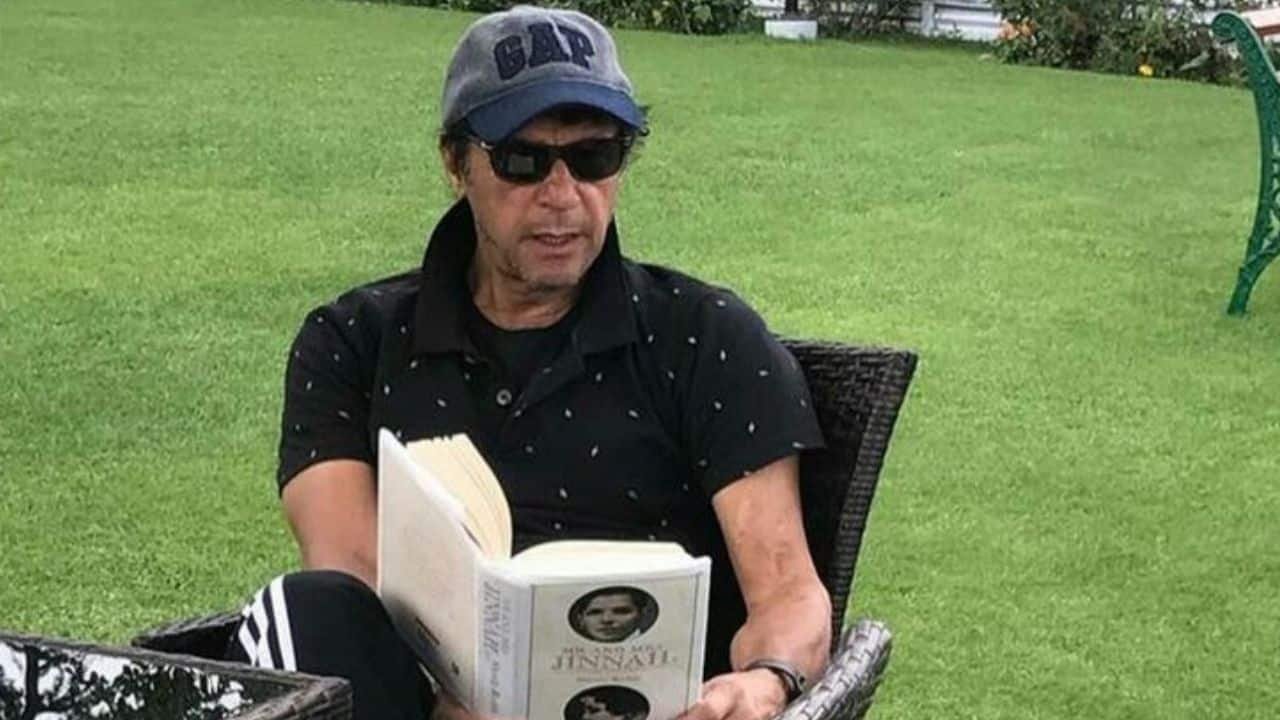
  • Which Tafseer will Imran Khan be reading in jail?

    Which Tafseer will Imran Khan be reading in jail?

    Former Prime Minister Imran Khan’s lawyer Intezar Hussain Panjutha has on Wednesday tweeted about the Tafseer of the Holy Quran that Khan is reading in Jail.

    The Study Quran is written by a group of writers and the chief editor is Iranian Philosopher Seyyed Hossein Nasr.

    It can be ordered online via Readings and Liberty Books in Pakistan.

    This is not the first time Imran Khan is either reading a commentary on the Quran or a book during incarceration. In August, his sister Aleema Khan told the media, “He has started finishing the Quran for the second time and has also read Islamic history.”

    The same lawyer, Panjutha, is seemingly the most regular supplier of books to Khan as he has posted about sending him books previously as well.

    To read more about how Imran Khan is spending time in jail, read TV, 29 books, four pillows and so much more: list of things provided to Khan in jail.

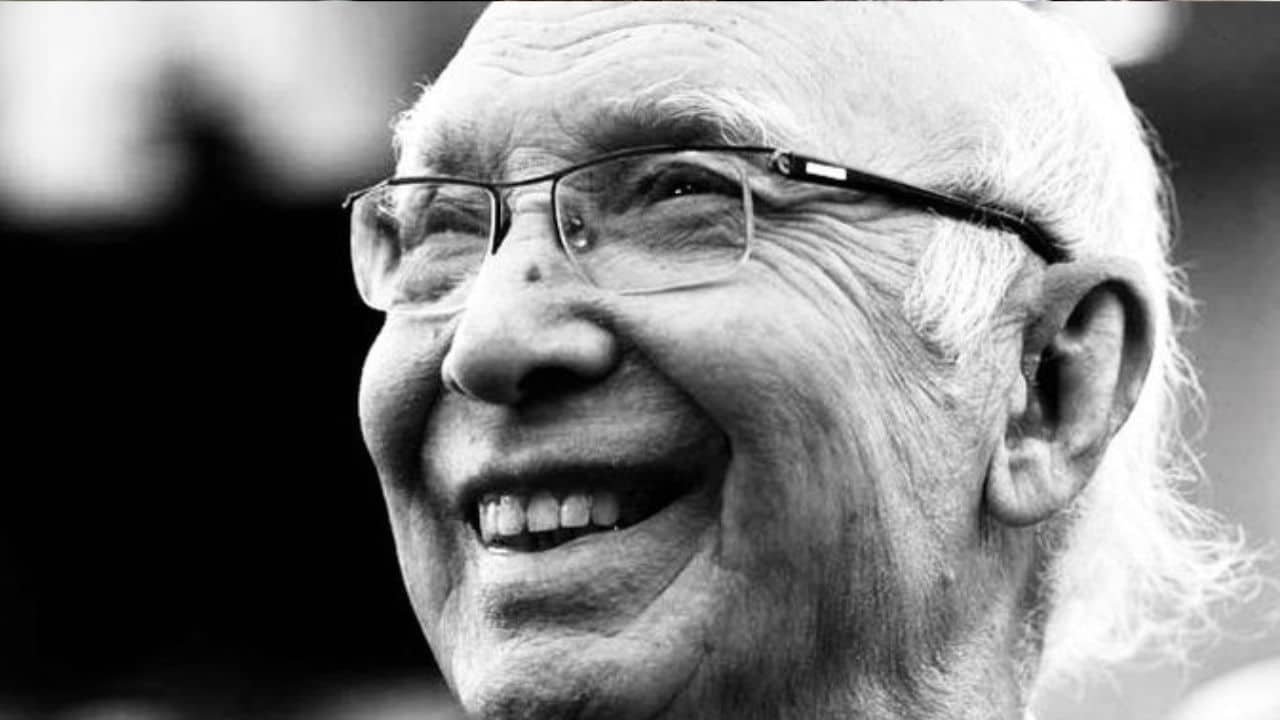
  • Tributes pour in after senior politician Sartaj Aziz’s death

    Tributes pour in after senior politician Sartaj Aziz’s death

    Senior politician, diplomat, and former finance minister Sartaj Aziz passed away at the age of 94 in Islamabad on Tuesday night.

    Born in February 1929 in Nowshera, Aziz was a veteran politician from the Pakistan Muslim League-Nawaz (PML-N). He served in key governmental posts in his long political career, including as the minister for finance and economic affairs. He also remained a senator from 1985 to 1999 and was elected as an advisor on national security and foreign affairs in the 2013 general elections.

    Aziz’s vast political career spanned academia, civil service, and public office holding.

    Besides serving as the federal minister, Aziz also fulfilled responsibilities as assistant president of the International Fund for Agricultural Development (IFAD) and director of the Food and Agriculture Organisation’s Commodities and Trade Division.

    The two-time finance minister was considered a respected figure in the national discourse, bearing keen insights and analysis on economic and political issues.

    PML-N announced the death of the senior politician on X (formerly Twitter). “It is with a heavy heart that we announce the passing of Mr. Sartaj Aziz. A stalwart, a true icon, and a towering figure! His contributions to the nation and towards the party will never be forgotten.”

    Other politicians and his colleagues started posting pictures of him and recalled the time, they served with him. Ahsan Iqbal said he had the “honour of working with him very closely and will never forget his affection and guidance”.

    Shehbaz Sharif termed it as “not just a personal loss but a loss for the nation.”

    Miftah Ismail said, “Sartaj Aziz’s passing is surely the end of an era.”

    Engineer Khurram Dastgir called it a profound loss to the nation.

    Reacting to the demise of a veteran politician, President Arif Alvi expressed deep grief and solidarity with the survivors of the deceased. He also prayed for Aziz’s forgiveness and patience for his family.

    Caretaker Prime Minister Anwaar-ul-Haq Kakar also expressed sorrow and said that his contributions to the country will always be remembered.

    Career diplomat Maleeha Lodhi paid tribute to him by saying, “Pakistan will be poorer without him.”

    Fellow Academic Adil Najam lauded him by saying, “Thank you, Sartaj sb, for a life well lived; a life of unwavering commitment to Pakistan.”

    Senior journalist, Nasim Zehra showed her respect towards Sartaj by praising him for his “commitment to the very best for Pakistan as Foreign and Finance Minister.”

    Fellow diplomat, Kristof Duwaerts tweeted, “I had the pleasure of interacting with H.E. late Sartaj Aziz on a number of occasions during my time in Pakistan.”

    Indian journalist Aditya Raj Kaul, praised him for being a gentleman and a great diplomat.

    Social worker and activist Khaleel Tetaly lauded Sartaj Aziz as a key advocate for community-led development in Pakistan.

    Institute of Strategic Studies Islamabad extended condolences on the passing of Sartaj Aziz for serving Pakistan with his exceptional talent in various capacities for over seven decades.

    Beaconhouse National University paid tribute to their esteemed founding Vice Chancellor and cherished mentor.

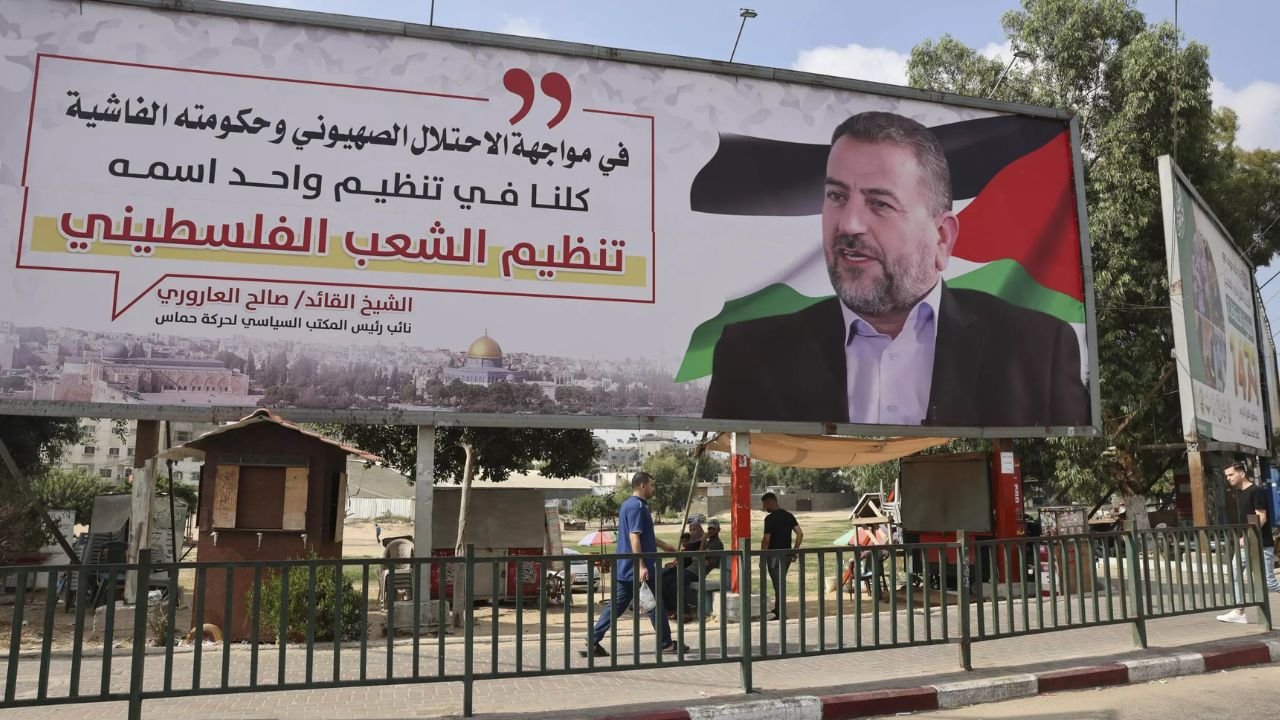
  • Israel ready ‘for any scenario’ after strike kills Hamas deputy in Lebanon

    Israel ready ‘for any scenario’ after strike kills Hamas deputy in Lebanon

    Jerusalem (AFP) – The Israeli army has said it is “prepared for any scenario” after a strike in Beirut that killed Hamas’s deputy chief, stoking fears that it could boil over into wider regional conflict.

    A high-level security official in Lebanon told AFP that Saleh al-Aruri was killed along with his bodyguards in a strike by Israel.

    A second security official confirmed the information, while Hamas TV also reported Israel had killed Aruri in Lebanon.

    Israeli army spokesman Daniel Hagari did not directly comment on the killing, but said afterwards that the military was in “very high state of readiness in all arenas, in defence and offence. We are highly prepared for any scenario.”

    Israel has previously announced the deaths in Gaza of Hamas commanders and officials during the war, but Aruri is the most high-profile figure to be killed, and his death came in the first strike on the Lebanese capital since hostilities began.

    The strike adds to widespread fears that it could lead to a wider regional conflagration.

    Hamas said Aruri’s death would not lead to its defeat, while its Lebanon-based ally Hezbollah vowed the killing would not go unpunished, calling it “a serious assault on Lebanon… and a dangerous development”.

    Lebanese Prime Minister Najib Mikati condemned the killing and said it “aims to draw Lebanon” further into the war.

    Aruri, who lived in exile, is accused by Israel of masterminding numerous attacks.

    Following his death, Hamas chief Ismail Haniyeh said that a movement “whose leaders fall as martyrs for the dignity of our people and our nation will never be defeated”.

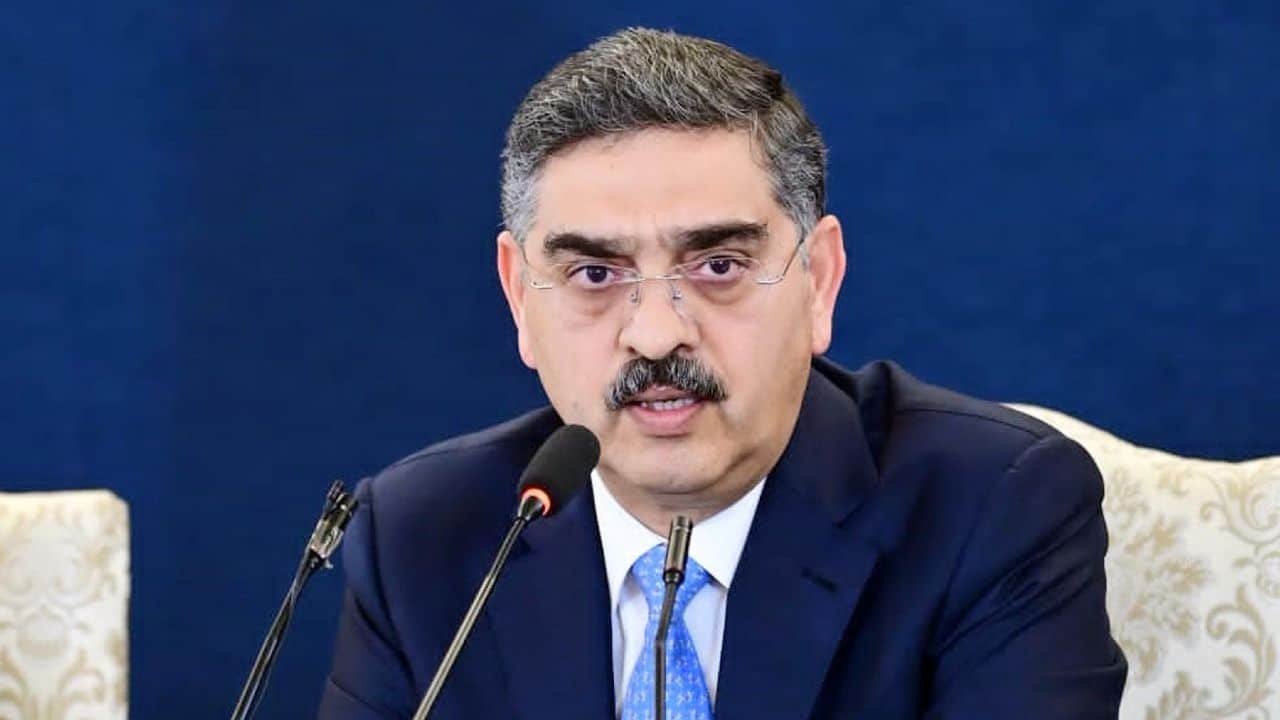
  • State won’t accept ‘elements’ supporting terrorists in Balochistan, says PM Kakar

    State won’t accept ‘elements’ supporting terrorists in Balochistan, says PM Kakar

    Caretaker Prime Minister Anwaar-ul-Haq Kakar criticised “elements” who are backing terrorists and militants in the name of supporting Baloch protesters demanding the release of all missing persons.
    The prime minister’s statement came during a press conference in Lahore as the Baloch families of missing persons protested against “enforced disappearance” and “extrajudicial killing” in Islamabad.

    PM Kakar said that the state would not tolerate elements who are supporting militants and terrorists involved in the killing of individuals from Balochistan, including teachers, doctors, and lawyers.

    The Prime Minister also criticised the media for portraying the Baloch families protest in an inaccurate way, but in reality, he said, Baloch stood with Pakistan.

    The premier said that there was no restriction on freedom of expression and that every citizen has the right to protest within constitutional limits. “The families have the right to protest for their beloved ones, but others are just launching baseless criticism.”

    However, he also said that the state won’t allow those elements who want to support militants and terrorists in the country.
    “Those who want to support them [armed militants] should join the camp of the militant outfits who termed terrorism as a movement,” he added.
    Anwaar-ul-Haq Kakar also said that the Indian spy agency, Research and Analysis Wing (Raw), is funding terrorists in Balochistan.

    On the other hand, Baloch activist Mahrang Baloch tweeted on X (previously Twitter) in response to Kakar’s press conference: “From the inception of our movement, our demands have been clear: an end to all forms of human rights violations in Balochistan and the cessation of the Baloch genocide. We’ve presented these demands to the state through the media. Our stance has remained clear from the beginning – we seek negotiations with the state regarding these demands. Sadly, the world witnesses the continuous irresponsibility and stubbornness of the state, where peaceful protestors endure torture and arrests, and media trials are conducted against this peaceful movement. Today, the Prime Minister of Pakistan declared victims of enforced disappearances as terrorists, insulting victim families and addressing peaceful political activists in a threatening tone. However, we assert to this state and government that we will persist in informing the world about your oppression and barbarism.”

  • South Korean opposition leader stabbed in neck, expected to undergo surgery

    South Korean opposition leader stabbed in neck, expected to undergo surgery

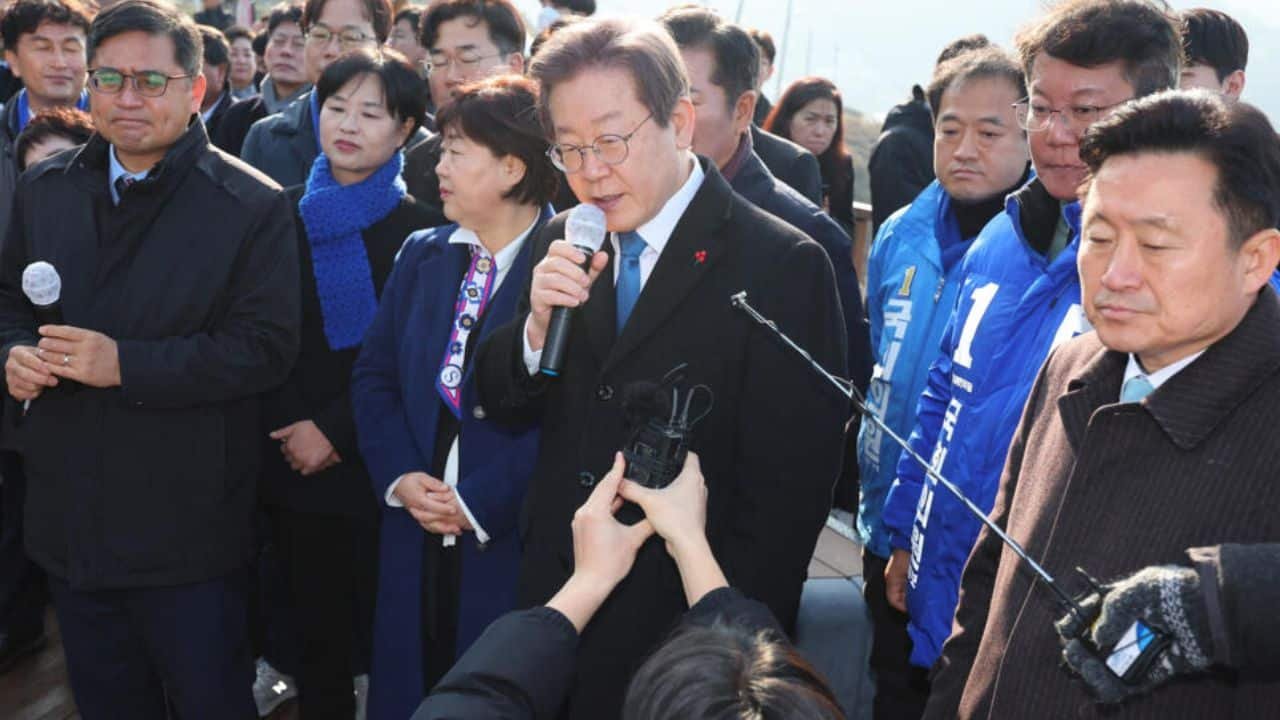
    South Korean opposition party leader Lee Jae-myung was stabbed in the neck on Tuesday by a man who pushed through a crowd pretending to be his supporter.

    Lee was surrounded by journalists and supporters at a construction site in the southern port city of Busan when a man lunged and struck him in the neck, South Korean television channels showed.

    He was bleeding but conscious as he was rushed to a local hospital, the Yonhap news agency reported, before being flown to the capital Seoul for surgery, according to an official from his party.

    An official from Pusan National University Hospital, where Lee received emergency treatment and CT scans before his transfer to Seoul, said the injury was not life-threatening.

    Police were seen wrestling the assailant, who wore a hat with a pro-Lee slogan, to the ground. He was arrested at the scene, Yonhap reported.

    Lee was “walking to his car while talking to reporters when the attacker asked for his autograph”, a witness told local broadcaster YTN, adding that Lee was then struck with what “looked like a knife”.

    The 59-year-old was seen collapsing to the ground as people rushed to aid him, one of whom pressed a handkerchief on Lee’s neck before emergency responders carried him to an ambulance.

    “This is an act of terror against Lee and a serious threat to democracy that should never occur under any circumstances,” Kwon Chil-seung, an MP from Lee’s Democratic Party, told reporters outside the hospital in Busan.

    Lee was later flown to the capital, where Kwon said he would undergo surgery at the Seoul National University Hospital.

    Police in Busan said Lee suffered a “one-centimetre laceration on his neck” and that he “remains conscious and bleeding is minor”, according to South Korean news outlet Chosun Ilbo.

    The attacker has not stated his motive, according to police officials cited by Yonhap.

    Presidential contender

    Lee lost in 2022 to conservative Yoon Suk Yeol in the tightest presidential race in South Korea’s history.

    Yoon expressed “deep concern over the safety of Lee Jae-myung upon hearing of the attack”, his spokeswoman Kim Soo-kyung said.

    “Yoon emphasised our society should never tolerate this kind of act of violence under any circumstances.”

    A former child factory worker who suffered an industrial accident as a teenage school drop-out, Lee rose to political stardom partly by playing up his rags-to-riches tale.

    He is widely expected to run for president again in 2027, and recent polls have indicated that he remains a strong contender.

    But Lee’s bid for the top office has been overshadowed by a string of scandals.

    He avoided arrest in September when a court dismissed a request from the prosecution for him to be taken into custody pending trial on various corruption charges.

    Lee still faces trial on charges of bribery in connection with a firm that is suspected of illicitly transferring $8 million to North Korea.

    He is also accused of breaching his duties, allegedly resulting in a loss of 20 billion won ($15 million) for a company owned by Seongnam city during his term as its mayor.

    Lee has denied all allegations against him.

    In August last year, he launched a hunger strike against what he called the Yoon government’s “incompetent and violent” policies.

    He was hospitalised because of fasting-related ailments after not eating for 19 days.

  • Putin Says Russia Will ‘Intensify’ Attacks on Ukraine

    Putin Says Russia Will ‘Intensify’ Attacks on Ukraine

    President Vladimir Putin said Monday that Moscow will intensify strikes on military targets in Ukraine after an unprecedented attack over the weekend on the Russian city of Belgorod.

    The attack killed 24 people and left over 100 wounded in Belgorod on Saturday. It came after Moscow launched a large-scale attack on Ukrainian cities.

    “We’re going to intensify the strikes, no crime against civilians will rest unpunished, that’s for certain,” Putin said Monday during a visit to a military hospital.

    He said Russia will press on with hitting what he called “military installations.”

    “We are doing that today, and tomorrow we will continue doing it,” Putin said, almost two years into Moscow’s offensive.

    He spoke as Ukraine said Russia had hit it with a “record” number of drones on New Year’s Day.

    Putin called the Belgorod hit a “terrorist attack” and accused Ukrainian forces of targeting “right in the city centre, where people were walking, before New Year’s Eve.”

    He repeated a claim that Ukraine is being used by the West to “settle its problems” with Russia.

    The Russian leader said he believed the “strategic initiative” in the dragging conflict was on the Russian side.

    “In any case that is how I am being briefed and I always insist: any offensive operations should be done after a defeat of the enemy,” he said, according to the Interfax news agency.

  • The curious case of PTI’s missing lawyer

    The curious case of PTI’s missing lawyer

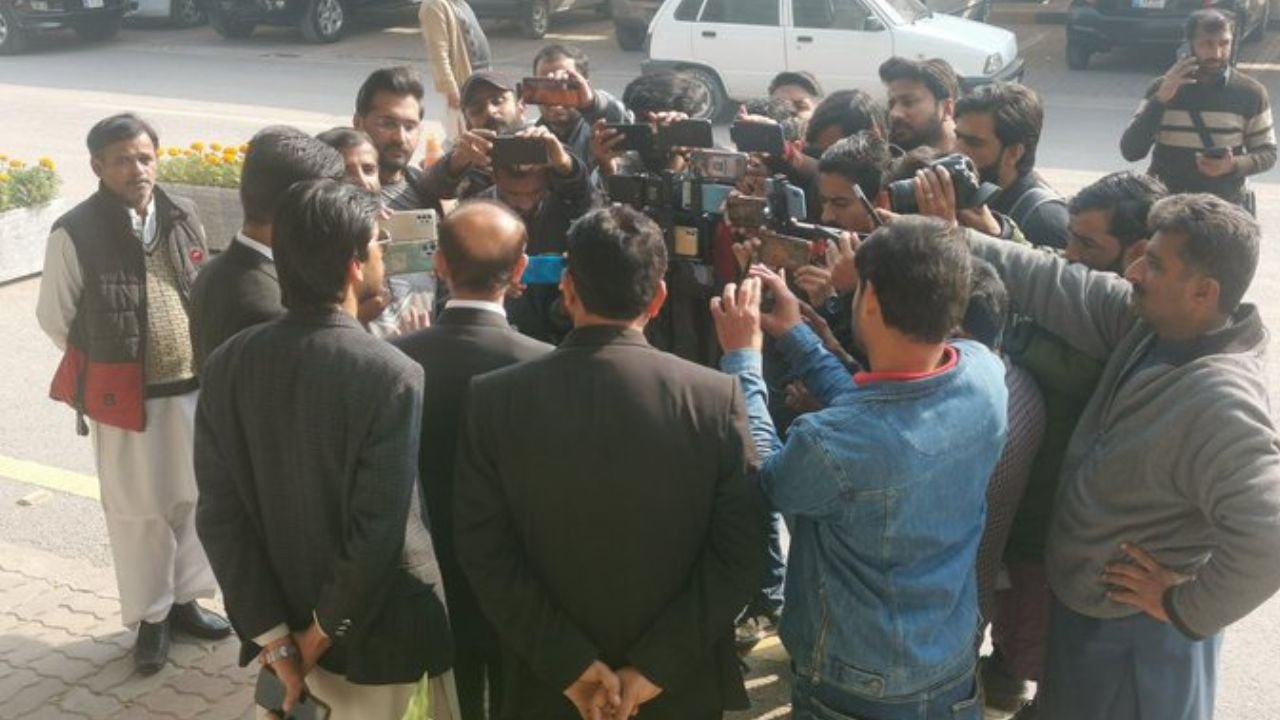
    A lawyer representing Pakistan Tehreek-e-Insaf (PTI) failed to appear before the Supreme Court of Pakistan on Monday in a case related to providing a level playing field in the upcoming elections.

    The PTI lawyer had been scheduled to appear before Chief Justice of Pakistan, Qazi Faez Isa. The Chief Justice had instructed the PTI lawyer to appear at 11 am after a recess.

    After the recess, the PTI lawyer did not appear in court, and proceedings were initiated by the Supreme Court Bench once the cases were complete.

    Journalists criticized the lawyer’s absence, stating that the advocate held a press talk but didn’t focus on the case.

    PTI’s lawyer, Shoaib Shaheen, stated that his team had a meeting with the Registrar of the Supreme Court.

    He further mentioned that the Registrar had assured them that the application would be scheduled for a hearing either today or tomorrow, expressing confidence that their application will be heard. He also said that PTI’s legal team is doing their best.

    In another electoral development, a written decision has been issued rejecting the nomination papers of former PTI Chairman Imran Khan for NA-122 and NA-89 constituencies in Lahore.

    Imran Khan’s lawyer, Rai Muhammad Ali, described in detail that he was unable to meet Imran Khan for the signing of nomination papers.

    He further stated that the Election Commission of Pakistan (ECP) changed the constituency of people at the last moment which led to the rejection of nomination papers.

    According to the decision, Imran Khan has been sentenced to five years for ethical misconduct, and he has been declared ineligible under Article 63 of the Constitution.

    The decision clarified that Imran Khan has not been disqualified or declared defunct; rather, he has been declared ineligible under Article 63, and the complainant’s objections are legal.

    It’s noteworthy that Mian Nasir Ahmad, a former PML-N MPA, had raised objections to Imran Khan’s nomination papers. After a three-year legal battle, the Election Commission decided to declare Imran Khan ineligible for five years.

    Imran Khan now has the option to file an appeal in the High Court. Appeals in the High Court Tribunal will be accepted from January 1 to January 3, and the Election Tribunal will begin hearings from January 3. The Election Tribunal will make decisions on all appeals by January 10.

    As the legal proceedings unfold, with 3345 candidates screened during the scrutiny process, the election process for the third phase of general elections 2024 is well underway. The Supreme Court and Election Tribunal will play pivotal roles in ensuring fair and transparent elections in the country.