Category: Politics

News stories of Politics, for the topics that matter the most to young professionals and college students, political news reported with a different angle.

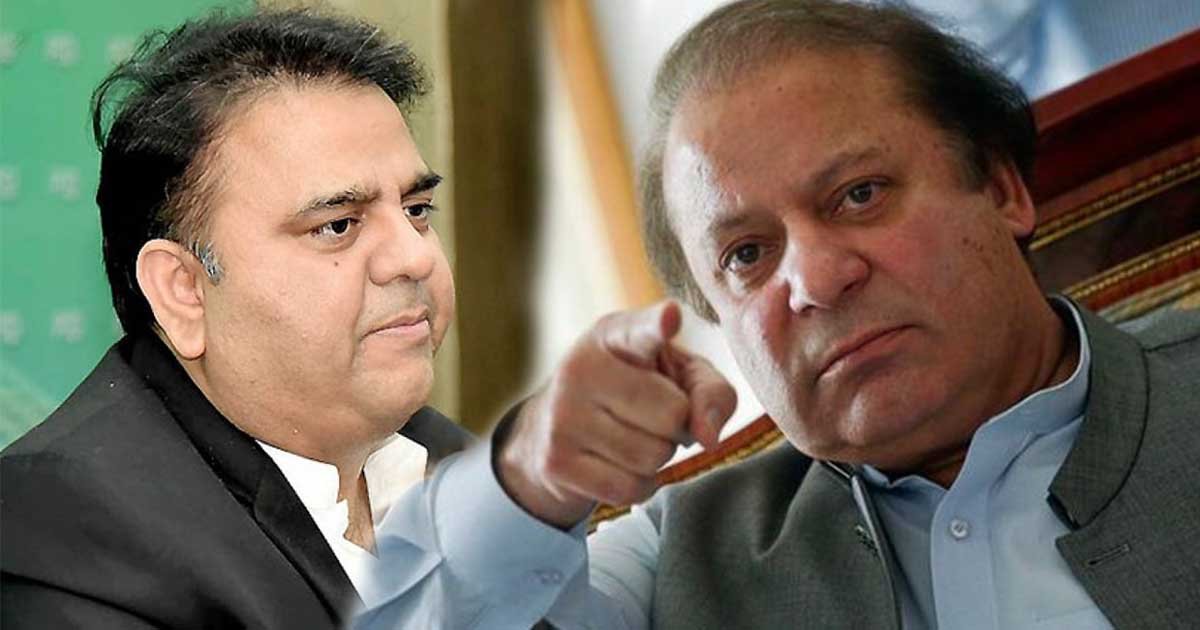
  • ‘Nawaz won’t come back, we will bring him back’: Fawad Chaudhry

    ‘Nawaz won’t come back, we will bring him back’: Fawad Chaudhry

    Federal Interior Minister Sheikh Rasheed has said that Nawaz Sharif’s arrival to Pakistan has been hyped for no reason. It does not make any difference whether he comes or not.

    “We have prevented the mafia group from establishing a foothold in any city,” he said.

    “We will contest the next elections with full force under the leadership of Prime Minister Imran Khan,” he added.

    Federal Minister for Information and Broadcasting Fawad Chaudhry on Tuesday said that the government will bring Pakistan Muslim League-Nawaz (PML-N) supremo Nawaz Sharif back after the finalisation of an agreement with the United Kingdom (UK) government and ruled out the possibility of Nawaz’s voluntary return to the country.

    “We will bring back the PML-N leader and former prime minister Nawaz Sharif because he himself will never return,” said Fawad.

    “We have been addressing the legal lacunas relating to the matter for the last two years. Rest assured, he will not return, but we will bring him back,” Fawad said emphatically.

    Fawad emphasised that the opposition was not capable of toppling the government, as it required leadership which they did not have.

    “They are only issuing statements to appease their workers. Everybody knows that Imran Khan gave them [the] toughest time while in [the] Opposition,” he noted.

  • PM Khan says bank staff wearing ‘shalwar kameez’ won’t ‘frighten’ Pakistanis

    PM Khan says bank staff wearing ‘shalwar kameez’ won’t ‘frighten’ Pakistanis

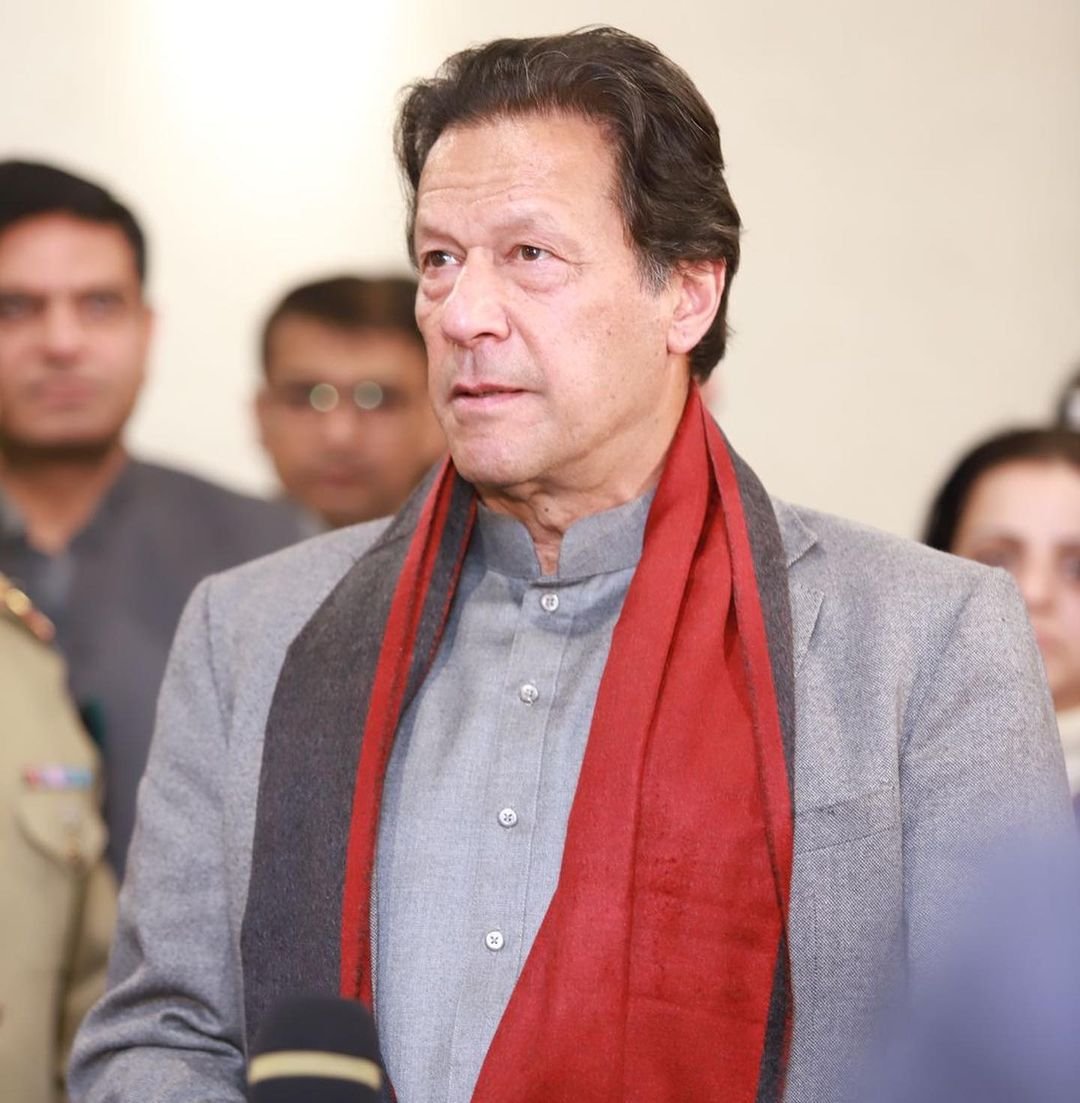
    Prime Minister (PM) Imran Khan, during a ceremony held to approve the Rs100 billion in the Mera Pakistan Mera Ghar initiative on Friday, said that he was happy to see that banks have now started to converse in Urdu with their customers.

    “Banks have started talking to customers in Urdu, so now make the staff wear shalwar kameez [national dress of Pakistan], this will not frighten the people,” said PM Khan.

    “There were several hurdles earlier, as when a common person would go to the bank, they would suffer from anxiety,” said the premier, adding, “I see Pakistan now moving in the direction it should have been headed in a long time ago.”

    “Pakistanis who worked as labourers overseas had one dream — to build a house for themselves and their families,” the prime minister said, regretting that past governments did not pay heed to this issue.

    PM Khan said that past governments did not focus on the lower classes as they had only paid attention to the elite in every sector — education, health, and other facilities.

    PM Imran Khan said this project would lift Pakistan’s economy, as construction of homes would increase.

  • MNAs only come to mark attendance, third parliament session adjourned

    National Assembly (NA) Speaker Asad Qaiser adjourned the session on Monday due to lack of quorum in the lower house for the third consecutive day.

    Pakistan Muslim League-Nawaz (PML-N) lawmaker Sheikh Fayyazuddin mentioned the empty treasury benches and said that he is “ashamed”, reports Dawn.

    Pakistan People’s Party (PPP) lawmakers were not present in the assembly on Monday because of the 14th death anniversary of Benazir Bhutto.

    For the quorum of the lower house, the presence of 86 members (one-fourth) out of the 342 members is necessary.

    On December 22nd and 24th, the sessions were adjourned because of the same reason.

    However, the assembly record shows that on Dec 22, a total of 219 members had marked their attendance. On Dec 24, 176 members had marked their attendance.

    Moreover, it shows that on the opening day of the NA session, 89 lawmakers belonging to the Pakistan Tehreek-i-Insaf (PTI) and its allies were present. Similarly, a great number, i.e. 105 treasury members, were present when the session was called the second time.

  • ‘Used’:Rana Shamim in trouble as court frame charges against ex-judge

    ‘Used’:Rana Shamim in trouble as court frame charges against ex-judge

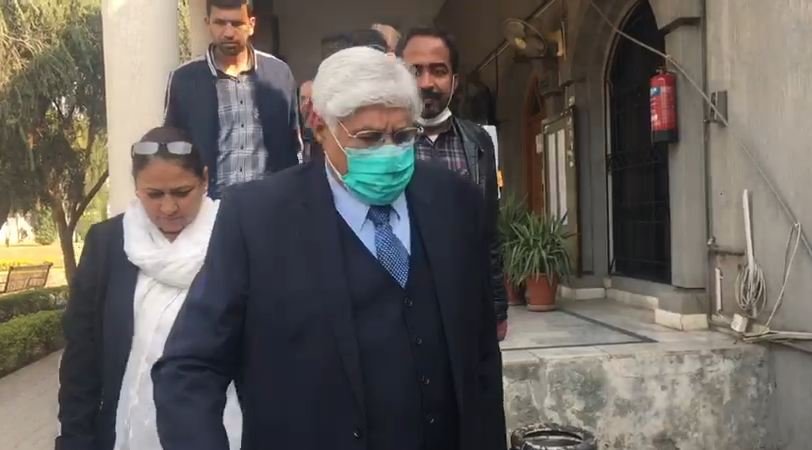
    The Islamabad High Court (IHC) on Tuesday set January 7, 2022, as the date for framing charges against former Gilgit-Baltistan Chief Judge Rana Shamim and others in a case related to an affidavit that accuses former Chief Justice of Pakistan (CJP) Mian Saqib Nisar of colluding to deny bails to Pakistan Muslim League-Nawaz (PML-N) leadership prior to the 2018 elections.

    During the hearing today, CJ IHC Athar Minallah observed that Shamim’s written response submitted to the court had “laid the entire blame” on journalist Ansar Abbasi [the journalist who published the story accusing CJP Nisar], recalling that the former jurist had also maintained that he had not shared the affidavit with anyone.

    He added that in similar circumstances, courts in the United Kingdom asked journalists to disclose their sources but the IHC would not do so.

    “The judge [mentioned in] the affidavit was on leave at the time. Attempts were also made to cast doubt on the two judges on the bench,” Justice Minallah said.

    Justice Minallah said the matter had “nothing to do” with the former CJP. “Go and do what you want to do with Mian Saqib Nisar,” he remarked.

    He recalled that proceedings had started because of an attempt to cast suspicion on judges of the high court. “[This] perception is being created which everyone has started believing as true,” Justice Minallah said.

    “Where was that perception when bail was granted two weeks later by this same court?” he questioned.

    Attorney General of Pakistan (AGP) Khalid Jawed Khan said that the concerned document was very important in contempt of court case. Shamim’s counsel, Lateef Afridi, responded that Shamim had said the affidavit was a “private document” and was written at his wife’s request.

    “By now, even Rana Shamim must have come to know how sensitive this issue is,” Justice Minallah remarked.

    “Contempt of court cases were initiated against Firdous Ashiq Awan in [the IHC] and Imran Khan in the Supreme Court. What happened in those cases? Such cases are initiated and the court has to show mercy,” Afridi responded.

    Afridi said Shamim “did not know about the affidavit’s consequences when he wrote it”. The judge reiterated his question about who the beneficiaries were to which Afridi again responded that he did know and requested the court to not waste time on the issue since there were other cases pending.

    The chief justice remarked, “What if Kulbhushan Jadhav (Indian spy) submitted an affidavit saying his case should not be heard by this court since it is compromised? This is a serious matter. Understand the consequences of this affidavit.”

    Meanwhile, journalist Ansar Abbasi said that he had talked to Shamim a day before the report was published. “Rana Shamim also [messaged] me that what I read out was correct,” the journalist said.

    Subsequently, the attorney general requested the court to indict Shamim and others. Terming Shamim responsible since he was the one who wrote the affidavit, the AG said the ex-judge had committed contempt of court.

    “Since the past three days, there are [reports] that the affidavit was written in someone’s office. It is surprising that no denial has come forth,” the AG said.

    Shamim’s counsel responded that the matter had been denied in a TV interview. However, the AGP argued that no denials were made by those related to the matter.

    “Rana Shamim should accept that he was used and apologise. If he does, then I too will [ask the court] to not take action. If he doesn’t apologise, then set a date quickly for indictment,” the AG requested the court.

    Subsequently, the court set January 7, 2022, as the date for framing charges.
  • New spy chief says no to the media

    New spy chief says no to the media

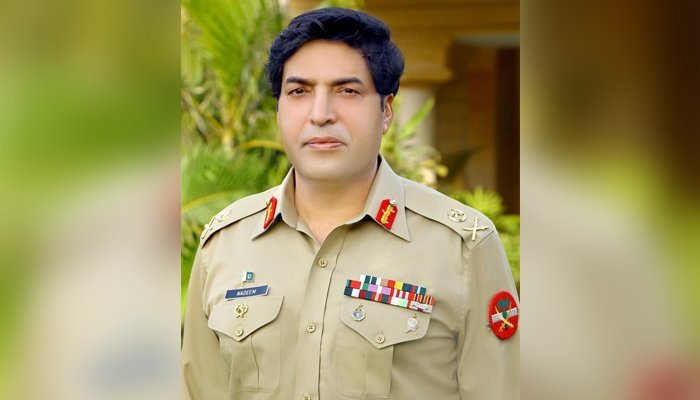
    Director General (DG) Inter-Services Intelligence (ISI) Lt Gen Nadeen Anjum has asked all authorities concerned not to release to the media his picture or video footage made during an official meeting, reports Ansar Abbasi for The News.

    A minister on condition of anonymity revealed to the news outlet that the National Security Committee (NCC) met on Monday. The meeting was also attended by the DG ISI. However, the picture and video footage, released to the media by the government, showed almost everyone else except for the top spymaster of the country.

    When asked for the reason, the minister said it’s a standing instruction for all concerned from the incumbent DG ISI not to release any of his pictures or video footage of any official meeting that he attends.

    The minister added that for the same reason, ever since his appointment as the DG ISI, none of his picture or video footage has been released to the media. Lt-Gen (retd) Amjad Shoaib, while commenting on it, said the basic principle of intelligence services is to stay away from the media’s eye.

    He said there have been violations of the principle in the past and a number of times the governments had been releasing to the media picture and video footage of the intelligence chiefs.

    Gen Shoaib said the intelligence chiefs should not be shown on the media and TV screens. Generally, he explained, the spymasters are not recognised in the public all over the world for the same reason.

  • SCBA pays tribute to Benzair Bhutto

    The Supreme Court Bar Association (SCBA) paid tribute to Shaheed Mohtarma Benazir Bhutto on her 14th death anniversary.

    “Mr Muhammad Ahsan Bhoon, President, Supreme Court Bar Association of Pakistan, has paid tribute to Shaheed Mohtrama Benzair Bhutto, (the first lady and twice democratically elected Premier of a Muslim country), on her 14th death anniversary.”

    “While paying homage to Shaheed Mohtarma, the President said that she was an exceptional and charismatic leader who set topmost standards in politics based on self-esteem, truthfulness and integrity.”

    “All her life, she struggled for upholding rule of law, supremacy of the constitution for intensification of the democratic values.”

    “She was a symbol of judicious, democratic and liberal Pakistan and had shown the courage and valor against those who opted to resort extremism and perhaps that is the reason for which she was assassinated,” the President opined.

    Benazir Bhutto was assassinated in a gun-and-bomb attack in Rawalpindi’s Liaquat Bagh on December 27, 2007. She was elected as prime minister of Pakistan twice. She was the first woman to lead a Muslim country.

  • ‘Backward thinking dangerous for Pakistan’: Fawad on Taliban’s restrictions on Afghan women

    Federal Minister for Information and Broadcasting Fawad Chaudhry, while talking about the recent Taliban’s restrictions on Afghan women, stated that the Taliban’s ‘retrogressive thinking’ is dangerous for Pakistan, reports Dawn.

    While addressing a ceremony in Islamabad, the minister said, “Saying that women can’t travel alone or go to schools and colleges — this kind of retrogressive thinking is a danger for Pakistan.”

    “You see that two extremist regimes have cropped up on right [India] and left [Afghanistan] of Pakistan. On one side there is Afghanistan where the Taliban have arrived. We want to fully help the Afghan people”, he added.

    Fawad said, “We have had failures and successes but till now Pakistan is that bright hope in this region which while remaining amid these extremes can emerge out from them.”

    Chaudhry’s statement has come after Afghanistan’s Taliban authorities’ announcement about women who seek to travel long distances should not be offered transport if they are not wearing hijab or not accompanied by a close male relative.

    Furthermore, he pointed out that extremists in the country and said, “Quaid-e-Azam never saw Pakistan as a religious country and all these people who today on his name are fooling the people that the meaning of an Islamic country was a religious country — this was entirely not the case.”

    While talking about the Sialkot lynching incident, Fawad said, “You saw the whole of Pakistan was united and condemned that incident. This is happening every day in India with Muslims and no one is bothered.”

    Chaudhry stressed that Pakistan’s purpose was “preserving minority rights and safeguarding them”.

  • ‘Get out from here’: SC reinstates Murtaza Wahab as Administrator Karachi after unconditional apology

    ‘Get out from here’: SC reinstates Murtaza Wahab as Administrator Karachi after unconditional apology

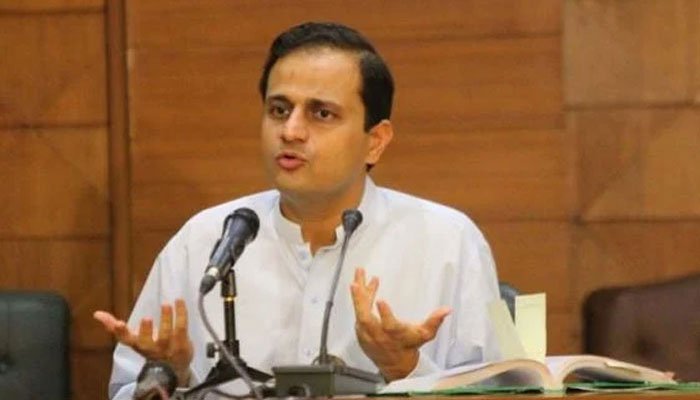
    The Supreme Court (SC) took back its order for the removal of Murtaza Wahab from the post of Administrator Karachi after he tendered an “unconditional apology” during a hearing of the Gutter Baghicha case at the Karachi Registry on Monday.

    The court directed that the post of administrator be “kept away from politics” and instructed Wahab to fulfill his responsibilities while remaining above “political affiliation and pressure”.

    Earlier, a two-member bench comprising Chief Justice Gulzar Ahmed and Justice Qazi Mohammad Amin issued a directive for Wahab’s removal after a heated exchange with him.

    Attorney General of Pakistan Khalid Jawed Khan, Advocate General of Sindh Salman Talib Ud Din, Karachi Commissioner Iqbal Memon, Wahab, and Senior Director of the anti-encroachment department Bashir Siddiqui were present during today’s hearing.

    During the hearing of a matter related to the Gutter Baghicha park, Justice Amin, while addressing Wahab remarked, “These are state lands [and] not your personal property. [You will] have to return them. If we don’t take them [back] then someone else will. You will return the lands.”

    “Should we leave the government?” Wahab questioned, saying that major observations are made about the provincial government by the court.

    “Silence yourself mister, what are you saying? Don’t do politics here,” the chief justice reprimanded Wahab.

    “Get out from here. We will fire you right now. Are you an administrator or a political leader?” Justice Gulzar questioned. 

    “The administrator, prima facie, failed to perform his duties. The administrator’s behaviour is that of political leaders [and] not of serving the citizens,” the chief justice remarked.

    “Go and transfer Bin Qasim park [and] Hill park in your name. Take Frere [Hall] park too. How many parks are there in Karachi? Finish them now. Distribute the few remaining parks among your officers as well,” the chief justice scolded Wahab.

    “Is Karachi your personal property?” he questioned.

    Murtaza Wahab later apologised to the court for using harsh words.

    “I apologise for my behavior,” Wahab said.

    Justice Qazi Amin remarked that they have removed him [Wahab] from office. “You are no longer an administrator. You are not part of the state but the government,” he said.

    Wahab, while speaking to the media during a break in the hearing, said that he accepted whatever the court’s decision would be.

    He said that he has apologised to the court. “I was stating my opinion with great respect,” said Wahab, adding that this court is his own court.

    “[A person] should be heard before issuing a decision against them,” Wahab said as he looked forward to the court’s final decision after the break.

    The court later accepted the apology of Murtaza Wahab after a short break in the proceedings and withdrew the order to remove him from office.

  • SC orders action against officials who issued permits for Nasla Tower construction

    The Supreme Court (SC) has given orders to authorities to take strict action against those officials who issued construction permits to build the illegal 15-storeyed Nasla Tower on Monday.

    A two-judge bench comprising Chief Justice Gulzar Ahmed and Justice Qazi Mohammad Amin ordered the anti-corruption department to register a case against those who are responsible for the issuance of construction permits. They also directed the police to file a separate case against them.

    The Deputy Inspector General (DIG) West has been given instructions to take immediate action against the officials who had approved the Nasla Tower building plan and present a report to the Supreme Court.

    The Supreme court also ordered to seize the 780 square yards of the land the tower was constructed upon and directed the official assignee of Sindh High Court (SHC) to take possession of the land and prohibit its sale.

    The Chief Justice also expressed his anger over the slow pace of the demolition procedure of the Nasla Tower. He asked Karachi Commissioner Iqbal Memon, “Such a building is torn down within one hour in the world. What are you people doing?”

    The Karachi Commissioner replied that five floors have been demolished so far and currently 400 labourers are working on the given task.

  • Law implemented against corporal punishment, schools told to be vigilant

    The Federal Directorate of Education (FDE) gave the direction to heads of all educational institutions to be watchful against corporal punishment as the new law against hitting students is implemented across the federal capital schools. The President of Pakistan, Dr Arif Alvi approved the Act on December 1.

    The bill on banning corporal punishment was approved in the National Assembly on February 2021.

    The new law states the teachers who commit corporal punishment will face serious consequences including compulsory retirement and dismissal from services.

    A letter was submitted on December 22 by the FDE to 423 heads of institutes that come under them to ensure strict compliance with the new regulations. A huge penalty will be imposed on the individuals who are proven to be guilty.

    The spokesperson of FDE, Abdul Waheed said: “We will ensure complete implementation of the Islamabad Capital Territory Prohibition of Corporal Punishment Act 2021. All heads have been informed about the new law and in case of its violation, the FDE will take action.”

    According to the letter, there are two categories of penalties that are minor and major which will apply to the individuals.

    A minor penalty includes withholding increment in salary or promotion for some specified time period, censuring. Halting from promotion and recovery from pay are included in this category.

    On the other side, if a teacher is found guilty then they will face demotion to a lower position, compulsory retirement, removal, and dismissal from service come under major penalties.

    The FDE also directed all institutions to hold orientation for staff members on the Act within one week of the issuance of the letter.

    The law also explains that corporal punishment is such a physical force in which a student receives some degree of pain or discomfort, no matter how light it could be. Hitting (smacking, slapping, spanking) a child or with the use of the stick, belt, whip, shoe, wooden spoon, etc.

    Physical force could be kicking, shaking, or throwing a child, scratching, pinching, biting, pulling hair, or boxing ears. Forcing a child to stay in uncomfortable positions, burning, scalding, or forced ingestion, for example, washing a child’s mouth out with soap or forcing him to swallow hot species, including mental abuse.

    The court of the magistrate shall take the case when the complaint of physical punishment is registered either by a student to whom a physical force is inflicted, his parents, or next of kin.

    The law will also be enforced in private schools. The federal government shall formulate a comprehensive system for the enforcement and monitoring of this law in private institutions whether registered or unregistered. It shall devise a system for complaints to address any corporal punishment.