Category: Politics

News stories of Politics, for the topics that matter the most to young professionals and college students, political news reported with a different angle.

  • ‘Media Martial Law’, Journalists sit in protest against proposed media authority bill

    ‘Media Martial Law’, Journalists sit in protest against proposed media authority bill

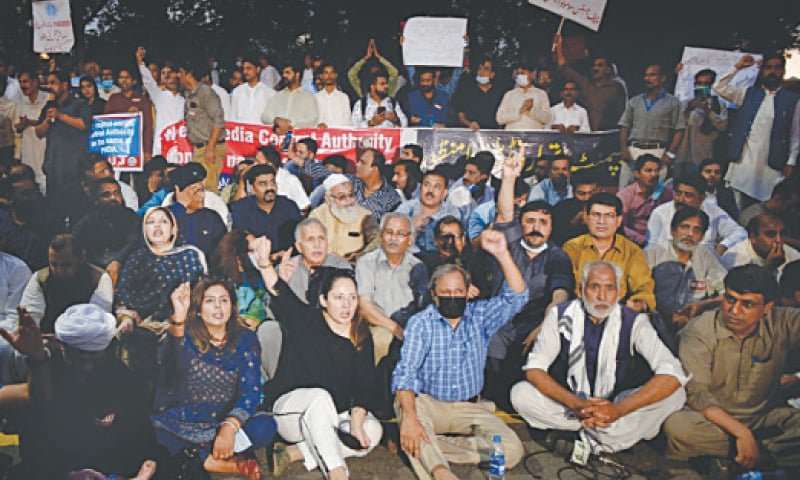
    Pakistani journalists are protesting in front of the Parliament House against the proposed Pakistan Media Development Authority (PMDA), which aims to muzzle media freedom. The on-going protest started on Sunday. Journalists marched from the National Press Club to the Parliament House and stayed overnight.

    They said the sit-in would continue till President Dr Arif Alvi’s address to the joint session of parliament, which is scheduled to assemble on Monday.

    DETAILS OF THE PROTEST

    Renowned journalists including Mazhar Abbas, Hamid Mir, Fahd Husain, Kashif Abbasi, Saleem Safi, Asma Shirazi, Gharidah Farooqi Imtiaz Alam, and Afzal Butt are participating in the protest, headed by the Pakistan Federal Union of Journalists (PFUJ).

    PFUJ general secretary Nasir Zaidi, while talking to Voicepk.net said, “Prior to this, we struggled against every law to control the press in the eras of dictators, and we will struggle against such laws even today.”

    Senior journalist Afzal Butt said, “Many attempts had been made in the past to silence the media by dictators, but journalists successfully fought for their rights and this time too, the journalist community would protect freedom of the press.”

    Journalist Imtiaz Alam stated that, “The government through the PMDA was trying to impose ‘media martial law’. “as per Dawn.

    Journalists and politicians are criticising the government. “Parliamentary reporters have banned from sitting in the press gallery of Parliament for joint session,” tweeted PPP’s Senator Sherry Rehman.

    SUPPORT BY JOURNALISTS

    Other journalists have expressed their concerns and showed solidarity with fellow journalists on social media accounts.

    https://twitter.com/zburki/status/1436954006820118537

    INTERNATIONAL CONDEMNATION

    Pakistani journalists in Britain also condemned the Pakistan government’s plans to establish the PMDA.

    “The officials of the High Commission called journalists individually and asked them not to hold the protest outside the High Commission premises and also issued threats of serious consequences for organising the protest,” wrote Murtaza Ali Shah for Geo News.

    “The journalists particularly singled out the current information minister [Fawad Chaudhry] for first playing his role in the economic murder of journalists and now pushing through a black law to completely finish the private media which provides thousands of jobs to media workers,” he added.
  • VIDEO: President Alvi shares ad on stigma surrounding contraceptives

    A government-sponsored advertisement addresses the social stigma surrounding the use of contraceptives in Pakistan. President Dr Arif Alvi shared the public service announcement (PSA) and tweeted, “The health of the nation is closely linked to maternal and child health”.

    “Make the right family arrangements for prosperity, keep a check on the number of children. Ensure good health. Don’t ignore this topic but discuss it and spread the message,” the president added.

    At the end of the PSA, a helpline number is also given: 0800-1117.

    https://twitter.com/ArifAlvi/status/1437311083497328641

    People on social media are lauding the government’s initiative

    https://twitter.com/lemonfresh02/status/1437353973317570560

    https://twitter.com/ReemKhurshid/status/1437338920572887045

  • PTI leads in Cantonment Board polls, PML-N in second place

    PTI leads in Cantonment Board polls, PML-N in second place

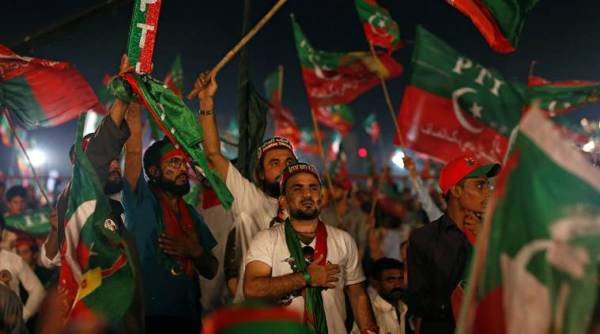
    Pakistan Tehreek-e-Insaf (PTI) emerged as the biggest winner in the Cantonment Board elections held across Pakistan on Sunday, reports Radio Pakistan.

    According to the unofficial results, PTI got 58 seats, while the Pakistan Muslim League-Nawaz (PML-N) scored 51. Independent candidates claimed 49 seats.

    Pakistan People’s Party (PPP) has managed to win 14 seats and Muttahida Qaumi Movement (MQM) got 10 seats. Jamaat-e-Islami (JI) won five seats while Balochistan Awami Party (BNP) got two seats.

    Minister for Information and Broadcasting Fawad Chaudhry in a tweet said the Cantonment Board election results show that the Opposition has left with no standing following a crushing defeat.

    Reacting to the ruling party’s victory, federal Minister for Planning, Development and Special Initiatives Asad Umar said: “Cantonment elections once again show the PTI not only as the largest party but also the only national party.”

    PML-N President Shehbaz Sharif called party leaders and congratulated them on their success in the cantonment polls.

    Province wise results:

    PTI won the most number of seats in Khyber Pakhtunkhwa (KP) — 18 — followed by 28 in Punjab, 14 in Sindh, and three in Balochistan.

    PML-N won big in Punjab, bagging 51 seats, managing only five in KP, three in Sindh, and none in Balochistan. In Lahore, the PML-N bagged 15 of 19 wards.

    PPP was surprisingly unable to defeat PTI in Sindh, instead of tying with them for 14 seats. The remaining three seats were won in KP, meaning none were won in either Punjab or Balochistan.

    Independent candidates scored big in Punjab, bagging 32 seats. They secured nine in KP, seven in Sindh, and four in Balochistan.

    MQM won all of its 10 seats in Sindh, whereas JI won five in Sindh and two in Punjab.

    ANP won two seats in KP, whereas BAP won two in Balochistan.

  • Moonis Elahi meets Bilawal Bhutto, discuss political situation

    Moonis Elahi meets Bilawal Bhutto, discuss political situation

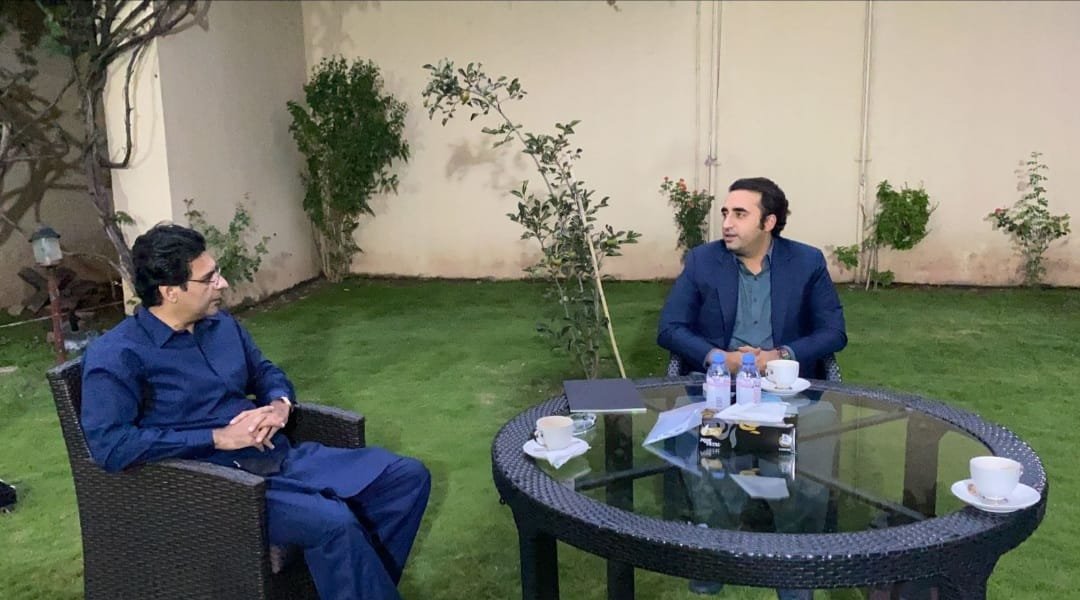
    Pakistan Muslim League-Quaid (PML-Q) leader and Federal Minister for Water Resources Chaudhry Moonis Elahi on Sunday met Chairman Pakistan People’s Party (PPP) Bilawal Bhutto-Zardari at Zardari House in Islamabad.

    The PPP Media Office issued a brief statement after the meeting, stating that the two leaders “discussed the overall political situation in the country”.

    The statement said the two leaders also discussed issues relating to water distribution among the provinces and the historic water shortage in Sindh.

    Bilawal also inquired about the health of Elahi’s uncle and party president Chaudhry Shujaat Hussain. PPP Senator Mustafa Nawaz Khokhar was also present during the meeting.

    The meeting between the two leaders took place a day before the president’s address to a joint sitting of parliament.

    In June, Punjab Assembly Speaker and PML-Q leader Chaudhry Pervaiz Elahi had a meeting with former president Asif Ali Zardari in Lahore.

    During the meeting, both leaders discussed matters of mutual interest and the national political scene.

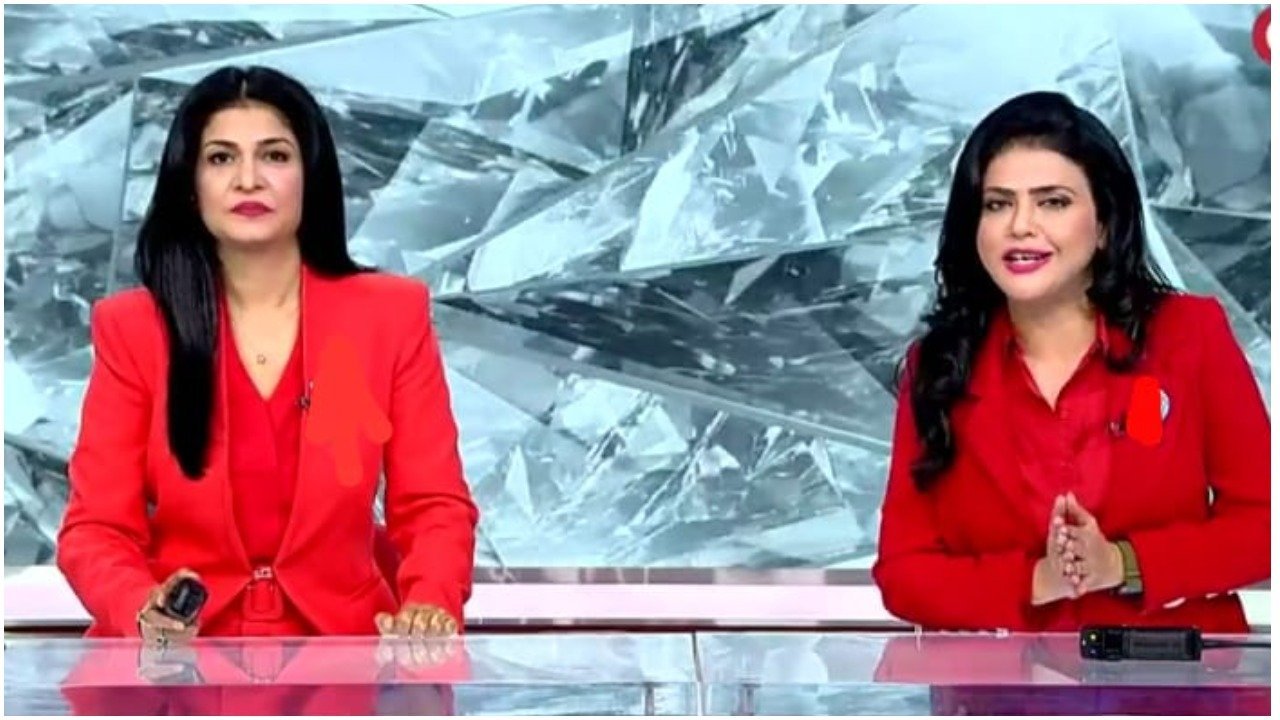
  • New Indian channel promises to present ‘only good news’

    New Indian channel promises to present ‘only good news’

    India’s leading TV Channel, India Today has launched a Hindi-language TV channel that promises to present only “good news.”

    The latest channel named ‘Good News Today’ “will showcase stories of hope, human triumph, innovation and inspiration from different walks of life, from different parts of India and the world,” India Today Group vice-chairperson Kalli Purie told Arab News.

    “We need to spread positivity, good stories and personalities no matter what the reality is,” she added.

    According to Purie, the slogan of this channel is Achi Khabar, Sachi Khabar (good news, authentic news).

    The country’s position has been falling rapidly on the World Press Freedom Index by Reporters Without Borders. In 2016, it was 136th, but in 2020 it dropped to 142nd.

    Based in Uttar Pradesh (UP), India Today is a 24-hour English language television and has one of the largest viewerships in India. In addition, India has more than 160 national and regional news channels.

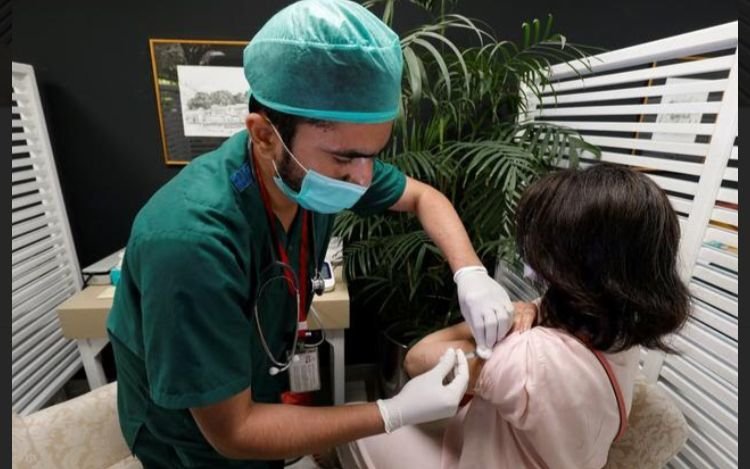
  • Pakistan lowers Covid vaccination eligibility age to 15

    Pakistan lowers Covid vaccination eligibility age to 15

    The government has officially decided to further lower the Covid vaccination eligibility age to 15 years, reported Geo News.

    Children between the ages of 15 and 18 will be vaccinated with the Pfizer vaccine, the National Command and Operations Centre (NCOC) said.

    According to the NCOC, Pfizer vaccine will be available at all central vaccination centres across the country. Moreover a registration certificate will be required for children up to the age of 18 to be vaccinated.

    In combating the pandemic, the NCOC has also taken another step by sending mobile vaccination teams to visit schools and colleges for vaccination.

    Meanwhile, NCOC has said that all those people whose second dose against Covid-19 has become due are not required to wait for the sms message and can visit any vaccination centre throughout the week.

    A day earlier, NCOC head Asad Umar had announced on Twitter that more than 20 million people in Pakistan are now fully vaccinated against coronavirus.

    Pakistan has administered at least 66,456,245 doses of Covid vaccines so far. Assuming every person needs two doses, that’s enough to have vaccinated about 15.3 per cent of the country’s population.

  • HRW releases report on 9/11 calling US to end global war on terror

    Human Rights Watch (HRW) has released a report on September 11, 2001, attacks in the United States titled, ‘9/11 Unleashed a Global Storm of Human Rights Abuses’.

    The report says, “The brutal rulers [US leaders] figured out that the best way to get away with mass abuse was to label it a fight against terrorism.”

    Furthermore it states, “The war paradigm was also used to justify killing suspects wherever they were found, often on the flimsiest of evidence. However, international human rights law requires law enforcement officials to arrest suspects whenever possible and to use lethal force only as a last resort to stop an imminent threat to life.”

    “They [US] not only mistreated the people of Afghanistan but its citizens also had to face discrimination. Globally, Muslims are the primary victims of terrorism. The US has always treated ‘presumed terrorists’ as combatants,” the report reads.

    HRW also has discussed the ill-treatment of one million Uyghurs in Xinjiang, China and the bombings on Gaza by Israel.

    “It is a time to condemn the evil of terrorism. It is also the time to close Guantanamo, by releasing all of the 39 aging detainees still there, who have not been charged and giving the rest a fair trial in a proper court,” the report concluded.

    People from all over the world remembered the horrifying episode today on social media, while some of them share their stories.

    Since 2001, the notorious military prison at Guantanamo has become a symbol of US human rights abuses. Many detainees — mostly Muslim men — were tortured or held for years and even decades without charges, trials, or basic legal rights.

    The 9/11 attacks are the deadliest terrorist attacks on American soil in US history. It was a series of airline hijackings and suicide attacks committed by 19 militants associated with al-Qaeda.

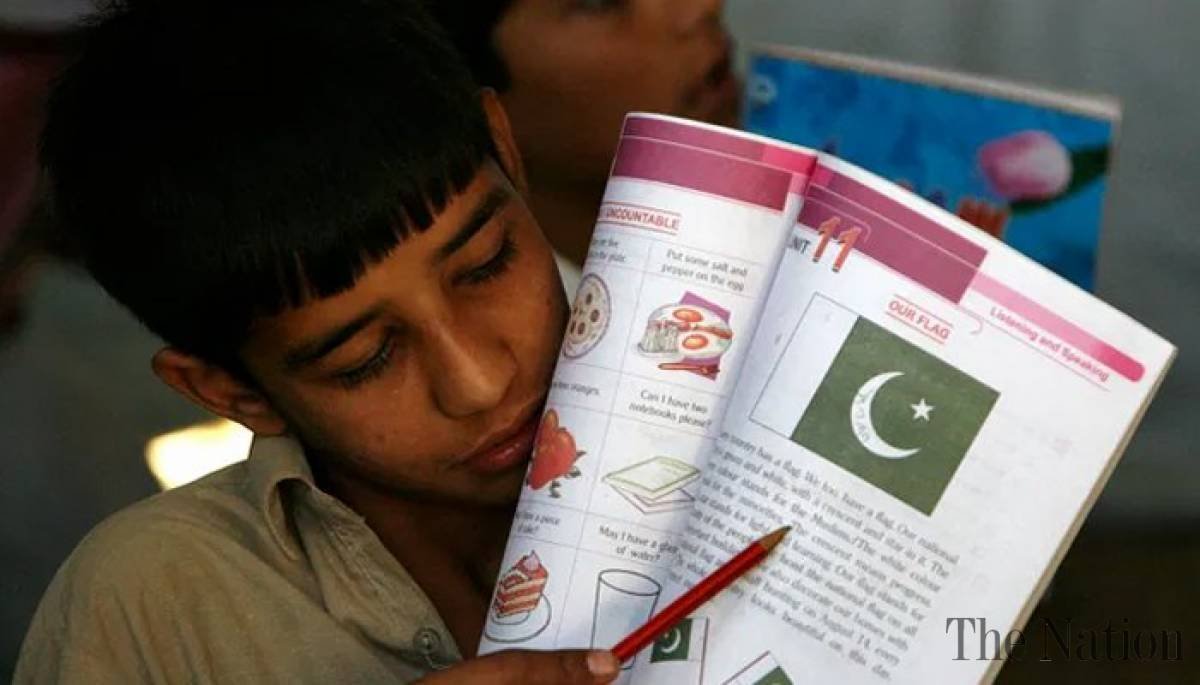
  • Shafqat Mahmood welcomes criticism on SNC, assures change

    Shafqat Mahmood welcomes criticism on SNC, assures change

    Federal Minister for Education Shafqat Mahmood tweeted that he is grateful for the views, both negative and positive, on Single National Curriculum (SNC). He added that curriculums and textbooks are not static and need constant updating.

    “I am grateful for the views, both negative and positive, on the single national curriculum (SNC) and on the textbooks developed to implement it,” wrote the minister.

    Punjab Education Minister Dr Murad Raas reacted to the criticism following the implementation of SNC. He tweeted that he would be conducting a live session on Sunday to answer questions related to SNC.

    Earlier, Sharmeen Obaid-Chinoy came forward and criticised the new curriculum. In addition, SNC is also receiving criticism on social media.

    According to the new curriculum, schools will be free to teach additional material or even additional subjects. In the beginning, three subjects — Islamic Studies, Social Studies and General Knowledge — will be taught in the Urdu language at the primary level (Grade 1-5). Quranic learning with translation will also be mandatory in Grade 6-12.

    Mahmood had earlier announced the SNC would be implemented from the new academic session on August 2 in all public and private schools as well as madrassah of Punjab.

  • UN investigation wanted for Kashmiri leader Syed Ali Geelani’s death

    UN investigation wanted for Kashmiri leader Syed Ali Geelani’s death

    Chairman of Parliamentary Committee on Kashmir Shehryar Khan Afridi wrote letters to United Nations (UN) Secretary-General Antonio Guterres and High Commissioner of the United Nations Human Rights Council (UNHRC) Michelle Jeria, calling for an impartial but immediate UN investigation into the custodial killing of Hurriyat leader Syed Ali Shah Geelani, reports Dawn.

    Talking to reporters, Afridi said, “Hurriyat leaders are being killed in custody by the illegal occupational regime of India in Jammu and Kashmir under the garb of the Covid-19 pandemic. Had the UN investigated the custodial murder of Ashraf Khan Sehrai, Geelani’s life could have been saved. Now we fear that other imprisoned Kashmiri leaders including the new All Parties Hurriyat Conference (APHC) chief Massarat Alam Bhat, Syed Shabbir Shah, Yasin Malik, Asiya Andrabi, Dr Qasim Faktu, and others may also be killed the same way.”

    “This loss may turn out to obstruct Kashmiri people’s voice and compromise their long struggle for freedom. I would also like to bring to attention here the matter in which Geelani’s death was handled by the occupational Indian government where they shut down the internet across the Kashmir valley and beefed-up security forces when word of his death spread,” he said.

    Veteran Kashmiri leader and freedom fighter Syed Ali Shah Geelani was laid to rest on September 2 amid high security at Hyderpora in Srinagar.

    Syed Ali Geelani’s son told AP that the family had planned the burial at the main Martyrs’ Graveyard in Srinagar as per his will but were disallowed by the police.

    They snatched his body and forcibly buried him. Nobody from the family was present for his burial. We tried to resist but they overpowered us and even scuffled with women,” said his son Naseem Geelani.

  • Pakistan may send experts to replace Afghan brain drain

    Pakistan may send experts to replace Afghan brain drain

    Federal Minister for Finance and Revenue Pakistan, Shaukat Tarin has said that Pakistan may have to send experts to Afghanistan because of the country’s major experts have left the country which has complicated the Taliban’s administration, reports The News.

    While giving an extensive briefing to the Senate Standing Committee on Finance on Thursday, Mr Tarin said that the government was building up strategic reserves of essential food commodities to meet domestic as well as Afghanistan’s requirements.

    According to him, “they [Afghanistan} require assistance and we may have to dispatch experts because of the brain drain in Afghanistan. The situation is fluid and we are analysing it. The West has stopped foreign reserves of Afghanistan to the tune of $10 billion, as the IMF has stopped $400 million and many others so Kabul will be facing a scarcity of foreign exchange. Our bilateral trade will surge but we may have to undertake bilateral trade in the Pak rupee.”

    Talking about Pakistan’s economic situation he stated, “Pakistan’s trade deficit stands at $4 billion and remittances are hovering around $2.5 billion.”

    “On tax revenue, FBR revenues are ahead of target by 23 percent. The track and trace system will be placed for five major sectors. The Point of Sale (POS) will integrate receipts and standardised and frivolous notices will be withdrawn,” he assured.

    More than 120,000 people evacuated from Afghanistan are qualified professionals from civil servants to lawyers.

    Michael Barry, a specialist on Afghanistan who taught at the American University in Kabul, said that many members of the Taliban are from rural areas and lack the knowledge to run the state bureaucracy, as per Agence France-Presse (AFP).