Category: Politics

News stories of Politics, for the topics that matter the most to young professionals and college students, political news reported with a different angle.

  • Action against Jahangir Tareen hurt me like dropping my cousin Majid Khan from cricket team: PM

    Action against Jahangir Tareen hurt me like dropping my cousin Majid Khan from cricket team: PM

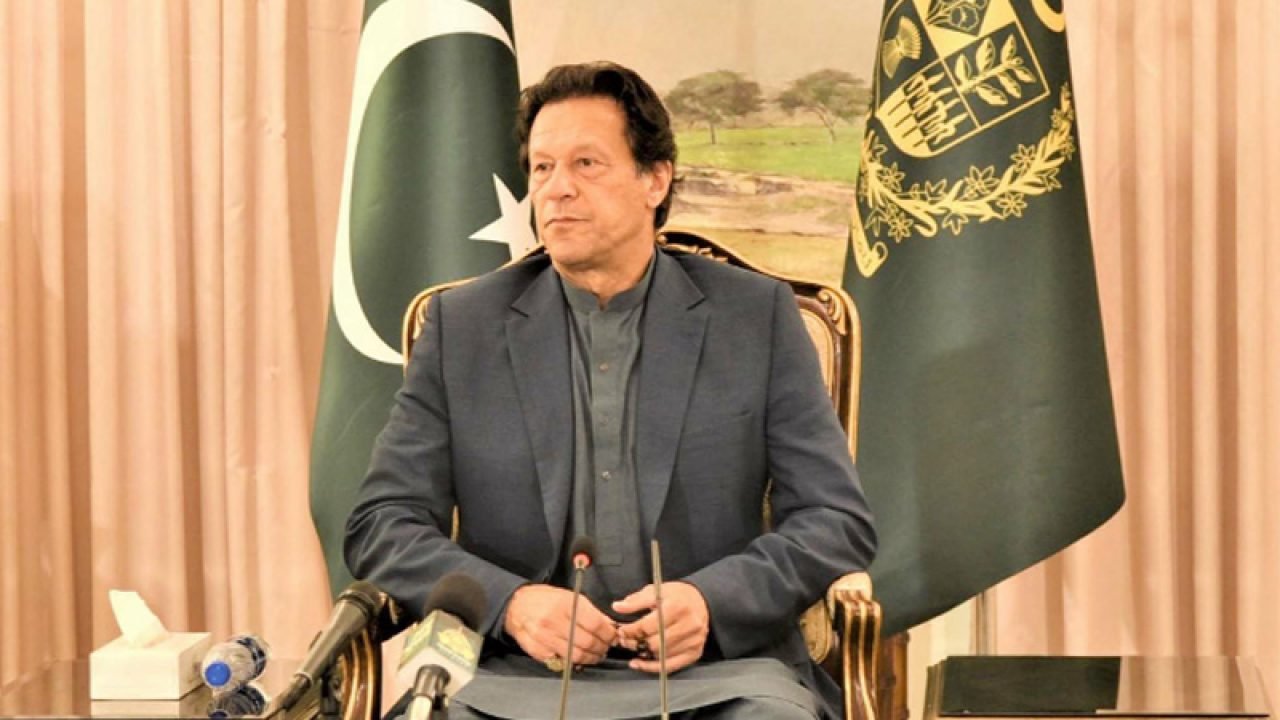
    Prime Minister (PM) Imran Khan has said that taking action against his friend and colleague Jahangir Khan Tareen over the sugar scandal hurt him like dropping his cousin and former Pakistan cricketer Majid Khan from the team.

    “These were two of the hardest decisions I ever had to make in my life,” he said while speaking to senior journalist Kamran Khan during a wide-ranging interview on Dunya News.

    To a question regarding the inquiry into the sugar crisis, the premier said Pakistan Sugar Mills Association (PSMA) had “threatened Wajid Zia, warning him to stop whatever he was doing”. He said that it thought that the government would buckle if the sugar prices rose.

    “I will fight the sugar mafia,” he added.

    The PM noted that sugar sales in Punjab doubled in July but it emerged that it was being sent from Punjab to Sindh.

    “The PTI is not in power in Sindh so they are hoarding sugar there,” he explained. “The Sharifs, the Zardaris, and many other politicians own sugar mills.”

    “They can blackmail me as much as they want but I will not let off the hook unless and until they abide by the law,” the premier said, adding that the public institutions would make a decision on the sugar inquiry report.

    He then mentioned his longtime friend Tareen, saying he “did the most with me in my struggle over the past seven to eight years”.

    PM Imran also categorically denied that Pakistan would recognise Israel — a few days after the UAE established formal relations with Tel Aviv — stating that Islamabad won’t do so until Palestinians are not given their right to a “just settlement”.

    “Whichever country wants to do it [recognise Israel], our stance is very clear. Our stance was cleared by Quaid-e-Azam Muhammad Ali Jinnah in 1947-48,” said PM Imran. “Which was that we will never recognise Israel till the Palestinians do not get their rights.”

    He said that Pakistan will not establish diplomatic relations with Israel till the Palestinians do not get a separate state of their own, which the people of Palestine accept, based on the Two-Nation Theory. 

    The premier said that if Pakistan agreed to recognising Israel and gave up its principled stance then it will have to stop raising the issue of Kashmir as the situation in the disputed area was the same. 

    “Hence, Pakistan cannot recognise Israel,” he stated.

    The premier said Karachi would have progressed if not for the ethnic politics of the 1980s.

    Earlier today, Khawaja Izharul Hassan, a leader of the ruling PTI’s coalition partner, the MQM-P, had said a committee to resolve Karachi’s problems was not a solution.

    It was reported late last week that the federal and Sindh governments had agreed on forming a committee comprising representatives of the city’s three main stakeholders — the ruling PTI, PPP, and the MQM-P — to address the metropolis’ longstanding civic issues.

    In his comments today, the premier said looking at the port city in its current state was painful. “The MQM-P founder spread hatred among people [of Karachi] and divided them; he wreaked havoc in Karachi.”

    “The situation in Karachi is dire,” he added.

    He said he has approached the courts on the issue of local government system in Sindh.

    “I intervene in Punjab and Khyber Pakhtunkhwa because we have the PTI’s government there,” the premier explained, adding that if the Centre intervened in Sindh, the provincial leadership “will make a fuss”.

    “We are going to do whatever we can for Karachi,” he vowed.

    Speaking about his political career, PM Imran said his “whole life had been spent in struggle”. “I was nine years old when I started this struggle,” he added.

    “Those who do not know how to struggle falter,” the PM underlined.

    Referring to the time he was voted into office, he said Pakistan was close to defaulting, the public institutions were destroyed and the rupee weakened.

    “Depreciation of the rupee leads to inflation,” he said, adding that the government was paying instalments for the loans the rulers of the past had obtained.

    He said that while he was attempting to make the country a welfare state, the elites gathered and are trying to overthrow the government.

    With regard to power, the premier said electricity in Pakistan was costlier but sold at a cheaper rate, noting that “we are producing the most expensive electricity in the world”.

    If electricity prices had not been revised upwards, the country would have had to take loans, he noted. 

    A comprehensive power policy is set to be introduced in a couple of weeks, he added.

    Speaking of the ongoing coronavirus pandemic, the prime minister said many people talked about how he did not understand the crisis.

    “Our party and the Opposition leaders kept saying that everything should be shut down during the corona [virus pandemic],” he noted. “A strict lockdown was imposed in Sindh; that was their [provincial government’s] right after the 18th Amendment.”

    “We had to endure a month of criticism during corona,” he said. “I told Bill Gates that we saved our lower class by imposing a smart lockdown,” he added.

    Referring to Pakistan’s anti-graft watchdog, the National Accountability Bureau, he said: “We’re not dictating [NAB’s actions].”

    Speaking of the Opposition parties, the PM said their leaders had only one goal and that was to blackmail him. “Should I have given them NRO,” he asked rhetorically.

    He said the Opposition parties wished to do away with clauses that would eventually bring an end to NAB. They were also blackmailing the government over legislation related to the Financial Action Task Force (FATF), he added.

    Throwing a jibe at the PML-N vice-president, he noted that there was stone-pelting when Maryam Nawaz was going to NAB’s office in Lahore for an appearance.

    “They go to the NAB as if Nelson Mandela is going to NAB.”

    “We are strengthening the FIA [Federal Investigation Agency],” the prime minister said, adding that the accusation against the Punjab chief minister pertaining to alcohol licensing was a “joke”.

    The chief executive of the biggest province, Punjab, was summoned over the alcohol licensing issue but excise department’s officials should have been called, he noted.

    Summoning Punjab Chief Minister Usman Buzdar led to suspicions, he lamented.

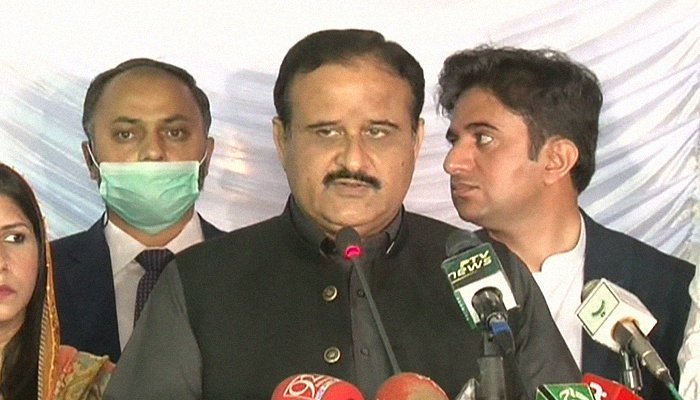
    “Attacks are launched at Usman Buzdar and that makes me very sad,” he said. “He has become the chief minister for the first time and he is learning,” he said, adding that Punjab was making rapid progress.
  • Naya Pakistan: Two years on, only one promise fulfilled, over 30 in progress, six in limbo

    Naya Pakistan: Two years on, only one promise fulfilled, over 30 in progress, six in limbo

    With two years passing since the oath-taking ceremony of Imran Khan as the country’s 22nd prime minister (PM), much has changed in line with his vision of formation of “Naya Pakistan”, his teammates say.

    Amid such claims by government members, Dawn has monitored progress on major promises from the ruling Pakistan Tehreek-e-Insaf’s (PTI) 2018 election manifesto, as well as any important pledges made in the course of its term.

    According to the report, while over 30 promises are reportedly in progress, six lie in limbo, only one has been fulfilled and five others are partially complete.

    As per details of the promises, that of tackling corruption has been completed by PM Imran’s team and those regarding affordable housing, facilitating overseas Pakistanis, minority rights, police reforms and crime control are partially complete.

    Another 37 promises are in progress whereas among those that lie in limbo are the ones pertaining to madrassah reforms, provision of housing units to persons with disabilities, strengthening of parliament, gender parity, elimination of water mafia and criminal justice reforms.

    Give PTI’s full manifesto a read here:

  • NAB summons Buzdar for ‘issuing illegal liquor licences’

    NAB summons Buzdar for ‘issuing illegal liquor licences’

    The National Accountability Bureau (NAB) has summoned Punjab Chief Minister (CM) Usman Buzdar on August 12 for what it says was illegal issuance of liquor licences.

    The anti-graft watchdog has accused the provincial chief executive of illegally using powers of Excise director general (DG) and issuing liquor permits to a private hotel in Lahore.

    The hotel in question is the same as the one in regard to which reports had falsely claimed that a local company was setting up a “liquor bar” at the Allama Iqbal International Airport after approval from the Pakistan Tehreek-e-Insaf (PTI) led Punjab government.

    “A section of local media wrongly reported that the provincial government has granted a license to a company to sell liquor at the airport,” then spokesperson to the CM, Dr Shahbaz Gill, had said in a video message in January last year.

    He had further said that an under-construction five-star hotel near the airport had sought permission, which was duly granted after all the legal requirements were fulfilled.

    “This is not something new and all the major hotels in the country are permitted under the laws,” Gill said.

    However, the issuance has reportedly landed the Punjab CM in hot water.

    Earlier, on May 24, in view of the threat of sale of poisonous liquor on the occasion of Eidul Fitr, Punjab Excise and Taxation DG Hafiz Ziaul Mustafa issued a letter to stop the sale of illegal liquor and take necessary steps, The Express Tribune reported.

    Some unscrupulous elements use clinical alcohol, sedative tablets and juices of rotten fruits to brew liquor which is then sold in bottles of local and foreign brands. In the past scores of people have died and many more have gone blind from this locally brewed concoction.

    The DG also directed to pay special attention to liquor license holders on the occasion of Eid. A letter issued from the office of the DG said that several people have been affected by drinking toxic liquor in recent years which has embarrassed the government.

    Bootleggers making this toxic moonshine were likely to bring out their product on the festive occasion of Eid to grab the merriment mood of poor people who could not afford a pint of legally sold liquor available from licenced excise shops.

  • India continues celebrating arrival of Rafale jets that other countries dumped

    As India continues to celebrate the arrival of its Rafale jets, military experts are not only questioning its capabilities against United States (US) aircraft but are also raising questions why the Rafale jets failed to compete in the international arms markets and got dumped by a majority of nations.

    According to foreign media reports, Dassault’s Rafale was not India’s only choice as various other global firms expressed interest in the MMRCA tender. Six renowned aircraft manufacturers competed to bag the contract of 126 jets, which was hailed to be the largest-ever defence acquisition deal of India.

    The initial bidders were Lockheed Martin’s F-16s, Boeing’s F/A-18s, Eurofighter Typhoon, Russia’s MiG-35, Sweden’s Saab’s Gripen and Dassault’s Rafale.

    All aircraft were tested by the IAF and after careful analysis on the bids, two of them — Eurofighter Typhoon and Dassault Rafale — were shortlisted.

    Dassault received the contract to provide 126 fighter jets as it was the lowest bidder and the aircraft was said to be easy to maintain. After Rafale won the contract, the Indian side and Dassault started negotiations in 2012. Though the initial plan was to buy 126 jets, India scaled it down to 36, that too in fly-away condition.

    Despite boasting of awe-inspiring capabilities and selected by India after a mammoth testing & bidding process, the French origin jets didn’t see many buyers. Other than France and India, only Qatar and Egypt are using Rafale jets and that too in very limited numbers.

    As reported earlier by EurAsian Times, Russian aviation experts had claimed that Rafale jets would have been useless against the Chinese Airforce (PLAAF). The maximum speed of the Rafale jet is about Mach 1.8 compared to Chinese J-16s at Mach 2.2.

    The Rafale’s practical ceiling is also lower than the J-16s. Even in engine thrust, the Chinese J-16s aka Russian Su-35s are far superior to the French combat aircraft. Even if the Indian Air Force (IAF) was to deploy all 36 of its newly acquired jets, the technical superiority would still be on the side of China, claimed the Russian expert.

    The Rafale is one of the most expensive aircraft in the international market. India’s deal of 36 jets is worth Rs. 60,000 crores. Experts argue that the high cost is the result of many reasons including general inefficiency in the country’s defence sector, along with the small scale on which the Rafale is being produced in comparison to rival fighters such as the F-18, MiG-29 or F-35 due to which Rafale has not benefitted from economies of scale. This has contributed to its poor performance in the international markets.

    Rafale’s third buyer, India, previously proposed to acquire 126 jets under Make in India and not 36. However, it took five years for even the first five jets to arrive in India after Prime Minister Narendra Modi announced it in April 2015 during his trip to France.

    According to analysts, despite heavy marketing by the makers of Rafale, France’s relatively small and inefficient defence sector seems to have met its limit with the fighter program. The small production lines are unable to produce the aircraft quickly or efficiently and the French budget for research and development is smaller in contrast to the US or Russia.

    The aircraft is priced very steeply and most nations prefer to buy US jets not only because of the technical superiority but also to please the Americans instead of the French. The Rafales have seemingly lost the fight in the international market, despite boasting of excellent qualities.

  • Shaukat Khanum CEO made special assistant to PM Imran on health

    Shaukat Khanum CEO made special assistant to PM Imran on health

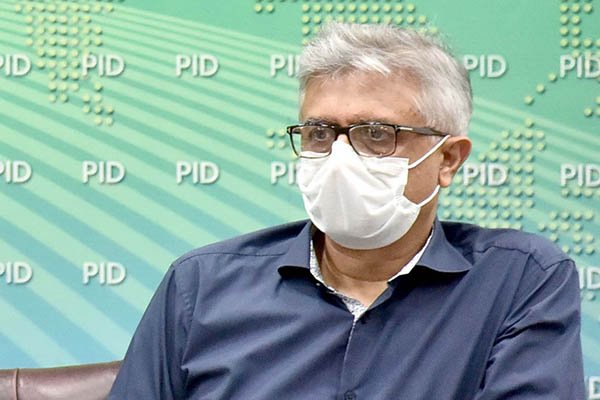
    Prime Minister (PM) Imran Khan has appointed Dr Faisal Sultan, the chief executive officer (CEO) of Shaukat Khanum Memorial Cancer Hospital & Research Centre, as his special assistant on national health services, regulations and coordination, a statement issued by his office said on Monday.

    “Dr Faisal Sultan shall hold status of federal minister,” read a tweet by the government.

    Dr Sultan, who also serves as the PM’s focal person on COVID-19, will replace Dr Zafar Mirza, who had resigned last week.

    A consultant physician on medicine and infectious diseases, Dr Sultan completed his graduation from Lahore’s King Edward Medical College University (KEMU) in 1987. He also holds the postgraduate degrees of Diplomate American Board of Internal Medicine (1992) and Diplomate American Board of Infectious Disease (1994).

    Reacting to his successor’s appointment, Dr Mirza said: “I am very pleased about the appointment of Dr Faisal Sultan as SAPM health. As [a] federal minister he will be able to make decisions which [are] important.”

    Dr Mirza, who reports claimed had been told to resign from office, termed Dr Sultan “a capable professional with a good worldview” and a good friend, wishing him success in his new role.

  • Naya Pakistan: Matric pass PTI MPA becomes new chairperson of Punjab Education Foundation

    The recent “election” of the new chairperson of the Punjab Education Foundation (PEF) has attracted widespread social media attention after it was revealed that he himself holds only a matriculation or secondary school certificate.

    Established in 1991, PEF is an autonomous statutory body to encourage and promote education on non-commercial/non-profit basis. Since then, it has come a long way to arrange free quality education for the deserving children at their doorsteps.

    On July 27, the first meeting of the newly-constituted Board of Governors (BoG) of the PEF was held in which the members, through consensus, elected Sardar Aftab Akbar as the new chairperson.

    According to the Punjab Assembly’s official website, the academic qualification of Akbar, a Pakistan Tehreek-e-Insaf (PTI) MPA from PP-23 (Chakwal-III), is matriculation. He has served as the tehsil nazim in Chakwal from 2005 to 2010, while still serves as a member of the Primary and Secondary Healthcare as well as Committee on Privileges of the Punjab Assembly.

    It is pertinent to mention here that the PEF has been in the limelight these days for non-payment to its partner schools across Punjab. The owners and teaching and non-teaching staff of PEF partner schools had protested recently outside the Punjab Assembly and the Governor House. They had even tried to reach Zaman Park over the non-payment issue that has made them unable to pay salaries to teaching and non-teaching staff besides clearing building rents and utility bills etc.

    Punjab School Education Minister Dr Murad Raas, with regard to non-payments, says that PEF had already paid 50 per cent of the payment to the schools and remaining payment would be made only after verification of the students enrolled in these schools. He said previously some 250,000 fake enrolments were detected at many PEF partner schools and since millions of rupees were to be paid to the schools, verification of students was a must.

    The minister said many PEF partner schools were in fact beneficiaries of the Pakistan Muslim League-Nawaz (PML-N) and the government would not waste public money on fake enrolments. He said the PEF initiative was aimed to bring out of school children into schools and not to financially support fake enrolments. Dr Muard Raas further said he had also apprised Prime Minister (PM) Imran Khan about the issue in a recent meeting who had assured full support.

  • Everything we know about Tania Aidrus’s resignation

    Everything we know about Tania Aidrus’s resignation

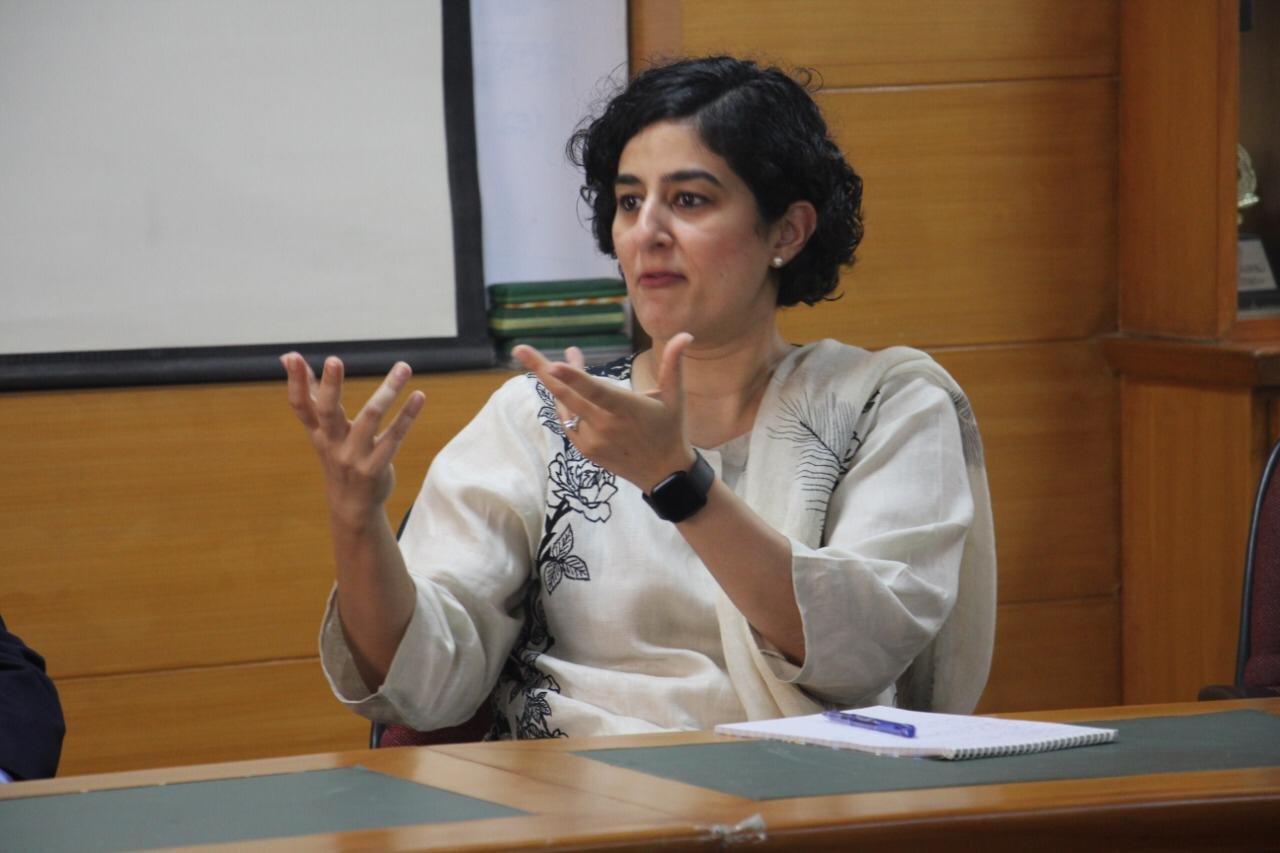
    Special Assistant to the Prime Minister (SAPM) on Digital Pakistan Tania Aidrus has resigned from her post amid growing criticism for holding dual citizenship.

    “Growing criticism is a distraction to my ability to execute on the long-term vision for a Digital Pakistan. It is unfortunate that a Pakistani’s desire to serve Pakistan is clouded by such issues,” said Tania, who holds Canadian and Singaporean nationality, in her resignation letter.

    Furthermore, she stated that her Canadian nationality was a consequence of her birth and “not an acquisition of choice”.

    TANIA & TAREEN:

    According to media reports, appointments of Tania and Khurram Jamali, who formerly worked under Tania at Google, was facilitated by Jahangir Khan Tareen.

    In April 2020 when the sugar scandal rose its ugly head and a subsequent probe into it led to the damning report that said Tareen prioritised his sugar mills over national interest, PM Imran Khan was disillusioned.

    This led to a rift between the premier and Tareen, who, according to reports, are no longer on talking terms.

    While Tareen has left the country for the time being and does not hold any direct or indirect power in the government, people cannot help drawing links between the rift and Tania’s resignation.

    DIGITAL PAKISTAN INITIATIVE AND DIGITAL PAKISTAN FOUNDATION CONFLICT:

    Despite the existence of Digital Pakistan Initiative, Tania formed a nonprofit organisation called Digital Pakistan Foundation to attract foreign expatriates and talent to facilitate the digitisation process in Pakistan.

    According to Tania, the government’s Digital Pakistan Initiative had no Federal Budget assigned to it, neither was it under the ambit of the Ministry of Information Technology (IT) or Ministry of Science and Technology (MoST), leaving it stalled and dry.

    However, reports say, Shabahat Ali Shah, the chief executive officer (CEO) of the National IT Board (NITB), and Tania were not getting along well since day one.

    Both Shah and Tania were working for the IT Ministry and there had been an overlap of their work, leading to turf wars.

    Taking advantage of Tania’s vulnerability, Shah allegedly want her sacked as the SAPM. To that end, the Digital Pakistan Foundation scandal was reportedly intentionally hyped up and leaked to a journalist, whose thread about the scandal was later picked up by various media outlets.

    Meanwhile, Tania says she will continue serving in Pakistan through public and private initiatives and will always be available for the cause of ‘Naya Pakistan’.

  • ‘Army chiefs should serve as president of Pakistan after retirement’

    ‘Army chiefs should serve as president of Pakistan after retirement’

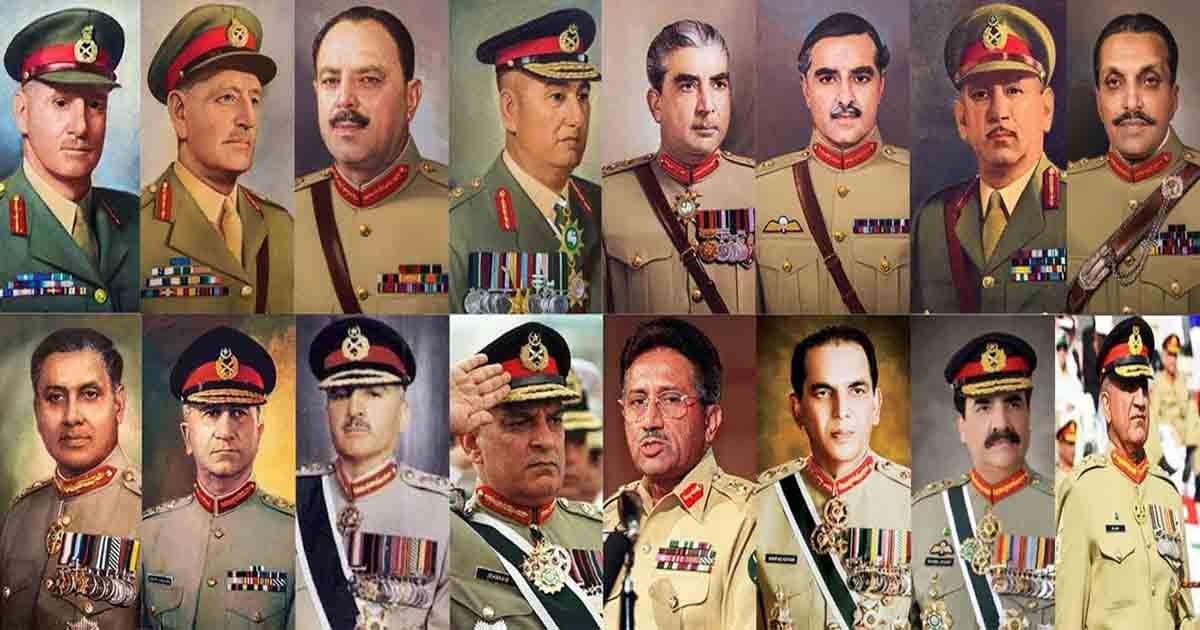
    Twice former prime minister (PM) of the Azad Jammu & Kashmir (AJK) region Sardar Attique Ahmed Khan has suggested that every chief of army staff (COAS) should be allowed to serve as the country’s president after retirement so as to enhance Pakistan’s foreign policy while keeping in view the defence and strategic significance of the country.

    “Pakistan has a lot of enemies and our politicians are unable to realise that the country’s defence is a lot more important than economy or democracy,” he said while speaking to a private media outlet.

    Ahmed said that the current parliamentary system had failed and it needed to be fixed while enhancing cooperation between different institutions. “Army’s help is sought every time the country faces any major challenge. The difference between help and interference must be made clear.”

    WATCH VIDEO:

    He maintained that the constitution should be amended so as to help the executive branch and accompany any elected PM with a president who is an ex-army chief.

    “I believe the chemistry between the serving and the now-president-for-four-years army chiefs would benefit Pakistan’s defence and foreign affairs,” Ahmed said and also cited the example of former United States’ (US) secretary of state Colin Luther Powell.

    An American politician, diplomat and retired four-star general, Powell served as the 65th US state secretary from 2001 to 2005.

    Ahmed also said such steps were needed to strengthen the constitution and not individuals.

    While many differ on the ex-AJK PM’s statement, it merits a mention that experts believe the military is already continuing to shape Pakistan’s security and foreign policies.

    According to a forecast report released by The Economist Intelligence Unit (EIU) and cited by Dawn in November last year, Pakistan Army was likely to continue shaping the country’s foreign and security policy while the government was expected to largely amenable to this arrangement.

    While the ruling Pakistan Tehreek-e-Insaf (PTI) boasts of civil-military relations in Pakistan being at their historic best — a claim verified by the military’s media wing as well — the report had also outlined Pakistan’s political and economic outlook for the period of 2020 to 2024 and forecast that the PTI would serve its full term while opposition parties would remain in a state of disarray owing to legal challenges facing their leaders.

  • Official, who banned books in Punjab over ‘blasphemous and anti-Pakistan’ content, is a ‘pervert and misogynist’

    Official, who banned books in Punjab over ‘blasphemous and anti-Pakistan’ content, is a ‘pervert and misogynist’

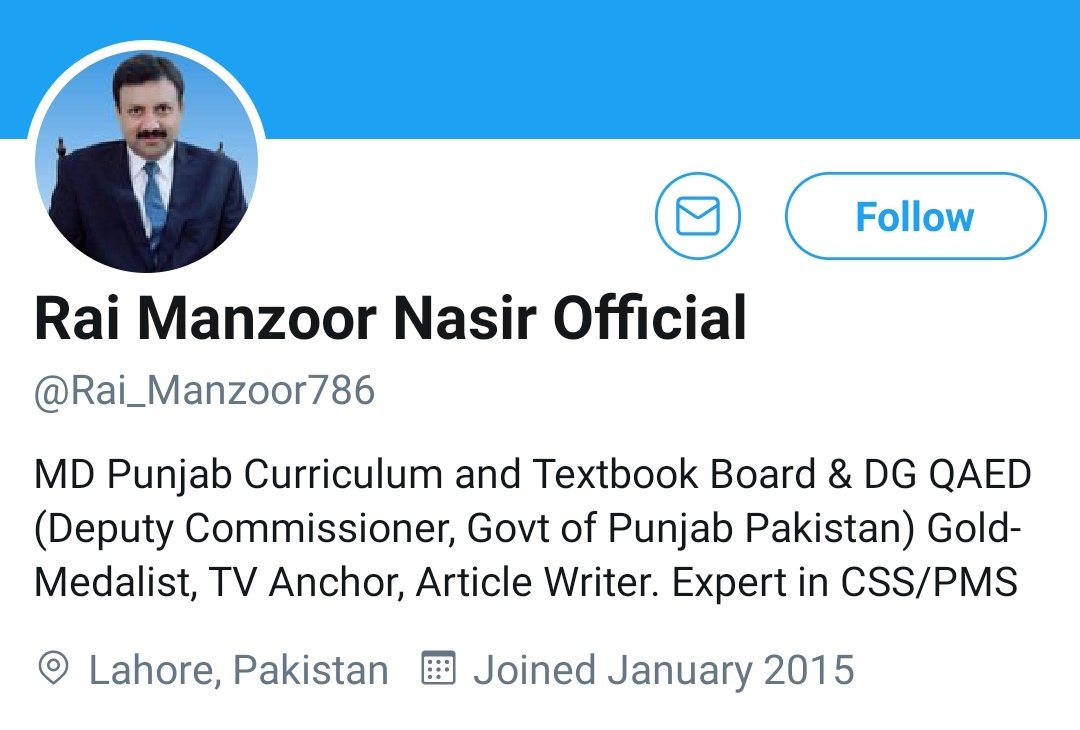
    Punjab Curriculum & Textbook Board (PCTB) Managing Director (MD) Rai Manzoor Hussain Nasir, who had on Thursday banned 100 books being taught in private schools for carrying “blasphemous and anti-Pakistan” content, has come under fire for being what Twitterati call is a “pervert and misogynist”.

    BOOKS BAN:

    Addressing a press conference, Nasir said that the PCTB had started critical review of 10,000 books being taught by private schools across the province and in the first phase had banned 100 books of 31 publishers including Oxford and Cambridge for blasphemous, immoral and anti-Pakistan content.

    The PCTB MD said that the board had formed 30 committees for this purpose. He said it was sad that nobody checked these books earlier and had no idea what was being taught to our kids in private schools against hefty fees. He said the banned books had distorted facts about Pakistan and its creation, Quaid-e-Azam Muhammad Ali Jinnah and Allama Muhammad Iqbal while these books also carried blasphemous content. He said Pakistan was portrayed as an inferior country to India while Azad Jammu & Kashmir (AJK) was also shown as part of India in maps in some of these books.

    Rai Manzoor Nasir said that instead of including sayings of Quaid-e-Azam Muhammad Ali Jinnah and Allama Muhammad Iqbal, etc. one of the books carried sayings of Mahatma Gandhi and some unknown people. He said in a book of Mathematics counting concepts were made explained to the young students showing pictures of pigs. He said one of the books by Cambridge tried to promote crime and violence among the students on the basis of unemployment in the country.

    The PCTB MD said that these 100 books had been immediately banned and the publishers had been directed to immediately stop publishing and selling the books. He said District Education Authorities (DEAs) across Punjab will visit private schools (after reopening of schools) to check if these books were still being taught. He said FIRs would be registered against the publishers for violation under the provisions of the Punjab Curriculum and Textbook Board Act 2015.

    ‘PERVERT AND MISOGYNIST’:

    Already under fire for what was criticised as a move to “crackdown on the future of children by banning books”, things took an uglier turn for the PCTB MD as Twitterati called him out over “hypocrisy” and being a “pervert and misogynist”.

    Besides calling him out for liking porn videos on Twitter, netizens also highlighted that Nasir was involved in moral policing over the social networking site.

    He was also criticised for being a racist and tweeting against Afghan refugees.

    Have something to add to the story? Let The Current know in the comments below.

  • ‘Demolish illegal buildings’: Court orders sealing Navy’s elite sailing club

    ‘Demolish illegal buildings’: Court orders sealing Navy’s elite sailing club

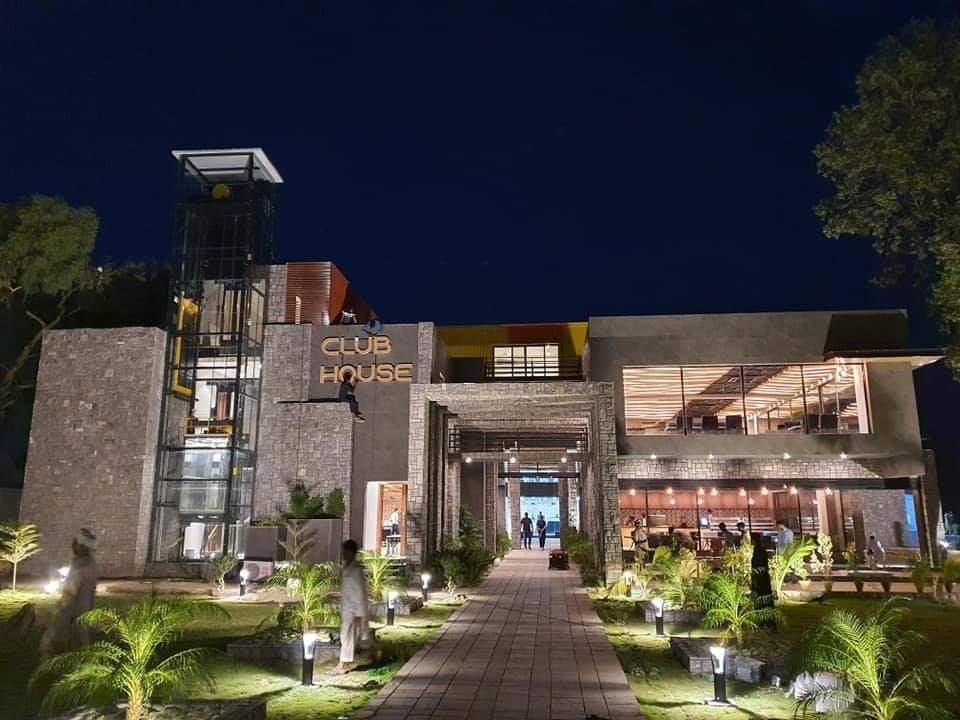
    The Islamabad High Court (IHC) has ordered the Capital Development Authority (CDA) administration to seal the newly-constructed Navy Sailing Club, declaring the sports complex’s construction illegal.

    Two weeks ago, the CDA had served a notice to the navy for its allegedly illegal and unauthorised construction of the club and directed to immediately stop the construction of the building.

    During the hearing on Thursday, a board member told the court that the CDA had not issued any allotment letter for the land in question. To which, IHC Chief Justice Athar Minallah asked if the authority had taken any action to halt the construction. “We had issued notices to the Navy,” the CDA representative informed the judge.

    “What do you mean ‘you issued notices’,” asked Justice Minallah. “Demolish the illegal buildings,” he said.

    READ: Islamabad admin at odds with Navy over construction of elite sailing club

    Last week, the navy had clarified that the land in question was, in fact, allotted to it in 1994 for the development of a water sports centre. A statement issued at the time had asserted that navy divers are trained at the club who, then, take part in rescue operations in all four provinces and the federally administrative units, including Azad Jammu and Kashmir, as the club is the only such facility in the north of the country.

    Citing a 1994 order of the Prime Minister’s Office (PMO), the CDA official informed the court that the permission to build the sports facility was granted by prime minister of the day, Benazir Bhutto.

    However, the judge ordered the CDA to seal the facility before the next hearing, saying in case the authority fails to comply, the court will summon Cabinet Secretary Ahmad Nawaz Sukhera. He also directed the issue to be presented before the cabinet.

    The judge wondered if the flagship military project was supported by any legal provision providing space for a purportedly commercial project.

    When a Pakistan Navy representative, who was present in the court, sought time to submit a response, Justice Minallah asked what did the navy need time for. “We respect you, appreciate your sacrifices and honour your martyrs but an illegal construction isn’t allowed,” he said.

    “Why are you defending something which is indefensible [according to relevant laws],” he questioned.

    “Islamabad is the country’s capital, not a tribal area. No one is above the law. Not even this court.”