Category: Politics

News stories of Politics, for the topics that matter the most to young professionals and college students, political news reported with a different angle.

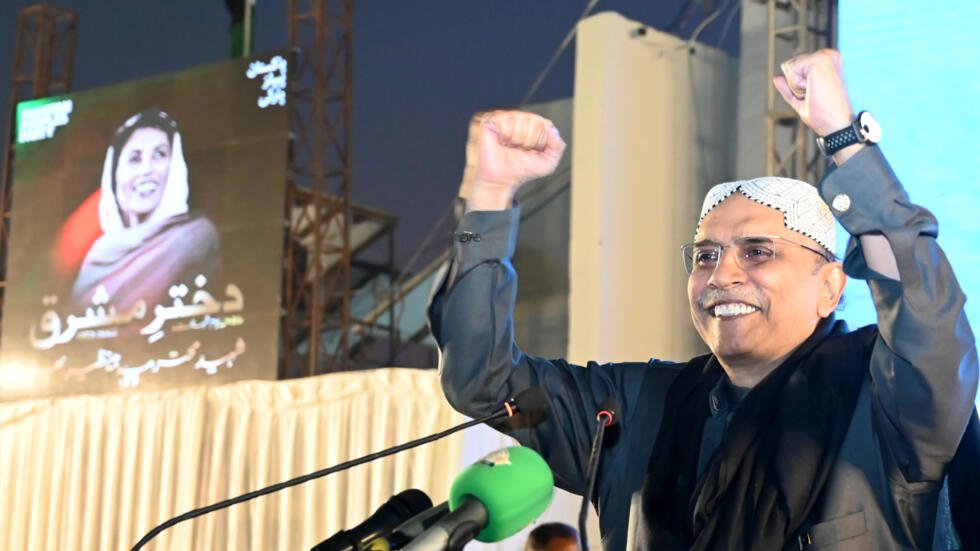
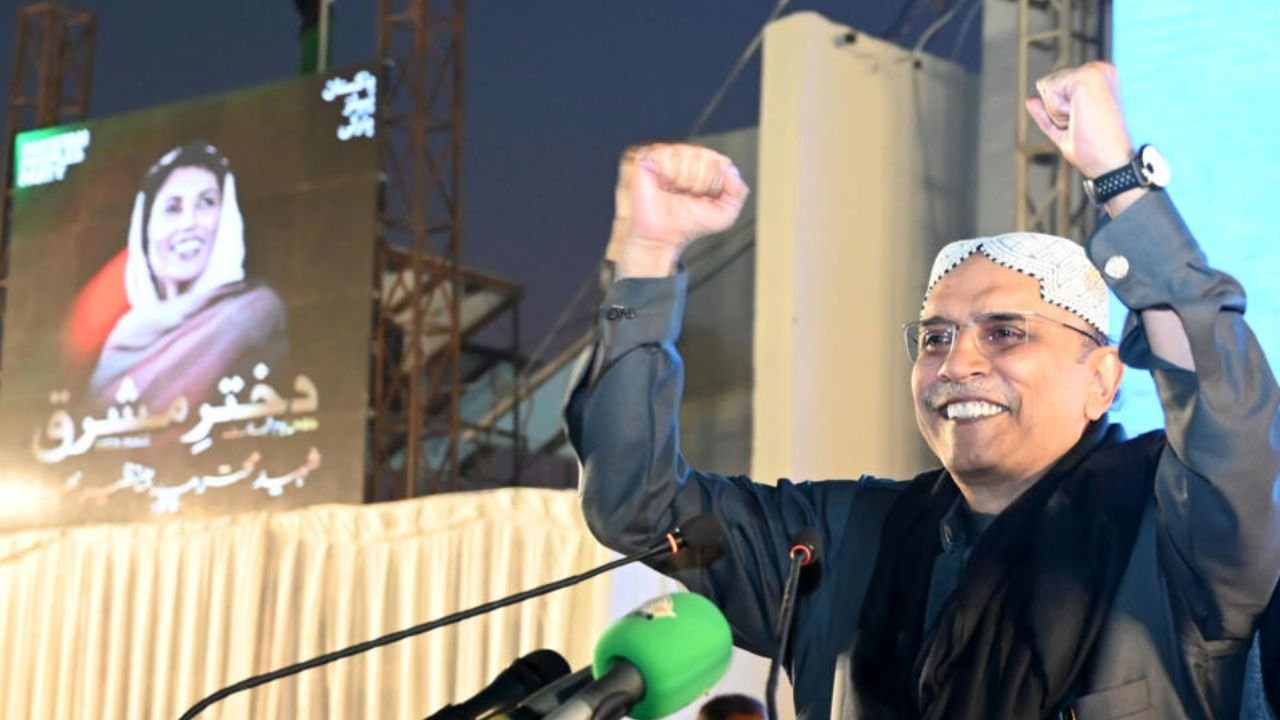
  • Asif Zardari elected as the 14th President of Pakistan

    Asif Zardari elected as the 14th President of Pakistan

    Lawmakers across Pakistan, the Senate, National Assembly, and the four provincial assemblies, cast their votes to elect the 14th president of the country and Asif Ali Zardari won by securing 411 votes.

    His opponent, Mehmood Khan Achakzai, secured 181 votes.

    The Election Commission of Pakistan (ECP) orchestrated the process, which unfolded between 10 am and 4 pm, with meticulous arrangements in place.

    The presidential race sees former President Asif Ali Zardari, representing a coalition of the Pakistan Muslim League-Nawaz (PML-N), Pakistan Peoples Party (PPP), and other allied parties, vying for a potential second term. He faces stiff competition from Mahmood Khan Achakzai, President of the Pakhtunkhwa Milli Awami Party and the joint candidate of the opposition.

    Polling stations were set up within the respective houses of parliament, where the election took place through a secret ballot. The Parliament House in Islamabad accommodated senators and MNAs, while the four provincial assemblies served as polling stations for provincial lawmakers.

    During the voting process, PPP Senator Sherry Rehman acted as Zardari’s polling agent, while Senator Shafiq Tareen represented Achakzai. Islamabad High Court Chief Justice Aamir Farooq presided over the proceedings at the Parliament House, with notable figures like Zardari’s children, Bilawal, Bakhtawar, and Aseefa Bhutto-Zardari, in attendance.

    However, not all political parties participated in the election. JUI-F chief Maulana Fazlur Rehman and Jamaat-e-Islami decided against voting, citing concerns over the credibility of the process.

    The newly elected president of Pakistan is slated to be sworn in on Sunday at 4 pm at the President’s House. Chief Justice of Pakistan Justice Qazi Faez Isa will administer the oath, with invitations already issued to guests for the ceremony.

    In the provincial assemblies, strict security measures were enforced to ensure a smooth and transparent electoral process. Election Commission members oversaw proceedings, guaranteeing fairness and peace throughout the voting.

    Despite tension and security concerns, the Election Commission upheld its decision to proceed with the scheduled polling, dismissing requests for postponement from opposition candidate Mahmood Achakzai. This commitment underscores the commission’s dedication to upholding democratic principles and adhering to electoral timelines.
  • SJC recommends not using  titles ‘judge’, ‘justice’ with Mazahar Naqvi’s name

    SJC recommends not using  titles ‘judge’, ‘justice’ with Mazahar Naqvi’s name

    A five-judge bench of the Supreme Judicial Council (SJC) has released a 33-page detailed opinion on Friday,  stating that former judge of the apex court, Sayyed Mazahar Ali Akbar Naqvi, has committed misconduct. The council recommended his removal from office and advised against using the titles ‘Justice’ or ‘Judge’ with his name in the future.

    The SJC discovered that the judge committed several instances of misconduct, which harmed the reputation of the judiciary.

    While Mr Naqvi had resigned a day before the SJC began proceedings on nine complaints against him under Article 209(6), the council decided to continue with its proceedings, with Chief Justice of Pakistan (CJP) Qazi Faez Isa saying it was “necessary to remove the misperception that the institution of judiciary is above the law”.
    The Supreme Judicial Council, led by the Chief Justice of Pakistan, praised the Pakistan Bar Council (which oversees lawyers) and Advocate Mian Dawood for filing complaints to support the rule of law and accountability.

    The council found Naqvi guilty of violating his oath of office and the Code of Conduct for judges after at least five allegations made by the complainants were proven true.

    The council explained that it could not be stated that Mr Naqvi was “untouched by greed”, “was above reproach”, his conduct was “free from impropriety expected of a judge” in his official and private affairs and thus he violated Article II and III of the Code of Conduct. According to the SJC opinion, it was clear that he violated Article IV as his actions were swayed by consideration of “personal advantage”.

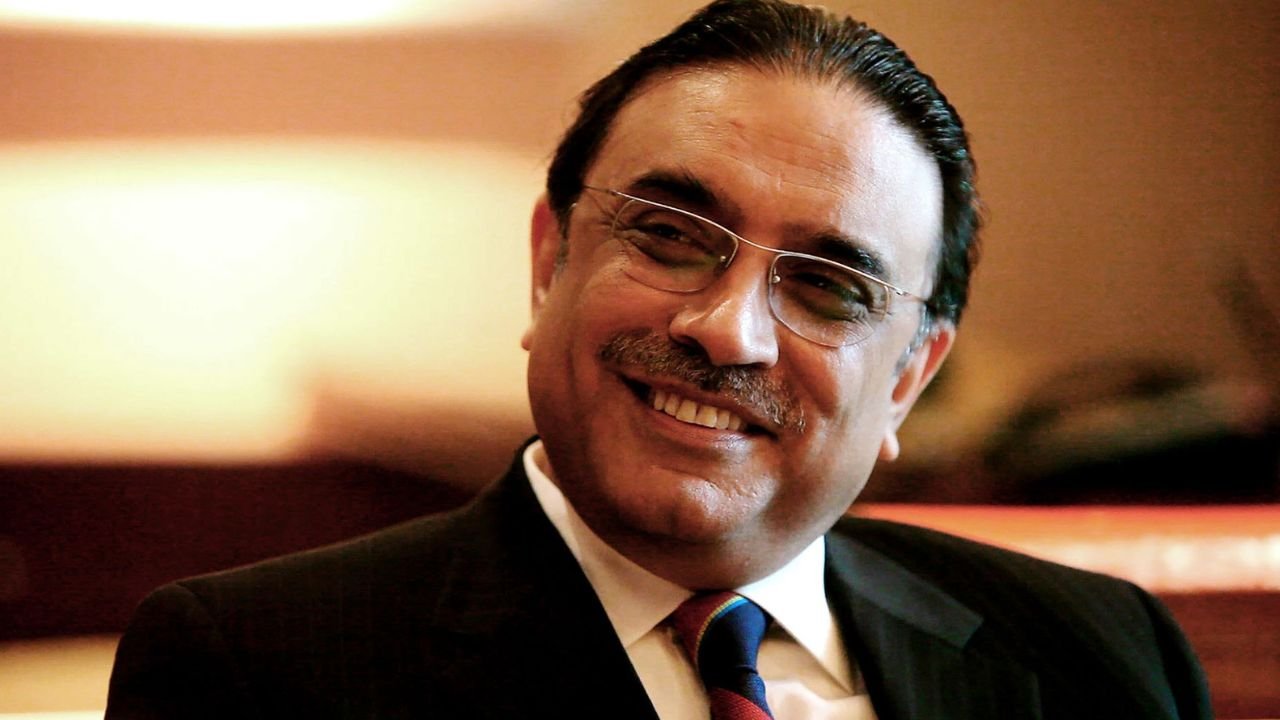
  • Asif Ali Zardari: ‘Artful dodger’ returns as Pakistan president

    Asif Ali Zardari: ‘Artful dodger’ returns as Pakistan president

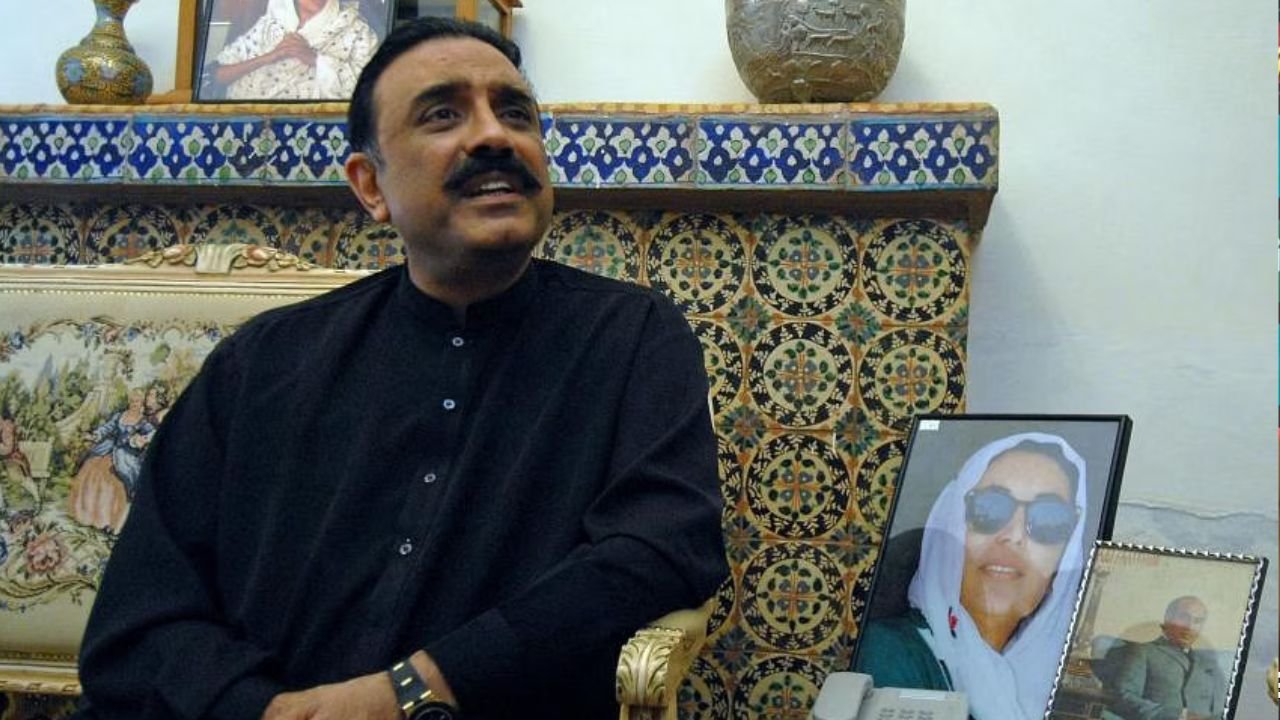
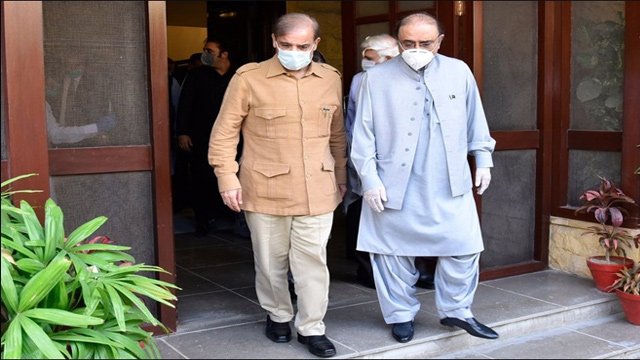
    Asif Ali Zardari, the widower of Pakistan’s slain first female premier Benazir Bhutto who has had a life storied equally by tragedy and farce, is set to become president for a second time on Saturday.

    Initially a background character as Bhutto’s consort, Zardari was stained by a bevy of corruption and other allegations, including absurd kidnapping plots and taking kickbacks lavished on hoards of jewellery.

    Despite a reputation as “Mr. Ten Percent” — the alleged cut he took for rubber-stamping contracts — a sympathy vote propelled him to office when his wife was assassinated in a 2007 bomb and gun attack.

    Between 2008 and 2013, he ushered in constitutional reforms rolling back presidential powers, and the 68-year-old’s second term will see him steer a largely ceremonial office.

    He has spent more than 11 years in jail, a long time even by the standards of Pakistani politicians, with a wheeler-dealer’s talent for bouncing back after scandals.

    Back in 2009, the New York Times said he had a knack for “artful dodging” — “maneuvering himself out of the tight spots he gets himself into”.

    Newly sworn-in lawmakers were set to vote him in under the terms of a coalition deal brokered after February 8 elections marred by rigging claims.

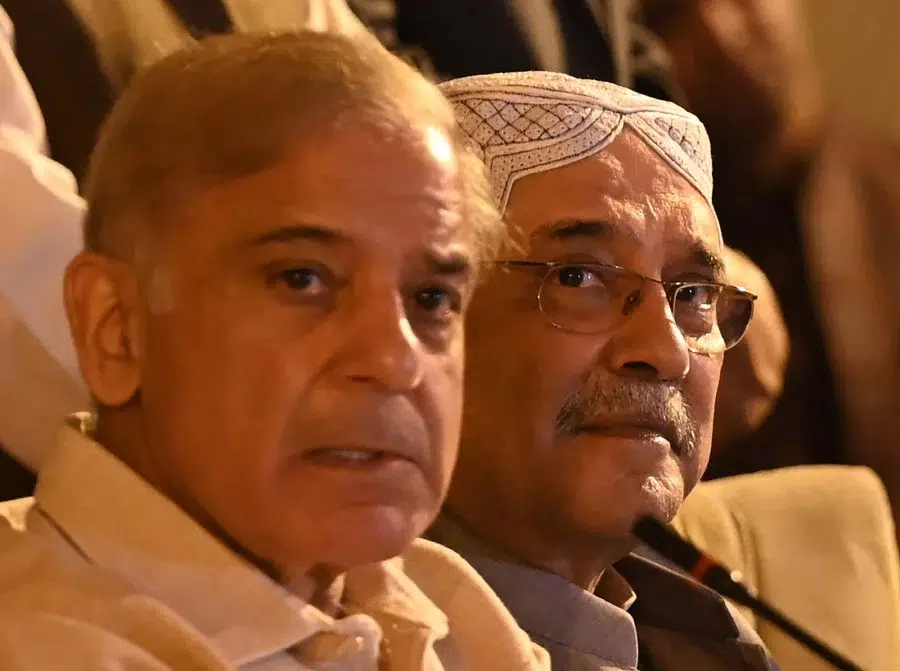
    Under that deal, Zardari’s Pakistan Peoples Party (PPP) will take the presidency, while its historic rivals the Pakistan Muslim League-Nawaz (PML-N) party secured the prime minister’s position for Shehbaz Sharif, who was officially sworn in on Monday.

    Zardari was born in 1955 into a land-owning family from the southern province of Sindh.

    “As a child, I was spoilt by my parents as an only son,” he said in a 2000 interview with the Guardian newspaper. “They indulged my every whim.”

    He expressed only limited political ambitions as a young man — losing a 1983 local government election.

    It was his 1987 arranged marriage with PPP leader Benazir Bhutto that earned him a spot in the political limelight.

    Their union — brokered by Bhutto’s mother — was considered an unlikely pairing for a leader-in-waiting from one of Pakistan’s major political dynasties.

    Bhutto was an Oxford and Harvard graduate driven by the desire to oust then-president Mohammad Zia-ul-Haq, who forced her father from the prime minister’s office and had him executed.

    Zardari was a university dropout with a reputation for brawling, partying and romancing women at a private disco in his family home.

    On the eve of their wedding, Bhutto’s team issued a formal statement denying he was “a playboy who plays polo by day and frequents discos at night”.

    Their nuptial celebrations were dubbed the “people’s wedding” — doubling as a political rally in the megacity of Karachi, where a crowd of 100,000 fervently chanted PPP slogans.

    Initially, Zardari pledged to keep out of politics.

    Bhutto served as prime minister from 1988 to 1990 — the first woman to head a democratic government in a Muslim country — and again from 1993 to 1996.

    PPP insiders regarded Zardari as a liability, considering him likely to embarrass her leadership.

    Their fears were perhaps well-founded. In 1990, he was embroiled in accusations of an absurd plot to extort a businessman by tying a bomb to his leg.

    He was jailed for three years on extortion and kidnapping charges but was elected to the national assembly from behind bars.

    In Bhutto’s second term, he served as investment minister.

    A bombshell New York Times investigation detailed how he tried to engineer vast kickbacks on military contracts over this period while lavishing huge sums on jewellery.

    After Bhutto’s government fell in 1996, Zardari was back behind bars within half an hour.

    In December 2007, Bhutto was assassinated while on the campaign trail for a third term in office.

    Her killing shook the nation to its core, a wave of sympathy carrying the PPP to victory in 2008. The party nominated Zardari as president.

    In 2010, he was widely criticised for continuing a European holiday when the nation was devastated by floods that killed almost 1,800 and affected 21 million.

    He was also head of state when US commandos trespassed onto Pakistani soil for the 2011 assassination of Osama Bin Laden, an episode that humiliated many compatriots.

    He did, however, usher in constitutional reforms rolling back the sweeping powers of the presidency and bolstering parliamentary democracy that had been undermined by three decades of military rule since 1947.

    In 2013, Zardari became the first Pakistani president to complete his full term.

    He was jailed once again over money laundering charges in 2019 but was released months later.

    Zardari and Benazir had three children, including Bilawal Bhutto Zardari, the current chairman of the PPP.

    This article was produced by AFP. © Agence France-Presse

  • High achievers to get iPads in Punjab

    High achievers to get iPads in Punjab

    Punjab Chief Minister Maryam Nawaz presided over a high-level meeting in Lahore on Thursday, focusing on matters concerning higher education scholarships and the iPad scheme.

    During the meeting, the chief minister expressed dissatisfaction with the incomplete briefing and called for a comprehensive plan for the Punjab Educational Endowment Fund (PEEF) Scholarship scheme.

    Emphasizing her commitment to modernizing higher education and other institutions, she instructed for a student survey to be conducted regarding the iPad and laptop schemes across the province to better understand their requirements.

    She said that the government will take further action regarding the laptop and iPad schemes after considering the needs of students.
    “It is necessary to have students’ feedback in this regard,” Chief Minister added.

    She further asserted that the education sector must not be directionless and aimless.

  • PHC extends stay on reserved seats MNAs oath

    PHC extends stay on reserved seats MNAs oath

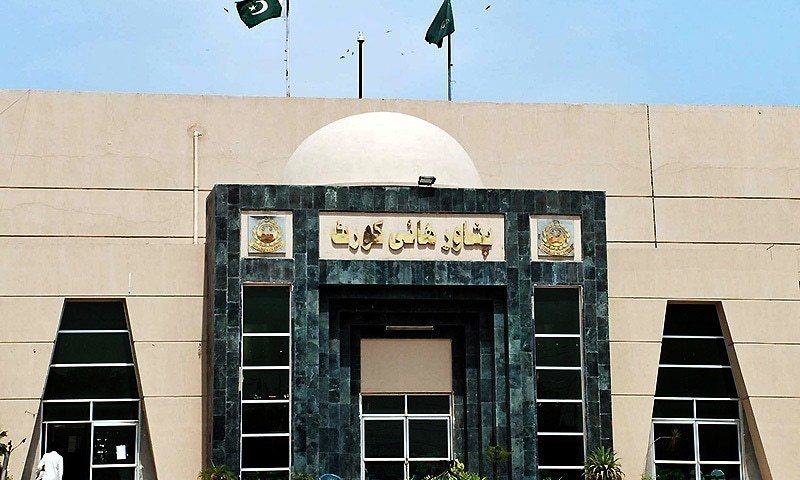
    The Peshawar High Court (PHC) has extended its stay order on the oath-taking ceremony of lawmakers notified on reserve seats, which were denied to the PTI-backed Sunni Ittehad Council (SIC) after a verdict to the effect issued by Election Commission of Pakistan’s (ECP).

    The court issued its order during a hearing of a petition filed by SIC, adjourning the hearing and summoning the Attorney General of Pakistan, Mansoor Usman Awan, to appear before the court on the next hearing.

    A day earlier, the PHC barred the oath-taking of lawmakers notified on the aforementioned reserved seats, preventing members from swearing in and directed the ECP to submit its response in the said matter by today.  

    The directives were issued during today’s hearing conducted by Justice Ishtiaq Ibrahim and Justice Shakeel Ahmad.

  • Three terrorists arrested with Adiala jail map, bombs

    Three terrorists arrested with Adiala jail map, bombs

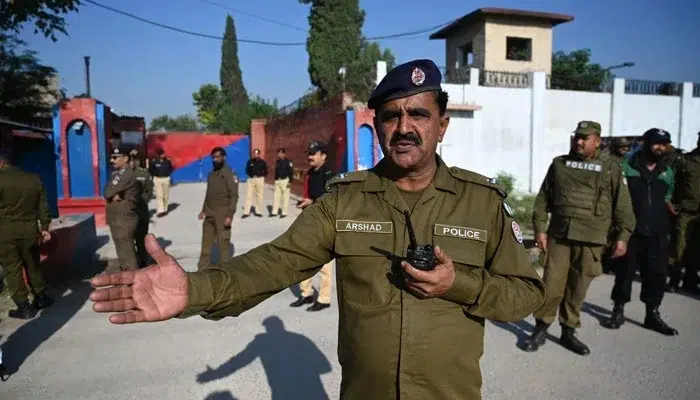
    The Counter Terrorism Department (CTD) has claimed on Thursday that they have arrested three Afghan terrorists with a map of Adiala Jail, a hand grenade, and Improvised Explosive Devices (IEDs) with them.

    Rawalpindi City Police Officer (CPO) Khalid Hamdani stated that police recovered automatic weapons and ammunition from the terrorists, after which police and other law enforcement agencies launched a search operation near the Adiala jail area.

    Former Prime Minister Imran Khan is currently in Adiala jail, serving sentences in multiple cases. CCPO Rawalpindi has stated that the terrorists are from Afghanistan.

    Earlier on November 7, 2023, police found a suspicious bag laden with an explosive device near Adiala Road in Gorakhpur, Rawalpindi, just one kilometre away from the Adiala jail, ahead of a hearing of the cipher case.

  • Punjab’s first Sikh minister, Ramesh Singh Arora, takes oath

    Punjab’s first Sikh minister, Ramesh Singh Arora, takes oath

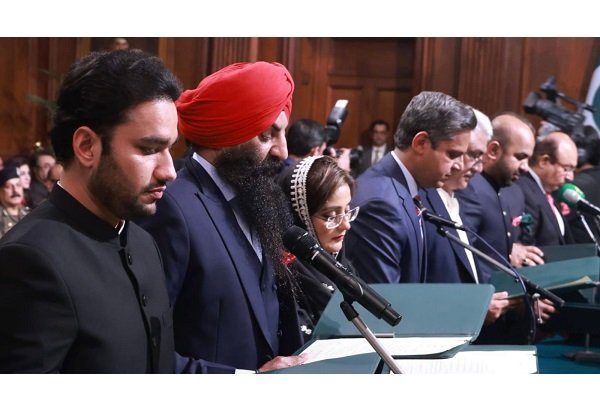
    After Maryam Nawaz became the first female chief minister of Punjab and the first female chief executive of a province in the country, history was made yet again with the inclusion of the first Sikh minister in the provincial cabinet.

    Ramesh Singh Arora, a member of the Pakistan Muslim League-Nawaz (PML-N), took oath to become a minister in the provincial cabinet. The Sikh politician has returned to the provincial assembly for the third term, this time with the portfolio of a minister.

    Arora, who hails from Narowal, has been allotted the minorities portfolio. He was also the first-ever Sikh lawmaker of Punjab, taking oath as a member of the provincial assembly in 2013.
    Meanwhile, the provincial cabinet has appointed Khalil Tahir Sindhu, a member of the christian community from Punjab, to serve alongside Arora. Sindhu will handle the human rights portfolio.
    Since 1970, various political parties or alliances, such as the PML-N, Pakistan Peoples Party, Islami Jamhoori Ittehad, Pakistan Muslim League Quaid, and Pakistan Tehreek-e-Insaf, have formed governments. However, the PML-N stands out as the only party to bring the first Sikh MPA to the house and include him in the cabinet.

  • PML-N, allies secure two-third majority in National Assembly

    PML-N, allies secure two-third majority in National Assembly

    The coalition government, led by Pakistan Muslim League-Nawaz (PML-N) and allies has secured a two-thirds majority in the National Assembly (NA) after the Election Commission of Pakistan (ECP) allocated them reserved seats but not to opponent Sunni Ittehad Council (SIC).

    A total of 224 seats out of 336 are a requirement for any government to secure a two-thirds majority in NA.

    Considering the current numbers, the Shehbaz Shairif-led coalition government — comprising Pakistan Peoples Party (PPP), MQM-Pakistan (MQM-P), Pakistan Muslim League-Quaid (PML-Q), Istehkam-e-Pakistan Party (IPP), Pakistan Muslim League-Zia (PML-Z), Balochistan Awami Party (BAP), and National Party (NP) —  has 230 members in the lower house. 

    The PML-N currently has 123 seats in NA, of which 75 are general seats, which the party won in the February 8 polls. After that, nine independent MNAs joined the party, taking the number to 84. However, PML-N secured 23 reserved seats, including 16 for women and 4 for minorities.

    Similarly, after the ECP ruling on the remaining reserved seats, the party got the lion’s share, bagging 15 out of the remaining 20 reserved seats for women and one out of the three remaining seats reserved for minorities. 

    The PML-N now has 123 members, becoming the largest party in the NA.

    On the other hand, the Pakistan Tehreek-e-Insaf (PTI)-backed SIC stands at the second position with 82 seats, PPP now has 73 seats, including 54 general seats, 16 women and another three reserved seats for minorities.

    Moreover, MQM-P stands at number four with a tally of 22 MNAs, including 17 general seats and five reserved seats — four women and one minority.

    IPP has four seats in the National Assembly, including three general and one reserved for women.

    Similarly, six political parties have one general seat, including BAP, Majlis Wahdat-e-Muslimeen (MWM), PML-Z, Balochistan National Party (BNP), Pashtunkhwa Milli Awami Party (PkMAP) and the National Party (NP).

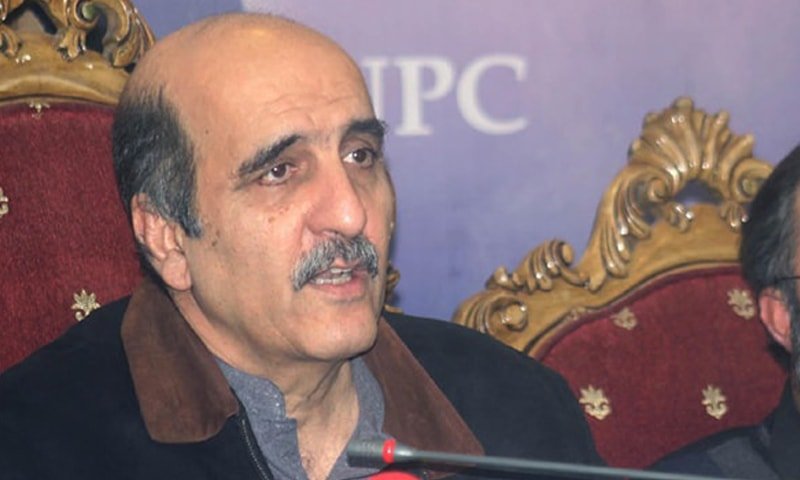
  • Akbar S Babar challenges fresh PTI’s intra-party polls in ECP

    Akbar S Babar challenges fresh PTI’s intra-party polls in ECP

    Disgruntled Pakistan Tehreek-e-Insaf (PTI) founding member Akbar S Babar filed two separate petitions with the Election Commission of Pakistan (ECP) to challenge the party’s intra-party elections for the second time.

    The Supreme Court (SC) on January 13 upheld the ECP’s verdict regarding the party’s intra-party elections as invalid, leading the party to lose its ‘bat’ electoral symbol.

    A five-member ECP bench headed by Chief Election Commissioner (CEC) Sikandar Sultan Raja declared the PTI’s internal polls unlawful.

    In the fresh petition, Babar has requested the ECP to declare the recent intra-party polls invalid too.

    PTI’s fresh intra-party elections were held on March 3.

    The beleaguered party’s federal election commissioner Raoof Hasan formally announced last Sunday that Barrister Gohar Ali Khan and Omar Ayub Khan had been elected as the party’s chairman and secretary general unopposed, respectively, in the intra-party polls.

    Taking to journalists, Babar said that he moved the ECP against the “fresh fraud” of the PTI, adding that he was kept away from the intra-party elections.

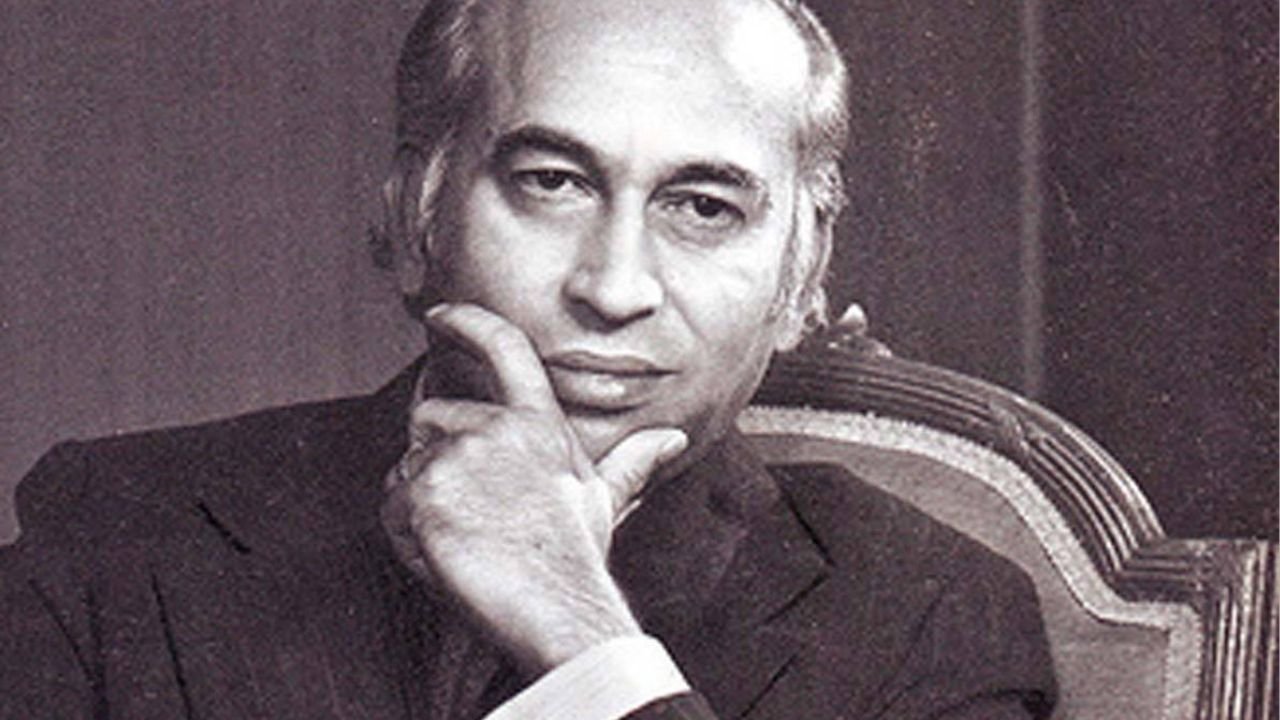
  • Zulfiqar Ali Bhutto was not given a fair trial: Supreme Court

    Zulfiqar Ali Bhutto was not given a fair trial: Supreme Court

    A nine-member bench of the Supreme Court has reserved its verdict on the murder trial of PPP founder and former Prime Minister Zulfiqar Ali Bhutto.

    The Chief Justice of Pakistan, Qazi Faez Isa, has said on Wednesday, “The proceedings of the Lahore High Court and of the appeal by the Supreme Court of Pakistan don’t meet the requirement of the fundamental right to fair trial and due process enshrined in the articles 4 and 9 of the constitution.”

    “This court can’t reappraise the evidence and undo the decision of the case. However, in a detailed reason, we shall identify the major Constitutional and legal lapses that occurred with regard to fair trial and due process.”

    Talking to media outside the court, Bhutto’s grandson, PPP Chairman Bilawal Bhutto Zardari said that the court has acknowledged that his grandfather was not given a fair trial.

    What is the Zulfiqar Ali Bhutto case?

    Zulfiqar Ali Bhutto, the leader who saw his elected government toppled by General Zia-ul-Haq in 1977, faced a controversial trial resulting in his execution.
    Former president Asif Ali Zardari brought back the long-dormant presidential reference on the death sentence of the late Prime Minister Zulfikar Ali Bhutto.

    The reference, filed in 2011 under Article 186 of the Constitution of Pakistan, resurfaced as a 9-member Supreme Court bench, led by Chief Justice Qazi Faez Isa, took up the case on December 12.

    The reference is based on the assertion by former Supreme Court Chief Justice Naseem Hasan Shah that the trial bench was influenced by the Zia-ul-Haq government.

    It also questions the constitutionality of conducting the murder case in the Lahore High Court instead of the Sessions Court.

    Article 186 and the President’s right

    Article 186 of the National Constitution empowers the President to seek the Supreme Court’s opinion on matters of public importance.

    The current hearing revolves around five crucial questions posed by Asif Zardari, aiming to address issues related to human rights, judicial precedent, fairness of the death sentence, adherence to Quranic orders, and the sufficiency of evidence.
    Questions from presidential reference

    Asif Ali Zardari’s reference poses pivotal questions, challenging the legality and fairness of Bhutto’s trial:

    1. Were Bhutto’s human rights, as enshrined in the constitution, respected during the trial?
    2. Will the Supreme Court’s decision set a precedent for all high courts, as per Article 189?
    3. Was the death sentence impartial and free from bias?
    4. Does the death penalty align with Quranic principles?
    5. Was the evidence and testimony presented during the trial sufficient for conviction?

    What was the case?

    Bhutto, who served as President of Pakistan from 1971 to 1973 and later as Prime Minister until 1977, was at the center of a storm of controversy that ultimately cost him his life.

    The narrative begins with the fall of Dhaka in December 1971, which marked a significant turning point in Pakistan’s history. Following this, Bhutto rose to power, first as President and later as Prime Minister under the newly established 1973 Constitution.

    However, his reign was short-lived as General Zia-ul-Haq seized control through a martial law imposition on July 5, 1977.

    Bhutto’s troubles escalated when he was arrested on September 3, 1977, in connection with the murder of political opponent Nawab Muhammad Ahmad Khan Kasuri in March 1974.

    Despite being released just ten days later due to “contradictory and incomplete” charges, Bhutto found himself back behind bars, this time under martial law. His trial commenced on October 24, 1977, with allegations of conspiracy to murder hanging over his head.

    Masood Mahmood, the Director General of the Federal Investigation Agency, testified against Bhutto, claiming he had ordered Kasuri’s assassination.

    The trial was marred by interruptions and allegations of bias, culminating in Bhutto’s conviction for murder on March 18, 1978. Despite appeals and pleas for clemency, Bhutto’s fate was sealed when the Supreme Court upheld the verdict on February 6, 1979.

    The final blow came on March 24, 1979, when the Supreme Court dismissed Bhutto’s appeal, clearing the way for his execution. Bhutto’s appeal in the Supreme Court in front of a seven-member bench was dismissed with a 4-3 verdict against him in February 1979.

    General Zia-ul-Haq, who had been calling Bhutto a murderer throughout the trial, ordered his hanging on April 4, 1979, sparking widespread condemnation and accusations of judicial misconduct.