Category: Politics

News stories of Politics, for the topics that matter the most to young professionals and college students, political news reported with a different angle.

  • Newly-elected MNAs take oath

    Newly-elected MNAs take oath

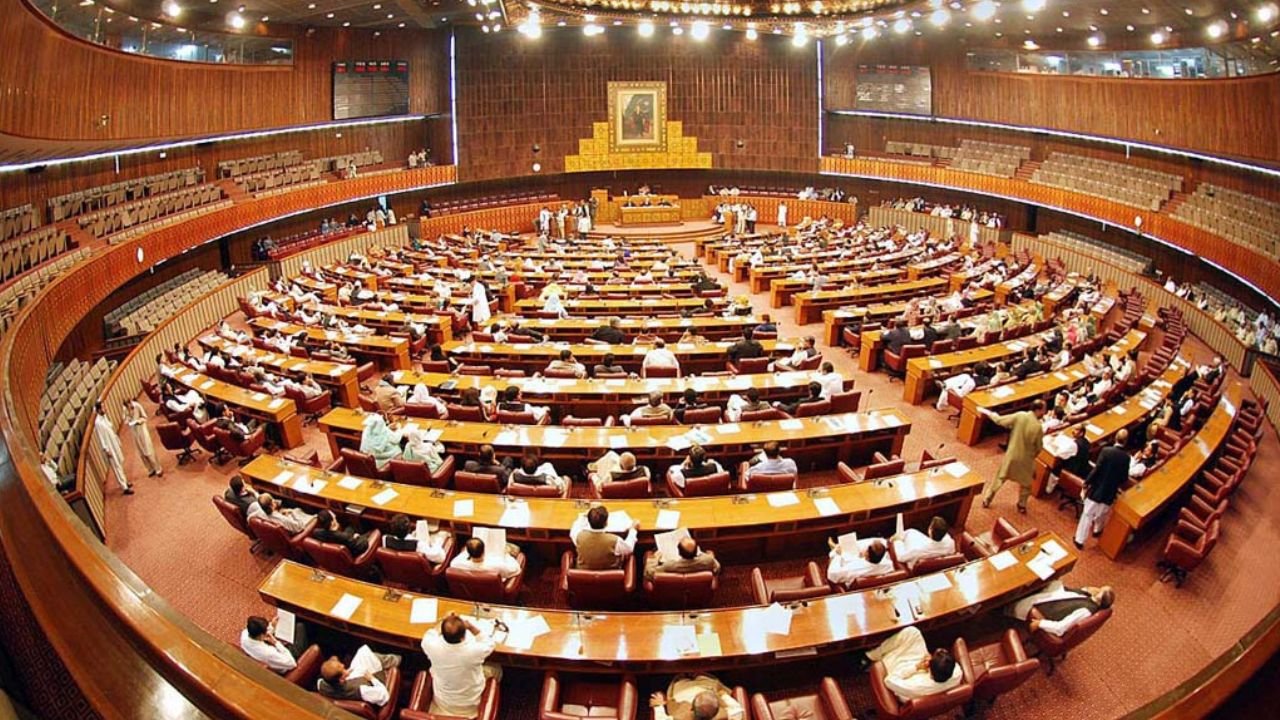
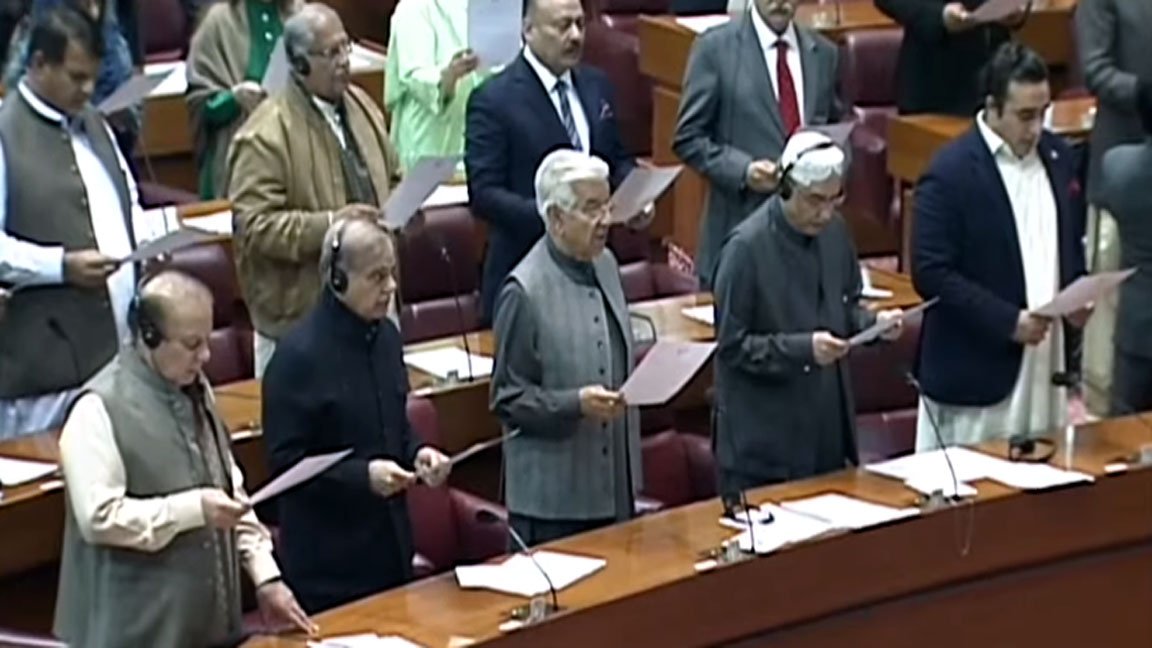
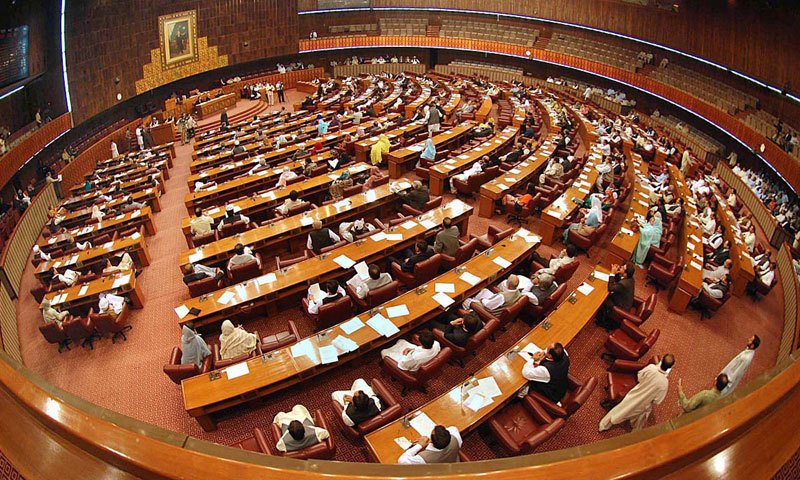
    Newly elected members of the National Assembly (NA) swore their oaths today during the first meeting of the 16th National Assembly.

    Speaker Raja Parvez Ashraf presided over the session and administered the oath to newly-elected members.

    Earlier, MNAs elected on February 8 arrived at the lower house for their oath taking around 10 am. Former Prime Ministers Nawaz Sharif and Shehbaz Sharif were also present in the session.

    Sunni Ittehad Council (SIC), joined by independent candidates from PTI, began chanting slogans during the inaugural ceremony.

    The session is being held today under Article 91(2) of the Constitution, with President Arif Alvi refusing to sign an earlier summary for summoning the session on the reported grounds of non-allocation of reserved seats to SIC.

  • Newly-elected MNAs to take oath today

    Newly-elected MNAs to take oath today

    Newly-elected Members of National Assembly (MNA) are set to take oaths today in the inaugural session of the 16th session of the lower house.
    The development comes as the convening of the assembly’s session, required to be held on the 21st day after the polls under Article 91(2) of the Constitution, was surrounded by uncertainty after President Arif Alvi had stressed the allocation of reserved seats before the session.

    Geo News reported that the president gave a verbal response on the matter, without either rejecting or accepting the summary.

    On Monday, since Alvi was hesitant to call for the assembly session, the National Assembly Secretariat organized the session.
    However, the president finally summoned the NA session after political parties warned him of legal consequences.

  • ECP rejects Nawaz Sharif’s application for recounting in NA-15

    ECP rejects Nawaz Sharif’s application for recounting in NA-15

    The Election Commission of Pakistan (ECP) has rejected an application filed by Pakistan Muslim League-Nawaz (PML-N) supremo Nawaz Sharif for the recounting of votes in the National Assembly constituency of NA-15, Mansehra.

    “The petitioner may approach the Election Tribunal,” the verdict said.

    ECP ordered the returning officer to submit the complete results in three days.

    Nawaz Sharif’s lawyer said that the elections were unconstitutional, illegal, and against the election rules.

    Pakistan Tehreek-e-Insaf (PTI)-supported candidate Shahzada Gustasap Khan won the election in NA-15 by getting 105,249 votes.

    The PML-N supremo was in second position with 80,382 votes in the same constituency.

  • ‘PPP pressurising PML-N to sideline MQM,’ alleged MQM’s Kamran Tessori audio leak sparks new debate

    ‘PPP pressurising PML-N to sideline MQM,’ alleged MQM’s Kamran Tessori audio leak sparks new debate

    Muttahida Qaumi Movement-Pakistan (MQM-P) is facing challenges in talks with Pakistan Muslim League-Nawaz (PML-N) as another alleged audio of Governor Sindh Kamran Tessori goes viral on social media.

    Earlier, an audio clip went viral in which MQM-P leader Mustafa Kamal revealed to the party’s Rabita Committee that PML-N “doesn’t want to talk to us”. He accused the Pakistan Peoples Party (PPP) of trying to corner them.

    Kamal has confirmed that the audio is genuine.

    In the latest audio, Kamran Tessori can be heard saying that MQM-P is paying the cost of becoming part of the Pakistan Democratic Movement (PDM) coalition government.

    “We were part of the Pakistan Tehreek-e-Insaf (PTI) government when PML-N and the PPP were in opposition. We supported the PDM, which angered our voter,” Tessori said in the audio, which could not be independently verified.

    “MQM-P got seven seats despite all the hurdles [in 2018 elections] which was our vote bank. We didn’t get the vote today [in the 2024 polls]. The party is being offered one ministry [Information Technology] as part of government and they are bringing their own governor in Sindh as well.”

  • Do you know how Speaker, Deputy Speaker, Prime Minister, and Leader of Opposition are elected in assembly?

    Do you know how Speaker, Deputy Speaker, Prime Minister, and Leader of Opposition are elected in assembly?

    By constitutional obligation, Speaker Raja Pervaiz Ashraf has convened a session of the newly elected National Assembly, scheduled for February 29th, following the general elections on February 8th. President Arif Alvi’s reluctance to fulfill this duty prompted Speaker Ashraf to take matters into his own hands, ensuring the timely commencement of parliamentary proceedings.

    Oath-Taking Ceremony for Newly Elected Members

    The inaugural session of the new assembly will first see all the lawmakers take oath. In the 336-member house, 60 seats are reserved for women and 10 for minorities.

    Allocation of Reserved Seats

    The Election Commission of Pakistan (ECP) has already allocated 40 reserved women seats to different political parties. These include 20 out of 32 of Punjab, two out of 10 of Khyber Pakhtunkhwa, all 14 of Sindh and all four of Balochistan.

    Seven out of 10 seats reserved for minorities have also been allocated. The ECP is yet to allot reserved minority and women seats to the Sunni Ittehad Council (SIC), which has allied with the PTI.

    Election of Speaker and Deputy Speaker

    Speaker Ashraf, continuing in his role until a successor is elected, will preside over the session’s proceedings.

    “At the first meeting of the Assembly, following a general election, after the members have made oath and before the transaction of any other business, the Assembly shall proceed to elect a Speaker under clause (1) of Article 53, by secret ballot,” states Rules of Procedure and Conduct of Business in the National Assembly, 2007.

    Article 53 of the Constitution of Pakistan says, “After a general election, the National Assembly shall, at its first meeting and to the exclusion of any other business, elect from amongst its members a Speaker and a Deputy Speaker and, so often as the office of Speaker or Deputy Speaker becomes vacant, the Assembly shall elect another member as Speaker or, as the case may be, Deputy Speaker.”

    “At any time before 12:00 noon on the day preceding the day on which the election is to be held, any member may propose another member for election as Speaker by delivering to the Secretary a nomination paper signed by him and accompanied by a statement by the member whose name is proposed that he is willing to serve as Speaker, if elected,” states the official procedure.

    The voting process will be conducted through a secret ballot, and whoever receives more votes will be elected the new speaker of the house. In case the speaker’s election ends in a tie, the election will be held again.

    Subsequently, the new speaker will announce the schedule for the deputy speaker’s election. In the same manner, through a secret ballot, the deputy will be elected.

    Prime Ministerial Election Process

    Once the Speaker and Deputy Speaker are elected, the schedule for the Prime Minister’s election, also known as the leader of the house, will be announced. This process, outlined in Section 91(3) of the Constitution, involves nominations and an open vote by division, requiring a simple majority for victory.

    Section 91(3) of the Constitution says: “After the election of the speaker and the deputy speaker, the National Assembly shall, to the exclusion of any other business, proceed to elect without debate one of its Muslim members to be the Prime Minister.”

    In the same way, nomination papers for the prime minister’s election will be submitted to the assembly’s secretariat.

    While the election for the speaker, his deputy, and the leader of the opposition are free from any religious limitation, the prime minister’s election is open to only the Muslim members of the house.

    “Before voting commences, the Speaker shall direct that the bells be rung for five minutes to enable members not present in the chamber to be present. Immediately after the bells stop ringing, all the entrances to the lobby shall be locked and the assembly staff posted at each entrance shall not allow any entry or exit through those entrances until the voting has concluded,” according to the official procedure for recording of votes in the Second Schedule.

    Under the supervision of the speaker, an open vote will take place — by division.

    For instance, if there are two candidates, the speaker would say that ‘whoever wants to vote for candidate A can go to lobby A’ and ‘whoever wants to vote for candidate B, can go to lobby B’.

    At the entrance of the said lobbies, there will be an member of the assembly secretariat staff who will record every MNAs name in their register. This whole process will be open and people sitting in the galleries will be able to see who votes for whom.

    Here, the political parties have to vote collectively and every member has to vote for the candidate that their party is voting for.

    After every member has picked their lobby and registered their vote, the speaker will call them back and announce the result. To be selected as the prime minister, one needs a simple majority — more than half of the votes in the house i.e. 169 votes out of the total 336.

    Section 91(4) of the Constitution states, “The Prime Minister shall be elected by the votes of the majority of the total membership of the National Assembly: Provided that, if no member secures such a majority in the first poll, a second poll shall be held between the members who secure the two highest numbers of votes in the first poll and the member who secures a majority of votes of the members present and voting shall be declared to have been elected as Prime Minister: Provided further that, if the number of votes secured by two or more members securing the highest number of votes is equal, further poll shall be held between them until one of them secures a majority of votes of the members present and voting.”

    This means that the two most-voted candidates will contest another round of elections till one ultimately gets 51 percent of votes or more, and wins.

    Selection of Leader of the Opposition

    After the Prime Minister’s election, the Speaker will facilitate the nomination of candidates for the Leader of the Opposition, a position crucial for parliamentary balance. The selection process entails the submission of candidate names along with signatures, with the individual garnering the most support from opposition members being appointed.

    “After the [election of the Prime Minister] the Speaker shall inform the members about the date, time and place for submission of a name for the Leader of the Opposition under their signatures,” says the official procedure in Chapter V 39(2).

    The third point of the same section adds, “The Speaker shall declare a member as Leader of the Opposition having the greatest numerical strength after verification of the signatures of the members: Provided that any member who is not signatory to the proposal, if he presents himself before the count, and signs the proposal, shall be included in the count.”

    This announcement will be made right after the prime minister’s election but submission of these lists can take time.

    Changes in Selection Procedures

    Before the implementation of the 18th Amendment to the Constitution, the designation of the opposition leader rested solely with the discretion of the speaker.

    During the era of Parvez Musharraf, this discretionary power was perceived to be misused, notably when Fazlur Rehman was appointed as the opposition leader despite the clear majority held by the PPP and PML-N.

    However, the process has transformed now. In the current scenario, if multiple candidates are contending for the position, they are required to submit lists of opposition members, along with their signatures, to the speaker. The candidate who garners greater support from opposition members will be conferred the title of the leader of the opposition.

    Furthermore, it’s worth noting that in each of the aforementioned elections, the votes of the candidates themselves will also be taken into account.
  • PM Kakar appears before Islamabad High Court in Baloch missing students case

    PM Kakar appears before Islamabad High Court in Baloch missing students case

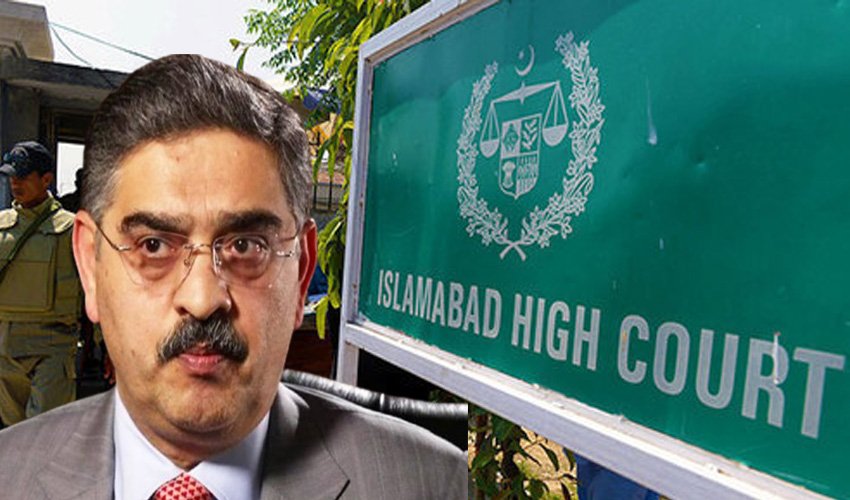
    Caretaker Prime Minister Anwarul Haq Kakar has appeared before the Islamabad High Court (IHC) on Wednesday in a case related to the recovery of Baloch missing students.

    Justice Mohsin Akhtar Kayani of the IHC heard the case related to Baloch missing students when PM, Anwarul Haq Kakar appeared before the court after skipping the last two hearings.

    During the last hearing, the IHC had instructed the caretaker prime minister, ministers, and secretaries to attend the next one. Additionally, they formed a three-member committee involving intelligence institutions to help find missing Baloch students.

    Apart from the caretaker prime minister, the interior secretary and caretaker federal Interior Minister Gohar Ijaz have also appeared in the high court.

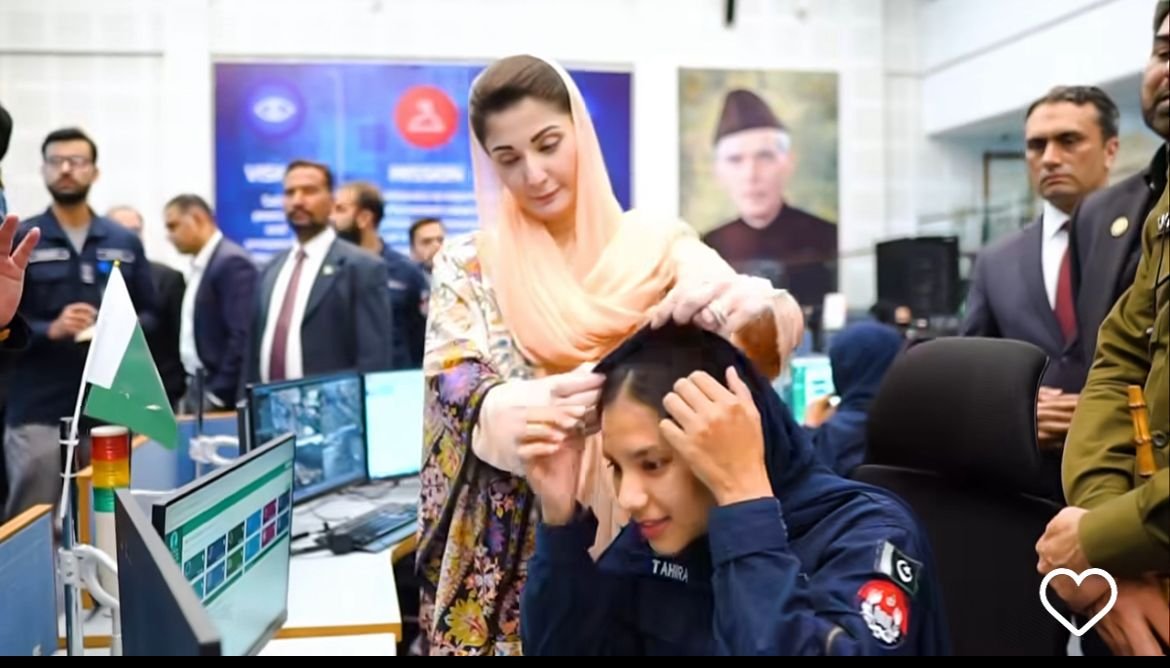
  • ‘Cringe’; Maryam Nawaz slammed for adjusting police officer’s dupatta

    ‘Cringe’; Maryam Nawaz slammed for adjusting police officer’s dupatta

    Maryam Nawaz, the Vice-president of Pakistan Muslim League-Nawaz (PML-N) and newly appointed Chief Minister of Punjab, has managed to land into controversy on her second day on the job.

    A video posted on X (formerly Twitter) by an account claiming to be Team MNS shared a video of Maryam listening to a female police officer showing her something on a computer screen. While the officer is talking, her dupatta slips off her head. Maryam Nawaz then puts the dupatta back on her head.

    The account wrote: “CM Maryam Nawaz Sharif’s act of adjusting a police officer’s dupatta is a powerful reminder that leadership is about compassion and understanding.”

    The video, posted on Tuesday evening, has set off a furious debate with many people finding the gesture cringe inducing and an invasion into the police officer’s personal space.

    We at The Current agree that the gesture is indeed an invasion of personal space, and just a few days after the Ichra incident, completely unnecessary. The police officer performs serious duties, we are quite sure she can take care of her dupatta herself.

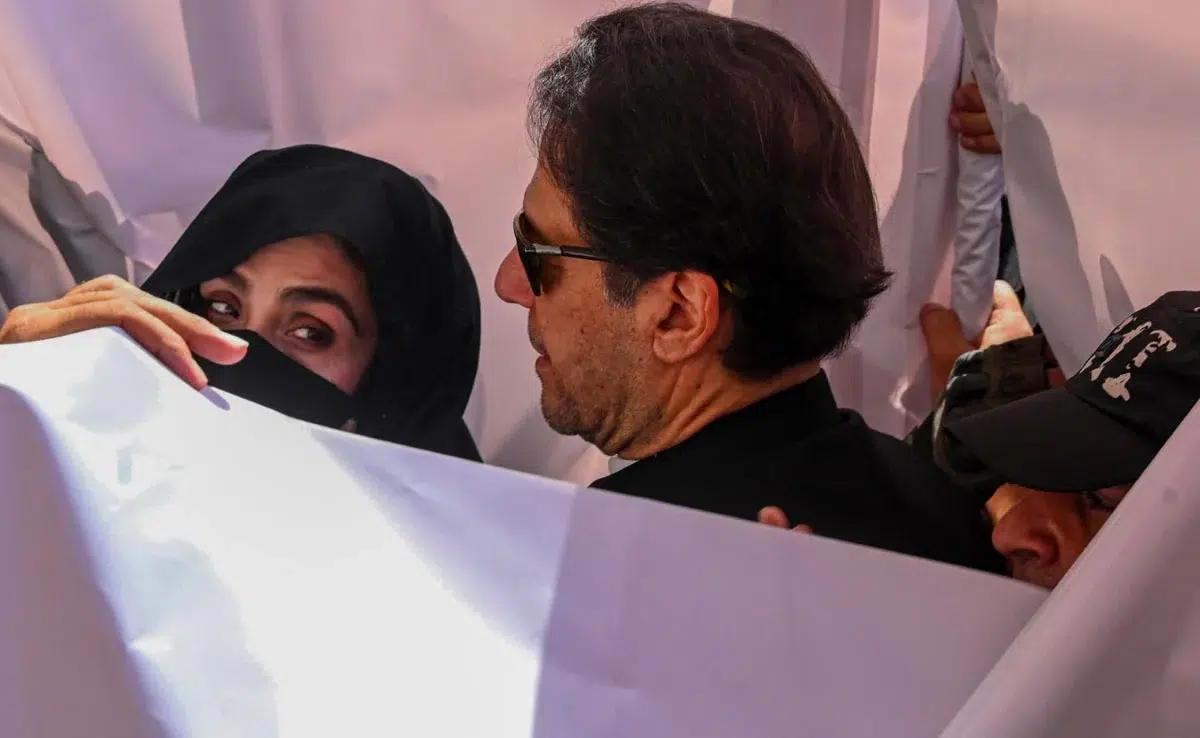
  • Accountability court indicts Imran Khan, Bushra Bibi in £190m reference

    Accountability court indicts Imran Khan, Bushra Bibi in £190m reference

    An accountability court in Rawalpindi on Tuesday charged Pakistan Tehreek-e-Insaf (PTI) founder Imran Khan and his wife Bushra Bibi with involvement in the £190 million reference.

    Judge Nasir Javed Rana of the accountability court conducted the hearing at Adiala Jail, where former Prime Minister Imran is invarcerated in multiple cases, including the Toshakhana, cipher and illegal marriage cases. 

    Imran Khan and his wife Bushra Bibi were present when Judge Nasir Javed read the charge sheet.

    National Accountability Bureau (NAB) Deputy Prosecutor Sardar Muzaffar Abbasi, along with his team, was also present in court.

    NAB had started investigating Imran Khan, his wife, and others for allegedly getting hundreds of canals of land under the name of Al Qadir University Trust. As a result of the accusation of land, the government faced a loss of 190 million pounds.

  • One police officer martyred, three injured in intelligence-based operation in Mardan

    One police officer martyred, three injured in intelligence-based operation in Mardan

    A senior police officer was martyred and three others injured in an intelligence-based operation against terrorists on Tuesday in the Mardan area of Khyber Pakhtunkhwa (KP).

    Superintendent of Police (SP) Ijaz Khan embraced martyrdom while a deputy superintendent of police (DSP) was injured in the operation.

    The counter-terrorism department (CTD) confirmed in its statement that two terrorists got killed in the exchange of firing in Katlang Tehsil, Mardan. A most wanted militant, Mohsin Kadir, was also killed in the intelligence-based operation.

    The injured police officers were shifted to the hospital right after the incident.

    Following the incident, the funeral prayers of SP Ijaz were performed and attended by District Police Officer (DPO) Najeeb and other police officials.

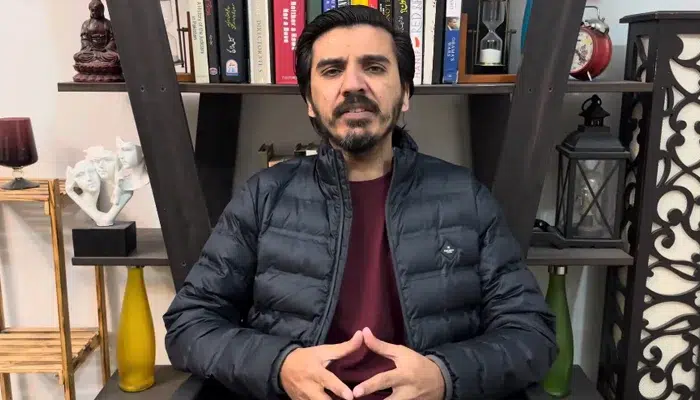
  • FIA arrests Asad Toor in connection with campaign against judges

    FIA arrests Asad Toor in connection with campaign against judges

    Prominent journalist Asad Ali Toor was arrested on Monday by the Federal Investigation Agency (FIA) in connection with a campaign against Supreme Court (SC) judges, including Chief Justice of Pakistan (CJP) Qazi Faez Isa.

    His counsel, Imaan Mazari confirmed the arrest to Geo.tv.

    Last month, the caretaker government formed a Joint Investigation Team (JIT) comprised of six members to investigate a negative campaign against judges of apex court. 

    Imaan Mazari told Geo.tv that FIA officials detained Toor for eight hours on Friday, February 23 after he appeared before the JIT for questioning, even though he hadn’t received a formal notice as per the standard procedure.

    “We went to high court on Monday in the morning, and the chief justice, even though I specifically told him about the eight-hour detention and that there’s a real apprehension of arrest because they have threatened us as well, said that he cannot do anything based on apprehensions,” she added.

    After the hearing in the Islamabad High Court (IHC), Mazari stated that she went to the FIA office at 4:46 pm while Asad was being interrogated inside.

    On Tuesday morning, Asad was presented before the magistrate, however, his lawyers were not present there.