Category: Tech

The Current’s tech news keeps you upto date with news of new gadgets, tech updates, information about tech startups and technology reviews.

  • TikTok to prevent under-18 users from using beauty filters

    TikTok to prevent under-18 users from using beauty filters

    TikTok has decided to implement restrictions to prevent users under the age of 18 from using beauty filters.

    Users under the age of 18 will soon be prevented from using effects that enhance their beauty and attractiveness. The change is aimed at protecting minors from mental health problems.

    Beauty filters are applied to real-time video images to enhance physical attractiveness. Common effects of such filters include smoothing skin texture and enlarging eyes or narrowing the nose. A filter called ‘Bold Glamour’ turns anyone into a supermodel.

    However, according to the company, the age restriction will not apply to filters that are designed for entertainment purposes.

    TikTok will also use machine learning technologies that can help identify accounts belonging to children under the age of 13.

  • Instagram to make huge algorithm change

    Instagram to make huge algorithm change

    Instagram is going to make a major tweak that will significantly change the algorithm of the app.

    According to reports, Meta is testing a new feature that will help reset the algorithm of Instagram feed. Users will be able to change their content preferences by resetting the algorithm that determines what shows up on their feed.

    The photo-sharing app’s algorithm suggests content in photos, reels, and the ‘explore’ section based on what it thinks or understands about the user’s personality.

    But now, users will be able to reset the algorithm’s suggestions.

    This feature is currently being tested but will be introduced to all users very soon. The company said that users will be able to reset the suggested content by going to the Content Preferences section in the app.

    If you reset the algorithm, it will help give you a ‘fresh start’ on Instagram, and retune the app’s suggestions.

    However, resetting the algorithm does not mean that your data in the app will be deleted or that the way ads are displayed will change.

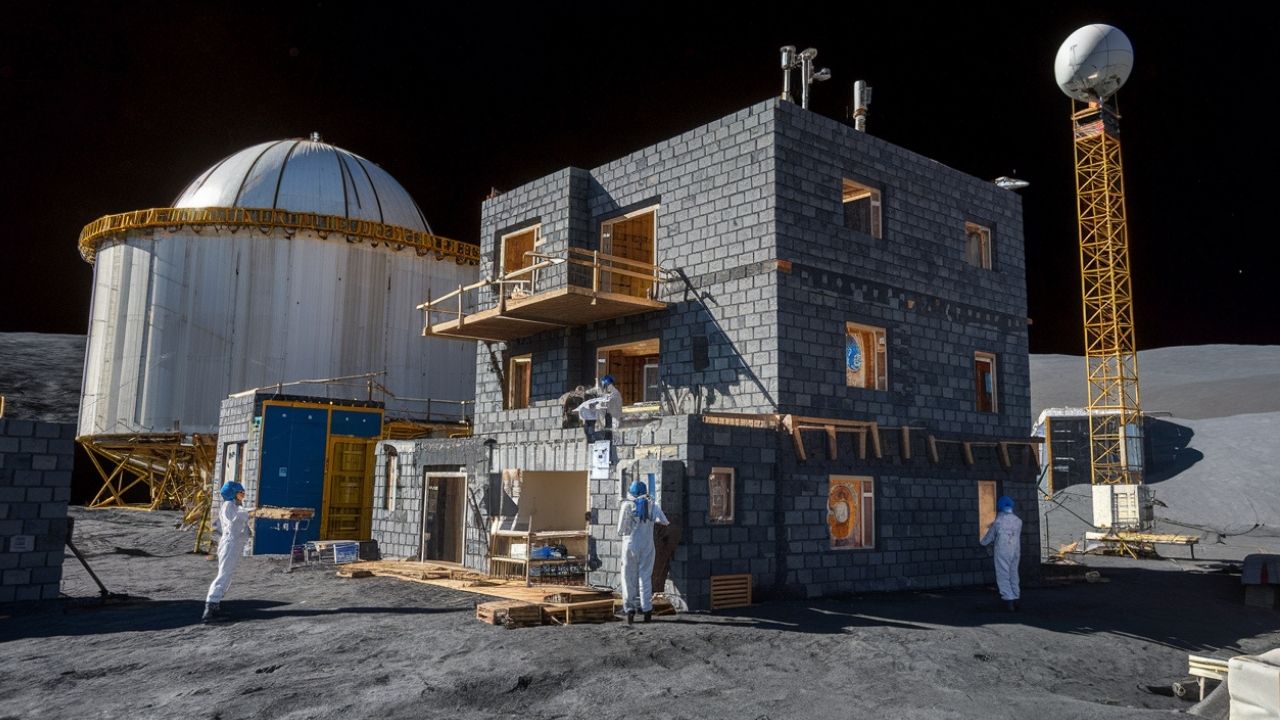
  • China tests building Moon base with lunar soil bricks

    China tests building Moon base with lunar soil bricks

    China is seeking to push forward in its quest to build the first lunar base, launching an in-space experiment to test whether the base’s bricks could be made from the Moon’s own soil.

    A cargo rocket carrying brick samples blasted off late Friday for the Tiangong space station, part of Beijing’s mission to put humans on the Moon by 2030 and build a permanent base there by 2035.

    “China launched the cargo craft Tianzhou-8 from the Wenchang Satellite Launch Center on Friday night to deliver supplies for its orbiting Tiangong space station,” state news agency Xinhua said, citing China’s space agency.

    Construction of a Moon base is a daunting task: any structure has to withstand huge amounts of cosmic radiation, extreme temperature variations and moonquakes, and getting building materials there in the first place is a costly procedure.

    Building the base out of the Moon itself could be a solution to those problems, scientists from a university in central Wuhan province hope.

    They have created a series of prototype bricks made of various compositions of materials found on Earth, such as basalt, which mimic the properties of lunar soil.

    Slivers of those test bricks will be subjected to a series of stringent tests once they reach the space station.

    “It’s mainly exposure,” said Zhou Cheng, a professor at Wuhan’s Huazhong University of Science and Technology.

    “To put it simply, we put (the material) in space and let it sit there… to see whether its durability, its performance will degrade under the extreme environment.”

    The temperature on the Moon can vary drastically between 180 and -190 degrees Celsius (356 to -310 degrees Fahrenheit).

    Its lack of an atmosphere means it is subjected to large quantities of cosmic radiation as well as micrometeorites, while moonquakes can weaken any structure on its surface.

    The exposure experiment will last three years, with samples sent back for testing every year.

  • YouTube introduces new income stream for creators

    YouTube introduces new income stream for creators

    YouTube has introduced a new source of income for creators.

    As per the details, YouTube is introducing a new feature called Jewels for creators, which will allow them to generate revenue through vertical live streams.

    Jewels are a digital currency that you can send as a ‘gift’ to your favourite creators. The option to send this gift will appear on live streams, much like Facebook and other interactive live streaming platforms.

    It is also similar to TikTok’s Live Gift feature, in which users buy coins and send them as gifts.

    In a statement, YouTube said that when viewers send gifts using Jewels, creators will receive rubies, one ruby ​​will be worth one US cent and 100 rubies will be equivalent to one dollar.

    For the next 3 months, eligible creators will also be able to earn a 50% bonus on the revenue generated from Jewels.

    Creators will be able to receive this gift only when they do a vertical live stream on YouTube, and users will only be able to send Jewels through the mobile app.

    This feature is currently being introduced for users in the US, but it is hoped that it will also be introduced in other countries soon.

    Only creators who are part of the YouTube Partners Program are eligible for this new feature.

  • PTA rolls out new registration portal for VPN users

    PTA rolls out new registration portal for VPN users

    After a controversy over blocking virtual private networks (VPNs) and growing public anger in Pakistan, the Pakistan Telecommunication Authority (PTA) Wednesday rolled out a streamlined process for legitimate users to register their VPNs.

    The move came days after the national regulator started the process of blocking unregistered VPNs in the country to regulate internet security and ensure the safety of users.

    VPNs are widely used around the world to access content that may be inaccessible or blocked for internet users in their home country. In Pakistan, VPNs are frequently used to access X, among other restricted websites.

    The PTA held a consultation session on the VPN registration framework yesterday. Representatives from the Ministry of IT & Telecommunication (MoIT&T), the Pakistan Software Export Board (PSEB), and the Pakistan IT Association (P@SHA) attended the session.

    According to a statement issued by the PTA, the session aimed to foster a secure environment for the IT and e-commerce sectors in Pakistan.

    “The PTA introduced a streamlined VPN registration process, allowing legitimate users to register their VPNs through a new online platform at ipregistration.pta.gov.pk,” the statement further said.

    The regulatory authority claimed that this simplified framework “supports uninterrupted access for IT companies, freelancers, and other stakeholders, reinforcing PTA’s commitment to Pakistan’s expanding digital economy”.


    During the session, participants also addressed concerns about the potential use of VPNs for illegal activities.


  • Block pornographic and blasphemous content, ministry urges PTA

    Block pornographic and blasphemous content, ministry urges PTA

    The Pakistan Telecommunication Authority (PTA) has been urged to block and restrict public access to pornographic, blasphemous and other harmful online content.

    The Ministry of Religious Affairs, in an official communique to the top telecom regulator, showed concerns that Pakistan is becoming “one of the leading countries in terms of viewing pornographic content, which is highly alarming, especially in light of its negative impact on public morality and the well-being of our society”.

    “Despite the proactive measures taken by the PTA to block such content in line with the Supreme Court orders issued in January 2016, May 2016, and March 2018, it has been observed that pornographic and blasphemous material is still readily accessible on multiple online platforms.”

    The ministry acknowledged the PTA’s efforts to curb this issue by blocking the accessibility of such content, but noted with concerns that such material “is still online accessible that violates our cultural and religious values”.

    The letter further states that the widespread availability of such content undermines efforts to protect citizens, particularly young people, from exposure to harmful material.

    It also raises concerns regarding the adherence to the directives of the top court and the authority’s ability to enforce content regulations effectively.

  • Meta announces major changes to WhatsApp

    Meta announces major changes to WhatsApp

    Meta has announced that it will replace the contact-saving system on WhatsApp.

    In general, WhatsApp stores the same contacts as your primary phone, and it is not possible to save WhatsApp contacts to other linked devices. If the phone is lost or damaged, then these contacts have to be saved again on WhatsApp.

    Now, however, the contact manager feature will be introduced in WhatsApp, under which all contacts will be saved directly in the App, and the user will not need to save them again if they lose or change the phone.

    This feature will be rolled out first to WhatsApp Web and its Windows app in the next few weeks, followed by an eventual possibility to save contacts to other linked devices as well.

    The new technology, Identity Proof Linked Storage (IPLS), will be used to bring about this change. Under this technology, the names and numbers stored in WhatsApp will be encrypted, and you will have access only to them.

  • TikTok removes over 30 million Pakistani videos

    TikTok removes over 30 million Pakistani videos

    TikTok has deleted more than 30 million videos from Pakistan during the second quarter of 2024 for violating community guidelines.

    A Community Guidelines Enforcement Report released by TikTok stated that the platform has deleted more than 30,709,744 videos from TikTok in Pakistan in recent years.

    99.5 per cent of videos were deleted before users reported them, while 97 per cent were deleted within 24 hours, the report said.

    The above data highlights TikTok’s commitment to ensuring the platform is safe for Pakistani users.

    More than a billion people from all over the world visited this platform daily, and millions of videos, photos, and other content were posted there.

    TikTok has deleted more than 178,827,465 videos from around the world in the second quarter of this year, excluding Pakistan. 144,430,133 were deleted through automation, indicating the platform’s advanced use of its detection technology to eliminate harmful content in real time.

    The report also highlights a 50 per cent reduction in the number of restored videos, reinforcing the accuracy and effectiveness of TikTok’s content moderation system.

    TIKTOK DELETED PAKISTANI VIDEOS IN JULY THIS YEAR:

    TikTok has deleted 20 million videos in Pakistan that violated the social media giant’s community guidelines. The company wants to make sure its platform is safe and respectful for all users.

    This isn’t the first time TikTok has removed videos in Pakistan. Last year, it deleted 11.7 million videos for the same reason.

    TikTok uses special tools to find and remove videos that don’t follow its rules. It also deleted 21 million accounts that belonged to children under 13.

    In the meanwhile, it reported that proactive measures resulted in the global removal of 166,997,307 films, or around 0.9 percent of all videos posted on the site. “A significant fraction of these, 6,042,287 movies, were reinserted after additional examination, whereas 129,335,793 videos were recognised and removed by automatic detection systems.”

    TikTok has now disclosed the number of comments removed and filtered by its comment safety tools for the first time. TikTok has removed and filtered 976,479,946 comments during the three-month period.

    In Pakistan alone, the platform took action against 20,207,878 videos for also breaching its community guidelines during the same period. The platform utilizes automated systems to identify and remove videos that breach its rules.

  • Samsung issues rare apology for poor results in tech ‘crisis’

    Samsung issues rare apology for poor results in tech ‘crisis’

    Samsung Electronics issued a rare apology and acknowledged on Tuesday it was facing a “crisis” over its technological competitiveness, reflected in a disappointing profit guidance, despite a global AI boom.

    Samsung said it expected third-quarter profits to rise to 9.1 trillion won ($6.8 billion), up 274.5 per cent from a year earlier, falling short of market expectations as the company struggles to leverage robust demand for the chips used in artificial intelligence servers.

    “Today, we, the management of Samsung Electronics, would like to first say sorry to you,” Samsung said in a statement signed by Jun Young-hyun, the vice chairman of its device solutions division.

    It said “concerns have arisen about our fundamental technological competitiveness and the future of the company” because of the results.

    “Our management will take the lead in overcoming the crisis […] We will make the serious situation we are currently facing an opportunity for a resurgence.”

    The results are up around three-fold from the same period last year but down nearly 13pc from the previous quarter.

    The rare apology came about a week after the tech giant said it intended to reduce staff in some of its operations in Asia, describing the move as “routine workforce adjustments”.

    Bloomberg reported that the layoffs could affect about 10pc of the workforce in those markets, while other reports claimed the planned move could affect up to 30pc of overseas employees at some operations.

    Samsung has been lagging behind South Korea’s SK hynix when it comes to high bandwidth memory (HBM) chips used in AI chipsets, which could be one of the biggest causes of the profit estimate released on Tuesday, said Kim Dae-jong at Sejong University in Seoul.

    “Given the circumstances, it appears that Samsung has also lost a significant number of (HBM-related) employees to SK hynix,” Kim told AFP.

    The company was facing a “grave situation”, he said.

    Shares in Samsung fell 1.31pc in afternoon trading in Seoul, with its stock down almost 30pc over the past six months.

    ‘Expected decline’

    The Samsung statement said management would “quickly assess and make any necessary adjustments to our workplace culture”.

    The firm is the flagship subsidiary of South Korean giant Samsung Group, by far the largest of the family-controlled conglomerates known as “chaebol” that dominate business in Asia’s fourth-largest economy.

    Jene Park, a senior analyst at Counterpoint Research, said there had been “an expected decline” in Samsung’s memory sector, with delays in supply of the newest chips and general reductions in memory demand.

    Even so, a sharp profit or sales decline was unlikely in the near future, he said. “Samsung plays a significant role in the global supply chain,” Park said.

    The company’s estimate for its sales for the third quarter was seen increasing 17.2pc on-year to 79 trillion won.

    Samsung is expected to release its final earnings report at the end of this month.

  • Duo wins Physics Nobel for key breakthroughs in AI

    Duo wins Physics Nobel for key breakthroughs in AI

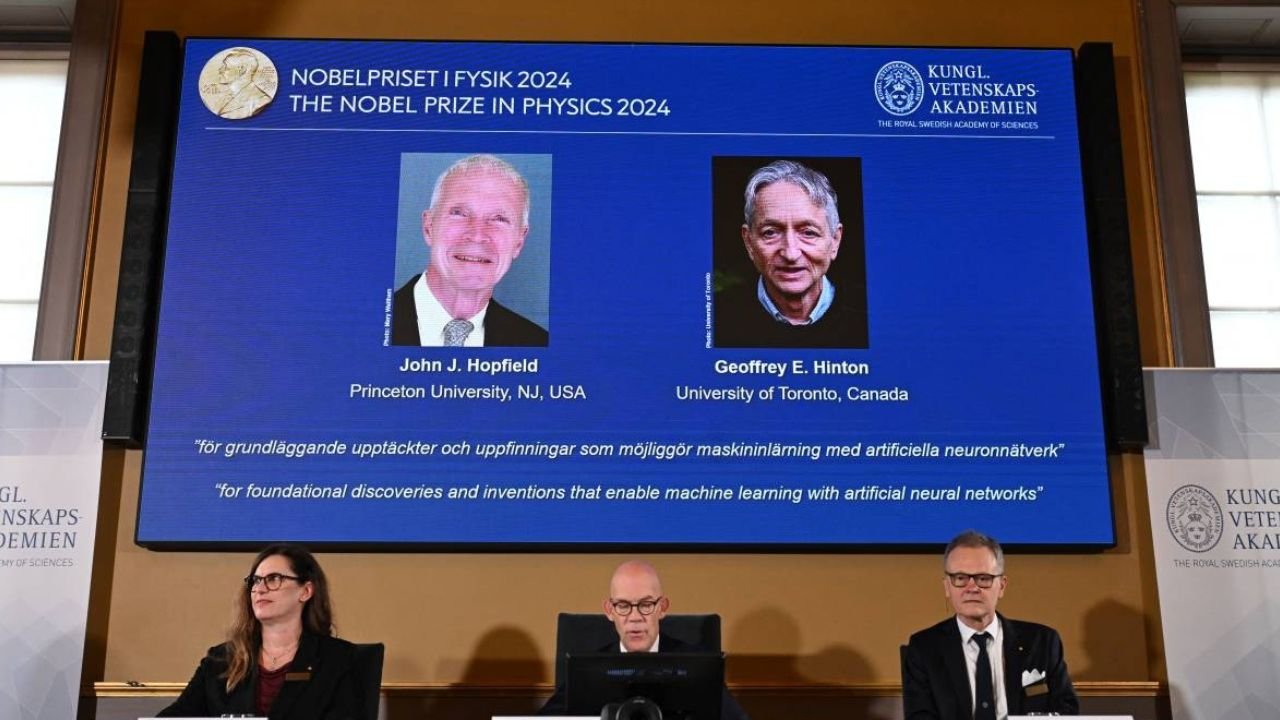
    American John Hopfield and British-Canadian Geoffrey Hinton won the Nobel Prize in Physics on Tuesday for pioneering work in the development of artificial intelligence.

    The pair were honored “for foundational discoveries and inventions that enable machine learning with artificial neural networks,” the jury said.

    “This year’s two Nobel Laureates in Physics have used tools from physics to develop methods that are the foundation of today’s powerful machine learning,” the Swedish Royal Academy of Sciences said in a statement.

    Hopfield, 91, a professor at Princeton University, was spotlighted for having created “an associative memory that can store and reconstruct images and other types of patterns in data.”

    The jury said Hinton, a 76-year-old professor at the University of Toronto, “invented a method that can autonomously find properties in data, and so perform tasks such as identifying specific elements in pictures.”

    “I’m flabbergasted… I had no idea that could happen,” Hinton told reporters via a phone interview as the winners of the award were announced in Stockholm.
    The pair will receive their prize, consisting of a diploma, a gold medal and a $1 million cheque, from King Carl XVI Gustaf in Stockholm on December 10, the anniversary of the 1896 death of scientist Alfred Nobel who created the prizes in his last will and testament.

    Last year, the Nobel Prize in Physics went to France’s Pierre Agostini, Hungarian-Austrian Ferenc Krausz and Franco-Swede Anne L’Huillier for research using ultra quick light flashes that enable the study of electrons inside atoms and molecules.

    The Nobel season continues this week with the announcement of the winner, or winners, of the chemistry prize on Wednesday — followed by the much-anticipated prizes for literature on Thursday and peace on Friday.

    The Economics Prize winds things up on Monday, October 14.

    Awarded since 1901, the Nobel Prizes honor those who have, in the words of prize creator and scientist Alfred Nobel, “conferred the greatest benefit on humankind.”