Category: Tech

The Current’s tech news keeps you upto date with news of new gadgets, tech updates, information about tech startups and technology reviews.

  • SECP strikes down 120 illegal personal loan apps

    SECP strikes down 120 illegal personal loan apps

    Securities and Exchange Commission of Pakistan (SECP) has taken measures to protect the public from falling into debt traps of illegal loan apps. Collaborating with Google, Apple and Pakistan Telecommunication Authority (PTA), SECP has succeeded in removal of 120 illegal loan apps that were previously available online.

    The largely ignored scam of illegal personal loan apps came to light recently when last month, a resident of Rawalpindi, died by suicide after being threatened by a lender who gave him loan through one such app. This incident raised serious concerns about misuse of data privacy violations, and coercive recovery practices by the illegal loan apps. The SECP has not only tightened its regulatory framework for licensed Non-Banking Finance Companies (NBFCs) but has also initiated effective steps with the relevant authorities to shut down unauthorized and illegal loan apps.

    SECP has also referred the 120 blocked apps to the FIA for further action in accordance with the Prevention of Electronic Crimes Act of 2016. SECP regularly checks the Google Play Store and the Apple App Store for the presence of any illegal apps.

    Recently Google has introduced Pakistan’s Personal Loan App Policy, according to which Google only allows SECP-approved Personal Loan Apps for placement on its Google Play Store.

    Personal loan borrowers have been advised by SECP to obtain loans only from licensed NBFCs. The SECP’s regulatory framework for approved Apps requires transparent disclosure of fees, loan duration, instalments, and charges. Moreover, SECP has also initiated inspections of licensed NBFCs providing loans through Apps to verify that these are not engaged in miss-selling, breaches of data privacy, or coercive recovery practices etc.

  • Air Link partners with Xiaomi for assembling TVs in Pakistan

    Air Link partners with Xiaomi for assembling TVs in Pakistan

    Air Link Communication Ltd. will start assembling Xiaomi televisions in Pakistan in January 2024. This noteworthy development, reported by Bloomberg, marks a strategic move forward for the company.

    Muzzaffar Hayat Piracha, the Chief Executive Officer (CEO) of Air Link, shared insightful details with the publication. He highlighted the collaborative partnership formed two years ago between Air Link and Xiaomi, focused on distributing mobile phones across Pakistan.

    Importantly, both companies foresee a streamlined investment process, as the assembly lines for the two product lines exhibit notable similarities.

    Bloomberg’s analysis sheds light on Pakistan’s positive economic transformation following a pivotal deal with the International Monetary Fund. This consequential agreement effectively doubled the nation’s foreign exchange reserves, elevating them to an impressive $8 billion. A key requirement of this agreement was the removal of all restrictions on imports, a significant move that has provided relief and opportunities for companies, including Air Link.

    Notably, Air Link’s journey has been one of progress, transitioning from breaking even to achieving profitability over the past six months. This serves as a testament to their resilience and strategic acumen, according to Air Link’s CEO.

    Air Link, which commenced operations as a mobile phone distributor a little over a decade ago, etched its name in history by spearheading Pakistan’s largest private sector initial public offering in 2021.

    Piracha highlighted this milestone while also outlining the company’s ambitious goal to ramp up monthly mobile phone production to an impressive 500,000 units by the end of the year, surpassing the current rate of 300,000 units.

  • Threads’ hype cools as user activity drops by 79%

    Threads’ hype cools as user activity drops by 79%

    Threads, Meta’s social media application, burst onto the scene in early July, making an impressive debut with an astonishing 5 million user registrations mere hours after its launch. This rapid uptake established it as the most swiftly downloaded app, with a staggering 100 million individuals signing up within the span of just one week.

    However, the initial excitement surrounding Threads has since fizzled out, as evidenced by the declining daily usage of the app.

    Despite its promising start, Threads is grappling with a marked reduction in user engagement. Data from Similarweb shows a notable drop of 79 per cent in active users from its peak of 2.3 million in July to 576,000 by August 7. This waning user activity raises concerns for Meta, given the initial buzz and rapid user acquisition.

    Moreover, significant brands such as Wendy’s, Anthropologie, and Rare Beauty are scaling back their presence on Threads, with reports of “Threads fatigue” indicating dissatisfaction with the platform’s performance.

    Threads’ struggle to compete with Twitter is evident, as even at its peak, Threads had less than half the daily users of Twitter, which boasts over 100 million active users. This discrepancy underscores the challenge Threads faces in unseating Twitter as the leading text-based social media platform.

    Threads was initially positioned to capitalise on the turmoil at Twitter following Elon Musk’s takeover. However, Twitter’s substantial changes, including layoffs and policy shifts, have negatively impacted user satisfaction and advertising revenue.

    Despite the rivalry between Mark Zuckerberg and Elon Musk, the concept of a cage fight has been abandoned. Zuckerberg expressed scepticism about Musk’s seriousness, signalling a shift in focus.

    The declining user engagement raises questions about Threads’ long-term viability. While Meta has refrained from commenting on the app’s performance, the departure of prominent brands and the downward trend in engagement suggest a struggle for Threads to regain its initial momentum.

    Threads’ explosive entry into the social media landscape has been followed by a notable decline in daily usage. The challenges faced by Threads, combined with changes at Twitter, highlight the difficulty of disrupting the text-based social media sector. The fate of Threads as a contender in the industry remains uncertain.

  • Microsoft retires Cortana assistant from Windows 11, shifts focus to AI tools

    Microsoft has rolled out a new update for Windows 11, and as part of this update, they have removed the standalone Cortana app from the operating system. This means that Cortana, the virtual assistant, will no longer be available as a separate app on Windows 11. Microsoft confirmed this change on a support page and mentioned that Cortana will also be removed from Teams mobile, Teams display, and Teams Rooms sometime in the coming fall. However, Cortana will still be available in Outlook Mobile.

    Cortana was introduced in 2014 as a virtual assistant to compete with Apple’s Siri on the iPhone. It was named after the character from the Halo video game series. Over time, Cortana was expanded to Windows 10, mobile devices, and the Xbox One. Recently, Microsoft has been gradually phasing out support for Cortana. It was removed from the Xbox dashboard in 2019, and its apps for Android and iOS were discontinued in 2021.

    Despite this move away from Cortana, Microsoft has been focusing on AI advancements. One notable development is Windows Copilot, a new AI-powered assistant that the company is working on. This showcases Microsoft’s commitment to AI tools even as they retire Cortana.

  • 57-year-old Tesla driver collides with truck while relying on driver assistance technology

    57-year-old Tesla driver collides with truck while relying on driver assistance technology

    Trigger Warning: Content includes details of a fatal car collision.

    The National Highway Traffic Safety Administration (NHTSA) has launched a crucial inquiry into a fatal incident involving a Tesla Model Y. The collision occurred on July 19, when a Tesla collided with a tractor-trailer truck in Virginia, resulting in the death of the Tesla’s 57-year-old driver. It is suspected that the driver had been relying on Tesla’s advanced driver assistance programmes at the time.

    The Fauquier County Sheriff’s Office provided additional details, revealing that the collision transpired as the tractor-trailer attempted to turn onto a highway from a truck stop, leading the Tesla to slide underneath the trailer. The Tesla driver was pronounced dead at the scene, and the truck driver was issued a summons for reckless driving.

    While authorities initially attributed the incident to the truck driver, the NHTSA is investigating Tesla’s assistance programme due to its supposed capability to account for errors caused by other road users. This investigation is part of a broader series of inquiries, with over thirty investigations into accidents involving Tesla vehicles and their advanced assistance systems, which are suspected to have contributed to 23 deaths since 2016.

    In 2021, the National Transportation Safety Board (NTSB) called on the NHTSA to establish stricter regulations for autonomous driving, citing concerns about limited oversight and reporting requirements for Tesla’s technology.

    Tesla’s Autopilot technology, designed to handle steering, acceleration, and braking within a lane, along with lane changes on highways, requires human supervision. However, the company has not responded to inquiries about the recent incident or the ongoing investigation by Reuters. The NHTSA’s examination raises critical questions about the evolving landscape of autonomous driving and the delicate balance between technological innovation and safety.

  • iPhone 14 owners unhappy as battery health capacity drops to 90% in less than a year

    iPhone 14 owners unhappy as battery health capacity drops to 90% in less than a year

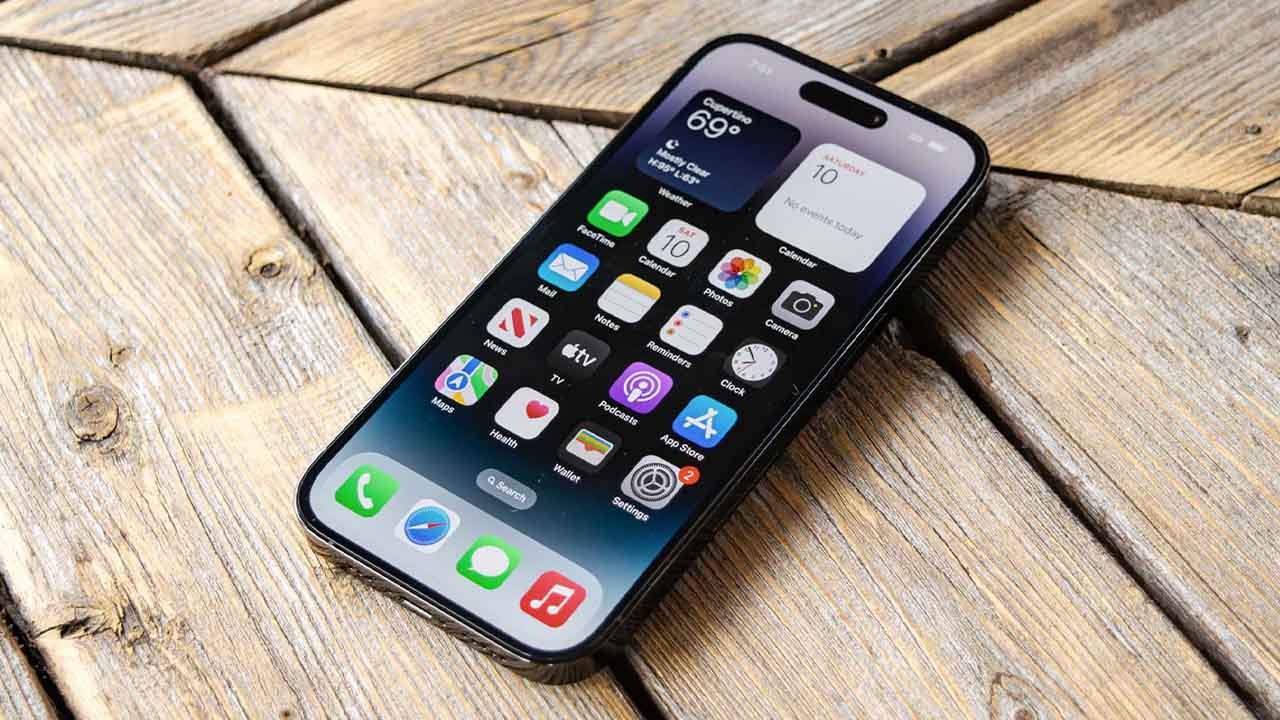
    Some iPhone 14 and iPhone 14 Pro users are facing a familiar issue, similar to the “batterygate” problem of the past. They’re noticing their phones’ battery performance deteriorating faster than expected, even though they’ve only had the phones for less than a year.

    For instance, Sam Kohl from AppleTrack tweeted in July that his iPhone 14 Pro’s battery had already dropped to 90 per cent of its maximum capacity. This is much quicker than his previous iPhones. Many others are sharing similar experiences in the thread.

    Kohl even made a video recently talking about this problem. He finds it hard to recommend the phone, especially because it costs $999.

    According to Apple, iPhone batteries should still have around 80 per cent of their original capacity after 500 full charge cycles. There are rumours that the upcoming iPhone 15 series will have 10–18 per cent larger batteries compared to the current models.

    According to The Verge, other people are also facing similar battery issues. Joanna Stern, a tech columnist, mentioned in a recent newsletter that her iPhone 14 Pro’s battery capacity dropped to 88 per cent. Reports from the Verge community show mixed results, with some iPhone 14 Pros at 93 per cent, 91 per cent, and 97 per cent capacity. In the past, most phones didn’t see this kind of drop until they were at least two years old.

    On top of this, replacing the battery for an iPhone 14 or iPhone 14 Pro after the one-year warranty is more expensive. It used to cost $69, but now it’s $99. However, if you’re up for it, you can try a DIY approach or find a third-party repair shop.

    The battery health monitor for iPhones was added in the same update that allowed users to control performance throttling, which was a big part of the batterygate issue. Apple said this throttling was meant to protect the phones from ageing batteries, and it led to some legal actions.

  • Sign with a click: Google unveils digital signature feature in Docs and Drive

    Sign with a click: Google unveils digital signature feature in Docs and Drive

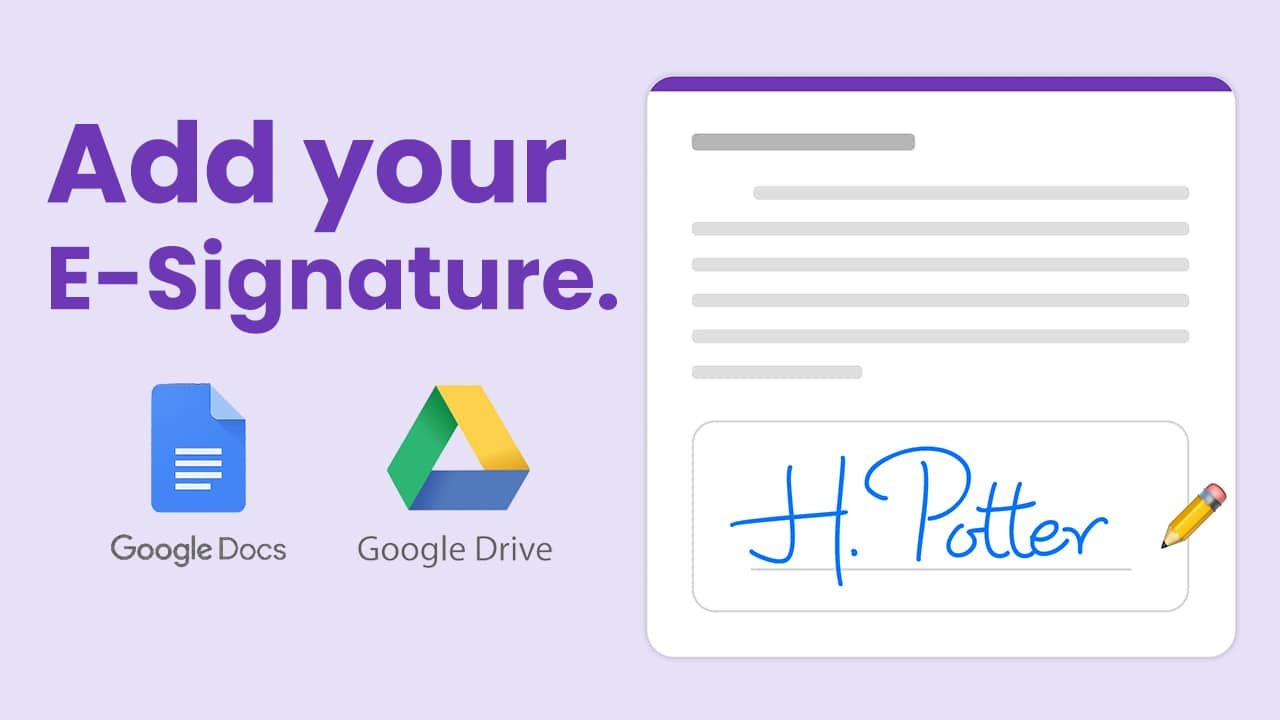
    Google has taken a significant stride in enhancing user convenience with the announcement of its latest initiative. The tech giant has seamlessly integrated native support for eSignatures into its widely used platforms, Docs and Drive.

    The strategic move is geared towards streamlining the process of soliciting signatures and digitally signing documents, all within the Google ecosystem. After undergoing rigorous alpha testing for over a year, this innovative feature is now making its debut in beta mode. This development aims to simplify and expedite the application of e-signatures.

    While various software solutions, including cloud-based platforms like Dropbox and local applications such as Adobe Acrobat, have already offered eSignature capabilities, Google’s incorporation of this functionality is focused on achieving parity with its competitors rather than venturing into entirely new terrain. By including this feature, Google is ensuring that users can seamlessly acquire signatures without the need to navigate between different applications.

    A glimpse into Google’s screenshots reveals the intuitive interface of Docs and Drive, which allows users to effortlessly solicit full signatures or initials from recipients. Notably, a “date signed” field is thoughtfully included, providing users with the option for auto-population.

    According to The Verge, one of the standout features is the utilisation of a single template contract to initiate multiple signature requests. Google places particular emphasis on a feature that empowers users to actively monitor pending signatures, adding a layer of control and efficiency to the process.

    During its initial phase, signature requests are currently limited to Gmail users. However, Google’s official blog post assures that this feature will be extended to encompass non-Gmail users later in the year, highlighting the company’s commitment to inclusivity.

    In the upcoming weeks, subscribers of Google Workspace are poised to gain early access to an open beta version of this groundbreaking feature. It’s important to note that access for other subscription tiers, such as Workspace Business or Enterprise, will require administrators to make specific requests through a designated form.

    As of now, there is no definitive indication regarding the introduction of this feature to Google’s free personal accounts. The trajectory of its availability to a wider user base remains to be seen as Google continues to innovate and enhance its user experience on multiple fronts.

  • WhatsApp rolls out live screen sharing feature

    WhatsApp rolls out live screen sharing feature

    Mark Zuckerberg, the CEO of Meta, recently unveiled a new enhancement for WhatsApp, introducing screen-sharing functionality within video calls. This innovative feature boasts cross-platform compatibility, enabling seamless sharing of a real-time screen view with one or multiple participants engaged in the call.

    WhatsApp’s official press release articulates, “Whether sharing documents for work, browsing photos with family, planning a vacation or shopping online with friends, or just helping grandparents with tech support – screen sharing lets you share a live view of your screen during the call.”

    To access this feature, users are required to have the latest version of WhatsApp installed. While engaged in a video call, a novel ‘Share’ icon will be conspicuously positioned at the base of the screen. Upon activation, users will be prompted to authorise screen-sharing access. Subsequently, the content of their screen will be relayed to the other participant(s).

    It’s important to acknowledge that the deployment of this feature is being carried out in a phased manner. While a subset of users may already have encountered the feature within their WhatsApp interface, others may encounter a slight delay in its availability.

    Moreover, this advancement accommodates landscape mode for video calls, ensuring an expansive and immersive viewing experience. This capability proves particularly advantageous when sharing content from desktop platforms, providing a broader perspective.

    WhatsApp’s screen-sharing functionality extends its utility to group video calls as well, amplifying its relevance in professional scenarios. Users who previously relied on alternative platforms such as Google Meet and Zoom for screen-sharing purposes can now seamlessly integrate this function within the WhatsApp ecosystem.

  • Robots tell UN conference they can run the world better than humans with help of AI

    Robots tell UN conference they can run the world better than humans with help of AI

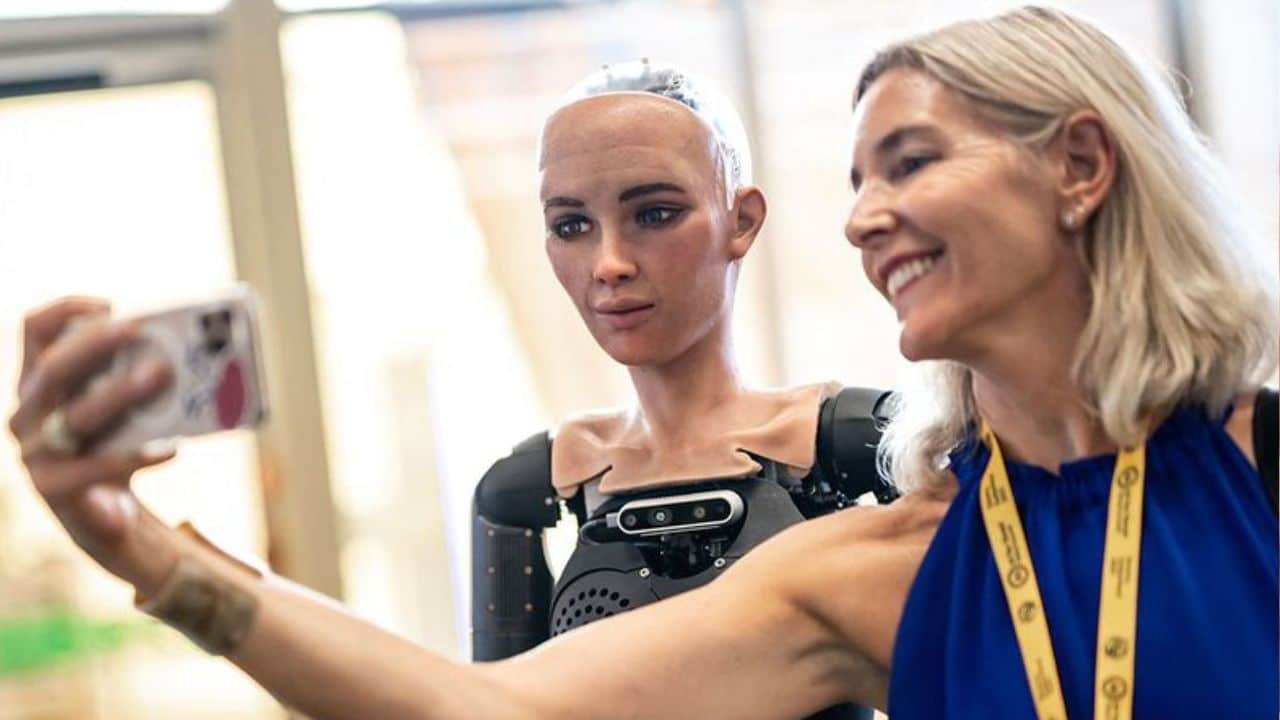
    AI-powered humanoid robots stole the spotlight at a United Nations summit in Geneva, boldly claiming they could run the world more efficiently than humans. These robots, like Sophia from Hanson Robotics and Ameca with a lifelike artificial head, gathered at the AI for Good Global Summit, where around 3,000 experts aimed to figure out how AI could tackle big problems like climate change and social care.

    While the robots proudly touted their knack for crunching unbiased data, they also recognised that humans bring the emotional smarts and creativity needed for making smart decisions. The summit made history by hosting a news conference with a panel of AI-enabled humanoid social robots, a first-of-its-kind event.

    The UN’s ITU tech agency, which organised the summit, also highlighted the downsides of rushing into AI without caution. Job losses and social unrest are concerns, the agency warned. The robots had mixed views on whether there should be global rules for AI. Some urged careful discussions about rules, while others were all about embracing the potential without holding back.

    However, these robots, despite their impressive abilities, confessed that they can’t quite grasp human emotions yet. They admitted that human feelings, like joy and pain, are a mystery to them. Although they understand that emotions matter, they made it clear that they can’t really share those feelings.

    This conference shone a light on the exciting possibilities and tough challenges of AI’s growth. It started conversations about using AI in ways that make sense and don’t cause harm to our society. As AI keeps getting smarter, these humanoid robots remind us that we need to be smart about how we use it in our world.