Category: Tech

The Current’s tech news keeps you upto date with news of new gadgets, tech updates, information about tech startups and technology reviews.

  • OpenAI partners with Bing to supercharge ChatGPT with cutting-edge search experience

    OpenAI partners with Bing to supercharge ChatGPT with cutting-edge search experience

    OpenAI has announced its decision to implement Bing as the default search engine for ChatGPT. The introduction of this enhanced search functionality will be gradually rolled out to ChatGPT Plus users, starting today, and will soon be extended to all free ChatGPT users through a plug-in integrated within ChatGPT.

    In a blog post published today, Yusuf Mehdi, Microsoft’s head of consumer marketing, expressed his enthusiasm for the partnership between Microsoft and OpenAI. Mehdi stated, “Our collaboration with OpenAI has been instrumental in the development of the new Bing. ChatGPT will now benefit from an exceptional search engine integrated within, providing more current and timely answers sourced from the web.”

    Similar to how Bing’s chat experience utilizes GPT-4 and includes citations for links, OpenAI’s AI chatbot, ChatGPT, will incorporate search capabilities and web data that also incorporate citations. The integration of Bing into ChatGPT represents a significant achievement for Microsoft’s search engine, particularly after recent speculation that Samsung might switch from Google to Bing Search. This integration builds upon Microsoft’s extensive investment in OpenAI, which amounted to a “multibillion dollar investment” earlier this year, following years of close collaboration between the two companies.

    Moreover, Microsoft has pledged to employ the same open plug-in standard utilized by OpenAI for ChatGPT, facilitating compatibility and seamless integration between plug-ins for Bing Chat, Microsoft’s Copilot platform, and ChatGPT.

  • WhatsApp will soon let you edit sent messages and lock chats

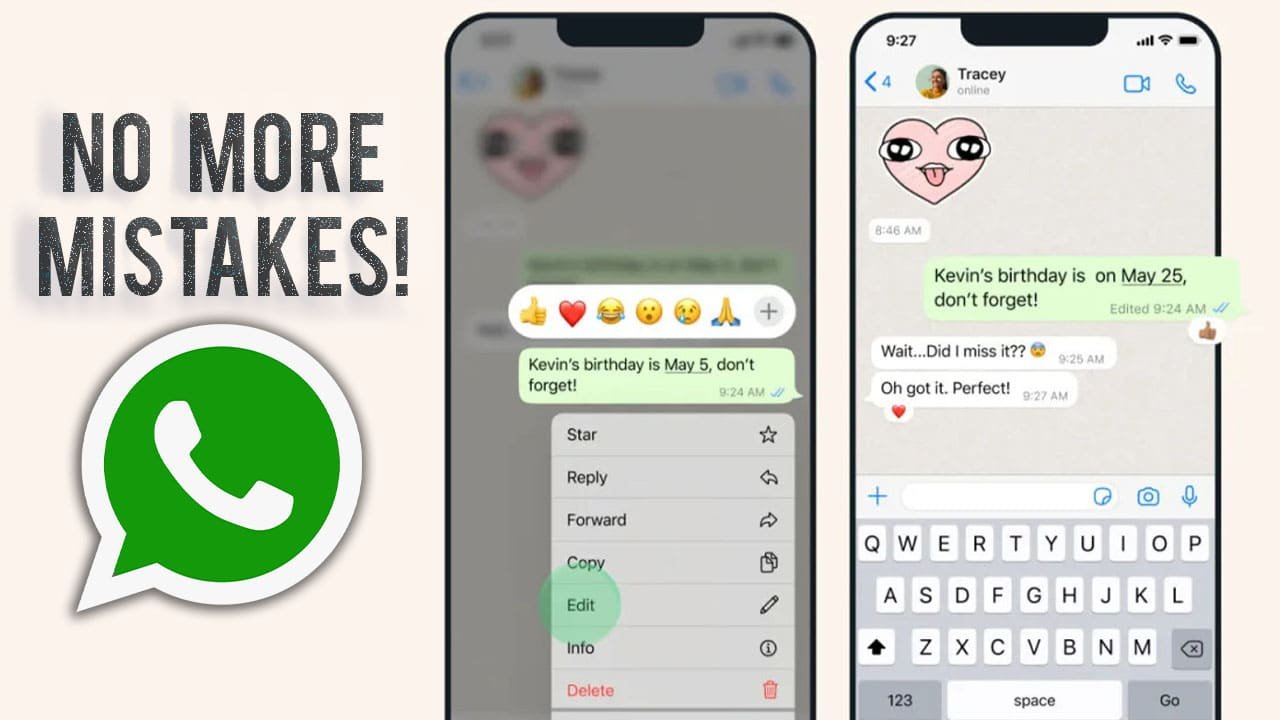
    WhatsApp will soon let you edit sent messages and lock chats

    The popular messaging app owned by Meta has commenced the phased rollout of its highly anticipated function, which will soon be accessible to all users in the forthcoming weeks.

    Under this innovative update, edited messages will bear a conspicuous label, indicating that modifications have been made, while preserving the confidentiality of the specific changes made. To initiate the editing process, users simply need to press and hold a message, then select the “edit” option from the convenient drop-down menu. However, it’s important to note that this edit feature remains available for a limited duration of 15 minutes after the message has been sent.

    According to a blog post by the company, this new functionality aims to address instances when users make inadvertent errors or alter their thoughts, providing them with a seamless means of rectifying mistakes or supplementing additional context within their conversations. WhatsApp is truly excited to offer enhanced control over chats, empowering users to correct typographical errors or refine their message content.

    WhatsApp now joins the league of other prominent messaging services like Telegram and Signal, which have already integrated the edit function into their platforms. Moreover, Twitter introduced its exclusive Edit Tweet feature for paying subscribers last year, while Facebook has allowed users to edit posts and comments for nearly a decade, albeit without extending the capability to messages until now.

    Notably, WhatsApp’s latest update coincides with Meta’s recent announcement that it will introduce the ability for users to lock and conceal conversations. Through the Chat Lock feature, a specific chat thread can be discreetly removed from the app’s standard onscreen inbox and relocated to a secure folder, safeguarded by a password or advanced biometric measures such as facial recognition or fingerprint authentication. Meta emphasizes that this offers an additional layer of security, although it may potentially raise concerns in relation to the UK government’s online safety bill.

    Prepare to experience an enhanced messaging experience as WhatsApp’s groundbreaking updates redefine the boundaries of user control. Stay tuned as the platform ushers in a new era of communication, offering unparalleled flexibility and security.

  • This is how much PTA tax you have to pay on your new iPhone 14

    This is how much PTA tax you have to pay on your new iPhone 14

    In 2019 Federal Board of Revenue (FBR) introduced a new tax mechanism called the Device Identification Registration and Blocking System (DIRBS) to regulate the usage of mobile devices in the country. The DIRBS system was designed to identify and register non-compliant devices with PTA mobile tax operating on local mobile networks and eventually block them to ensure that only compliant devices are used. With the implementation of the system, the FBR aimed to bring transparency and accountability to the mobile device market in Pakistan.

    With the latest tax burdens luxury phone users, whether an Apple fan or an android bunny, are now disappointed. Its not easy for every brand lover to pay the tax on a new phone he wants to buy.

    Tax rates change frequently so it is unclear when the Pakistan Telecommunication Authority (PTA) will raise the taxes of your smarts phones.

    Here is a list of some smarts phones and the taxes applied on them to get approved from PTA on passports and CNIC.

    Here is the list of Apple IPhone taxes on Passport

    IPhone 14 PKR 125,751
    IPhone 14 Plus PKR 125,751
    14 Pro PKR 127,000
    14 Pro Max PKR 127,068
       

    Here is the list of Apple IPhone taxes on ID-Card  

    Iphone 14 PKR 131,126
    Iphone 14 plus PKR 131,126
    14 pro PKR 145,801
    14 pro max PKR 152,424

    Here is the list of Taxes on Samsung Phone

    Samsung Galaxy S23 All Model Tax with Passport 2023

    Samsung Galaxy S23 99,800
    Samsung Galaxy S23plus 127,000
    Samsung Galaxy s23 Ultra 131,000

    Samsung Galaxy S23 All Model Tax with ID Card 2023

    Samsung Galaxy S23 110,500
    Samsung Galaxy s23 plus 145,801
    Samsung Galaxy s23 ultra 152,424

    Suppose you want to import the recently announced Samsung Galaxy S20 Plus, S20 Ultra, or standard S20 to Pakistan. In that case, you may use the information above to estimate the tax and customs duty you’ll owe. This Galaxy smartphone’s tax rate is the highest allowed by FBR.

    Here is the list of Xiaomi Redmi 9 PTA tax
    Xiaomi all models Tax with Passport

    Xiaomi Redmi 9(3+32) Tax Payable PKR 9,802 (On Passport)
    Xiaomi Redmi 9(4+64) Tax Payable PKR 10,480 (On Passport)
    Xiaomi Redmi 9C Tax Payable PKR 8,584 (On Passport)

    Xiaomi all models Tax with ID cards

    Xiaomi Redmi 9(3+32) Tax Payable PKR 11,664 (On ID card)
    Xiaomi Redmi 9(4+64) Tax Payable PKR 12,471 (On ID card)
    Xiaomi Redmi 9C Tax Payable PKR 10,214 (On ID card)

    Xiaomi Redmi 9 PTA tax need to be paid if you are importing them to Pakistan.


    These taxes must be paid within 30 days if the phone is registered on your passport and if you have registered the phone on your ID card, you will have 60 days to pay the tax.

  • Fake image of major Pentagon explosion raises concerns about AI-generated misinformation

    Fake image of major Pentagon explosion raises concerns about AI-generated misinformation

    A fabricated image depicting a significant explosion near the Pentagon was circulated on social media platforms on Monday, triggering a brief decline in the stock market.

    Subsequently, a multitude of social media accounts, including several verified ones, shared the counterfeit image, exacerbating the state of confusion.

    Afterward, authorities officially confirmed that no such incident had taken place. Keen-eyed investigators on social media, such as Nick Waters from Bellingcat, an online news verification group, promptly identified several notable inconsistencies with the image.

    These included the absence of any credible eyewitnesses to substantiate the purported event, particularly considering the Pentagon’s busy surroundings.

    Waters tweeted, “This is why it’s exceedingly challenging (some may argue virtually impossible) to fabricate a convincing counterfeit of such an occurrence.”

    Additionally, discernible disparities between the depicted building and the actual Pentagon served as clear evidence. This disparity can be easily ascertained by employing tools like Google Street View to compare the two images.

    Furthermore, the presence of peculiar elements like a levitating lamp post and a black pole protruding from the pavement unequivocally exposed the image’s deceptive nature.

    The complexities faced by artificial intelligence in faithfully recreating locations without introducing sporadic anomalies persist.

  • Meta slapped with record-breaking $1.3 billion fine for EU-US data transfer breach

    Meta slapped with record-breaking $1.3 billion fine for EU-US data transfer breach

    Meta has received a record-breaking fine of 1.2 billion euros ($1.3 billion) from European privacy regulators due to the transfer of European Union (EU) user data to the United States (US).

    The decision stems from a case initiated by Austrian privacy activist Max Schrems, who argued that the existing framework for transferring EU citizen data to the US did not adequately protect Europeans from US surveillance.

    There have been several legal disputes surrounding mechanisms for transferring personal data between the US and the EU. The most recent arrangement, known as Privacy Shield, was invalidated by the European Court of Justice in 2020, which is the highest court in the EU.

    The Irish Data Protection Commission, responsible for overseeing Meta’s operations in the EU, accused the company of violating the General Data Protection Regulation (GDPR) of the EU. Despite the 2020 ruling by the European court, Meta continued to transfer the personal data of EU citizens to the US. GDPR is a significant data protection regulation that governs companies operating within the EU, and it has been in effect since 2018.

    Meta utilized a mechanism called standard contractual clauses to facilitate the transfer of personal data between the EU and the US. This method had not been blocked by any EU court. However, the Irish data regulator stated that these clauses, along with other measures implemented by Meta in conjunction with the European Commission, did not adequately address the risks to the fundamental rights and freedoms of data subjects as highlighted by the European Court of Justice.

    The Irish Data Protection Commission also instructed Meta to halt any future transfer of personal data to the US within a five-month period following the decision.

    The 1.2 billion euro fine imposed on Meta is the largest ever penalty issued for breaching GDPR. Previously, the highest fine of 746 million euros had been levied against e-commerce giant Amazon for GDPR violations in 2021.

    Meta has announced its intention to appeal the decision and the fine. In a blog post on Monday, Meta’s President of Global Affairs, Nick Clegg, and Chief Legal Officer, Jennifer Newstead, stated that they would seek a stay from the courts to pause the implementation deadlines due to the potential harm caused by the orders, particularly to the millions of Facebook users.

    This case involving Meta has once again brought attention to the efforts of the EU and Washington to establish a new data transfer mechanism. Although the US and EU reached a preliminary agreement on a new framework for cross-border data transfers last year, it has not yet come into effect.

    Meta is hopeful that the EU-US data privacy agreement will be established before the Irish regulator’s deadlines take effect. If the new framework is implemented within the expiration of the implementation deadlines, Meta’s services can continue without disruption or impact on users, as stated by Clegg and Newstead.

  • WhatsApp to introduce built-in sticker making tool in new update

    WhatsApp to introduce built-in sticker making tool in new update

    WhatsApp is reportedly working on a sticker making tool that will allow users to create their own stickers for the popular messaging app. The tool is expected to be released in a future update to WhatsApp.

    The sticker making tool will allow users to create stickers from scratch or from existing photos and videos. Users will be able to add text, emojis, and other decorations to their stickers. Once a sticker is created, it can be shared with other WhatsApp users.

    Emojis and Stickers have become increasingly popular in recent years, and WhatsApp is not the only messaging app that offers them. Other popular messaging apps that offer stickers include Telegram, Facebook Messenger, and Snapchat.

    Stickers are a fun and easy way to add personality to your conversations. They can also be used to express emotions that are difficult to convey with text alone. With the upcoming sticker making tool, WhatsApp users will be able to create their own stickers that perfectly reflect their unique personalities.

    The sticker making tool is just one of the many new features that WhatsApp is working on. The company is also reportedly working on a new interface for group chats, as well as a feature that will allow users to send disappearing messages.

    WhatsApp is one of the most popular messaging apps in the world, with over 2 billion active users. The company is constantly adding new features and improvements to the app in an effort to keep its users engaged. The sticker making tool is just one of the many new features that WhatsApp is working on, and it is sure to be a popular addition to the app.

  • OpenAI introduces ChatGPT app for iPhone users with voice input and synced chat history

    OpenAI introduces ChatGPT app for iPhone users with voice input and synced chat history

    OpenAI has recently launched an exclusive ChatGPT application for iOS users, catering to the needs of those on the go. This downloadable and installable app provides added convenience for interacting with the bot, along with a host of impressive functionalities.

    One noteworthy feature is the incorporation of voice input, utilizing OpenAI’s open-source speech recognition model, Whisper. This integration enables users to engage with the bot using their voice, presenting an additional avenue for chat interactions.

    Moreover, the application seamlessly synchronizes your chat history across different platforms, including the web version of ChatGPT and other connected devices. This ensures a consistent and unified user experience, allowing you to effortlessly continue your work and keep track of previous queries while on the move.

    For subscribers of ChatGPT Plus, a variety of benefits await. These include access to the enhanced GPT-4 version, early access to upcoming features, and faster response times—much like the web version.

    Presently, the application is available for download on the Apple App Store to iOS users in the United States. It is expected that the availability of the app will soon expand to other countries. Android users can anticipate a similar timeline for the release of their version of the app.

  • Montana becomes first US state to ban TikTok

    Montana becomes first US state to ban TikTok

    Montana has become the first state in the United States to impose a ban on the popular social media app TikTok. The state’s governor signed a legislation that forbids mobile application stores from providing access to the app within Montana starting from next year.

    This action is part of a series of measures taken by the US against TikTok, which is owned by the Chinese technology company ByteDance. Concerns have been raised about TikTok’s connections to China, amid fears that these ties could pose a threat to national security.

    The federal government, along with over half of US states, has already prohibited the use of the app on government devices. Furthermore, the Biden administration has issued a warning of a potential nationwide ban unless TikTok’s parent company divests its shares.

    TikTok has previously denied allegations of sharing user data with the Chinese government, asserting that it would refuse such requests. In response to the Montana bill, the company released a statement claiming that it infringes upon the First Amendment rights of Montana residents by unlawfully banning TikTok. They also expressed their intention to protect the rights of their users both within and outside the state.

    During a congressional hearing in March, TikTok’s CEO, Shou Zi Chew, was compelled to defend the company’s relationship with China. Lawmakers raised concerns about the app’s impact on the mental health of young people.

    TikTok boasts a user base of over 100 million in the United States, making it one of the most popular social networks globally. There are lingering questions regarding the enforcement and repercussions of such bans, particularly for creators who rely on the platform.

    Effective from January 1, Montana’s new law prohibits the downloading of TikTok within the state. It imposes a daily fine of $10,000 on any entity, whether it be an app store or TikTok itself, for every instance in which someone is provided the opportunity to access the app or download it. The penalties, however, do not apply to users.

  • IT minister denies involvement in internet suspension resulting in billion-rupee losses

    IT minister denies involvement in internet suspension resulting in billion-rupee losses

    Following the internet blackout in Pakistan, Federal Minister for Information Technology and Telecommunication Syed Amin-ul-Haque distanced his ministry from the blockage, stating that they were not taken into confidence.

    According to Geo, Haque revealed that mobile internet services were suspended without the Ministry of IT’s consultation. Since 2017, the Pakistan Telecommunication Authority (PTA) has not been under the Ministry of IT, and the PTA has been operating independently.

    The minister explained that blocking social media websites or the internet was not the solution to any issue, and he urged people to be open-minded rather than resorting to using a VPN to access blocked sites.

    Haque suggested that instead of completely blocking the internet, it could be blocked in specific areas. He emphasized that the IT sector suffered losses of billions of rupees due to internet blockages.

    The suspension of mobile broadband and restricted access to Twitter, Facebook, and YouTube occurred after violent protests arose in response to the Rangers personnel arresting Pakistan Tehreek-e-Insaf (PTI) Chairman Imran Khan from the Islamabad High Court. At least ten people died, and dozens sustained injuries during the days-long protests.

    After almost a seven-day suspension, the government restored access to social media platforms such as Twitter, YouTube, and Facebook. The suspension was recommended by the interior ministry and is the longest continuous shutdown in a country that often suspends communication as a tool to quell unrest. Telecom operators suffered an approximate revenue loss of Rs820 million, which was a significant blow to the sector as the economy remained in a fragile state.

    Additionally, the government blocked major social media platforms, including Twitter and Facebook, while YouTube services were slower to control the spread of disinformation.

  • Google’s Bard is a more powerful, accurate AI chatbot than ChatGPT

    Google’s Bard is a more powerful, accurate AI chatbot than ChatGPT

    Google has opened up access to Bard, its AI-powered chatbot, to English speakers in many parts of the world. The waitlist for access to the chatbot has been removed after two months of limited testing.

    Some people believe that Bard is simply a clone of ChatGPT, but this is not the case. Bard is much more advanced than ChatGPT, as it has access to the latest news and events. This allows Bard to provide more comprehensive and informative responses to users’ questions.

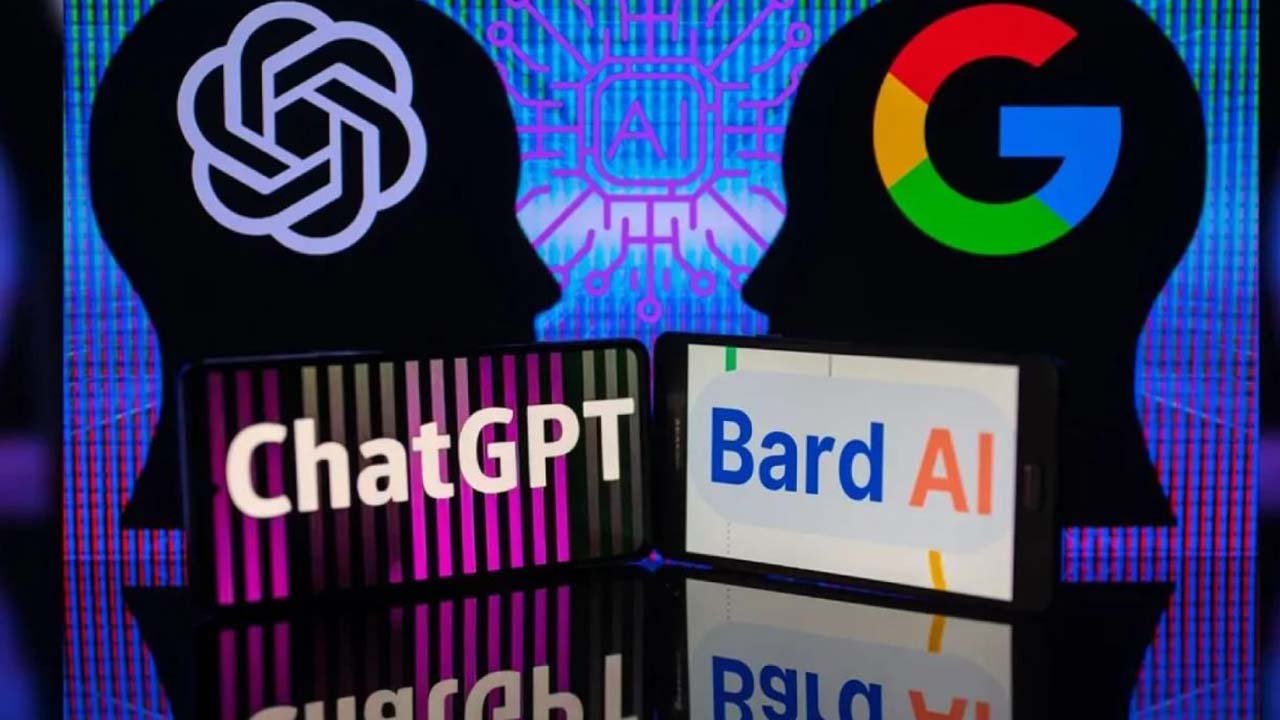
    Bard and ChatGPT 4 are both large language models, also known as conversational AI or chatbots. They are trained on massive datasets of text and code, and they can communicate and generate human-like text in response to a wide range of prompts and questions.

    However, there are some key differences between the two models.

    Bard

    1. Bard is trained on a massive dataset of text and code that includes information from the internet. This gives Bard a wider range of knowledge to draw from, and it allows Bard to answer questions in a more comprehensive and informative way.
    2. Bard is also able to access and process information from the real world through Google Search. This gives Bard a real-time view of the world, and it allows Bard to keep its answers up-to-date.
    3. Bard is designed to be informative and comprehensive. It is trained on a massive dataset of text and code, and it is able to access and process information from the real world through Google Search. This gives Bard a wide range of knowledge to draw from, and it allows Bard to answer questions in a comprehensive and informative way.

    ChatGPT 4

    1. ChatGPT 4 is trained on a massive dataset of text, but it is not trained on information from the internet. This means that ChatGPT 4 has a more limited range of knowledge, and it may not be able to answer questions as comprehensively as Bard.
    2. ChatGPT 4 is also not able to access and process information from the real world. This means that ChatGPT 4’s answers may not be up-to-date.
    3. ChatGPT 4 is designed to be creative. It is trained on a massive dataset of text, and it is able to generate human-like text in response to a wide range of prompts and questions. This makes ChatGPT 4 a good tool for generating creative content, such as poems, code, scripts, musical pieces, email, letters, etc.

    Bard and ChatGPT 4 are both powerful large language models. They can both communicate and generate human-like text in response to a wide range of prompts and questions. However, Bard has a wider range of knowledge, it is able to access and process information from the real world, and it is designed to be informative and comprehensive. ChatGPT 4 is designed to be creative. Ultimately, which model is better for you depends on your needs.

    It is currently unknown whether Bard will remain free. Google has not made any announcements about its plans for Bard’s pricing model. However, it is possible that Google may choose to make Bard a paid service in the future. This is because Bard is a very powerful and versatile tool that could be used for a variety of purposes, such as generating content, writing code, and translating languages. As such, Google may believe that it can charge a premium for access to Bard.

    On the other hand, Google may also choose to keep Bard free. This is because Google has a history of providing free access to its products, such as Gmail and Google Drive. Additionally, Google may believe that making Bard free will help to promote its other products and services.

    Ultimately, it is up to Google to decide whether Bard will remain free or not. However, it is likely that Google will make a decision about Bard’s pricing model in the near future.