Category: Tech

The Current’s tech news keeps you upto date with news of new gadgets, tech updates, information about tech startups and technology reviews.

  • Apple may cut off iPhone X and older iPad models from iOS 17 compatibility list

    Apple may cut off iPhone X and older iPad models from iOS 17 compatibility list

    According to French tech website iPhoneSoft, Apple’s upcoming operating system iPadOS 17 will no longer support the first-generation 9.7-inch and 12.9-inch iPad Pro models, as well as the fifth-generation iPad. This news corroborates earlier reports from a source with a reliable track record for predicting upcoming software updates. If the information is accurate, only the following devices will be compatible with iPadOS 17 when it is released in the fall: iPad Pro (2017 and later), iPad Air (third generation and later), iPad (sixth generation and later), and iPad mini (fifth generation and later).

    It’s important to note, however, that being on Apple’s compatibility list doesn’t guarantee that the device will fully support all features of the software. For instance, iOS 15 is compatible with all devices that can run iOS 14, but not all features will be available on older iPhones.

    In terms of iPhone compatibility, there are conflicting reports. The same source that leaked information about the iPad models that will be dropped from iPadOS 17 claimed that iOS 17 will also drop support for the iPhone 8, iPhone 8 Plus, and iPhone X. However, another anonymous leaker, who has shared accurate information in the past, disputed this claim. According to this second source, all iPhones that support iOS 16 will also support iOS 17, including devices powered by A11 chipsets like the iPhone X and iPhone 8/8 Plus.

    Last year, iOS 16 and iPadOS 16 discontinued support for several devices, including the iPhone 6s, iPhone 6s Plus, iPhone 7, iPhone 7 Plus, original iPhone SE, final iPod touch, second-generation iPad Air, and fourth-generation iPad mini. Apple is expected to announce iOS 17 during its WWDC keynote on June 5th.


  • Major camera upgrade: Apple iPhone 15 Pro Max expected to debut with larger IMX903 sensor

    Major camera upgrade: Apple iPhone 15 Pro Max expected to debut with larger IMX903 sensor

    Apple has finally upgraded the main camera on its iPhone 14 Pro and iPhone 14 Pro Max models from a 12 MP to a 48 MP sensor. Reports suggest that Apple will continue this trend with the iPhone 15 Pro models, with the iPhone 15 Pro Max receiving an even bigger sensor.

    According to leaker Ice Universe, the iPhone 15 Pro Max is expected to debut later this year with a new 48 MP sensor, the IMX903, which is an improvement on the IMX803 used in the iPhone 14 Pro models. The IMX903 is predicted to be a 1/1.14-inch sensor, which is larger than the 1/1.28-inch IMX803.

    Additionally, leakers are promoting hardware-level 14-bit DNG RAW capture. However, it appears that Apple may revert to the days when the Pro Max model had a superior camera to the Pro one.

    All available information suggests that the IMX903 will be exclusive to the iPhone 15 Pro Max, while the iPhone 15 Pro will retain the IMX803 from its predecessors.

  • No more blue ticks for Twitter users who don’t pay for verification

    No more blue ticks for Twitter users who don’t pay for verification

    On Thursday, Elon Musk’s social media platform followed through on its promise to eliminate blue verification checks from accounts that don’t pay a monthly fee. The blue checks have been removed from the accounts of many prominent public figures and celebrities on Twitter, including Oprah Winfrey, Lady Gaga, Beyonce, Pope Francis, and Donald Trump.

    The purge came after Musk introduced Twitter Blue, a paid service that aims to democratize journalism and empower the people’s voice. Before Musk ended the verification system, roughly 300,000 users had the blue check mark, which helped differentiate real public figures from impostors and protected against fake news.

    Following the change, some users, such as Stephen King, still have the blue check mark but claimed not to have paid for the new service. Musk responded to King’s tweet with “You’re welcome namaste” and revealed that he’s “personally paying for a few [accounts].” Musk has been attempting to increase Twitter’s revenue by offering subscription and premium services since buying the social media company for $44 billion last October. Musk previously described the system that assigned the check marks as “corrupt and nonsensical.”

    Twitter began tagging users with a blue check mark roughly 14 years ago. After Twitter Blue’s introduction, numerous fake accounts emerged, including some impersonating Musk’s Tesla and SpaceX. Twitter temporarily suspended the service days later. The cost to display the verified check mark under the new service ranges from $8 per month for individuals to $1,000 per month for organisations.

    Politicians and official bodies have also been affected by the Thursday purge, with concerns raised that the public will be unable to identify which Twitter accounts provide information about natural disasters. US Senator Brian Schatz tweeted, “There really ought to be a way for emergency managers to verify that they are real on this website or imposters will cause suffering and death.” According to digital intelligence platform Similarweb, only 116,000 accounts signed up for Twitter Blue last month.

  • India’s 5 million coders face uncertain future amid AI advancements

    India’s 5 million coders face uncertain future amid AI advancements

    If the technology underlying ChatGPT were to displace software engineers, India would be the country most affected, as it is home to over 5 million coders. This prospect is causing concern for newly qualified engineers like Palash Hade, who anticipates a reduction in software jobs in India.

    To increase his employability, Hade enrolled in an online degree program in data science and analytics from the prestigious Indian Institute of Technology (IIT) Madras.

    In the past, India’s outsourcing firms were desperate for talent and were willing to train engineers from different backgrounds. However, with the rise of generative artificial intelligence and ChatGPT, firms are now looking for candidates with these specific skills. India’s largest outsourcer, Tata Consultancy Services Ltd., made 46,000 campus offers this year, but the CEO of Tech Mahindra warns that change is fast approaching due to advanced AI.

    While students at elite schools like the Indian Institute of Science are not worried about the impact of AI on their future job prospects, tens of thousands of engineers without degrees from such institutions have reason to worry. Entry-level coding jobs are at risk of being eliminated, according to Shraddha Kulkarni, a 21-year-old engineering student in Bangalore who has been actively using ChatGPT.

    According to Bloomberg, developers on Reddit and Quora are also expressing anxiety about the potential impact of AI on their industry. They fear that the time and effort they invested in developing their skills may be rendered obsolete by AI-based programming.

  • Apple CEO Tim Cook to meet India’s PM Modi during store opening

    Apple CEO Tim Cook to meet India’s PM Modi during store opening

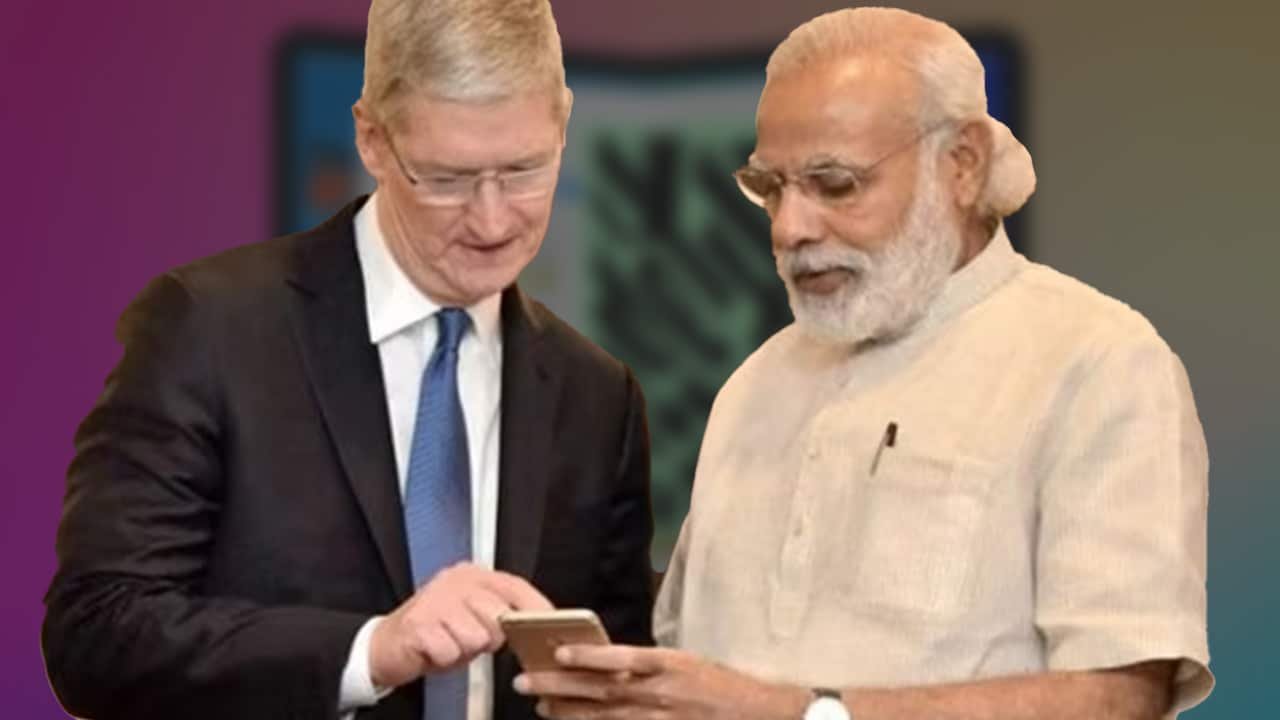
    Tim Cook, the CEO of Apple, is scheduled to meet India’s Prime Minister, Narendra Modi, and the country’s deputy IT minister as part of his visit to inaugurate the tech giant’s first retail store in India.

    Cook’s visit to Mumbai and New Delhi to open the first official company-owned outlets in the country highlights Apple’s growing interest in India, despite only having a 3 per cent market share.

    The company has been expanding iPhone assembly through contract manufacturers and increasing its exports. Cook will meet Modi on Wednesday in New Delhi, and he is also expected to meet India’s deputy IT minister, Rajeev Chandrasekhar.

    Apple and the IT ministry did not immediately respond to requests for comment, while Modi’s office declined to comment. Cook’s meetings with Indian officials come as Apple focuses more on India, which is the world’s second-largest smartphone market.

    According to data from the India Cellular and Electronics Association, iPhones accounted for more than 50 per cent of the $9 billion worth of smartphones exported from India between April 2022 and February 2023.

    On Monday, Apple opened its first store in Mumbai, but only for a private event where bloggers and tech analysts reviewed the store layout and design. The Mumbai store is located in the Reliance Jio World Drive mall, which is home to luxury clothing and jewellery brands like Michael Kors, Kate Spade, and Swarovski. It is 20,800 square feet, far larger than the planned Delhi outlet, according to local registration documents.

    Apple has sold its products in India through resellers or e-commerce websites such as Amazon. The Mumbai store will open to the public from Tuesday, while a second store will be inaugurated inside a New Delhi mall on Thursday.

    In India, iPhones are assembled by three of Apple’s contract manufacturers – Foxconn, Wistron Corp, and Pegatron Corp. Apple plans to assemble iPads and AirPods in India as well.

  • YouTube Music finally adds real-time lyrics in collaboration with MusixMatch

    YouTube Music finally adds real-time lyrics in collaboration with MusixMatch

    YouTube Music has finally introduced an automatic real-time tracking feature for lyrics, catching up with competitors Spotify and Apple Music. Previously, lyrics were only available on Google’s streaming platform in a basic manual format.

    Now, any song with uploaded lyrics on YouTube Music will feature the new real-time tracking feature, which highlights lyrics as they are sung and enlarges the text size within the Lyrics tab of the app. The development of this feature was a collaboration between Google and MusixMatch, with LyricFind also contributing to real-time lyrics tracking.

    MusixMatch is also responsible for providing lyrics on Spotify, including in languages other than English. Although the feature has not been officially released yet, screenshots of the new feature have been seen on Android and iOS. Some Android users have even claimed to have already accessed the feature via app version 5.51.50.

    It seems that the feature is gradually being rolled out to different regions, so it’s recommended to keep your YouTube Music app up to date to ensure you don’t miss out. However, it’s worth noting that some regions may have to wait longer than others to get the new feature.

  • Alibaba launches AI model ‘Tongyi Qianwen’ as ChatGPT rival for enterprise testing

    Alibaba launches AI model ‘Tongyi Qianwen’ as ChatGPT rival for enterprise testing

    Alibaba has launched its long-awaited ChatGPT rival, “Tongyi Qianwen,” for enterprise testing. The launch is not open to the general public but is restricted to a few eligible enterprises. Currently, the company is extending invitations to enterprise users only to participate in experience testing. Interested users can submit their applications via the official website, and those who meet the eligibility criteria will be considered for participation.

    “Tongyi Qianwen” is a highly advanced AI model designed to understand and respond to human commands. It serves as an efficient assistant and can even generate ideas. The model is being developed by Alibaba’s advanced research institute, the DAMO Academy. For many years, Alibaba DAMO Academy has been involved in cutting-edge scientific research fields such as natural language processing (NLP) and has been developing large models since 2019.

    Alibaba plans to integrate its AI large-scale model technology with the DingTalk productivity tools. Alibaba’s large-scale model is scheduled to be launched on April 11 at the 2023 Alibaba Cloud Summit, along with several industry-specific application models that will follow. Additionally, it has been reported that the company is set to release a large model, which could be comparable to ChatGPT 2.5, in the second half of this year.

    Alibaba DAMO Academy is the research and development arm of Alibaba Group, one of the world’s largest e-commerce companies. The academy was founded in 2017 and focuses on cutting-edge research in areas such as machine learning, artificial intelligence, natural language processing, and quantum computing. The academy has several research centers located in China, the United States, Israel, Singapore, Russia, and other countries.

    The goal of the academy is to use its research to support Alibaba’s businesses and to make significant contributions to the academic and scientific communities. The academy has partnerships with leading universities and research institutions around the world and collaborates with top researchers in various fields.

  • We asked Chat GPT to write a Pakistani horror story and this was the result

    We asked Chat GPT to write a Pakistani horror story and this was the result

    Chat GPT has swept the world up in its wake, generating responses to all kinds of topics and triggering a debate on how good it is or isn’t at its job. By simply entering a few keywords and prompts, the artificial intelligence chatbot can be used to write letters, college application essays and even novels, with Amazon already enlisting books where the co-author includes the AI bot.

    We were curious about ChatGPT’s storytelling capabilities, wondering if it is good enough to write a Pakistani story? We have all grown up listening to horror stories like Karsaaz ki Dulhan, the wandering woman at Mohatta Palace, so can Chat GPT give us something equally eerie and chilling?

    The result is printed here and we leave it to our audience to decide whether this was a good spooky story or not:

    “Once upon a time in Karachi, there was a family named Ahmed. They lived in a big house, where multiple generations of the family resided. The house was luxurious with plenty of large rooms, but there were always rumors about mysterious things that happened inside the house at night.

    One day, a new family moved next door to the Ahmeds. They had a daughter named Aisha who was just six years old. Aisha was a curious little girl who could be found playing in the front yard of her house every day. One day while playing, Aisha caught sight of the house next door. She couldn’t take her eyes off the house, so she walked up to the fence separating their properties.

    Suddenly, she saw a ghostly apparition with long hair and an old-fashioned dress in the window of the house next door. Terrified, Aisha ran back to her parents and told them everything. They didn’t believe her, thinking it was just her imagination.

    That night, the Ahmeds also noticed something unusual: the sound of footsteps could be heard from within the house. It sounded like someone was walking down the hallway. They were all very scared, and some members of the family started to believe the rumors they had heard about the house.

    Finally, the elder members of the Ahmed family decided to investigate. They searched the entire house but found nothing. But the very next night, the footsteps became louder and the ghostly apparition again appeared in the window. This time, everyone saw it.

    They decided to approach the local priest to help them with this situation. The priest told them that the house was built on an ancient burial ground, and the person buried there had been murdered. The restless soul of that victim was haunting the house, and it had now become more active because of Aisha’s presence.

    The family was very scared, but the priest performed an exorcism and recited some holy verses to calm the spirit. Soon the house was free of the ghostly presence, and the family members were able to live there in peace.

    From that day on, the Ahmed family knew that they should never underestimate the power of spirits and the potential for paranormal activity. They lived on, never forgetting what had happened and always being careful to not disturb the burial grounds next door.”

  • WhatsApp to introduce biometric chat locks for enhanced privacy and security

    WhatsApp to introduce biometric chat locks for enhanced privacy and security

    A number of Android OS skins from prominent brands such as Xiaomi offer app lock capabilities, whereby individual apps require authentication to gain access, sometimes by way of biometric verification.

    Stock Android can also be endowed with this feature by utilising various apps accessible on the Play Store, though their reliability can be called into question. Given the confidential nature of WhatsApp conversations, Meta’s ongoing development of a per-chat biometric lock embedded into the app is a positive move in the right direction.

    For an app that is advertised as having a strong focus on privacy and security, the absence of in-app biometric authentication options is highly noticeable. Luckily, according to WABetaInfo, the latest WhatsApp beta update available on the Play Store (v2.23.8.2) gives indications of a new feature being developed. This feature will allow users to lock individual chats using either a passcode or fingerprint, even though only the latter’s toggle is visible. It is suspected that the fingerprint unlock will require a passcode to be set up as a backup.

    Screenshots imply that it will be possible to lock sensitive group chats from the group info section. It also appears that all locked chats will be relocated to a vault-like space, separated from regular chats, hence requiring authentication only once. While it isn’t apparent from the shared screenshots, WABetaInfo reports that WhatsApp will erase the chat if users wish to unlock it by force, such as in the event of forgetting the passcode.

    There is little information available about how notifications for these chats will be displayed, what will happen to the media in the conversations, and how many chats can be locked. WhatsApp is one of the most well-known encrypted messaging apps in existence, yet it is not at the forefront of this feature. For instance, Telegram has allowed passcode or fingerprint unlocking since around 2018, but it is for the app as a whole rather than individual chats. It is somewhat perplexing why WhatsApp has not followed this path.