Category: Tech

The Current’s tech news keeps you upto date with news of new gadgets, tech updates, information about tech startups and technology reviews.

  • When will Pakistanis have full access to internet?

    When will Pakistanis have full access to internet?

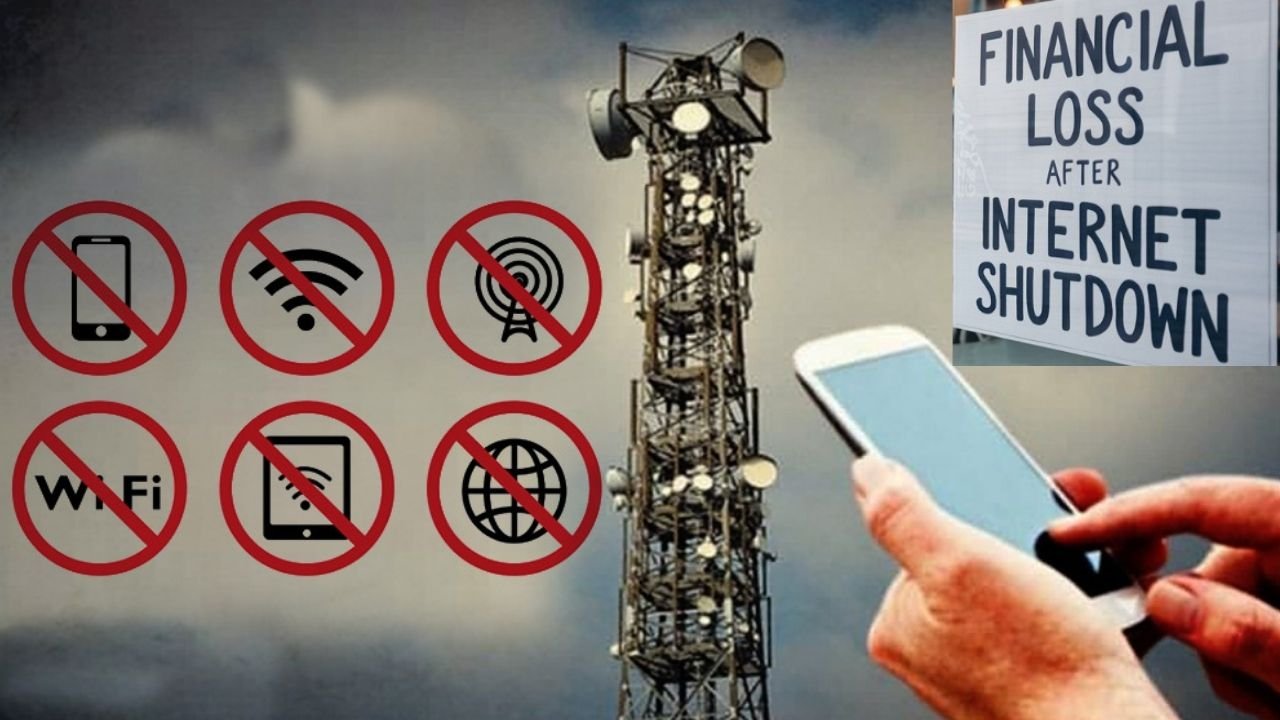
    Pakistan’s internet slowdown has been ongoing for over a month, and the Pakistan Telecommunication Authority (PTA) deadline for its restoration ended yesterday. The deadline has passed, and the internet remains disrupted.

    “The internet slowdown is due to the failure of two out of seven submarine cables. The rerouting of the AAE-1 cable is completed; after this, the internet services will be further improved.” read PTA’s statement.

    “The repair phase of the SMW4 cable is likely to be completed by October 2024, and internet services will be fully available after the completion of the second submarine cable,” PTA further added.

    The internet in Pakistan has been slow since July, which has caused many digital businesses to lose money and many freelancers to lose their jobs.

  • SpaceX postpones historic mission featuring first private spacewalk

    SpaceX postpones historic mission featuring first private spacewalk

    SpaceX on Tuesday postponed once more its attempt to launch a daring orbital expedition featuring an all-civilian crew. The expedition aims to carry out the first-ever spacewalk by private citizens.

    The Polaris Dawn mission, organized by billionaire entrepreneur Jared Isaacman, was set to launch from NASA’s Kennedy Space Center in Florida during a four-hour window early Wednesday.

    But SpaceX announced Tuesday it was pushing back the launch plans “due to unfavorable weather forecasted in Dragon’s splashdown areas off the coast of Florida,” in a message on X.

    An earlier attempt on Tuesday was scrapped due to a helium leak on a line connecting the tower to the rocket.

    Riding atop a Falcon 9 rocket, the SpaceX Dragon capsule is set to reach a peak altitude of 870 miles (1,400 kilometres) — higher than any crewed mission in more than half a century since the Apollo era.

    Mission commander Isaacman will guide his four-member team through the mission’s centrepiece: the first-ever spacewalk carried out by non-professional astronauts, equipped with sleek, newly developed SpaceX extravehicular activity (EVA) suits.

    Rounding out the team are mission pilot Scott Poteet, a retired US Air Force lieutenant colonel; mission specialist Sarah Gillis, a lead space operations engineer at SpaceX; and mission specialist and medical officer Anna Menon, also a lead space operations engineer at SpaceX.

    The quartet underwent more than two years of training in preparation for the landmark mission, logging hundreds of hours on simulators as well as skydiving, centrifuge training, scuba diving, and summiting an Ecuadoran volcano.

    Polaris Dawn is set to be the first of three missions under the Polaris program, a collaboration between Isaacman, the founder of tech company Shift4 Payments, and SpaceX.

    Isaacman declined to reveal his total investment in the project, though reports suggest he paid around $200 million for the SpaceX Inspiration4 mission in September 2021, the first all-civilian orbital mission.

    Polaris Dawn will reach its highest altitude on its first day, venturing briefly into the Van Allen radiation belt, a region teeming with high-energy charged particles that can pose health risks to humans over extended periods.

    On day three, the crew will don their state-of-the-art EVA spacesuits — outfitted with heads-up displays, helmet cameras, and advanced joint mobility systems — and take turns to venture outside their spacecraft in twos.

    Each will spend 15 to 20 minutes in space, 435 miles above Earth’s surface.

    Also on their to-do list are testing laser-based satellite communication between the spacecraft and Starlink, SpaceX’s more than 6,000-strong constellation of internet satellites, in a bid to boost space communication speeds, and conducting nearly 40 scientific experiments.

    These include tests with contact lenses embedded with microelectronics to continuously monitor changes in eye pressure and shape.

    After six days in space, the mission will conclude with a splashdown off the coast of Florida.

  • Internet shutdown costs 65 billion rupees to Pakistan’s economy

    Internet shutdown costs 65 billion rupees to Pakistan’s economy

    Pakistan’s economy has suffered a loss of PKR 65 billion in 2023 due to internet shutdowns.

    Statista’s latest data reveals that 8.3 million Pakistanis were affected by the internet outage, which lasted 259 hours.

    Statista is a German online organization that specializes in data collection. It ranked Pakistan seventh in terms of losses in the last financial year.

    Last year, India was one of the top countries with the longest internet shutdowns in the world, with 47 crore users not having access to the internet. This resulted in India being ranked fourth for internet shutdowns.

    “In India – the country that cuts internet access the most – shutdowns have in the past clustered in Kashmir and Rajasthan, where they have been used during protests (and preemptively when protests were expected), but also during exams. In 2023, ethnic tensions in Manipur state led to most targeted shutdowns employed by the government”, states Statista’s official website.

    Internet service in India was highest in Occupied Kashmir and Rajasthan.

    The total list of 25 countries with the most internet shutdowns from top to bottom is Russia, Ethiopia, Myanmar, Iran, India, Iraq, Pakistan, Algeria, Senegal, Azerbaijan, Guinea, Brazil, Mauritania, Yemen, Venezuela, Kenya, Sudan, Syria, Turkey, Gabon, Tanzania, Cuba, Chad, Zimbabwe and Suriname at last in the list respectively.

    Regionally, after 2019, Asia experienced the most disruption cases of internet connections, over 50 percent compared to the rest of the world.

  • Telegram founder arrested on alleged charges of cybercrime and drug trafficking

    Telegram founder arrested on alleged charges of cybercrime and drug trafficking

    Pavel Durov, the founder and CEO of the popular messaging app Telegram, was detained at Bourget Airport near Paris on Sunday. The arrest follows allegations linked to his platform, which has been a focal point of a French investigation.

    Durov, 39, was arriving from Azerbaijan aboard his private jet when French authorities executed an arrest warrant. The warrant stems from a preliminary investigation conducted by OFMIN, France’s agency for preventing violence against minors.

    The charges against Durov include fraud, drug trafficking, cyberbullying, and organised crime, with accusations also pointing to his failure to address the misuse of Telegram.

    French media reports indicate that the investigation is centred on Telegram’s moderation issues, which police believe have enabled unchecked criminal activity on the app. The situation reportedly surprised investigators, who were taken aback by Durov’s arrival in France despite the existing warrant.

    The Russian embassy in France has called for consular access to Durov, asserting that his rights must be protected. According to Russian state news agency TASS, the embassy has criticised France for its lack of engagement on the matter and is in touch with Durov’s legal team.

    Telegram, founded by Durov and his brother in 2013, is renowned for its robust encryption features and has attracted nearly a billion users globally. The app gained significant traction during the Russia-Ukraine conflict, serving as a major channel for unfiltered and sometimes graphic content from both sides.

    Its use by key figures, including Ukrainian President Volodymyr Zelenskyy and Russian officials, has only increased scrutiny from various governments concerned about security and data breaches.

    In response to Durov’s arrest, Russian representatives have accused France of adopting a “totalitarian” stance. Mikhail Ulyanov, Russia’s representative to international organisations, warned that such actions could endanger individuals involved in the international information sphere. Meanwhile, several Russian bloggers have urged protests outside French embassies worldwide.

    In addition, Elon Musk, the tech billionaire and owner of X (formerly Twitter), criticised the arrest, remarking, “It’s 2030 in Europe, and you’re being executed for liking a meme.”

  • Internet issue in Pakistan: What’s behind the nationwide slowdown?

    Internet issue in Pakistan: What’s behind the nationwide slowdown?

    Pakistan, a nation that has steadily integrated digital technologies into the fabric of daily life, now finds itself grappling with an internet crisis that has sparked widespread frustration among its citizens. Confusion abounds as people ask: What’s really causing the slowdown in Pakistan’s internet?

    Millions of Pakistanis who rely on the internet for everything from communication to commerce are currently experiencing severe disruptions, reminiscent of the early 2000s when dial-up connections and internet cards were the norm. The situation has become so dire that many are questioning whether the country’s technological progress has come to a standstill.

    A regression to the past

    For many, the current internet woes feel like a step back in time. Despite the launch of 4G services years ago, internet speeds have plummeted to the levels of 2G or even EDGE networks. In some cases, the internet is so sluggish that it fails to function at all. This has led to a near-paralysis of digital communication in Pakistan, with millions struggling to maintain even the most basic online activities.

    The impact is felt across the spectrum of society. From students attempting to access educational resources to businesses trying to close deals, the internet slowdown has thrown a wrench into the daily operations of countless individuals and organisations. Popular platforms like WhatsApp, which serve as lifelines for communication in Pakistan, have become virtually unusable at times. Users report being unable to download images, videos, or documents, rendering the app ineffective for both personal and professional use.

    The blame game: Service providers or government control?

    As the crisis deepens, fingers are being pointed in multiple directions. Internet service providers (ISPs) are facing criticism for failing to maintain service quality, but there is growing suspicion that the root of the problem lies elsewhere. Reports suggest that the slowdown may be linked to the deployment of a nationwide internet firewall aimed at controlling online content and traffic. This has led to speculation that the government is intentionally throttling internet speeds to limit access to information and suppress dissent.

    The slowdown is not confined to rural areas; even the federal capital, Islamabad, and its posh sectors such as F-7 and F-6 are experiencing significant disruptions. This is a far cry from the promises of a digitally empowered Pakistan, where the number of 3G and 4G users had grown from 130.92 million at the end of February to nearly 132 million by the end of March 2024. The reality on the ground, however, tells a different story—one where millions of Pakistanis are struggling to stay connected.

    A growing digital divide

    The internet issue has exposed a growing digital divide in Pakistan. While those in urban centres like Karachi, Lahore, and Islamabad are accustomed to high-speed internet, the recent disruptions have left them reeling. Meanwhile, in rural areas, where internet access has always been patchy, the situation has gone from bad to worse. Places like Bara Manga are now almost entirely cut off from the digital world, exacerbating existing inequalities.

    The situation has sparked outrage among Pakistan’s growing online community, which includes not just casual users but also students, freelancers, traders, and others who rely on the internet for their livelihoods. The frustration is palpable, with many taking to social media to voice their concerns, even as they struggle to stay connected.

    Official responses: Confusion and contradictions

    The official response to the internet crisis has been marked by confusion and contradictions. After facing intense criticism from netizens and the information technology sector, the Pakistan Telecommunications Authority (PTA) finally broke its silence on the issue. PTA Chairman Major General (retd) Hafeez-Ur-Rehman, while briefing the National Assembly Standing Committee on IT, attributed the slowdown to a fault in the undersea submarine cable. He assured the public that the issue would be resolved by August 27, but many remain sceptical.

    Rehman explained that Pakistan is connected to the global internet through seven fibre optic cables, one of which is currently damaged. While this explanation offers some clarity, it does little to alleviate the frustration of millions who are still grappling with slow or non-existent internet service.

    Meanwhile, others in the IT sector believe that the government’s testing of a new nationwide internet firewall is the real culprit behind the disruptions. “On the one hand, the new government is promising an information technology revolution for Pakistan, and on the other, it is throttling it completely,” said one industry insider who wished to remain anonymous.

    The government has repeatedly denied responsibility for the internet problems, insisting that the firewall is intended to regulate and block malicious content while protecting government networks. Information and Technology Minister Shaza Fatima Khawaja, in a recent statement, blamed Pakistan’s large population for straining the network, adding that her team has been “working tirelessly” with ISPs to resolve the issue.

     Personal stories of frustration

    The impact of the internet crisis is perhaps best illustrated through the personal stories of those affected. Dr Maryam Jabbar, a medical officer at the Pakistan Institute of Medical Sciences (PIMS), described her daily struggle to commute using ride-hailing apps like InDrive. “Sometimes, I am unable to book a ride because the 4G does not work, and my phone shows the EDGE sign,” she said. “The situation of the internet is much worse in some areas of G-8. I had to walk from the PIMS OPD to Centaurus twice this week because neither my nor my colleagues’ internet was working.”

    Freelancers like Hannan Masood are also bearing the brunt of the slowdown. Masood, who works with clients in the United States, feared he might not be able to pay his rent this month after a client became angry over missed messages and calls. “The client thought I had intentionally turned off my internet to avoid work,” he said. Masood tried using SIM data and VPNs to stay connected, but found them equally unreliable. “VPNs work sometimes, but only for the first 10 minutes. After that, they become very slow,” he said, adding that he is hesitant to spend money on VPNs after hearing from friends that even paid versions are not functioning properly.

    Economic and political ramifications

    The internet crisis comes at a time of widespread discontent in Pakistan over the country’s economic situation. With inflation running high and the government sharply increasing taxes and electricity fees, many Pakistanis believe they are being asked to shoulder the burden of the ruling elite’s lavish lifestyle. The June budget announcement, which included a 25 per cent increase in government salaries, was followed by an unprecedented tax hike for the common salaried class. This move was heavily criticised, with an editorial in Dawn stating that it would “make the life of average Pakistanis even harder.”

    In this context, some view the internet slowdown as a deliberate attempt by the government to stifle criticism in digital spaces. Social media platform X (formerly Twitter) has already been blocked since the February elections due to “national security” concerns. Supporters of former Prime Minister Imran Khan’s party point out that he is the most popular Pakistani on the platform, with nearly 21 million followers, suggesting that the government’s actions are politically motivated.

    A call for transparency and solutions

    As the internet crisis drags on, the need for transparency and effective solutions has become increasingly urgent. The government’s mixed messages and the PTA’s assurances have done little to restore public confidence. If the new firewall is indeed behind the disruptions, as many suspect, there should have been some warning or at least an official explanation. Instead, Pakistanis are left to navigate a digital landscape that is increasingly unreliable and unpredictable.

    The situation underscores the importance of a robust and resilient internet infrastructure in today’s hyperconnected world. For a country that has embraced digital technologies as a means of economic and social progress, the current crisis is a stark reminder of how quickly those gains can be reversed. The government, ISPs, and all stakeholders must work together to resolve the issue swiftly and ensure that Pakistanis can once again rely on a stable and secure internet connection.

    As Pakistan grapples with this digital setback, the hope is that lessons will be learned, and the country will emerge stronger, with a more transparent and accountable approach to managing its internet infrastructure. For now, however, millions of Pakistanis are left in the lurch, waiting for their digital lifeline to be restored.


  • Sharks bayqasoor hain; PTA chairman says fault in submarine cables disrupting internet

    Sharks bayqasoor hain; PTA chairman says fault in submarine cables disrupting internet

    After facing heavy criticism from the public and IT sector over frequent internet outages, Pakistan Telecommunications Authority (PTA) has finally addressed the issue, attributing it to a “fault in the undersea submarine cable.”

    PTA Chairman Major General (retd) Hafeez-Ur-Rehman, during a briefing to the National Assembly Standing Committee on IT, said, “The Submarine Consortium has informed us that internet services are disrupted due to a fault in the submarine cable, which will be fixed by August 27.”

    He further mentioned that Pakistan is connected by seven fibre optic cables, one of which is currently damaged.

    IT experts have criticized the government led by Prime Minister Shehbaz Sharif, highlighting the economic impact on freelancers, IT professionals, and the digital economy.

    An estimated loss of $300 million has been incurred due to the internet slowdown, while companies and individuals who rely on stable internet connectivity, a vital part of the country’s digital economy, are now “struggling to maintain operations, with the slowdown threatening their very survival.”

    However, the government has denied any involvement in the issue. State Minister for Information Technology Shaza Fatima Khawaja blamed internet users’ virtual private networks (VPNs) for slowing their internet speeds.

    While speaking to the media last week, She said, “I can swear that the government of Pakistan did not block the internet or slow it down.”

    The internet has not been working properly in Pakistan since last month; even downloading a picture or a voice note on WhatsApp has become a headache.

  • X to close its operations in Brazil

    X to close its operations in Brazil

    Social media platform X (formerly Twitter) has announced the closure of operations in Brazil due to what it said were censorship orders by a Brazilian judge.

    X announced, “Brazil’s Supreme Court Justice Alexander Morris has threatened it if it does not comply with court orders. They will arrest X’s legal representative in Brazil. So we have decided to stop operating in Brazil after censorship orders from a Brazilian judge, Judge Alexander Morris, secretly threatened an X legal representative in Brazil, not to remove some content but also to arrest.”

    Documents signed by the Judge have also been published, including a $3,600 daily fine for non-compliance and an arrest warrant for X’s representative in Brazil. In 2022, the Brazilian Supreme Court ordered blocking the popular messaging application Telegram.

    X immediately removed all its remaining staff in Brazil, but the company also said the service would still be available to Brazilians. Against this backdrop, the company has not explained how it claimed to suspend its operations if it continues to provide X services to Brazilians.

    Earlier this year, the platform clashed with Judge DeMaurice over free speech, far-right accounts and misinformation. The company said the Judge’s recent orders amounted to censorship. A copy of the document was also shared, on which the Associated Press (AP) sent emails to the Supreme Court’s press office, but there was no response.

  • No cyberattacks on ATMs across country, clarifies 1LINK

    No cyberattacks on ATMs across country, clarifies 1LINK

    1LINK, one of the largest interbank networks in Pakistan, has denied social media rumours that ATMs will be closed for the next two to three days on fears of a cyberattack.

    The clarification came forward in a notification by 1LINK after social media was abuzz with rumours that ATMs would remain closed for a few days, asking customers to avoid using ATMs.

    The message also warned people not to conduct any online transactions during this time and claimed that this alleged cyberattack report was also aired on BBC radio.

    In its response, BBC Urdu also dismissed the claim that no such thing has been aired.

    “Thus far, no cyber threat has been observed on the ATM and online banking ecosystem in this context, and the financial service industry remains vigilant as ever before,” the notification by 1LINK read.

  • ‘Please do something,’ students push Hamid Mir to file petition against internet disruption

    ‘Please do something,’ students push Hamid Mir to file petition against internet disruption

    The month of August has been the worst for the digital space in Pakistan since February 2024.

    The tech industry has expressed serious concerns about the internet slowdown, warning that it could cost the debt-ridden nation up to $300 million.

    Amid the ongoing issues, senior journalist Hamid Mir took the matter to the Islamabad High Court (IHC), filing a petition through Advocate Imaan Mazari against the internet slowdown.

    Mir argued on behalf of the journalist community, which is struggling to perform its duties due to reliance on connectivity and communication. He further noted that the issue impacts those in e-commerce, students, freelancers, and others.

    The petition also highlights that no prior consultation or deliberation took place between the government and relevant stakeholders before the installation of the firewall, which has contributed to the ongoing struggles of the business and tech community.

    This lack of transparency has fueled doubts and rumours about the nature of the firewall.

    But did Hamid Mir file the petition solely because of the struggles faced by journalists?

    “Frankly speaking, I filed the petition after receiving messages from many students who said they could not leave Pakistan but were finding it difficult to study here,” Mir told The Current, revealing that internet disruptions have also impacted students pursuing online studies, prompting them to seek intervention from the authorities — which Mir decided to do on their behalf.

    “I also face pressure from my own family, who cannot stay in this country anymore. They have asked me to do something to restore internet and social media if we are to remain here,” he explained, reflecting on the growing discontent among the youth.

    Given the current circumstances, the petition argues that installation cannot proceed without consulting relevant stakeholders and that only “reasonable restrictions” may be imposed by law, based on the “principles of necessity and proportionality.”

    The respondents are also asked to provide reports on the firewall’s objectives, status, and impact on citizens’ rights, including details on internet surveillance. Meanwhile, the petition calls for halting the firewall installation and ensuring uninterrupted internet access for citizens until the issue is resolved.

  • Multinational companies plan to leave Pakistan as internet disruptions continue, says PBC

    Multinational companies plan to leave Pakistan as internet disruptions continue, says PBC

    The Pakistan Business Council (PBC) warned on Friday that numerous multinational companies are planning to relocate their offices from Pakistan, with many having already left the country, due to severe internet disruptions.

    “Many multinational companies (MNCs) are either planning to relocate their back offices from Pakistan or have already done so, as the reported imposition of a firewall causes widespread internet disruptions across the country,” the PBC stated.

    Alarm bells went off when the Dubai Chamber of Commerce released a report highlighting that 3,968 Pakistani companies were registered in Dubai between January and June 2024.

    Pakistan ranked second among the top countries whose companies registered in Dubai, signalling an exodus of businesses from Pakistan.

    Hundreds of thousands of skilled and unskilled workers already exist in the country in search of better opportunities abroad.

    “While we struggle with the costs of idle capacity in power generation leading to unemployment and loss of exports and tax revenue, we now have to contend with the threat of idle capacity in the emerging software sector due to poor firewall execution,” lamented the body.

    The tech industry has expressed serious concerns about the internet slowdown, warning that it could cost the debt-ridden nation up to $300 million.