Category: Tech

The Current’s tech news keeps you upto date with news of new gadgets, tech updates, information about tech startups and technology reviews.

  • Elon Musk fires more than 90% of Twitter India staff

    Elon Musk fires more than 90% of Twitter India staff

    Twitter Inc. terminated more than 90 per cent of its employees in India over the weekend, “severely depleting its engineering and product team in a prospective growth area.”

    The firing frenzy is part of global reductions by new owner Elon Musk.

    .According to persons familiar with the situation who spoke to Bloomberg on the condition of anonymity due to the sensitivity of the subject, Twitter’s India offices employed just over 200 people before the cuts, leaving it with only about a dozen employees. The offices are in Bengaluru, Mumbai, and New Delhi.

    Due to its sizable potential pool of new online users, India is a crucial growth engine for international internet companies like Twitter, Meta Platforms Inc., and Google, a division of Alphabet Inc.

    The businesses must comply with “increasingly strict regulations” intended to rein in giant digital enterprises in the country.

    According to one of the employees who spoke with Bloomberg, the product and engineering teams in India that worked on a worldwide mandate accounted for roughly 70 per cent of the jobs that were eliminated.

  • After Twitter, Meta reportedly planning ‘large-scale’ layoffs this week

    After Twitter, Meta reportedly planning ‘large-scale’ layoffs this week

    With plans to layoff thousands of employees this week, Facebook parent company Meta will join a growing list of digital companies that are reducing their workforces.

    As of September 30, Meta has over 87,000 people working for it across its various platforms, which include the social media sites Facebook and Instagram as well as the messaging service WhatsApp. According to WSJ, the social media business had reduced its ambitions to hire engineers by at least 30 per cent in June, and Mark Zuckerberg had advised staff to prepare for a slowdown in the economy.

    In his announcement of Meta’s dismal third-quarter results, CEO Mark Zuckerberg stated that the company’s headcount will not rise by the end of 2023 and might even decline significantly.

    “In 2023, we’re going to focus our investments on a small number of high-priority growth areas. So that means some teams will grow meaningfully, but most other teams will stay flat or shrink over the next year. In aggregate, we expect to end 2023 as either roughly the same size or even a slightly smaller organization than we are today,” Zuckerberg said on the last earnings call in late October.

    Profits for Meta dropped to $4.4 billion in the third quarter, a 52 percent year-over-year decline. The poor findings had a significant negative impact on Meta’s stock price, which dropped by 25 per cent in one day.

    Over the past year, the company’s market value has decreased to $600 billion.

    In a previous open letter to Mark Zuckerberg, Meta’s shareholder Altimeter Capital Management stated that the company needed to streamline by eliminating positions and capital expenditures. They also stated that investors had lost faith in Meta as a result of its increased spending and pivot to the metaverse.

    Owing to increased interest rates, rising inflation, and a European energy crisis, several technological businesses, including Microsoft Corp., Twitter Inc., and Snap Inc., have reduced workforce in recent months.

  • ‘There is no choice when the company is losing $4 million per day’: Musk justifies cutting half of Twitter’s workforce

    ‘There is no choice when the company is losing $4 million per day’: Musk justifies cutting half of Twitter’s workforce

    On Friday, Twitter laid off half of its 7,500-person workforce as the company’s troubled big restructuring under new owner Elon Musk got under way, only one week after his sensational takeover.

    According to an internal memo seen by AFP, “approximately 50 per cent” of the workforce was affected and would immediately lose access to business computers and email.

    Workers from all over the world who were let go used Twitter to express their anger or disbelief and bid farewell to one of Silicon Valley’s most recognisable enterprises.

    “Woke up to the news that my time working at Twitter has come to an end. I am heartbroken. I am in denial,” said Michele Austin, Twitter’s director of public policy for the US and Canada.

    Prior to the layoffs, Twitter restricted access to all of its locations and asked staff to remain at home while they awaited word on their futures with the firm.

    The cull is a part of Musk’s effort to obtain financing for the massive $44 billion acquisition, for which he sold $15.5 billion worth of Tesla shares and took on billions of dollars in debt.

    After his massive acquisition, Musk, the CEO of Tesla and SpaceX, has been frantically looking for new revenue streams for Twitter, including the notion of charging users $8 per month for verified accounts.

    The actions would help Twitter combat the possibility of losing advertisers, which are the company’s primary source of income, since many of the major businesses in the world postpone their ad purchases after learning of Musk’s well-known contempt for content controls.

    The volatile businessman lamented a “huge loss in revenue” on Twitter on Friday, attributing it to “activist groups” who were pressing advertisers.

    “We did everything we could to appease the activists. Extremely messed up! They’re trying to destroy free speech in America,” he added.

    This seemed to be a reference to Musk’s previous meeting with civil rights organisations, where he heard worries that Twitter will unleash a wave of hate speech a week before the US midterm elections. Musk had promised that Twitter would not turn into a “free-for-all hellscape” in an effort to calm people down, but his assurance was swiftly contradicted by a tweet spreading a rumour that the husband of US House Speaker Nancy Pelosi had been attacked.

    “We are witnessing the real time destruction of one of the world’s most powerful communication systems. Elon Musk is an erratic billionaire who is dangerously unqualified to run this platform,” said Nicole Gill, Executive Director of Accountable Tech.

    She was a member of a group of 60 rights organisations that demanded on Friday that advertising on the Musk-owned platform be boycotted.

    “Elon Musk has demonstrated that it’s not possible for him to keep the brand safeguards that have existed on Twitter in place. There’s no more time for trust but verify, it’s time for escalation,” said Angelo Carusone, President and CEO of Media Matters for America.

    Although very popular with celebrities and opinion leaders, the California-based business has historically struggled to turn a profit and has lagged behind Facebook, Instagram, and TikTok in terms of user growth.

    Since Musk finalised his acquisition late last week and immediately set about dissolving its board and removing its chief executive and key managers, Twitter employees have been preparing for this kind of unpleasant news. Five Twitter employees who had previously been let go filed a class action lawsuit against the business late on Thursday, alleging that they had not received the legally mandated 60-day notice period.

    The US Worker Adjustment and Retraining Notification (WARN) Act, which grants employees the right to early notification in situations involving large layoffs or plant closures, is cited in the lawsuit.
  • Apple steps up iPhone 14 production shift from China to India

    Apple steps up iPhone 14 production shift from China to India

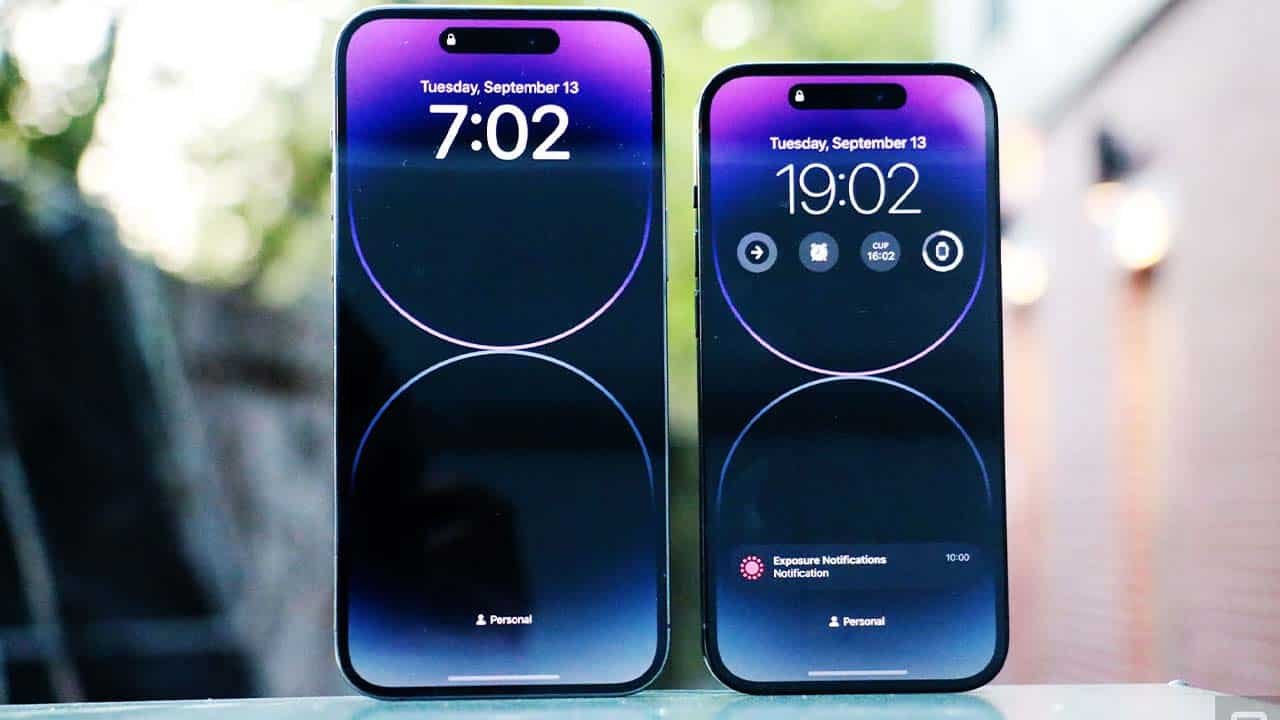
    In an attempt to expand its manufacturing base outside of China, Apple has recruited another assembly partner for the iPhone 14 production lineup in India, according to Bloomberg.

    Following Foxconn, which started making the iPhone 14 models in India in September, Taiwanese contract maker Pegatron will manufacture the model in the country.

    The iPhone 11, iPhone 12, iPhone 13, and most recently the iPhone 14 are all produced at Apple’s Taiwanese assembly partners Foxconn, Wistron, and Pegatron’s iPhone manufacturing facilities in India. The production of the most recent model has seen a significant reduction in the time between Chinese and Indian output from months to weeks.

    In the five months since April, Apple has exported $1 billion worth of iPhones from India. Despite being modest by Chinese standards, India’s rising iPhone production indicates Apple’s willingness to invest there as a rival to China’s dominance in electronics assembly, which has recently been weakened by the latter’s zero-COVID policy.

    Following an epidemic at the factory, which resulted in the metropolis of nearly 10 million people being shut down, Foxconn’s major Zhengzhou plant, which employs about 200,000 people, has been subject to the same limits. According to one report, when COVID-19 rules in China become more stringent, iPhone production might decrease by as much as 30 per cent the following month.

    Despite the coincidence of events, Apple’s long-term production development plans in India are unrelated to China’s lockdown issues, even though they do serve to emphasise the company’s utter reliance on only one nation.

    Apple is playing a long game by shifting its production lines away from China, one that won’t have a significant influence on its supply chain for many years. According to a recent Bloomberg article, it would take eight years to relocate just 10 per cent of Apple’s production capacity from China, where over 98 per cent of iPhones are still produced.

  • WhatsApp launches ‘Communities’ to organise group conversations

    WhatsApp launches ‘Communities’ to organise group conversations

    Communities, a new WhatsApp feature that offers bigger, more organised conversation groups that was first put through testing earlier this year, is now officially available.

    Communities introduce a number of new features to the messaging platform with the goal of enhancing communication and organisation among businesses, clubs, schools, and other private groups. These features include admin controls, support for sub-groups and announcement groups, 32-person voice and video calls, larger file sharing, emoji reactions, and polls.

    Communities itself provide end-to-end encryption and can accommodate groups of up to 1,024 users.

    Emoji reactions, massive file sharing (up to 2GB), and the option for administrators to remove messages are just a few of the features created for Communities that have already made their way to the WhatsApp platform before today’s debut. According to the business, WhatsApp will now enable polls, 32-person video calls, and larger group sizes more widely outside of Communities.

    Due to the fact that both the new feature and Facebook Groups enable features like sub-groups, file sharing, admin functionality, and more, there may initially be some parallels between the two. WhatsApp Communities, however, are designed to be used by people who may already be connected in the real world, unlike Facebook Groups, which are frequently used by dispersed strangers with a shared interest.

    Since WhatsApp is phone number-based, as opposed to Facebook, members of these discussion groups already know one another because they may have swapped phone numbers or at the very least provided their numbers with the group admin. The phone numbers will only be made visible to admins and members of the same sub-groups as you; they will remain concealed from the rest of the Community.

    This aims to strike a compromise between users’ demands for privacy and the necessity of enabling communication amongst group members. For instance, even if you don’t know every parent on your child’s sports team personally, you’re probably at ease talking to them in a small group setting that might be a part of the larger school community.

    In addition, WhatsApp Communities are concealed, in contrast to Facebook Groups, which may be found on the site. You must be asked to join; there won’t be a search or discovery option available.

  • $8 for Starbucks coffee is cool, but a Twitter badge is not? Netizens react to Musk’s meme

    $8 for Starbucks coffee is cool, but a Twitter badge is not? Netizens react to Musk’s meme

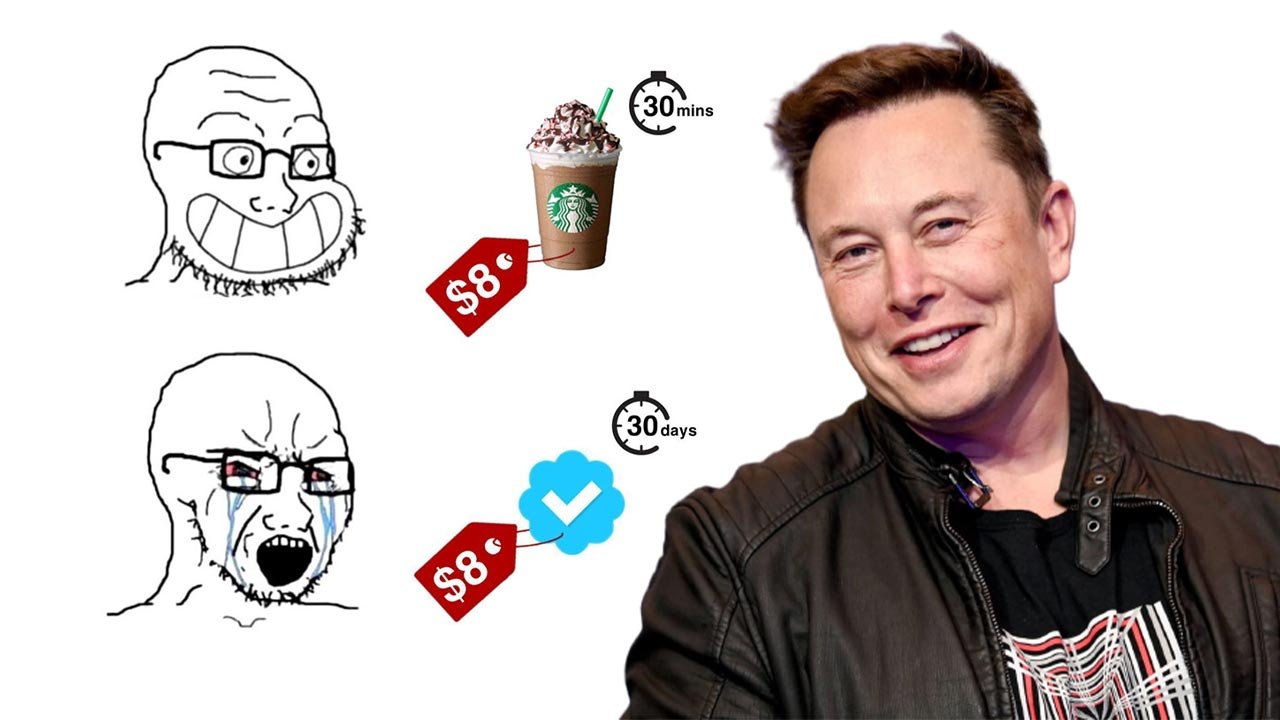
    Elon Musk’s intentions to charge an additional $8 per month for the Twitter Blue service have both amused and incensed online users. This may be the rationale behind Musk’s defense of his choice to charge verified users for their Twitter blue tick badge.

    Musk appears to have turned to memes in an effort to spread the word about his lofty goal of turning Twitter into a revenue-generating platform. The head of SpaceX, who is renowned for his blunt assessment of everything on Earth, has been jokingly outlining his new plan.

    https://twitter.com/Therealdavedfs1/status/1587894312838529024

    In one of his tweets, he posted a meme depicting individuals enjoying their $8 Starbucks coffee while grumbling about having to spend the same amount to maintain their Twitter verification badge.

    Users reacted strongly to the meme that compared the cost of coffee to that of a Twitter subscription. Some people praised the choice, while others criticised the millionaire.

    “They don’t see the vision Mr Musk. I’d pay $80 for a checkmark for even just 30 minutes. Everybody hating on Elon should instead be grateful for the service he is doing for us. He doesn’t get enough appreciation,” said a user. “Mocking of users will continue until profits improve,” chimed in another user.

    Another meme posted by the Tesla CEO depicts two characters discussing shelling out $8 for freedom of speech. Another responds to the question of why pay $8 for Twitter verification by stating that he can still use Twitter for free without the advantages.

    He claimed that Twitter is a fascinating site in another tweet. “Twitter is simply the most interesting place on the Internet. That’s why you’re reading this tweet right now,” read his tweet. In another tweet, Musk said it was good to be attacked by right and left at the same time. “Being attacked by both right & left simultaneously is a good sign,” he wrote.

    On November 1, Musk announced the $8 per month subscription plan for Twitter on his Twitter account. The new CEO continued by outlining several premium services to which users will have access.

    According to him, platform users will be able to publish long videos and audio files as well as receive priority treatment for replies and remarks. Additionally, there won’t be many adverts on subscribers’ feeds.

  • Best-selling author slams Musk’s plan to charge $20 for Twitter’s blue tick verification

    Best-selling author slams Musk’s plan to charge $20 for Twitter’s blue tick verification

    Elon Musk, who recently acquired control of the microblogging network in a $44 billion deal, responded to bestseller author Stephen King’s tweet expressing dissatisfaction over the anticipated cost for a verified badge.

    There have been rumours that Twitter would soon begin charging verified users a monthly charge for the blue ticks on their handles, Mr King said, “$20 a month to keep my blue check? F*** that, they should pay me. If that gets instituted, I’m gone like Enron.”

    The monthly charge is the subject of much rumour, with some reports stating it will be around $5 per month and others estimating it to be as high as $20. The author’s tweet on Enron relates to the significant US corporation’s spectacular collapse following years of explosive growth.

    Responding to Mr King’s tweet, Mr Musk said, “We need to pay the bills somehow! Twitter cannot rely entirely on advertisers. How about $8?”

    Many people believe it is not worthwhile to pay for a blue tick, while others contend that there is nothing wrong with charging individuals for the blue tick. The buzz surrounding the charge for a certified badge has ignited a heated debate.

    According to Musk, who oversaw the dramatic events that led to the dramatic developments of the Twitter takeover that also reached the court, the verification process for accounts is being updated. He made no further explanations.

    If the initiative is approved, users would have to pay $4.99 per month for Twitter Blue in order to keep their “verified” badges.

    Although the project may still be shelved because the CEO of Tesla Inc. has not made a final decision, Platformer predicts that verification will most likely be included in Twitter Blue.

    Musk dissolves Twitter’s board of directors

    In order to further solidify his authority over the social media network, Elon Musk earlier dissolved the Twitter’s board of directors.

    After purchasing the business last week, the multi-billionaire will serve as its CEO, putting an end to months of negotiations over the $44 billion acquisition.

    He has taken swift action to leave his stamp on the company, which is utilised by journalists and politicians all over the world.

    He is thinking about making adjustments to Twitter’s verification process and eliminating positions. According to reports, the first round of layoff is being discussed and may affect 25 per cent of the company’s workforce.

  • NASA captures ultraviolet image of the Sun ‘smiling’ back at Earth

    NASA captures ultraviolet image of the Sun ‘smiling’ back at Earth

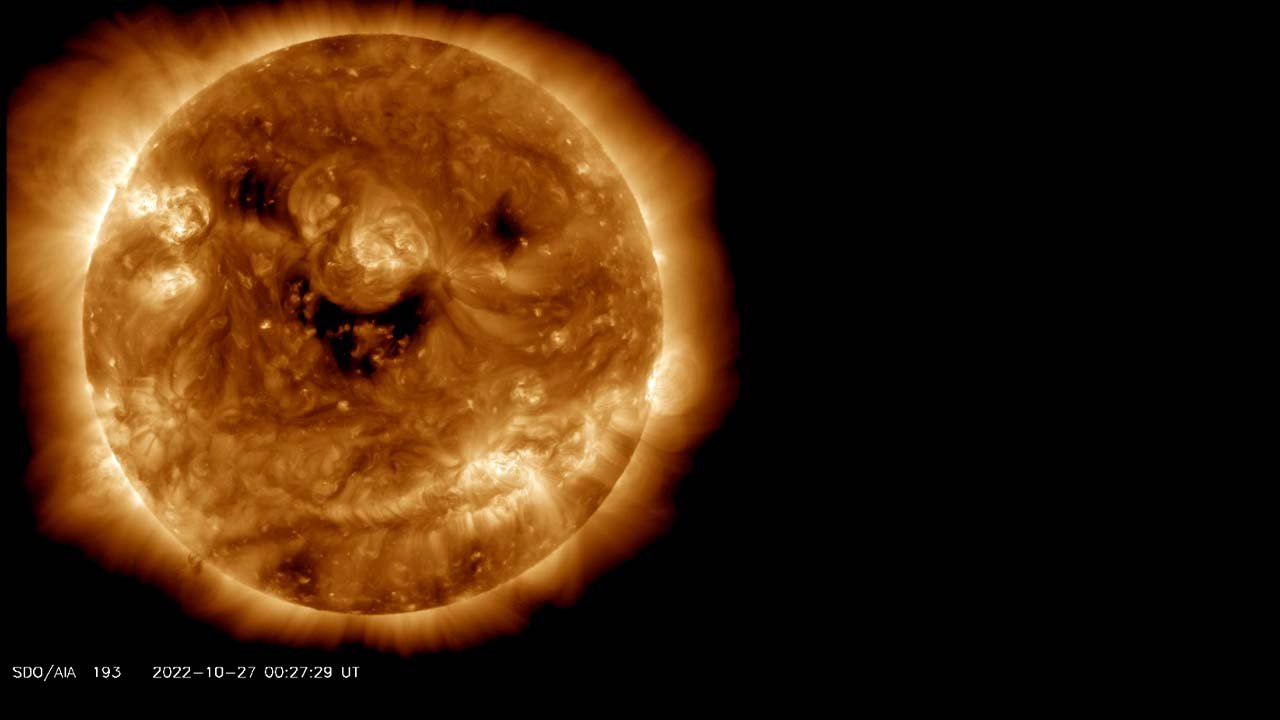
    This week, NASA’s Solar Dynamics Observatory (SDO) captured an ultraviolet image of the sun with three black spots that resemble a smiling face. This face may be a harbinger of a solar storm that might cause issues for Earth.

    A small geomagnetic storm watch has been issued for Saturday by the Space Weather Prediction Center of the National Oceanic and Atmospheric Administration. While geomagnetic storms may produce stunning auroras in the sky, they can also interfere with GPS and cause dangerous currents to flow through the electricity system and pipelines.

    The coronal holes, which are black patches, are places where solar wind escapes into space more rapidly and readily, keeping those places colder. According to the Exploratorium, a museum in San Francisco, these winds may reach speeds of up to 1.8 million miles per hour.

    People took advantage of the chance to create memes and change the smiling sun to resemble a pumpkin or the Stay-Puft Marshmallow Man from the Ghostbusters series.

    In 2014, NASA acquired pictures of the sun that similarly resembled jack-o-lanterns and gave them the name “Pumpkin Sun.” The sun’s active regions, which are what made up the jack-o-face, lantern’s indicate magnetic field disruptions that give rise to solar storms like solar flares and coronal mass ejections.

    Solar physicists employ telescopes that can picture the sun in the extreme ultraviolet spectrum because the human eye cannot see some wavelengths of sunlight. SDO highlights a specific region of the sun’s atmosphere using 13 different light wavelengths.

    “Ultraviolet light from the sun can show us the origins of solar storms that can lead to power outages, cell phone disruptions, and delays in shipping packages due to the rerouting of planes from over the pole,” Joseph Gurman, a researcher at the NASA Goddard Space Flight Center’s Solar Data Analysis Center said.

    “Wednesday’s image was taken at 193 angstrom light, giving it the yellow, light orange hue. The 2014 image was taken at a blend of 171 and 193 angstrom light, colorizing the sun in gold and yellow “to create a Halloween-like appearance,” according to NASA.

    Shockingly, both pictures were taken in October, just in time for Halloween.

  • Twitter is planning to start charging $20 per month for blue tick badge

    Twitter is planning to start charging $20 per month for blue tick badge

    Only a few days after taking over as Twitter’s CEO, Elon Musk is apparently working on some significant improvements. The Twitter Blue membership and even the verification procedure, which awards verified accounts with a “Blue tick,” are expected to undergo modifications.

    According to reports, the Twitter Blue membership will be connected to it, and Musk also has big price increases planned for the subscriptions.

    The new Twitter Blue membership will cost customers $19.99, according to a report by The Verge. Additionally, Twitter accounts that already have the blue tick will need to abide by this new system and pay for it.

    Verified users will have a total of 90 days to switch to Twitter Blue before they lose their checkmark. Employees of Twitter have also been told to resign or move quickly with this new membership plan. According to the article, a deadline of November 7 has been set for the staff.

    Twitter Blue, a paid monthly opt-in membership that grants exclusive access to premium services, was introduced last year. This, according to Twitter, will allow you to personalise your Twitter experience. In the US, Canada, Australia, and New Zealand, the subscription service is now available.

    It will be interesting to watch how Musk implements both a worldwide rollout and a complete overhaul of the payment system. Twitter Blue may be bought in-app on iOS and Android in the territories that are eligible.