Category: Tech

The Current’s tech news keeps you upto date with news of new gadgets, tech updates, information about tech startups and technology reviews.

  • Best Samsung phones available in Pakistan under Rs25,000

    Best Samsung phones available in Pakistan under Rs25,000

    Due to the ongoing depreciation of the local currency against the US dollar and high PTA approval fees, phone prices have increased significantly over the past three years, along with the prices of other gizmos.

    Even so, Samsung, a reputable phone manufacturer, offers a limited number of options on the market that you can take into consideration as Samsung smartphones are known for being more durable than those of other lesser-known brands.

    Here are some of the best cell phones available on the market at reasonable prices:

    Samsung A02Price: Rs16,699

    Display: IPS Capacitive Touchscreen

    Screen Size: 6.5 inches

    ROM and RAM: 32GB Built-in, 3GB RAM  

    Main Camera: Dual 13 MP, f/1.9, (wide), AF + 2 MP, f/2.4

    Front Camera: 5 MP

    Battery: 5,000 mAh 

    Samsung A03 CorePrice: Rs18,500

    Display: PLS TFT Capacitive touchscreen

    Screen Size: 6.5 inches

    ROM and RAM: 32GB Built-in, 2GB RAM  

    Main Camera: 8 MP, LED Flash 

    Front Camera: 5 MP

    Battery: 5,000 mAh 

    Samsung A03  –  Price: Rs21,999

    Display: PLS TFT Capacitive touchscreen

    Screen Size: 6.5 inches

    ROM and RAM: 32GB Built-in, 2GB RAM  

    Main Camera: Dual 48 MP, f/1.8, (wide), AF + 2 MP 

    Front Camera: 5 MP

    Battery: 5,000 mAh 

    Samsung A03s Price: Rs22,499

    Display: PLS TFT Capacitive touchscreen

    Screen Size: 6.5 inches

    ROM and RAM: 32GB Built-in, 3GB RAM  

    Main Camera: Triple Camera: 13 MP, f/2.2, (wide), AF + 2 MP, f/2.4, (macro) + 2 MP, f/2.4, (depth)

    Front Camera: 5 MP

    Battery: 5,000 mAh 

    Samsung A03 4GBPrice: Rs23,999

    Display: PLS TFT Capacitive touchscreen

    Screen Size: 6.5 inches

    ROM and RAM: 64GB Built-in, 4GB RAM  

    Main Camera: Triple Camera: 13 MP, f/2.2, (wide), AF + 2 MP, f/2.4, (macro) + 2 MP, f/2.4, (depth)

    Front Camera: 5 MP

    Battery: 5,000 mAh 

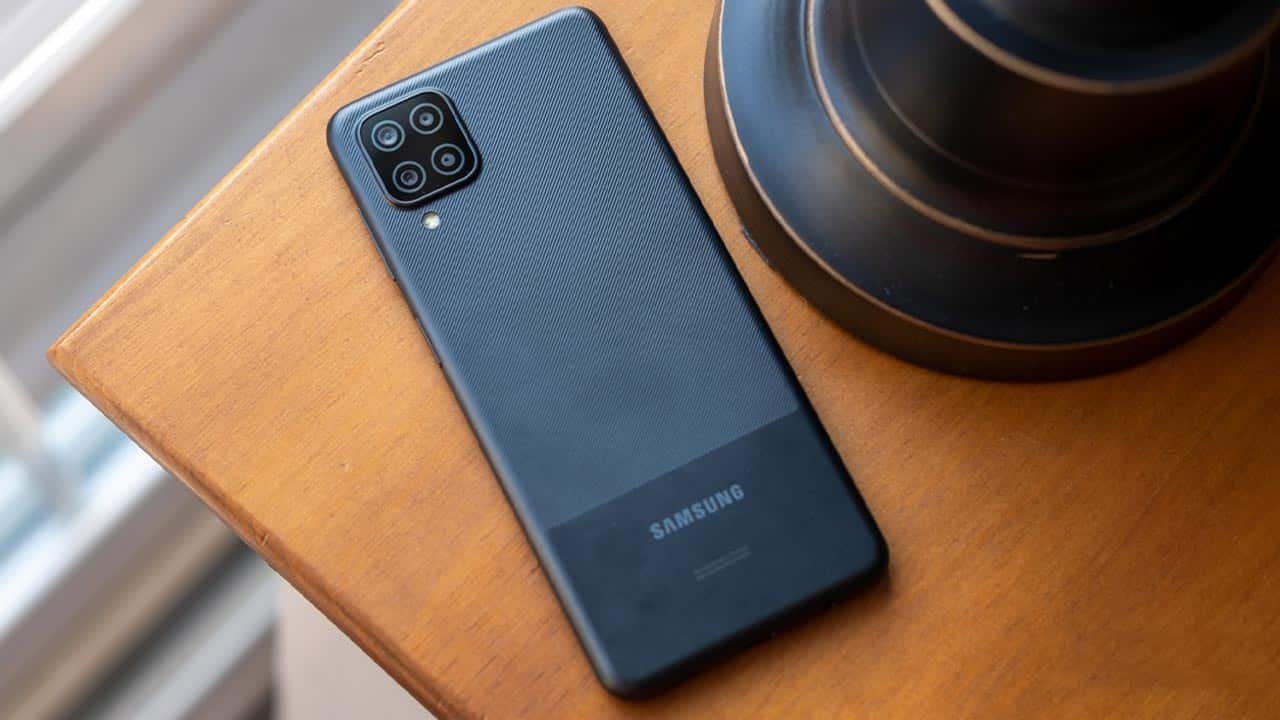
    Samsung A12Price: Rs24,999

    Display: PLS TFT Capacitive touchscreen

    Screen Size: 6.5 inches

    ROM and RAM: 64GB Built-in, 4GB RAM  

    Main Camera: Quad Camera: 48 MP, f/2.0, 26mm (wide), AF + 5 MP, f/2.2, (ultrawide) + 2 MP, f/2.4, (macro) + 2 MP, f/2.4, (depth)

    Front Camera: 8 MP

    Battery: 5,000 mAh (15W fast charging)

  • Nikon may stop making SLRs to focus on mirrorless models

    Nikon may stop making SLRs to focus on mirrorless models

    Nikkei, a Japanese business journal, stated earlier today that Nikon is going to discontinue producing DSLR cameras and concentrate on mirrorless cameras. Naturally, this news spread throughout the camera community and was covered by numerous popular sites.

    Nikon Inc. posted a statement on its website clarifying that it would keep producing, marketing, and servicing its DSLR camera range.

    According to Nikkei’s initial report, the company has discovered that Nikon will withdraw from the single-lens reflex camera sector and pivot toward digital solutions under rising competition from smartphone cameras.

    To be more precise, Nikkei stated that Nikon “plans to focus resources on mirrorless cameras, which have become widespread items as a result of more advanced digital technologies.”

    Nikkei doesn’t go into further detail about how this information was gathered, and it just adds a brief history of Nikon, its history as a photographer, and the situation of the camera market now to the initial piece.

    It’s interesting to note that Nikkei ends the statement by stating that “Rival Canon likewise aims to follow Nikon and discontinue producing DSLRs within a few years,” but it doesn’t provide any further information on that assertion.

    Soon after, Nikon learned about the piece, but not before the photographic community picked up on Nikkei’s first revelation.

    Nikon Inc. posted the following comment on its website in reaction to the report from Nikkei and the articles from other publications:

    ‘There was a media article regarding Nikon’s withdrawal of SLR development. This media article is only speculation and Nikon has made no announcement in this regards. Nikon is continuing the production, sales and service of digital SLR. Nikon appreciate your continuous support.’

    The statement from Nikon Inc. is clear-cut, but Nikon doesn’t specifically refute the details in the Nikkei report. Nikon just states that “Nikon has not announced in these regards” rather than claiming the news is false.

    Nikon does claim that it will keep up “the manufacturing, sales, and service of digital SLR,” but that’s a somewhat nebulous claim that only applies to here and now.

  • Apple’s electric vehicle may lack steering wheel and brake pedal: Leaks

    Apple’s electric vehicle may lack steering wheel and brake pedal: Leaks

    For years, rumours have circulated that Apple is working on a self-driving electric car. The company’s troublesome “Project Titan” is described in-depth in a recent article, along with several intriguing facts about its design, such as the absence of a steering wheel.

    A comprehensive article about Apple’s multi-year effort to create a self-driving automobile was published by The Information.

    The majority of it records information that everyone following “Project Titan” already knows, however, the article also contains some fresh information about the car’s design and difficulties.

    Autonomous vehicles still need to be able to hand over control to people in order to be safe, and they have frequently done so in tests. The study lists numerous instances of this occurring with Titan.

    The most intriguing aspect is that Apple is attempting to obtain approval from the US National Highway Traffic Safety Administration so that it may release the car without a steering wheel or brake pedals, fully committing it to be a self-driving vehicle.

    Another unique element of the project is the seating arrangement concepts from Apple designers. The most recent design has four chairs that face inward, placing passengers face-to-face. Additionally, designers are considering allowing passengers to lie down and sleep.

    A level 5 Apple automobile has been in development for about ten years, but it won’t likely be released to the public for some time. Hyundai was a potential partner for Apple in the past, but discussions ceased in February of last year.

    Project manager Doug Field departed Apple in September of last year to work for Ford, which made the delays much worse.

  • Meta, PTA launch educational series ‘Chai Chats’ to promote digital literacy

    Meta, PTA launch educational series ‘Chai Chats’ to promote digital literacy

    In order to raise awareness of digital literacy and social cohesion among young Facebook users in Pakistan, Meta has created the educational series “Chai Chats” in partnership with the Pakistan Telecommunication Authority (PTA).

    According to DAWN, the series follows a close-knit group of college friends who face challenging online situations and overcome them with grace, friendship, and humour. Its goal is to encourage and persuade young people to adopt positive and responsible online behaviour.

    Through the web series and local community training, the programme hopes to reach millions of young Pakistanis online as well as 180 secondary school teachers and more than 1,000 secondary school students. It will also train educators in at-risk communities to address these issues with at-risk communities.

    The focus of the webisode series “Chai Chats” focuses on the daily online activities of five university buddies and how they support one another in navigating their online and offline lives while also taking into account their varied socio-cultural and behavioural tendencies.

    By connecting with the young audiences, the characters and their story should function as positive role models.

    Chairman PTA Maj. Gen (R) Amir Azeem Bajwa praised Meta’s efforts in a statement about the programme. “This effort will improve Pakistani youth’s capacity to utilise social media platforms in a beneficial, productive, and legal manner for both individual and group well-being.

    Through better digital experiences, Meta has been at the forefront of fostering digital literacy.

    The government of Pakistan is dedicated to using digital technology to hasten socio-economic development across the country, and I believe that this initiative will prove to be a significant first step in that direction, he continued.

    “The programme furthers Meta’s long-term commitment to developing digital literacy in Pakistan and assisting all users to harness the benefits of technology innovation for their growth and socioeconomic success,” stated Ruici Tio, Policy Program Manager, APAC- Meta.

    Its objective, according to him, was to improve the digital and critical thinking abilities of over 1,000 children and 180 teachers in these areas.

  • Pakistani mobile manufacturing businesses are laying off workers due to economic challenges

    Pakistani mobile manufacturing businesses are laying off workers due to economic challenges

    There has been significant upheaval in the economy as a result of the new tax structure, rising inflation, and the power shortage.

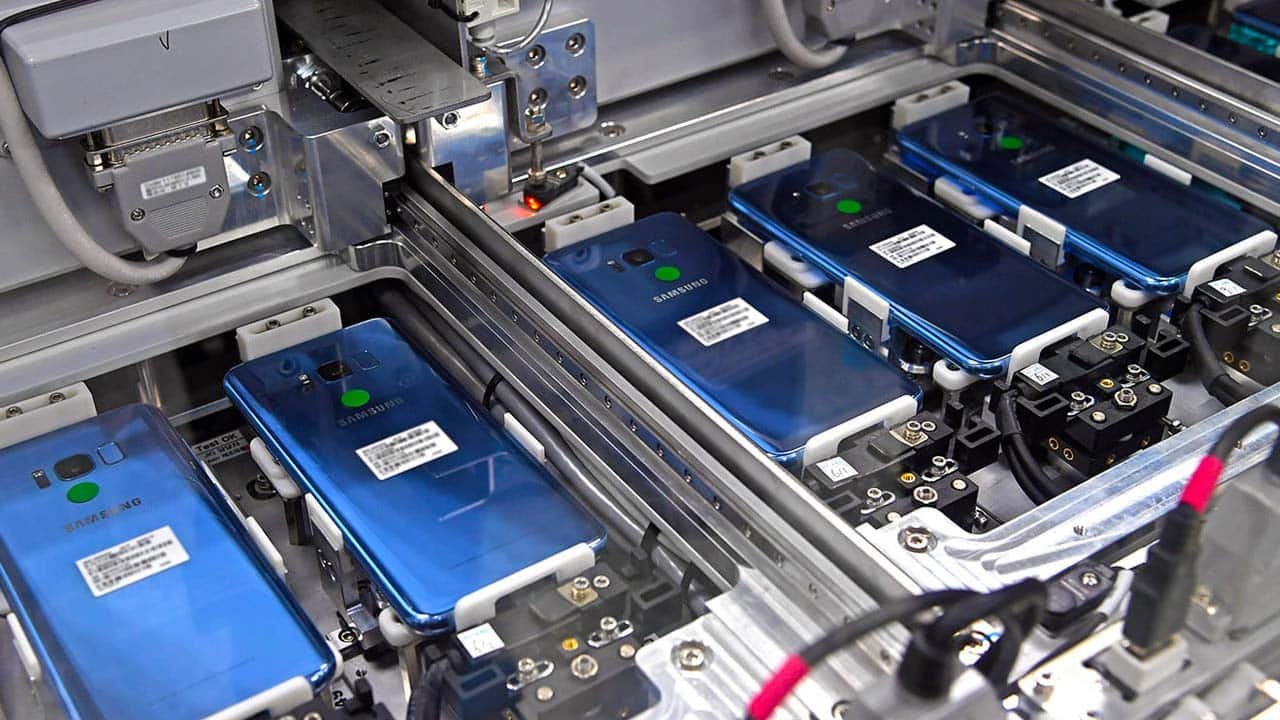
    The Samsung mobile factory, which is owned by Lucky Motors, experienced a similar situation when it had to lay off a number of employees because Pakistan was short on raw materials.

    In addition to Samsung, there have also been reports of firing close to 1,000 workers at the Vivo mobile factory.

    Lucky Motor Corporation was permitted by PTA to manufacture Samsung mobile devices in August 2021, which sounded like a great news in terms of job creation and GDP contribution, among other things.

    In various economic sectors, each economic measure can have numerous impacts. As per economic theory, a nation’s high rate of inflation discourages investment since it makes it less certain that those investments will be lucrative. Humongous unemployment is being caused by this, along with an import ban and a recently implemented “super tax” in Pakistan.

    Additionally, businesses like Careem and Airlift recently stopped operating in some sectors and let go of a number of employees.

    In the year 2020, Careem fired 31 per cent of its workforce due to a pandemic. A number of the staff members at SVWL, Airlift, and Careem Food were let go in 2022. limited their operations or nearly shut down.

  • WhatsApp will soon let you hide online status for more privacy

    WhatsApp will soon let you hide online status for more privacy

    The Last Seen time in WhatsApp can currently be hidden from the public, but your contacts can still see it when you’re back online.

    It appears that the most popular messenger will soon have the option to hide your online status, which has been long desired.

    You can hide your online status from everyone in WhatsApp’s most recent beta version, according to WABetaInfo. This is fantastic if you’re being chased on WhatsApp and don’t want your bothersome relatives or friends bugging you all the time.

    Over the past few months, the messaging service owned by meta has been testing a tonne of incredible new features.

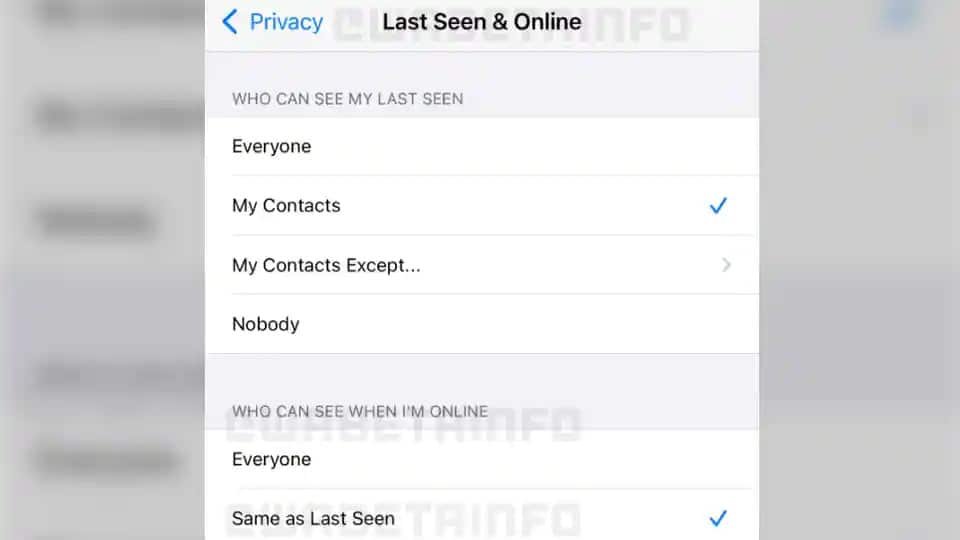
    You will have two options to choose from with the new feature. You have the option of making your online status public if you want it to function like Last Seen. This means that you have the option of letting anyone see your online activity, just your contacts, just your contacts with a few exceptions, or nobody at all.

    Although the screenshot is of iOS, according to WABetaInfo, WhatsApp is also working on bringing the feature to Android and WhatsApp Desktop.

    It is unknown when the feature will go live because it is still in development.

  • Instagram may convert post videos into Reels to compete with TikTok

    Instagram may convert post videos into Reels to compete with TikTok

    Instagram is testing a feature that converts video posts into Reels. According to the company, the modification is a part of Instagram’s plan to streamline video on the app and is currently being tested with a small number of users worldwide.

    With the most recent move made by the blogging platform, Instagram’s efforts to surpass TikTok are clearly growing.

    A representative from Meta stated, “We’re testing this feature as part of our efforts to simplify and improve the video experience on Instagram.”

    The social media consultant Matt Navarra shared a screenshot of an in-app message that reads, “Video posts are now shared as Reels,” on Twitter. Participants in the test will see this message.

    The message warns that anyone can find your Reel and use your original audio to make their own Reel if your account is public and you post a video that ends up being turned into one. Only your followers will be able to see your Reel if your account privacy setting is set to private.

    The message also mentions that if your account is public and you post a reel, anyone can remix it. In your account settings, you can, however, stop people from remixing your Reels.

    As Meta has placed significant wagers on Reels, the test is now. Reels now account for more than 20% of people’s Instagram usage, according to the company’s Q1 2022 earnings report.

    It is not surprising that Instagram wants to completely replace video posts in order to expand Reels. People may spend even more time watching Reels if the company ultimately decides to make this change permanent, which would be something to brag about.

    Instagram’s video components would be even more consolidated if it decides to convert all video uploads into Reels.

    When Mosseri outlined Instagram’s goals for 2022 last year, he said the company would increase its investment in video and concentrate on Reels.

    This change may have been intended all along, as he even made a hint that Instagram would center all of its video products around Reels and continue to expand the short-form product.

  • Samsung starts mass production of advanced 3nm chips

    Samsung starts mass production of advanced 3nm chips

    Samsung Electronics, which is vying with Taiwan’s TSMC for market dominance, declared on Thursday that it had begun mass producing advanced 3-nanometer microchips.

    Before being employed in devices like mobile phones, the new chips will be used in high-performance computer applications. They will be smaller, more powerful, and efficient.

    The first-generation 3nm technology, according to Samsung, “can reduce power consumption by up to 45 per cent, boost performance by 23 per cent, and reduce the area by 16 per cent” when compared to the 5nm process.

    The South Korean company stated last month that it would “push ahead the mass production of chips based on the 3-nanometer technology” with a five-year plan to invest 450 trillion won (US$356 billion).

    Only two businesses, Samsung and Taiwan’s TSMC produce the great majority of the most sophisticated microchips in the world, and both are currently operating at maximum capacity to address a global shortage.

    Although it dominates the memory chip market, Samsung has been unable to keep up with TSMC in the advanced foundry sector.

    According to TrendForce, TSMC holds a majority of the worldwide foundry business with clients like Apple and Qualcomm, while Samsung is in second place with a market share of about 16 per cent.

    As per the company’s 2021 annual report, TSMC intends to start 3-nanometer technology volume production in the second half of this year and 2-nanometer technology development last year.

  • Cellular companies raise call and data bundle prices

    Cellular companies raise call and data bundle prices

    Telecommunications companies in Pakistan, such as Jazz, Telenor, and Ufone, have raised the prices of various call and data package offers.

    According to Propakistani, Jazz has notified its customers of the price increase, and the company has revised the subscription fees for the YouTube and social packages for one week from Rs115 to Rs120, while the price of the WhatsApp package has increased from Rs21 to Rs23 for one week.

    Jazz prepaid monthly premium, which includes 25GB of monthly data and 250 all-network minutes, remains unchanged at Rs650.

    Due to rising inflation, Ufone has also raised its prices. UPower is now priced at Rs120, up from Rs100 previously. The price of SuperCard Plus increased from Rs649 to Rs699 on June 29, 2022. The price of Super Card Gold has also risen by more than Rs100, from Rs999 to Rs1,099.

    Read more: Number of 3G, 4G users in Pakistan increases to 113.89 million

    Telenor package prices have also increased. On June 22, 2022, the price of EasyCard increased from 500 to Rs550; on June 29, 2022, the price of EasyCard increased from Rs650 to Rs700; and the monthly social pack plus increased to Rs100.

    Telecom companies claim that a price increase is required to maintain service quality as inflation rises.

  • Vintage camera auctioned for PKR 3.1 billion

    Vintage camera auctioned for PKR 3.1 billion

    Leica’s inventor Oskar Barnack’s camera was up for bids and was anticipated to bring in a nice little PKR 753 million ($3 million). The Leica 0-Series Model 105 owned by Barnack has now sold for PKR 3.1 billion ($15 million), that is five times the original bid making it the priciest camera ever sold.

    According to RobbReport, the camera owned by Oskar Barnack was put up for auction and was predicted to fetch $3 million.

    The company released the 0-Series to test the market two years prior to the release of the Leica A. Only about 22 were ever produced, and today there are fewer than 12 left, according to the Leitz Auction.

    Oskar Barnack, the man who created Leica, owned camera number 105; his name is inscribed on the Galilean viewfinder. (This is the kind of viewfinder found in older cameras.)

    This camera was reportedly used by Barnack until 1930, when he gave it to his son Conrad and switched to the Leica I Model C, which has interchangeable lenses. The 0-Series Model 105 was still in Barnack’s family up until 1960, when it was acquired by an American collector.

    With the anticipation that the camera would bring in around three million euros, bidding started at one million euros. A little over $15 million, or 14.4 million euros, was the final selling price. It surpasses the old best set by the auction house, which realised $2.5 million from the sale of a Leica 0-Series no. 122 in 2018.

    In addition to the heavily altered camera (which Barnack used for photographic research), the wealthy buyer will also get the original leather lens cap, an aluminium cap personalised with Barnack’s initials, and correspondence related to the Model 105.

    There were plenty of other intriguing pieces of Leica equipment and memorabilia up for auction, though none have been quite as remarkable as the Model 105.

    A black-paint Leica MP brought in $100,000, while one of Barnack’s original prints created in 1914 on an Ur-Leica sold for $9,400. Leica MP Unique Gold, another object about which we had previously written, sold for just over $75,000 at auction.