Category: Tech

The Current’s tech news keeps you upto date with news of new gadgets, tech updates, information about tech startups and technology reviews.

  • Cloudflare fixes widespread outage that knocked popular websites offline

    Cloudflare fixes widespread outage that knocked popular websites offline

    On Tuesday, several popular websites were unavailable due to a widespread outage reported by Cloudflare, an American content delivery network.

    The DNS service, said in a statement that its team was aware of the issues and was working “to resolve as quickly as possible”.

    Cloudflare recently announced in an update that it had resolved a widespread outage that impacted a range of services earlier in the day, including FTX, Discord, Omegle, DoorDash, Crunchyroll, NordVPN, and Feedly.

    Users began experiencing problems accessing popular sites along with Zerodha, Medium.com, news outlet Register, Groww, Buffer, iSpirt, Upstox, and Social Blade about an hour after the internet infrastructure firm resolved the issue.

    According to the statement, a critical P0 incident – defined as an imperative, first-priority problem – was confirmed at 06:34AM UTC (11:57AM PST) and Cloudflare’s network connectivity was disrupted in major zones. “Customers attempting to reach Cloudflare sites in impacted regions will observe 500 errors. The incident impacts all data plane services in our network,” it added.

    Multiple websites in Pakistan were unavailable due to the outage, along with DoorDash, Crunchyroll, Discord, Omegle, Feedly, Zerodha, Medium.com, Register, Upstox, and Social Blade.

  • Number of 3G, 4G users in Pakistan increases to 113.89 million

    Number of 3G, 4G users in Pakistan increases to 113.89 million

    The latest data from Pakistan Telecommunication Authority (PTA) reveals that the number of 3G and 4G users grew by 1.14 million from 112.75 million in April 2022 to 113.89 million in May 2022.

    Pakistan’s cellular subscriber base grew by 0.25 million to 193 million by the end of May 2022, up from 192.75 million at the end of April, according to Brecorder.

    By the end of May, cellular mobile teledensity had risen from 87.6 per cent to 87.67 per cent. By the end of May, the total teledensity had risen to 88.81 per cent, up from 88.74 per cent in April.

    The monthly penetration of Next Generation Mobile Services (NGMS) at the end of April had risen to 51.73 per cent, up from 51.24 per cent.

    Network providers

    The total number of 3G users on Jazz fell from 6.222 million at the end of April to 6.068 million at the end of May, a reduction of 0.154 million. By the end of May, the number of Jazz 4G users had risen from 36.567 million to 37.168 million.

    Zong 3G subscribers fell from 3.357 million at the end of April to 3.272 million at the end of May, while 4G users grew from 27.952 million at the end of April to 28.317 million at the end of May.

    Telenor 3G subscribers fell from 3.696 million at the end of April to 3.613 million at the end of May, whereas Telenor 4G users enhanced from 21.216 million at the end of April to 21.494 million at the end of May.

    By the end of May, there were 3.576 million Ufone 3G users, up from 3.673 million at the end of April. Ufone’s 4G users increased from 8.761 million at the end of April to 9.052 million at the end of May, a 0.291 million increase over the previous month.

  • WhatsApp now lets you hide profile photo, last seen from specific contacts

    WhatsApp now lets you hide profile photo, last seen from specific contacts

    Last year, the Meta-owned messaging platform WhatsApp began developing a new privacy setting that would allow users to hide their profile photos, last seen, and about information from specific people in their contact lists.

    It was only available for beta version users, but the company has now announced that it will be accessible to all iPhone and Android users worldwide.

    Users can now show their WhatsApp profile photo, last seen, and About information to anyone in their contacts list except those they choose to keep out.

    Previously, users could choose between three privacy settings for their profile photo, last seen, and About information: Everyone, My Contacts, and Nobody. According to GSM Arena, these are met by a third alternative named ‘My contacts except…,’ which can also be used for Status privacy.

    However, just like read receipts, if someone doesn’t share their last seen with others, they won’t be able to see others. The only difference is that the latter will always remain operational for group chats, even if they’ve turned it off.

    To test this new privacy control, users can go to WhatsApp’s Settings > Account > Privacy menu on an iPhone or Android device.

    WhatsApp also announced some group calling features, including the ability to mute others during a group call and send messages to particular users, in addition to new privacy control. When someone joins a group call off-screen, a banner appears.

    The latest WhatsApp beta update also includes an admin approval feature, which allows group admins to accept or deny requests from people who want to join via hyperlink.

  • Only 9% of Pakistanis reported misuse of data, 51% unaware: Survey

    Only 9% of Pakistanis reported misuse of data, 51% unaware: Survey

    A survey conducted by Gallup Pakistan and Worldwide Independent Network of Market Research has revealed that only 51 per cent of Pakistanis are aware of the fact that their data can be missed by the applications downloaded on their phones.

    Only 35 per cent Pakistani respondents said that they are aware of it. In addition, only 9 per cent of Pakistanis said they have reported misuse of their data. Fake e-mails, company spam e-mails, bank accounts, credit cards, and e-mail hacking were among the most common issues reported by Pakistanis.

    66 per cent of Pakistanis said that technology is an important part of their lives.

    The survey was conducted between October 15 and December 18, 2021. A total of 33,000 people from 39 countries participated in the survey, out of which 1,000 were from Pakistan.

  • After electricity, telecom companies warn of phone call loadshedding

    After electricity, telecom companies warn of phone call loadshedding

    Following a massive tax hike, telecom companies in Pakistan have warned the public of initiating ‘loadshedding’ of phone calls, similar to power cuts, across the country.

    Telecommunication officials informed senators during a meeting of the Senate Standing Committee on Finance that, like electricity, load-shedding of phone calls would be observed in the coming days, according to ARY News.

    During the meeting, telecom company representatives stated that the federal government has enhanced the advance tax on imported fibre optic cable by 15 per cent while boosting duty by 20 per cent.

    The senators were informed that the companies are experiencing severe financial difficulties as a result of the enhanced financial strain of importing fiber-optic.

    Telecom company representatives claimed that fibre optic cable is only used in 10 per cent of towers across the country, and that unless the government lowers fibre optic cable taxes, Pakistan will fall behind in the global connectivity race.

    After hearing the telecom companies’ arguments, the Senate committee recommended that the federal government reduce relevant taxes on fibre optic imports.

  • Are you ready to buy Snapchat Subscription?

    Are you ready to buy Snapchat Subscription?

    Snapchat is reportedly working on a subscription plan that will allow users access to several features, including the ability to pin conversations. With the launch of Snapchat +, users may have to pay to access exclusive, experimental, and pre-release features on social media platforms. With a premium subscription, Snapchat users will get a special Snapchat icon and a special badge.

    What is Snapchat Plus?

    With Snapchat Plus, Liz Markman (Snapchat Spokesperson) reports, subscribers will have access to certain features of the app.

    “You’ll be able to pin friends as best friends, get custom snap chat icons and subscriber profile badges, and see how many retweets you have on Snap Stories”. He also notes that “you will be able to see your friends’ location in the last 24 hours, but only if they share it with you”.

    Why paid when they can offer free?

    This is not the only social media platform to launch a paid subscription model. Other social media platforms are also running the same race. For example, Twitter launched its first subscription offer, Twitter Blue, in June, which is currently available in Australia, New Zealand, and Canada.

    The transition to a subscription-based business model may be the result of app tracking transparency, a feature introduced by Apple in iOS 14 that requires apps to ask users before they can track their data. Companies such as Snap and Meta have publicly stated that Apple’s new guidelines have affected their revenue, which is largely based on advertising.

    By introducing new subscription plans, these companies hope to offset the loss in advertising revenue by charging for access to special features that will not be available to free users.

    How much does Snapchat Plus cost?

    The service costs € 4.59 (Rs1,009) monthly or € 45.99 (Rs10,111) per year.

    It is not clear when Snapchat Plus will launch as it is still in testing mode, but keep an eye out for it. Will you pay for it?

  • TikTok is the fastest growing platform among social media apps: report

    TikTok is the fastest growing platform among social media apps: report

    Data from the Reuters Digital Media Report 2022 shows that among users of social media platforms, TikTok took over Snapchat and Telegram in 2021 and 2022 respectively, across the world. It is the fastest growing platform among all social media channels. In 2021, only five per cent of the global audience was using TikTok and this number has grown to 16 per cent in 2022. Snapchat audience decreased by one per cent to 12 per cent while Telegram has seen an increase of five per cent with new global audience of 12 per cent.

    The table shows change in audiences using Snapchat and TikTok

      2020 2022 Change
    TikTok 5 per cent 16 per cent 11 per cent
    Snapchat 13 per cent 12 per cent -1 per cent

    Social media usage has also increased throughout the world.

    Trust in BBC falls by 20%

    Data mentioned in the report also shows that the average level of trust in news networks globally has reduced by eight points from 50 per cent to 42 per cent in a year. Moreover, in the UK, the proportion of people not trusting BBC has increased from 11 per cent to 26 per cent while the proportion trusting BBC has fallen by 20 per cent.

    The attached graph shows how the UK audience’s trust in the BBC has dwindled over time.

    Another important thing to notice is that TikTok is not just being used for fun videos. It is also emerging as a new player in the news ecosystem. More and more people are turning to TikTok for their news. It has also taken over Snapchat for news as well.

      2020 2022 Change
    TikTok 1 per cent 7 per cent 6 per cent
    Snapchat 3 per cent 2 per cent -1 per cent
    Audience is less interested in news

    Globally, the interest of people in news is falling. The proportion that says they are extremely interested in the news has fallen sharply over time. On average, in 2015, 67 per cent of global audiences was interested in the news while this number declined to 47 per cent in 2022 with a change of -20 per cent.

    Country 2017 2022 Change
    Argentina 77 per cent 48 per cent -29 per cent
    Brazil 82 per cent 57 per cent -25 per cent
    Spain 82 per cent 55 per cent -27 per cent
    UK 65 per cent 43 per cent -22 per cent
    USA 68 percent 47 per cent -21 per cent
    Consumers are avoiding the news

    The report also says that 38 per cent of the audience actively avoided news in 2022. The audience becoming least interested in the news has been increasing from 2017 to 2022 in every country except for Italy. The attached graph shows the percentage of people staying away from news in different countries.

    The most common reason for avoiding news is politics and Covid-19. Data shows that 43 per cent of users avoid the news because of excessive news regarding Covid-19 and politics. Moreover, 36 per cent of the audience thinks that the news has a negative impact on their mood.

    People under the age of 35 struggle to understand news

    People under 35 are also finding it hard to understand the news and it is causing them to avoid the news.

    Younger audiences want journalists to express personal opinions

    Data from the report shows that 46 per cent of the population between the ages of 18-24 do not want news channels to just report news on social media but want them to express their personal opinions alongside reporting news, while the opposite is true for people of age 55+. 57 per cent of older people want news channels to stick to reporting the news. The older the consumer, the more the proportion of them want journalists to stick to just posting news on social media.

    Majority uses smart phones to access morning news

    In most countries, the majority use mobile phones to access news in the morning with the highest percentage being 43 per cent in Norway. In most countries, the least used medium for news is print media. The 2021 report shows that the lockdown during Covid-19 proved to be a nail in the coffin for print media.

    Younger audiences prefer watching the news rather than reading it

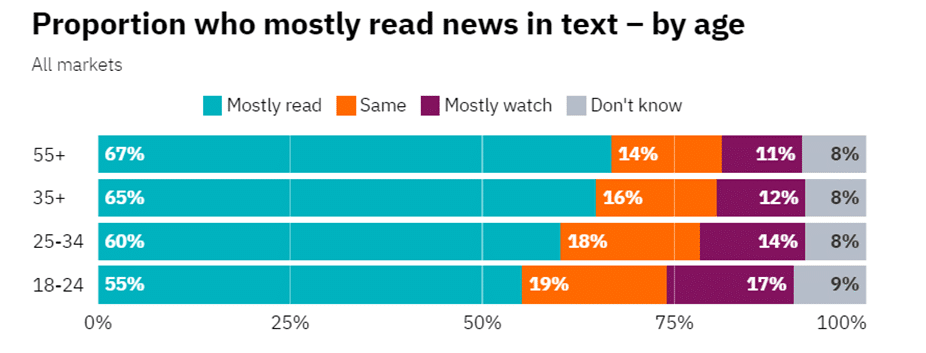
    Although the significant majority still prefers reading news irrespective of age, data reveals that people aged 18-24 prefer watching the news (17 per cent) which is more when compared to older people (11 per cent for age above 55). The younger you are, the more you prefer watching the news rather than reading about it.

    Key findings in Digital Media Report 2021

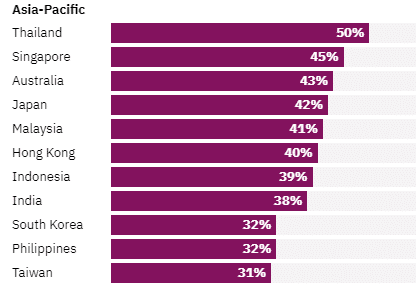
    Data from the digital media report last year (2021) showed that the trust level for news reports in Asia-Pacific is no more than 50 per cent with the most being in Thailand. It is important to notice that the USA is reported to have a trust level of 29 per cent in the news, which is the lowest of all 46 countries selected for the report. The report says it is the aftermath of deep division over the US ‘stolen election reports’ and the killing of George Floyd.

    To measure the trust level, people were asked to indicate if they trusted the news posted on social media,

    Other key findings of last year’s report showed that Facebook, which was known for Covid-19 misinformation, was still used by 32 per cent for news and the most successful social media platform was YouTube.
  • Microsoft advises users to move on as Internet Explorer dies at 27

    Microsoft advises users to move on as Internet Explorer dies at 27

    Microsoft has formally advised users to abandon the 27-year-old Internet Explorer in favour of the company’s newer Edge browser.

    Support for Internet Explorer 11 is being terminated today, the legendary web browser is being phased out in favour of Microsoft Edge.

    After moving away from the Internet Explorer branding with the release of Windows 10 in 2015, it’s the end of an era on the internet.

    There aren’t many changes for users. Internet Explorer’s usage has dropped dramatically in recent years, as it accounts for less than a 5 per cent market share of all browsers.

    For years, Microsoft has worked to discourage users from using Internet Explorer, referring to it as a compatibility solution rather than a browser that businesses should actively use.

    While Microsoft’s Edge, which is powered by Chromium, is now the default browser in Windows 11, the MSHTML engine that powers Internet Explorer is still included. It exists solely to enable IE mode in Microsoft Edge, which Microsoft states will be supported until at least 2029.

    For web apps and sites that require Internet Explorer, businesses have mostly switched to Edge’s IE mode. This IE mode for Edge was established by Microsoft in 2019, and it supports older ActiveX controls that are still used by many legacy sites.

    Multiple businesses will be caught off guard by the Internet Explorer retirement, or will not be able to completely phase out its use in time.

    Some government departments and financial institutions in Japan have been reluctant to respond to the IE retirement, according to Nikkei this week. For example, the Japan Pension Service website must be viewed in Edge’s IE mode.

    Thousands of comparable enterprises and instances of Internet Explorer usage are expected to exist around the world.

    For years, Microsoft has been warning of today’s Internet Explorer retirement, and it’s still being cautious with alerts and redirection until the browser is completely eliminated in the coming months.

  • Here’s why iOS 16 is going to be the finest upgrade ever

    Here’s why iOS 16 is going to be the finest upgrade ever

    On paper, Apple’s iOS 16, the iPhone’s next big software upgrade, appears to be innovative and super secure. iOS 16, which was previewed at Apple’s annual conference, would bring enhancements to communication, personalisation, and privacy. This contains significant upgrades to the lock screen, Messages app, and photos on your iPhone.

    The developer beta for iOS 16 is already available, with a public beta version expected in July. iOS 16 will be released this fall, most likely alongside the much-anticipated iPhone 14. The new software is also compatible with iPhone 8 and subsequent models.

    “Embarrassing errors are a thing of the past,” Apple Senior Vice President of Software Engineering Craig Federighi said as he unveiled three of the Messages app’s most requested additions.

    For starters, you’ll be able to edit sent texts in iOS 16. So, if you find a typo after sending a message, you’ll be able to correct it later. In the message’s status, a small “edited” shows.

    Next, and perhaps the best feature, you can recall a sent message right away. If you mistakenly send an incomplete message, you can utilise the Undo Send feature to prevent it from being read, making your friends and family think you’re crazy.

    Finally, you may flag unread messages and threads. When you don’t have time to answer a message right away but want to make sure you don’t forget about it later, this could be a useful tool.

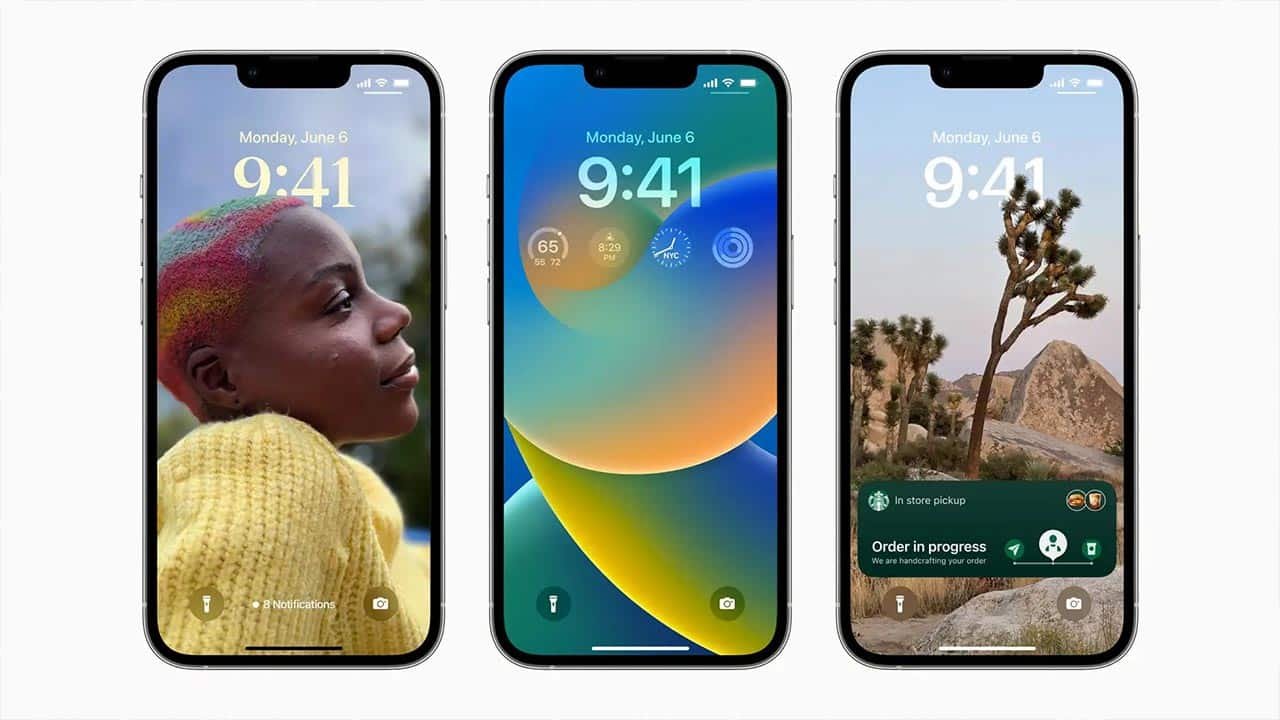
    The lock screen is one of the first things you see when you open your iPhone, especially if it has Face ID. The iPhone’s lock screen receives the most significant improvement yet with iOS 16. To edit your lock screen, press and hold. You can swipe through a variety of different styles.

    Each design alters the background photo’s colour filter as well as the typeface on the lock screen, ensuring that everything is in sync. This appears to be Apple’s response to Google’s Material You, which debuted with Android 12.

    You can also change the typefaces for the time and date, as well as add lock screen widgets like a calendar, temperature, and activity rings. On the Apple Watch lock screen, the widgets are similar to complications.

    You can also create many personalised lock screens with various widgets and switch between them with a simple swipe. There’s even a photo-shuffle feature that changes the photographs on your lock screen automatically.

    An always-on display was one feature we thought Apple would provide. It’s a feature found on practically all Android phones, as well as the Apple Watch. There’s a chance it’ll be released alongside the iPhone 14.

    As alerts might sometimes obscure the photo on your lock screen, iOS 16 pushes notifications to the bottom of your screen. Instead of being gathered into a list, they show as a vertical carousel as you receive them. This not only looks better, but it should also make one-handed use of your iPhone much easier.

    Another issue with notifications is addressed in iOS 16. You may receive a series of notifications from one app in a sequence, such as the score of a basketball game. Instead of experiencing a succession of interruptions, a new tool for developers called Live Activities makes it easy to remain on top of things happening in real-time from your lock screen.

    Sporting events, workouts, and even the progress of an Uber ride should be easier to monitor with Live Activities.

    Visual Look Up in iOS 15 analyses photographs and can recognise objects such as flora, landmarks, and pets. This is taken to the next level with iOS 16. You may remove a photo’s subject. Interestingly, It’s just a tap-and-hold tool for removing the background from a photo.

    Safety Check is a programme that tries to assist people who are in violent relationships. It’s a new service that is designed to assist those who are in violent situations. It allows you to check and change who has access to your iPhone’s location information, passwords, messages, and other apps.

    Several changes have been made to the focus mode. The first uses widgets and lock screen appearance to apply Focus behaviours. So you could have one lock screen for when Work Focus is turned on and another for when you’re working out.

    Moreover, Apple has added Focus filters to apps that apply your iPhone’s Focus mode. For example, depending on which Focus mode is active, you can limit which tabs are displayed in Safari.


  • Coming budget 22-23 will improve Pakistan’s IT sector

    Coming budget 22-23 will improve Pakistan’s IT sector

    Prime Minister (PM) Shehbaz Sharif emphasised the importance of drafting an economic strategy during the day-long Pre-Budget Business Conference on Tuesday, stating that all stakeholders should work together to develop a framework for attaining economic growth.

    During his speech, the PM stressed the importance of financial management in order to boost exports and agricultural yields. The meeting was attended by senior economists, industrialists and was organised by the government to explore avenues of consensus-based economic initiatives, according to APP.

    “All of us will have to move collectively. The government will need guidance from stakeholders and experts. The government will form a taskforce on agriculture and exports for formulating comprehensive plans,” he said.

    PM Shehbaz stated that his government had about 15 months to implement short and medium-term economic initiatives.

    He was disappointed that Pakistan was lagging behind other countries, despite the fact that the rest of the world had excelled by following their development plans. He claimed that Pakistan was endowed with talented individuals capable of replicating India’s success in the IT sector.

    PM Shehbaz announced that he had assigned Minister of Information Technology Aminul Haque the objective of increasing IT exports to $15 billion in the next two years. “We cannot progress until we set ambitious targets,” he stressed.

    Syed Amin Ul Haque pledged on Tuesday to increase information technology exports to $5 billion by the end of 2023.

    For the coming fiscal year, several IT and telecommunications programmes have been proposed in this regard.

    According to sources, these projects include 31 existing and two new ones, for which the Pakistani government would give Rs4,438.696 million and foreign aid will provide Rs1,042 million.

    Budget allocation for IT sector

    Reportedly, an amount of Rs100 million is proposed for IT professional certification through the Pakistan Software Export Board, while Rs80 million is planned for Crime Analytics and Smart Policing. In Azad Jammu and Kashmir and Gilgit-Baltistan, Rs50 million has been suggested for demand-driven industry, while Rs179 million has been earmarked for the building of a data centre to provide cloud-based services.

    PM Shehbaz warned that development plans could not be implemented unless political stability was achieved. The premier also stressed the importance of concentrating on exports and developing the agricultural sector.

    He went on to claim that he was aiming to ‘fix’ friendly country relations that had deteriorated during the previous administration’s tenure. “I have invited China, Japan, Turkey, and other countries to invest in Pakistan,” he said. He invited the corporate community to join him in this endeavour.

    Meanwhile, Finance Minister Miftah Ismail stated that the government will require $41 billion in the next 12 months and that he is ‘confident’ that this can be achieved.

    The Shehbaz Sharif government, he added, has re-engaged with the International Monetary Fund (IMF). “We spoke with them and are extremely optimistic that we will reach an agreement with the IMF soon. That is something we are extremely certain about”.

    Moreover, he explained that the present coalition administration had made difficult measures to help the economy stabilise. “It is difficult for any prime minister to authorise a fuel price hike of twice the amount we have, but we were losing Rs84 per litre on diesel and Rs69 per litre on petrol”.