Category: Tech

The Current’s tech news keeps you upto date with news of new gadgets, tech updates, information about tech startups and technology reviews.

  • WhatsApp rolls out payment services in India

    WhatsApp rolls out payment services in India

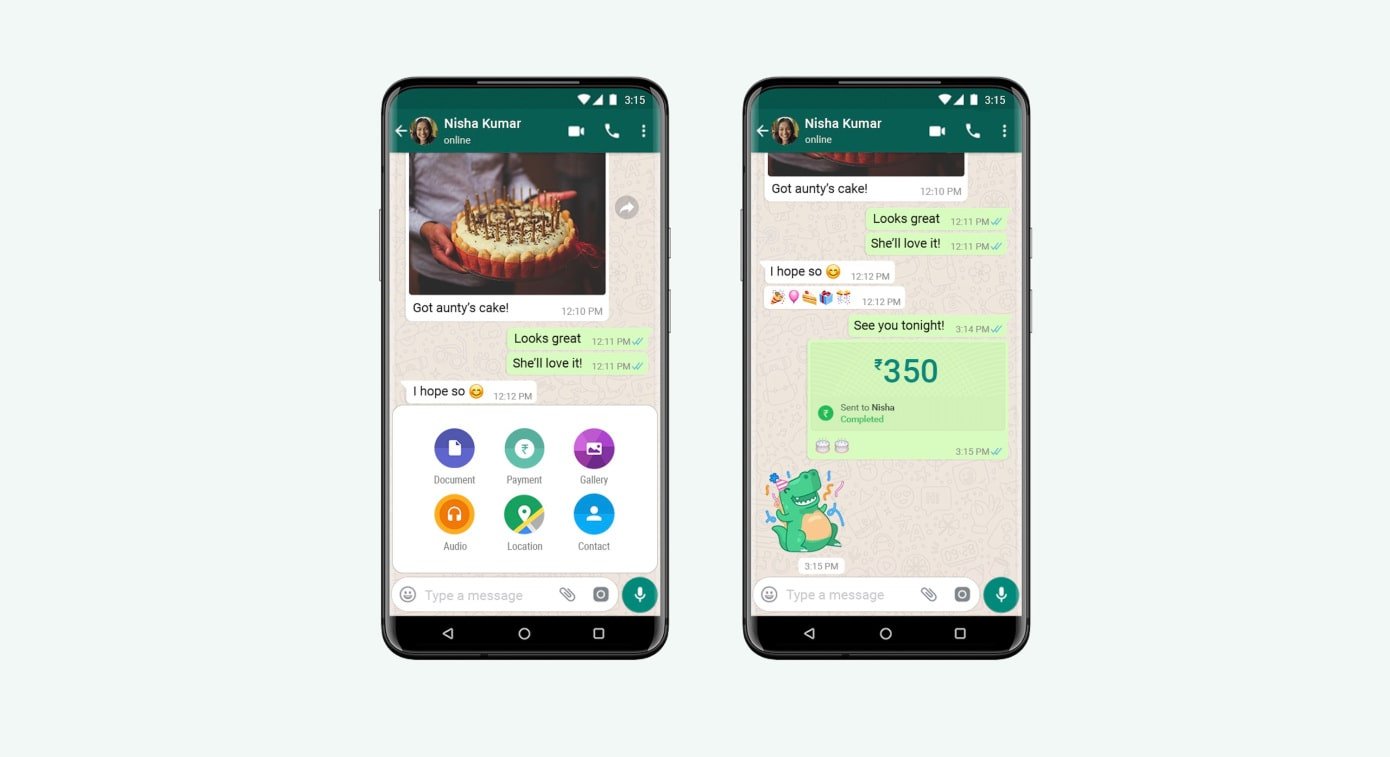
    WhatsApp began testing its payment services in India with one million users in 2018, and now they are rapidly expanding the feature to capture the world’s second-largest economy.

    The Facebook-owned company said on Friday that it is rolling out payments in ten regional languages in the latest stable version of WhatsApp on Android and iOS.

    The company made the announcement when National Payments Corporation of India (NPCI), the body that runs the Unified Payment Interface (UPI) system, approved to roll out the feature in the Indian market.

    Like Google, Samsung and several other firms, WhatsApp has built its payments service in collaboration with large banks in India.

    NPCI said WhatsApp, which has accumulated over 400 million users in India, can expand payments to its users in a “graded-manner”, and to start with, it can only roll out the payments service to 20 million users and has to work with multiple banking partners.

    WhatsApp said that they are already working with leading banks like ICICI, HDFC, Axis, Jio Payment, and the State Bank of India.

    Google and Walmart are currently dominating the mobile payments market in India; together they have almost 80% of the UPI market share.

    UPI’s popularity has diminished the relevance of several firms in India, including SoftBank and Alibaba-backed Paytm that spent years building mobile wallets. Unlike UPI apps, mobile wallets are not interoperable with other mobile wallets and levy a small fee to consumers.

    “With UPI, India has created something truly special and is opening up a world of opportunities for micro and small businesses that are the backbone of the Indian economy. India is the first country to do anything like this. I’m glad we were able to support this effort and work together to help achieve a more digital India. I want to thank all our partners who’ve made this possible. When people can access financial tools, they’re more empowered to support themselves and others or start a business. Long term, we need more innovation that gives people control over their money, and making payments easier is a small step that can help,” said Mark Zuckerberg, Chief Executive Officer (CEO) of Facebook, in a video posted on Friday.

    Facebook itself has made a big push in e-commerce in the past year. And if WhatsApp gains traction with payments, it could open more avenues for its parent firm.


  • Trump Jr shares map showing occupied Kashmir as part of Pakistan

    Trump Jr shares map showing occupied Kashmir as part of Pakistan

    The youngest son of the American president, Donald Trump Jr, has shared a world map that showed Indian occupied Kashmir (IoK) as Pakistani territory.

    While the red areas on the map depicted Trump supporters from all around the world, the tweet went viral for other reasons.

    Trump Jr made more than one critical error in the map. He confused India with Iran, showed the Caspian Sea, Black Sea, Azov Sea, Aral Sea, and Antarctica as countries, while many other Asian countries as water bodies.

    It got more exciting when Indians realised that the entire Kashmir region had actually been shown as part of Pakistan. Trump’s map showed India in blue, while Jammu and Kashmir in red along with Pakistan, depicting support for Donald Trump.

    The tweet left Indian Twitterati going crazy as they criticised Trump Jr over “wrong; depiction of geographical boundaries”.

    Some politicians also pulled in. Congress leader Shashi Tharoor took a dig at the Modi government and ridiculed the prime minister’s “bromance” with Trump.

    On the other hand, Pakistanis declared celebration, especially, after renowned comedian Jeremy McLellan’s tweet.

    This is the second time in recent days when Pakistan’s new political map has gained international recognition. Last week, Saudi Arabia issued a celebratory banknote of 20 Riyals, showing Kashmir as part of Pakistan.

  • ‘Baby Shark’ dethrones ‘Despacito’, becomes most-watched video on YouTube

    ‘Baby Shark’ dethrones ‘Despacito’, becomes most-watched video on YouTube

    Baby Shark became the most-watched YouTube video on Monday, with more than seven billion views.

    ‘Baby Shark Dance’, the English-language version of the song, crossed over seven billion views on YouTube on Monday, even more than Luis Fonsi and Daddy Yankee’s ‘Despacito’ as the most-watched video on the platform.

    The ubiquitous children’s song was first uploaded to YouTube in June 2016. It is a remix of an American campfire song by the Seoul-based production company Pinkfong.

    The song has plenty of adult fans and entered global viral fame: The Washington National’s baseball team took it up as an anthem and went on to win the World Series last year, prompting the White House to play the tune during the celebrations.

    One US town played the song on a loop, while another, Florida’s West Palm Beach, used the melody to try to discourage homeless people from congregating in a public area.

    Two of the last four tracks to hold the most-played record on YouTube are South Korean — rapper Psy’s megahit ‘Gangnam Style’ held the title for more than three years until it was dethroned by Wiz Khalifa’s ‘See You Again’.

  • Marriott Hotels fined £18.4m for data breach that hit millions

    Marriott Hotels fined £18.4m for data breach that hit millions

    The United Kingdom’s (UK’s) privacy watchdog has fined the Marriott Hotels chain £18.4m for a hack that compromised the data of more than 339 million guests.

    The Information Commissioner’s Office (ICO) said names, contact information, and passport details may all have been compromised in a cyber-attack.

    The breach included seven million guest records for people in the UK. The ICO said the company failed to put appropriate safeguards in place.

    The first part of the cyber-attack happened in 2014, affecting the Starwood Hotels group, which was acquired by Marriott two years later. But until 2018, when the problem was first noticed, the attacker continued to have access to all affected systems, including:

    Names
    Email addresses
    Phone numbers
    Passport numbers
    Arrival and departure information
    VIP status
    loyalty program numbers

    On that basis, the ICO said Marriott had failed to protect personal data as required by the General Data Protection Regulation (GDPR).

    “The cyber-criminals had been in the systems for years and were effectively thrown into the merger deal without Marriott having a clue. Herein lies the issue, though – it seems that the hotel didn’t check what it was buying,” said cyber reporter, Joe Tidy.

    The ICO report makes clear Marriott beefed up the security of Starwood’s IT systems far too late and the hackers had free rein to move around, cherry-picking the data that would sell best on criminal forums.

    The fine is nothing like the £99m the ICO planned to issue, but it’s still a massive deterrent for future companies. It may make executives planning their next big mergers look more carefully and cautiously at the databases they’re about to acquire.

  • New study reveals ‘all messengers are leaking your personal information’

    New study reveals ‘all messengers are leaking your personal information’

    All messaging applications have support for link previews, this feature expands any website links you send or receive in a chat with images and any brief description. A recent study has shown that these previews can leak all your sensitive data, drain your battery and consume bandwidth.

    To preview, you have to visit the link through the app, open the file that’s in there and survey it. This can leave you vulnerable to malware or force an app to download files that are too big, causing it to crash and drain the battery.

    Surprisingly, the list of apps included messengers from Facebook, Instagram, LinkedIn, Line and few others. Some cases of these apps were found with issues such as leaking IP addresses, unnecessarily downloading gigabytes of data in background and exposing links sent in end to end encrypted chats.

    Facebook Messenger and Instagram showed the worst results as they would download a copy of a linked file in its entirety, even if it was gigabytes in size. Most other apps would cap the amount of data anywhere from 15MB to 50MB.

    These findings are quite alarming; your personal information isn’t safe on any online platform. Private messages are not so private.

  • Pakistan to introduce 5G by end of 2021

    Pakistan to introduce 5G by end of 2021

    In an attempt to catch on with the rest of the world in terms of the latest technology, Pakistan Information Technology Minister Aminul Haq has announced that the government will introduce 5G wireless technology by December 2021.

    In a statement, the IT minister said that the government was taking effective measures to introduce the latest service in Pakistan and it would ensure that this is done by the end of next year.

    The trial run of 5G would start from a hospital in Islamabad and Zong, a Chinese telecom company, would help the government in this regard, he said. However, before this step, the government will have to connect Islamabad, Karachi, and Gwadar via fibre optics network, he added.

    Furthermore, the IT ministry has established a policy committee on bidding for the 5G service. The committee has the representation of the members of all the stakeholders — telecom companies and the Frequency Allocation Board.

    The committee is currently looking for an international consultant to auction the 5G licences, which would be followed by the biddingprocess, its starting price, and other conditions.

    In August 2019, Pakistan successfully tested 5G network in the country. “Zong has become the first operator in Pakistan to successfully conduct a 5G trial and this is yet another milestone for the company,” Wang Hua, chairman and CEO of Zong, had said following the trials.

    Khaleej Times had reported that the 5G service in Pakistan will be 100 times faster than the current levels, while the network will be 10 times faster than existing broadband connections available in the country. “5G home routers speed has been recorded at 4 gigabytes per second, which means that it can download a 50gb file in just two minutes,” the report had added.

    But the road to 5G isn’t easy and Pakistan still has to go a long way to achieve this milestone. For example, the United States only has 5G coverage in 25 cities, whereas in China, only 50 cities have 5G coverage. “On top of it, the kind of 5G available for now is some kind of speed boost over 4G instead of the full-fledged 5G services,” said a report by Profit magazine.

  • Zoom’s end-to-end encryption has arrived

    Zoom’s end-to-end encryption has arrived

    Zoom’s end-to-end encryption (E2EE) has arrived, allowing both free and paid users to secure their meetings so that only participants, not Zoom or anyone else, can access their content.

    Zoom E2EE has launched in technical preview, which means Zoom is asking for feedback on the feature for 30 days. However, the company says that E2EE will continue to be available after this period. Instructions on how to enable it can be found in Zoom’s help center.

    Zoom has previously offered encryption for its calls, but the data was only encrypted between each meeting participant and Zoom’s servers, rather than being end-to-end encrypted between participants. 

    Once E2EE is enabled, you can check Zoom is using the more secure kind of encryption using the green shield at the top left of a meeting window. The shield will show a padlock rather than a checkmark if the meeting is encrypted end-to-end.

    Zoom’s E2EE meetings support a maximum of 200 participants. That won’t affect users on Zoom’s Basic or Pro plans, which max out at 100 participants, but it could be a problem for Business or Enterprise subscribers which would otherwise allow for up to 300 or 500 participants.

    This initial launch is just the first of four phases Zoom is planning for its end-to-end encryption offering. The next phase is scheduled to include better identity management and support for single sign-on and is planned to launch next year.

  • Facebook takes its first small steps into the world of cloud gaming

    Facebook takes its first small steps into the world of cloud gaming

    Facebook is the latest tech giant to get into the world of cloud gaming — but the company is offering quite a bit different than the competition.

    Unlike Amazon or Google, which both offer standalone cloud gaming services for a fee, Facebook is introducing cloud games on the existing app — several of which are playable right now.

    “We’re doing free-to-play games, we’re doing games that are latency-tolerant, at least to start,” says Jason Rubin, Facebook’s vice president of play.

    “We’re not promising 4K, 60fps, so you pay us $6.99 per month. We’re not trying to get you to buy a piece of hardware, like a controller.”

    “We give away a lot of stuff for free because that is a business for us,” says Rubin. “Don’t undervalue just having people engage with communities on Facebook. That is what we do.”

    Users can play games without downloading them on their mobile devices. The purpose of launching this service is to facilitate the distribution of mobile games. The company is not trying to compete with Nvidia, Microsoft, or Google.

    Apart from allowing users to play instant games via its messaging service and News Feed, the new service also lets users set up a player name and an avatar. Moreover, players can cross-play and challenge their opponents while playing the cloud version of a particular game.

    Facebook’s cloud gaming service also focuses on how developers will be able to advertise their games. Instead of the usual screenshot or maybe a short clip of gameplay, the service will allow developers to create demo versions of their game that people can play instantly.

  • Facebook to launch free website builder

    Facebook to launch free website builder

    Facebook is planning on launching its own free website builder and paid web hosting service.

    The news was officially announced in a blog post by the company. According to Facebook, this new service will be beneficial for all the startups and medium-sized firms, who are looking for a cost-friendly and reliable services.

    They are also looking forward to provide a new option for businesses to manage their WhatsApp messages via the hosting services that will be provided by Facebook. This option will make it easier for all the small and medium-sized business to get started. They can now sell their products, manage almost everything and respond to the messages they receive. They will easily communicate with their employees and customers.

    Apart from making the hosting service available in a few months, it also plans on introducing ways purchase directly through WhatsApp chats. The compatibility with the existing e-commerce will be monitored, this will make things easier for retailers.

  • Here’s why you should market your business on social media

    Here’s why you should market your business on social media

    With emerging technology, social media is one of the best platforms to market your business. You don’t have to miss this phenomenal marketing strategy for your business growth. Here are some of the best reasons to market your business on social media.   

    1. Increased brand awareness 

    The best approach to discover the needs of your clients than directly speaking with them, is marketplace awareness. Market place awareness is to enhance your ability to assess the entire marketplace from a macro level. Primarily, the basic way to analyze this is to use Google keyword planner and Google trends. Google keyword planner will tell you how aware the market is on a very basic level. Implementing the right strategy will greatly increase your brand recognition since you will be dealing with a broad audience of consumers.

    2. Engaging with your customers

    Social media is the best route for drawing in and communicating with clients. Focusing on your social presence is extremely important. Moreover, you need to ensure that you have quality content. posting visual content (Photos/Videos) is a plus, you are more likely to grab customer’s attention through it.The more you interact the more possibilities you have of knowing their mindset, you can conduct polls and interact via comments. Set up a two-way communication with your intended interest group so their desires are known and their interests are satisfied easily. Besides, correspondence and commitment with clients is one of the approaches to win their consideration and pass on your message.

    3. Cost-effective

    Social media is one of the most cost-effective digital marketing methods used to market your product and increase your business visibility. Just by contributing minimal expenditure and time, you can essentially generate revenue. Invest less and gain more. All you need to invest is your time in creating quality content and interact with your customers. It will cut your marketing costs without sacrificing results.

    Improved brand loyalty

    The main goal of every business is to develop a loyal customer base. Customer satisfaction and brand loyalty go hand in hand, considering this it is very important to engage with your customers regularly for effective bonding. Delivering value to your customers should be your priority. Also, make sure that your brand is consistent.

    It is clear that social media marketing has its own advantages, so what are you waiting for? People who need to know about your brand/business are mostly using social media and your call will surely reach them with the right marketing strategies and approaches.