Category: Tech

The Current’s tech news keeps you upto date with news of new gadgets, tech updates, information about tech startups and technology reviews.

  • MrBeast earns $250,000 from one video on X

    MrBeast earns $250,000 from one video on X

    MrBeast, the world’s most popular YouTuber, has said that he made $250,000 from posting one video on X (formerly Twitter). The video had over 155 million views on the day he shared the stats, and now it has over 176 million views.

    The experiment was a result of X trying to increase engagement and revenue under Elon Musk’s leadership.

  • Instagram introduces new feature for Reels

    Instagram introduces new feature for Reels

    Social media platform Instagram has introduced a new feature that allows users to add multiple audio tracks to Reels.

    To use this new feature, users will have to click on the ‘Add to Mix’ option in the Reel Editor to add a new track to their video.

    Once the tracks are added to this feature, the user can cut and add the part they want. The combined track will be attributed to the same creator so that their fans can reuse the unique mix.

    Launching multi-track audio in Reels empowers creators to express their creativity in a way that works for them and their audience.

    Users no longer need to use another editor to mix multiple tracks and then apply them to their clips.

  • This YouTube Shorts feature will take your videos to the next-level

    This YouTube Shorts feature will take your videos to the next-level

    YouTube has announced a new feature for users who create short videos, part of several new features for vloggers who post short videos like TikTok.

    These features will be available to users immediately, while the availability of other features will be ensured in a few weeks.

    The new feature is similar to TikTok’s text-to-speech video narration, which will feature voice-over based on artificial intelligence (AI) technology.

    In YouTube shorts, you can select any voice from the four currently provided by clicking on the Advice button at the top left corner of the screen.

    Another new feature YouTube has introduced is auto-generated captions. You can also change caption styles using different fonts and colours. Similarly, a new set of Minecraft effects is also part of the video service.

  • Five reasons to hold off on buying the iPhone 15 and wait for the iPhone 16 release

    Five reasons to hold off on buying the iPhone 15 and wait for the iPhone 16 release

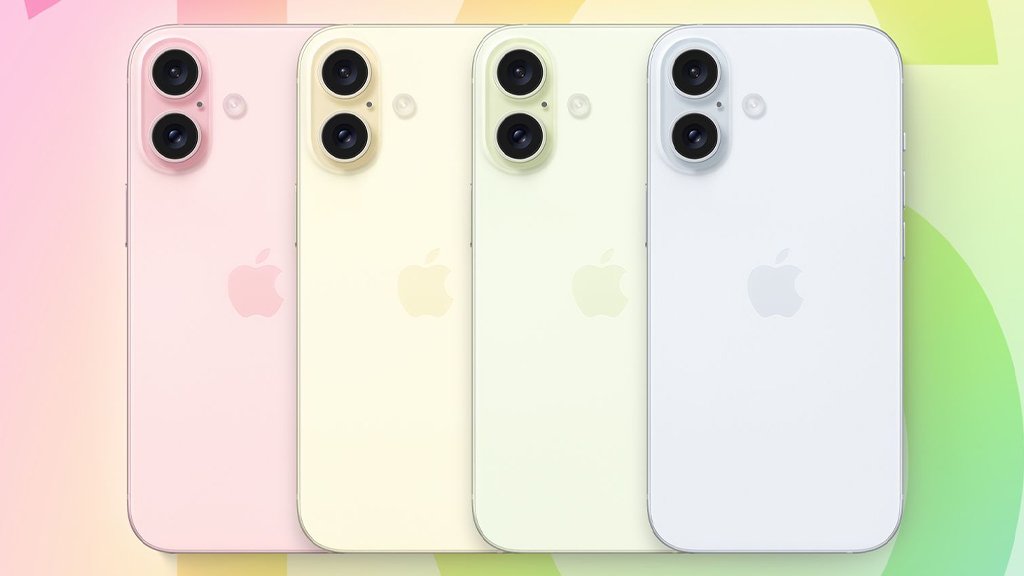
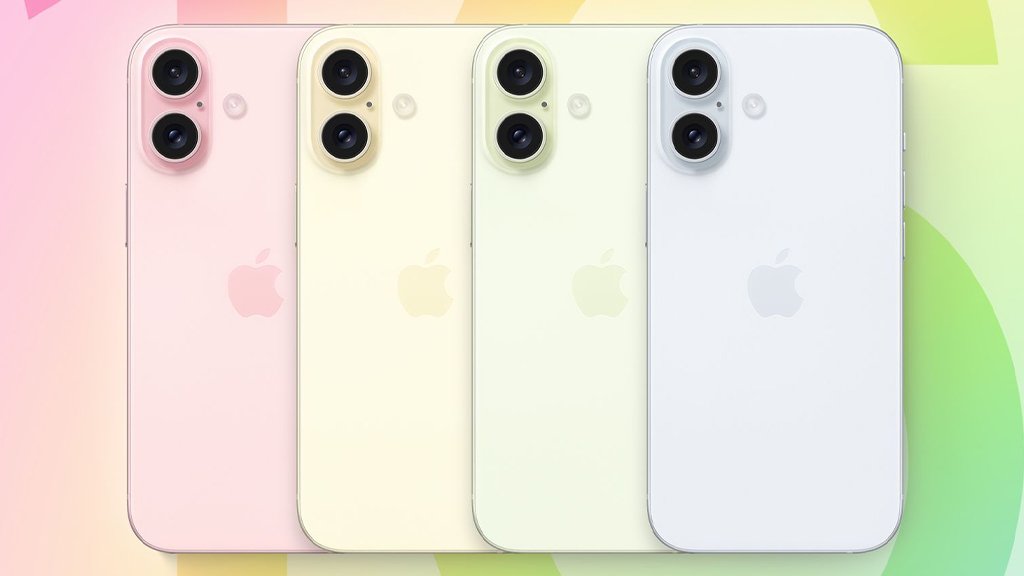
    With the iPhone 16 and iPhone 16 Pro set to launch in just two months, now might not be the ideal time to purchase a new iPhone 15. Unless you urgently need a new device, waiting until September could be advantageous.

    Here’s why the iPhone 16 is worth the wait:

    1. Larger screens

    The iPhone 16 series promises a notable design enhancement with bigger screens. Reliable sources, including analyst Ross Young, indicate that the iPhone 16 Pro will feature a 6.3-inch display, up from the iPhone 15 Pro’s 6.1 inches.

    The iPhone 16 Pro Max is expected to boast a 6.9-inch display, compared to the iPhone 15 Pro Max’s 6.7 inches. This would make the iPhone 16 Pro Max the largest iPhone to date and the first change in screen sizes since the iPhone 12 Pro series in 2020.

    2. Improved battery life and faster charging

    The iPhone 16 lineup is set to include larger batteries across the board. Here’s a comparison of the current iPhone 15 capacities with the expected iPhone 16 capacities:

    – iPhone 15: 3,349 mAh

    – iPhone 15 Plus: 4,383 mAh

    – iPhone 15 Pro: 3,274 mAh

    – iPhone 15 Pro Max: 4,422 mAh

    – iPhone 16: 3,561 mAh (6.3 per cent increase)

    – iPhone 16 Plus: 4,006 mAh (8.6 per cent decrease)

    – iPhone 16 Pro: 3,355 mAh (2.5 per cent increase)

    – iPhone 16 Pro Max: 4,676 mAh (5.7 per cent increase)

    Additionally, the iPhone 16 may feature higher energy density batteries and faster charging capabilities, potentially supporting 20W with MagSafe and 40W wired fast charging.

    3. New capture button

    All iPhone 16 models will introduce a new Capture button for the camera, positioned on the right side of the phone. This touch-sensitive button will allow users to zoom in and out by swiping and adjust focus and shutter speed with varying pressure.

    4. Apple intelligence integration

    Apple’s new suite of AI features, Apple Intelligence, will be fully supported by the iPhone 16 lineup, thanks to a new chip and additional RAM. This suite, announced at WWDC, will bring advanced AI capabilities to the iPhone, enhancing user experience significantly.

    5. Enhanced camera features

    The iPhone 16 Pro is expected to adopt the 5x zoom tetraprism camera currently exclusive to the iPhone 15 Pro Max. New Sony sensors for the main camera and a 48 MP ultra-wide camera will also be featured, providing substantial improvements over the iPhone 15 Pro’s 12 MP ultra-wide camera.

    The iPhone 16 series is slated for release in September. Are you planning to upgrade? What features are you most excited about? Share your thoughts in the comments.


  • Meta to remove all posts targeting pro-Israel, Zionists

    Meta to remove all posts targeting pro-Israel, Zionists

    Technology company Meta has decided to remove all posts from its platform that target Jews as ‘Zionists’.

    The latest update to Meta’s policy comes in response to the challenge Facebook and Instagram have faced in balancing freedom of expression and combating anti-Semitic behaviour.

    A blog post by Meta said, “The company will now remove content that targets “Zionists” in dehumanising comparisons or else their existence will be denied due to their apparent proxies of the Jews or Israeli people. We will remove posts about “Zionists” when they are linked to anti-Semitic claims such as that they control the media.”

    Earlier this month, Meta announced that it would further clarify its hate speech policy, including considerations around the use of the Arabic word “martyr.”

  • Pakistan Civil Aviation to install ‘e-gates’ at airports for faster immigration

    Pakistan Civil Aviation to install ‘e-gates’ at airports for faster immigration

    The Pakistan Civil Aviation Authority (CAA) has decided to install ‘e-gates’ at international airports across the country to expedite passenger immigration.

    A tender has been issued by the CAA for the installation of e-gates to enhance passenger convenience at international airports in Pakistan.

    Interested companies have been invited to submit their applications by August 13.

    The E-Gates Border Control System will be installed at Karachi, Lahore, and Islamabad Airports in the first phase.

    The installation of e-gates is expected to enhance the efficiency of immigration services for passengers.

    Passengers will scan their passports at the e-gates, saving time during the immigration process.
    Once the project is operational, passengers will no longer have to wait in immigration queues.

  • YouTube tests new feature to support small creators

    YouTube tests new feature to support small creators

    YouTube has started testing a new feature to encourage content creators with fewer subscribers.

    This feature is called Hype, and it is being tested in some countries; in the second phase, this feature will be expanded to more countries.

    YouTube partner content creators will benefit more from the feature, and the feature will be available only to content creators who have a maximum of 500,000 subscribers.

    Under the feature, users will be able to use the “Hype” section in their uploaded video, after which their video will be automatically promoted by YouTube’s algorithm for a week.

    Under the feature, whichever user’s video gets more “Hype” in a week will be paid more money under different categories.

    The feature will not be available to all YouTube channel owners immediately, but it is likely to be rolled out to everyone in the future.

  • Apple reportedly testing Samsung-made camera sensor for iPhone 16

    Apple reportedly testing Samsung-made camera sensor for iPhone 16

    Apple is reportedly testing advanced CMOS image sensors (CIS) from Samsung, which could feature in the iPhone 16 later this year. According to The Elec, Apple is conducting a final quality assessment of these sensors, provided by Samsung System LSI, the logic business unit of Samsung.

    Traditionally, Apple has relied exclusively on Sony for its CIS needs. However, recent developments suggest a strategic shift away from the Japanese supplier due to concerns about reliability and the desire to integrate new technologies into its camera systems.

    This change in direction comes after Apple encountered issues with Sony last year. In response, Apple asked Samsung to develop new image sensors in 2023 when Sony failed to deliver in a timely manner, complicating the launch schedule for the iPhone 15.

    If Samsung successfully passes the current quality tests, it will mark the first time the company supplies CIS for an iPhone. The new sensors from Samsung boast a more advanced three-wafer stack design, compared to the two-stack design used in current and previous iPhone models. These three wafers separately house the photodiode, transistors, and analog digital converter logics, which allows for higher pixel density, reduced noise, and smaller pixel sizes.

    In a CIS, the photodiode converts light into electrical signals, while four transistors are responsible for transferring, amplifying, reading, and erasing these signals. The separation of these components into three wafers enhances the sensor’s performance.

    Additionally, the new technology uses wafer-to-wafer hybrid bonding, which directly attaches the wafers through a copper pad, eliminating the need for signal-transferring bumps. This results in a smaller CIS with faster data transfer speeds.

    The iPhone 16 lineup is expected to be announced in the autumn, featuring new camera capabilities, including a dedicated “Capture” button and a 48-megapixel Ultra Wide camera.

  • Japanese scientists make smiling robot with ‘living’ skin

    Japanese scientists make smiling robot with ‘living’ skin

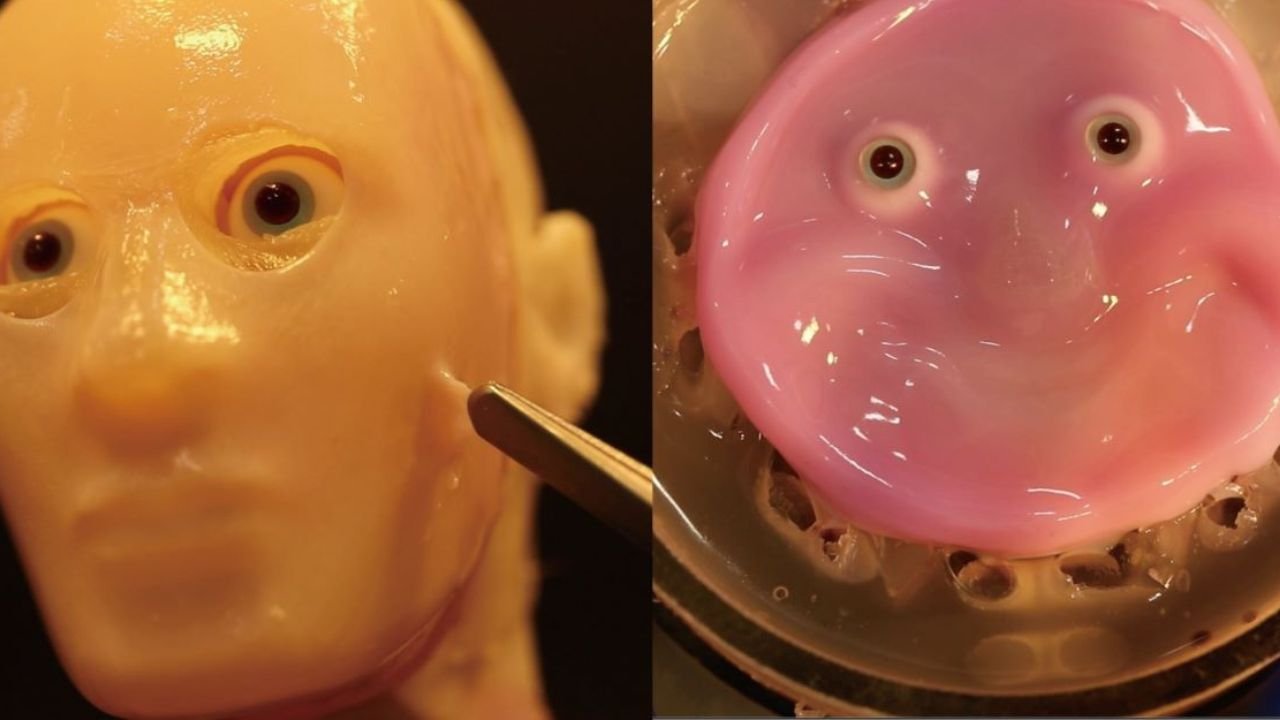
    Japanese scientists make smiling robot with ‘living’ skin have used human cells to develop an equivalent to living skin that can be attached to robotic surfaces to flash a realistic — if creepy — smile.

    The University of Tokyo researchers published their findings this week along with a video of the gooey-looking pink material being stretched into an unsettling grin.

    They used a “skin-forming cell-laden gel” to create a “robot covered with living skin”, their study in the journal Cell Reports Physical Science said.

    The biohybrid robot specialists hope the technology will one day play a role in the invention of androids with human-like appearances and abilities.

    “We also hope this will help shed better light on wrinkle formations and the physiology of facial expressions,” and help to develop transplant materials and cosmetics, the team led by Professor Shoji Takeuchi said.

    The new material could signal a departure from traditional humanoid robots covered with genuine-looking skin often made of silicone rubber, which cannot sweat or heal itself.

    The scientists’ goal is “to endow robots with the self-healing capabilities inherent in biological skin”, but they are not there yet. In previous studies, they grafted collagen onto a cut on lab-grown skin covering a robotic finger to demonstrate how it could be repaired.

    But they said conducting similar repair tests on their smiling robotic skin “is a future challenge”.

    To create what they described as a “natural smile” that moves fluidly, they gelatinised the skin-like tissue and fixed it inside the robot’s holes, a method inspired by real human skin ligaments.