Category: Uncategorized

  • Gold price drops by Rs4,000 in two days to Rs271,700 per tola in Pakistan

    Gold price drops by Rs4,000 in two days to Rs271,700 per tola in Pakistan

    Gold prices seem to be going down after touching the highest ever peak of Rs277,000 per tola in the previous month.

    On Wednesday, the price for 24-karat gold in Pakistan dropped by a whopping Rs3,000 per tola unexpectedly and was recorded at Rs271,700 in the local bullion market.

    This means the price is now Rs5,300 per tola down from the all-time high level seen in September 2024. So, is it a good time to buy gold in Pakistan? Maybe… or maybe not as the price may drop even further in the coming weeks.

    Along with the per tola, ten-gramme gold rates are also down by Rs2,572 as the All-Pakistan Gems and Jewellers Sarafa Association (APGJSA) reported the price for ten-gramme to be at Rs232,939.

    Since the start of this week, gold rates have declined Rs4,000 per tola within two days.

    In the previous week, the total loss gold suffered was of Rs500 per tola only.

    The international rate of gold was also seen down, according to the APGJSA, the price was recorded at $2,617 per ounce, including a premium of $20, and down by $30.

    Not surprisingly, the price of silver remained unchanged at Rs3,050 per tola in the local market.

  • Pakistani rice exports: A booming sector that needs government support

    Pakistani rice exports: A booming sector that needs government support

    Pakistani rice is serving a purpose far greater than tasting good in Biryani: it’s turning into a lifeline for the country’s economy, bringing in nearly $4 billion annually.

    In July and August alone, exporters managed to export a staggering 620,000 metric tons of rice. That’s a huge deal, especially considering they did it without enjoying government perks like minimum support prices or energy subsidies.

    What’s even more impressive is how Pakistani rice is standing out globally. Compared to its counterpart India, Pakistan had 74 alerts, while India had a staggering 264 alerts. The result is that Pakistan is building a reputation for quality rice, especially in Europe.

    And with production ramping up significantly in the past year, Pakistan has been able to beat India in price, too. As such, Pakistan now has a 25 per cent share of Europe’s rice market while India is behind with 17 per cent. However, India isn’t sitting quietly – they’ve come out firing by lifting bans on certain rice varieties to regain their market share.

    Rice exports could be the key to pulling Pakistan out of its economic troubles. At the close of FY 2023, Pakistan’s current account deficit was a worrying $3.275 billion.

    But the Minister of Commerce, Jam Kamal Khan’s new vision might change that.

    He wants to boost rice exports by $3 billion, which could nearly wipe out the deficit and inject much-needed dollars into the economy. Moreover, the minister expressed interest in educating farmers to improve the quality of rice harvests to reduce the chances of getting flagged with a health alert by foreign authorities.

    However, the catch is that to jump from $4 billion in exports to $7 billion, a 75% increase, Pakistan’s rice industry needs help. But what could be the solution here? The solution: Government subsidies to rice exporters.

    While exporters are doing well, they could meet the minister of commerce’s goal with the right support. Access to state-of-the-art rice milling machines and government-improved irrigation systems is necessary. Rice is a water intensive crop, and any disruption in water supply wipes out a year’s worth of yields.

    But even low-cost milling machines can cost small farmers around PKR 3 million – a price many can’t afford on their own.

    If Jam Kamal wants to take rice exports to the next level, the government needs to step in. Supporting farmers and exporters with subsidies could be the difference between a negative and positive balance of trade in the coming years.

    Is rice the new saviour of the economy? Time will tell.

  • Aleema Khan reveals details of how she was arrested

    Aleema Khan reveals details of how she was arrested

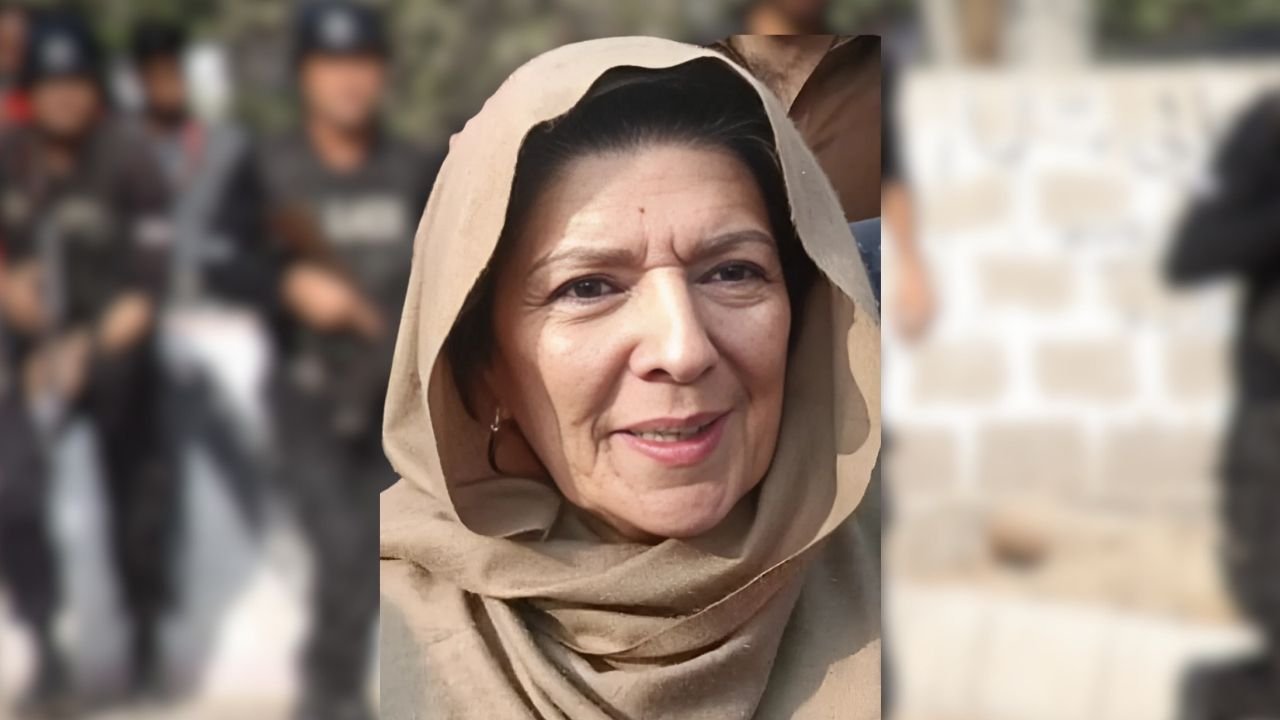
    Aleema Khan, the sister of the founder Pakistan Tehreek-e-Insaf (PTI) Imran Khan, has revealed details of how, along with her sister Uzma Khan, was arrested during the Islamabad protest.

    Sardar Qadeer Advocate posted a video on X (formerly Twitter) in which Aleema Khan said that federal capital police arrested her following an interview she gave to a journalist, stressing, “We were not committing any violation at that time.”

    She said, “Section 144 was imposed, not a curfew; I could have been arrested only if the curfew was imposed.”

    Aleema Khan revealed that many elderly women around 60 to 80 years of age were detained by federal police in the same cell as her, and the police didn’t provide them medicine for two days.

    Imran Khan’s sister said that they were deceived when the police shifted them to the I-H police line instead of presenting them before the court, and added, “We were apprehended, not even served food or medicines for multiple hours on the last day. The next morning, we did not have cash; police collected money to buy food and then served us breakfast.”

    She demanded that authorities provide proof of the section 144 violation allegedly committed by the elderly detained women: “If it were proven, they would embrace even ten-year imprisonment.”

  • Imran Khan approaches United Nations expert over 26th constitutional amendments

    Imran Khan approaches United Nations expert over 26th constitutional amendments

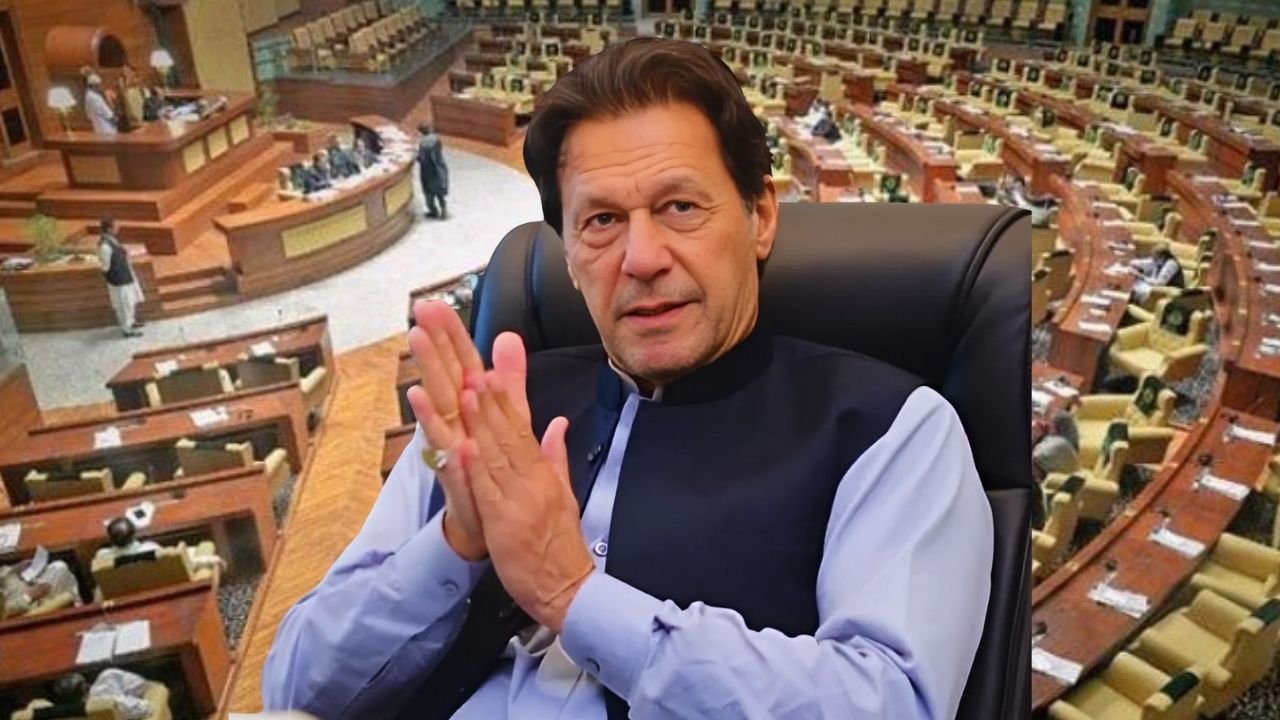
    Founder of Pakistan Tehreek-e-Insaf (PTI) Imran Khan has approached the United Nations (UN) Special Representative on the Independence of Judges and Lawyers against the incumbent government’s proposed constitutional amendments.

    According to the United Kingdom (UK) website, which offers legal assistance, former Prime Minister (PM) Imran Khan has filed an urgent appeal to the UN Special Rapporteur through Edward Fitzgerald KC, Tatyana Eatwell and Jennifer Robinson.

    Imran’s family advised Eatwell and Robinson to conduct UN engagement and international advocacy on his behalf.

    The appeal voiced concerns that the incumbent government’s proposed twenty-sixth constitutional amendments would curb the independence of the judiciary, and the rule of law added that constitutional amendments would pose a serious threat to the fundamental rights of Imran Khan and his followers in Pakistan.

    International counsel for Imran Khan and his family, Edward Fitzgerald KC, Tatyana Eatwell and Jennifer Robinson, stated, “The proposed amendments are clearly aimed at removing the jurisdiction and powers of the Supreme Court, at a time when the judiciary in Pakistan is already under threat. Judges have been threatened and coerced to deliver prescribed verdicts in controversial cases.”

  • KP govt dismisses allegations of deal with establishment after Gandapur’s ‘disappearance’

    KP govt dismisses allegations of deal with establishment after Gandapur’s ‘disappearance’

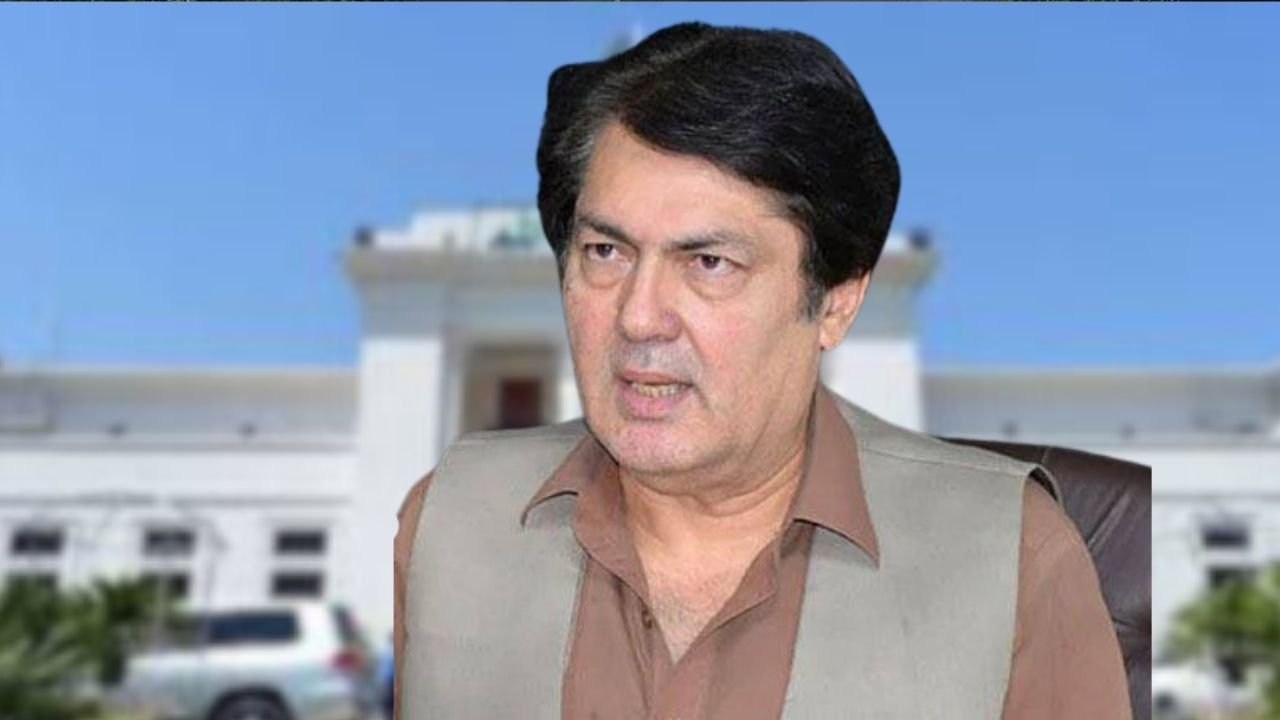
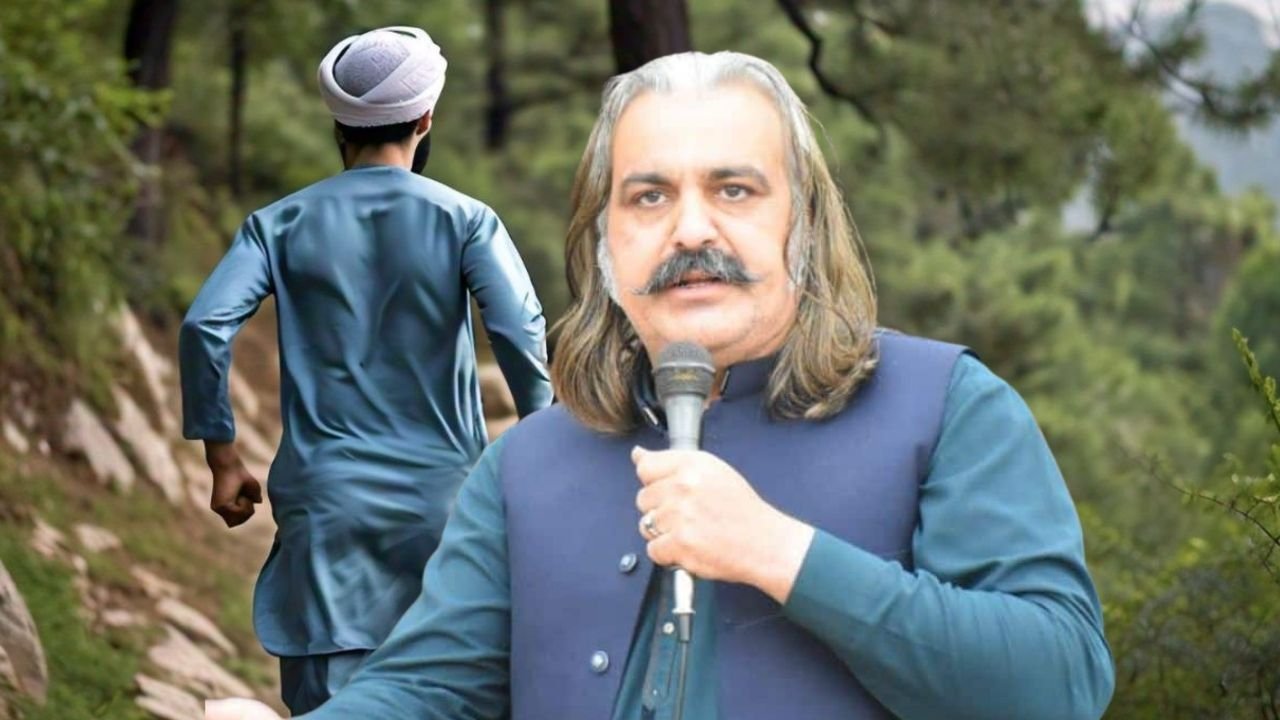
    Khyber Pakhtunkhwa Chief Minster’s Advisor Barrister Mohammad Ali Saif ruled out allegations of Ali Amin Gandapur making a deal with the military establishment.

    Talking on Geo News last night, he said, “It is false that CM Gandapur has made any deal [with institutions],” after Gandapur went missing for more than 24 hours after reaching KP House in Islamabad for a PTI protest.

    Gandapur made a sudden entry into the KP Assembly House on Sunday night after PTI alleged that he had been abducted.

    Ali Amin, in his signature fiery style, narrated a mysterious tale of how he survived and reached the parliament by himself.

    “Police raided the KP House multiple times […] Listen IG [Inspector-General of Police]. I was there the whole night,” Gandapur revealed that he had never left the KP House while managing to hide in the building.

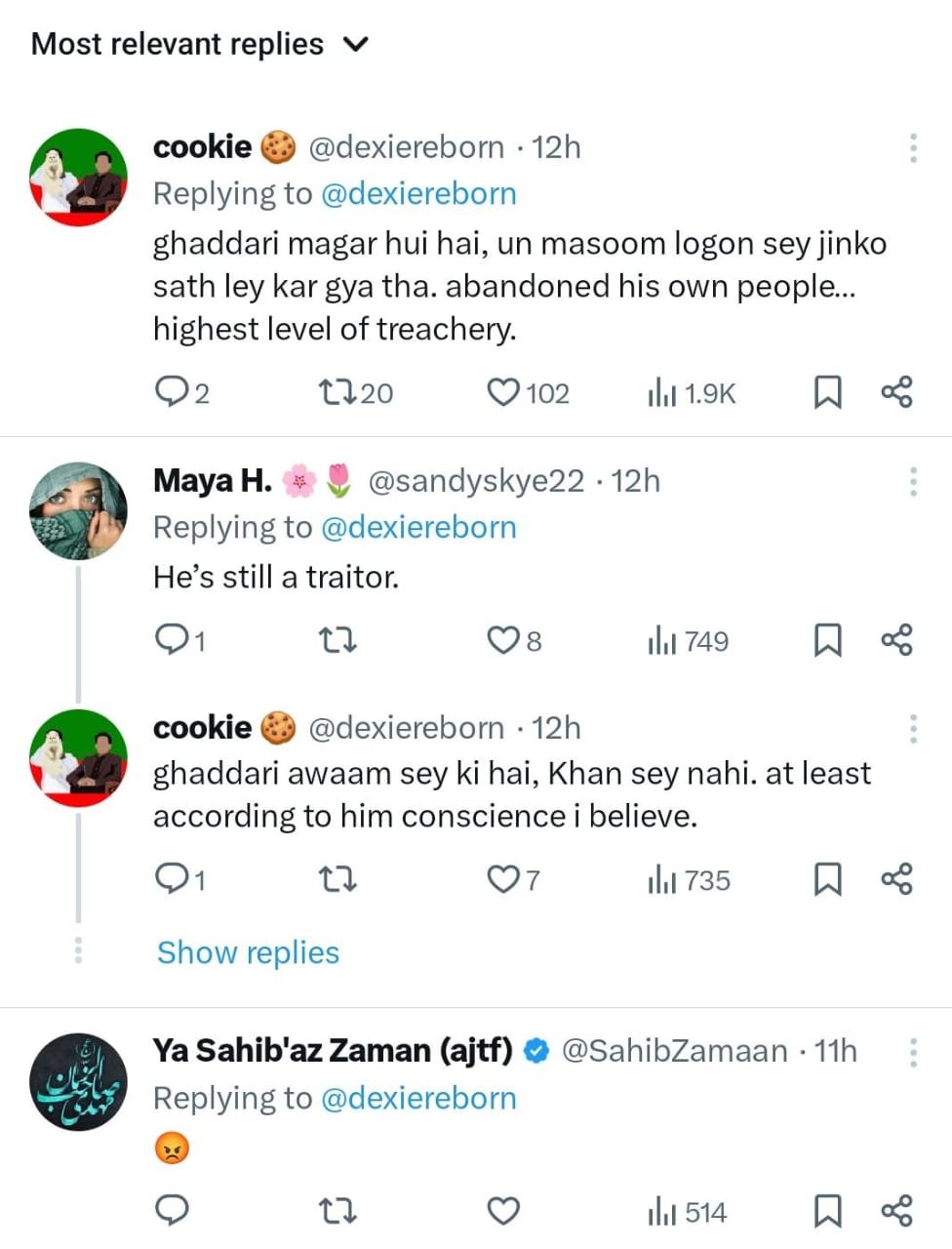
    PTI supporters on social media have strongly criticised the party leadership, especially Ali Amin Gandapur, for allegedly abandoning the protestors on October 5 in Islamabad.

    Furthermore, Defence MInsiter Khawaja Asif called CM KP a “swindler”, referring to his “absence” last week.

  • Bollywood actor Emraan Hashmi suffers ‘deep wound’ on set

    Bollywood actor Emraan Hashmi suffers ‘deep wound’ on set

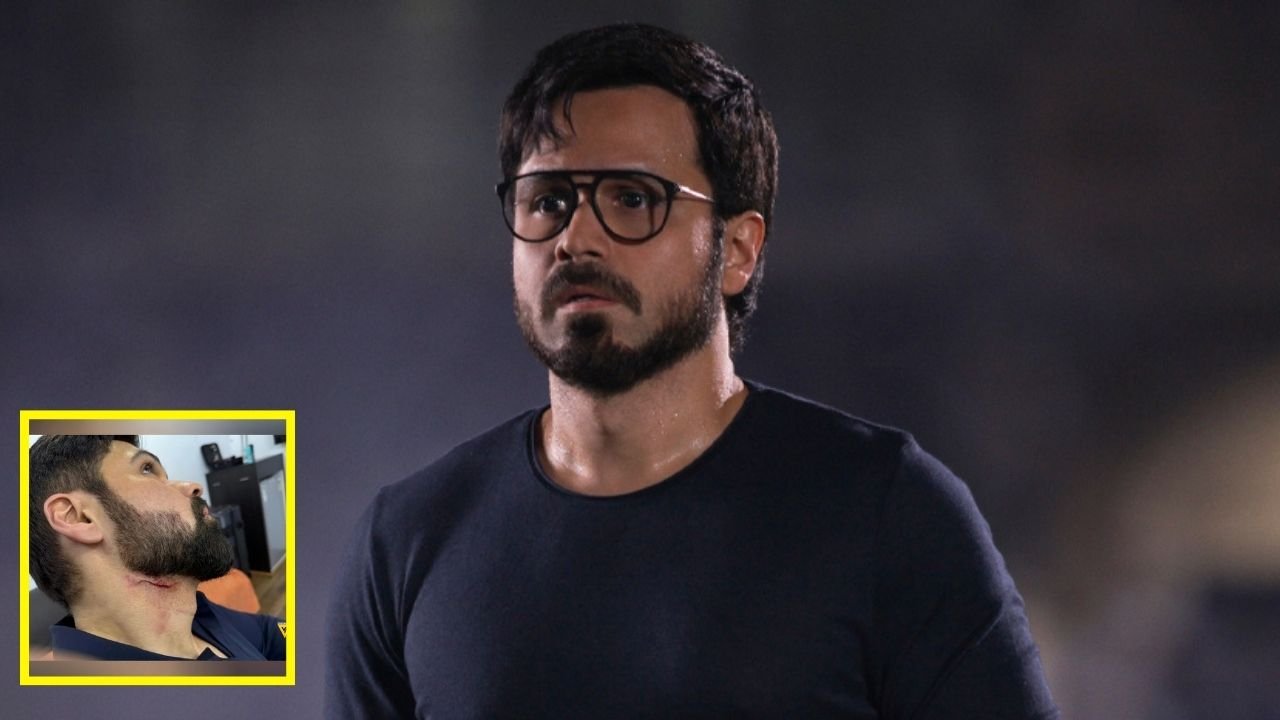
    Bollywood actor Emraan Hashmi was injured during the filming of ‘Goodachari 2’   in Hyderabad, Deccan.

    Hashmi is currently in Hyderabad for the shooting of the second part of the spy thriller. He sustained a deep wound on his neck while filming an action scene.

    Reports suggest that Emraan is expected to stop the film’s shoot and return to Mumbai by Tuesday.

    The actor has not yet issued any statement regarding the injury, but business associate Sunny Khanna has confirmed that he was injured during the shoot.

    G2 is the sequel to Adivi Sesh’s blockbuster film Goodachari, which starred Sobhita Dhulipala and Jagapathi Babu in lead roles.

  • Dr. Zakir Naik criticised for complaining about PIA’s overweight charges

    Dr. Zakir Naik criticised for complaining about PIA’s overweight charges

    Religious scholar Dr Zakir Naik faced backlash over his statement regarding the complaint to Pakistan International Airlines (PIA) for not loading his overweight stuff “free” on the plane on his way to Pakistan from Malaysia.

    Speaking from the Governor House in Karachi, he was offended by recalling his tour to Pakistan and stated that the PIA Chief Executive Officer (CEO) offered his a 50 per cent discount on his overloaded 500 KG baggage and questioned the Pakistan hospitality.

    He further said, “If I were in an Indian airport, they would even let me load 1000 KG of baggage free in the plane,” and confirmed he never paid overweight at an Indian airport.”

    Lambasting Pakistan authority, Zakir Naik stated, “I am a state guest in Pakistan, but my extra luggage was not loaded free.”

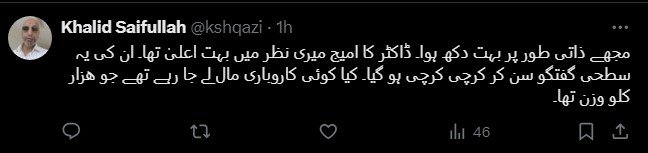
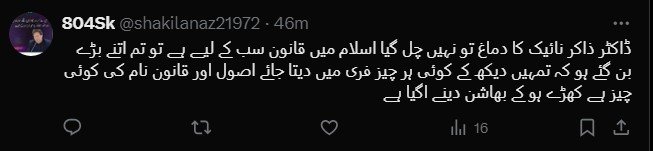
    Social media users Criticised Dr Zakir Naik over his complaint to PIA.

    One user wrote, “Enough of hospitality; serve Dr Sahab some food and say goodbye to him.”

    Another user wrote, “Clerics has lost his mind.”

  • Exchange rates: PKR gains 12 paisa against US dollar, Rs1.5 versus British Pound

    Exchange rates: PKR gains 12 paisa against US dollar, Rs1.5 versus British Pound

    The Pakistani rupee (PKR), on first trading day of the week, registered a marginal fall against the US dollar (USD).

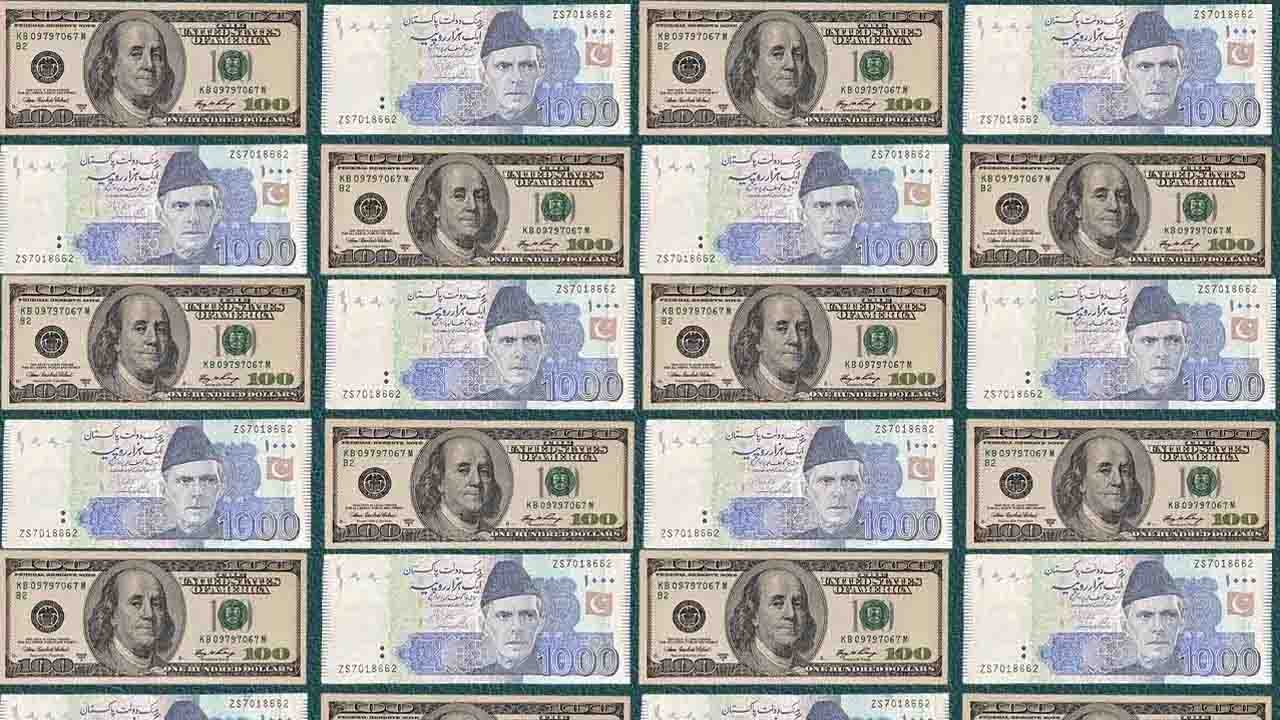
    According to the State Bank of Pakistan (SBP), the PKR dropped 0.04 per cent or 12 paisa in the inter-bank market and closed Monday’s trading session at Rs277.64 against the USD.

    The currency market now seems a little stablised after the International Monetary Fund (IMF) approved the fresh bailout programme and released the first tranche of around $1.1 billion.

    Globally, the US dollar extended a rally sparked by Friday’s strong US jobs data and an escalation in the Middle East conflict.

    During  the day, the PKR saw an intraday high of Rs277.75 and a low of Rs277.65.

    In the open market, exchange companies were buying the greenback for Rs278.25 and selling it for Rs279.84.

    This financial year, PKR has climbed by 69.89 paisa or 0.25 per cent against the USD. While the current calendar year has seen rupee gain 1.52 per cent or Rs4.22.

    Here is how the PKR performed today against other major foreign currencies:

    Currency Difference Today’s rate Previous rate
    British Pound 1.5 rupees 363.89 365.39
    Euro 1.47 rupees 304.48 305.95
    Japanese Yen 2.23 paisa 1.8727 1.895
    Swiss Franc 1.87 rupees 323.69 325.55
    UAE Dirham 3.18 paisa 75.55 75.59
    Chinese Yuan 1.77 paisa 39.56 39.54
    Saudi Riyal 4.3 paisa 73.92 73.88

    The British Pound dropped by Rs1.5, closing at Rs363.89 compared to last closing rate of Rs365.39.

    PKR gained Rs1.47 against the Euro and closed at Rs304.48 as compared to the Friday’s rate of Rs305.95.

    The Swiss franc dropped by Rs1.87, closing at Rs323.69.

    Against the Japanese Yen, PKR gained 2.23 paisa, closing at Rs1.8727.

    The Saudi Riyal closed at Rs73.92 with a gain of 4.3 paisa from its previous value of 73.88.

    The Chinese Yuan gained 1.77 paisa, closing at Rs39.56 against Rs39.54 from the previous session.

    The UAE Dirham gained 3.18 paisa from Rs75.59 a day ago to Rs75.55.

  • PTI supporters are furious at Ali Amin Gandapur

    PTI supporters are furious at Ali Amin Gandapur

    The Chief Minister of Khyber Pakhtunkhwa, Ali Amin Gandapur, surprised everyone, including his party supporters, by making a sudden appearance on October 6 in the KP Assembly after he went incommunicado the previous day in Islamabad.

    PTI supporters on social media are enraged at party leaders, including Gandapur, for allegedly abandoning protestors on the streets.

    Gandapur was welcomed by a cheering crowd of MPAs and went on to narrate a mysterious tale.

    According to YouTuber Imran Riaz, Gandapur told him, “I hid in the KP House when the Rangers and Police attacked the building. A man (official) guided me to hide on the roof of a police vehicle, upon which I stayed for several hours.”

    Gandapur further told Riaz, “The man came again and told me to change location because another search operation would take place, so he instructed me to hide on another police vehicle’s roof, which was higher. It was nighttime by now.”

    “After the rain came to an end, I changed my clothes and started trekking through Trail 3 on Margalla Hills and reached Monal. I crossed over Margalla Hill, where the KP region begins, and stopped a car for a lift,” Gandapur told Riaz.

    According to Riaz, Ali Amin Gandapur travelled in a car from Haripur to Abbottabad, then towards Shangla to Swat Motorway and then crossing Mardan, he reached Kernel Sher Khan Interchange and went, despite all odds, to Peshawar.

    He then reached the KP Assembly, where he delivered his speech, but the majority of PTI supporters remained unconvinced and angry.

    One PTI supporter took to X, formerly Twitter, to write: “If all the TV channels are covering Ali Amin Ganapur’s speech right now, then it is evidence enough that He isn’t speaking for the general public but for the Generals instead!”

  • From Words to War: Iran Attack Israel, October 2024

    From Words to War: Iran Attack Israel, October 2024

    On 1 October 2024, Iran attack Israel. Iran launched nearly 200 Fattah-1 and Kheibar Shekan ballistic missiles in the direction of Israel. Tehran’s Islamic Revolutionary Guard Corps announced on Tuesday that it targeted Israel as retaliation for Israeli airstrikes on Gaza and southern Lebanon as well as the killing of Iranian, Hamas, and Hezbollah military figures.

    On Tuesday, Israel found itself in a position of engaging in fights on three separate fronts, fighting Hamas in the south of Gaza and Hezbollah in the north of Lebanon and fending off an Iranian missile.

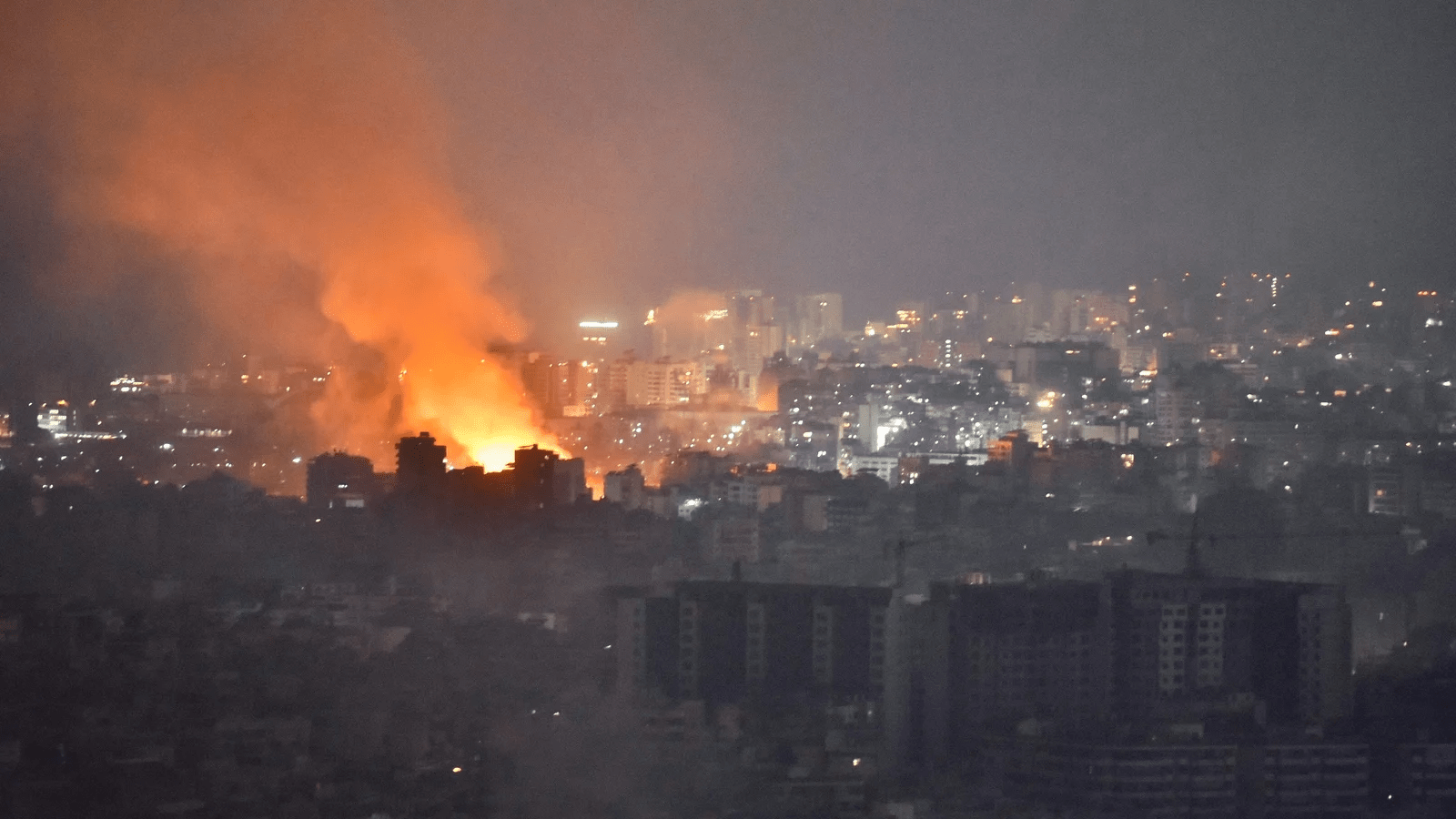
    There were air raid sirens and explosions lit up the night sky, followed by loud booms, all of which were due to the Israeli interception of Iranian missiles. Meanwhile, Israel’s military spokesperson, Rear Admiral Daniel Hagari, confirmed that though the majority of Iranian missiles were shot down, several missiles struck central and southern Israel.

    Following this April attack, this was Iran’s second attack on Israel this year. Let’s discuss essential information about this new chapter in the Iran-Israel conflict and see how this conflict goes from words to war.

    Details About What Happened on 1 October 2024 – Iran Attack Israel

    • It is still unknown what the exact aim of Iran attack Israel was. However, the IRGC later noticed it stated that the rockets were directed at ‘important military and security objectives’ within the area of Israel.
    • The IRGC declared that the attack was primarily targeted at three military bases in the Tel Aviv area.
    • According to reports released by Iran’s state media, the attack included a strong cyberattack and the Iranian military’s first use of Fatah hypersonic ballistic missiles.
    • The Israeli army insisted that it had managed to intercept most of the 180 missiles fired at it by Iran. However, northern and southern Israel sustained ‘isolated’ damages. The IRGC declared that 90% of the missiles may reach their destruction targets.
    • Domestic US military officials stated that Mr. Sullivan validated the reaching condition, whereby the US military actively collaborated with Israel to attempt to shoot down the following missiles.
    • No civilian deaths were recorded in Israel, Mr. Sullivan reported to the press from the White House.

    Why did Iran launch Missiles on Israel?

    The IRCG indicated in its statement that the Iran attack Israel missiles was an answer to the airborne international forces who performed what it calls the “violation of Iran’s sovereignty and the martyrdom” of Hamas POLITBURO ENVOY ISMAIL HANIYEH. He died after an explosion that the Iranians attributed to Israel, while the Israelis did not accept responsibility for it. The statement about the missile attack maintained that it was directed “in the action of proper self-defense of the nation.”

    Moreover, it also stated that the attack was a response to Israel’s air presence over the southern parts of Beiriut a week ago that took the lives of top Hezbollah commander Sayyid Hassan Nasrullah and Brigadier General Abbas Nilforoushan. They command the military Qods unit.

    This outbreak of the war came only a few hours after Israeli soldiers entered southern Lebanon. It was claimed that there were “Hezbollah terror targets” in border towns that could attack northern Israel’s peasant dwellers from the villages.

    Israel has shifted their position from their previous defensive one during the war with Hamas. It has started offensive operations on the Shia Islamist political organization and the military organization, too. It had been almost a year since the start of the persistent cross-border armed conflict that followed the outbreak of war with Hamas in Gaza. Hezbollah and Hamas are supported by Iran and labeled as terrorist groups.

    Israel’s Reaction to Missile Attack

    Israel’s Prime Minister Benjamin Netanyahu declared at the cabinet meeting that the missile attack of the Iranian side is ‘failed.’ He also said that it was a huge mistake that the Iranians made.

    “Our will to defend ourselves and exact revenge on our enemies is something the Iranian regime does not understand,” he added.

    Yoav Gallant, the defense minister, put it in more straightforward words. ‘Iran simply does not understand that every aggressor who begins a war against the state of Israel and within his action is going to be quickly punished and is going to pay a heavy price.’

    Defense Capabilities of Israel and Iran

    Following Iran attack Israel, there is a chance of increased conflict. So, we are going to discuss the defense capabilities of each nation.

    Military Spendings

    In April 2024, the Stockholm International Peace Research Institute (SIPRI) released the following fact sheet:

    Iran has increased its military budget from 10.2 billion US dollars in 2022 to 10.3 billion in 2023.

    Israel’s military expenditure for 2023 has reached 27.5 billion US$, 24 percent more than the amount spent in 2022. It is partly an increase due to the war in Gaza that started on the 7th of October.

    Ground Forces

    While Iran possesses around 10513 battle tanks and 6798 artillery guns, its battle strength includes more than 640 armored personnel carriers. The Iranian army has 50 Deth helicopters, while the IRGC comprises 5.

    Israel has 400 battle tanks, 530 artillery guns, and 1190 personal carriers.

    Air Force

    Iran boasts 312 combat soldiers in aviation, while the IRGC contains 23 fighter jets. The air force of the opposing party has two ground attack helicopters, the army has 50, and the IRGC has 5.

    Israel maintains 345 military offensive aircraft and 43 helicopters, specifically armored for combat.

    Navy

    The Iranian Navy owns 17 tactical submarines, 68 patrols and escort craft, 9 frigates, 12 landing craft, 11 ships for attack, and 18 boats for repairs and auxiliary use.

    Israel owns 5 submarines and has 49 patrol and coastal fighters.

    Missile Weapons

    Iran possesses at least 12 missiles with medium and short range. Of these missiles, several are like the Tondar 69, which has a range of 150 km (93 miles). Furthermore, Khorramshahr and Sejjil range up to 2,000 km (1243 miles).

    The Israeli arsenal shows at least four sets of interceptors, respectively, capable of destroying small, medium, and intermediate-range missiles in a linear progression from LORA hitting targets at 280 km (174 m) to Jericho 3 hitting targets between 4800 km (2983 m) and 6500 km (4039 m).

    What has been the International Response to this conflict?

    The adviser to the Biden administration, while briefing the reporters, mentioned that “there will be consequences and severe consequences. They will work with Israel to make that the case against Iran.” 

    Omar Rahman, a fellow member at the Middle East Council on Global Affairs, said, “There is no question that one will come. Israel will match that action.” “You are going to get into the kind of conclusive action. He also said it is a reciprocal action that makes for getting into a bigger war.