Chairman of the Pakistan Telecommunication Authority (PTA), Major General (retd) Hafeezur Rehman, stated that social media platform X (formerly Twitter), which is currently banned on government request, will be restored only if the government authorises so.
Chairman Pakistan Telecommunication Authority (PTA) Major General (retd) Hafeezur Rehman reaffirmed that there have been no cyber attacks on telecom infrastructure in the past two years. He stated that the PTA engages platforms on complaints related to social media content violating Pakistani laws and can block social media platforms upon government directive. He noted TikTok’s prompt response to complaints compared to X (formerly Twitter), which acts on only seven per cent of reported violations.
Responding to Senator Abdul Qadir’s query about unblocking X, Chairman PTA reiterated that the decision rests with the government. He also discussed the licensing process for IoT technology, revealing recent initiatives.
Federal Minister of Law and Justice Nazir Tarar expressed concerns over posts on social media platforms that could provoke religious sentiments, emphasizing that protests often follow such incidents. He differentiated government actions on YouTube and TikTok from those on X, highlighting differing approaches.
Chairman PTA addressed VPN usage in Pakistan, acknowledging a significant decline in X users (70%) due to VPN restrictions. He mentioned plans to whitelist specific VPNs for legitimate use in Pakistan.
Chairman PTA also highlighted the tax burden on telecom users in Pakistan (34.50%), comparing it with rates in neighboring countries like Sri Lanka (20-40%), Bangladesh (21-33%), India (18.5%), and Nepal (26%).
A lawyer for a man arrested in suspicion of being a drug dealer took Lahore High Court to task for denying his clients the privileges given to former Imran Khan, currently also in jail.
A bail hearing was scheduled today at the Lahore High Court.
During the proceedings, the suspect’s lawyer cited legal precedents, including cases involving the founder of Pakistan Tehreek-e-Insaf (PTI) Imran Khan who is currently incarcerated.
Justice Mansoor Ali Shah, presiding over the bench, deliberated on the eligibility for bail in such cases. He stated that the accused involved in drug trade deserve punishment without bail, emphasizing the detrimental impact of drugs on society and its influence in educational institutions.
The lawyer argued under Article 25 of the Constitution, the man deserved the same conveniences given to Imran in legal matters. “My client and the PTI founder should be considered equally under Article 25,” the lawyer asserted.
Responding to this, Justice Mansoor questioned the relevance of Khan’s cases to the current bail application. The lawyer replied back that despite facing numerous cases, the PTI’s founder had been granted bail in a cipher case by the Supreme Court.
“Imran Khan was granted bail despite facing over 200 cases, including terrorism charges,” the lawyer elaborated. “In contrast, my client faces only 14 cases and should similarly be eligible for bail.”
Justice Shah differentiated between the nature of charges against the PTI founder and the suspect, emphasizing the severity of the charges in each case.
The lawyer countered by highlighting the specific charge against the PTI founder, which carries the death penalty. “There is a cipher case against the PTI founder, a capital offense,” the lawyer pointed out.
The lawyer also drew attention to the disparity in facilities between the PTI founder and his client while in custody. “The PTI founder enjoys better living conditions in jail, which are not available to my client,” the lawyer argued.
After considering legal precedents and arguments presented, the three-member bench, headed by Justice Mansoor Ali Shah, approved the bail application of the accused, Obaidullah.
Pakistan Tehreek-e-Insaf (PTI) founder Imran Khan, who is currently imprisoned in Adiala jail, has categorically signalled that his party was ready for talks with the military establishment, Dawn News has reported.
However, while talking to reporters at Adiala jail, Khan set three preconditions for the talks: the return of PTI’s alleged ‘stolen mandate’, the release of all of the party workers currently detained, and transparent elections.
Earlier, Khan’s sister Aleema Khan delivered a message from Imran Khan to the Chief of Army Staff (COAS) General Syed Asim Munir to “become neutral for the sake of Pakistan.” In 2022, Khan repeatedly berated the army’s leadership for being “neutral”, repeatedly saying that only animals are neutral.
Khan stated that his party has never levelled allegations against the army, saying that even a “spoilt child” was liable to criticism.
He also recalled that General Ziaul Haq was responsible for the judicial murder of Zulfiqar Ali Bhutto, and General Yahya Khan was responsible for the fall of Dhaka.
Khan stated that the party had already nominated Mehmood Khan Achakzai for negotiations and urged the military to nominate their representative for talks.
A retired army officer, Lieutenant Colonel Akbar Hussain, has been court-martialed by a military court after he was found guilty of inciting mutiny among army personnel, which led to his removal from duty.
The court handed him a sentence of 14 years of rigorous imprisonment on May 10 of this year, while his rank was forfeited on July 26.
Previously, the infamous PTI-affiliated Major (retd) Adil Farooq Raja and Captain (retd) Haider Raza Mehdi were also court-martialed on charges of sedition and violation of the Official Secrets Act of 1923.
The court found Adil Farooq Raja and Haider Raza Mehdi guilty on October 7 and October 9, 2023, respectively, following due judicial process. They were sentenced to 14 and 12 years of rigorous imprisonment, respectively, and their ranks were forfeited effective November 21, 2023.
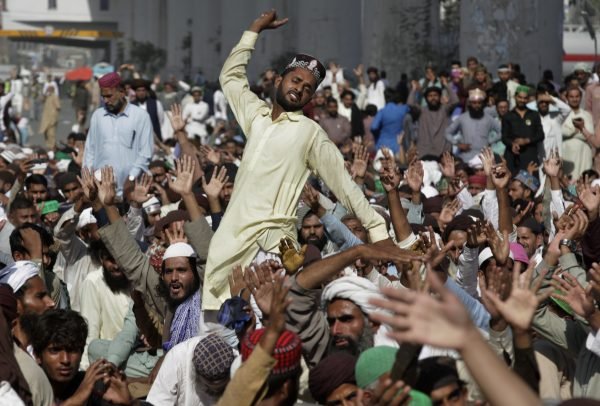
The government is determined to apprehend members of the right-wing religious party, Tehreek-e-Labbaik Pakistan (TLP), with police arresting at least two people while booking 1500 for inciting violence against the Chief Justice of Pakistan (CJP) Qazi Faez Isa.
Yesterday, TLP Vice Emir Pir Zaheerul Hasan Shah was arrested after a case was filed against him for an inflammatory speech targeting the CJP outside the Lahore Press Club during a protest against the SC verdict in the Mubarak Sani case.
In February 2024, in the Mubarak Sani case, the Supreme Court ruled that Ahmadis, while declared non-Muslims, retain the right to profess their religion.
Meanwhile, another TLP leader, Saqib Ibrahim, had targeted CJP in what the Okara police called an “illegal public meeting.” Another accused, Tauqeer Nasir, was also present in Okara when Ibrahim made the offending remarks – both were arrested on Monday.
1500 TLP members have been booked in Lahore’s Qila Gujjar police station under various sections of Pakistan Penal Code, including the anti-terror law.
Multiple cases have been filed against 90 TLP members in Okara for indulging in hate speech against the top judge.
Likewise, hundreds of TLP members in Faisalabad and Sheikhupura have also been booked. Dawn News also reported that the Punjab police is on high alert to foil any violence as it continues to hunt down TLP leadership across the province.
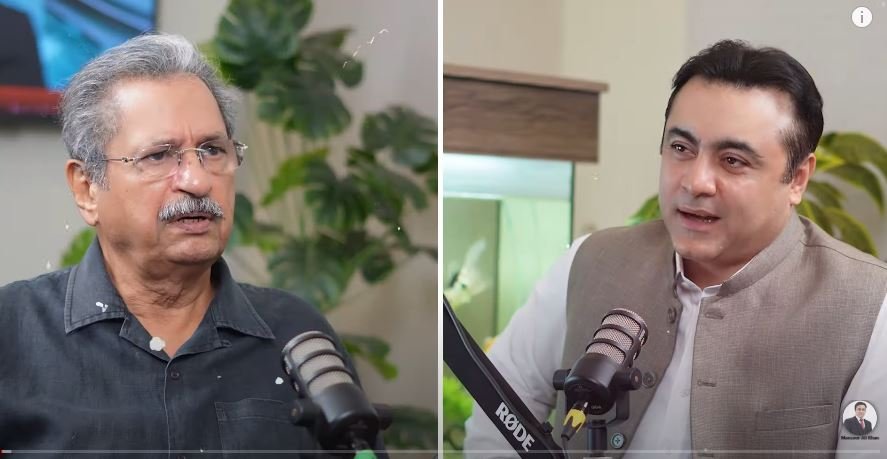
Former Federal Minister for Education Shafqat Mahmood recently appeared on senior journalist Mansoor Ali Khan’s podcast where Mahmood stated that the Pakistan Tehreek-e-Insaf’s (PTI) narrative about US conspiracy in Khan’s ouster from power in 2022 was “not true at all.”
Khan asked the PTI leader whether the US was behind PTI’s removal from government, to which Mahmood replied, “They didn’t do anything at all. In politics, you have to make a lot of narratives; not all of them are hundred per cent true.”
Shocked at his reply, the journalist said, “Sir, this is a lie you told.” Shafqat Mahmood replied, “You can call it a lie or it’s just politics.”
In 2022, the founder of PTI, Imran Khan, alleged that the US conspired against his government in the infamous “cipher”, which, according to Khan, was the evidence of the conspiracy.
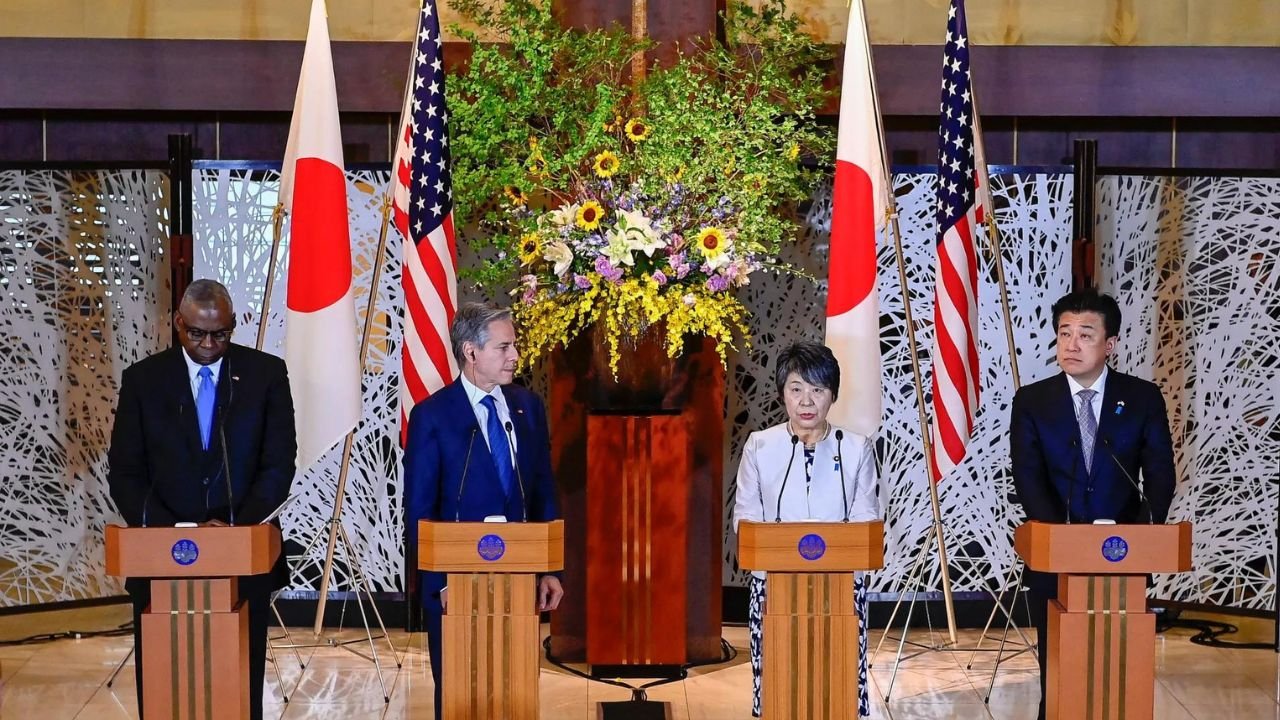
Beijing on Monday warned the United States and Japan to “stop creating imaginary enemies” after the countries lashed out against China’s actions in the South China Sea in Tokyo talks.
“We strongly urge the US and Japan to immediately stop interfering in China’s internal affairs and stop creating imaginary enemies,” foreign ministry spokesman Lin Jian said.
Following talks in the Japanese capital on Sunday, the US and the hosts slammed Beijing’s “destabilizing actions” in the South China Sea while also condemning Russia’s growing military cooperation with China and North Korea.
US Secretary of State Antony Blinken, Defense Secretary Lloyd Austin and their Japanese counterparts “reiterated their strong objections to the PRC’s unlawful maritime claims, militarization of reclaimed features, and threatening and provocative activities in the South China Sea”, a joint statement said, using an acronym for China.
China’s “destabilizing actions in this region include unsafe encounters at sea and in the air, efforts to disrupt other countries’ offshore resources exploitation, as well as the dangerous use of Coast Guard and maritime militia vessels”, the communique added.
They accused China of “intensifying attempts to unilaterally change the status quo by force or coercion in the East China Sea” and that Chinese “foreign policy seeks to reshape the international order for its own benefit at the expense of others”.
China’s Lin on Monday said the joint statement “disregards facts, mixes up right and wrong maliciously attacks China’s foreign policy”.
He added the communique “crudely meddles in China’s internal affairs, maliciously attacks and smears China on maritime issues, makes thoughtless remarks on China’s normal military development and defence policy, exaggerates and kicks up a fuss about the China threat, and maliciously hypes up regional tensions”.
“China deplores and firmly opposes this,” Lin said.
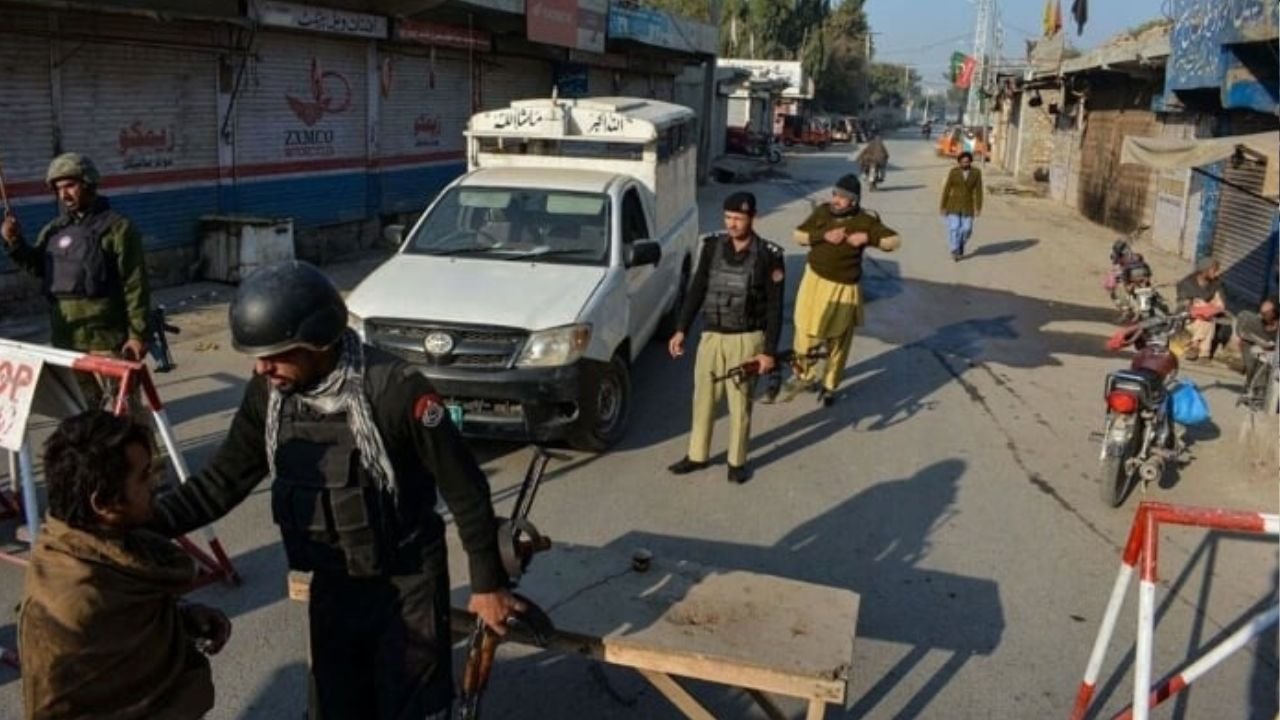
Khyber Pakhtunkhwa Police have been targeted by terrorists this year, with 76 officers killed so far.
Police force in the province is frequently targeted by terrorists. This year, 76 police personnel have been martyred and 113 have been injured.
According to a report by the Counter Terrorism Department (CTD), 23 police personnel were martyred and 23 were injured in DI Khan, 12 martyred and 12 injured in Bannu, 11 martyred and 32 injured in Bajaur, and 11 policemen martyred and 11 injured in Peshawar.
Following the American withdrawal from Afghanistan, terrorists have reportedly been using thermal guns and other modern weapons against security forces in Pakistan.
Government representatives indicate that the provincial government has begun equipping the police with modern weapons.
Last year, 184 police officers and personnel were martyred, and 408 were injured in terrorist incidents.
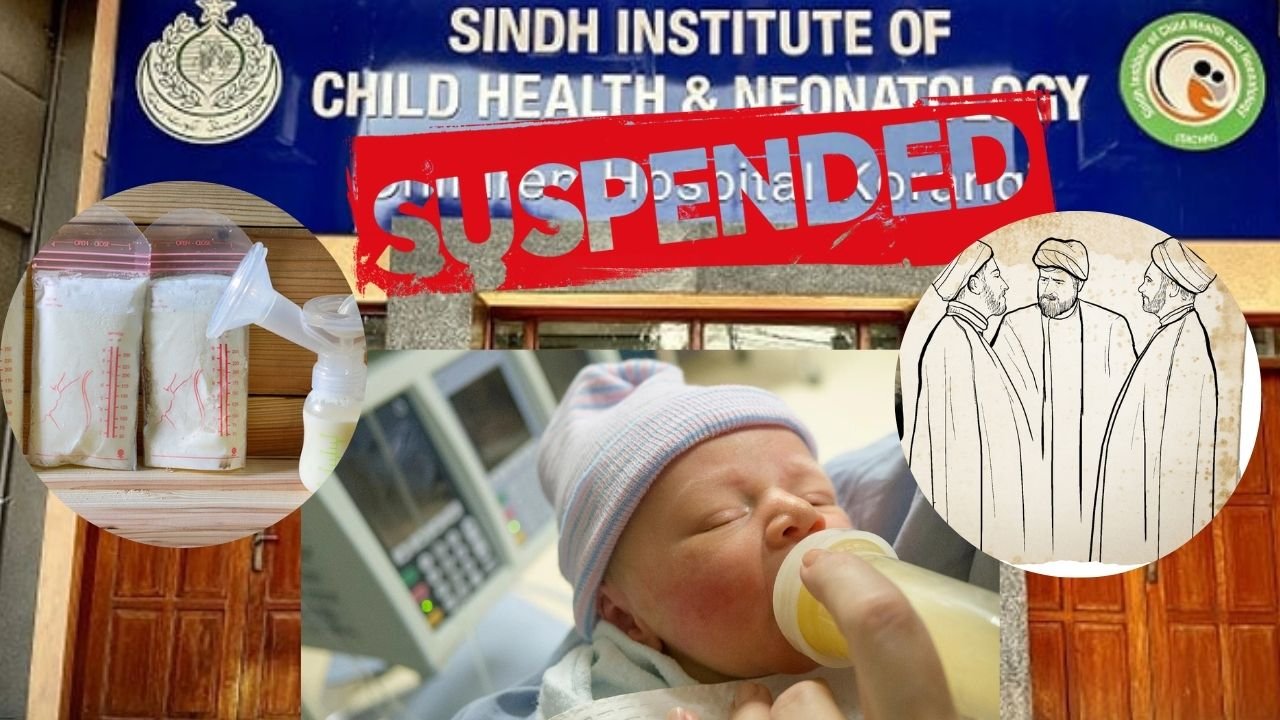
The establishment and suspension of the first ever human milk bank in Pakistan is an issue that has been making headlines all over the world.
While local media pinpoint the very nature of the issue to be controversial, international media frames it as an example of the perpetuated backwardness of our society. What perturbed me the most was the fact that the project started after getting approval from a prestigious religious body, Darul Uloom Karachi, patronized by Mufti Taqi Usmani. The approval got suspended because of a revised fatwa from the same institute.
What led to the suspension just two weeks after the inauguration, and how will this impact the mortality rate of premature children?
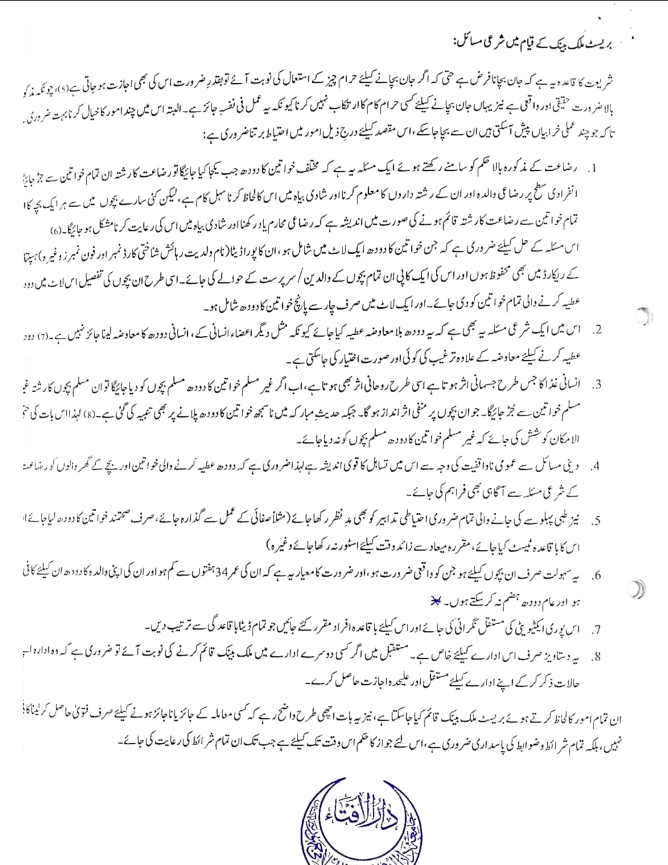
The human milk bank has been in the works since last year. I talked to the Executive Director of SICHN, Professor Jamal Raza, who explained that the institute had formally applied for the fatwa and, after six months of waiting, had an interview at Darul Ifta of Darl Uloom Karachi where they answered all the questions asked by distinguished muftis. “Subsequently, the fatwa was given last December, after which the equipment was procured from the UK and other places as it is not available in Pakistan,” Jamal said.
The first fatwa, issued on December 25, 2023, laid out basic tenets of Islam for breast feeding in a detailed manner. That document has been reviewed by The Current.
It outlined eight conditions that need to be followed.
The first and foremost condition was regarding the age of the child. The exclusive facility of breast milk is to be given to premature children with a gestation period of less than 34 weeks and less than 2 kilogrammes of weight.
The tenet strictly suggests a bond of milk kinship (Raḍāʿah), stating that a parent-child bond is formed when a woman gives milk to a baby who isn’t biologically related to her. To avoid future incestuous marriages between milk siblings and relations, the tenet says, the foster relationship must be clearly shared. The fatwa delineates that the bio-data of all the women in one lot (with a maximum of four to five women) must be kept in the hospital’s record and shared with the parents of the child and vice versa.
The second condition extrapolates that the act of donating milk for the child should be done voluntarily and free of cost, just like the donation of organs.
The third condition explains the spiritual impact of the milk bond, because of which it is imperative that only the breast milk of Muslim women is given to the children.
The fourth condition makes it mandatory for the women and families of the children to be educated about Shariah laws regarding the practice of Raḍāʿah.
Further conditions stress that the milk be cleaned and pasteurized, not stored for long, and only given to children who need it most desperately and cannot digest powdered milk.
The last two conditions demand that the whole activity be supervised by a group of people and assert that this provisional permission is specific to SICHN. If some other institute wants to open the same facility, then it would have to ask for it.
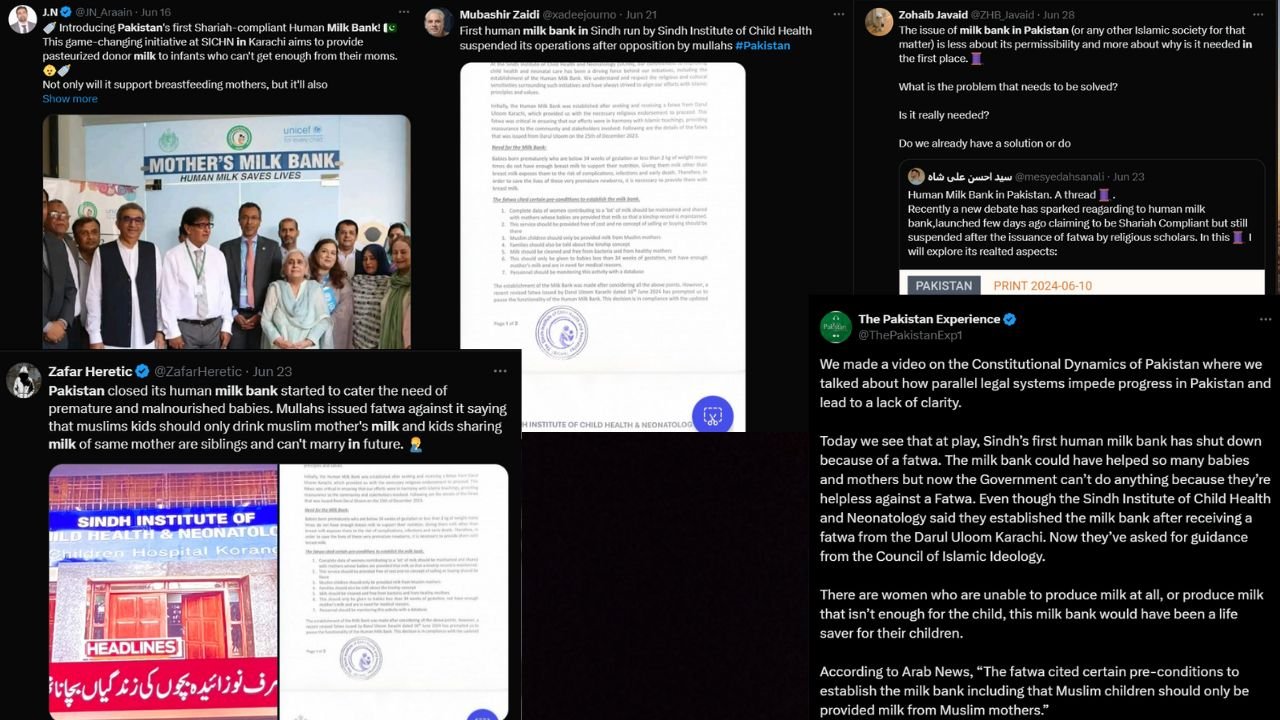
On June 10, 2024, Pakistan’s first Shariah-compliant ‘Human Milk Bank’ was inaugurated by Sindh Health Minister Dr Azra Pechuho. It was set up in collaboration with UNICEF.
Journalist Waqar Bhatti wrote in The News that Prof Jamal Raza, who spoke at the inauguration ceremony, described mother’s milk as the ‘original fast food’, emphasizing that it delivered all the necessary nutrients, healthy components, and disease-fighting properties that a newborn needs.
Bhatti’s report elaborated that Pakistan has a neonatal mortality rate (NMR) of 41 deaths per 1000 live births, which is one of the highest in the world, and this facility in Sindh understands that a mother’s breast milk is the best source of food and has all the antibodies that may protect the immunity of children.
Bhatti, while talking to journalists Mehtab Haider and Waqar Gillani, identified the artificial powdered milk industry as the real reason behind mothers shying away from feeding their children, not realizing that this is extremely harmful to a child’s health. As for the suspension, he claimed that the wayward discourse on social media actually misguided Mufti Taqi Usmani; otherwise, the facility was really proving to be helpful.
Since the inauguration, public sentiment has been against the establishment of the milk bank.
In a YouTube video made by Urdu Point, host Shabana asks the public about the opening of the milk bank in Sindh. All the people she talked to voiced their opinions against establishing the bank, stating religious reasons.
The reaction on social media was mixed; it either pronounced the suspension a “conspiracy of mullahs” or called it a decision in accordance with Islamic rules.
“The second fatwa directly did not mentioned this fatwa but was in response to some other question which we are not aware of, as we were not approached for any clarification nor our centre was visited for procedural verification,” Jamal Raza stressed while talking to TheCurrent.
Emphasising that they don’t intend to do anything remotely unislamic and open to all sort of suggestions, Raza added, “We feel that most of the criticism was based around lack of information to the general public and the general tendency to criticise without fact finding, thus if any religious body is willing to sit down with us to understand the process, they should not have any objection to the establishment of this bank.”
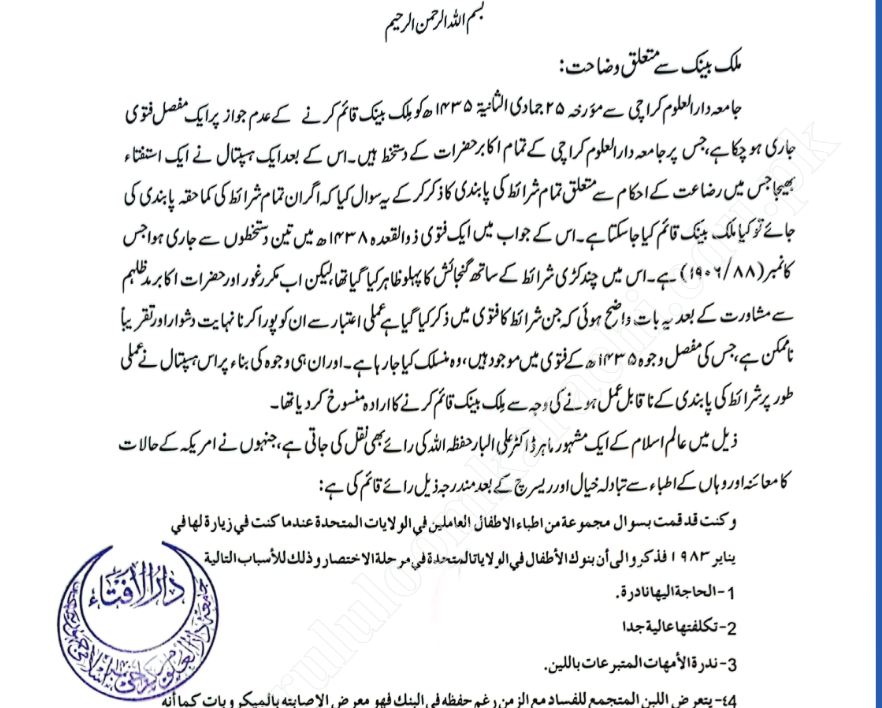
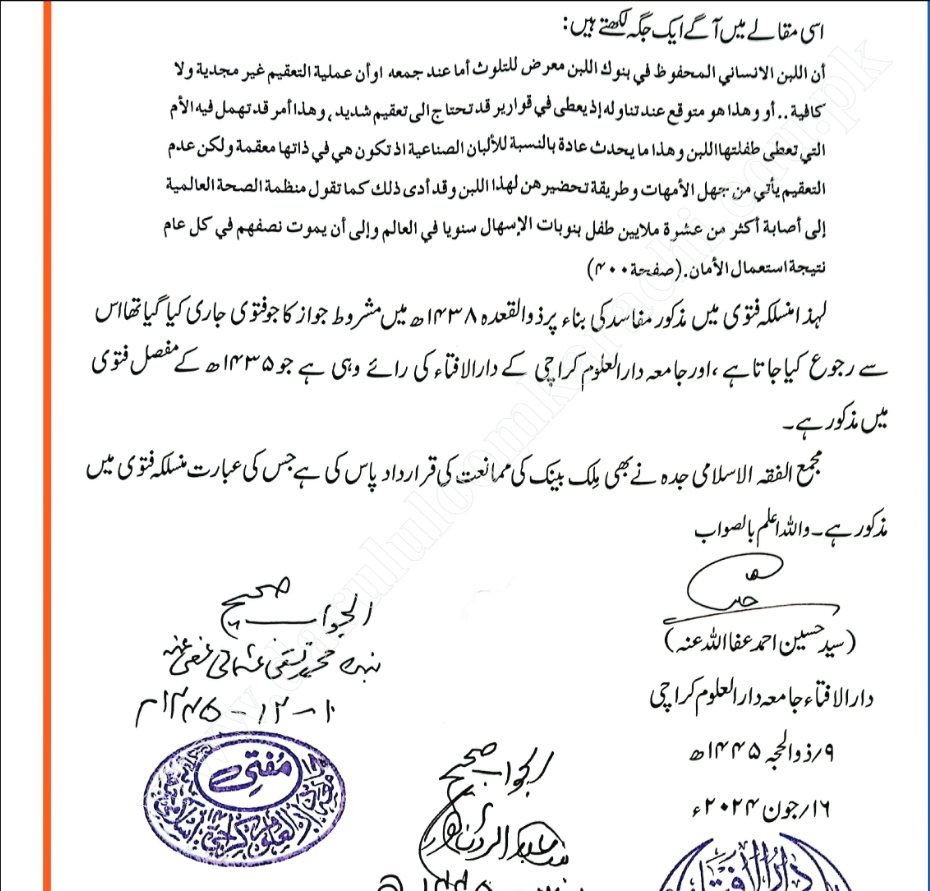
A revised fatwa issued by Darul Uloom Karachi dated June 16, 2024, prompted SICHN to discontinue the functionality of the Human Milk Bank and seek further guidance from Dar ul Uloom and Islamic Ideology Council.
I tried to talk to Dar ul Uloom about why they felt the need to have a revised fatwa and know the reason for taking back the permission they accorded earlier. The singular answer from all the multiple scholars I talked to stated that the revised fatwa is the only response they want to put out there and that they are not going to entertain any other query about this issue.
The revised Fatwa available on Dar ul Uloom Karachi’s official website includes a detailed analysis of the establishment of a milk bank that did not comply with Shariah laws because of the demanding maintenance of the concept of kinship at the facility as observed by the scholars sitting in Dar ul Ifta. It quotes an American scholar and a Jeddah’s Islamic think tank declining the establishment of a milk bank along with a detailed note from Mufti Taqi Usmani extrapolating other religious concerns entailing the issue of breast milk bank but no word on the specific issue of the establishment of milk bank in the city.
In a panel discussion about the Human Milk Bank on Samaa TV’s Mufti Online, Dr. Shawana Mufti, a prominent gynaecologist practising in America, shared her take on the issue of establishing a milk bank in the country. She highlighted that the idea is not feasible in the present socio-economic conditions of Pakistan, especially considering the high protocols there are for the milk donors to meet in the countries where they are operational. She started off by saying that she respects the opinion of all the scholars and the tenets of Islam and she totally agrees with all the scholars here, saying that this wouldn’t be successful in Pakistan because the idea of a milk bank to be formed was coined in the West as it was found out that for children who are premature at birth and can only survive if given the breastfeed. “Here they start with screening as it is checked what is the social and medical history of donor mother,” she stressed. Further, Shawana laid out how strict the screening criteria for a donor mother are, to the extent that it is considered that the mother takes painkillers or any sort of narcotics, “In Pakistan, a regular woman doesn’t even go to a doctor until she is dying or expecting a child. The financial stress in the country would never be up to the screening criteria (of international standard). Who will donate milk here? The elite women won’t donate milk here.”
Her argument was seconded by Professor Naaureed Fatima in the panel as she said that this is sadly a reality that elite class won’t donate and the commoners are so unaware about the complexity of the milk kinship that it requires a campaign to educate them about that. In this case, a milk bank in Pakistan is not a feasible idea.
I talked to Mufti Sohail Sialwi from Nottingham, UK, who opined that the basic rules delineated in both the fatwas are the same. It is clearly stated in the first fatwa that conditional permission is given because the strict criteria are hard to fulfil. That is why the fatwa asserted not just keeping a strict record but also educating both the parents and donor women about the complexities of the concept of Raḍāʿah. However, in the second fatwa, the verdict is shared after analysing the conditions in which record-keeping is an uphill task, and even if things are recorded, tempering them isn’t very difficult as the incidents of these records getting destroyed, burnt and modified. Thus, in a country like ours, the officers (liable to be corrupt or oblivious to sensitivity) cannot be trusted with a sensitive issue like this.
The matter now rests with the Islamic Ideology Council, the most high-profile religious authority in the country. I talked to the Chairman of the Islamic Ideology Council, Dr. Raghib Naeemi, who informed me that a delegation from SICHN came to the Council to defend their case, and the discussion around the topic is ongoing. However, a simple Google search revealed that a similar issue rose in 2014, and the IIC ruled against the legitimacy of a human milk bank.
Dr. Raghib Naeemi, Chairman of the Islamic Ideology Council
Islam as a religion defines the social fabric of the Pakistani nation. The concept of milk donation is considered esteemed and sacred for Muslims as derived from the religious tradition inspired by the life of the Prophet (PBUH). The need of the hour is a large-scale awareness campaign patronized by the government addressing all the misconceptions and educating mothers to not just breastfeed their children but also donate milk to premature children. The government could curb neonatal mortality by advertising for lactating mothers to feed their children inside the hospitals or even for children who, for some reason, cannot have their mother’s milk fed. Although involving money in this activity is proscribed, a form of recognition for such mothers could be to facilitate them with a healthy diet and transportation for the time they feed the child. In this way, the government can easily record these mothers and ensure the exclusivity and intimacy of the donor mother-child bond at the core of the concept of Raḍāʿah.
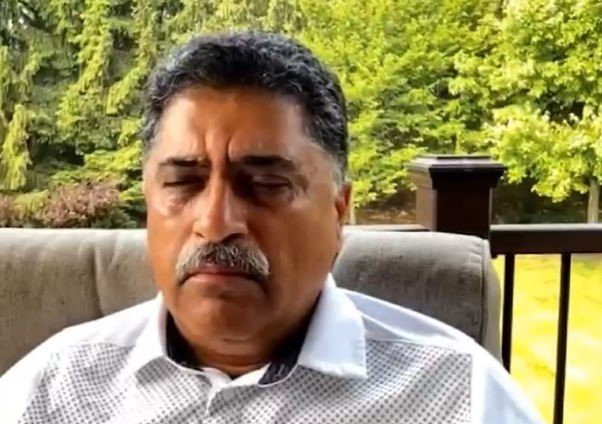
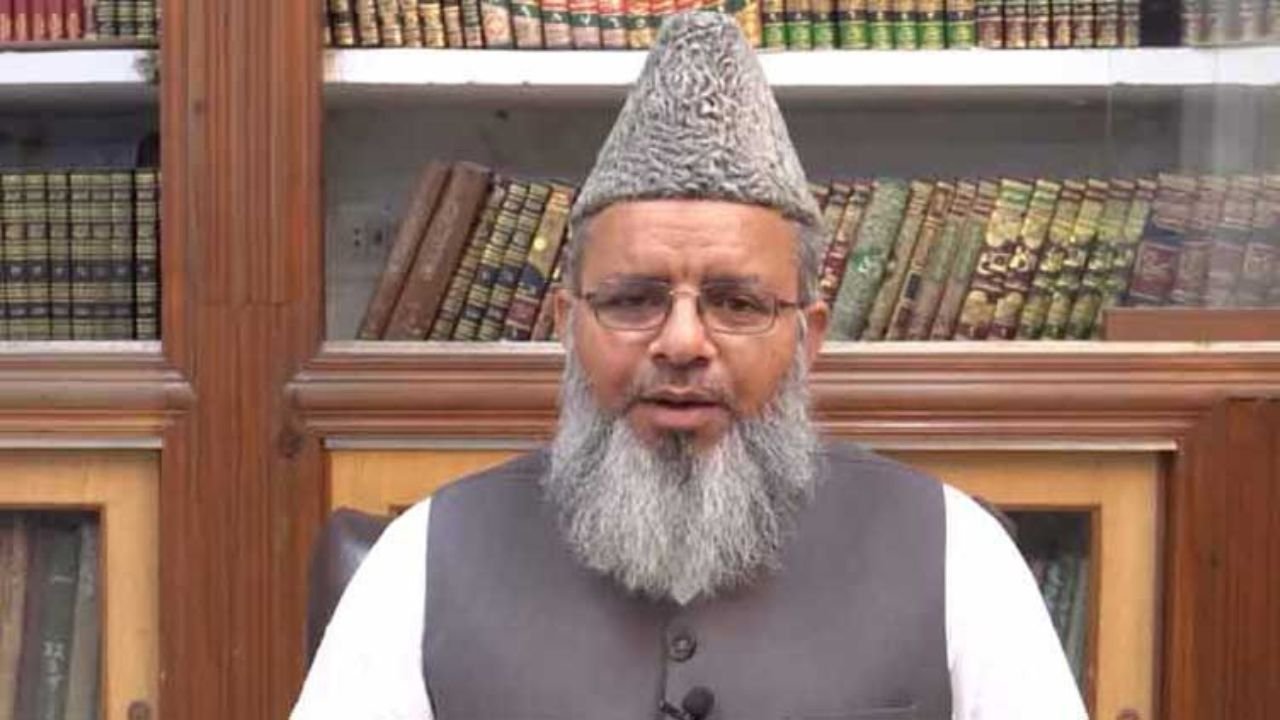 Dr. Raghib Naeemi, Chairman of the Islamic Ideology Council