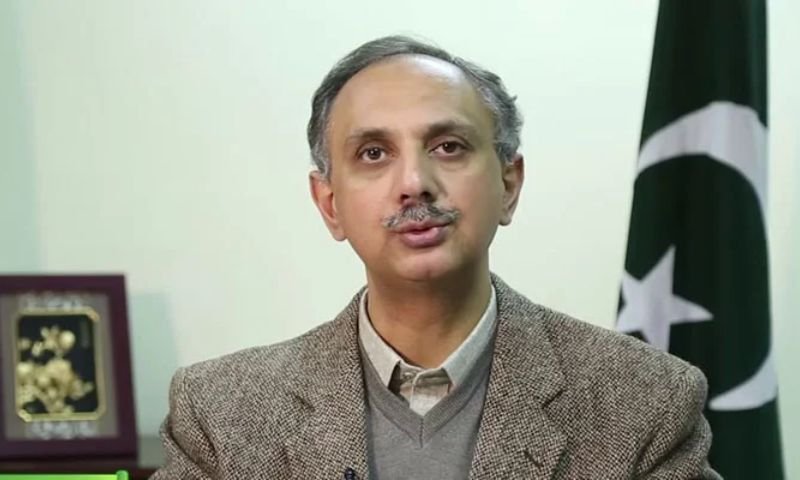
Pakistan Tehreek-e-Insaf (PTI) Secretary General Omar Ayub Khan has called for the invocation of Article 6 (Guilty of high treason) against the members of the Election Commission of Pakistan (ECP) because they misinterpreted the Constitution, leading to the removal of the party’s electoral symbol—the bat.
His remarks came after the recent Supreme Court verdict granting PTI reserved seats for women and minorities—a right previously revoked by the ECP.
“I congratulate the entire Pakistan on this auspicious day and the entire legal team,” Ayub said, hailing the Supreme Court’s ruling in a press conference.
He also stated that the Chief Election Commissioner of Pakistan, Sikandar Sultan Raja, and four other members of the ECP should resign from their offices immediately.
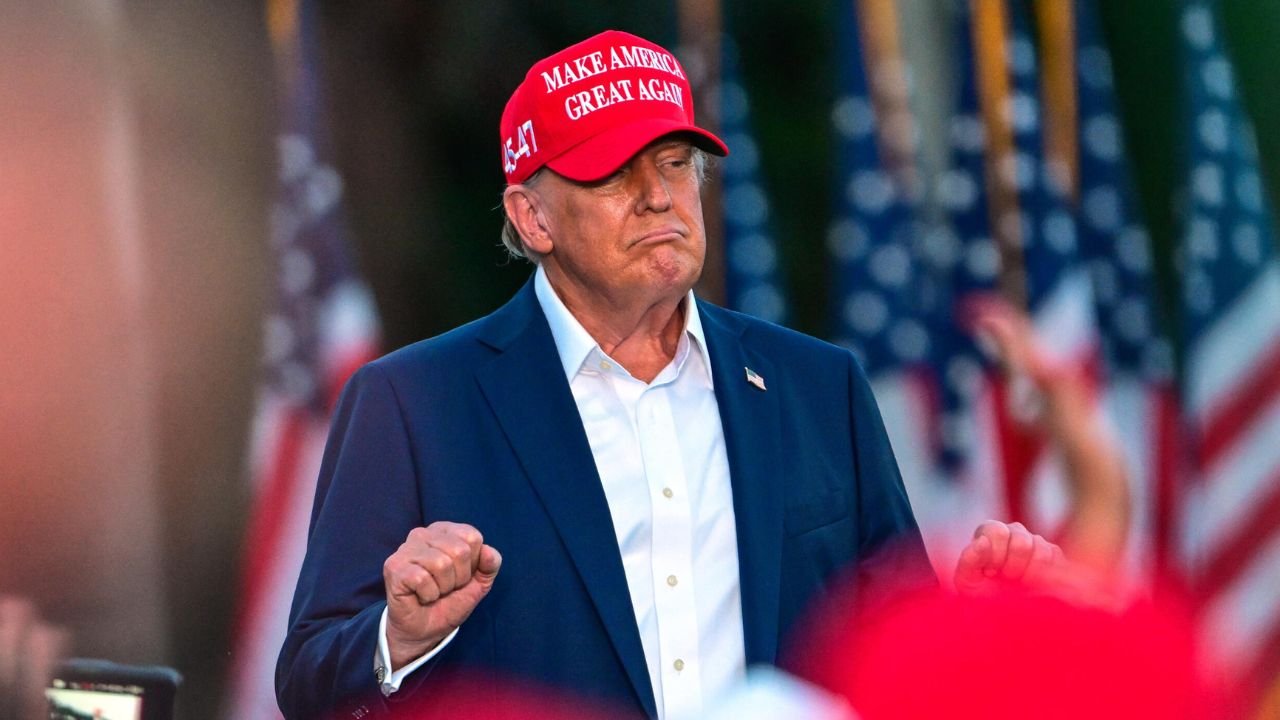
Meta said Friday it was lifting restrictions on US presidential candidate Donald Trump’s Facebook and Instagram accounts, ending measures put in place after his supporters violently stormed the US Capitol in 2021.
It said that “former President Trump, as the nominee of the Republican Party, will no longer be subject to the heightened suspension penalties.”
Trump’s Facebook and Instagram accounts were suspended indefinitely a day after his supporters attacked the US Capitol on January 6, 2021, and it was determined he had praised people engaged in violence on social media.
His accounts were reinstated in February 2023 but with a threat of penalties for future breaches — an additional restriction that Meta lifted on Friday.
“In assessing our responsibility to allow political expression, we believe that the American people should be able to hear from the nominees for President on the same basis,” Meta wrote in a blog post.
It added that US presidential candidates “remain subject to the same Community Standards as all Facebook and Instagram users, including those policies designed to prevent hate speech and incitement to violence.”
Trump, the first former president to be convicted of a crime, was also banned from Twitter and YouTube.
While those restrictions were later lifted last year, Trump now mainly communicates on his own social media platform, Truth Social.
His Facebook profile, which has 34 million users, includes messages originally published on Truth Social as well as invitations to rallies and videos from his campaign.
In a significant political and symbolic win for the Pakistan Tehreek-e-Insaf (PTI), a thirteen-member bench of the Supreme Court on Friday ruled that the party has the legal and constitutional right to reserved seats.
It was Justice Mansoor Ali Shah who, with his announcement of the 8-5 majority verdict, dismissed the Peshawar High Court’s (PHC) order that had upheld the Election Commission of Pakistan’s (ECP) ruling denying reserved seats to the Sunni Ittehad Council, which was backed by PTI.
Geo News reported that eight Justices, Justices Athar Minallah, Shahid Waheed, Muneeb Akhtar, Muhammad Ali Mazhar, Ayesha Malik, Syed Hassan Azhar Rizvi, and Irfan Saadat Khan supported the verdict.
The Supreme Court, in its verdict today, declared that a party’s lack of electoral symbol does not affect its legal rights to participate in an election.
The Supreme Court also stated that the Election Commission of Pakistan (ECP) ‘misinterpreted’ its January 13 verdict of taking away PTI’s bat symbol and they never ruled that PTI could not participate in the elections.
“PTI was and is a political party, which secured general seats in the national and provincial assemblies in the general elections of 2024,” emphasised the verdict.
The ruling said that PTI should present a list of eligible candidates for the reserved seats to the electoral body within 15 days after the verdict.
TIMELINE
On 13 January 2024, the Supreme Court upheld the Election Commission of Pakistan’s (ECP) decision to revoke PTI’s electoral symbol ‘bat’. PTI leadership called the decision “unfair and damaging to democratic constitutionalism.”
Following this landmark decision, PTI members contested the general elections as the party-backed independent candidates with their own allotted electoral symbols.
Following the February 8 elections, PTI-backed independents won the highest number of seats, making history in the country.
To get the reserved seats according to proportional representation, PTI-backed independents joined the Sunni Ittehad Council (SIC) because the laws dictated that only a political party could be eligible for the allocation of reserved seats.
The SIC then approached the ECP on February 21 seeking allocation of reserved seats. However, the PTI suffered a setback after the electoral body, citing the party’s failure to submit its list of candidates, denied allocating the reserved seats to the SIC via its 4-1 majority verdict on March 4.
The party then approached the Peshawar High Court on March 6, which, in yet another setback to the party, upheld the electoral body’s decision on the matter in its March 14 ruling.
Subsequently, on April 2, the SIC moved the SC seeking to set aside the PHC verdict.
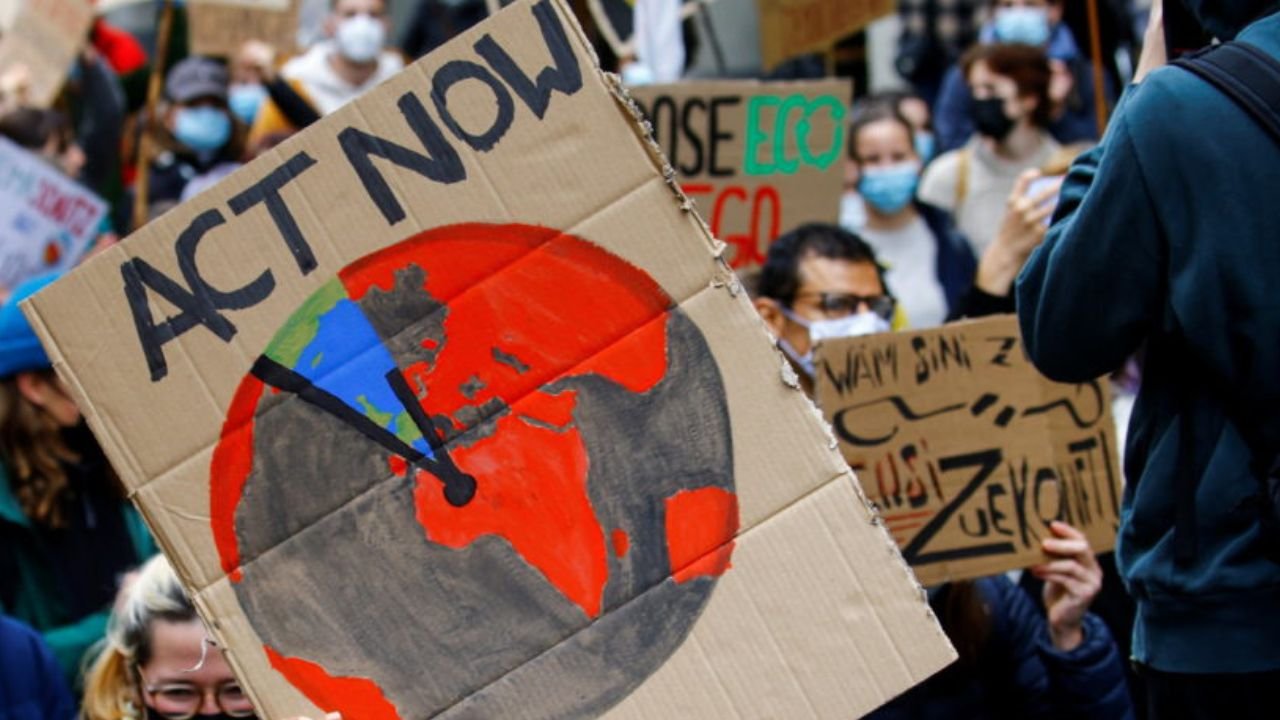
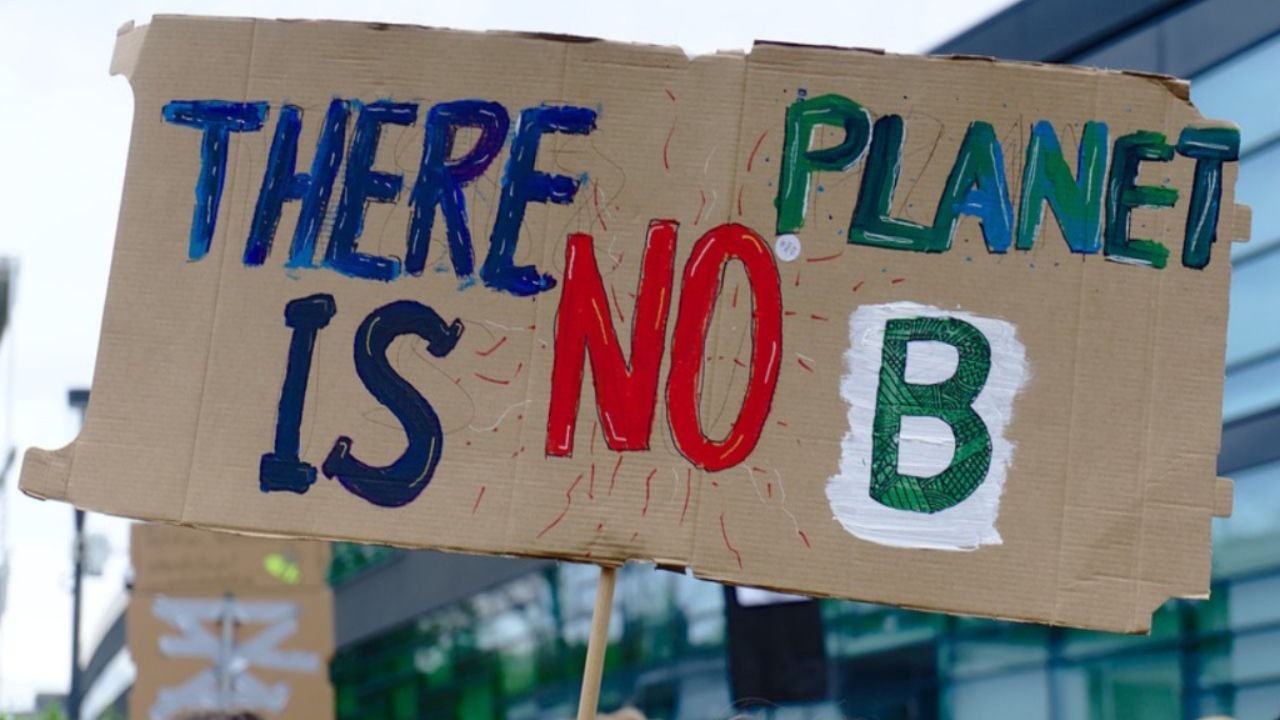
Countries on the frontlines of climate change have warned they cannot wait another year for long-sought aid to recover from disasters as floods and hurricanes wreak havoc across the globe.
The appeal came during a meeting of the “loss and damage” fund that will conclude Friday amid concerns it is unlikely to be able to approve climate aid until 2025.
“We cannot wait until the end of 2025 for the first funds to get out the door,” Adao Soares Barbosa, a board member from East Timor and a long-standing negotiator for the world’s poorest nations, told AFP.
“Loss and damage isn’t waiting for us.”
Nearly 200 nations agreed at the UN COP28 summit last November to launch a fund to distribute aid to developing countries to rebuild after climate disasters.
That historic moment has given way to complex negotiations to finalise the fund’s design, which some countries worry will not move at a pace or scale that matches the tempo of extreme weather disasters afflicting their people.
“The urgency of needs of vulnerable countries and communities cannot be left until we have every hair in place for this fund,” said Barbosa.
Experts say damage bills from climate disasters can run into the billions, and there is barely enough cash set aside for loss and damage at present to cover just one such event.
‘Immense pressure’
This year has witnessed a string of catastrophes on multiple continents, from floods and landslides to heatwaves and wildfires.
Delegates met in South Korea for the second meeting of the loss and damage fund this week as Hurricane Beryl left a trail of destruction across the Caribbean and North America.
The “massive” destruction witnessed in recent weeks “puts immense pressure on us to deliver on our work”, Richard Sherman, the South African co-chair of the board steering the negotiations, told the meeting.
The fund said it wanted money approved “as soon as possible, but realistically by mid-2025”, according to an official document seen by AFP.
In an appeal for faster action, Elizabeth Thompson, a board member from Barbados, said Hurricane Beryl alone had caused “apocalyptic” damage worth “multiple billion dollars”.
“In five islands of the Grenadines… 90 percent of the housing is gone… Houses look like packs of cards and strips of wood, roofs are gone, trees are gone, there is no food, there is no water, there is no power,” she said.
“We cannot keep talking while people live and die in a crisis that they do not cause.”
Thompson said the fund needed to reflect “the urgency and the scale required to respond to… the risk, the damage and the devastation faced by people across the world who need this fund”.
– No money, no fund –
Wealthy nations have so far pledged around $661 million to the loss and damage fund. South Korea contributed an additional $7 million at the start of this week’s meeting.
“That would hardly cover the likely losses from one major climate-related disaster,” Camilla More, of the International Institute for Environment and Development, told AFP.
Some estimates suggest developing countries need over $400 billion annually to rebuild after climate-related disasters. One study put the global bill at between $290 billion and $580 billion a year by 2030, and rising after that.
In one example in 2022, unprecedented flooding in Pakistan caused more than $30 billion in damages and economic losses, according to a UN-backed assessment.
Developing nations had been pushing for a specific fund to distribute aid to recover from climate impacts for 30 years, and the agreement struck in November was hailed a major diplomatic breakthrough.
“(But) we can’t have a fund without money,” said Brandon Wu from ActionAid.
Technical discussions are taking place this year over the details of the loss and damage fund, including with the World Bank which will house the fund on an interim basis.
The Philippines was chosen this week to host the fund’s board.
Contentious discussions remain to decide how the money is allocated and in what form it should be made available to countries.
On Tuesday, more than 350 nongovernmental organisations sent a letter to the fund’s board demanding that a substantial share of the money be made directly available as small grants to local communities and indigenous groups.
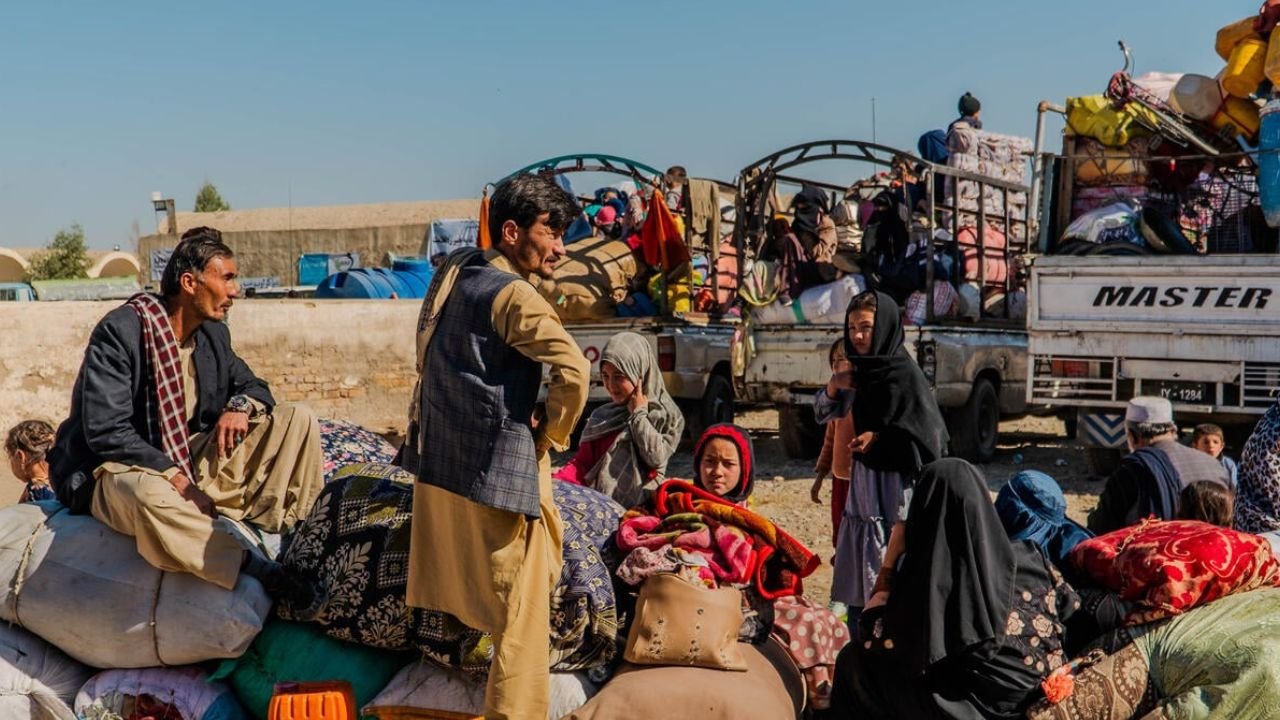
At least 44,000 Afghans approved for relocation to Western nations following the Taliban’s return to power are still waiting in limbo in Pakistan, Islamabad said Thursday.
In the days after the NATO-backed government collapsed in August 2021, more than 120,000 people, mostly Afghans, were airlifted from Kabul in a chaotic evacuation.
Hundreds of thousands more Afghans have fled Taliban rule since then, with many promised new lives in the nations involved in their country’s 20-year occupation.
Pakistani foreign office spokeswoman Mumtaz Zahra Baloch said that three years after the Taliban takeover, there were still 25,000 Afghans approved for relocation to the US living in Pakistan.
A further 9,000 Afghans resident in Pakistan have been accepted by Australia, as have 6,000 by Canada, 3,000 by Germany, and more than 1,000 by Britain – all yet to be relocated.
“We have urged them to expedite the approval and visa issuance process for these countries, for these individuals, so that they are relocated as early as possible,” Baloch told reporters at a weekly press briefing.
Most countries shut their Afghan embassies as Kabul fell, and as a result, many parked Afghan migrants in Pakistan while their Islamabad embassies processed their cases.
Many of the Afghans who were promised relocation were involved in the foreign-backed government and are fearful of reprisals by Taliban authorities.
On Tuesday, Pakistani Prime Minister Shehbaz Sharif pressed the UN High Commissioner for Refugees Filippo Grandi over the backlog of Afghans awaiting relocation, as well as the large numbers of refugees who have arrived with no plans for onward travel.
According to a statement released by his office, Sharif told Grandi that “the international community must recognise the burden being shouldered by Pakistan while hosting such a large refugee population, and demonstrate collective responsibility”.
Some 600,000 Afghans have travelled to Pakistan since the Taliban took over and implemented their austere version of Islam.
Millions more came in the four decades before that, fleeing successive conflicts including the Soviet invasion, a civil war, and the post-9/11 US-led occupation.
Since last year, however, Islamabad has waged a campaign to evict huge numbers of undocumented Afghans, as relations with Kabul soured over security.
More than half a million have crossed back into Afghanistan, fearing arrest. On Wednesday, Islamabad said it would extend the right of registered Afghan refugees to stay for another year — but continue its push to send those without papers back home.
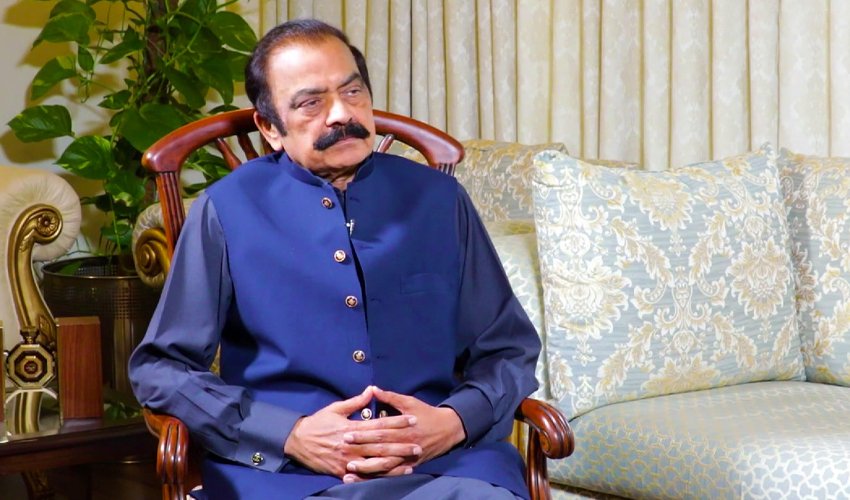
Prime Minister Shehbaz Sharif’s Adviser on Political and Public Affairs Rana Sanaullah, appearing on the Geo News programme Capital Talk, has stated that people shouldn’t engage in such controversial conversations that lead to fear that their calls are being tapped.
The federal government has authorised the country’s top spy agency, Inter-Services Intelligence (ISI), to intercept and trace calls and messages to apprehend an offence against national security.
“If somebody is worried over their conversations being ‘heard’, then they should not engage in such verbal exchanges to begin with,” Sanaullah reiterated, echoing the government’s stance on the issue.
“If the content of my call is something I cannot face, something I cannot defend or something that I can be blackmailed over – then I shouldn’t be engaging in that in the first place,” said the advisor.
The Lahore High Court has issued a written order for the previous hearing of a petition filed against the imposition of protective and non-protective tariffs on electricity consumers.
The Supreme Court ordered the public prosecutor to appear with instructions at the next hearing.
The written order said that according to the petitioner, tariffs related to electricity units have been imposed on the consumers.
In the written order of the Lahore High Court, it has been said that according to the petitioner, electricity units are not being given to consumers as per the basic rate.
Yesterday, the Lahore High Court issued a notice to National Electric Power Regulatory Authority (NEPRA) on the petition against the exorbitant increase in the electricity bills of more than 200 units on the basis of protective and non-protective tariffs and sought its response at the next hearing.
Justice Risal Hasan Syed further questioned on what basis the prices of electricity have been increased.
The International Monetary Fund (IMF) has suggested that the government impose income tax of up to 45 percent on agriculture income as Pakistan seeks another multi-billion dollar bailout to stabilise its economy.
The condition is part of the structural benchmarks the IMF has set for Pakistan to follow in order to access the next IMF loan that the country is negotiating with the global lender, Tribune reported.
It also reported that the IMF has set October 2024 as the deadline for amending provincial tax laws to align with federal tax laws.
Under the constitution, the federal government cannot impose taxes on agricultural income, as it is the provinces’ responsibility.
Currently, the provinces are authorised to collect taxes from the agriculture sector, which contributes 24 percent to the economy but does not contribute even 0.1 percent of the total taxes collected across the country.
President Asif Ali Zardari expressed apprehension at the move, saying the government was planning to tax agricultural income as per the IMF’s condition. Still, the provincial governments will lead the initiative to tax large land-holding farmers per their profitability and expenditures.
Gold prices in Pakistan witnessed a slight rise on Wednesday, following a similar trend in international markets.
According to the All-Pakistan Gems and Jewellers Sarafa Association (APGJSA), the price of gold per tola increased by Rs600, bringing it to Rs245,600.
The price for 10 grammes of gold also saw a modest uptick, gaining Rs514 to reach Rs210,562.
This increase comes after a minor decline on Tuesday when the price per tola dropped by Rs100.
Internationally, gold prices also climbed on Wednesday. The APGJSA reported that the global rate for gold stood at $2,372 per ounce, inclusive of a $20 premium, after a $10 increase.
In contrast, silver prices remained stable, with the rate per tola holding steady at Rs2,900.
It is noteworthy that in April, gold prices in the local market hit an all-time high of Rs252,200 per tola.