Category: Uncategorized

  • Establishment’s involvement in judicial matters will end soon, says LHC Chief Justice

    Establishment’s involvement in judicial matters will end soon, says LHC Chief Justice

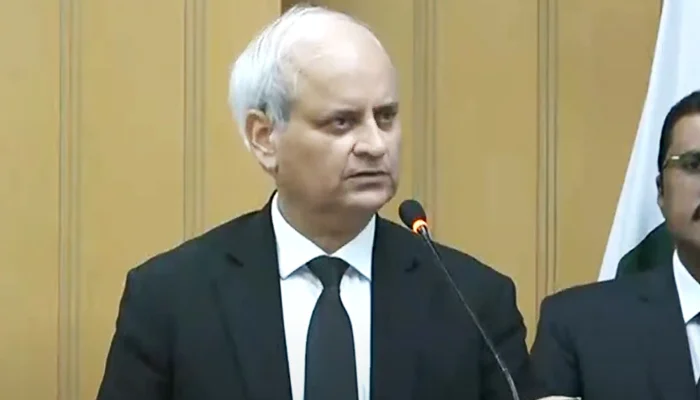
    Lahore High Court (LHC) Chief Justice Malik Shehzad Ahmed Khan said confidently on Friday that the security establishment’s involvement in the judiciary will be over soon.

    While addressing an event in Rawalpindi, he stated, “Interference in judiciary will have to be fought with faith that it will come to an end.”

    Justice Khan stressed that the establishment’s interference in the judiciary is a genuine issue, adding that he received letters as proof claiming the Army establishment’s involvement in judicial matters.

    “The establishment’s interference in judicial matters will end, and my experience [tells me] that it will come to an end,” said the chief justice.

    Justice Malik Shehzad Ahmed mentioned that he is happy that judicial authorities is “fulfilling their responsibilities without any fear or greed”.
    Earlier, on March 25, six Islamabad High Court (IHC) judges wrote a letter to Supreme Court (SC) blaming intelligence agencies for interfering in judicial matters.

  • LEAs stop TTP from establishing footprint in Balochistan

    LEAs stop TTP from establishing footprint in Balochistan

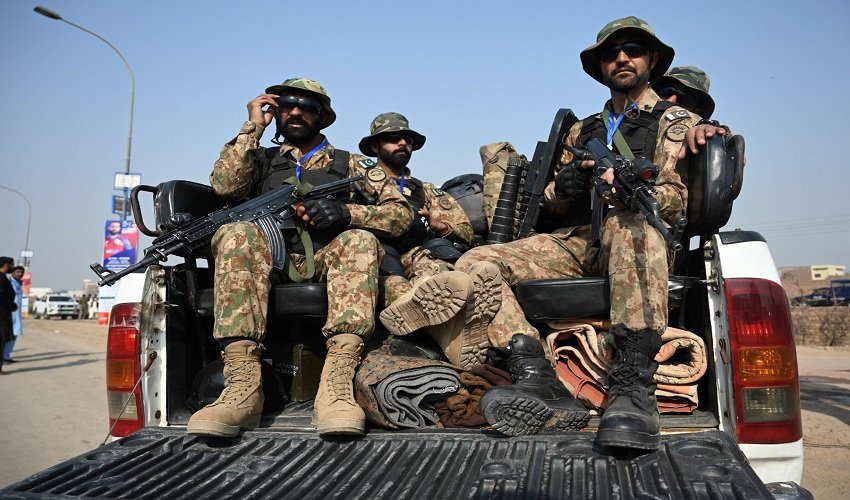
    Law enforcement agencies have foiled a Tehreek-i-Taliban Pakistan (TTP) attempt to establish a foothold in Balochistan by arresting a most wanted commander and several other members of the banned outfit in different areas of the province.

    The security situation in Pakistan has been deteriorating since the past few months, especially in Balochistan and Khyber Pakhtunkhwa provinces.

    “With the arrest of the TTP commander and other terrorists, their efforts to establish centres in the province have been foiled,” stated a spokesman for the Counter Terrorism Department on Thursday.

    The CTD, along with other law enforcement agencies, conducted operations and arrested several militants, including the wanted TTP commander.

    He also said, “The arrested commander was involved in various terrorist activities in different areas of the country.”

  • Gold price drops by Rs1,200 per tola to Rs240,700

    Gold price drops by Rs1,200 per tola to Rs240,700

    In a significant shift on Thursday, gold prices in Pakistan witnessed a notable decrease. The price of 24-karat gold fell by Rs1,200 per tola, bringing it to Rs240,700 per tola.

    This reduction reflects the ongoing challenges in purchasing power, with the price being set Rs1,500 below its actual market value.

    The Karachi Sarafa Association reported that the price for 24-karat gold was Rs206,361 per 10 grammes, a decrease of Rs1,029. Meanwhile, 22-karat gold was quoted at Rs189,165 per 10 grammes, reflecting a similar downward trend.

    In contrast, silver prices remained stable in the domestic market. The price of 24-karat silver held steady at Rs2,750 per tola and Rs2,358 per 10 grammes, indicating no change from previous rates.

    Globally, the gold market also experienced a decline. Spot gold was traded near $2,305 an ounce, marking a decrease of $15.5 or 0.67 per cent from the previous session. This downturn follows a report indicating that the US core consumer price index fell to its lowest level in over three years, suggesting a potential for faster policy easing.

    Bloomberg reported that the Federal Reserve has adjusted its expectations, now projecting just one quarter-point interest rate cut this year, down from the three cuts anticipated in March.

    Swap traders are currently pricing in a 25-basis-point rate cut by November, with a 75 per cent probability of a similar reduction by year-end.

    This is a shift from the 50 per cent chance of a second cut that was forecasted two days prior. US producer prices, expected to be released later on Thursday, may provide further indications of market trends.

    Overall, the drop in gold prices reflects both domestic economic pressures and global market adjustments, offering a complex landscape for investors and consumers alike.

  • Tax dou, phir baahir jao: no vacation abroad if you don’t pay your taxes

    Tax dou, phir baahir jao: no vacation abroad if you don’t pay your taxes

    Pakistan’s budget for 2024-25 was presented on Wednesday by Finance Minister Muhammad Aurangzeb.

    With a heavy bailout IMF bailout package weighing on the government, increased taxes have been imposed.

    The Federal Board of Revenue (FBR) has asserted strict actions against non-filers including disallowing foreign travel, No vacation abroad if you don’t pay your taxes.

    While these people are barred from travelling as per the proposal in the Finance Bill 2024-25, Haj and Umrah travellers, minors, students, overseas Pakistanis and such other classes of persons categorised as non-filers are exempted.

    The implementing agencies can face a penalty of Rs 100 million if they fail to block SIMs, utility connections or bar foreign travel of non-filers for first default and Rs200 million for each following default.

    These impositions are put forward for people failing to show necessary evidence or submitting incomplete information pertaining to tax returns or not filing returns.

    Traders and shopkeepers who did not register under Tajir Dost Scheme, will also be penalised while failure to register could result in imprisonment for six months or a fine, or both.

  • Gold price surges by Rs600 to Rs241,900 per tola

    Gold price surges by Rs600 to Rs241,900 per tola

    The price of gold in Pakistan saw a notable increase on Wednesday, with 24-karat gold reaching Rs241,900 per tola, marking a rise of Rs600 per tola.

    According to the Karachi Sarafa Association, the price of 24-karat gold per 10 grammes also climbed, now standing at Rs207,390, an increase of Rs514.

    Similarly, 22-karat gold experienced a price hike, with the new rate quoted at Rs190,108 per 10 grammes. In contrast, silver prices remained stable in the domestic market. The price of 24-karat silver held steady at Rs2,750 per tola and Rs2,358 per 10 grammes.

    On the international stage, spot gold traded near $2,314 per ounce, showing little change from the previous session. Investors are keeping a close watch on the upcoming US inflation data, which is set to be released just hours before the Federal Reserve’s decision on interest rates today.

    This data could significantly influence gold prices, as any shifts in interest rates may impact investor sentiment and demand for precious metals.

    The recent surge in gold prices in Pakistan reflects the broader global economic uncertainties and the anticipation of key economic indicators that could sway the market in the coming days.

  • How was the performance of 100 days of National Assembly? FAFEN reports details

    How was the performance of 100 days of National Assembly? FAFEN reports details

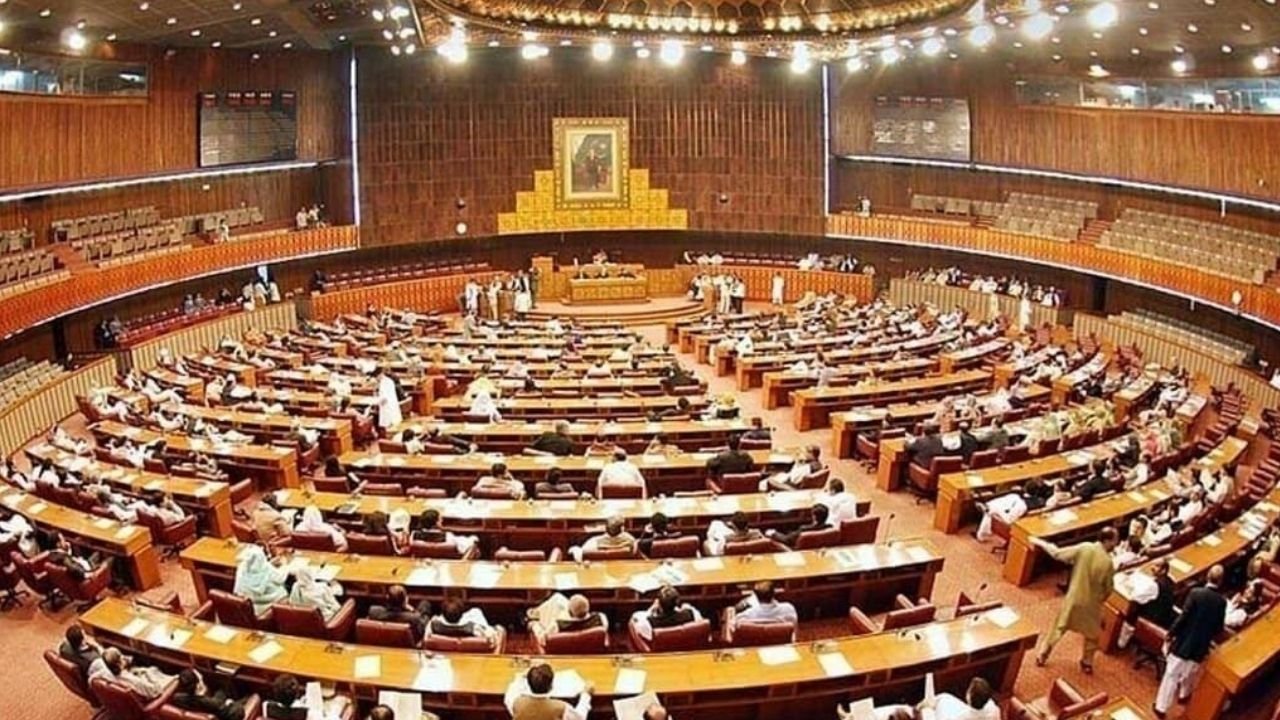
    The Free and Fair Election Network (FAFEN) has released a report on the National Assembly’s performance of the first 100 days.

    The report underlines that the legislative process was slow in the first 100 days of the National Assembly. The delay in the formation of standing committees also affected performance.

    In total, the House held 23 meetings covering 66 hours and 33 minutes, 159 (51 per cent) of the existing 310 members of the House actively participated in the meetings, the average attendance of members in the House was 231, the highest was 302 and the lowest was 176.

    The report stated that Prime Minister Shehbaz Sharif attended only two out of 23 sessions of the National Assembly, which is 10 percent, while in the past, former Prime Minister Nawaz Sharif attended 26 percent and Imran Khan 29 percent of the sessions.

  • UN probe accuses Israel of crimes against humanity

    UN probe accuses Israel of crimes against humanity

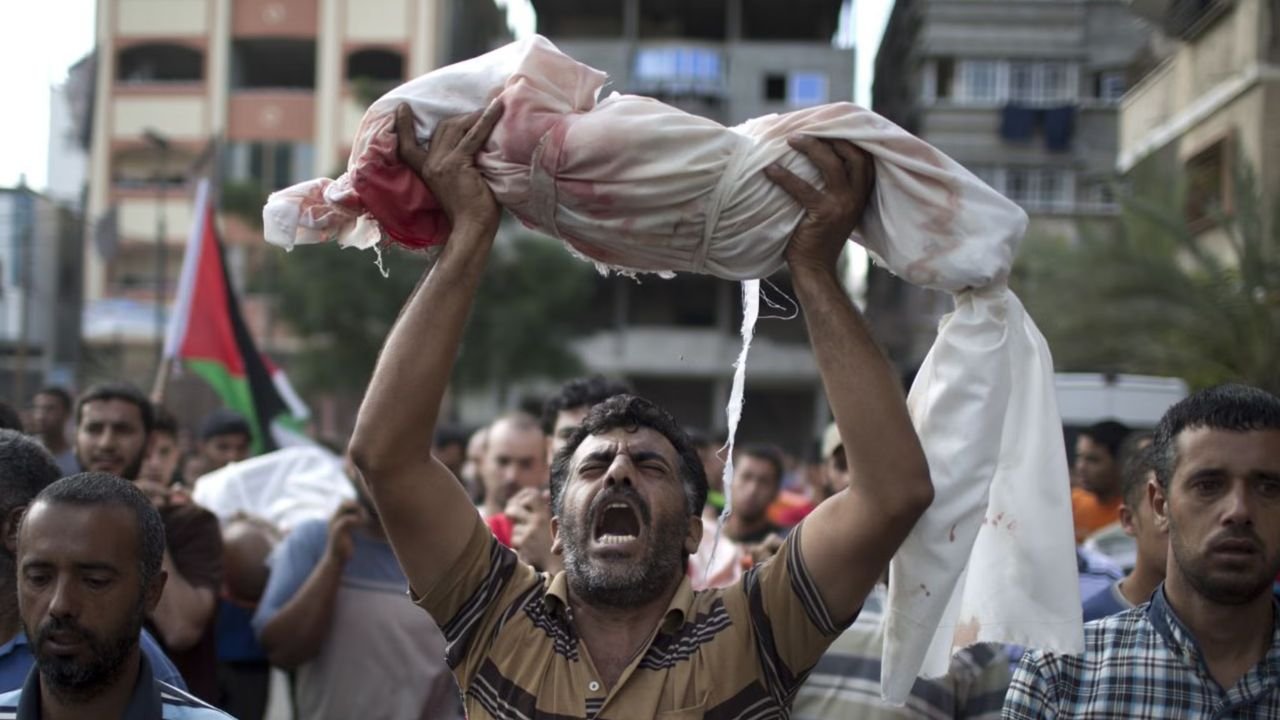
    A UN investigation concluded on Wednesday that Israel has committed crimes against humanity during the genocide in Gaza, including that of “extermination”, while saying Israeli and Palestinian armed groups have both committed war crimes.

    The independent Commission of Inquiry’s report is the United Nations’ first in-depth investigation into the events following October 7.

    It found that Israel had committed war crimes, crimes against humanity and violations of international humanitarian law (IHL) and international human rights law (IHRL).

    The report noted “a widespread or systematic attack directed against the civilian population in Gaza.”

    “The commission found that the crimes against humanity of extermination; murder; gender persecution targeting Palestinian men and boys; forcible transfer; and torture and inhuman and cruel treatment were committed,” it added.

    Israel rejected the conclusions by accusing the UN commission of “systematic anti-Israeli discrimination”.

    Israel intensified its attacks in Gaza after Hamas’s October 7 attack.

    The commission found that in that attack, members of the military wings of Hamas and other Palestinian armed groups and Palestinian civilians committed war crimes, as well as violations and abuses of IHL and IHRL.

    Militants seized 251 hostages, of which 116 remain in Gaza, though the Israeli army says 41 of them are dead.

    The Israeli army launched a devastating offensive on the Gaza Strip that has left more than 37,000 people dead, the majority of them civilians, according to the territory’s health ministry.

    The unprecedented Commission of Inquiry was established by the UN Human Rights Council in May 2021 to investigate alleged violations of IHL and IHRL in Israel and the Palestinian territories.

    Since October 7, the three-member commission has focused on Israeli geocide against Palestinians in Gaza.

    “It is imperative that all those who have committed crimes be held accountable,” said the commission’s chair Navi Pillay, a former UN rights chief and an ex-International Criminal Court judge.

    “Israel must immediately stop its military operations and attacks in Gaza.

    “Hamas and Palestinian armed groups must immediately cease rocket attacks and release all hostages. The taking of hostages constitutes a war crime.”

    ‘War crimes’ in October attack

    The commission concluded that members of Hamas, other Palestinian armed groups and civilians participating in the October 7 attack “deliberately killed, injured, mistreated, took hostages and committed sexual and gender-based violence”.

    These acts were committed against civilians and members of the Israeli security forces.

    “These actions constitute war crimes and violations and abuses of IHL and IHRL,” it said.

    The commission further said it found “significant evidence on the desecration of corpses, including sexualised desecration, decapitations, lacerations, burning, severing of body parts and undressing”.

    “Women were subjected to gender-based violence during the course of their execution or abduction. Women and women’s bodies were used as victory trophies by male perpetrators.”

    Many children who witnessed their relatives being killed were “also filmed for propaganda purposes”, with the commission finding it “particularly egregious that children were targeted for abduction”.

    The report said Israeli authorities “failed to protect civilians in southern Israel on almost every front”.

    Israel’s ‘starvation’ of Gaza

    In their actions in Gaza, the commission found the Israeli authorities “responsible for the war crimes of starvation as a method of warfare, murder or wilful killing, intentionally directing attacks against civilians and civilian objects, forcible transfer, sexual violence, torture and inhuman or cruel treatment, arbitrary detention and outrages upon personal dignity”.

    Starvation will affect the Gaza population, particularly children, “for decades to come”, the report said, while “the siege it imposed… constitutes collective punishment and reprisal against the civilian population, both of which are clear violations of IHL.”

    In the West Bank, the commission found that Israeli forces committed acts of sexual violence, torture and inhuman or cruel treatment and outrages upon personal dignity, “all of which are war crimes”.

    Israel’s government and forces “permitted, fostered and instigated a campaign of settler violence against Palestinian communities” in the territory, the commission added.

    The report is based on interviews with victims and witnesses conducted remotely, and in Turkey and Egypt, and through studying thousands of verified open-source items, satellite imagery and forensic medical reports, the commission said.

    “Israel obstructed the commission’s investigations and prevented its access to Israel and the Occupied Palestinian Territory,” it added.

    The report is due to be presented to the UN Human Rights Council next week.

    rjm/rlp/lb

    © Agence France-Presse

  • BTS star Jin finishes South Korean military service

    BTS star Jin finishes South Korean military service

    K-pop megastar Jin from BTS was discharged from his South Korean military service on Wednesday, AFP reporters saw, the first member of the band to complete the mandatory duty, freeing him up to fully resume musical activities.
    The seven members of the world’s most popular boy band have been performing their service — which South Korea requires of all men under 30, due to tensions with the nuclear-armed North — with the K-pop juggernaut on a self-described “hiatus” since 2022.
    Jin emerged from the gates of his army base in South Korea’s northern Yeoncheon county where he was met by fellow bandmates J-hope, V, RM, Jungkook and Jimin.
    RM played the saxophone, belting out the hook of BTS’s mega-hit “Dynamite” while the bandmates hugged and presented Jin with a giant bouquet of flowers.

    Fans had hung colourful banners outside the base, with one reading: “Seok-jin you did so well for the last 548 days. We’ll stand by you with our unwavering love,” referring to the star by his full first name.
    A giant balloon flew in front with the message: “Worldwide handsome Seok-jin! Congratulations on your discharge.”
    Yeoncheon county put up its own banner that read: “BTS Jin, The last year and a half was a joy for us. Yeoncheon will not forget you!”

    Fans had been urged not to attend, and there were only a couple of admirers present early Wednesday outside the base.
    BTS’s agency HYBE announced Jin’s discharge on Weverse — a superfan social media platform — earlier this week.
    “We are excited to bring you the news of Jin’s upcoming military discharge,” it said.
    It also “strongly advised” fans to “refrain from the visiting site” citing safety concerts, and added that there would be no special events planned.

  • PM Shehbaz invites PPP to join extended cabinet

    PM Shehbaz invites PPP to join extended cabinet

    Prime Minister Shehbaz Sharif has decided to extend the federal cabinet after the budget and invited Pakistan Peoples Party (PPP) once again to join the cabinet, The News reported on Wednesday.

    Pakistan Muslim League-Nawaz (PML-N) senior political leaders and members of allied parties will be included in the extended cabinet.

    Shehbaz Sharif has started working on enlisting new cabinet members, inviting PPP to join the government to work together for the betterment of the country.

    PML-N has given the task to its senior leader, Ahsan Iqbal. He as already talked to Chief Minister Balochistan, Sarfraz Bugti and PPP’s trusted leader Qamar Zaman Kaira.

    After the elections, PPP decided against becoming part of the cabinet.

    However, the party does hold constitutional and parliamentary posts.

  • Coalition government to moderate Modi’s Hindu nationalism

    Coalition government to moderate Modi’s Hindu nationalism

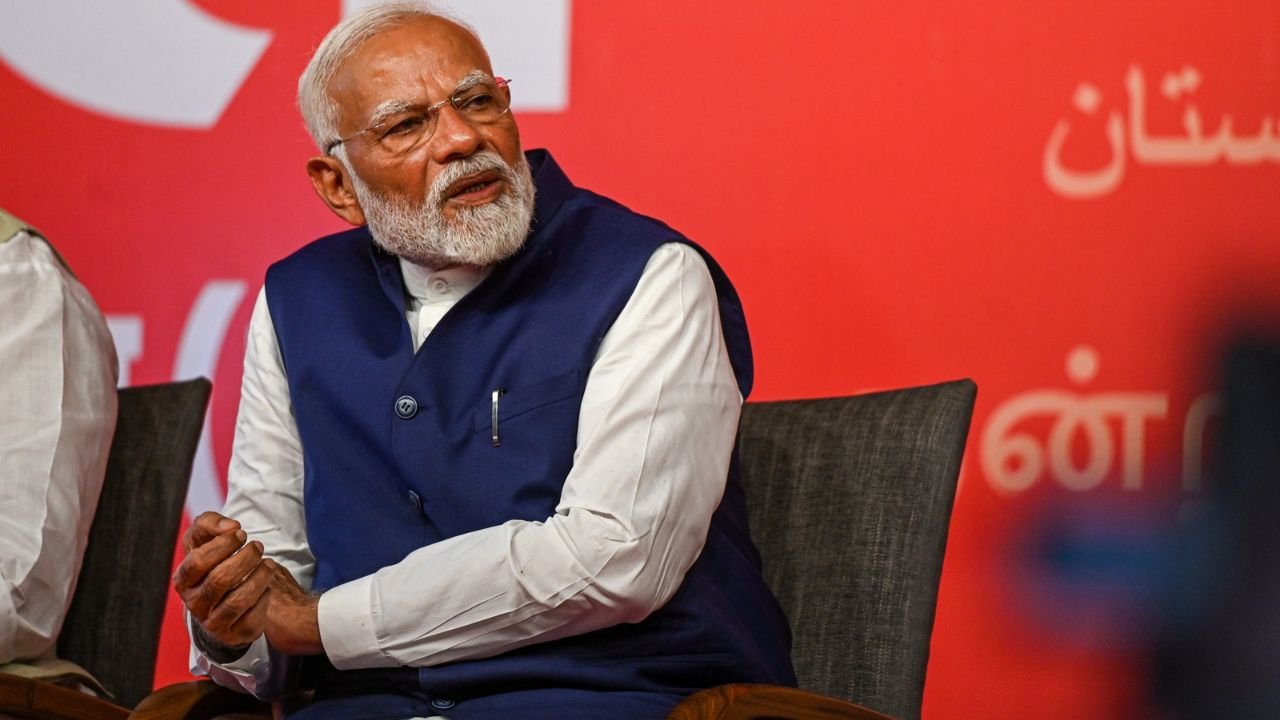
    India’s Prime Minister Narendra Modi will have to moderate his Hindu-nationalist agenda to assuage his coalition partners, but they will likely let him press on with his foreign and economic policies, analysts say.

    Modi, forced into a coalition government after a shock election setback left him without an outright majority for the first time in a decade, unveiled his third-term cabinet on Monday.

    Key posts are unchanged — including the defence, finance, foreign and interior ministers — and the cabinet remains dominated by his Bharatiya Janata Party (BJP).

    “Modi opts for continuity,” The Hindustan Times headline read Monday.

    “BJP and Modi are still solidly occupying the… driving seat,” the Times of India wrote in its editorial.

    Nevertheless, this term will require “more dexterous deal-making within the parliament for policies that require tweaking of laws,” said Ashok Malik, from The Asia Group business consultancy.

    ‘Pushed to the background’

    Before the polls, when the right-wing BJP boasted of winning a super majority, minorities including many in the 200-million-plus Muslim population were worried.

    Modi’s decade as premier has seen him cultivate an image as an aggressive champion of the country’s majority Hindu faith.

    His government revoked the constitutional autonomy of India’s Muslim-majority region Kashmir, and backed the construction of a temple on grounds where a mosque stood for centuries before it was torn down by Hindu zealots in 1992.

    Critics feared another BJP landslide would see policies steamrolled through parliament that would further blur the line between state and religion — despite India’s secular constitution.

    But analysts said a coalition forces Modi to tread more carefully.

    “In a government with allies, the BJP’s key cultural agendas will all be pushed to the background,” Nistula Hebbar, political editor of The Hindu newspaper, told AFP.

    Instead, Modi is expected to focus on infrastructure, foreign affairs and economic reforms which “won’t be much of an issue” for the alliance, she added.

    “Very broadly, the economic policy and external strategy doesn’t face any challenges in continuity, or any serious philosophical or strategic challenges with allied or opposition parties,” said Malik.

    ‘Conciliatory Modi’

    Not so for his Hindu-nationalist agenda, however.

    Modi had promised to introduce a national common civil code to standardise laws across all religious communities, opposed by Muslim activists as an attack on their faith.

    India’s 1.4 billion people are subject to a common criminal law, but rules on personal matters such as marriage, divorce and inheritance vary.

    But the common code would require parties to “forge national consensus”, Malik said, which is now more doubtful given Modi’s reliance on coalition partners.

    Modi was also accused of ramping up rhetoric targeting India’s key religious divide to rally the Hindu majority to vote.

    With elections over, “Hindu-Muslim rhetoric may also take a back seat, at least for the time being,” said Neerja Chowdhury, from The Indian Express.

    BJP leaders also campaigned on a plank to remove affirmative quotas in government jobs and educational institutions for Muslims.

    A controversial revision of electoral boundaries based on population — that would have reduced the overall parliamentary punch of opposition areas — also likely faces the backburner.

    Hebbar said she expected to see “a different Modi, a more conciliatory Modi”.

    ‘People want jobs’

    For the policies he will push through, analysts say he will seek to expand welfare support for farming and poorer communities, seeking to shore up popularity in rural constituencies after electoral losses.

    In a symbolic first move, Modi on Monday approved the latest tranche of a massive cash handout for 93 million farmers, as well as building plans for 30 million homes for poor families.

    Modi has overseen India’s ascent to become the world’s fastest-growing major economy, and its fifth largest, but the world’s most populous country has a jobs crisis to match.

    Many saw unemployment as a key factor in BJP losses.

    “People want jobs,” said Malik. “And to satisfy this very legitimate need, you need to build the economy, and reform even faster.”

    Modi’s agenda will focus on infrastructure, reforming industrial policies and domestic manufacturing incentives in a bid to create an “economic spurt in the next five years”, he added.

    But analysts also say it is still to be seen how political dynamics will play out in a parliament where Modi faces a far more powerful opposition.

    “Modi has never handled a coalition because he has never had to rely on one,” Hebbar said.

    “It’s a new situation for everyone… but he is a quintessential politician and would be ready to do whatever is required”.