Category: Uncategorized

  • Gandapur once again has meltdown about Governor Kundi

    Gandapur once again has meltdown about Governor Kundi

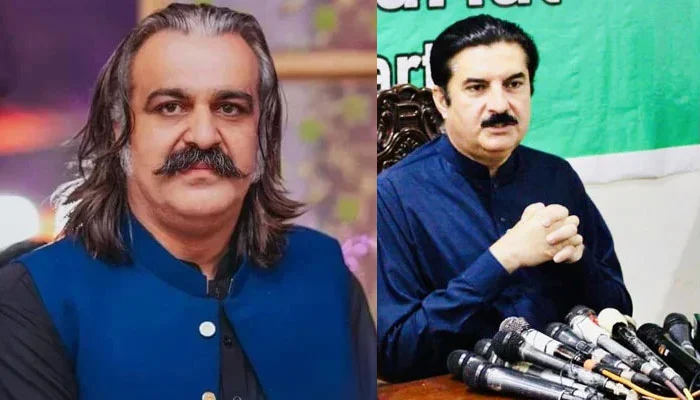
    Chief Minister of Khyber Pakhtunkhwa (KP) Ali Amin Gandapur once again used ugly words while lashing out at Governor KP Faisal Karim Kundi during talks with journalists saying, “You [Kundi] yourself are a thief, so is your leader. To hell with your alliance.”

    “He [Kundi] has crossed the limits many times and uses my name often so I call out his name and he gets some views on TikTok,” exclaimed the CM KP.

    Gandapur used uncouth language during the tirade against the PPP leader and stated, “You’re worth nothing, I can kick you out of the Governor House today.”

  • FIA arrests social activist Sarim Burney from Karachi

    FIA arrests social activist Sarim Burney from Karachi

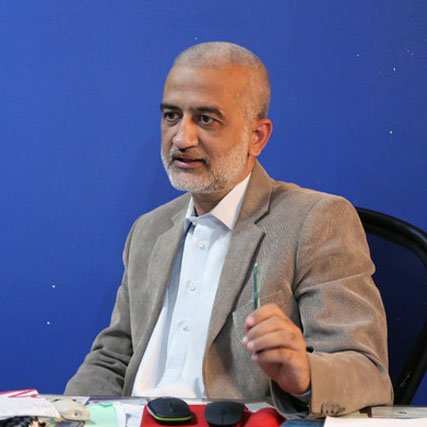
    The Federal Investigation Agency (FIA) has arrested social activist Sarim Burney from Karachi on charges of human trafficking, Geo News reported on Wednesday.

    Authorities apprehended him when he landed in Karachi from a tour to the United States (US) of America. A source in FIA revealed that authorities arrested Burney on a complaint by the US government.

    Sarim Burney allegedly adopted 25 children and illegally smuggled them to the US, the FIA source added.
    The source claimed that the FIA has started an investigation into the matter.

    The activist runs the Sarim Burney Welfare Trust International, a non-profit trust “representing the oppressed and less privileged population”, according to the organisation’s website.

    As per the website, the trust provides “legal services for child abuse, harassment, sexual assault, human trafficking, domestic violence, violation of human rights, workers compensation rights and other serious crimes.”

  • How Modi’s party lost its majority in India

    How Modi’s party lost its majority in India

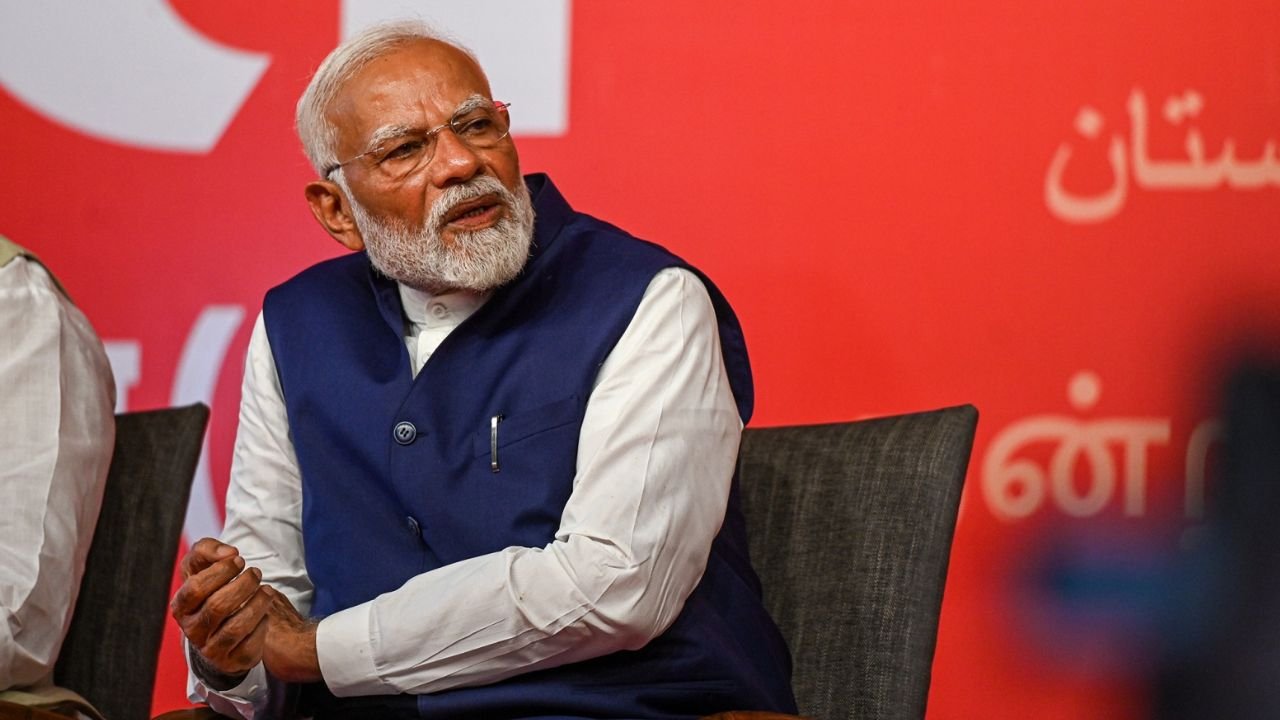
    Indian Prime Minister Narendra Modi will remain in office but with a substantially reduced mandate, confounding expectations of a resounding victory forecast by analysts and exit polls.

    Modi’s Bharatiya Janata Party (BJP) failed to secure an outright majority for the first time since the Hindu nationalist leader swept to power a decade ago, and will instead rely on coalition allies to govern.

    AFP takes a look at the reasons why Modi and his party failed to achieve a third successive landslide win:

    Critics and rights groups accused Modi of ramping up rhetoric against Muslims to unprecedented levels during his campaign in a bid to mobilise the Hindu majority.

    At his rallies, he referred to Muslims as “infiltrators”, and claimed the main opposition Congress party would redistribute the nation’s wealth to Muslims if it won.

    But the strategy failed to galvanise Hindu voters behind the BJP, while also solidifying minority communities’ support for the opposition.

    The BJP’s vote share dropped nearly one point to 36.6 percent from the last election five years ago, translating in India’s electoral system into a drop from 303 to 240 seats in the 543-member parliament.

    Numerous voters over the course of the election told AFP that they were more concerned with India’s chronic unemployment problem than with the government’s ideological agenda.

    “People were concerned about livelihood, unemployment, price rises,” Nilanjan Mukhopadhyay, the author of a Modi biography, told AFP.

    “They did not relate to what Modi and the BJP were saying.”

    For the first time in 15 years, Modi’s party failed to win the most seats in Uttar Pradesh, India’s most populous state and a bellwether for national elections.

    Uttar Pradesh is the heartland of India’s majority faith, with widespread support for Modi’s Hindu-nationalist agenda, and had for the past decade formed the bedrock of the BJP’s parliamentary strength.

    But an alliance of opposition parties who had competed against each other in past polls saw BJP candidates face stronger rivals, who ultimately won more than half of the state’s seats.

    Modi won his seat in the state, representing the Hindu holy city of Varanasi, by just 152,000 votes — compared to a victory margin of nearly half a million votes in 2019.

    Spectacularly, the BJP’s candidate lost in the constituency representing Ayodhya, despite Modi in January inaugurating a divisive Hindu temple built on the grounds of a razed mosque there.

    “The opposition managed to put a sword back to him and Uttar Pradesh has shown resistance to his brand of politics,” political scientist Ramu Manivannan of the University of Denver told AFP.

    The BJP’s electoral strategy was premised on increasing its parliamentary majority by gaining ground in India’s wealthier and better-educated southern states.

    Modi made repeated whistlestop tours through the south where he affirmed his “topmost respect” to local culture.

    He also embarked on a 48-hour meditation ritual in the southern coastal town of Kanyakumari last week when the vote was nearly over.

    But the premier’s relentless campaigning did not translate into significant gains where they were needed.

    The party failed to win a single seat in Tamil Nadu state — almost as populous as Germany with 84 million people — and won just one constituency in neighbouring Kerala, with a population of 35 million.

    Manivannan said that “ideological resistance in the south” had played its part in the BJP’s lacklustre result.

    Southern voters have typically backed regional parties strongly rooted in appeals to social justice policies and opposed to the BJP, and Modi’s muscular Hindu-first ideology has held little appeal.

  • India’s Modi in talks with allies after close election win

    India’s Modi in talks with allies after close election win

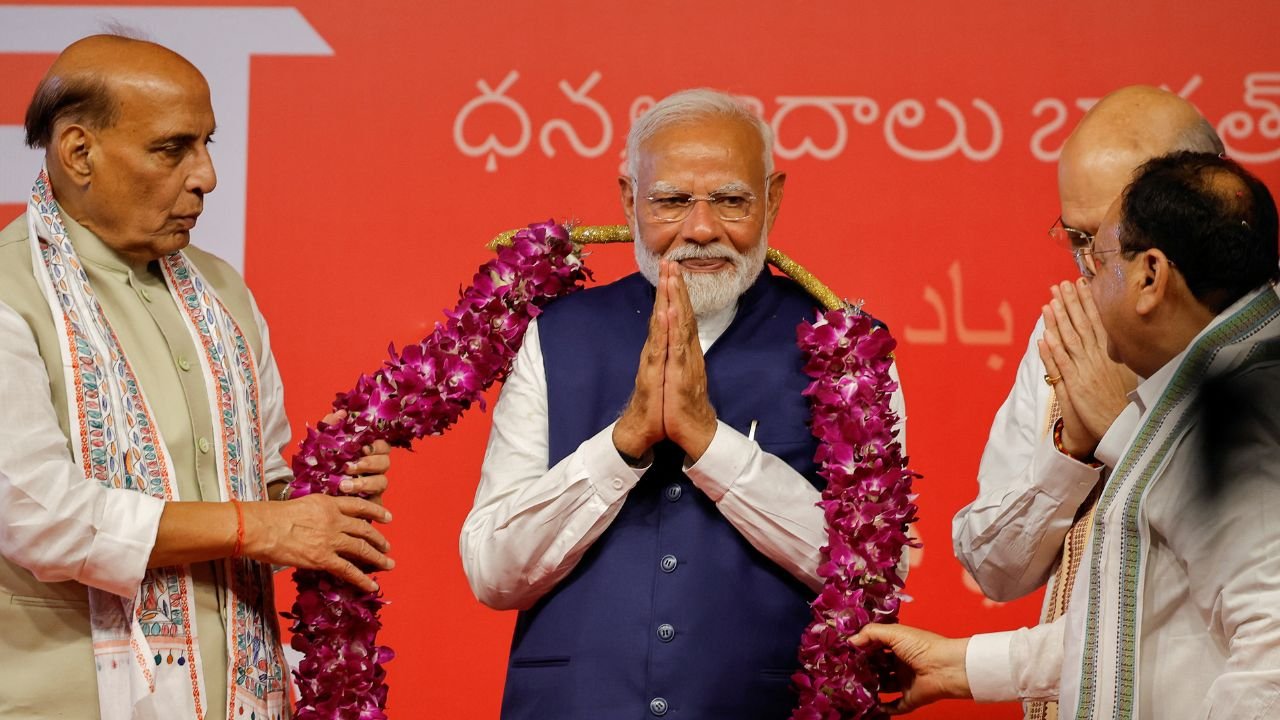
    Indian Prime Minister Narendra Modi’s party was in talks with key allies to form a government Wednesday, after failing to secure an outright majority for the first time since sweeping to power a decade ago.

    Party leaders across the political spectrum were attempting to shore up their positions and bolster alliances, a day after the surprise setback to Modi’s right-wing Bharatiya Janata Party (BJP).

    The release of the results on Tuesday upended conventional wisdom throughout the six-week election that Modi’s Hindu nationalist agenda would power him to a landslide win, and he faces the prospect of a far tougher-than-expected third term.

    “It will force Modi to take the point of view of others — we shall see more democracy and a healthy parliament,” said Nilanajan Mukhopadhyay, who has written a biography of Modi.

    “He will have to be a leader that he has never been; we will have to see a new Modi.”

    Modi’s BJP lost the outright parliamentary majority it had enjoyed during its first two terms but is still expected to be able to form a government, leading an alliance of smaller parties.

    “India cuts Modi down,” The Telegraph daily, from the opposition stronghold state of West Bengal, splashed across its front page.

    “Coalition Karma,” the headline of India’s Mint newspaper read.

    While a government has yet to be formed, rival China congratulated Modi on Wednesday and said it was “ready to work” with its neighbour, while Japan also applauded the “ruling coalition” on its win.

    Modi, 73, insisted on Tuesday night that the election results were a victory that ensured he would be able to continue his agenda and his Hindu faithful celebrated across the country.

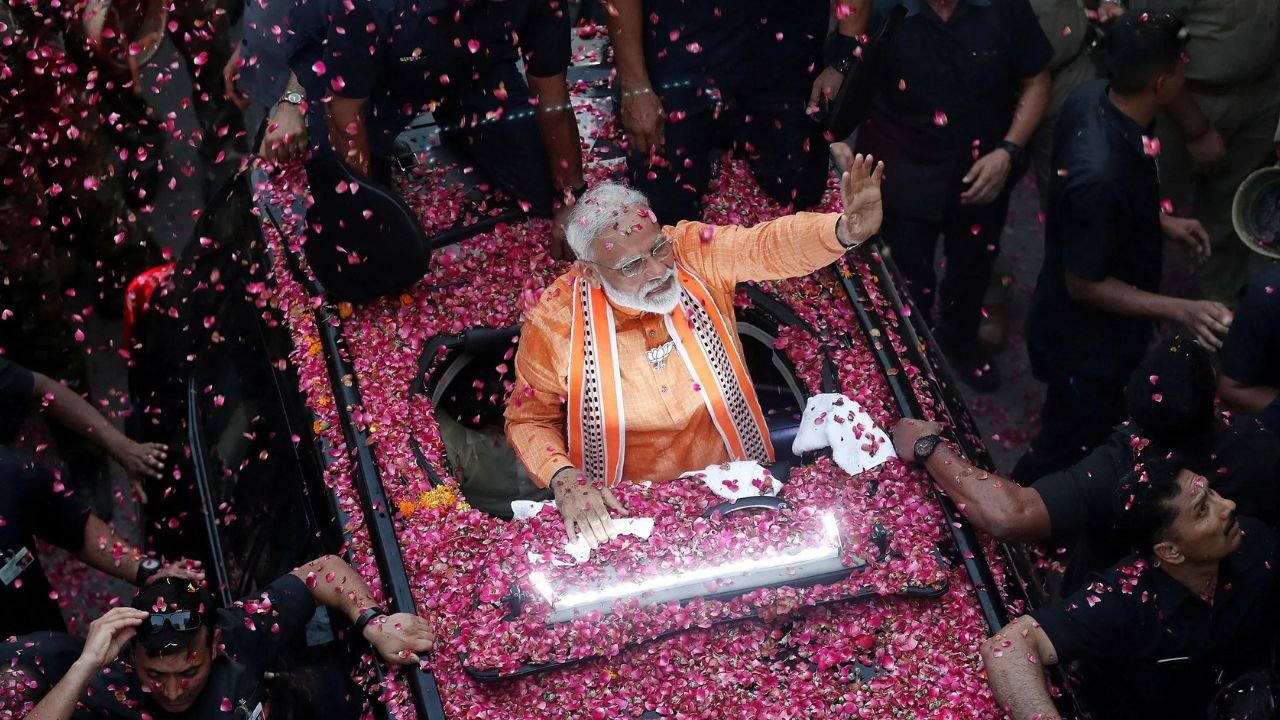
    “Our third term will be one of big decisions and the country will write a new chapter of development,” Modi told a crowd of cheering supporters in the capital New Delhi late Tuesday. “This is Modi’s guarantee.”

    BJP supporters on the streets of New Delhi pointed out their party had secured the most seats and toasted that win.

    “We are so happy about the results,” said 36-year-old office worker Archana Sharma.

    She said she was “looking forward to supporting Modi and BJP” in the future, too.

    Govind Singh, 38, an optometrist, said “having a strong opposition is necessary” but added that it was better to have a government with a parliamentary majority.

    “Having a full mandate is essential for any country”, he said.

    The BJP secured 240 seats in parliament, well down on the 303 from five years ago and 32 seats short of a majority.

    The main opposition Congress party won 99 seats in a remarkable turnaround, almost doubling its 2019 tally of 52.

    “The country has said to Narendra Modi ‘We don’t want you’,” opposition leader Rahul Gandhi told reporters after the results were released, saying people had given “the right response”.

    Commentators and exit polls had projected an overwhelming victory for Modi, who critics have accused of leading the jailing of opposition figures and trampling on the rights of India’s 200-million-plus Muslim community.

    In a personal sting, Modi was re-elected to his constituency representing the Hindu holy city of Varanasi with a far lower margin of 152,300 votes. That compared with nearly half a million votes five years ago.

    Now dependent on coalition partners, the BJP must seek consensus to push its policies through parliament.

    “The lurking possibility of them using their leverage, encouraged further by feelers from Congress and others in the opposition, is going to be a constant worry for BJP,” the Times of India reported.

    Modi now has to “suffer the fate of working with an alliance partner… who could pull the plug at any time”, said Hartosh Singh Bal, the political editor of The Caravan magazine in New Delhi.

    Stocks slumped Tuesday on speculation the reduced majority would hamper the BJP’s ability to push through reforms.

    Shares in the main listed unit of Adani Enterprises — owned by key Modi ally Gautam Adani — nosedived 25 percent, before rebounding slightly.

    Modi’s opponents fought against a well-oiled and well-funded BJP campaign machine, and what they say are politically motivated criminal cases aimed at hobbling challengers.

    Many of India’s Muslim minority are increasingly uneasy about their futures and their community’s place in the constitutionally secular country.

    Modi himself made several strident comments about Muslims on the campaign trail, referring to them as “infiltrators”.
  • Gold price increases by Rs700 to Rs241,000 per tola

    Gold price increases by Rs700 to Rs241,000 per tola

    The price of gold in Pakistan saw a notable increase on Tuesday, with 24-karat gold reaching Rs241,000 per tola, marking a Rs700 rise from the previous session.

    This hike comes despite efforts to maintain prices below their actual value to accommodate the reduced purchasing power among consumers. Currently, gold prices are set Rs3,000 lower than their market cost.

    In a broader context, last week witnessed a mild recovery in Pakistan’s bullion market. The price of 24-karat gold edged up by Rs300, settling at Rs240,300 per tola.

    The Karachi Sarafa Association reported an additional increase this week, with 24-karat gold rising by Rs600 to Rs206,619 per 10 grammes. In comparison, 22-karat gold was priced at Rs189,400 per 10 grammes.

    Silver prices remained stable, with 24-karat silver selling for Rs2,900 per tola and Rs2,486.28 per 10 grammes.

    On the international stage, spot gold traded near $2,331.69 an ounce, experiencing a decline of 0.81 per cent from the previous close. The global gold market is currently influenced by uncertainties surrounding potential interest rate cuts by the Federal Reserve.

    This ambiguity has caused confusion among market participants regarding the future trend of inflation, contributing to the recent depreciation in gold prices.

    The fluctuating gold prices in Pakistan reflect a combination of local economic conditions and international market trends, illustrating the intricate balance between domestic fiscal strategies and global economic influences.

  • Islamabad policeman hit by British diplomat 

    Islamabad policeman hit by British diplomat 

    A woman who hit a policeman while driving on Dastur Highway in Islamabad has been identified as a British diplomat.

    The Islamabad Police have registered a case against Stacey Joanne Sutoki, the third secretary of the British High Commission, in Secretariat Station following a government complaint.

    The lawsuit accuses her of negligence and signal violation. The FIR details that she collided with a motorcycle while driving at high speed, seriously injuring the policeman. The injured officer, Ameer Dad, is assigned to the Kakar security division.

    The accident took place at the time when Constable Ameer Dad was returning home on his motorcycle after his shift, near the Radio Pakistan building in Islamabad.

    The British High Commission in Pakistan has acknowledged the accident involving one of their officials and expressed their commitment to following all necessary procedures and cooperating with the local authorities.

  • Modi: tea seller’s son who became India’s populist hero

    Modi: tea seller’s son who became India’s populist hero

    Once shunned and now eagerly courted by the West, Prime Minister Narendra Modi has steered India away from its secular traditions and towards the Hindu-first politics he has championed for decades.

    Modi’s political ascent was marred by allegations of his culpability in India’s worst religious riots this century, and his tenure has dovetailed with rising hostility towards Muslims and other minorities.

    But a decade after first sweeping to national office, the 73-year-old is also consistently ranked among the world’s most popular leaders.

    Supporters revere his tough-guy persona, burnished by his image as a steward of India’s majority faith and myth-making that played up his modest roots.

    “They dislike me because of my humble origins,” he said in rallies ahead of the last elections, lambasting his opponents.

    “Yes, a person belonging to a poor family has become prime minister. They do not fail to hide their contempt for this fact.”

    Modi was born in 1950 in the western state of Gujarat, the third of six children whose father sold tea at a railway station.

    An average student, his gift for rousing oratory was first seen with his keen membership of a school debate club and participation in theatrical performances.

    But the seeds of his political destiny were sown at the age of eight when he joined the Rashtriya Swayamsevak Sangh (RSS), a hardline nationalist group.

    Modi dedicated himself to its cause of promoting Hindu supremacy in constitutionally secular India, even walking out of his arranged marriage soon after his wedding aged 18.

    Remaining with his wife — whom he never officially divorced — would have hampered his advancement through the ranks of the RSS, which expected senior cadres to stay celibate.

    The RSS groomed Modi for a career in its political wing, the Bharatiya Janata Party (BJP), which through the 1990s was growing into a major force.

    He was appointed chief minister of Gujarat in 2001 but the following year the state was rocked by sectarian riots, sparked by a fire that killed dozens of Hindu pilgrims.

    At least 1,000 people were killed in the ensuing violence, with most of the victims Muslims.

    Modi was accused of both helping stir up the unrest and failing to order a police intervention.

    Modi later told a BBC reporter that his main weakness in responding to the riots was not knowing “how to handle the media”.

    A probe by India’s top court eventually said there was no evidence to prosecute Modi, but the international fallout saw him banned from entering the United States and Britain for years.

    However, it was a testament to India’s changing political tides that his popularity only grew at home.

    He built a reputation as a leader ready to assert the interests of Hindus, who he contended had been held back by the secularist forces that ruled the country almost continuously since independence from Britain.

    Critics have sounded the alarm over a spate of prosecutions directed at Modi’s political rivals and the taming of a once-vibrant press.

    India’s Muslim community of more than 200 million is also increasingly anxious about its future.

    Modi’s rise to the premiership was followed by a spate of lynchings targeting Muslims for the slaughter of cows, a sacred animal in the Hindu tradition.

    But Western democracies have sidestepped rights concerns in the hopes of cultivating a regional ally that can help check China’s assertiveness.

    Modi was last year accorded the rare honour in the US of a joint address to Congress and a White House state reception at President Joe Biden’s invitation.

    He has taken credit for India’s rising diplomatic and economic clout, claiming that under his watch the country has become a “vishwaguru” — a teacher to the world.

    Only now is India assuming its rightful global status, his party contends, after the historical subjugation of the country and its majority faith — first by the Muslim Mughal empire and then by the British colonial project.

    Modi’s government has refashioned colonial-era urban landscapes in New Delhi, rewritten textbooks and overhauled British-era criminal laws in an effort to erase what it regards as symbols of foreign domination.

    This project reached its peak in January when Modi presided over the opening of a new Hindu temple in the town of Ayodhya, built on grounds once home to a centuries-old Mughal mosque razed by Hindu zealots in 1992.

    Modi said during the elaborate ceremony that the temple’s consecration showed India was “rising above the mentality of slavery”.

    He added: “The nation is creating the genesis of a new history.”

  • ‘Irresponsible statement’ Justice Munib Akhtar, CJP Isa trade verbal blows

    ‘Irresponsible statement’ Justice Munib Akhtar, CJP Isa trade verbal blows

    Monday’s hearing of the case pertaining to Sunni Ittehad Council’s reserved seats turned into a salvo of verbal blows in the Supreme Court.

    A slightly heated exchange of words took place between the Chief Justice of Pakistan Qazi Faez Isa and Justice Munib Akhtar.

    During the hearing, Justice Akhtar remarked, “There is no logic in the Election Commission’s orders because, on one hand, it says SIC did not contest elections and therefore did not win any seats but on the other hand it is a parliamentary party as well.”

    Meanwhile, other judges also passed remarks to which CJP Qazi Faez Isa stopped the petitioner’s lawyer Faisal Siddiqui from answering the questions of the judges.

    Here Justice Munib intervened and said, “This is an unfair statement, every judge of the full court has the right to ask questions.”

  • Netflix drama stirs complex past of Pakistan’s ‘courtesans’

    Netflix drama stirs complex past of Pakistan’s ‘courtesans’

    The Netflix hit “Heeramandi” depicts the plush and powerful lives of courtesans in the 1940s, but there is little glamour for modern Pakistani sex workers in the faded red-light district where the series is set.

    The eight-part show — subtitled “The Diamond Bazaar” in English — portrays courtesans in the “royal neighbourhood” of pre-partition Lahore, once a hub of culture and political intrigue.

    With dazzling Bollywood-style opulence, it shows women consorting with aristocrats, forging influential alliances and rivalries against the backdrop of India’s struggle for independence from British rule.

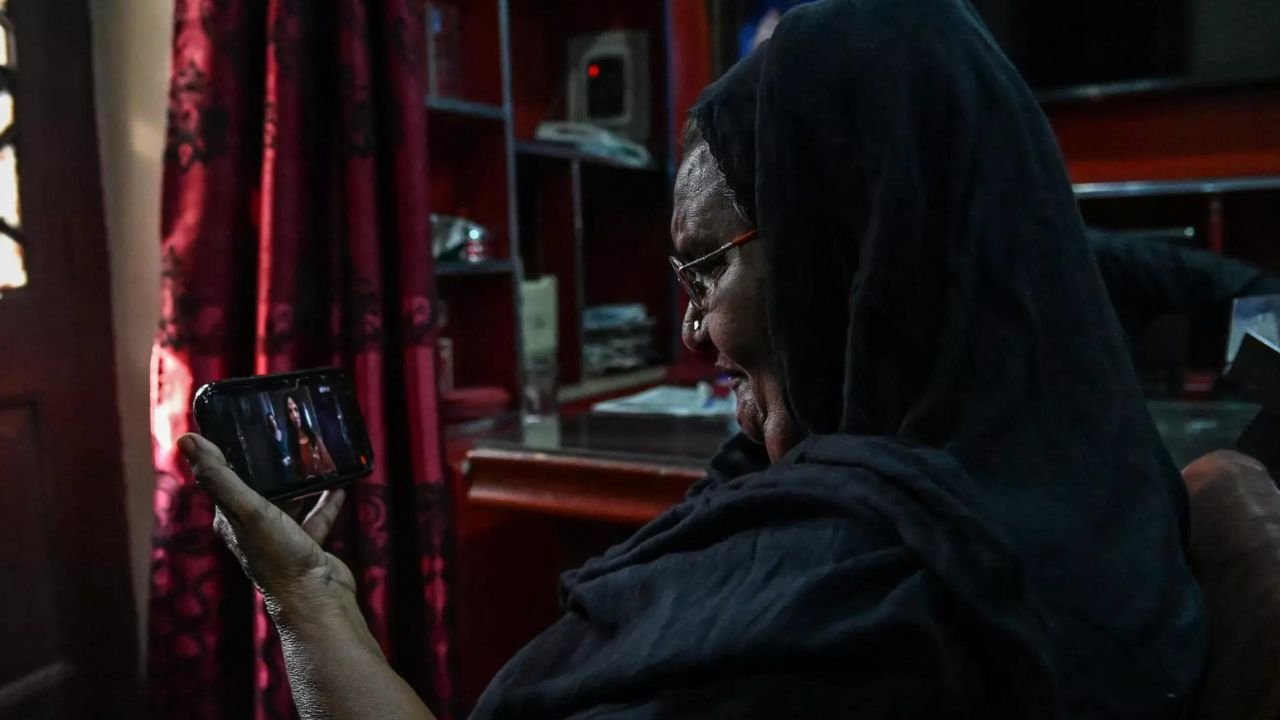
    But in the derelict remains of the neighbourhood, 65-year-old former sex worker Shagufta scoffed.

    “This is not what Heera Mandi is like,” she told AFP, using a pseudonym to protect her identity.

    “Now the girls just put their bodies on display,” explained Shagufta. “There is nothing left in Heera Mandi.”

    Shagufta can trace back seven generations of women in her family who worked as “tawaifs” in Heera Mandi, and she began dancing and being prostituted at the age of 12.

    While courtesans did command respect for their artistry in dance and music during the Mughal period, the show exaggerates the wealth and glamour of the British-ruled era in which it is set.

    “It was never like this,” she said.

    Taboo ‘tawaifs’

    The glittering jewels and swooning melodrama of the show attracted nearly 11 million views in its first three weeks on Netflix, as well as a deluge of interest on social media.

    Fascination has been split across Pakistan and India, where TikTok has lit up with videos of influencers dressing in traditional costumes and lip-syncing to the show’s songs and dialogues.

    A sequence from a seductive classical dance inspired by the gait of an elephant — considered regal and dignified — has gone viral, with the dancer gracefully moving her hips from side to side.

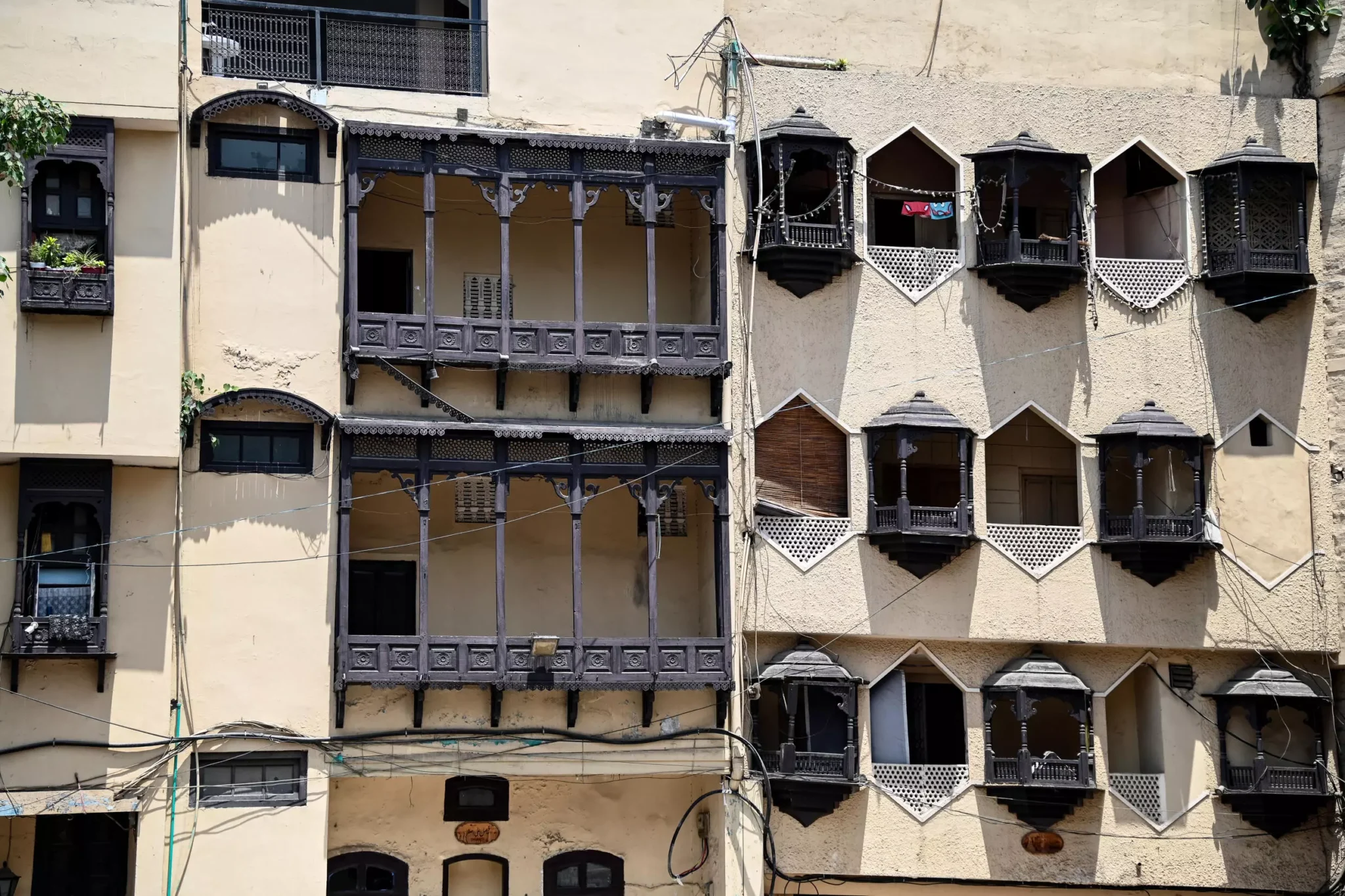
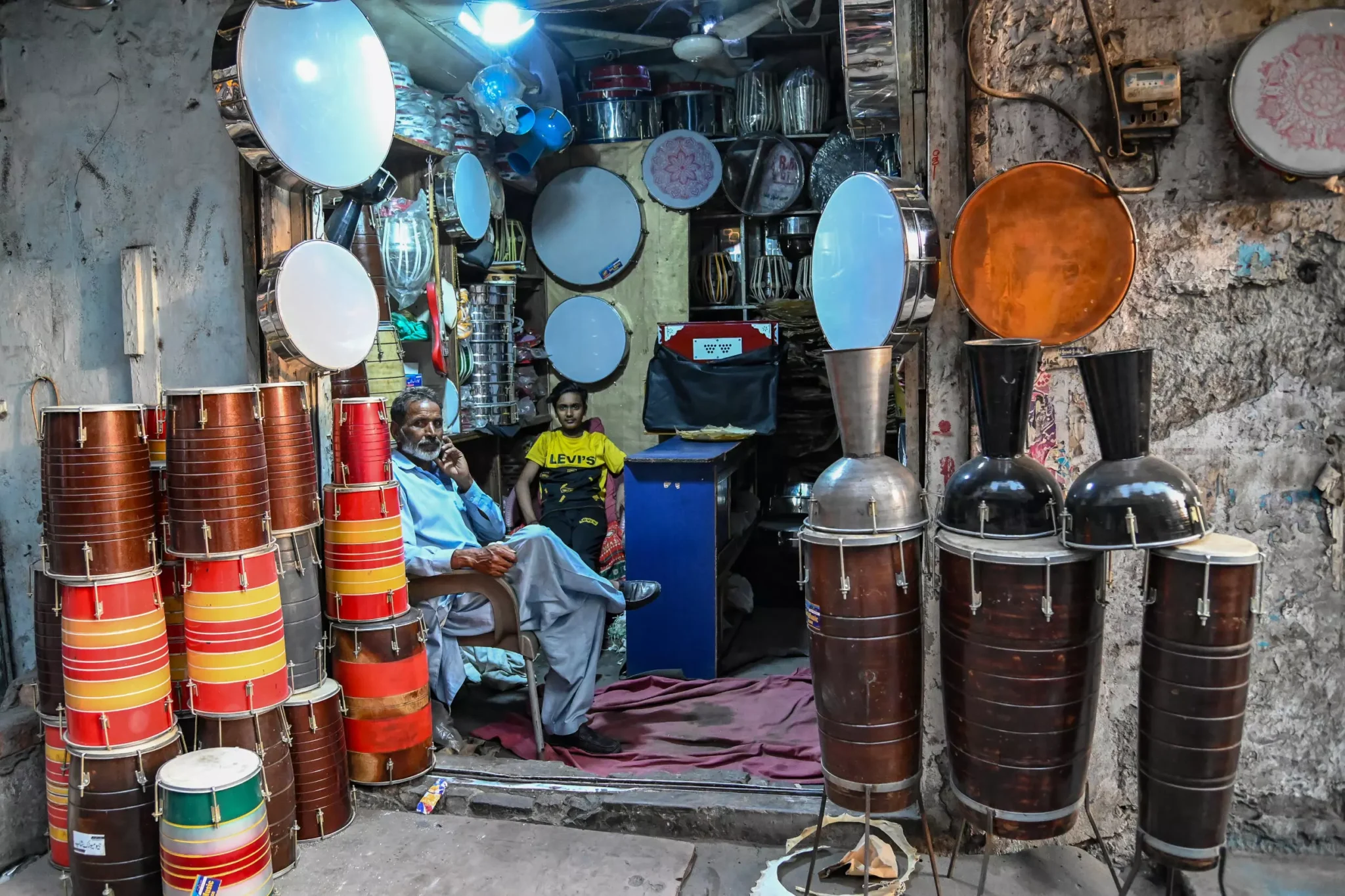
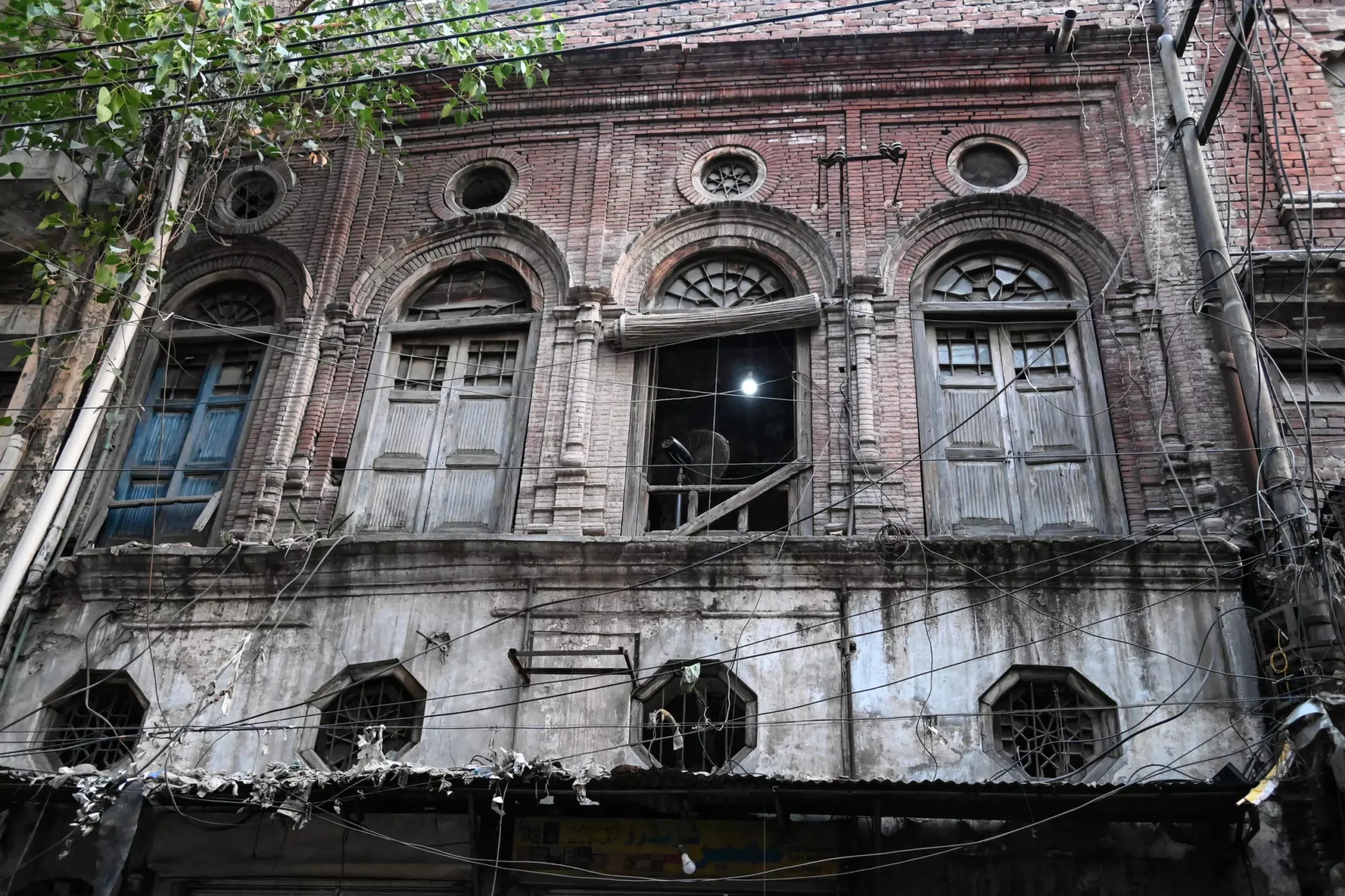
    Some vloggers have performed in front of shops selling shoes and musical instruments that have replaced the once-grand brothels, their crumbling art deco facades framing filthy alleyways.

    But whether the show is breaking down barriers around sexuality in deeply conservative Pakistan or simply compounding them with titillation is up for debate.

    Ar. Naveen Zaman, a cultural researcher, is excited about the renewed attention Heera Mandi is getting.

    “People are once again talking about the tawaif culture,” he said. “So actually, they are starting researching about these topics which were considered taboo in the past years.”

    For Zaman, it is a step towards reviving an uncomfortable history.

    “Old connections are being built here,” he said.

    The courtesans were at the height of their power in the Mughal era, which lasted from the 1500s to the mid-1800s.

    During British rule, Victorian morality codes were threatened by the women’s influence over the adoring local aristocracy, and the “diamond bazaar” was relegated to a red-light zone.

    Decades after Pakistan gained independence, the dictatorship of President Zia ul-Haq introduced hardline Islamic reforms which pushed sex work further into the shadows.

    A police crackdown in 2009 finally shuttered Heera Mandi’s brothels and ended the music and dancing with which sex workers entertained their clients.

    Painful realities

    For 38-year-old Noor — also a pseudonym — the Netflix series does not wash away the stigma of being a sex worker from Heera Mandi.

    Unlike in the series, where the term “tawaif” evokes ideas of art and etiquette, sex work in present-day Pakistan is a raw and dispiriting business.

    Forced into sex work when she was a child to support her family, Noor is ostracised even by her relatives for the work she does.

    “Women in this field are not considered honourable and are not treated with respect. It doesn’t matter how pious they become, they will never be respected. People will always call her a tawaif.”

    “Even though in other areas of the city more sex work occurs — because of Heera Mandi’s reputation this place is still notorious,” she said.

    Classical Indian dancer Manjari Chaturvedi has been working to reclaim the storied culture of courtesans for 15 years.

    In her New Delhi studio, she called the Netflix series a “missed opportunity” which “could have created a different narrative for women, who were stigmatised for many centuries for the work they did”.

    “The saddest thing that a cinema like this does is it again brings sexuality into the foreground rather than the art, and again it brings the same stigma,” Chaturvedi said.

  • NOT GUILTY: Khan vindicated in cipher case

    NOT GUILTY: Khan vindicated in cipher case

    Islamabad High Court (IHC) acquits Pakistan Tehreek-e-Insaf (PTI) founder Imran Khan and the party’s vice president Shah Mahmood Qureshi in the cypher case on Monday.

    A two-member bench of the IHC, including Justice Aamer Farooq and Mian Gul Hassan Aurangzeb, heard the petition filed by the PTI founder. IHC Chief Justice Aamer Farooq announced the verdict in the case against both politicians.

    The PTI founder and the party’s vice chairman were sentenced to ten years each in the case.

    What is cyphergate?

    The issue first came to light less than a month before Imran Khan’s removal from the prime minister’s office on March 27, 2022, when the PTI founder waved a letter addressing a public rally, claiming that it’s a cypher sent from a country that wanted Khan removed, which was later said to be the United States.

    The former prime minister claimed, while addressing the public, that this letter was the reason for his ouster as prime minister.

    Initially, Khan didn’t reveal the name of the country, but after a few days, he blamed the United States for plotting against him. The convicted former prime minister alleged that Secretary of State for South and Central Asia Affairs Donald Lu was responsible for his removal.