Category: Uncategorized

  • Israel supporters, including Piers Morgan, changing stance after Rafah massacre

    Israel supporters, including Piers Morgan, changing stance after Rafah massacre

    Israel’s bombing of refugee tents in Rafah on Sunday night left the world horrified. As videos and images of decapitated children, Palestinians burning alive and bodies reduced to char appeared on social media, a wave of outrage spread across the globe.

    Among those who publicly spoke up were many supporters of Israel’s genocide in Gaza, including British television presenter Piers Morgan, who became a caricature of himself by continuously asking his pro- Palestinian panelists to “condemn Hamas”.

    On Sunday night, he tweeted, “The scenes from Rafah overnight are horrific.
    I’ve defended Israel’s right to defend itself after Oct7, but slaughtering so many innocent people as they cower in a refugee camp is indefensible.
    Stop this now @netanyahu”.

    Over in America, ‘free-speech activist’ Brianna Wu stopped her non-stop support of Israel to quote tweet Morgan’s tweet:
    “I agree with this.

    I said at the beginning that invading Rafah would be a mistake of historic proportions and would make it difficult for people to stand with Israel.

    None of this is going to make anyone safer.”

    As other Israel supporters scrambled to condemn the incident in Rafah, the internet was having none of it. Many reminded Piers of his complicity in the genocide.

    Even Andrew Tate popped up in the replies to simply say “Told you.”

  • Spain, Ireland and Norway recognise Palestinian state

    Spain, Ireland and Norway recognise Palestinian state

    Madrid (AFP) – Spain, Ireland and Norway are formally recognising a Palestinian state on Tuesday in a decision slammed by Israel as a “reward” for Hamas more than seven months into the genocide against Palestinians in Gaza.

    The three European countries believe their initiative has strong symbolic impact, which is likely to encourage others to follow suit.

    “Recognition of the State of Palestine is not only a matter of historic justice… It is also an essential requirement if we are all to achieve peace,” Spanish Prime Minister Pedro Sanchez said before meeting his cabinet.

    The move, he said, was “not against anyone, least of all Israel”.

    “It is the only way to move towards the solution that we all recognise as the only possible way to achieve a peaceful future — that of a Palestinian state living side-by-side with the state of Israel in peace and security.”

    Sanchez also said the decision reflected Spain’s “outright rejection of Hamas, which is against the two-state solution” and whose October 7 attacks led to the Gaza war.

    The plans were unveiled last week in a coordinated announcement by the prime ministers of the three countries.

    Both the Spanish and Irish cabinets were meeting to formally approve the step on Tuesday morning, while Norway informed Palestinian prime minister Mohammed Mustafa its recognition would also take effect the same day.

    Entering the cabinet meeting, Irish Prime Minister Simon Harris said it was “an important moment”.

    He said it sent “a signal to the world is that there are practical actions you can take as a country to help keep the hope… of a two-state solution alive”.

    ‘Incitement to genocide’

    The decision has provoked a furious response from Israel and further exacerbated diplomatic tensions, notably with Spain.

    Last week, Sanchez’s far-left deputy Yolanda Diaz hailed the move saying: “We cannot stop. Palestine will be free from the river to the sea”, which Israel’s Madrid envoy denounced as a “clear call for the elimination of Israel”.

    The slogan refers to the British mandate borders of Palestine, which stretched from the River Jordan to the Mediterranean before Israel was created in 1948.

    On Tuesday, Israeli Foreign Minister Israel Katz went even further.

    “Sanchez, as long as you don’t fire your deputy and you recognise a Palestinian state, you are participating in the incitement to commit genocide and war crimes against the Jewish people,” he wrote on X.

    On Sunday, Katz posted a video on X splicing footage of the October 7 attacks with flamenco dancing, saying: “Sanchez: Hamas thanks you for your service”.

    Spain condemned the post as “scandalous and revolting”.

    On Monday, Katz ordered the first of a series of “preliminary punitive measures”, ordering Spain’s Jerusalem consulate to stop offering consular services to Palestinians in the occupied West Bank.

    Differences within the EU

    Recognising Palestinian statehood has provoked sharp disagreement within the 27-nation European Union.

    For decades, formal recognition of a Palestinian state has been seen as the endgame of a negotiated peace between Israelis and Palestinians.

    Washington and most Western European nations have said they are willing to one day recognise Palestinian statehood, but not before agreement on thorny issues like the status of Jerusalem and final borders.

    The Gaza bloodshed has revived calls for Palestinians to be given their own state.

    Ever more European countries are expressing a desire to do so, although others remain reticent.

    France, for example, believes it is not the right time to do so, while Germany only envisages recognition following negotiations between the two sides.

    Tuesday’s move will mean 145 of the United Nations’ 193 member states now recognise Palestinian statehood.

    In 2014, Sweden became the first EU member to recognise a Palestinian state.

    It followed six other European countries that took the step before joining the bloc — Bulgaria, Cyprus, the Czech Republic, Hungary, Poland and Romania.

    Israeli genocide against Palestinians in Gaza has killed more than 36,000 people, also mostly civilians, according to the health ministry.

  • Deadly Bangladesh cyclone one of longest seen

    Deadly Bangladesh cyclone one of longest seen

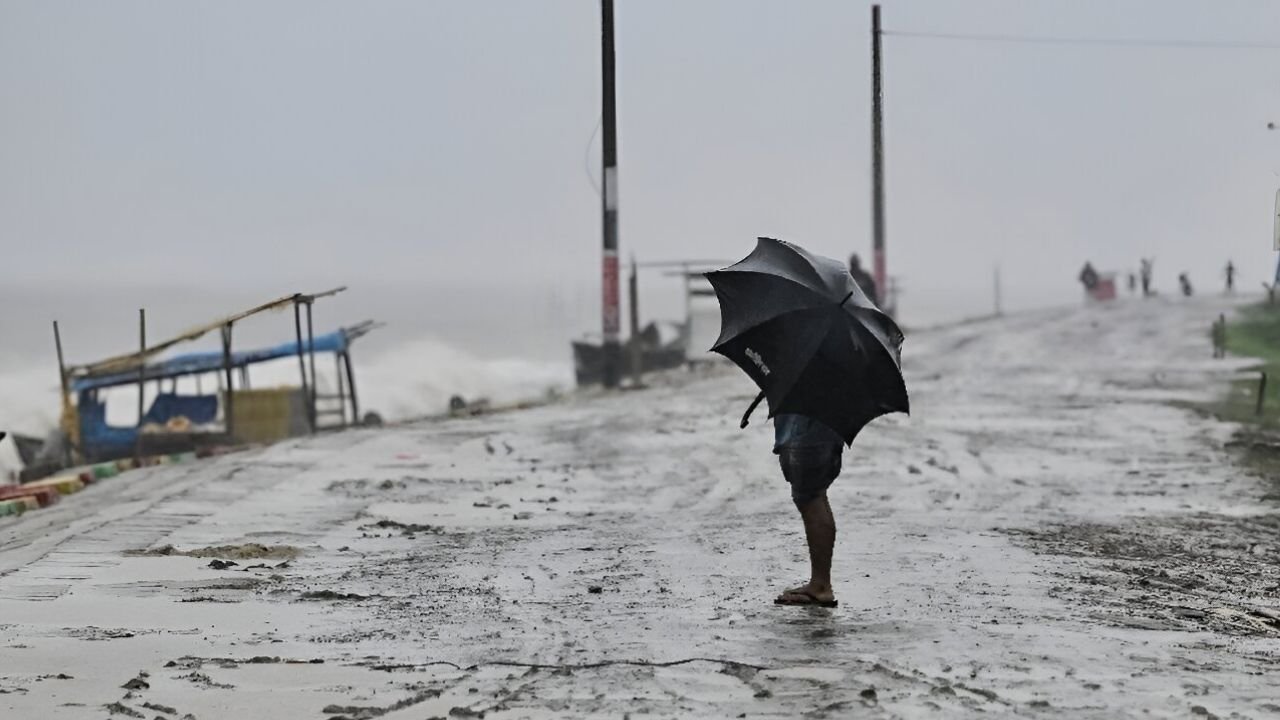
    Bangladeshi weather experts said Tuesday that a deadly cyclone that carved a swathe of destruction was one of the quickest-forming and longest-lasting they’d experienced, blaming climate change for the shift.

    Cyclone Remal, which made landfall in low-lying Bangladesh and neighbouring India on Sunday evening with fierce gales and crashing waves, left at least 23 people dead, destroyed thousands of homes, smashed seawalls and flooded cities across the two countries.

    “In terms of its land duration, it is one of the longest in the country’s history,” Azizur Rahman, director of the state-run Bangladesh Meteorological Department told AFP, adding it had battered the country for more than 36 hours.

    In contrast, Cyclone Aila, which hammered Bangladesh in 2009, lasted around 34 hours.

    Cyclones have killed hundreds of thousands of people in Bangladesh in recent decades, and the number of superstorms hitting its densely populated coast has increased sharply, from one a year to as many as three, due to the impact of climate change.

    Slow-moving — and therefore longer-lasting — storms bring greater destruction.

    “I’ve seen many storms in my life but nothing like this cyclone”, said Asma Khatun, an 80-year-old widow who lives with her son, a fisherman in Bangladesh’s hard-hit coastal town of Patuakhali.

    “Before, the storm came and went away… now it doesn’t seem to go away. The incessant pouring and heavy wind kept us stuck for days”.

    Rahman said the cyclone triggered massive rains, with some cities receiving at least 200 millimetres (7.9 inches).

    Storm surges breached multiple embankments, meaning seawater flooded into farmland, damaged freshwater fish farms common along the coast, or corrupted drinking water.

    Bangladesh’s state minister for disaster Mohibbur Rahman said 3.75 million people had been affected by the cyclone,  more than 35,000 homes were destroyed, and another 115,000 damaged.

    “We don’t know where to go,” said Setara Begum, 75, surveying the wreckage of her home after its tin roof was ripped off.

    Azizur Rahman said the cyclone formed more quickly than almost all the cyclones they have monitored in recent decades.

    “Of course, quick cyclone formation and the long duration of cyclones are due to the impact of climate change,” Rahman said.

    “It took three days for it to turn into a severe cyclone from low pressure in the Bay of Bengal… I’ve never seen a cyclone formed from a low pressure in such a quick time,” he said.

    “Usually, a cyclone is formed in the south and southwest of the Bay of Bengal, then takes seven to eight days to turn into a severe cyclone.”

    But while scientists say climate change is fuelling more storms, better forecasting and more effective evacuation planning have dramatically reduced death tolls.

    Around a million people in Bangladesh and neighbouring India fled inland seeking safety — but many people preferred to stay put to guard their homes.

    In Bangladesh, Cyclone Remal killed at least 17 people, according to the disaster management office and police, who reported Tuesday the additional deaths of a husband and wife, “crushed under stacks of bricks” when their house collapsed.

    Some drowned. Others were killed by debris, falling trees or electrocuted by falling power lines.

    Thousands of electricity poles were torn down, and power is out across large areas, said Biswanath Sikder, chief engineer of the Bangladesh Rural Electrification Board.

    “More than 20 million people are without electricity,” Sikder told AFP. “We are working hard to bring around 50 percent of these affected people by Tuesday evening.”

    In India, six people died, West Bengal state officials said.

    But the worst impact was stemmed by the expansive Sundarbans mangrove forest straddling Bangladesh and India — where the Ganges, Brahmaputra and Meghna rivers meet the sea, Bangladesh’s state weather department said.

    The crucial sea-water coastal forests help dissipate the violence of such storms.

    The International Union for Conservation of Nature (IUCN) warned this month that half of the world’s mangrove ecosystems are at risk of collapse due to climate change, deforestation and pollution.

  • Nawaz Sharif set to take PML-N reins after six years

    Nawaz Sharif set to take PML-N reins after six years

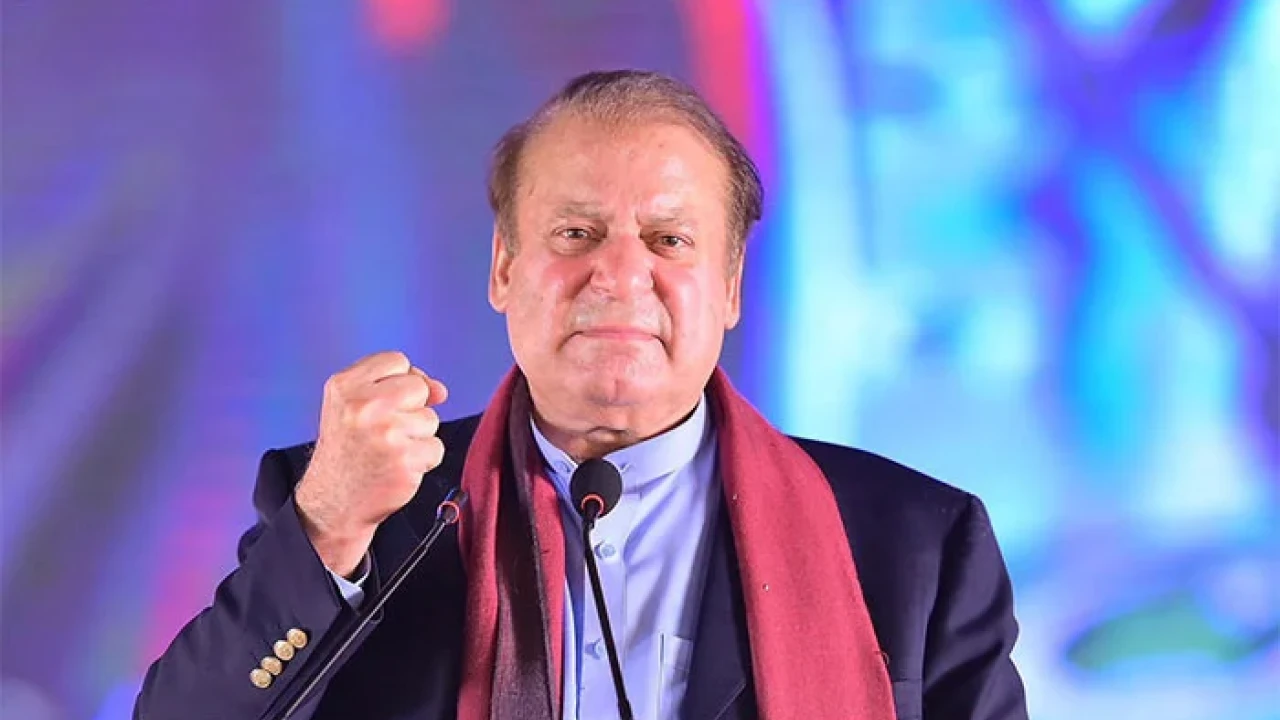
    Former Prime Minister Nawaz Sharif is set to take the reins of the Pakistan Muslim League-Nawaz (PML-N) today once again after more than six years.

    Nawaz Sharif will be elected the president of the party through intra-party polls rescheduled from the second week of May to May 28 aka Youm-e-Takbir.

    In 2017, Nawaz lost both the prime minister’s office and the presidency of PML-N after the ruling of the Panama Papers case. Hence, the catchphrase “Mujhy Kyun Nikala” (Why was I removed?) used by the party at that time.

    Rana Sanaullah previously stated that party leaders had a complete consensus on Nawaz being the leader of the party.

  • Israel PM Netanyahu says Rafah strike a ‘tragic accident’

    Israel PM Netanyahu says Rafah strike a ‘tragic accident’

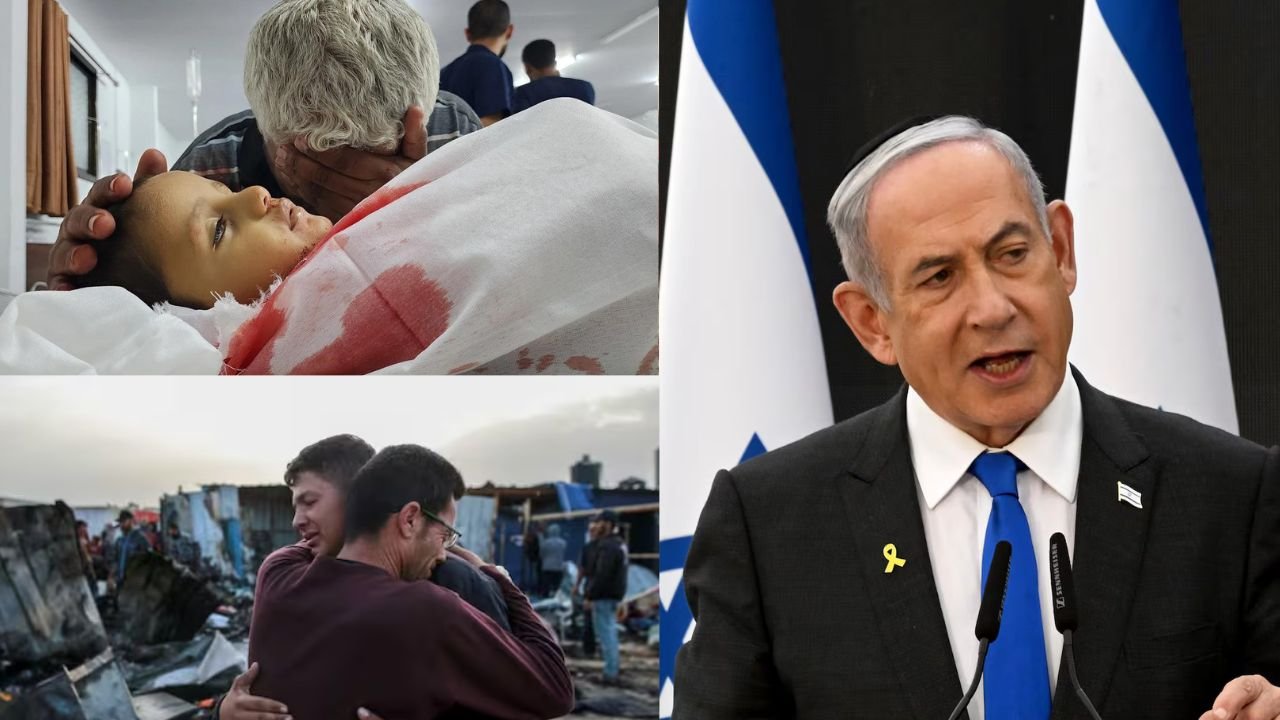
    Israeli Prime Minister Benjamin Netanyahu said on Monday that a deadly strike that hit a displacement camp in Gaza’s Rafah was a “tragic accident” that his government was investigating.

    “In Rafah, we evacuated a million uninvolved residents and, despite our best efforts, a tragic accident happened yesterday,” Netanyahu told parliament.

    He added that “we are investigating the case and will draw the conclusions” after Gaza’s health ministry reported 45 dead as the strike late Sunday sparked a fire that tore through a tent city for displaced Gazans.

    The ministry in the Gaza Strip also said that 249 people were wounded.

    Israel faced a wave of international condemnation on Monday over the Rafah strike, including from across the region as well from the European Union, France, and the United Nations.

    The Israeli military said it had launched a probe into the strike which it said was carried out based on “precise intelligence information” about two Hamas militants who it said were killed.

    It also said “the strike did not occur in the humanitarian area in Al-Mawasi, to which the IDF (army) has encouraged civilians to evacuate” since the ground operation began in Rafah.

    Netanyahu struck a defiant tone in his Knesset address while being heckled by relatives of hostages held in Gaza, and vowed to keep up the battle to destroy Hamas.

    “There is no substitute for absolute victory” in Gaza, he told the chamber.

    Netanyahu denounced pressure, both internal and external, that he said his government has faced since the war in Gaza began.

    “They pressured us then,” said Netanyahu, before listing calls to refrain from military operations which Israel carried out anyway.

    “Don’t enter Gaza. We entered! Do not enter Shifa! We entered! Do not enter Khan Yunis! We entered! Do not enter Rafah! We entered!” he said.

    “I don’t give up and I won’t give up! I stand up to pressures from home and abroad.”

    Israel’s genocide in Gaza has caused the death of 36,050 Palestinians.

    © Agence France-Presse

  • For deaf children in Pakistan, school is life

    For deaf children in Pakistan, school is life

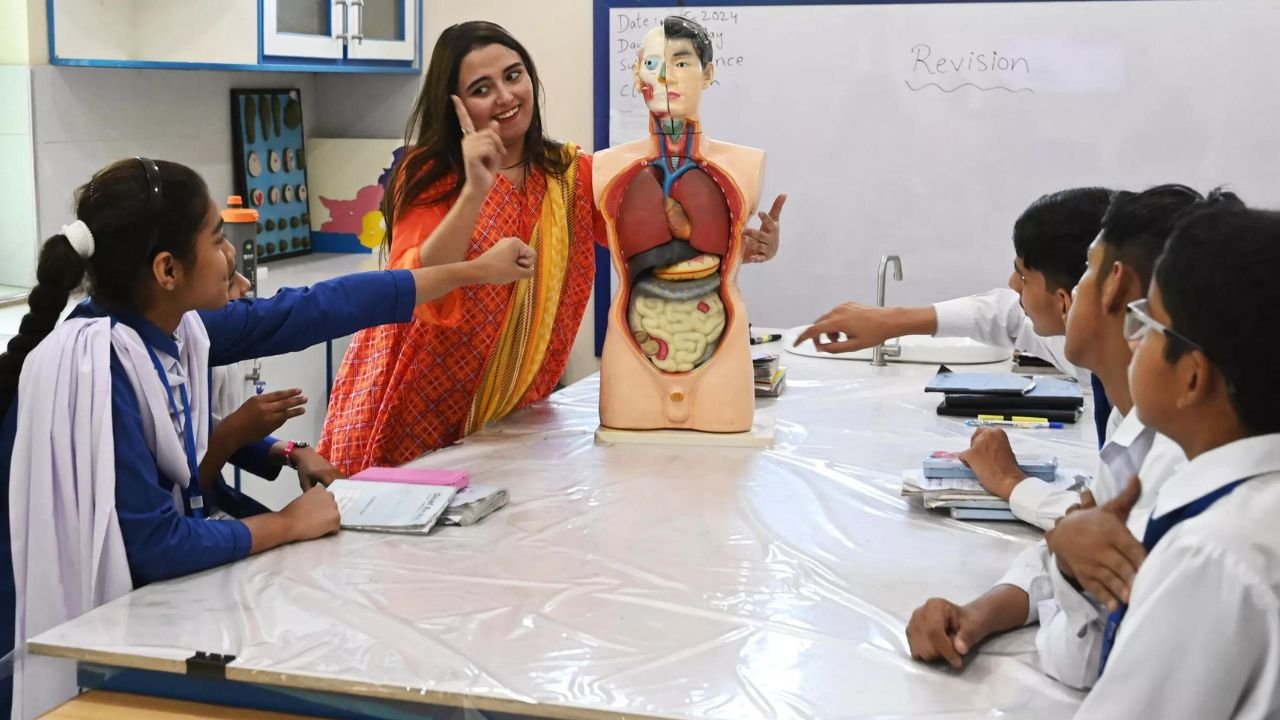
    Lahore (Pakistan) (AFP) – At a school for the deaf in Pakistan, the faces of students are animated, their smiles mischievous, as their hands twirl in tandem with their sign language teacher.

    The quiet classes exude joy, led often by teachers who are also deaf.

    “I have friends, I communicate with them, joke with them, we share our stories with each other about what we have done and not done, we support each other,” said Qurat-ul-Ain, an 18-year-old deaf woman who joined the school a year ago.

    More than 200 pupils, children and adults mostly from disadvantaged backgrounds, are among the few given a new fervour for life at this inner-city school in historic Lahore.

    Of more than a million deaf school-age children in Pakistan, less than five percent go to school.

    The figure is even lower for girls and, without a language to express themselves, many children are marginalised by society and even their families.

    “Life is a little difficult. There is a huge communication gap here where people generally don’t know sign language,” said Qurat-ul-Ain.

    At the school run by charity Deaf Reach, pupils learn sign language in English and Urdu before progressing on to the national curriculum.

    Everyone has a name in sign language, which often has to do with a physical characteristic.

    Younger children learn with visuals: a word and a sign are associated with an image.

    Their peers turn their thumbs down for a wrong answer and make the applause sign — twisting hands –- for a correct one.

    Families learning to sign

    Founded in 1998 by an American and funded with donations, Deaf Reach now has eight schools across the country, educating 2,000 students on a “pay what you can afford” basis, with 98 percent of children on scholarships.

    The vast majority of students at the school come from hearing families, who are also offered the chance to learn how to sign and break the language barrier with their son or daughter.

    Adeela Ejaz explained how she struggled to come to terms with her first born son — now 10 years old — being deaf.

    “When I couldn’t understand what he was trying to say he would bang his head against the wall and floor,” the 35-year-old told AFP.

    “It was tough for everyone because no-one knew how to communicate with him. Everyone would tell us he is deaf but I wasn’t prepared to accept that.”

    The mother and son pair are now both learning to sign.

    “I am getting better at signing and I am able to communicate with my son. He’s now become so attached to me.”

    The programme makes extensive use of technology, and offers an online dictionary and a phone app.

    It has also found employment for more than 2,000 deaf people with around 50 Pakistani companies.

    Huzaifa, 26, who became deaf after contracting a fever at a young age, was given a stitching apprenticeship at Deaf Reach to help him into the skilled workforce.

    “Teachers in the government school didn’t know any sign language. They would just write notes on the board and tell us to copy it. We used to get really disheartened, and I would be extremely worried for my future,” he told AFP.

    His family pushed for him to become educated, helping him to learn the basics of sign language before he received formal coaching.

    “My parents never threw me away. They spared no effort in ensuring I was able to continue my education,” he said.

    Without their dedication, he said: “I’d be working as a day labourer somewhere, cutting leaves or cementing walls.”

    Isolated and fearful

    Sign language varies from one country to another, with its own associated culture, and regional variations sometimes exist.

    According to World Federation of the Deaf, 80 percent of the approximately 70 million deaf people in the world have no access to education.

    “I used to sit idly at home, use the mobile or play outside. I never had a clue about what people were saying,” said Faizan, 21, who has been at Deaf Reach for 11 years and dreams of working abroad.

    “Before learning how to sign I used to feel very weak mentally and had an inferiority complex and fear. But thankfully there is none of that anymore.”

    Attitudes towards people with disabilities are slowly improving in Pakistan, which has introduced laws against discrimination.

    “We have seen over the years the mentality change tremendously. From many people hiding their deaf children, feeling embarrassed, ashamed,” noted Daniel Marc Lanthier, director of operations of the foundation behind Deaf Reach.

    Nowadays families are “coming out in the open, asking for education for their children, asking to find employment for them,” he said, though much work remains.

    “With a million deaf children who don’t have access to school, it’s a huge challenge, it’s a huge goal to be met.”


  • Gold price increases by Rs800 to Rs240,800 per tola

    Gold price increases by Rs800 to Rs240,800 per tola

    The domestic bullion market experienced a notable rebound on Monday, with the price of 24-karat gold rising by Rs800 to Rs240,800 per tola.

    This increase comes after a week of losses, reflecting a significant shift in the market dynamics.

    The recent surge in gold prices is attributed to a robust rally in the international market. Initially, local gold dealers underpriced the metal by Rs4,000 per tola due to a substantial reduction in purchasing power.

    However, the current rates are now aligned with transparent international pricing, factoring in the exchange rate fluctuations that influenced last week’s decline.

    According to the Karachi Sarafa Association, the price of 24-karat gold increased to Rs206,447 per 10 grammes, marking a rise of Rs686. Similarly, the price of 22-karat gold climbed to Rs189,243 per 10 grammes.

    In contrast, silver prices remained stable in the domestic market. The price for 24-karat silver held steady at Rs2,800 per tola and Rs2,400.54 per 10 grammes.

    On the international stage, gold is currently trading at $2,343.37 per ounce, up by 0.41 per cent or $9.8 compared to the previous close. Investors are closely monitoring the likelihood of U.S. interest rate cuts, particularly ahead of a key inflation report expected later this week.

  • Why is Pakistan severely hit by heatwaves?

    Why is Pakistan severely hit by heatwaves?

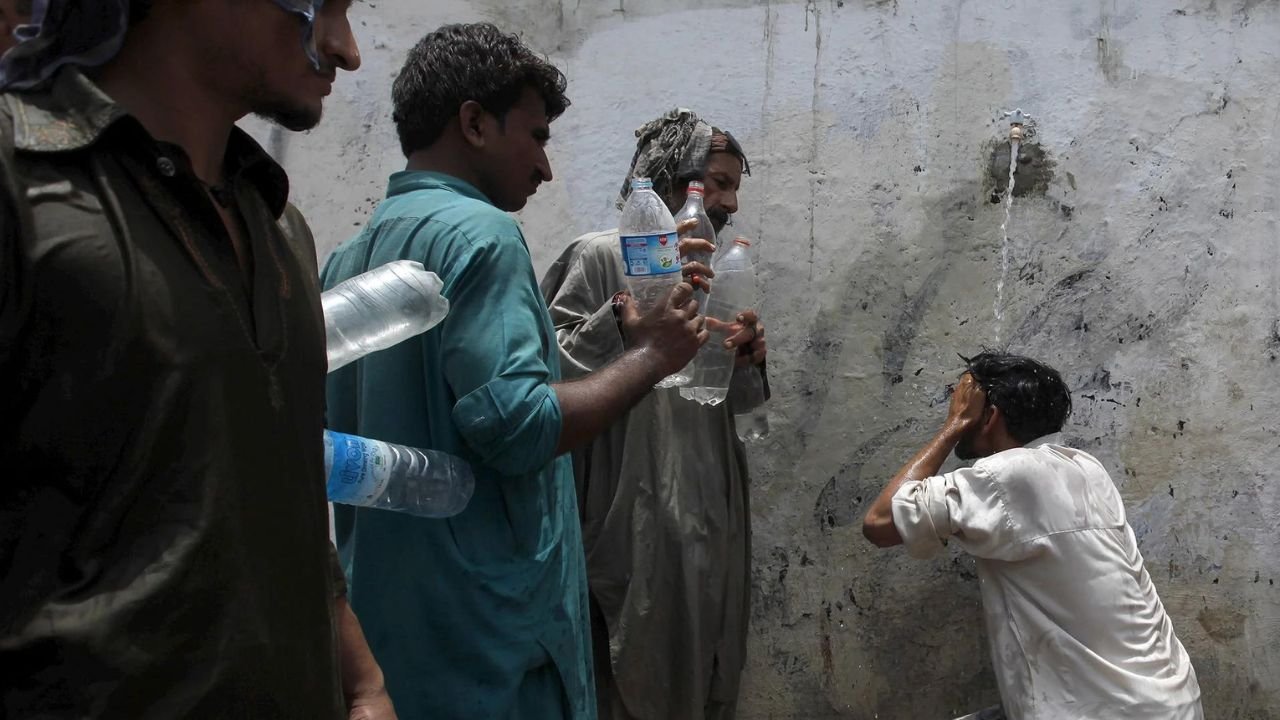
    The Meteorological Department has explained the reason behind the ongoing heatwave in Pakistan.

    Most of the plain areas of the country will continue to be affected by extreme heat in the coming days, while this week in Karachi, temperature is likely to reach 42 degrees Celsius.

    But why is heatwave so severe in Pakistan?

    According to the Department of Meteorology, the phenomenon has stemmed from the combination of meteorological and environmental factors.

    To sum it up, high air pressure in the upper atmosphere and the presence of limited clouds lead to heatwaves.

    This year, scorching heat across the country broke yet another record, with Mohenjo-Daro being the hottest city in the country at 53 degrees on Sunday.

  • Shah Mahmood Qureshi implicated in eight more cases related to May 9

    Shah Mahmood Qureshi implicated in eight more cases related to May 9

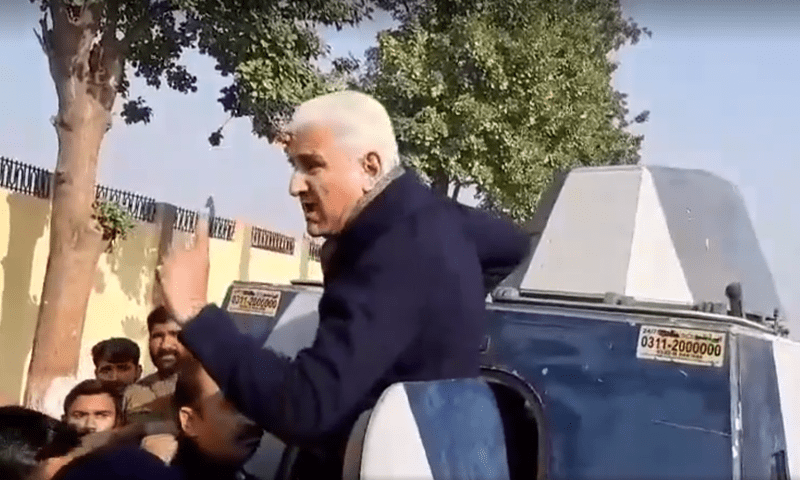
    Pakistan Tehreek-e-Insaf (PTI) Vice-Chairman Shah Mahmood Qureshi was implicated in eight more cases related to the May 9 riots on Sunday.

    Qureshi is currently incarcerated in Adiala Jail on multiple charges while also serving a 10-year sentence under the Official Secrets Act by a special court.

    May 9 riots took place when PTI founder Imran Khan was arrested from the premises of Islamabad High Court (IHC). Scores of PTI workers and senior leaders were imprisoned for involvement in violence and attacks on military installations in 2023.

    Meher Bano Qureshi, a PTI leader and the daughter of Shah Mahmood Qureshi, took to X to condemn the action taken by Lahore Police saying, “After 281 days in jail l, as a consequence of a sham trial, Lahore Police has arrested Shah Mahmood Qureshi in 8 cases related to 9th May incidents in Lahore. The arrest comes after he was interrogated by Lahore police yesterday. Incidentally, it’s a well-established and documented fact that my father was in Karachi on the 9th.”

  • 2nd T20: England defeats Pakistan by 23 runs

    2nd T20: England defeats Pakistan by 23 runs

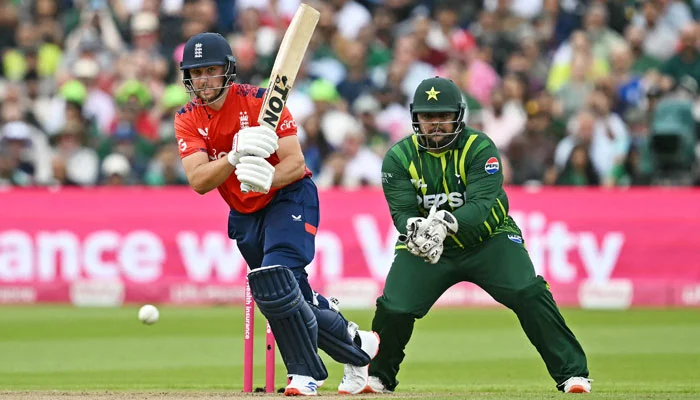
    In the second match of the series of 4 match T20 matches, England defeated Pakistan by 23 runs at Edgbaston Stadium in Birmingham,

    Pakistan won the toss and decided to field first.

    England inning:

    Batting first, the host team set Pakistan a target of 184 runs to win. Batting first, England scored 183 runs for 7 wickets in the allotted 20 overs.

    English batsman Will Jack scored 37 runs, Jonny Bairstow scored 21 runs and Phil Salt scored 13 runs. Moeen Ali 4, Chris Jordan 3, Liam Livingston 2 and Harry Brook scored one run, Jofra Archer remained not out with 12 runs.

    On behalf of Pakistan, Shaheen Shah Afridi dismissed 3 players, Imad Wasim and Haris Rauf took 2 wickets each.

    Pakistan inning:

    Chasing a target of 184 runs, the Pakistani team bowled out for 160 runs in the last over.

    Fakhr zaman scored 45 and Babar Azam scored 32 runs for Pakistan.

    Apart from them, Iftikhar Ahmed 23, Imad Wasim 22 and Azam Khan scored 11 runs. Mohammad Amir scored 5, Shadab Khan 3 and Saeem Ayub scored 2 runs, Mohammad Rizwan was dismissed for zero.

    The first match of the series between Pakistan and England was canceled due to rain.