Category: Uncategorized

  • 70 people lost lives in militant attacks in April

    70 people lost lives in militant attacks in April

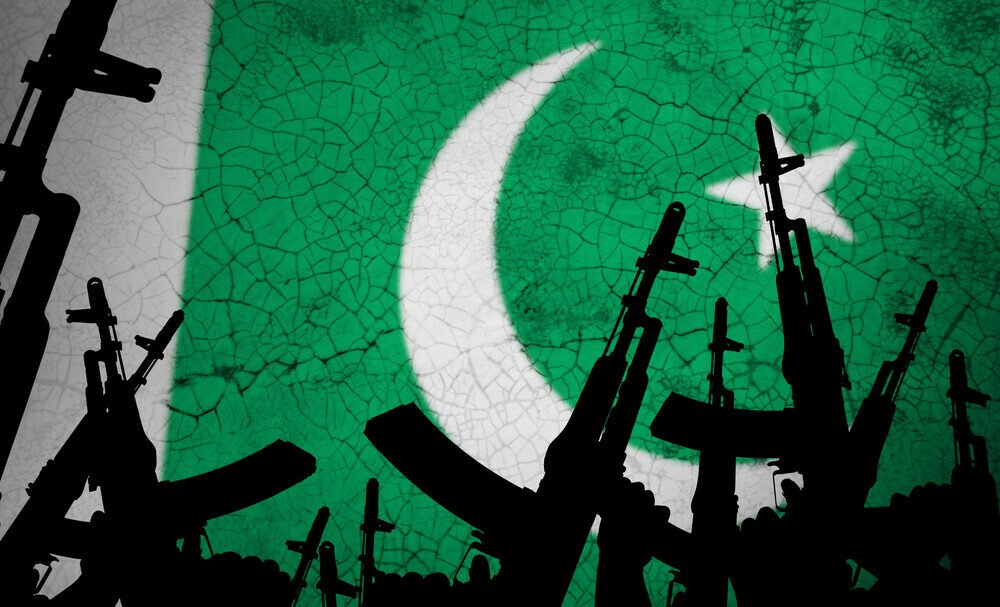
    Pakistan Institute for Conflict and Security Studies (PICSS), an Islamabad-based think-tank, published its monthly security assessment report in which it was revealed that militant attacks claimed 70 lives in April 2024.

    According to the monthly report, Pakistan experienced at least 77 militant attacks during the month of April which resulted in 70 deaths, including 35 civilians and 31 members of security forces.

    Total number of injured people was 67.

    As compared to the previous month, there has been a stark increase in attacks. In March, Pakistan experienced 56 militant attacks.

    This indicates a 38 per cent increase in the number of militant attacks, although there was a nine per cent decline in deaths, with no change in the number of injuries.

  • Tweets or ‘terrorism’?: Saudi’s jailed online activists

    Tweets or ‘terrorism’?: Saudi’s jailed online activists

    A Saudi court’s decision to sentence fitness influencer Manahel al-Otaibi to 11 years in prison highlights what activists describe as a fierce crackdown on even vaguely critical online speech.

    In the past two years the Saudi judiciary has “convicted and handed down lengthy prison terms on dozens of individuals for their expression on social media”, the human rights groups Amnesty International and ALQST said in a joint statement on Tuesday.

    These cases are generally handled by the Specialised Criminal Court, which was established in 2008 to try suspects accused of terrorism, and Saudi authorities do not often comment on them.

    Here are some of the most high-profile recent examples:

    Nourah al-Qahtani

    A mother-of-five, Qahtani was arrested in July 2021 largely in connection with critical posts on Twitter, since rebranded as X, according to a sentencing document provided by Democracy for the Arab World Now (DAWN), a Washington-based rights group.

    She initially received a prison sentence of six-and-a-half years, however prosecutors appealed for a harsher sentence and got their wish: a 45-year term issued in mid-2022.

    Qahtani’s Twitter account, as identified in the sentencing document, features numerous posts criticising the government and others warning of attempts to arrest those behind public protests, which are not tolerated in Saudi Arabia.

    The court found Qahtani had used Twitter “to challenge the religion and justice” of King Salman and Crown Prince Mohammed bin Salman

    Get info without
    leaving the page., the kingdom’s 38-year-old de facto ruler, according to the sentencing document.

    It also says she incited “the activities of those who seek to disturb public order and destabilise the security of society and the stability of the state” by “publishing false and malicious tweets”.

    Qahtani did not have a large public profile and it is not clear how her anonymous Twitter account, which has fewer than 600 followers, attracted the attention of Saudi authorities.

    Salma al-Shehab

    A member of Sunni-ruled Saudi Arabia’s Shiite minority, Shehab had been studying for a doctorate in Britain and was arrested in January 2021 while visiting on holiday.

    In August 2022 she was sentenced to 34 years behind bars for aiding dissidents seeking to “disrupt public order” in the kingdom by relaying their tweets.

    The mother-of-two, who mostly posted about women’s rights to an account with just a few thousand followers, was also banned from travelling abroad for a further 34 years.

    Both the sentence and travel ban were later reduced to 27 years each, according to Amnesty.

    After Shehab’s sentence was made public, the University of Leeds, where she was studying, said in a statement it was “deeply concerned” and trying to find ways to support her.

    Mohammed al-Ghamdi

    A government critic who denounced alleged corruption and human rights abuses on social media, Mohammed al-Ghamdi was sentenced to death last year.

    The charges include conspiracy against the Saudi leadership, undermining state institutions and supporting terrorist ideology, sources briefed on the details of the verdict said.

    The case against him was at least partly built on posts criticising the government and expressing support for “prisoners of conscience” like the jailed religious clerics Salman al-Awda and Awad al-Qarni, Mohammed’s brother Saeed al-Ghamdi told AFP at the time.

    Mohammed al-Ghamdi, a retired teacher in his 50s, was arrested in June 2022.

    Human Rights Watch said in August 2023 it had seen court documents contending that Ghamdi “targeted the status of the King and the Crown Prince” and that the “magnitude of his actions is amplified by the fact they occurred through a global media platform, necessitating a strict punishment”.

    In an interview with Fox News that aired in September 2023, Prince Mohammed said he disapproved of the judgement and raised the possibility that Ghamdi might be spared death.

    “I’m hoping that in the next phase of trials, the judge there is more experienced. And they might look at it totally different,” Prince Mohammed said.

    Manahel al-Otaibi

    Otaibi, a 29-year-old blogger and fitness instructor, was arrested in November 2022.

    Rights groups contend that law enforcement targeted her for challenging Saudi male guardianship laws and requirements for women to wear the customary body-shrouding abaya robe.

    The Specialised Criminal Court sentenced her to 11 years in prison on January 9, but the sentence was only made public later in a Saudi submission to United Nations special rapporteurs inquiring about the case.

    That document, dated January 24 and seen by AFP on Tuesday, says Otaibi “was convicted of terrorist offences that have no bearing on her exercise of freedom of opinion and expression or her social media posts”.

  • PTI alleges CJP Isa insincere with judicial ‘interference’ issue

    PTI alleges CJP Isa insincere with judicial ‘interference’ issue

    Pakistan Tehreek-i-Insaf (PTI) central information secretary Raoof Hasan, on Wednesday, expressed concern over the conduct of Chief Justice of Pakistan (CJP) Qazi Faez Isa during Supreme Court proceedings on the issue of interference by spy agencies in the judiciary.

    PTI demanded that a full court be constituted to hear the matter on a daily basis, and more importantly, that CJP Isa should disassociate himself from the bench.

    Raoof Hasan was accompanied by the former chief minister of Gilgit-Baltistan Khalid Khursheed and PTI advocate Abuzar Salman Niazi.

    The secretary information remarked that the six judges of Islamabad High Court (IHC) asked the CJP for help but the Chief Justice referred it to Prime Minister Shehbaz Sharif.

    He said one should not forget that the PM and operatives of intelligence agencies were among those implicated in the matter.

  • More war debris in Gaza than Ukraine: UN

    More war debris in Gaza than Ukraine: UN

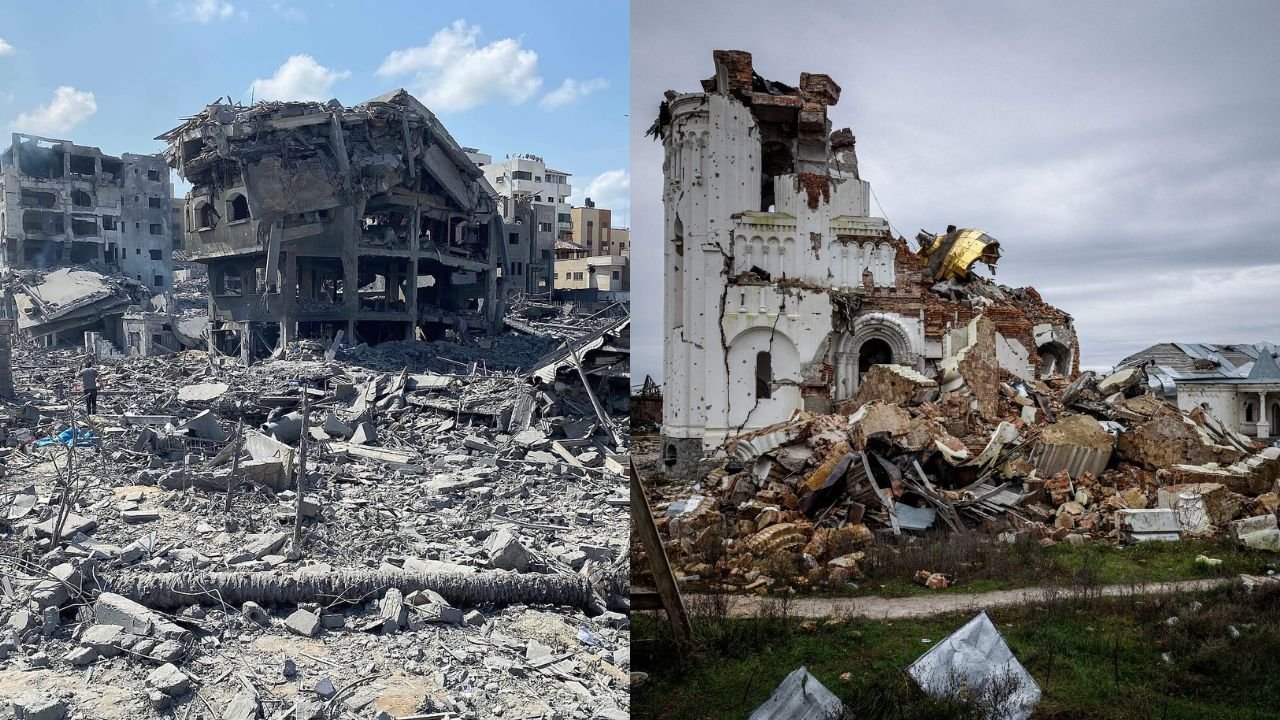
    Geneva (AFP) – The Gaza Strip is filled with more war debris and rubble than Ukraine, the head of UN demining operations for the narrow Palestinian territory said Wednesday.

    And the danger for clearance work is restricted not just to unexploded ordnance but includes possible exposure to toxic substances such as asbestos.

    The United Nations Mine Action Service (UNMAS) estimated the amount of debris in Gaza at 37 million tonnes in mid-April, or 300 kilogrammes per square metre.

    “Gaza has more rubble than Ukraine, and to put that in perspective, the Ukrainian front line is 600 miles (nearly 1,000 kilometres) long, and Gaza is 25 miles (40 km) long,” said Mungo Birch, head of the UNMAS programme in the Palestinian territories.

    But the sheer volume of rubble is not the only problem, said UNMAS.

    “This rubble is likely heavily contaminated with UXO (unexploded ordnance), but its clearance will be further complicated by other hazards in the rubble,” Birch told journalists.

    “There’s estimated to be over 800,000 tonnes of asbestos, for instance, alone in the Gaza rubble.” The cancer-causing mineral used in construction requires special precautions when handling.

    Birch said he hoped UNMAS, which works to mitigate the threats posed by all types of explosive ordnance, would become the coordination body for mine action in Gaza.

    It has secured $5 million of funding but needs a further $40 million to continue its work in Gaza over the next 12 months.

    However, “the sector as a whole will need hundreds of millions of US dollars over multiple years in order to make Gaza safe again for the population”, Birch added.

    Israel’s retaliatory offensive has killed at least 34,568 people in Gaza, mostly women and children, according to the health ministry.

  • April temperatures in Bangladesh hottest on record

    April temperatures in Bangladesh hottest on record

    Bangladesh last month saw the hottest average April temperatures since the country began keeping weather records in 1948, a senior forecaster told AFP on Wednesday.

    “2024 was the hottest April since 1948 in terms of hot days and area coverage in the country,” Bangladesh Meteorological Department senior forecaster Muhammad Abul Kalam Mallik said.

    Bangladesh remains in the grips of a suffocating heatwave that prompted authorities to close schools nationwide, with temperatures not expected to moderate until Thursday.

    “This year the heatwave covered around 80 percent of the country. We’ve not seen such unbroken and expansive heatwaves before,” Mallik said.

    Mallik said the 30-year average daily temperature for April between 1981 and 2010 was 33.2 degrees Celsius, but this year weather stations around the country recorded temperatures of between two and eight degrees higher.

    He added that Bangladesh had not seen the usual pre-monsoon April thunderstorms which normally cools the South Asian nation ahead of summer.

    “Bangladesh gets an average 130.2 millimetres of rain in April. But this April we got an average of one millimetre of rain,” he said.

    Mallik said the bureau was checking data to confirm whether this year marked record low rainfalls for April.

  • Rana Sanaullah appointed PM Shehbaz’s adviser on political affairs

    Rana Sanaullah appointed PM Shehbaz’s adviser on political affairs

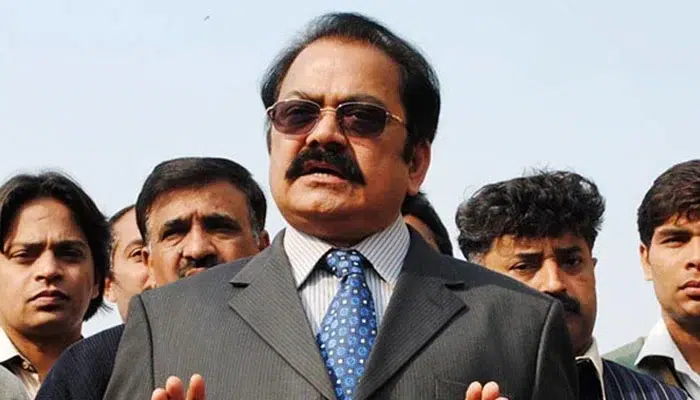
    Prime Minister Shehbaz Sharif has appointed Pakistan Muslim League-Nawaz (PML-N) Punjab President Rana Sanaullah as his adviser on political and public affairs.

    The President of Pakistan Asif Ali Zardari approved the appointment of Sanaullah as the PM’s advisor.

    Rana Sanaullah served as the interior minister during the previous government but lost his seat in the general elections 2024 in the National Assembly (NA-100) constituency in Faisalabad.

    Sanaullah’s appointment came just after a day Foreign Minister Ishaq Dar was given the additional role of Deputy Prime Minister.

    Sanaullah had recently hinted at the possibility of him taking a role in the federal government, stating that Nawaz Sharif would decide the matter after coming back from his China visit.

  • ‘Aik film tou banti hai’; Aamir Khan on working with Salman, Shah Rukh

    ‘Aik film tou banti hai’; Aamir Khan on working with Salman, Shah Rukh

    Bollywood’s resident thespian king Aamir Khan has revealed that he’s been discussing a movie collaboration with the other two reigning Khans of Indian cinema, Shah Rukh Khan and Salman Khan. During an appearance on Netflix’s The Great Indian Kapil Show, Aamir responded to a fan’s question about teaming up with the other two Khans by saying, “We think alike,” in a clip that hadn’t been shown before.

    The perfectionist Khan said that he had a meeting with Shah Rukh Khan and Salman Khan where they talked about a possible project they could work on together.

    “I told them, we’ve been in this industry for many years, and at this point in our careers, not making a film together would be unfair to our fans. We should make at least one film together,” he narrated, getting fans excited about the prospect. “I hope we come across great stories, and talented directors present those stories to us.”

  • April Recap

    Every time I sit down to write the intro for our monthly round-up, the first word to sum everything up is “crazy”. The things are sometimes too bad, other times, slightly less but overall, always not-so-good.

    At least that’s what has been the pattern lately, no?

    The centre of powers always seem to be at an advantage, leaving a little or no room for hope to seep in. But then there are the bravehearts who snap us back to the truth — the ultimate reality: justice.

    After decades of confusion and naivety, April 2024 has once again proved that with courage and resistance, anything can be jolted — if not broken.

    And that matters!

    Politics

    by Natasha M. Zai

    What a month! From the Islamabad High Court (IHC) judges letter hogging the spotlight in the first few days of the month to Maulana Fazlur Rehman suddenly becoming PTI’s unlikely ally, April had it all. 

    Where do we begin? Well, the early part of the month was all about the explosive letter by six IHC judges. The Supreme Court held hearings on the suo moto it took, and the Chief Justice thundered down from the rostrum that the judiciary will not take dictation. All for nothing though, as the end of the month saw a sustained campaign against IHC judge Babar Sattar. 

    Meanwhile, PTI turned into a spectacle of infighting. Omar Ayub became the leader of the opposition, while every possible name was thrown about for the position of Chairman of Public Accounts Committee. After alleging that former first lady Bushra Bibi was being poisoned by Harpic (hint hint), PTI decided to start a dialogue with the military establishment. Imran Khan even named Shibli Faraz, Omar Ayub and Ali Amin Gandapur as the three who are allowed to talk to the establishment. While we are talking about Gandapur, he also threatened to take over Islamabad if KP was not given “due rights”. He also gave yet another misogynistic statement, something he just can’t stop doing. 

    Moving on to the PML-N, the party acted true to its name and made samdhi jee Ishaq Dar the Deputy Prime Minister. Now the Prime Minister, Deputy Prime Minister, Chief Minister, Party Head, Foreign Minister are part of the Sharif clan. The government now seems more like a Pvt Limited company than a political administration. 

    Lastly, the PPP decided to lay low this month, after ensuring that Yousaf Raza Gillani becomes the Senate Chairman. 

    On the international front, a report in The Guardian said that India is indeed orchestrating killings in Pakistan, vindicating Pakistan’s stance. The Iranian president visited Pakistan and offered to share tech expertise, prompting the US to sanction companies that provide parts to Pakistan’s missile program. Shehbaz Sharif may actually be close to crafting an investment deal with Saudi Arabia, providing a much needed shot in the arm to Pakistan’s ailing economy.

    Business

    By Sadaan Khan

    The economic landscape of Pakistan in April 2024 presented a mix of highs and lows, underscoring the country’s ongoing challenges and resilience. The month began with adjustments to fuel prices, reflecting the fluctuating international market trends and domestic policy decisions. The federal government hiked the price of petrol by Rs9.66 per litre to Rs289.41, while the price of High-Speed Diesel (HSD) was reduced by Rs3.32 to Rs282.24 per litre, offering some relief to industries reliant on diesel.

    In the precious metals market, gold continued its upward trajectory. The price of gold at the beginning of April was around Rs237,100 per tola in Pakistani markets, indicating a significant increase following a surge in international gold prices. This trend continued through the month, with gold prices hitting a record high of Rs251,900 per tola by April 17, driven by global market forces.

    The Pakistani rupee (PKR) remained relatively stable against the US dollar, opening the month at Rs277.92 and closing at Rs278.4. This stability came as Pakistan initiated discussions with the International Monetary Fund (IMF) for a new multi-billion-dollar loan agreement to support its economic reform programme. The negotiations are crucial as the country approaches the end of a nine-month, $3 billion loan programme with the IMF, designed to address its balance-of-payments crisis.

    Despite consistent foreign aid, Pakistan’s economic performance remains a concern. The Pakistan Institute of Development Economics (PIDE) highlighted that the country has received over $200 billion in foreign aid since its inception, with around $155 billion disbursed. However, the inflows have not substantially improved Pakistan’s economic trajectory, with the PIDE stating, “It would not be misplaced to state that Pakistan is addicted to aid.”

    Foreign exchange reserves held by the State Bank of Pakistan (SBP) saw a decline of $73.5 million or 0.91 per cent week-on-week, standing at $7.98 billion by April 19, 2024. The SBP attributed this decrease to debt repayments, adding to the country’s ongoing economic challenges.

    The World Bank’s Pakistan development update painted a sobering picture, indicating that the poverty headcount rate, measured at the lower-middle-income country purchasing power parity (PPP), is expected to remain around 40 per cent over FY24–26. 
    Real GDP growth is projected to be 1.8 per cent in FY24, with high inflation, weak confidence, and political uncertainty contributing to the slow economic recovery.

    Meanwhile, the stock market’s benchmark index, KSE-100, crossed the 70,000 mark on April 9 and closed the month even higher at 71,695, providing a glimmer of hope amidst economic turbulence.

    Addressing other key issues, the Power Minister set a deadline of April 23 to combat electricity theft, aiming to eradicate all forms of illegal practices from the country’s power grid. The minister instructed all Discos’ chairmen and CEOs to take immediate action to curb electricity theft.

    Finally, the State Bank of Pakistan (SBP) decided to maintain the key policy rate at 22 per cent for the seventh consecutive time, signaling a cautious approach to monetary policy. The Monetary Policy Committee (MPC) noted that macroeconomic stabilsation measures are showing signs of improvement in both inflation and external positions, albeit with moderate economic recovery.

    April 2024 was a month of mixed economic signals for Pakistan, with rising gold prices and a steady stock market juxtaposed against challenges in foreign aid, poverty, and foreign exchange reserves. The outcome of ongoing discussions with the IMF will be critical in determining Pakistan’s economic trajectory in the coming months.

    Lifestyle

    by Urwa Khurshid

    As I was scrolling the feed to have an idea of the most prominent stories of the month of April, I felt chills down my spine because of an overwhelming number of crime-related stories making waves in the country. Because of this, these 30 days felt more like an eternity. 

    Ramzan was trailing off in the beginning yet the three most standout events were Qari Abu Bakar Muawiyah’s, Toba Tek Singh’s Maria murder case and Millat Express Case.

    Faisalabad’s Qari Muawiyah reportedly charged for attempting to assault a child came out of jail scot-free on intervention of a senior religious scholar. While there was no investigation, the most problematic part was the fact that the child of the father forgave him for “Allah ki Raza”. This created a lot of stir, yet nothing came out of it. 

    Toba Tek Singh’s Maria was choked to death by her brother while their father lying on the bed encouraged him. This murder was filmed by another brother and even though this shocked the whole nation, the blame game that ensued after was paralysing. The one who filmed the murder blamed the complicit brother and father to have raped the victim and vice versa.

    Millat Express Case was another testimony of how the morality of our society is going down the drain. A police officer was secretly filmed beating a protesting woman. While it was claimed that she was disturbing the fellow passengers and was mentally sick, it was still not an excuse for the cop to beat her this way. Victim Maryam’s death — either a suicide or the policeman killed her — became even more tangled because of the contradictory statements from family, police and railway department. It puts a question mark over the supposed rule of law in the country. 

    The dark episodes of crime does not end here as there are scores of other incidents of people getting killed over as trivial a reason as eating the burger of a girlfriend and as big as man slaughtering his wife and seven children due to poverty. 

    Internationally, except from the student protests in America, the conversation was mostly dominated by climate change. Be it the floods in Dubai or the heatwave in Bangladesh, the signs of an impending catastrophe are clearer than ever. It is hitting home with the flood-like situation in Balochistan because of heavy rains but unsurprisingly it remains ignored everywhere.

    Sports

    By Wasim Sarwar

    On April 1, Pakistan women cricket team all-rounder Aliya Riaz and Waqar Younis’ younger brother and commentator Ali Younis got engaged.

    On April 2, former Indian captain and Indian Premier League (IPL) franchise Chennai Super Kings wicketkeeper Mahendra Singh Dhoni crossed an important milestone in T20 cricket, becoming the first wicketkeeper in the world to take 300 wickets.

    On April 8, Chief of Army Staff (COAS) General Asim Munir hosted an iftar party for the Pakistan cricket team in Rawalpindi.

    On April 5, South African professional footballer Luke Flores was shot dead during a car robbery incident. 

    Pakistan Cricket Board (PCB) Director Media and Communications Aliya Rashid resigned from her host on April 5.

    On April 8, after more than 1,300 days, the reign of popular wrestler Roman Reigns in WWE came to an end, after he was defeated by Cody Rhodes in the main event of WrestleMania 40.

    On April 16, England spin legend Derek Underwood passed away at the age of 78, his county Kent announced.

    On April 21, Pakistan defeated India by 2-1 in the karate combat competitions held in Dubai, United Arab Emirates.

    On April 25, former captain of Pakistan women’s cricket team Bisma Maroof announced her immediate retirement from cricket on her Instagram account.

    The Gamer Galaxy E-Sports Festival became the site of a huge upset when Nauman Chaudhry defeated the uncrowned king of Tekken, Arslan Ash, on April 27.

    On April 28, the Pakistan Cricket Board (PCB) appointed former South African cricketer Gary Kirsten as the head coach of Pakistan’s white ball team and former Australian fast bowler Jason Gillespie as the head coach of the red ball team.

    Entertainment

    By Kainat Alvi

    Get the latest scoop on entertainment news!

    This month was packed with exciting events and news. Let’s dive in.

    Famous Korean popstar Daud Kim, who became a Muslim five years ago, plans to build a mosque in Incheon.

    Pakistani actress Hina Rizvi tied the knot with Ammar Ahmed Khan in a sweet and intimate wedding.

    Actor Zaviyar Ijaz’s dance moves didn’t impress everyone, especially his mix of Bhangra and chewing gum!

    The upcoming Netflix series ‘Heeramandi’ has everyone talking and eagerly waiting for its release.

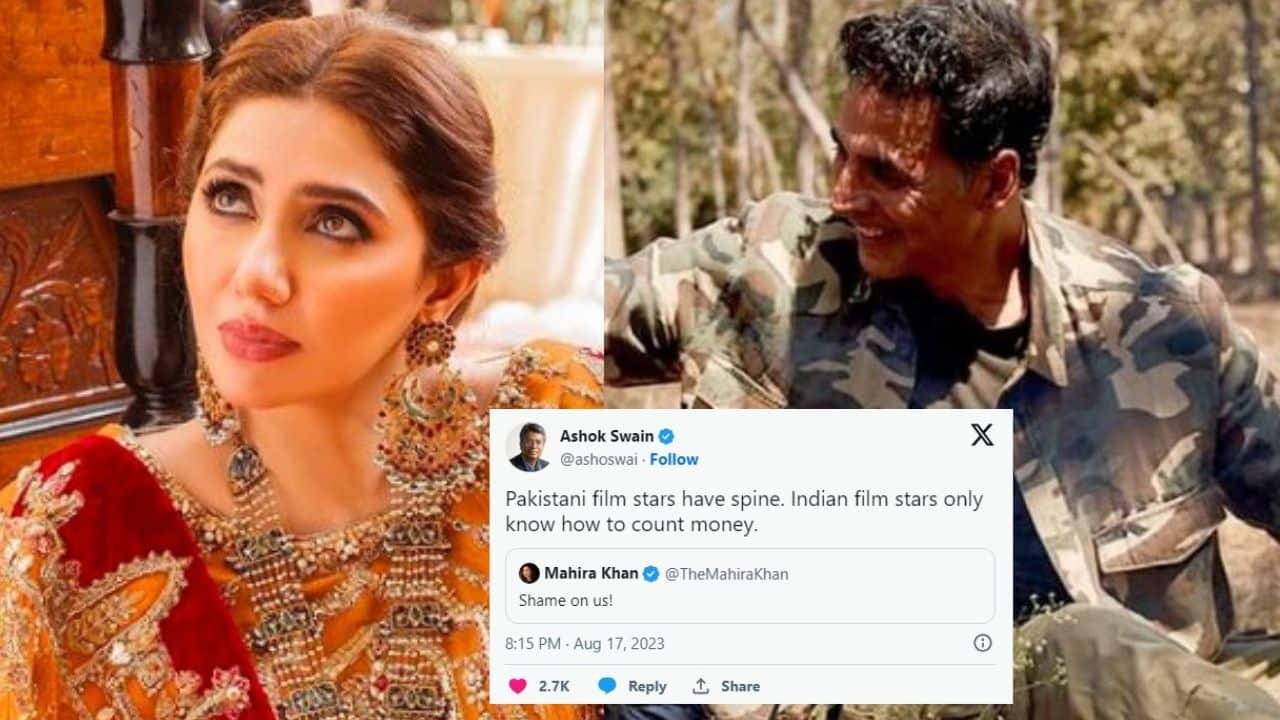
    Pakistani actress Mahira Khan stole the show at the EMIGala 2024 in Dubai, accepting the ‘Artist in Fashion’ award and attending Arijit Singh’s concert in style.

    The pre-wedding celebrations of Anant Ambani and Radhika Merchant in India grabbed attention, but surprisingly, the wedding will now happen in England!

    Get ready for a hilarious Eid with the upcoming movie ‘Umro Ayyar’!

    Stay tuned for more entertainment news and keep the good times rolling.

    Foreign

    May marked 200 days since October 7 attacks, i.e. 200 days of Israeli genocide against the Palestinians in Gaza and the West Bank. As of April 29, at least 34,535 Palestinians have been killed and 77,704 wounded.

    The month for the besieged strip started with Israeli forces pulling out from Gaza’s largest hospital, Al Shifa, after an intensive two-week military operation, leaving behind charred buildings and bodies all over the premises. This was followed by an attack on the people working for US-based charity,  World Central Kitchen, in Gaza which included an Australian, three Britons, a North American, a Palestinian and a Pole. Israel conveniently deemed it a ‘mistake’ on their end.

    The people of Gaza also marked the “saddest” Eid. Israel, in fact, did not spare that occasion either and killed 14 members of a family in a strike at a home.

    The anti-Israeli voices, however, became louder across the world this month.

    Within the Middle East, Iran warned Israel of punishing it for an airstrike that killed seven Revolutionary Guards, two of them generals, at its embassy in Damascus. Two weeks later, Iran launched several drones toward Israel, which, of course, were intercepted by the Israeli defence system.

    And even though the situation did not blow up, the conflict remains.

    Back in the US, student protests at universities gained strength as tensions flared between pro-Palestinian student protesters and school administrators at several US universities, while in-person classes were cancelled and demonstrators arrested.

    The protests began at Columbia University with a large group of demonstrators establishing a “Gaza Solidarity Encampment” on school grounds, spread to other campuses, including Yale, MIT and others. The demand to the universities to divest from investing in Israel expanded beyond US borders and the demonstrations took place in Australia, France, and Germany — where too, the police harassed the demonstrators. And as of April 30, Columbia University began suspending student demonstrators after they defied an ultimatum to disperse.

    Google also fired 28 employees following a sit-down protest over the tech giant’s contract with the Israeli government, organised by “No Tech for Apartheid”; while five Palestinians living in the Gaza Strip filed a legal complaint in Berlin against the German government over its delivery of weapons to Israel.

    Over and above, the world’s biggest election started on April 19 in India, which will continue through the month of May as it is conducted in seven phases in a span of 44 days. The results will be announced on June 4 with Modi likely to win for the third time in a row. This possibility is keeping Muslims and other minorities in the country on their toes as they fear another term of hatred and harassment at the hands of Hindutva followers. Only a couple of days back, unknown persons entered a mosque and allegedly tortured and killed the imam in Ajmer. On the other hand, some Hindu activists already want to “reclaim” the Shahi Idgah in a campaign endorsed by members of the BJP.

    So, which direction is India really headed towards? And how long will it take for the world to put an end to a genocide?
  • Why is South Africa still waiting for a female president?

    Why is South Africa still waiting for a female president?

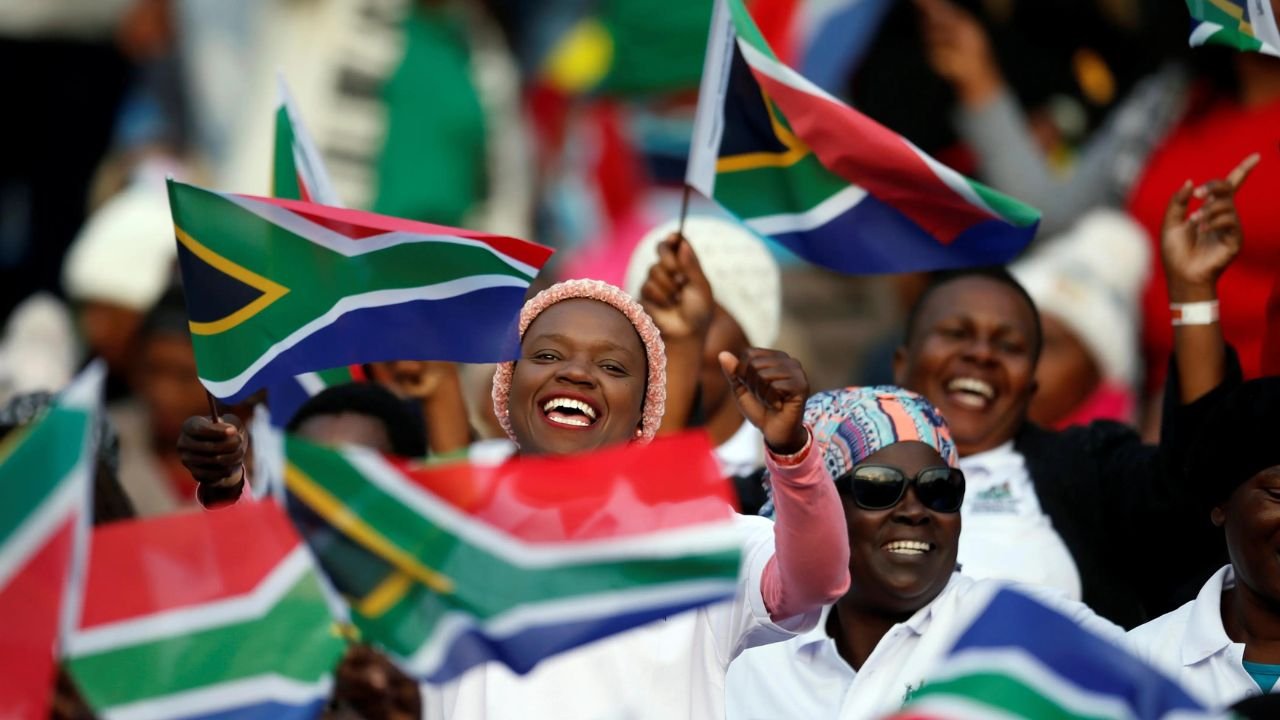
    South Africa has one of the world’s highest rates of female parliamentary representation in the world while boasting one of the most progressive constitutions.

    Yet the country is yet to produce a female president — something upcoming general elections are unlikely to change.

    Of the more than 50 parties in the running on May 29, only a handful are led by a woman. The five largest are all headed by men.

    “It is rare for a woman-owned party to stand, succeed and be sustainable,” said Colleen Makhubele, one of the few female party chiefs, who runs the small South African Rainbow Alliance (SARA).

    The dearth is despite South Africa ranking 11th globally for female representation in parliament, just below Sweden and higher than Finland.

    Women played a major role in the anti-apartheid struggle, and have held important government posts since the advent of democracy in 1994.

    About half the country’s ministries, including the key departments of foreign affairs and defence, are currently run by women.

    Women’s rights activists say the reason partially lies in the disconnect between the liberal views on which democratic South Africa was founded, and what still remains a fairly conservative society.

    The rainbow nation’s constitution lists “non-racialism and non-sexism” as the country’s second founding value after democracy itself.

    Yet many still see women as fit to lead their family — but not the nation.

    About one in five respondents to a 2017 Ipsos survey said that a woman’s place was in the home. Moreover, 22 percent thought men made better political leaders.

    This results in women often being overlooked when parties choose a leading candidate, said Bafana Khumalo, co-director of NGO Sonke Gender Justice.

    “Women are seen as important… but not to be voted into power,” he said.

    Makhubele of SARA, a former Johannesburg council speaker, said she has to work twice as hard as her male colleagues to win votes, funding and media coverage.

    Attitudes are slowly changing.

    A 2020 poll by Women Deliver, a non-profit, found 91 percent of respondents believed gender equality was important.

    Forty-three percent supported the government taking action to achieve equal representation in politics, and 69 percent backed gender quotas.

    The latter are already implemented by the ruling African National Congress (ANC) and the leftist Economic Freedom Fighters (EFF) — the country’s third largest party.

    The second largest party, the liberal Democratic Alliance (DA), had a female leader between 2007 and 2015.

    But that’s not enough, said political analyst and author Susan Booysen.

    “I’m blaming political parties for not systematically nurturing women’s ascendancy in party politics to get them to the top… women don’t see that systemic mentoring and promotion” she said.

    Parties might be missing out.

    Women make up more than 55 percent of registered voters in the upcoming elections and are seen as key drivers of support.

    “They’re the ones who actually make sure the people they live with go and vote on election day,” said Zama Khanyase of the ANC’s youth league.

    The ANC is largely expected to get less than 50 percent of the vote and for the first time lose its absolute majority in parliament when South Africans head to the polls in a month’s time.

    That could force it into a coalition to remain in power.

    After the parliamentary vote national assembly lawmakers then appoint a president.

  • Maulana Fazl backs PTI in NA speech

    Maulana Fazl backs PTI in NA speech

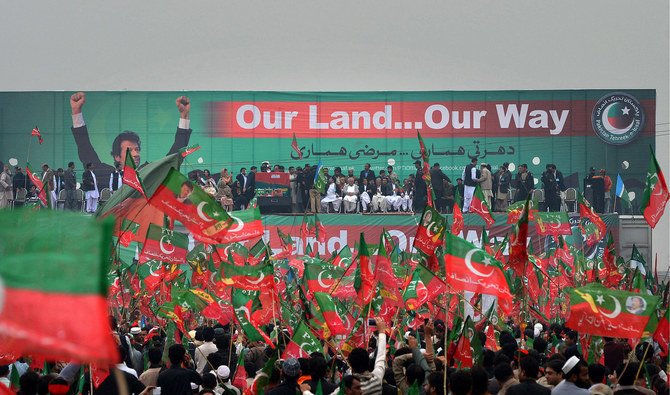
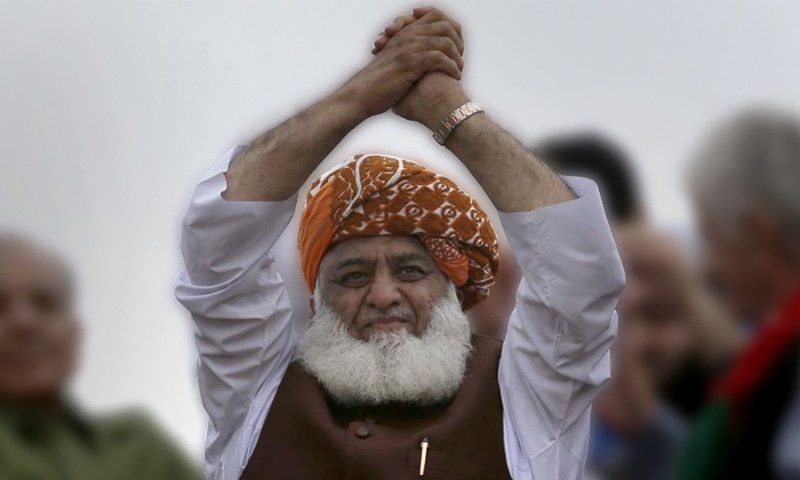
    Jamiat Ulema-e-Islam-Fazl (JUI-F) chief Maulana Fazlur Rehman, in his first speech in the National Assembly, criticised the ruling government, the recent general elections of February 8, civil bureaucracy and the establishment.

    Fazl emphasized that Pakistan was created through the democratic struggles of the people, “Neither bureaucracy nor establishment has a role in the creation of the country.”

    Maulana took the sitting assembly to task asserting, “Is this a parliament of representatives of the nation or a setup arranged by the establishment?”

    He also said this is the first kind of election in which the losers are upset and even the winners are not satisfied.

    The JUI-F leader also supported Pakistan Tehreek-e-Insaf (PTI) senior leader Asad Qaiser’s demand for granting the right to the latter’s party to organise public gatherings, terming it the Imran-founded party’s “constitutional right”.

    Fazl said that his party raised objections to the previous 2018 general elections as well, terming it similarly “fraudulent”.