Category: Uncategorized

  • Will Pakistan get enough COVID-19 vaccines?

    Will Pakistan get enough COVID-19 vaccines?

    “If we are lucky to find a vaccine at $6-10 per dose, we would need a total of $540 to 900 million to acquire 90 million doses. Notwithstanding the existing allocation of $150 million and some vaccines as aid, it means that we are going to need much more money.”

    Will Pakistan get enough COVID-19 vaccines?

    Before we answer this question, we need to know how many vaccines we need. Pakistan has set a target to vaccinate 70 million people, out of its population of more than 220 million, to achieve “herd immunity”. Most of the COVID-19 vaccines in the market require two doses to be administered to each person. This means that we need at least 140 million doses, not taking into account any wastage.

    The next question we should ask is how many different vaccines there are in the market. So far, at least seven vaccines have been approved, out of which five have been approved for use outside their country of approval, including those by Pfizer, Moderna, Oxford-AstraZeneca, Sinopharm and Sputnik V. A number of other vaccines are in advanced stages of approval, including those by Johnson & Johnson, Novovax, CanSino and Bharat Biotech.

    Pakistan’s choice of vaccine will depend on three factors: price, storage and transportation requirement, and availability.

    The approximate per-dose price for Pfizer is $20, Moderna $10-50 (depending upon the quantity ordered), for Sputnik V less than $10, and for AstraZeneca $3-4. The price of Sinopharm’s vaccine is unknown but news reports suggest around $145 for two doses (or roughly $72.5 per dose). The price of Sinopharm seems excessive and it is not clear if Pakistan can get a discounted rate.

    The vaccines by Pfizer and Moderna need ultra-low temperatures to be stored. For instance, Pfizer’s vaccine needs to be stored at -75˚C, whereas that of Moderna needs -20˚C. This poses a serious challenge for developing countries like Pakistan, which have unreliable or mostly absent cold chains. Therefore, this handicap would prevent the wide usage of these vaccines in Pakistan. On the other hand, the Russian and Chinese vaccines as well as the one by AstraZeneca can be stored at standard refrigerator temperatures, making them much more suitable for us.

    The availability of vaccine, however, poses the most significant challenge. The manufacturers of all these vaccines have mostly booked their entire capacity for 2021 already. Some of them are now planning to further ramp up their capacity very quickly. Even the companies that are still in the final stage of vaccine trials have started to book orders from customers around the world.

    Looking at price and storage requirements, the Oxford-AstraZeneca vaccine seems to be the most suitable choice for Pakistan. However, AstraZeneca has gone into a partnership with Serum Institute of India for the supply of this vaccine to our entire region – South Asia. There is no reason to believe that Serum Institute would not prioritise Indian requirements over export orders. The rivalry between India and Pakistan is not going to help either. Sources suggest that while Serum Institute has indicated availability of the vaccine for exports by the third quarter of 2021, the volume that it would be able to provide to Pakistan remains unclear. There is also a chance that this stipulated timeline is not followed.

    This leaves Pakistan with the Chinese and Russian vaccines only.

    Incidentally, this is not a Pakistan-specific problem and instead a challenge faced by all low-income countries, which are struggling to acquire sufficient quantities of vaccine. Out of a total of 7.2 billion doses booked so far, 5.2 billion have been booked by high or upper middle-income countries, whereas 2 billion doses have been booked by lower middle-income countries, including 1.5 billion by India alone. So far, the low-income countries have booked no significant volumes of the vaccine.

    Nevertheless, it does not absolve the state of its responsibility to provide enough vaccines for its citizens and that too in a timely fashion.

    What has Pakistan done so far in this regard?

    We have so far adopted a three-pronged strategy. Firstly, we have joined the COVAX alliance, which is aimed at facilitating equitable access to COVID-19 vaccine. Secondly, the government is developing its own plan to acquire the vaccine and administer it through the public sector healthcare system. And lastly, the government has allowed the private sector to import the vaccine so that they can also provide them to those who can afford.

    COVAX is an alliance formed through efforts of the UN, WHO and GAVI. The Alliance is planning to make 2 billion doses available by the end of 2021 for high-risk and vulnerable populations. Out of this, 1.3 billion doses will be financed by donors and provided to 92 low and lower-middle income countries including Pakistan, targeting up to 20 per cent of their population, while the rest of 700 million doses will be made available to 80 wealthier nations that have joined COVAX, on a self-financed basis. Although COVAX, owing to its sheer size, has been able to secure some sizeable contracts for vaccine supply, it is not clear if it will be able to meet its ambitious target within the stipulated time. So far, COVAX has committed 50 million doses to Pakistan, which still leaves us with another 90 million doses to procure to meet the target of 140 million vaccine doses.

    For government’s own vaccine procurement, Pakistan has so far allocated $150 million to provide vaccines for the most vulnerable 5 per cent of the population. Reportedly, the government is also negotiating with development partners to get another $100 million. So far, the government has only confirmed booking for one million doses of the Sinopharm vaccine. In addition, China has also announced providing 0.5 million doses to Pakistan free of cost. These 1.5 million doses would be enough only for 750,000 people or 1 per cent of the targeted population.

    The price of the Chinese contract is unknown but if it’s anywhere close to $72.5 for a dose, then it would have taken $72.5 million or almost half the allocated amount. If, however, the Chinese have given the vaccine on a discount, it might have left us with more money.

    Although the government’s permission to allow private sector import of the vaccine is a good step, it is unlikely that the private sector would get a significant vaccine supply in 2021.

    If we are lucky to find a vaccine at $6-10 per dose, we would need a total of $540 to 900 million to acquire 90 million doses. Notwithstanding the existing allocation of $150 million and some vaccines as aid, it means that we are going to need much more money.

    Pakistan needs to act fast, mobilise financing and secure supply contracts from Chinese, Russians and those manufacturers that are in advanced stage of trials to get a timely supply of the vaccine. Then comes the challenge of vaccinating the massive target of 70 million people.

    In short, Pakistan may get enough vaccine, but it is likely to take more than a year. Given the current situation, it seems that Pakistan is not likely to meet its vaccination target before the second half of 2022.
  • PM reveals he was offered money ahead of Senate election

    PM reveals he was offered money ahead of Senate election

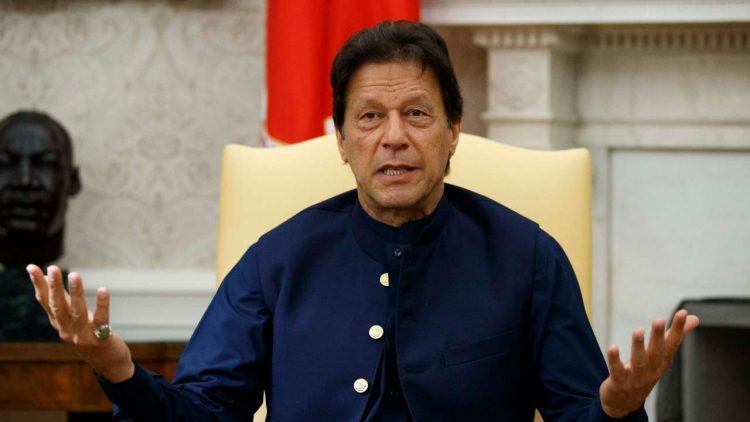
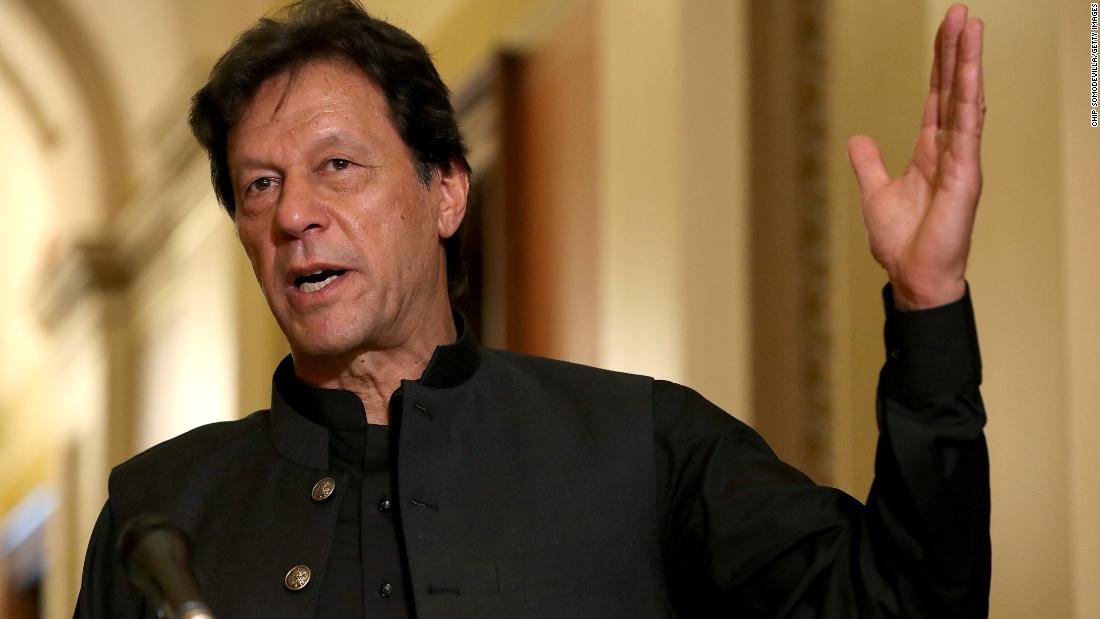
    Defending his party’s move to hold the upcoming election of the upper house of the parliament through open ballot, Prime Minister (PM) Imran Khan has spoken of bribes paid to buy loyalties, revealing that he himself had been offered some.

    “Money goes to the very top,” the premier said while speaking to media on Friday.

    According to Dawn, PM Imran claimed that 20 members of the Khyber Pakhtunkhwa (KP) Assembly belonging to the Pakistan Tehreek-e-Insaf (PTI) were paid Rs50 million each during the last Senate poll to vote in favour of certain candidates.

    Saying that the parties opposing the amendment aimed at curbing corruption would stand exposed, he added the PTI had expelled the 20 members after they were found guilty of horse-trading by an investigation committee.

    “We also know who is raising money to buy loyalties this time,” he said, without naming anyone.

    He termed the practice “betrayal” with Pakistan because the Senate had a particular “status and role” since it represented the provinces in the federation.

    The premier said it reflected poorly on the kind of people who came to the Senate through money and questioned the ability of such lawmakers to represent their respective provinces. “Apart from that, what kind of democracy is this where legislators sell their vote by taking money?” he asked.

    Acknowledging that his government did not have a two-thirds majority in the lower house, the premier said the ruling party would still try to present the amendment for open ballot in the Senate elections to curb horse-trading.

  • ‘Please don’t be that fool that runs after numbers,’ says Ayeza after hitting 8 million Instagram followers

    ‘Please don’t be that fool that runs after numbers,’ says Ayeza after hitting 8 million Instagram followers

    Ayeza Khan has dethroned Aiman Khan to become the most followed Pakistani celebrity on Instagram with 8 million followers. Aiman has 7.9 million followers on the social media application while Mahira Khan follows closely behind with 7 million followers.

    “Thank you guys so much for the love and respect! It is exciting to have such a huge number of followers here,” said Ayeza celebrating the milestone.

    Read more – The Current Ranking: Pakistani celebs and their followers on Instagram

    The actor then went to talk about her journey as an actor and how she focused on her work and not on increasing her Instagram followers.

    “I must say that the only reason I am able to celebrate this today is that I know how hard I worked to achieve whatever I have on this day,” said Ayeza. “I never focused my work and life towards getting a bigger number of followers. It never works in the long run. My mother has always taught me that it’s important to work hard and build your legacy and be patient. When you have those all the good stuff comes without you knowing.”

    Ayeza further talked about the disproportionate relationship between the numbers of followers and influence one can have.

    “Growing number of followers doesn’t guarantee a long term success if you’re hollow from the inside. There is a reason why someone with a few thousand followers on Instagram can have more influence on people than someone with tons of millions of followers,” said Ayeza, adding: “Please don’t be that fool that runs after numbers.”

    The actor continued: “For me, I never worked towards growing my Instagram numbers. Instead, I have always focused all my energy into my work, my acting and modelling especially, and the fan following grew itself.”

    “I’m thankful to all of you guys because it feels great to have so many people recognise your talent and work, rather than blindly taping that follow button and not even knowing what I actually do,” she concluded.

    Last week, Maya Ali and Hira Mani both crossed five million followers on Instagram.

  • Kid, who was spotted driving SUV, says he went out to get ice cream

    Kid, who was spotted driving SUV, says he went out to get ice cream

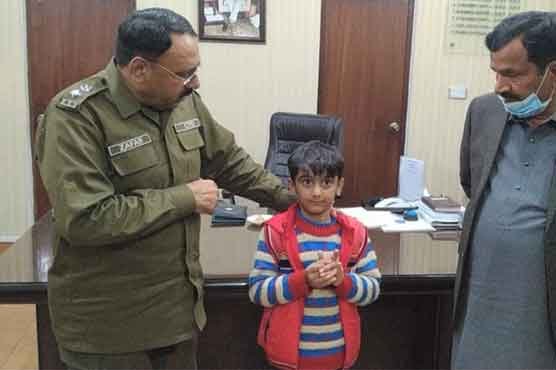
    The boy whose video driving a Land Cruiser in Multan went viral earlier this week says that he took the vehicle out for a ride because he felt like having ice cream.

    When asked by a reporter, the kid said he drove to several places to get the ice cream but couldn’t find any, so he decided to head back home. According to the kid, this was not the first time that he drove this vehicle.

    “My father didn’t scold me,” said the kid in response to a question. He only said that “I shouldn’t drive [at this age] again”.

    The kid’s father said he was sleeping when his son took the key of the vehicle from his bedside. “When I woke up and couldn’t find the key, I took my driver and went out to look for the kid,” he said, adding that the kid was returning home when “we came across him”.

    He also said that he went to the police voluntarily.

    On Friday, the father of the kid was fined Rs 1,000 for negligence. He has also submitted an affidavit to the police stating that the incident occurred due to his negligence and will not happen again. The man and his son were allowed to go home after submitting surety bonds.

  • Twitter unhappy with PTI minister for badmouthing former PM’s late father

    Federal Minister for Maritime Affairs Ali Haider Zaidi has drawn the ire of hundreds of social media users for badmouthing the late father of former prime minister (PM) and Pakistan Muslim League-Nawaz (PML-N) leader Shahid Khaqan Abbasi.

    Khaqan Abbasi, who was an air commodore in the Pakistan Air Force (PAF) until his removal by former premier Zulfikar Ali Bhutto, served as the federal minister for production in ex-PM Muhammad Khan Junejo’s cabinet. He died on April 10, 1988, after his car was hit by a missile in the Ojhri Camp disaster.

    “Huge secrets lie behind these huge businesses,” Federal Minister Zaidi wrote as he tweeted a 1991 report against the late Abbasi.

    His tweet, however, did not sit very well with a majority of Twitter users who said:

    While some are also supporting the minister’s statement, what do you think of the tweet? Let The Current know in the comments…

  • Tan France opens up on being a queer Muslim South Asian

    Tan France opens up on being a queer Muslim South Asian

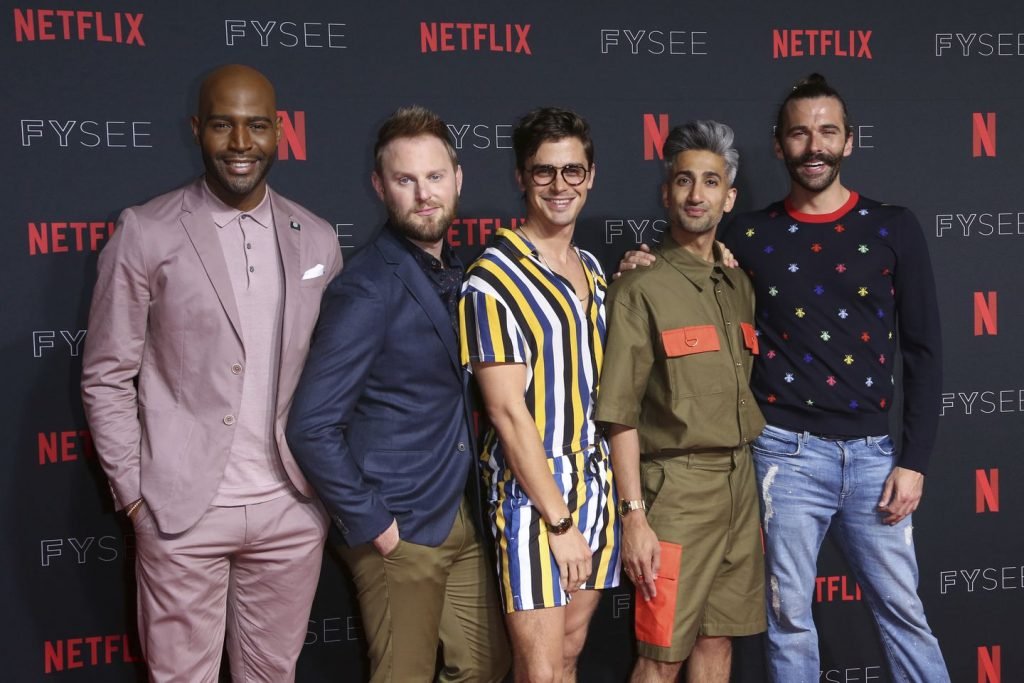
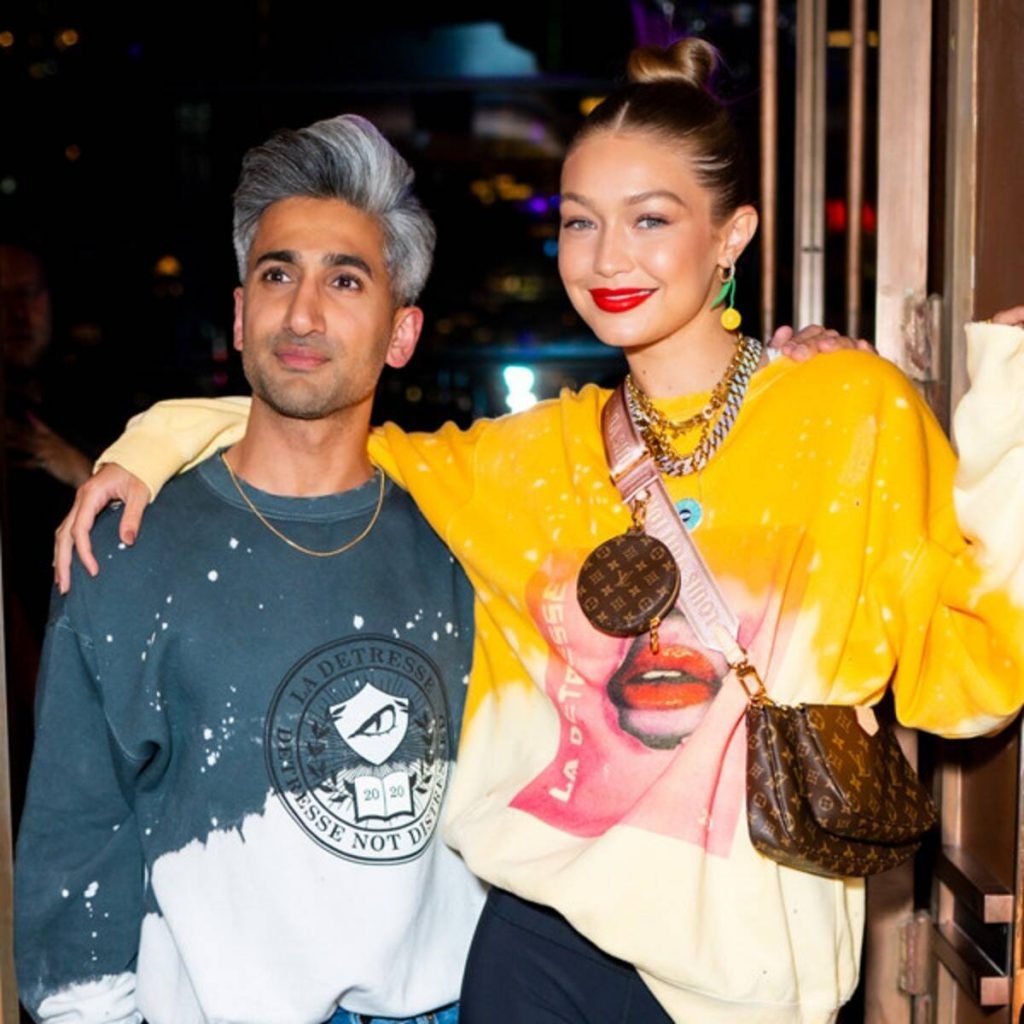
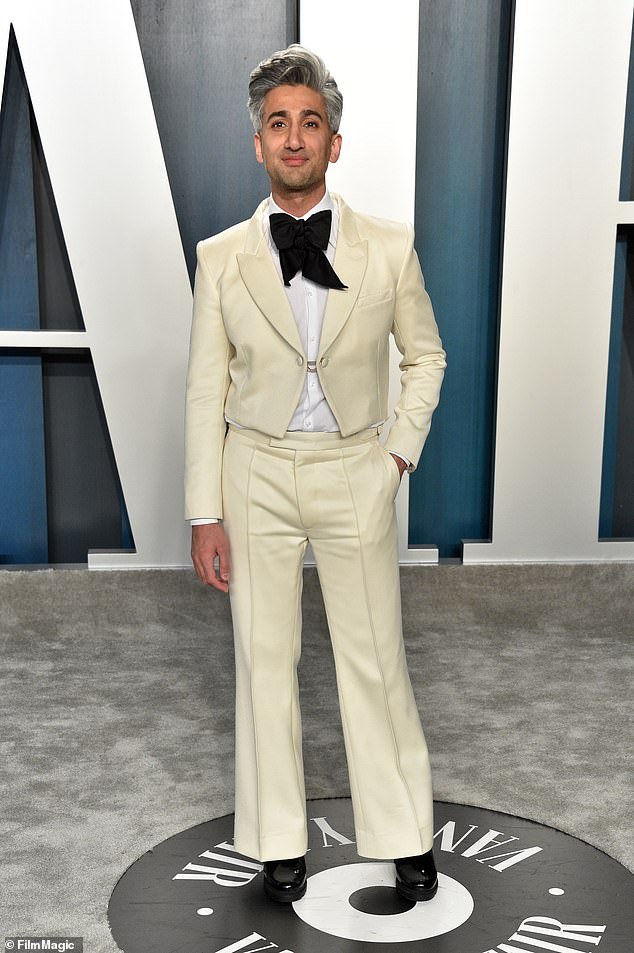
    British-Pakistani-American fashion designer famed for Netflix’s makeover series Queer Eye, Tan France in a recent interview with a local media publication opened up about being a queer Pakistani-Muslim and shed light on his love for his home country.

    Talking about taking the burden of representation, France said: “I think the pressure on me is a little different – I am the only member of the LGBTQ community, who is also South Asian and very open about the fact that I am Muslim also. And so, I’m a few things in America – I’m an immigrant, I’m Muslim, I’m South Asian and I’m gay – and there hasn’t been anybody like that on TV in the US before, or entertainment in general, so the pressure is really really great. It’s the hardest part of this job without a doubt.”

    He continued: “I’m sure you can imagine when you are somebody who is a little different, a lot of Pakistanis don’t appreciate that. There still are a lot of small-minded Pakistani people in and outside of Pakistan, who say ‘we don’t have gay people in our community’, and that’s the most difficult part when there’s nobody else to help you balance it out. When there’s only one person to focus your anger on, you are responsible to make sure you are the ‘perfect’ version of that. That pressure is a lot.”

    “The first year of Queer Eye was very difficult, though I’m very grateful for its success. Being on such a massive international show may be lovely for my white castmates because they just get to enjoy the joy of being famous and successful and wealthy and all those things,” said the reality show star further.

    “Whereas for me the bigger the show got, the more pressure I got from my own community, to be perfect, to not bring shame onto the community. To not embarrass Pakistan. And that’s not easy, and it doesn’t get any easier,” said Tan, adding that the pressure on his has become less now “because I’ve stopped giving a sh*t, quite honestly, what ‘Uncle Bilal’ thinks of me – but – the bigger my star gets, the more pressure is put on me.”

    Later, responding to another question, France said: “The amount of DMs I get through the likes of Instagram, both good and bad where the Pakistani community is saying we don’t have gay people here. Well, that is ridiculous. The other community, the gay community, and the ally community say we need people that show that we exist, that we are not alone, we are not monsters and we deserve love and kindness. The fact that I get those DMs so regularly, makes it clear that things aren’t where they need to be in Pakistan.”

    “That’s why people like me are so important in entertainment. If I had people like me on TV, I wouldn’t have felt like a freak, I wouldn’t have felt alone as a child. I think it comes from the top, so laws need to be changed from the top”, said France.

    Meanwhile, recalling memories from the last time he visited Pakistan, Tan said: “My favourite memory is my last trip, about 14 years ago when I went to Rawalpindi to design my sister-in-law’s wedding lehenga. My brother was getting married, and our family was to provide the clothes so I was a designer, and I said I want to design it, but I want to go to Pakistan to make it.”

    “So, I went with my mom, and we stayed in Rawalpindi with my brother’s wife’s family who also came with us (I’m really close with my sister-in-law) and I had probably one of the best vacations of my life. I helped cook every day and my sister-in-law’s mom, who has never been to England–found it so strange that this boy from England wanted to make gobhi and bhindi every morning with her -and I would teach her to make it my way! She was just so confused that this boy was cooking!”

    “It was one of my favourite trips, I loved it so much! The rest of the time I would do whatever I wanted. I could go and explore, I went to a zoo, a theme park in Islamabad, it felt like the most fun trip there,” he shared.

  • ‘Don’t teach your daughters to go to Aurat March, educate your sons,’ says Sarah Khan

    ‘Don’t teach your daughters to go to Aurat March, educate your sons,’ says Sarah Khan

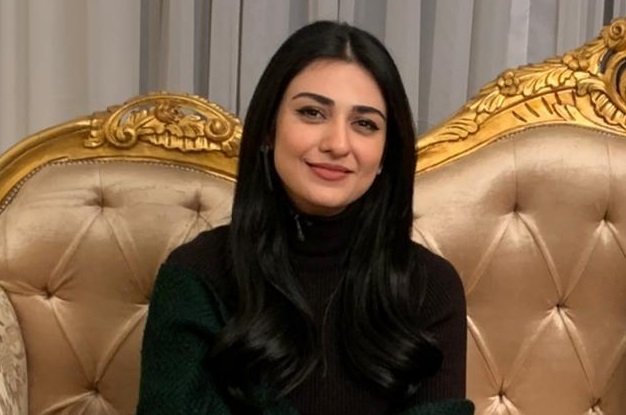
    Sarah Khan has said that Allah has made men and women as equals and that people shouldn’t try to distinguish them as superior or inferior.

    In an exclusive interview with The Current, Sarah said: “I believe in gender equality. I do not say that women should be superior, they should be treated as equals. The status Allah has given to them, we should follow that. Do not try to make it a competition.”

    “Women are already strong, then why do we have to say that the women are strong as well or they should be given equal salaries as men,” remarked the actor further.

    “I think, instead of fight for the rights, we should educate our sons. Don’t teach your daughters to go to ‘Aurat March’, educate your sons and teach them that their mother is also a woman,” she continued. “[A] woman is the one who runs the house, does the house chores and supports the man. If your wife is not helpful, then how will you be happy? Allah has already granted status to the woman, but I think men should be given the same rights. They deserve the same, not only women.”

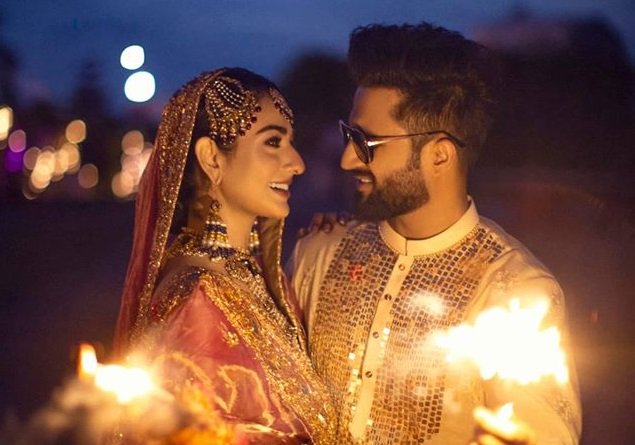
    Sarah, who is married to renowned singer Falak Shabir, also opened up about her marriage saying that it gave it more freedom. Sarah and Falak tied the knot in July 2020.

    “To be honest, I am now [after marriage] doing my work much more freely and with a lot more passion. It wasn’t like this before. One of the reasons was that I used to be at home occupied with so many things, with my siblings etc,” said the actor.

    “Now after marriage, it’s just me and my husband. He gives me so much freedom and encourages me to pursue my passion and wants me to succeed in my work. I enjoy working even more now and I want Allah to give every girl a husband like him,” added Sarah.

    Read more – Imran Ashraf, Sarah Khan shine in ‘Raqs-e-Bismil’

    Besides her marriage and thoughts on gender equality, Sarah also discussed her sister’s Noor Zafar Khan’s career, her ongoing drama Raqs e Bismil and what she would have been if she wasn’t an actor in the interview. Check it out below:

  • Bakhtawar Bhutto-Zardari ties the knot

    Bakhtawar Bhutto-Zardari ties the knot

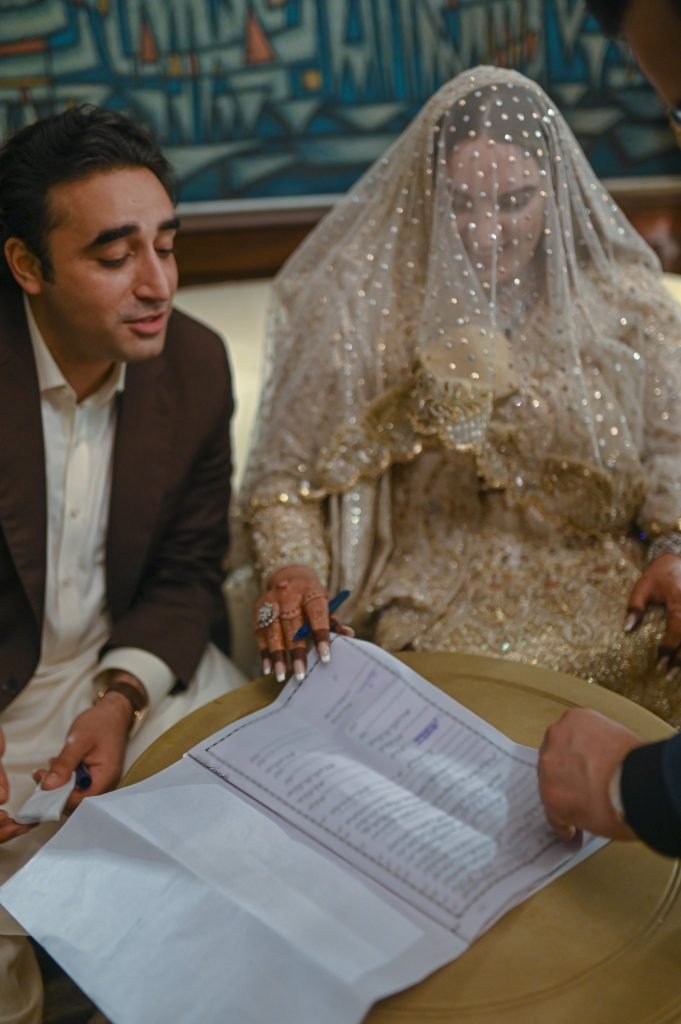
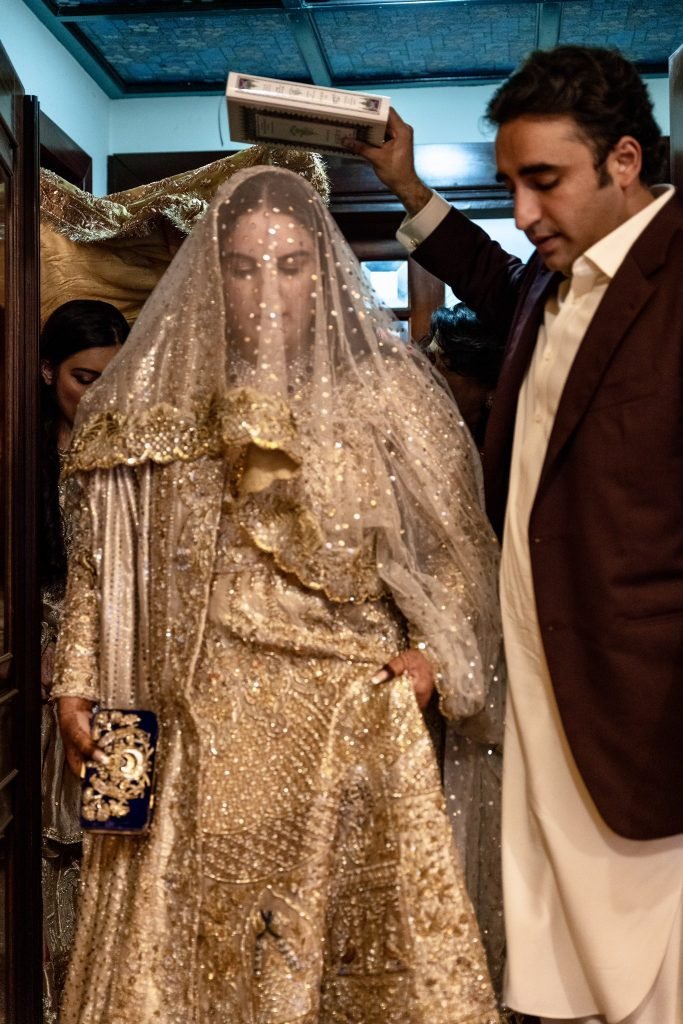
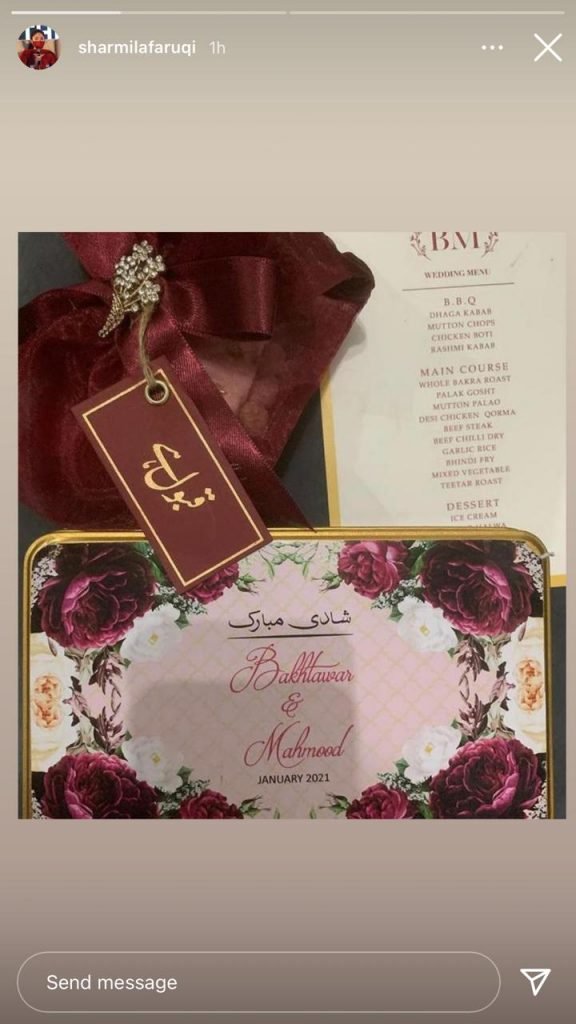
    Bakhtawar Bhutto-Zardari and Mahmood Y Choudhry have said their qubool hais and have officially tied the knot.

    Sharing pictures from the wedding on social media, Bilawal Bhutto-Zardari expressed his happiness over the occasion and remembered his late mother Shaheed Mohtarma Benazir Bhutto.

    “Happiest moment in many years to see my sister Bakhtawar getting married,” wrote Bilawal on Twitter. “Felt like our mother was watching over us in this moment of joy.”

    “Wishing them both all the best of for their new life together. Masha’Allah!,” he added.

    Similarly, sharing a lovely picture of the bride and groom, Aseefa Bhutto-Zardari wrote: “Wishing you a lifetime of happiness and joy. Mubarak Mubarak.”

    “I love you, my dear sister. I wish you a happy married life,” she added.

    Bakhtawar glowed in a gold outfit by Wardah Saleem.

    The event was a lavish affair will an elaborate menu.

    Later, the groom also shared pictures from the wedding on social media.

    The nikkah ceremony is expected to be followed by a baraat reception on Saturday, January 30. According to a spokesperson of Bilawal House, close to a thousand guests have been invited to the reception. Invitations have reportedly also been sent to important political leaders of the country including military leaders and judicial heads.

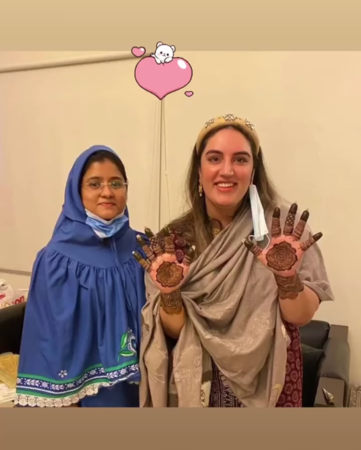
    Earlier, the bride had shared pictures of herself getting her bridal mehndi done.

    Meanwhile, Minister for Science and Technology Fawad Chaudhry extended his best wishes towards the newlyweds.

    Bakhtawar and Mahmood got engaged on November 27, 2020, in an intimate ceremony at the Bilawal House Karachi. For the unacquainted, Bakhtawar’s husband “Mahmood Choudhry is the son of Mohammad Younas and Begum Suraiya Choudhry who hail from the old town of Lahore,” according to a statement issued by the Pakistan People’s Party (PPP).

    “Mahmood, the last born of five siblings was born on July 28, 1988, in the city of Abu Dhabi. He completed his primary schooling in Abu Dhabi and secondary schooling in the United Kingdom. Mahmood further went on to read Law at the University of Durham.”

    “The family’s primary country of residence remains the United Arab Emirates (UAE) where Mahmood continues to run his businesses in construction, finance and tech,” added the statement.

  • Newsletter- 29th January 2021, Friday

    Newsletter- 29th January 2021, Friday


    *|MC:SUBJECT|*


    Hey, Good morning *|MERGE1|*.  It’s Laila from The Current. Today is the 29th of January and it’s Friday. The weekend is finally here. Being the ‘last working day’ of the week, you need extra motivation to get through it. Today is the 4th day of PakVsSA match and South Africa is leading with 29 runs. Weather today will be clear and cold in Lahore and Quetta, but it will be pleasant and sunny in other major cities.

    Morning Meme

    PTI’s Pakistan more corrupt than PML-N’s Pakistan for second consecutive year: Transparency International

    According to a report by Transparency International, the country under the PTI government — for the second consecutive year — has witnessed more corruption than it did in the outgoing year of the former ruling PML-N

    Read on

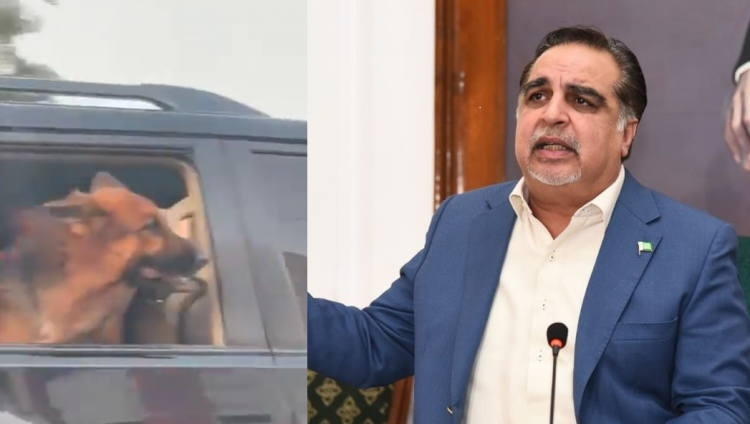
    VIDEO: Sindh governor’s dog enjoying police protocol in Karachi?

    Social media per aik viral video mein dekha ja sakta hai ke a dog is enjoying a ride in a government SUV on the roads of Karachi, with its head hanging out of the window aur us gaari ke peeche aik police ki gaari bhi hai. 

    Read on

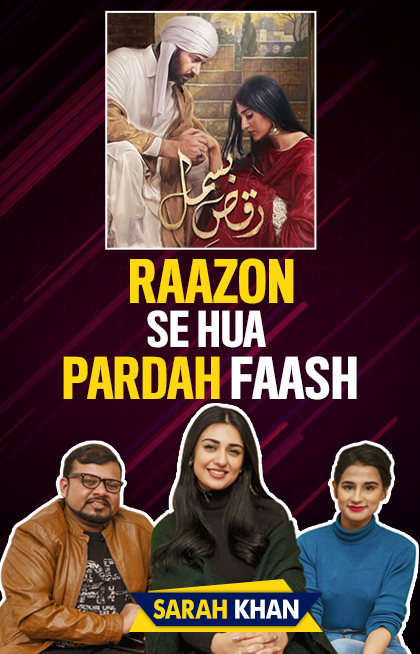
    Sarah Khan on Raqs-e-Bismil & life after marriage | The Current Top 5
     

    Iss haftay The Current Top 5 Drama Review mein hain Raqs-e-Bismil  ki Zohra. Aur unhon ne kiye bohot saray raaz faash. Watch the interview to find out which character is Sarah Khan’s biggest regret, what was the name of her childhood music band, and what this diva has to say about gender inequality!

    Watch

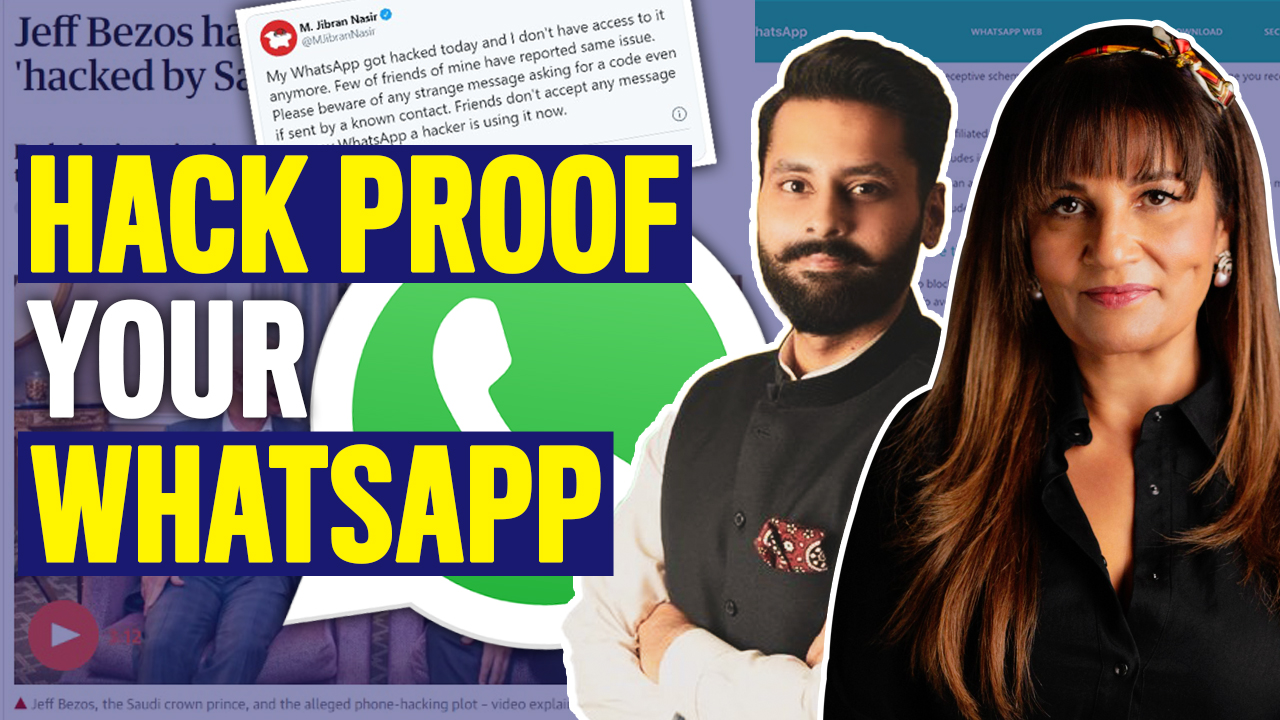
    Tech Review- Hack Proof

    Recently, the Whatsapp accounts of several well-known personalities were hacked. What exactly happened to them, who did it and what can be done about it? Find out it in this week’s tech review. 

    Watch

    Woman declared dead by hospital returns to life a day later

    According to reports, a woman, who was brought to a hospital for a gunshot wound after getting caught in the crossfire, was declared dead on Tuesday. But she is now being treated for her injuries after spending one night “dead”.

    Read On

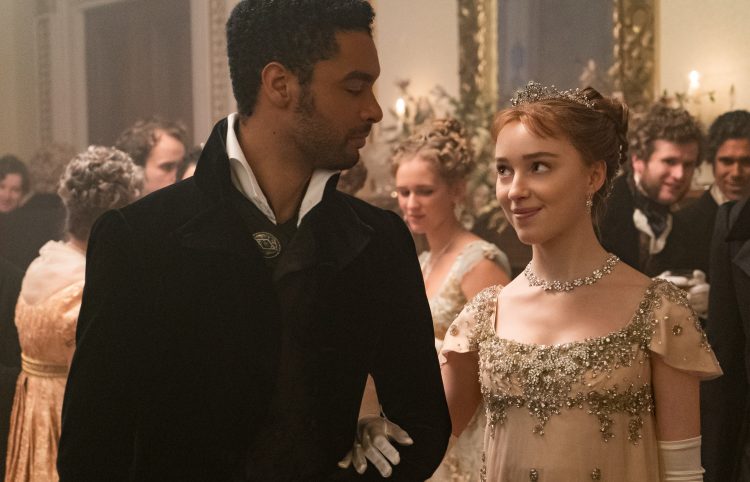
    ‘Bridgerton’ smashes records to become Netflix’s biggest show ever
     

    Regency-era British drama Bridgerton is Netflix’s biggest series ever with more than 82 million households tuning in to watch the show, the streaming platform has announced.

    Read On

    Why are The Current’s followers not with the one they love

    The Current recently asked its followers some hard-hitting questions and the answers left us quite sad. We asked people if they think our society is easy to live in? 71% voted that our society is ‘so suffocating’  and we totally agree with your answer.
     

    Read

    Current Baba’s prediction

    Aaj aap ko koyi good news milegi, so do not put your phone on silent today.

    HEY, WAIT A SECOND PLEASE. 
     
    If you like the newsletter, make sure that this email doesn’t get lost in promotions or spam.

    Here’s how: 

    • Through your phone, add us by hitting the “Kabob,” (the three dots in upper right-hand corner). Then click “move to,” and select “primary inbox.”
    • If you’re using a desktop just drag and drop the email into primary as shown in the video below. (You can also do this on your phone if you open your email in your browser). Easy.

    And don’t forget to send us your feedback. We would love to hear from you 

    Twitter

    Facebook

    Instagram

    Website

    Copyright © 2020 Instant Morning Current, All rights reserved.


    This email was sent to *|EMAIL|*

    why did I get this?    unsubscribe from this list    update subscription preferences

    *|LIST:ADDRESSLINE|*


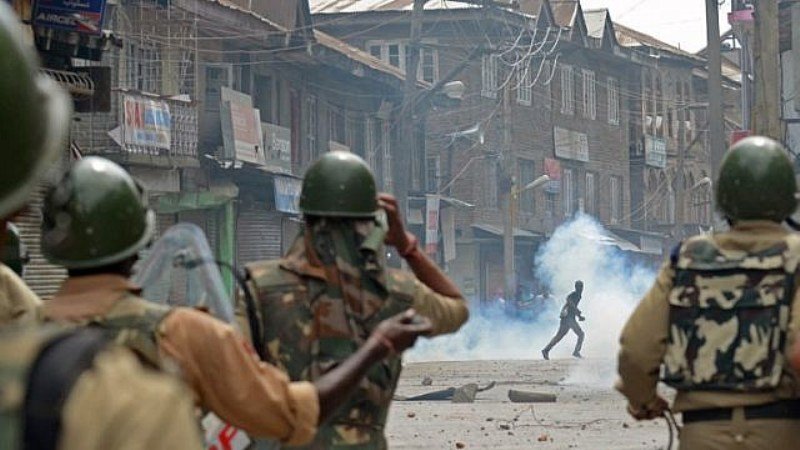
  • UN chief urges Pakistan, India to resolve Kashmir conflict through talks

    UN chief urges Pakistan, India to resolve Kashmir conflict through talks

    UN Secretary-General Antonio Guterres Thursday called on nuclear-armed India and Pakistan to “come together and seriously discuss their problems” stemming from the unresolved Kashmir dispute, saying his good offices are always available for mediation.

    Replying to a question from APP correspondent Iftikhar Ali at his first press conference in 2021, the UN chief warned that there was no “military solution” to the decades-old conflict.

    “It is clear when seeing Pakistan and India, any military confrontation between the two would be a disaster of unmitigated proportions for both countries and for the whole world,” he warned.

    “I do believe that is absolutely essential to have a de-escalation of the situation, namely in the Line of Control” in the disputed Kashmir region, Guterres said, adding, “I think it’s absolutely essential for the two countries to be able to come together and seriously discuss their problems.”

    “And,” he added, “I think it’s essential that human rights are fully respected in all territories that you mentioned,” referring to the question in which the correspondent highlighted the continuing rights abuses in the Indian occupied Kashmir.

    He said he stood by his statement of Aug. 8, 2019, which called for the resolution of the Kashmir dispute based on UN resolutions and the UN Charter.

    “Now, things have not moved in the right direction, our good offices are always available, and we will insist within it on finding peaceful solutions for problems that have no military solution.”