Category: Uncategorized

  • Petrol price increased by Rs9.66 to Rs289.41 per litre for next fortnight

    Petrol price increased by Rs9.66 to Rs289.41 per litre for next fortnight

    The already strained Pakistani populace, grappling with soaring inflation and costly transportation, faces yet another blow as the price of petrol in Pakistan has been increased by Rs9.66 per litre for the upcoming fortnight, driven by an uptick in international crude rates.

    In contrast, the price of high-speed diesel (HSD) has witnessed a reduction of Rs3.32 per litre.

    Following these adjustments, petrol now stands at Rs289.41 per litre, while diesel is priced at Rs282.24 per litre.

    These fluctuations adhere to the government’s strategy of reflecting international market price variations in the domestic market.

    This move also marks another decrease in the consumer price of HSD, following a prior reduction in mid-March 2024.

  • Bulgaria, Romania take first steps into Europe’s visa-free zone

    Bucharest, Romania – Bulgaria and Romania joined Europe’s vast Schengen area of free movement on Sunday, opening up travel by air and sea without border checks after a 13-year wait.

    A veto by Austria however means the new status will not apply to land routes, after Vienna expressed concerns over a potential influx of asylum seekers.

    Despite the partial membership, the lifting of controls at the two countries’ air and sea borders is of significant symbolic value.

    Admission to Schengen is an “important milestone” for Bulgaria and Romania, symbolising a “question of dignity, of belonging to the European Union”, according to foreign policy analyst Stefan Popescu.

    “Any Romanian who had to walk down a lane separate from other European citizens felt being treated differently,” he told AFP.

    Ivan Petrov, a 35-year-old Bulgarian marketing executive who lives in France, said he was enthusiastic about less stressful travelling and the time he would be able to save.

    “This is a great success for both countries, and a historic moment for the Schengen area — the largest area of free movement in the world,” EU chief Ursula von der Leyen said in a statement Saturday.

    “Together, we are building a stronger, more united Europe for all our citizens.”

    And they were 29

    With Bulgaria and Romania arriving joining Sunday, the Schengen zone will comprise 29 members — 25 of the 27 European Union member states as well as Switzerland, Norway, Iceland and Liechtenstein.

    Romania’s government said Schengen rules would apply to four sea ports and 17 airports, with the country’s Otopeni airport near the capital Bucharest serving as the biggest hub for Schengen flights.

    More staff including border police and immigration officers will be deployed to airports to “support passengers and detect those who want to take advantage to leave Romania illegally”, it added.

    Random checks will also be carried out to catch people with false documents and to combat human trafficking.

    Bulgaria and Romania both hope to fully integrate into Schengen by the end of the year, but Austria has so far relented only on air and sea routes.

    Croatia, which joined the EU after Romania and Bulgaria, beat them to becoming Schengen’s 27th member in January 2023.

    Created in 1985, the Schengen area allows more than 400 million people to travel freely without internal border controls.

    ‘Irreversible process’

    While some have reason to celebrate, truck drivers, faced with endless queues at the borders with their European neighbours, feel left out.

    Earlier this month, one of Romania’s main road transport unions the UNTRR called for “urgent measures” to get full Schengen integration, deploring the huge financial losses caused by the long waits.

    “Romanian hauliers have lost billions of euros every year, just because of long waiting times at borders,” secretary general Radu Dinescu said.

    According to the union, truckers usually wait eight to 16 hours at the border with Hungary, and from 20 to 30 hours at the Bulgarian border, with peaks of three days.

    Bulgarian businesses have also voiced their anger over the slow progress.

    “Only three percent of Bulgarian goods are transported by air and sea, the remaining 97 percent by land,” said Vasil Velev, president of the Bulgarian Industrial Capital Association (BICA).

    “So we’re at three percent in Schengen and we don’t know when we’ll be there with the other 97 percent,” he told AFP.

    Bucharest and Sofia have both said that there will be no going back.

    “There is no doubt that this process is irreversible,” Romanian Interior Minister Catalin Predoiu said this month, adding it “must be completed by 2024 with the extension to land borders”.

    ani-vs-anb/jj/js

    © Agence France-Presse

  • Stop the war on Gaza; thousands in Israel call for end to war on Palestinian Land Day

    The protesters, led by Arab members of the Israeli parliament, marched through the northern town of Deir Hanna waving Palestinian flags and carrying banners reading: “Stop the war on Gaza”.

    Most of the demonstrators were Arab citizens of Israel-Palestinians who evaded displacement during the 1948 war that led to Israel’s creation and who, with their descendants, now constitute around 21 percent of its population.

    A smaller contingent of Jewish Israelis joined the rally, some carrying signs reading: “Jews and Arabs refuse to be enemies”.

    Land Day commemorates protests and a strike on March 30, 1976 against a decision by the Israeli authorities to seize large swathes of land in the northern Galilee region.

    Israeli police fired at demonstrators, killing six people, and the government plan was subsequently dropped.

    “On this day 48 years ago, our people thwarted the project to confiscate our lands with their protests… and they embodied an important and prominent milestone in history,” Deir Hanna town council chief Saeed Hussein said in a speech in its main square.

    “48 years have passed, yet the machine of death and displacement persists… the attempt to erase our national identity and seize our lands continues.”

    Israel’s Arab citizens suffer higher rates of unemployment, poverty, and crime than Jewish Israelis.

    Community leader and former lawmaker Mohammed Barakeh said Israeli Arabs were still facing “displacement and repression”.

    “This flesh that burns in Gaza is ours and the women murdered in Gaza are our sisters,” he said, denouncing what he described as a “genocide” in the Palestinian territory.

    Since the war broke out nearly six months ago, Israel’s Arab citizens say they have experienced growing hostility from the government and from other Israelis.

    The war began on October 7 resulted in 1,160 deaths in Israel, mostly civilians, according to an AFP tally of Israeli official figures.

    Israel’s retaliatory campaign has killed at least 32,705 people, mostly women and children, according to Gaza’s health ministry.

    Eyal, a 33-year-old Jewish Israeli activist, said he joined the rally in solidarity with Arabs.

    “We demand an end to the massacres by the Israeli government in Gaza and an end to the war on Gaza,” he said, asking to be identified by his first name only.

  • Here’s why Samsung is not making displays for the new iPhone SE

    Apple is currently in the development phase of the iPhone SE (4th generation), with reports indicating that the tech giant intends to utilise the same display technology found in the iPhone 13 for its upcoming model.

    In recent developments, it was revealed last month that three major companies—BOE, Samsung Display, and Tianma—were competing to secure contracts for supplying display panels for the iPhone SE 4.

    Initial bids for the panel prices were submitted, with Samsung Display proposing the lowest price at USD 30 per unit, followed by BOE at USD 35 and Tianma at USD 40. However, Apple remained firm on its budget, not willing to exceed USD 20 per unit.

    Recent reports from IT Home suggest that Samsung Display has opted out of the negotiations due to pricing issues.

    Consequently, Apple has forged a partnership with BOE, the second-largest supplier among the contenders, to procure display panels for the iPhone SE (4th generation) at a rate of USD 25 per unit.

    It’s noteworthy that, despite Samsung Display initially offering the lowest price, it was unable to further reduce its price point.

    On the other hand, BOE, which initially quoted USD 5 higher than Samsung Display, managed to undercut the South Korean company’s proposed price.

    This development marks a significant loss for Samsung Display, as it will not be providing display panels for the iPhone SE 4.

    Speculations arise as to why Samsung Display withdrew from negotiations.

    It is possible that the company recognised the potential for higher profits by focusing on supplying displays for the iPhone 15 series rather than pursuing contracts for the iPhone SE 4, where profit margins would be significantly narrower.

  • Israel’s Netanyahu approves new Gaza ceasefire talks

    Israel’s Netanyahu approves new Gaza ceasefire talks

    Palestinian Territories – Israeli Prime Minister Benjamin Netanyahu gave the go-ahead Friday for a new round of talks on a Gaza ceasefire, a day after the world’s top court ordered Israel to ensure aid reaches desperate civilians.

    But despite a binding UN Security Council resolution earlier this week demanding an “immediate ceasefire”, fighting raged on unabated in Gaza Friday, including around its few functioning hospitals.

    The health ministry said dozens of people were killed overnight.

    Among them were 12 people killed in their home in the southern city of Rafah, which has been bombed repeatedly ahead of a threatened Israeli ground operation.

    Men worked under the light of mobile phones to free people trapped under the debris, AFPTV images showed.

    Regional fallout from the conflict also flared, with Israel saying it killed a Hezbollah rocket commander in Lebanon and a war monitor saying that Israeli air strikes killed several Hezbollah fighters in Syria.

    Netanyahu’s office said new talks on a Gaza ceasefire and hostage release will take place in Doha and Cairo “in the coming days… with guidelines for moving forward in the negotiations”.

    Those talks had appeared deadlocked in recent days despite a major push by the United States and fellow mediators Egypt and Qatar to secure a truce in time for the Muslim fasting month of Ramadan, now more than half way through.

    – Famine ‘setting in’ –

    In its ruling, the International Court of Justice (ICJ) in The Hague said it had accepted South Africa’s argument that the further deterioration of the humanitarian situation in Gaza required Israel to do more.

    “Palestinians in Gaza are no longer facing only a risk of famine, but… famine is setting in,” it said.

    Philippe Lazzarini, head of the UN agency for Palestinian refugees, said the ruling was “a stark reminder that the catastrophic humanitarian situation in the Gaza Strip is man-made (and) worsening”.

    A UN-backed report released last week warned that half of Gazans are feeling “catastrophic” hunger and projected imminent famine in the territory’s north.

    The Israeli defence ministry body responsible for Palestinian civil affairs (COGAT) hit back on Friday, alleging the assessment contained inaccuracies and questionable sources.

    The ICJ had ruled in January that Israel must facilitate “urgently needed” humanitarian aid to Gaza.

    The latest binding ruling by the court, which has little means of enforcement, came as Israel’s military said it was continuing operations in Gaza’s largest hospital Al-Shifa for a 12th day.

    Fighting around Gaza hospitals

    The United Nations says Gaza’s health system is collapsing “due to ongoing hostilities and access constraints”.

    Israel’s military accuses Hamas of hiding inside medical facilities, using patients, staff and displaced people for cover — charges the militants have denied.

    On Friday the army said it was “continuing precise operation activities in Shifa Hospital” where it began a raid early last week.

    Troops first raided Al-Shifa in November, but the army says Palestinian militants have since returned.

    About 200 militants have been killed during the latest Al-Shifa operation, it said.

    In north Gaza’s Shati refugee camp, Amany, a 44-year-old mother of seven, described how it felt to live under relentless Israeli bombardment.

    “Explosions and air strikes go on throughout the night, it’s petrifying,” she said. “I feel like I’m living a continuous nightmare that doesn’t want to end.”

    Netanyahu said on Thursday that troops “are holding the northern Gaza Strip” and also the southern city of Khan Yunis, amid heavy fighting.

    Near Al-Amal Hospital in Khan Yunis, troops carried out “targeted raids on terrorist infrastructure”, killing dozens in combat backed by air support, the army said on Thursday.

    Israeli tanks have also surrounded another Khan Yunis health facility, the Nasser Hospital, the Gaza health ministry said.

    Syria, Lebanon strikes

    Israel’s intensified attacks in Gaza have killed at least 32,623 people since October 7, mostly women and children, according to health ministry figures.

    Palestinian militants also seized about 250 hostages. Israel believes about 130 remain in Gaza, including 33 who are presumed dead.

    Since the Gaza war began, Israel has increased its strikes in Syria, targeting army positions and forces including Lebanon’s Hezbollah movement.

    A Britain-based war monitor, the Syrian Observatory for Human Rights, said Israeli air strikes killed seven Hezbollah fighters.

    The Israeli military said it killed the deputy commander of Hezbollah’s rocket unit in south Lebanon, Ali Abdel Hassan Naim, in an air strike.

    Israeli Defence Minister Yoav Gallant toured the army’s northern command on Friday “to closely examine another successful termination like the one that was executed this morning”, he said in a post.

    Gallant said the army would keep up its operations against Hezbollah, and its leader Hassan Nasrallah was to blame for the consequences, including members killed and wounded.

    “We will make them pay a price for every attack that comes out from Lebanon,” he said.

    Recent days have seen an uptick in deadly exchanges, and the White House has called on both Israel and Lebanon to put a high priority on restoring calm.

    burs-kir/hkb

    © Agence France-Presse

  • Why did Nida Yasir, Nadia Khan, and Shaista Lodhi get threatening calls?

    Why did Nida Yasir, Nadia Khan, and Shaista Lodhi get threatening calls?

    Nadia Khan, Shaista Lodhi, and Nida Yasir, who are famous for their work on morning shows, had a rare chat together on ‘Shan e Suhoor.’ They talked openly about their experiences in the morning show world, sharing both the good and tough parts of their careers.

    As everyone laughed and remembered good times, Nadia Khan talked about something sad from her past. She remembered a scary time when she used to take phone calls on live TV. She told a story about a frightening moment that she still remembers and feels scared about.

    A distressed caller, possibly grappling with depression, made a shocking demand – to meet Nadia in person, threatening harm to her child if refused. The gravity of the situation left Nadia reeling, underscoring the unpredictable nature of live television.

    “It was a really weird call. Women with depression would call a lot. (The caller) said that I want to talk to you, meet you, I’m very depressed and if you won’t meet me, I’ll kill my baby.” This led the other two to gasp in shock. A wide-eyed Nadia remembered feeling scared for the child, even if she did decide to go meet the woman in question.

    The conversation also brought up stories of drama behind the scenes with famous people, as Nida and Nadia shared exciting stories. Nida told a surprising story on the show when a caller, who said she was an actor’s sister, revealed that the actors who play a couple on screen are actually dating in real life. Meanwhile, Nadia remembered a stressful moment when the wife of a main actor called the show and accused him of cheating with a co-star. “I would get stuck,” revealed Nadia, holding her head.

    Shaista, who is used to dealing with problems on set, talked about how she handles difficult celebrity guests. She explained that she has to manage situations like late-night parties and make sure the guests look good the next morning. She said, “Sometimes, guests are in such bad shape in the morning that they can’t go on TV.” She also added, “You have a show to do, but no guest.”

    The get-together reminded everyone about the hidden details behind the scenes of morning TV, which are usually not noticed. Apart from the fancy stuff and fun, the hosts talked about how their job can be emotionally tough and stressful as they’re responsible for morning entertainment.

  • Heatwaves to last longer amidst climate change

    Climate change is causing heat waves to slow to a crawl, exposing humans to extreme temperatures for longer than ever before, a study published in Science Advances said Friday.

    While previous research has found climate change is causing heat waves to become longer, more frequent and more intense, the new paper differed by treating heat waves as distinct weather patterns that move along air currents, just as storms do.

    For every decade between 1979 to 2020,  researchers found heat waves slowed down by an average of five miles (eight kilometers) an hour per day.

    “If a heatwave is moving slower, that means heat can stay in a region longer, so that has effects on communities,” senior author Wei Zhang of Utah State University told AFP.

    The researchers divided the world into three dimensional-grid cells and defined heat waves as a million square kilometer zones where temperatures reached at least the 95th percentile of the local historical maximum temperature. They then measured their movement over time in order to determine how fast the hot air was moving.

    They also used climate models to determine what the results would have looked like absent human-caused climate change, and found manmade factors loomed large.

    “It’s pretty clear to us that a dominant factor here to explain this trend is anthropogenic forcing, the greenhouse gas,” said Zhang.

    The changes have accelerated in particular since 1997 and in addition to human causes, weakening upper atmospheric air circulation may play a part, the paper said.

    The duration of heat waves also increased, from an average of eight days at the start, to 12 days during the last five years of the study period.

    “The results suggest that longer-traveling and slower-moving large contiguous heat waves will cause more devastating impacts on natural and societal systems in the future if GHG keep rising, and no effective mitigation measures are taken,” the authors wrote.

    Zhang said he was worried by the disproportionate impacts on less-developed regions.

    “In particular, cities that don’t have enough green infrastructure or not many cooling centers for some folks, in particular for the disadvantaged population, will be very dangerous,” he warned.

    la-ia/mdl

    © Agence France-Presse

  • DIG East’s son allegedly engages in aerial firing; Sindh Police takes action

    Sindh Inspector General of Police (IGP) Ghulam Nabi Memon has taken action after videos of alleged aerial firing by the son of a senior Karachi police official circulated on social media.

    The son of Karachi East Deputy Inspector General of Police Azfar Mahesar can be seen firing pistols and rifles into the air from a luxury car, with policemen seemingly present in one of the clips.

    As the video quickly gained traction on social media, IGP Memon ordered an investigation against DIG East, directing Karachi’s additional IGP to oversee the inquiry. A statement issued by Sindh police asserted that disciplinary measures would be taken upon the completion of the investigation, which will also examine the legality of the weapons used.

    IGP Memon affirmed his commitment to prevent such incidents from causing fear and disorder. Meanwhile, DIG Mahesar stressed that the videos were edited and stated that he is probing the matter.

    Aerial firing is prohibited in Sindh, and as per the police, two college students were recently arrested for their alleged involvement in a similar incident on February 28 at Seaview.

    Authorities reiterated that there is a strict ban on weapon displays and aerial firing, citing the students’ actions as causing fear and distress among the public.

  • Punishing Nawaz Sharif on Iqama was judge’s mistake, says Aleema Khan

    Punishing Nawaz Sharif on Iqama was judge’s mistake, says Aleema Khan

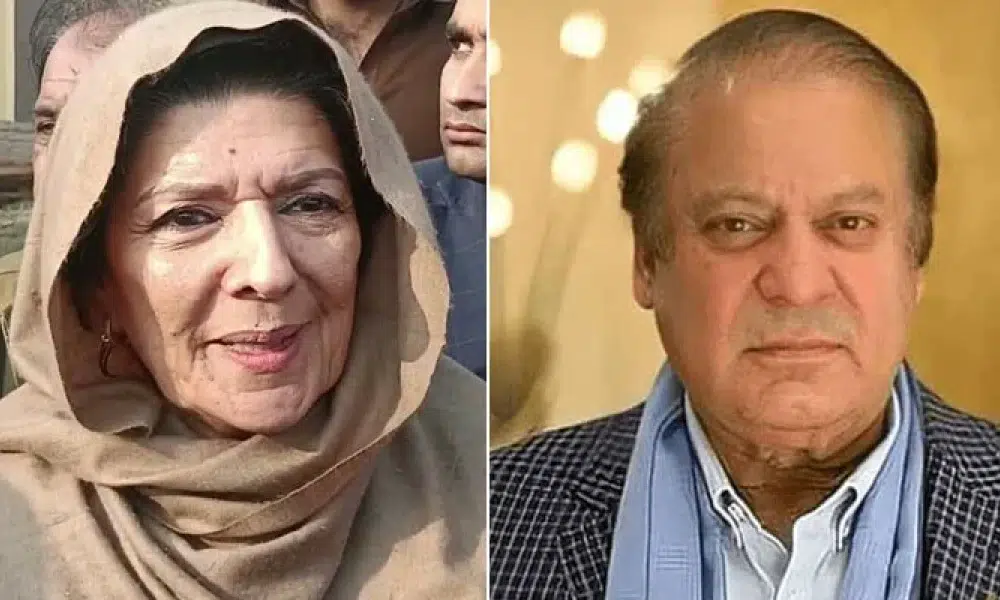
    Founder Pakistan Tehreek-e-Insaf (PTI) Imran Khan’s sister Aleema Khan has said that punishing Nawaz Sharif on Iqama in the Panama case was a judge’s mistake.  

    Talking to media in Islamabad, Aleema Khan declared that the letter from six Islamabad High Court (IHC) judges has revealed the wrongdoing of many individuals. She emphasised the importance of judges advocating for justice, stating that without their support, justice cannot prevail. Aleema Khan urged lawyers to unite in solidarity.

    Imran Khan’s sister stated that the judge made a mistake in the Panama case. She pointed out that the former prime minister was sentenced in the Iqama case, not in the original case, adding that if he were punished in the original case, he would not be free today.

    Aleema continued to say that if pay attention to the cipher case, there will be no doubt in the statement of Asad Majeed. The 10-year sentence in the cipher case and the treason case will be buried; this case is being conducted to save Donald Lu.

  • Khawaja Asif says General Bajwa ne lamba dhoka dia tha

    Khawaja Asif says General Bajwa ne lamba dhoka dia tha

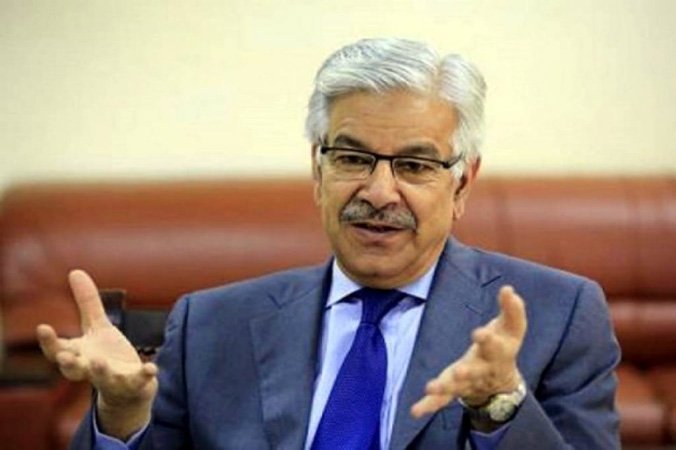
    Defence Minister Khawaja Asif has said on Hamid Mir’s show that former Chief of Army Staff (COAS) General Qamar Javed Bajwa “gave an ultimatum to me that if I condemn Mian Nawaz Sharif’s narrative then all the cases of National Accountability Bureau (NAB) against me would go away.”

    Hamid Mir asked the minister whether all three major parties including Pakistan Muslim League Nawaz were directly involved in extending the tenure of the then-COAS, so how could he expect the establishment to stay out of politics.

    Asif replied that it was a mistake and that politicians must have a consensus on upholding the dignity of constitution of Pakistan.

    Hamid Mir inquired of the minister why he agreed to extend Gen. Bajwa’s tenure despite being threatened. The minister humorously responded that Gen. Bajwa provided ultimatums only after securing his extension successfully.