Category: Uncategorized

  • Another Faraz, Another Era

    Another Faraz, Another Era

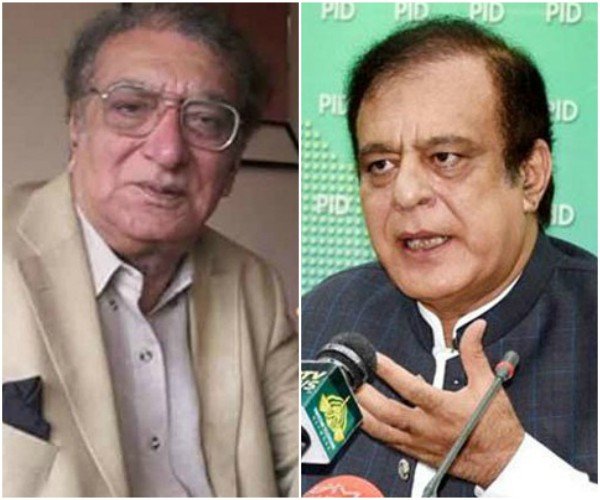
    Today Faraz’s son speak for a regime that is often described as ‘hybrid’

    Pakistan’s information minister is seen more and more on the TV screen nowadays. There he is on nearly every channel, —giving briefings, answering questions and being interviewed, cool and collected, smirking his way through the questions as he talks of PTI’s political opponents and assures journalists that his government is doing amazing things for the country.

    It is, of course, commendable that the minister is so accessible to journalists and so happy to dominate screen time, but every time I see him on the box I cannot help but wonder if his father would’ve supported such a regime.

    Ahmed Faraz was one of the greatest Urdu poets of the twentieth century. And along with poets like Faiz Ahmed Faiz and Habib Jalib his poetry has also documented the political and social struggles of the the time. One particular poem of Faraz did become very controversial and reportedly there was a period in which he denied that it was his work. The reason is because that particular work (“…Tum Sipahi Nahin”) is extremely critical of martial tyranny and bloodshed and harks back to the attitude of the army during the bloody civil war which resulted in the secession of East Pakistan and the creation of Bangladesh.

    That poem is chilling. Read it (or listen to a recital) today and your blood will run cold. Through verse the poet tells of a terrible disillusionment and declares that his pen will not write lies or propaganda as it is not a weapon to be used by tyrants but rather is the instrument of the people, the awam. “Mera Qalam tow amanat hai meray logon ki.” He talks of a military that uses force  against its own people, of tyrants who talk of justice but practise cruelty and encourage hatred. The poem harks back not just to the civil war but to numerous political upheavals and regime changes and conflicts — and the words are spine chilling.

    Listen to the verses and it is not difficult to see why Faraz was forced to deny the poem and why at one time it was circulated secretly by people. I’m not sure if he ever spoke, on the record, about what the repercussions were for him of writing that poem, but I imagine the consequences could not have been pleasant. And perhaps it was these consequences that convinced his family members that such lofty principles are simply not paying such a high price for.

    Today Faraz’s son speak for a regime that is often described as ‘hybrid’ and represents a government that works very closely with the institution whose very attitudes and actions are criticised in this poem. It seems the fact is indeed stranger than fiction. Or perhaps we should just call this ‘progress’.
    But listen to this particular poem in the context of present day Pakistan and one thing becomes clear: it doesn’t matter what compromises people like Faraz might make in later life if they are able to leave behind them such creations, creation that lives on long after they are gone and reverberate so strongly still. This is art but it is also social history and a lasting testament to political struggle and the fight for justice, it is the reminder of a dark night and of the people who fight for the dawn of justice and for an end to oppression and division. The poem is also an acknowledgement of the duty of the writer, a reiteration of the poet’s responsibiltity to document and resist tyranny “aaj shayir par yeh qarz matti ka hai” — he says the situation is serious and his words are written not with ink but in blood “aaj is qalam may lahu hai siyahi nahin”.

    Today Faraz’s son speak for a regime that is often described as ‘hybrid’ and represents a government that works very closely with the institution whose very attitudes and actions are criticised in this poem. It seems the fact is indeed stranger than fiction. Or perhaps we should just call this ‘progress’.

  • Kinza Hashmi gives us a reason to travel

    Pakistani actress Kinza Hashmi is vacationing in Turkey and has been posting about her drool-worthy trip on Instagram.

    Kinza shot to fame after her role in the drama, Gul-o-Gulzar and joining many others as they vacation in Turkey, she has also shared some beautiful spots of the country.

    Hashmi expressed her love for travelling and exploring places in a post captioned, “If you never go, you will never know” and ” Good things come to those who book flights “.

    Hashmi shared her thoughts with a picture in which she wrote, “Life is short and the world is wide so get out there and explore it”.

    She also shared the night view of Bebek Sahil in Arnavutköy, Beşiktaş, a visiting site in Turkey with caption, “The view was a 10/10”.

    The video she posted of enjoying in a boat made us all feel the same way she felt: “Go where you feel the most alive”.

    According to Kinza,”People don’t take trips, trips take people”. She thinks that the captivating sites and places confine people in their magic from which they cannot escape.

  • Donald Trump’s Indian fan, who worshipped him, dies ‘upset’ over president’s COVID-19 diagnosis

    An Indian man, who earlier made headlines for worshipping Donald Trump, and was upset over the news of the United States (US) president contracting COVID-19, has died of a cardiac arrest.

    Bussa Krishna was a fan of the president and said his devotion to Trump began more than four years ago when the leader appeared in his dream. He posted a tearful video on his Facebook page wishing for his idol’s recovery from the virus.

    Recently, he went to Toopran, which is his maternal grandmother’s house. Ever since Trump tested positive, Krishna was reported to be suffering from depression and not eating or sleeping properly.

    Despite his family members counselling him that there was nothing to worry about the president’s health, he did not change.

    “He was not having food or proper sleep,” Krishna’s uncle Ashok said.

    He said that Krishna spent about Rs1.4 (14 lacs) to construct the temple for Trump and another 80,000 to see him during his India visit in February.

    “His only dream was to meet Trump, but he left the world without fulfilling it,” another villager said.

    Also Read: Howdy Modi:Trump calls India ‘filthy’ during final presidential debate

    Though villagers used to make fun of him for building the Trump temple, Krishna never took their comments seriously and worshipped and admired the president as his god.

    On several occasions, he had arguments with villagers and made a point that like others pray to Lord Rama, Krishna and Shiva, he offered his prayers to the president of a superpower.

    The follower was popular as ‘Trump Krishna’ and always used to carry Trump’s photograph in his bag. He also always wore a Trump T-shirt.

    https://www.youtube.com/watch?v=jJURt4AFfyg
  • Asia crosses 10 million coronavirus cases after India becomes worst hit after US

    Asia crosses 10 million coronavirus cases after India becomes worst hit after US

    Asia surpassed 10 million infections of coronavirus on Saturday, the second-heaviest regional toll in the world, according to a Reuters tally. Cases continue to mount in India despite a slowdown and sharp declines elsewhere.

    Behind only Latin America, Asia accounts for about one-fourth of the global caseload of 42.1 million of the virus. With over 163,000 deaths, the region accounts for some 14% of the global COVID-19 toll.

    The Reuters tally is based on official reports by different countries. The true numbers of cases and deaths are likely much higher, experts say, given deficiencies in testing and potential underreporting in many countries.

    Despite the Asian spikes, the region overall has reported improvement in handling the pandemic in recent weeks, with daily caseloads slowing in places like India – a sharp contrast to the COVID-19 resurgence seen in Europe and North America.

    Within the region, South Asia led by India is the worst affected, with nearly 21% of the reported global coronavirus cases and 12% of deaths.

    India is the worst-hit country in the world after the United States. India is reporting more than 57,000 cases of the virus a day and averaging 764 COVID-19 deaths a day.

    The country has reported nearly 7.8 million infections, behind the U.S. tally of 8.5 million, and nearly 118,000 deaths, versus 224,128 in the United States. Unlike the recent U.S. surge, however, India’s slowdown saw the lowest daily caseload in nearly three months on Wednesday.

    But India’s infections may surge again, doctors fear, with a holiday approaching and winter bringing more severe pollution from farmers burning stubble, worsening the breathing difficulties that many COVID-19 patients suffer.

    India’s eastern neighbour Bangladesh is Asia’s second-worst hit country, with nearly 400,000 cases. But daily infections have slowed to 1,453, less than 40% of the July peak.

    Despite Asia’s patchy record, a World Health Organization expert said on Monday that Europe and North America should follow the example of Asian states in persevering with anti-COVID measures and quarantine restrictions for infected people.

    Mike Ryan, head of the UN agency’s emergency programme, said the global death toll from COVID-19 could double to 2 million before a successful vaccine is widely used and could be even higher without concerted action to curb the pandemic.

  • ‘Successful implementation’: Hammad Azhar says FATF blacklisting off the table

    ‘Successful implementation’: Hammad Azhar says FATF blacklisting off the table

    After the Financial Action Task Force (FATF) decided to keep Pakistan in the grey-list till February, Minister for Revenue Hammad Azhar congratulated the nation for successfully implementing the major points of the FATF.

    “Out of 27 points, we have implemented 21 points given by the authorities concerned regarding FATF, ” he stated while talking to a private television channel. Except India, every country had appreciated the efforts of Pakistan for satisfying the people dealing FATF, he added.

    Pakistan was placed on the grey list during the period of Pakistan Muslim League-Nawaz last government, he said. In reply to a question, he said the remaining six points had partially implemented. He also termed the decision that was taken without voting a “diplomatic victory”.

    BLACKLISTING OFF THE TABLE:

    In a statement, FATF urged Pakistan to complete an internationally agreed action plan by February 2021. FATF said Pakistan had now reached 21 targets out of 27 set for it in 2018 when Pakistan was placed on FATF’s “grey list” of countries with inadequate controls over terrorism financing.

    But Pakistan still needs to demonstrate that law enforcement agencies are identifying and investigating the widest range of terrorism financing activity, FATF said.

    The watchdog also asked Islamabad to demonstrate that terrorism financing probes resulted in effective, proportionate and dissuasive sanctions.

    “FATF acknowledged that any blacklisting is off the table now,” Pakistani federal minister Hammad Azhar tweeted.

    Azhar, who leads Pakistan’s delegation at FATF plenary meetings, said the forum’s discussions were focused on how Pakistan could be supported in meeting its targets before a formal review in the middle of next year.

    Last February, Pakistan secured an extra four months to complete the plan after missing 13 of the 27 targets that FATF had set for it in 2018 when it put Pakistan on its “grey list”.

  • Minal Khan clarifies that she is not getting married

    Minal Khan clarifies that she is not getting married

    Along with setting our screens on fire with Jalan, Minal Khan is also teasing fans by sharing glimpses of her personal life (read: love life) on social media. Though the actor has not officially confirmed her relationship, rumours are rife that she is in a relationship with budding actor Ahsan Mohsin Ikram.

    The two have been posting loved-up pictures of their hangouts on social media without sharing any details. They have also been leaving cute comments on each other’s Instagram posts only to delete them later.

    https://www.instagram.com/p/CGNSgKylY3X/
    https://www.instagram.com/p/CDB0DIBFLfg/

    All this has given rise to speculations that Minal and Ahsan will soon be tying the knot. However, Minal while replying to a follower clarified that she is not getting married.

    She also said that she aspires to be “a woman who wakes up and loves what she does for a living everyday, travels often, spiritually secured and mentally and financially stable”.

    Have any thoughts? Share your comments.

  • Jordanian princess adopts Islamabad Zoo’s brown bears

    Jordanian princess adopts Islamabad Zoo’s brown bears

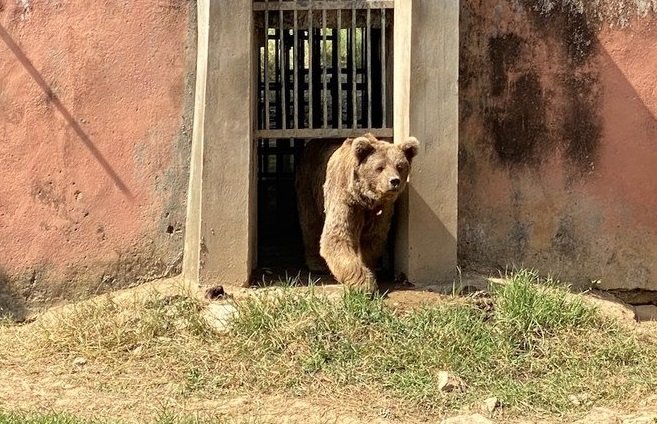
    Islamabad’s Marghazar Zoo’s two Himalayan brown bears are all set to fly to Jordan in 10 days, while Kaavan, the zoo’s lone elephant, is expected to leave for Cambodia by the end of November.

    According to reports, Islamabad Wildlife Management Board (IWMB) Chairman Dr Anisur Rehman has said that the two bears, including their import and export permits, are ready. He said that he is confident that the bears will receive better psychological and physical treatment in the sanctuary abroad.

    “The bear sanctuary is looked after by the (Jordanian) king’s aunt, Princess Alia, and she has given us an import permit within a day,” shared Dr Rehman.

    Dr Rehman also shared that they have also received the import permit for Kaavan which means the Cambodian government is willing to accept and introduce the 45-year-old elephant into one of its sanctuaries.

    “This is the first time that animals from Pakistan are being taken abroad for rest and recreation and health recovery,” Dr Rehman shared, adding: “The government realises that animals need first-class attention, which these captive animals will receive.”

    Suzi

    However, the bears are not being moved to Jordan permanently. According to Dr Rehman, the bears will be flown back to Islamabad once they have fully recovered and their enclosures at Islamabad Zoo are ready. Animals at the Islamabad Zoo are being relocated to temporary sanctuaries after the Islamabad High Court (IHC) ruled that the zoo is not fit enough for them and lacks the necessary facilities.

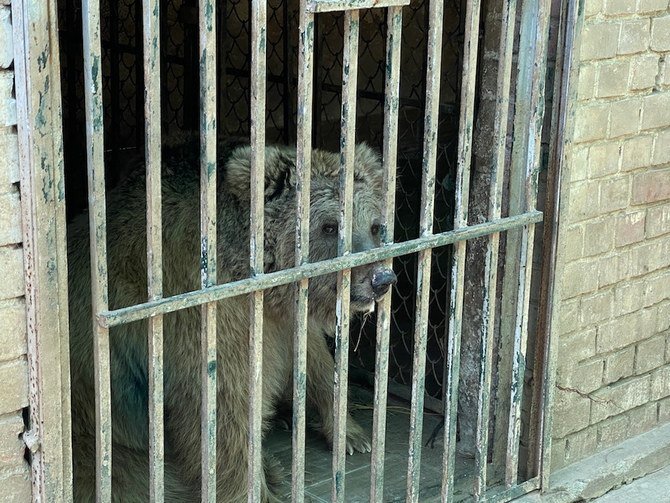
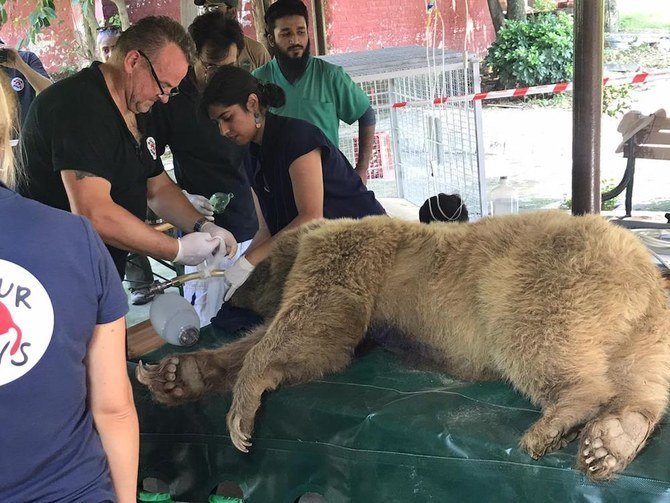
    Both the Himalayan brown bears suffer from psychological problems due to living in a substandard enclosure, with the female undergoing major surgery due to her critical condition. This was also the reason why sanctuaries within Pakistan refused to take them in.

    Dr Frank Goritz, head veterinarian at the Leibniz Institute for Zoo and Wildlife Research Berlin, treats Suzi on Sept. 22

    Meanwhile, Friends of Islamabad Zoo (FIZ), who have been campaigning for the animals, appreciated the decision to move the bears to Jordan. In a note posted to social media, they addressed those who said that the bears should have been moved to a local sanctuary instead of an international one.

    “Both the bears have no teeth and have been dependent on humans since birth,” wrote the animal rights body. “They will not be able to survive wild in the Deosai Plains and will need constant care.”

    “Other than that from what we were told, Deosai now has 76 bears and adding two bears with no experience of living with other bears won’t be able to survive and will need to be kept confined.”

    FIZ said that Al Ma’wa for Nature and Wildlife is the ideal place for the two bears because it is located 3500 feet above sea level, double the height of Islamabad and is climatically suited to Himalayan brown bears. They added that their facilities are top-class and the bears will be well taken care of there.

    https://twitter.com/IsbZooFriends/status/1319317671016529920?s=20
  • Japan researchers claim masks do not block coronavirus ‘perfectly’

    Japan researchers claim masks do not block coronavirus ‘perfectly’

    Japanese researchers have demonstrated that though masks can offer protection from coronavirus particles, but even professional-grade coverings cannot eliminate the risk of the contagion completely.

    Scientists at the University of Tokyo built a secure chamber with mannequin heads facing each other. One head, fitted with a nebulizer, simulated coughing and expelled actual coronavirus particles. The other mimicked natural breathing, with a collection chamber for viruses coming through the airway.

    A cotton mask reduced viral uptake by the receiver head by up to 40% compared to no mask. An N95 mask, used by medical professionals, blocked up to 90%. However, even when the N95 was fitted to the face with tape, some virus particles still sneaked in.

    When a mask was attached to the coughing head, cotton and surgical masks blocked more than 50% of the virus transmission.

    “There was a synergistic effect when both the virus receiver and virus spreader wore masks,” the researchers wrote in their study.

    There has been a growing consensus among health experts that the COVID-19 virus can be spread through the air. The US Centers for Disease Control and Prevention (CDC) has revised its guidance this month to say the pathogen can linger in the air for hours.

    A separate team of Japanese researchers used supercomputer simulations to show that humidity can have a significant effect on the airborne dispersion of virus particles.

  • Pakistan to get its own version of Netflix

    Federal Minister for Science and Technology Fawad Chaudhry has announced that his ministry is all set to launch Pakistan’s first OTT (over-the-top) platform. An OTT media service is a streaming media service offered directly to viewers via the Internet. OTT bypasses cable, broadcast, and satellite television platforms, the companies that traditionally act as a controller or distributor of such content.

    In a tweet, the Minister said: “We at the Ministry of Science and Technology (MoST) are all set to launch Pakistan’s Version of Netflix,” adding that the technology part of the initiative is complete.

    Chaudhry further said that he has directed PEMRA to “prepare a guideline on content” following which the platform will be launched in PPP (public private partnership) mode.

    Speaking exclusively to The Current, Fawad said that his ministry will provide content creators with the technical support – such as compression technology – they need.

    As far as the content on the platform is concerned, the Minister said that PEMRA has been directed to classify content keeping in mind international standards.

    “Our aim is to put Pakistani content on the map and PEMRA has been asked to prepare guidelines keeping in mind the international market,” said Fawad, adding that with internet freedom, censorship is unlikely.

    He also said that content on the platform will be different from what we usually see on television.

    When asked what the payment process will be like given that the majority of Pakistani don’t have credit cards, Fawad said that the payment process will be simple and viewers will be able to pay through their mobile phones.

    A new streaming platform will open new doors for Pakistani filmmakers and content creators giving them creative space and liberty. According to a recent report, Netflix has over 180 million subscribers worldwide, but only 100,000 in Pakistan as most Pakistanis do not have credits cards to pay for the service. This is one of the primary reasons why Netflix has not attempted to commission original Pakistani content, besides “weak storytelling, flawed screenplays and scripts that don’t meet international standards”.

    India, on the other hand, has about 40 providers of OTT media services including Netflix, Amazon Prime and Disney Plus.

    Pakistan forayed into the digital world just recently with Churails, that was released on Indian streaming platform Zee5.

    Senior PTI leader Senator Faisal Javed Khan, who is also the Chairman of the Senate Standing Committee on Information Broadcasting and Heritage, lauded Fawad for his initiative.

    Read more – Hamza Ali Abbasi cancels Netflix subscription over movie sexualising young girls

    Meanwhile, noted actors including Shaan Shahid, Humayun Saeed and Asad Siddiqui thanked the Minister for taking the initiative and introducing such platforms in Pakistan.

    “It’s time we make our presence in the entertainment arena of the world,” said Shaan, while Humayun said this will “open doors of opportunities for many many talented people and eventually help Pakistan reach a truly global audience.”

    However, Osman Khalid Butt remarked that PEMRA should not be allowed to prepare a content guideline for the platform.

  • ‘Azhar Ali’s captaincy to be reviewed’

    Azhar Ali may not retain his position as Pakistan’s Test Captain during next month’s tour of New Zealand after Pakistan Cricket Board (PCB) chief executive Wasim Khan said that the 35-year-old’s leadership will be “reviewed”.

    According to details, rumours are rife in the executive corridors of PCB’s headquarters about a younger replacement. The speculations come just 12 months after Azhar replaced Sarfaraz Ahmed as Pakistan’s Test captain. Mohammad Rizwan and current limited-overs captain Babar Azam are the top choices for potential replacements for Test captaincy, with the change likely to happen as early as December when Pakistan’s tour of New Zealand is scheduled to take place.

    Wasim also revealed that Azhar’s annual appraisal is being carried out and that a final decision has not been made yet as constitutionally the prerogative to name or dismiss a captain rests with PCB Chairman Ehsan Mani, who is due to meet Ali in the next ten days.

    Read more – Misbah Ul Haq steps down as chief selector

    Azhar has struggled with form over the past two years and found himself in a sustained slump until he scored a hundred in Karachi late last year, followed by a fighting century in a rain-hit draw against England in Southampton in August.

    Azhar is presently the most capped player in the Pakistan side with 81 Test matches in a career that started in 2010. He was appointed ODI captain following Misbah-ul-Haq and Shahid Afridi’s ODI retirements after the 2015 World Cup when he hadn’t been part of Pakistan’s ODI plans. Following poor results in England and Australia during his tenure, he was axed from captaincy in January 2017 but remained in the squad until 2018 before losing his spot to younger players.

    Ali had refused an offer to take up Test captaincy in 2017 after Misbah and Younis Khan retired from the longer format, with the PCB deciding to hand over the captaincy in all formats to Sarfaraz. While his limited-overs replacement Babar looks more secure than ever, Azhar’s stint as Test captain may well be drawing to a premature close.

    Meanwhile, Wasim has backed Misbah and Babar as coach and captain for next year’s World Twenty20.

    In a press conference, Wasim while speaking about Misbah and Babar had said: “Like every other job, that of the head coach and the captain is also performance-based. At the moment, our main focus is white-ball cricket with World Twenty20 events in each of the next two years and we’re backing Misbah and Babar for the next World Twenty20 as they’re both doing well together.”