Category: Uncategorized

  • Is Pakistan’s spy agency allegedly interfering in legal matters?

    Is Pakistan’s spy agency allegedly interfering in legal matters?

    Calls to investigate the ‘Islamabad High Court (IHC) letter to Supreme Judicial Council’ gain ground as the bar associations of Sindh, Lahore, Islamabad and Khyber Pakhtunkhwa and many senior legal experts express concern.

    Why? Earlier, six judges of the IHC penned a letter to Chief Justice of Pakistan Qazi Faez Isa expressing worry over alleged interference of intelligence agencies in judicial matters.

    The Sindh High Court Bar Association released a statement which said, “Interference in the affairs of the judiciary is tantamount to attacking the judicial system.”

    Similarly, the Islamabad High Court Bar Association condemned the alleged interference and reaffirmed its faith in the importance of autonomy of judiciary. “Public confidence in the justice system is linked to the independence and autonomy of the judiciary,” the bar said.

    Furthermore, Lahore Bar Association also expressed concerns and said, “Action should be taken against those who violate the constitution and law.” Khyber Pakhtunkhwa Bar Council also released a statement, “Interference in judicial matters is condemnable.”

    Meanwhile, the veteran legal expert and Pakistan Tehreek-e-Insaf leader Hamid Khan, commended the six judges for taking this ‘daring initiative’. He also said that this matter is significant and should be investigated in a judicial commission.

  • Maulana Fazlur Rehman announces protests against February polls

    Maulana Fazlur Rehman announces protests against February polls

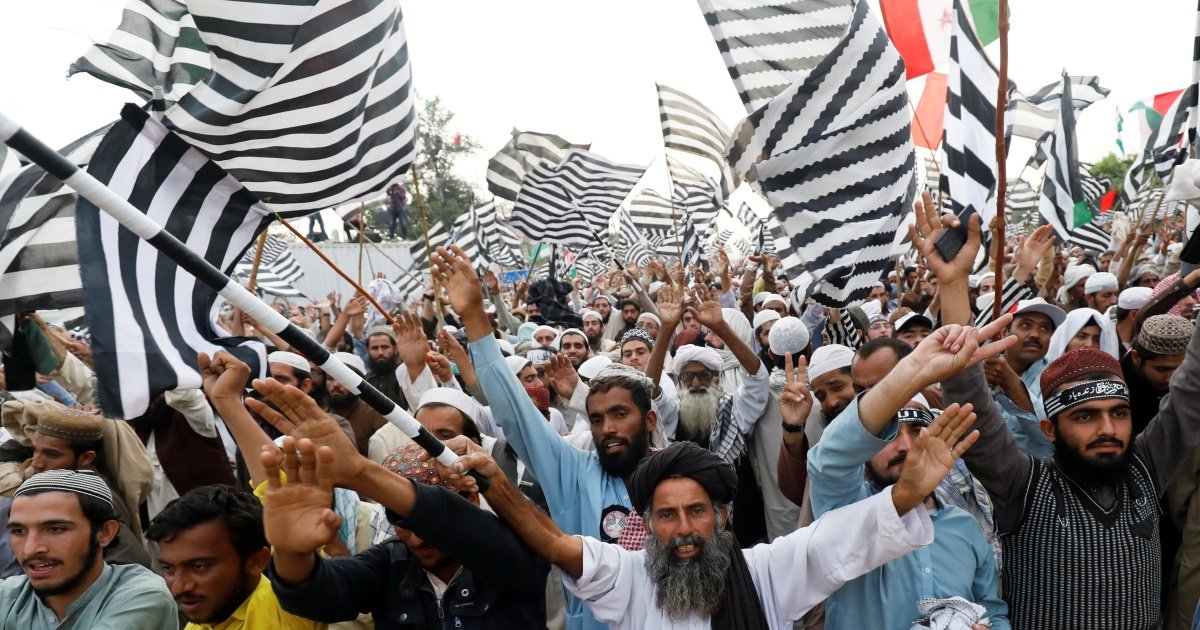
    Leader of Jamiat Ulema-e-Islam- Fazl (JUI-F) Maulana Fazlur Rehman on Wednesday said that his party had decided to boycott by-elections and will be holding protests in different cities from April 25.

    “Just like in 2018 elections, the mandate of people has been stolen in elections of 2024. We decided that our party would not accept the results of recent elections because this parliament is more of a representative of the establishment rather than the people,” said the chief of JUI-F.

    By now, major political parties like Pakistan Tehreek-e-Insaf, JUI-F, and Jamaat-e-Islami (JI) have rejected the results of February 8 elections, making the general elections controversial.

    “This is our narrative and we have decided to move forward with it. We will start this movement named ‘Awami Assembly’ from April 25 from Balochistan’s Pishin,” said the JUI-F leader. The second ‘Awami Aseembly’ will begin from Karachi on May 2 and the third phase would be in Peshawar on May 9.

    He also said that his party is in contact with other political parties, “so that a united opinion of people comes forward.”
    He criticized the Elections Commission of Pakistan for neglecting its legal obligations and accused the security agencies of overstepping their boundaries.

  • Countries at UN rally behind expert who accused Israel of ‘genocide’

    Countries at UN rally behind expert who accused Israel of ‘genocide’

    GENEVA: The UN expert who concluded Israel was committing acts of genocide in the Gaza Strip received broad support at the United Nations on Tuesday, with countries speaking up to back her and her report.

    Francesca Albanese, the special rapporteur on human rights in the Palestinian territories, told the UN Human Rights Council that countries should impose an arms embargo and sanctions on Israel.

    Expanding in person on her report released on Monday, Albanese said Israel was characterising the entire Gazan population as “targetable, killable and destroyable,” and had ostentatiously laid bare its “genocidal intent” to “rid Palestine of Palestinians.”

    Dozens of diplomats, mostly representing Arab and Muslim countries but also Latin America, took the floor to defend her mandate and her work.

    Pakistan, speaking for the Organization of Islamic Cooperation, backed her call for sanctions and an arms embargo.“We commend your courage in documenting… acts amounting to genocide in Gaza,” Islamabad’s representative said.

    “The occupation force’s dangerous and ruthless push for a final solution to the Palestinian question is plain for all to see, as its forces encircle Rafah like vultures and its ravenous land grab continues unabated in the West Bank.”

    Egypt, speaking for Arab group countries, affirmed their support for Albanese’s mandate and said they were gravely concerned about Israel’s “structured and systematic attack to make the Gaza Strip uninhabitable.”

    And Qatar, on behalf of the Gulf Cooperation Council, thanked Albanese for her report and demanded the international community “put an end to genocide being perpetrated by the Israeli war machinery.”

    In her speech, Albanese told the top UN rights body that Israel had “destroyed Gaza.”

    “When genocidal intent is so conspicuous, so ostentatious, as it is in Gaza, we cannot avert our eyes: we must confront genocide, we must prevent it and we must punish it,” she said.

    “The genocide in Gaza is the most extreme stage of a long-standing settler-colonial process of erasure of the native Palestinians.”

    Special rapporteurs are independent experts appointed by the Human Rights Council, although they do not speak on behalf of the UN.

    In response, Russia said it was “horrified” by Israel’s military operation that had seen “civilian infrastructure targeted” while China said it was was ready to facilitate peace talks.

    The European Union called for “proper and independent investigations on all allegations” and while appalled by the civilian death toll it recognized Israel’s right to self-defense.

    Albanese’s speech concluded to applause in the chamber. Israel was not present, nor was its chief ally the United States.

    Israel has long been harshly critical of Albanese, and on Monday immediately rejected her report as an “obscene inversion of reality.”

    The United States called her mandate “biased against Israel.”

    In the rights council on Tuesday, the only firm support for such positions came from non-governmental organizations.

    The World Jewish Congress said Albanese’s mandate “seeks to entrench divisions and a one-sided narrative instead of pursuing a balanced and inclusive approach.”

    The European Union of Jewish Students said Albanese’s “resignation is imperative” for the council to retain any credibility on issues concerning Israel and the Palestinian territories.

    Israel’s genocide in Gaza has killed at least 32,400 people in the besieged Strip, most of them women and children, according to the health ministry in the territory.

  • Three kidnapped Pakistanis rescued in Iran

    Three kidnapped Pakistanis rescued in Iran

    The Federal Investigation Agency (FIA) has recovered three Pakistanis kidnapped in Iran, and arrested a suspect.

    According to the FIA spokesperson, three citizens who had gone on pilgrimage visas were abducted on arrival in Iran, adding that human traffickers received Rs 20 lakh for the release of the citizens.

    He also revealed that the kidnappers demanded more money by sending videos of torture on the hostages to their families.

    The recovered persons include Muhammad Adnan, Kashif Mehboob and Muhammad Dawood.

  • Two women trick shopkeeper in Faisalabad

    Two women trick shopkeeper in Faisalabad

    Two women pretending to be customers tricked a shopkeeper in the Samundri area of Faisalabad.

    According to details, the women entered the clothes shop on the pretext of shopping, asked the shopkeeper to show them various valuable suits and kept looking for more.

    Later, when the shopkeeper found that the suits were missing, he went through the CCTV footage after which he came to know about the women’s trickery who stole the clothes.

    The total value of the clothes was more than 40 thousand rupees.

  • IMF engagement should not hinder Pakistan’s economic progress: PM Shehbaz

    IMF engagement should not hinder Pakistan’s economic progress: PM Shehbaz

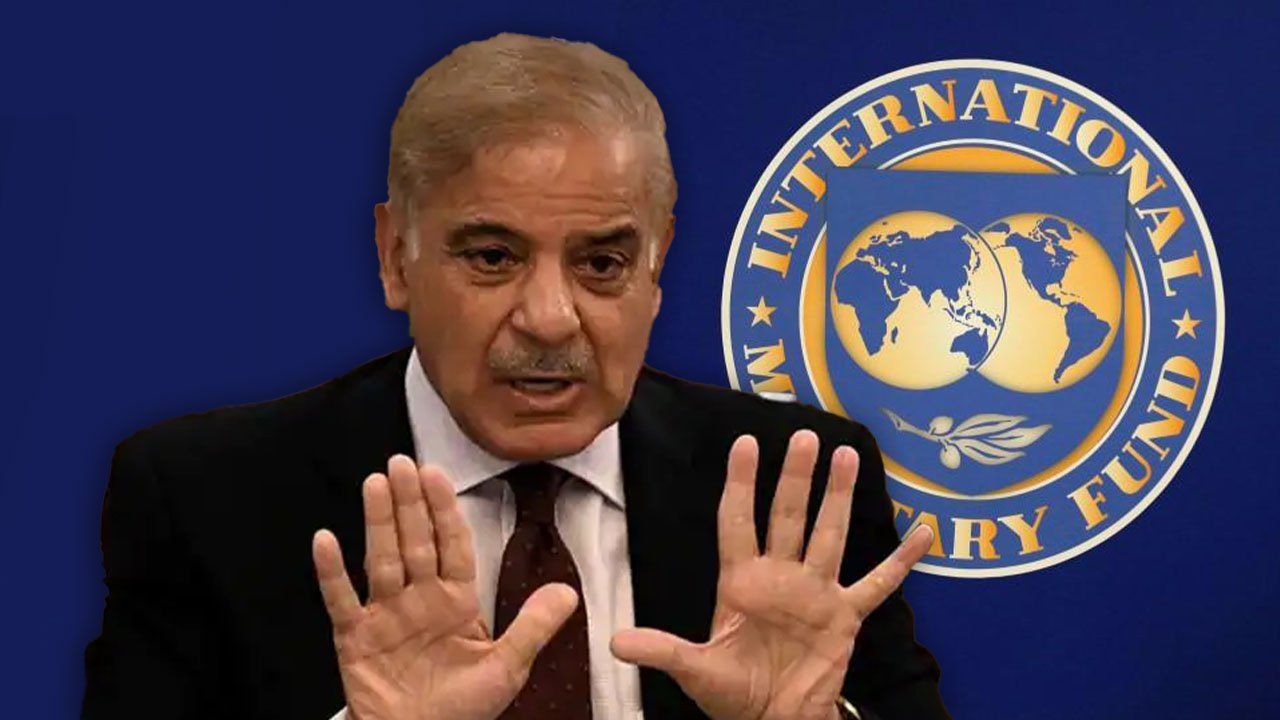
    Prime Minister (PM) Shehbaz Sharif asserted on Tuesday that any forthcoming engagement with the International Monetary Fund (IMF) must not impede Pakistan’s economic progress.

    His remarks come in the wake of discussions regarding a potential Extended Fund Facility (EFF) with the IMF, scheduled for deliberation in Washington next month, as the nation grapples with mitigating a looming economic crisis.

    With the expiration of the standby $3 billion arrangement with the IMF looming on April 11, recent negotiations have culminated in a staff-level agreement, paving the way for the disbursal of the final tranche of $1.1 billion.

    PM Shehbaz, following his re-inauguration, promptly directed his financial team to initiate efforts towards securing an EFF from the IMF.

    Speaking at a ceremony in Islamabad, the Prime Minister underscored the indispensability of another IMF programme while highlighting the imperative of simultaneously pursuing economic expansion.

    He highlighted key areas such as agriculture, IT exports, and both traditional and non-traditional exports as avenues for growth, questioning any limitations posed by an IMF programme on such initiatives.

    “If there is an IMF programme, who has stopped you from doubling agriculture output? from increasing IT exports? from increasing traditional and non-traditional exports?” PM Shehbaz posited, stressing the compatibility of economic growth initiatives with an IMF programme.

    He cautioned against using the IMF as an excuse for stagnation, urging prioritisation of domestically controllable economic avenues.

    In reiterating his stance, Prime Minister Shehbaz Sharif conveys a dual commitment to engaging with the IMF while ensuring a steadfast focus on bolstering Pakistan’s economic trajectory, fostering employment, and curbing inflation.

    As the nation navigates through economic challenges, the Prime Minister’s emphasis on proactive economic strategies resonates as a call to action for sustainable growth and resilience.

  • Struggling for a can of food: starving Gazans scramble for aid drops

    Struggling for a can of food: starving Gazans scramble for aid drops

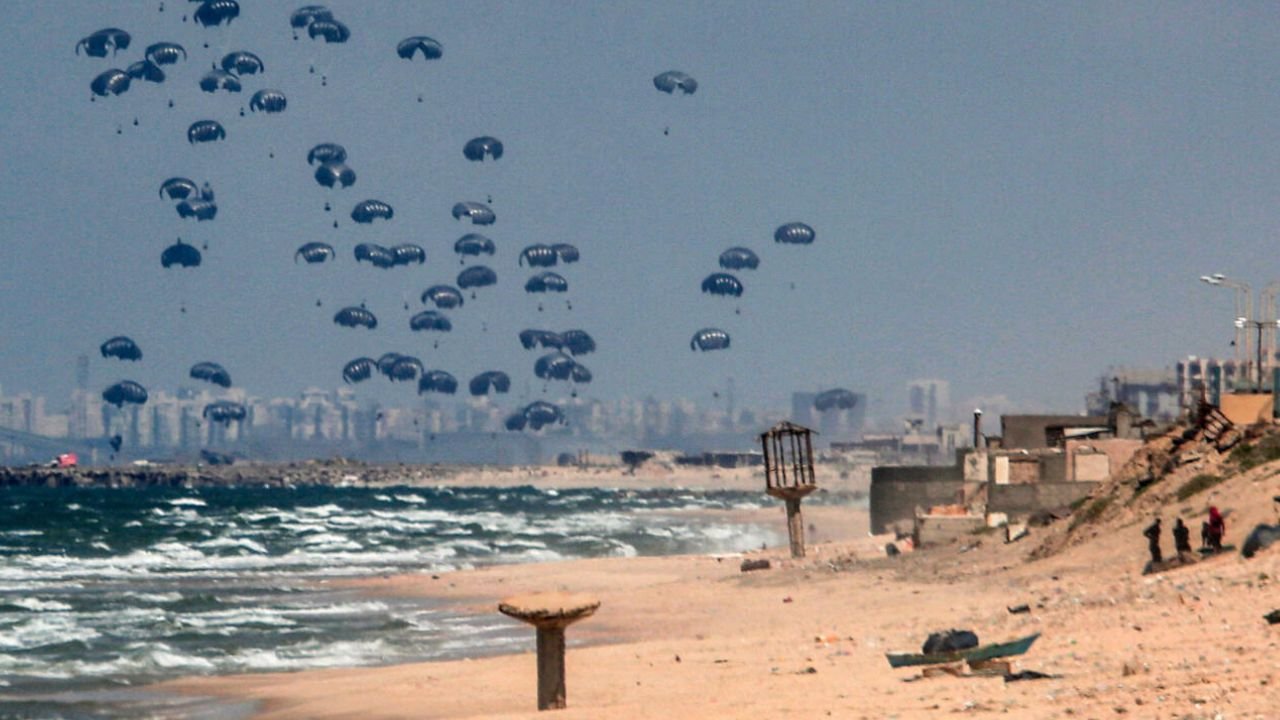
    A military plane banked over the war-ravaged ruins of Gaza City dropping dozens of black parachutes carrying food aid.

    On the ground, where almost no building within sight was still standing, hungry men and boys raced towards the beach where most of the aid seemed to have landed.

    Dozens of them jostled intensely to get to the food, with scrums forming up and down the rubble-strewn dunes.

    “People are dying just to get a can of tuna,” said Mohamad al-Sabaawi, carrying an almost empty bag on his shoulder, a young boy beside him.

    “The situation is tragic, as if we are in a famine. What can we do? They mock us by giving us a small can of tuna.”

    Aid groups say only a fraction of the supplies required to meet basic humanitarian needs have arrived in Gaza since October, while the UN has warned of famine in the north of the territory by May without urgent intervention.

    The aid entering the Gaza Strip by land is far below pre-war levels, at around 150 vehicles a day compared to at least 500 before the war, according to UNRWA, the UN agency for Palestinian refugees.

    With Gazans increasingly desperate, foreign governments have turned to airdrops, in particular in the hard-to-reach northern parts of the territory including Gaza City.

    The United States, France and Jordan are among several countries conducting airdrops to people living within the ruins of what was the besieged territory’s biggest city.

    But the aircrews themselves told AFP that the drops were insufficient.

    US Air Force Lieutenant Colonel Jeremy Anderson noted earlier this month that what they were able to deliver was only a “drop in the bucket” of what was needed.

    The air operation has also been marred by deaths. Five people on the ground were killed by one drop and 10 others injured after parachutes malfunctioned, according to a medic in Gaza.

    Calls have mounted for Israel to allow in more aid overland, while Israel has blamed the UN and UNRWA for not distributing aid in Gaza.

    “Palestinians in Gaza desperately need what has been promised — a flood of aid. Not trickles. Not drops,” UN chief Antonio Guterres said on Sunday after visiting Gaza’s southern border crossing with Egypt at Rafah.

    “Looking at Gaza, it almost appears that the four horsemen of war, famine, conquest and death are galloping across it,” he added.

    Israel has intensified its attacks in Gaza, killing at least 32,333 people, according to the health ministry in Gaza.

    Returning home in Gaza City with little to keep his family going, another Palestinian man said their situation was miserable.

    “We are the people of Gaza, waiting for aid drops, willing to die to get a can of beans — which we then share among 18 people,” he said.

  • No let-up in genocide in Gaza despite UN ceasefire resolution

    No let-up in genocide in Gaza despite UN ceasefire resolution

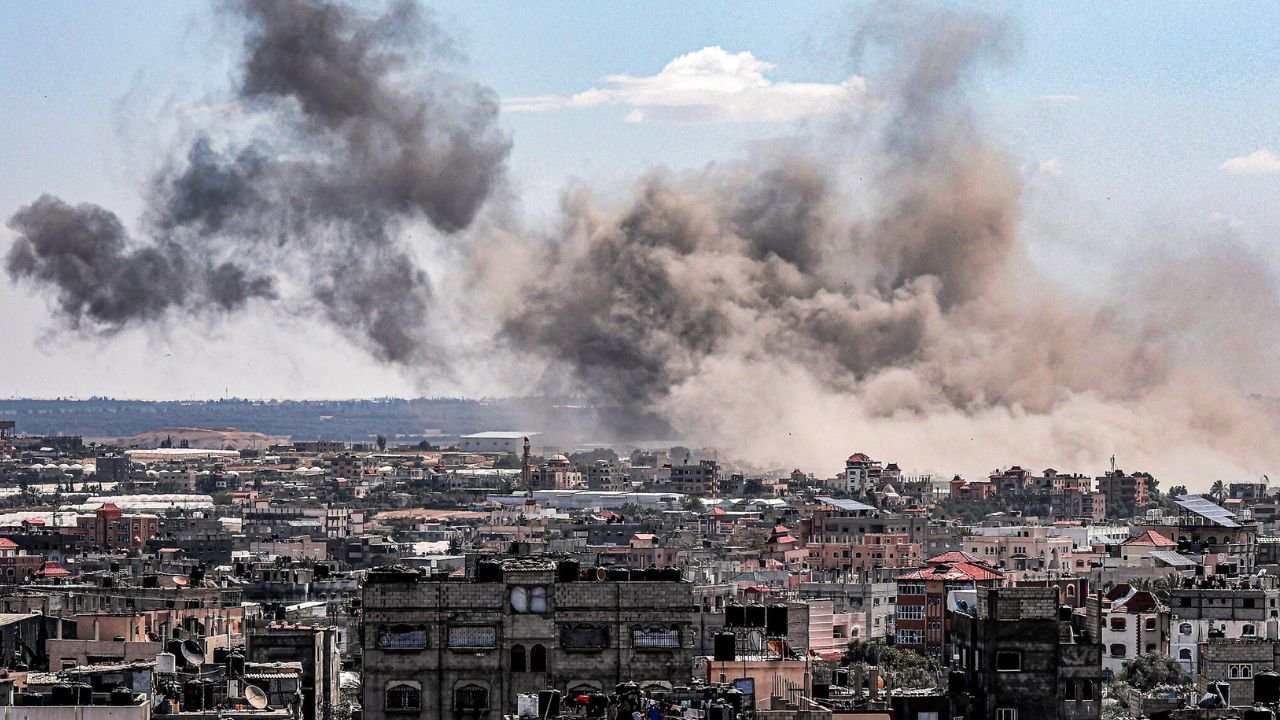
    Palestinian Territories – Israeli attacked Gaza on Tuesday, with no sign of a let-up in the war despite a UN Security Council resolution demanding an “immediate ceasefire”.

    The resolution was adopted on Monday after Israel’s closest ally the United States abstained amid growing concern for the worsening humanitarian situation after nearly six months of war.

    The text demands an “immediate ceasefire” for the ongoing Muslim holy month of Ramadan, leading to a “lasting” truce.

    It also demands that Hamas and other militants free hostages they took during the unprecedented October 7 attacks on Israel, though it does not directly link the release to a truce.

    In Gaza, there was intense fighting overnight, with Israeli operations in and around at least three major hospitals in the besieged territory.

    The Israeli military said its jets had struck more than 60 targets in Gaza in the past day, including tunnels, infrastructure and military structures “in which armed terrorists were identified”.

    The health ministry in the territory said 70 people were killed early Tuesday, 13 of them in Israeli air strikes around the southern city of Rafah.

    The Israeli military said air raid sirens sounded in areas near the Gaza border.

    The Security Council resolution was the first since the Gaza war erupted to demand an immediate halt in the fighting.

    After the vote, UN chief Antonio Guterres led calls for the resolution to be implemented. “Failure would be unforgivable,” he said on social media platform X.

    Israel reacted furiously to the US abstention, while Washington insisted that it did not mark a shift in policy, although it has taken a tougher line with Israel in recent weeks.

    The United States had previously vetoed successive draft resolutions calling for a ceasefire, but it has become increasingly concerned by the dire humanitarian situation in Gaza, where the United Nations has warned of famine in the north by May if urgent action isn’t taken.

    The Gaza health ministry said seven people had drowned in the Mediterranean trying to reach aid airdropped into the territory.

    Washington has also baulked at Israeli Prime Minister Benjamin’s determination to launch an assault on Rafah, the last major population centre still untouched by Israeli ground troops where most of Gaza’s population has sought refuge from the fighting.

    ‘Absolute interest’

    In protest at the United States’ abstention in the UN vote, which it said “hurts” both its war effort and attempts to release hostages, Israel cancelled a planned visit to Washington by a high-ranking delegation.

    Israel’s intensified attacks in Gaza killed at least 32,333 people in Gaza, most of them women and children, according to the health ministry.

    Hamas welcomed the Security Council resolution and reaffirmed its readiness to negotiate the release of hostages in exchange for Palestinian prisoners held by Israel.

    In a statement, the militant group blamed Israel for the failure to make progress in the latest round of talks hosted by mediator Qatar.

    Hamas said Netanyahu and his cabinet were “entirely responsible for the failure of negotiation efforts and for preventing an agreement from being reached up until now”.

    Netanyahu’s office hit back on X, charging that Hamas was “not interested in continuing negotiations” as it had been emboldened by the Security Council vote.

    Hamas leader Ismail Haniyeh was in Tehran on Tuesday for talks with Iranian officials, state media reported.

    It is Haniyeh’s second visit to key backer Iran since the start of the war.

    In the occupied West Bank, German Foreign Minister Annalena Baerbock met Palestinian president Mahmud Abbas.

    She welcomed the Security Council resolution and said it was “in the absolute interest of the people of Israel that we come to a ceasefire now so that the hostages can be released.”

    Hospital battles

    On the ground in Gaza, the fighting raged on unabated.

    Dozens of Israeli tanks and armoured vehicles surrounded the Nasser Hospital in the southern city of Khan Yunis, where thousands of displaced people have sought refuge, witnesses said.

    The health ministry said  shots were being fired around the sprawling complex, but no raid had yet taken place.

    At Gaza City’s Al-Shifa Hospital, the territory’s largest, Israeli troops have been involved in heavy fighting for the past nine days. Israel claims to have killed 170 Palestinian militants and arrested hundreds of others.

    And on Monday, the Israeli military reported killing about 20 fighters around Al-Amal Hospital, also in Khan Yunis, over the previous day in close-quarters combat and air strikes.

    Israel has labelled its operations “precise operational activities” and said it has taken care to avoid harm to civilians, but aid agencies have voiced concern for non-combatants caught up in the fighting.

    Palestinians living near Al-Shifa have reported corpses in the streets, constant bombardment and the rounding up of men who are stripped to their underwear and questioned.

    Palestinians in Rafah welcomed the UN vote and called on Washington to use its influence with Israel to ensure the resolution is implemented.

    Bilal Awad, 63, said Washington must “stand against an attack on Rafah, and support the return of the displaced to their cities”.

    Ihab al-Assar, 60, expressed hope that “Israel will comply” with the Security Council text.

    The fighting came as an independent UN-appointed expert, Francesca Albanese, said there were “reasonable grounds to believe” Israel’s actions in Gaza had met the threshold for “acts of genocide”.

    Israel rejected Albanese’s report, due to be presented to the UN Human Rights Council on Tuesday, as an “obscene inversion of reality”.

    bur-ser-dcp/kir

    © Agence France-Presse
  • Israel tanks surround Gaza’s Nasser Hospital: witnesses

    Israel tanks surround Gaza’s Nasser Hospital: witnesses

    Palestinian Territories – Dozens of Israeli tanks and armoured vehicles surrounded the Nasser Hospital in Gaza Tuesday, where thousands of displaced people have sought refuge from the fighting, witnesses said.

    Witnesses told AFP that shots were being fired at the sprawling complex in the southern city of Khan Yunis, but no raid was as yet taking place.

    Gaza’s health ministry said Israeli troops were shooting and firing “shells and (conducting) violent raids in its surroundings in preparation for its storming”.

    “Thousands of displaced people are still inside the hospital,” the ministry said. “They do not have sufficient quantities of drinking water, food and infant formula, and their lives are in danger.”

    The Israeli army did not immediately respond to an AFP request for comment.

    For the past nine days, Israeli troops have been involved in heavy fighting in and around Gaza City’s Al-Shifa Hospital, the territory’s biggest. They claim to have killed 170 Palestinian militants there and arrested hundreds of others.

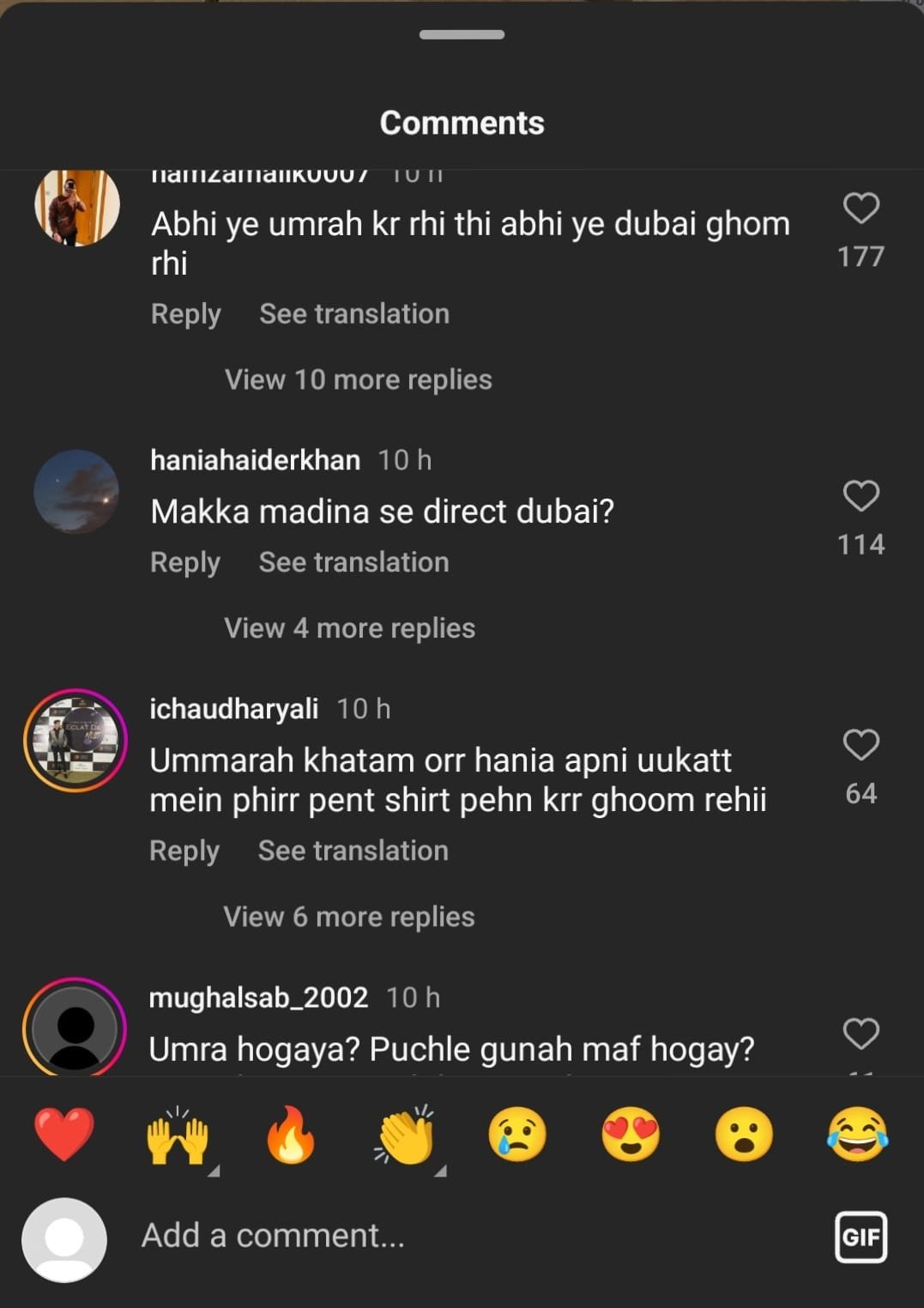
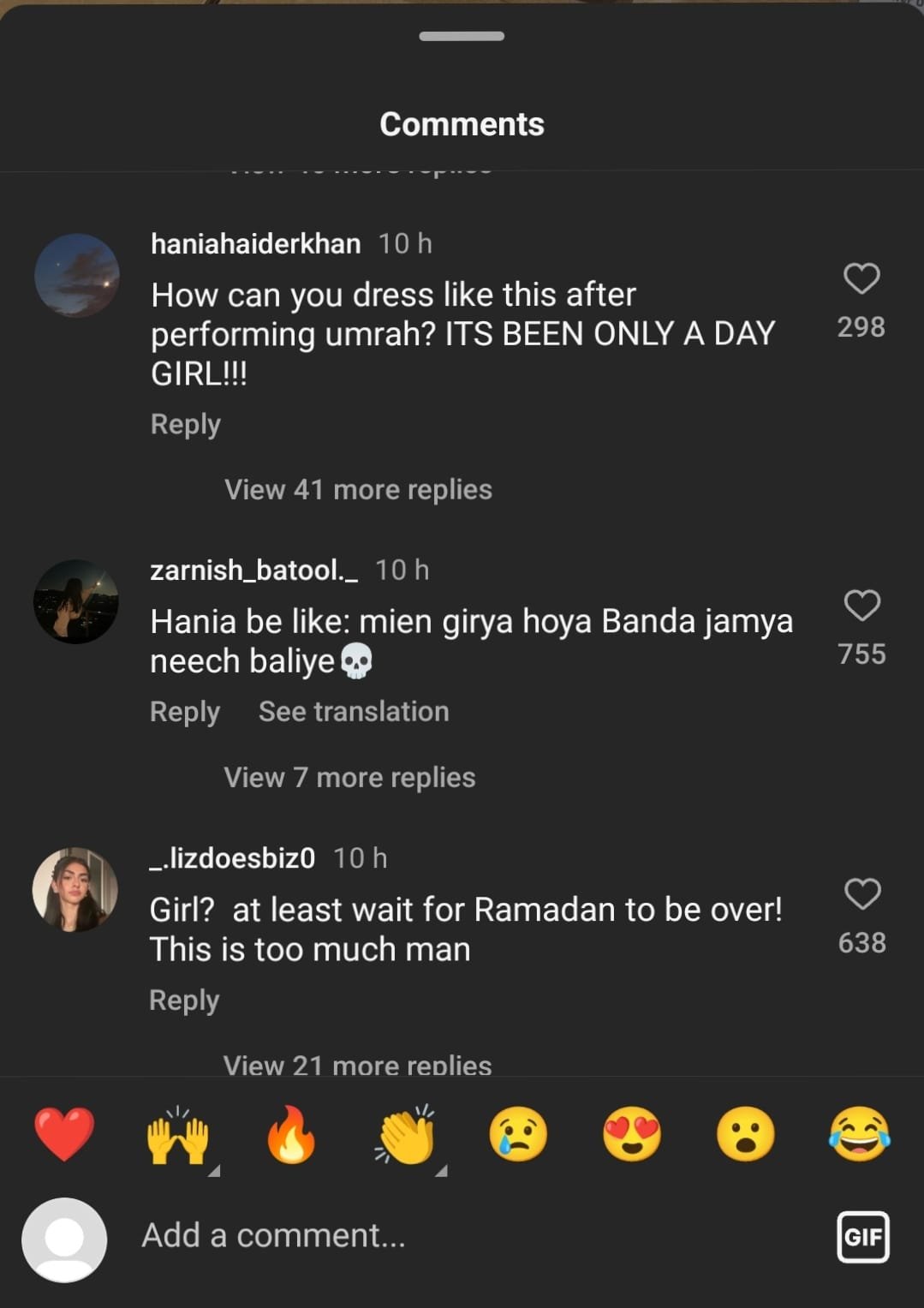
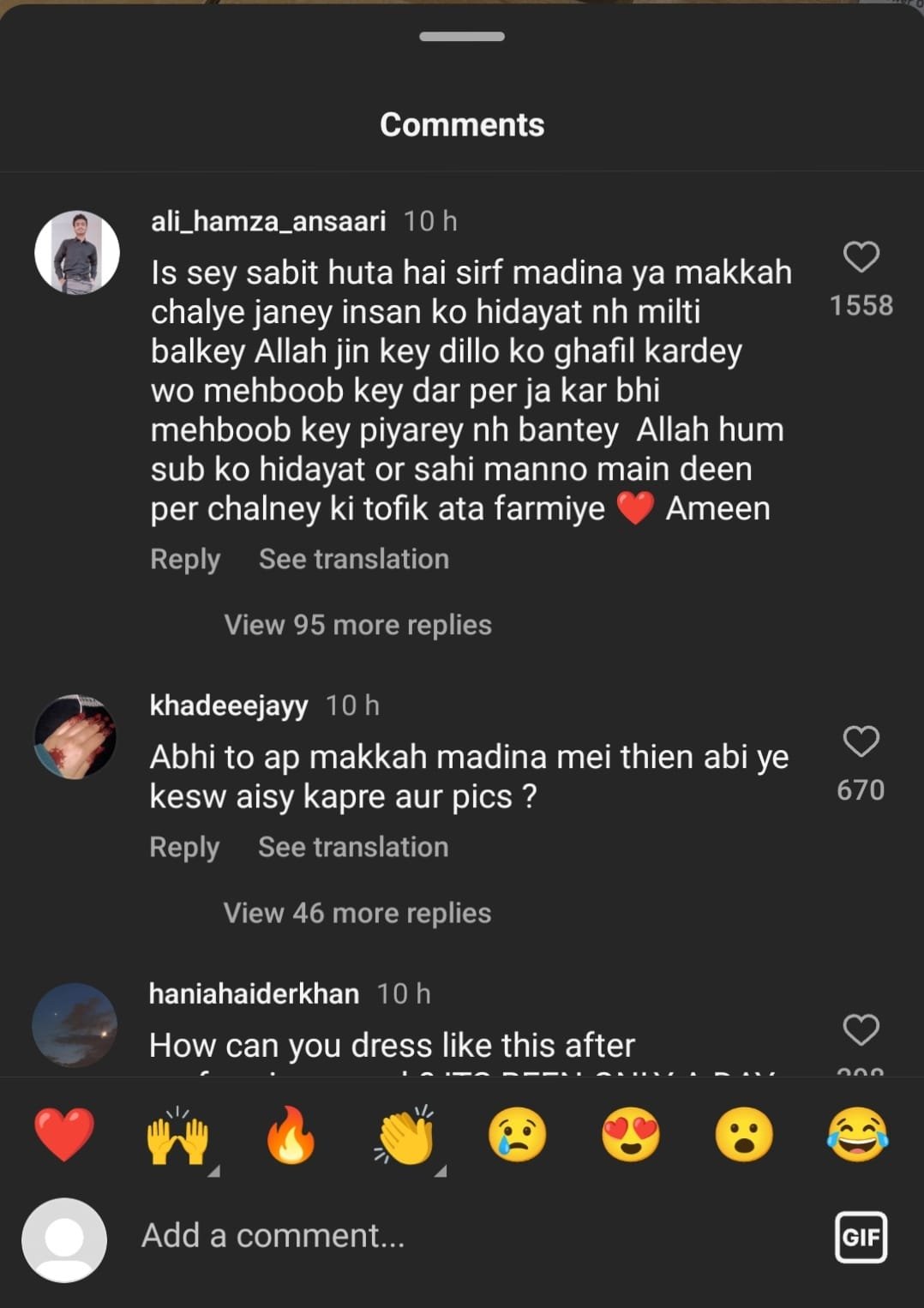
  • Hania Aamir faces criticism for going to Dubai right after Umrah

    Hania Aamir faces criticism for going to Dubai right after Umrah

    Pakistan’s sweetheart Hania Amir finished her Umrah journey and hopped over to Dubai for some fun in the sun! But hold on to your hats, folks, because it seems like not everyone’s cheering her on.

    Hania’s been keeping us entertained with her daily activities, sharing every little detail of her life like a true social media queen
    But wait, there’s a twist! .After posting some pics from her Dubai escapade, where she’s not sporting her usual hijab, the internet went into a frenzy. Turns out, some fans weren’t too thrilled about her wardrobe choice post-Umrah.

    As usual, trolls think they can dictate apparel choices to female entertainers and actresses. Really folks, give it a rest. Find something else to do, like a job or a creative project. What a woman wears is none of your business.

    This is what people are saying to Hania: