Category: Uncategorized

  • Christians in India fearful as election looms

    Christians in India fearful as election looms

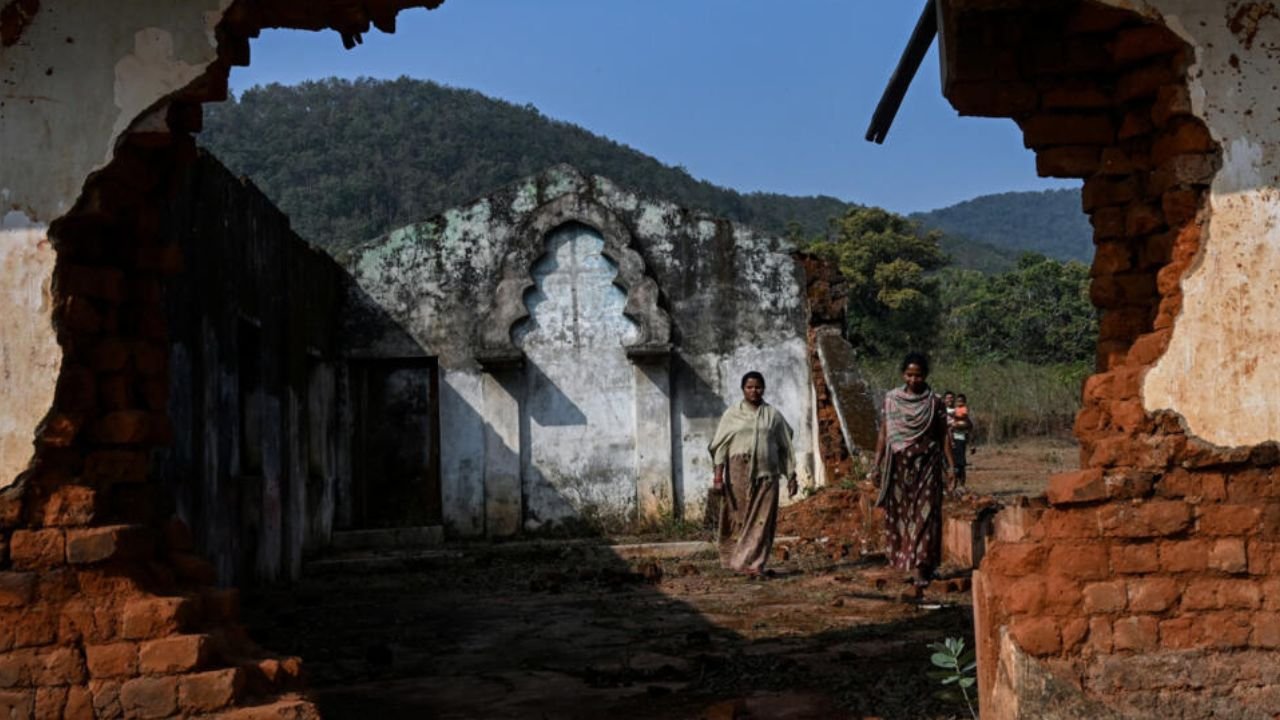
    Irpiguda (India) (AFP) – Church walls crumble in India’s Kandhamal district, where brutal attacks on Christians 16 years ago means many survivors still worry about their minority’s place in a Hindu-majority nation.

    With India’s election on the horizon and Hindu nationalist Prime Minister Narendra Modi widely expected to win, many Christians fear they may once again become targets.

    Deepti was among those attacked in 2008 when mobs rampaged through parts of India’s eastern state of Odisha after the murder of a Hindu priest and his four followers.

    The murder was widely blamed on Christians, and the ensuing revenge rampage left at least 101 people dead.

    Aged 19 at the time, she was gang raped by a mob enraged that her uncle had refused to recant his Catholicism.

    “I remember it every minute,” the 35-year-old domestic worker said in tears, using a pseudonym because she feared being identified.

    “I had been living there since childhood, I recognised them from their voice,” said Deepti, who moved to the state capital Bhubaneswar after the attack.

    “I can still remember each one of them.”

    She was one of scores of women who, according to community leaders, were sexually assaulted across the district.

    Mobs targeted dozens of churches, prayer halls and Christian homes, forcing tens of thousands to flee.

    Last year, the Vatican greenlighted the start of the beatification process towards potential sainthood for 35 of those killed in the violence, a group the church calls the “Kandhamal martyrs”.

    Local Odisha Archbishop John Barwa calls the move a “source of renewed faith and hope”.

    A simple memorial for those who were killed has been erected in the village of Tiangia.

    “Where there is hatred, let me sow love”, the memorial reads, quoting Saint Francis of Assisi.

    ‘Still scared to talk’

    Prasanna Bishnoi, head of Kandhamal’s survivors’ association, said church recognition that people had “died because of their faith” was welcomed — but that honouring the dead did nothing to address the worries of the living.

    “Otherwise, I don’t think it is going to benefit our people,” Bishnoi said.

    Six weeks of voting in marathon general elections begin on April 19, but few doubt the June 4 result — with the ruling Hindu-nationalist Bharatiya Janata Party (BJP), in power for a decade, widely tipped to win again.

    Critics accuse Modi’s BJP of wanting to turn officially secular India into a Hindu nation, something he denies.

    But many Christians worry.

    Right-wing Hindu groups have long accused Christians of forcibly converting Hindus and these allegations, which the community has vehemently denied, have resulted in attacks.

    India has 1.4 billion people and according to the last census, more than two percent are Christians.

    Believers say the religion has been present in the country for nearly two millennia, since the apostle Thomas arrived in the year AD 52.

    The New Delhi-based United Christian Forum (UCF) rights watchdog recorded 731 attacks against Christians in India last year, warning of “vigilante mobs comprising religious extremists”.

    In Kandhamal, the trauma of the 2008 attack haunts survivors, fearful they could be targeted again.

    “Even now the danger persists,” said Raheli Digal, 40, showing AFP the charred walls of what was once her house in Irpiguda village, where the church also lies in ruins.

    “When we remember those old scenes, and watch the news (about ongoing incidents of violence against Christians), we feel scared,” she added.

    “They have been saying for a long time that they won’t let Christians live here.”

    The housewife said she has lived since the 2008 violence in a resettlement camp nearby, and rarely returns to her village.

    “We do not come here… we are still scared to talk to them (Hindus),” she said.

    She sobbed as she described how she hid in the surrounding forested hills, watching as a mob chanting anti-Christian slogans came with blazing torches.

    “They destroyed our home, set it on fire,” she said.

    “We had nothing, not even a piece of cloth, not even water or food,” she added. “We had small children with us — we grabbed them, and ran into the forest.”

    ‘This country is for everyone’

    When Modi in January inaugurated a grand temple to the deity Ram in the northern city of Ayodhya, sparking Hindu celebrations nationwide, Digal and her neighbours stayed home.

    The temple was built on the site of a centuries-old mosque whose destruction by Hindu zealots in 1992 sparked sectarian riots that killed 2,000 people nationwide, most of them Muslims.

    The BJP admits there is a “level of threat perception”, but says it is trying to change that.

    “It is important that we dispel that,” said BJP national spokesman Mmhonlumo Kikon.

    Modi has been “engaging with the Christian community and the leaders to reassure them this country is for everyone — it is not just for the majority community”, Kikon said.

    Bishnoi, from the survivors’ association, said seeing Modi meeting Christians helped him feel “safe”.

    But he also said that reports of violence worried him and cast doubt in his mind.

    “If this government comes to power, then I think minorities will be under pressure,” he said.
  • PTI to register FIR against Sanaullah for threatening Imran Khan

    PTI to register FIR against Sanaullah for threatening Imran Khan

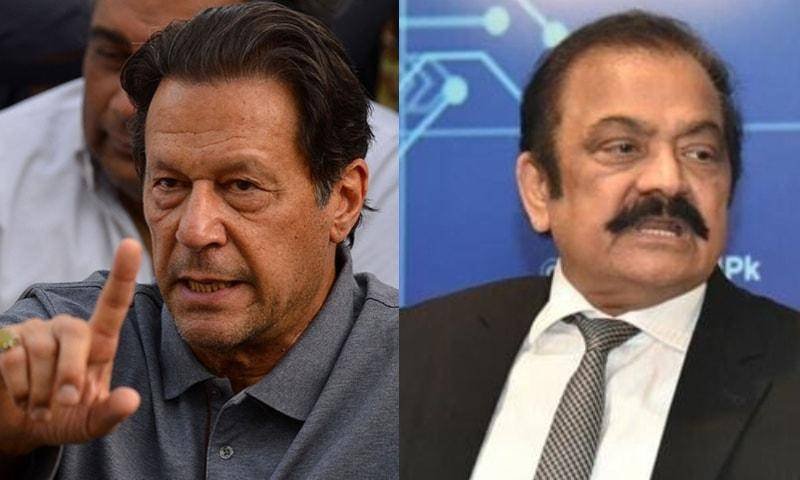
    The Karachi leadership of Pakistan Tehreek-e-Insaf (PTI) has decided to lodge a First Information Report (FIR) against the ruling party Pakistan Muslim League-Nawaz (PML-N) senior member Rana Sanaullah for allegedly threatening to kill Imran Khan.

    In recent interviews with TV channels, Sanaullah termed the mere political existence of Imran Khan a “problem”.
    The PTI, however, did not agree with the narrative and viewed Sanaullah’s remarks as a “demand” to assassinate Imran Khan.

    Rana Sanullah, however, clarified his position on Geo News saying he did not issue any death threat to Imran Khan. “Our relation with PTI is only political,” he said.

    Sanaullah remarked that if PTI chooses to leave the kind of exclusive politics which terms other politicians as “dacoits” and does not consider engaging with other political parties, then this problem would go away right at that moment.

    “If he [Imran Khan] doesn’t accept our political existence then why would we accept his,” asked Sanaullah.

    PTI leader Raoof Hasan said that his party’s core committee has decided to register cases against both PML-N leaders Sanaullah and Marriyum Aurangzeb for their threatening remarks to PTI’s Imran Khan.

  • Israel furious at US abstention on Security Council ceasefire vote

    Israel furious at US abstention on Security Council ceasefire vote

    Israel reacted angrily on Monday to the first UN Security Council vote to demand an “immediate ceasefire” in the Gaza war, after its closest ally the United States abstained, while fighting raged in the Palestinian territory.

    Immediately after the resolution passed, Israel cancelled the visit of a delegation to Washington, which the United States had requested to discuss concerns over a mooted Israeli invasion of Rafah, in crowded southern Gaza.

    Israel said the US abstention “hurts” both its war effort and efforts to release hostages.

    It was “a clear retreat from the consistent position of the US,” Prime Minister Benjamin Netanyahu’s office said.

    While diplomatic attention turned to New York, fighting continued across the Gaza Strip, with Israeli forces battling Hamas militants around at least two major hospitals.

    Washington insisted that its Security Council abstention did not mark a shift in policy, although it has taken an increasingly tougher line with Israel in recent weeks.

    The United States had repeatedly vetoed Security Council resolutions calling for an immediate ceasefire, but on Friday it put forward its own unsuccessful text mentioning one, before abstaining on Monday’s resolution drafted by non-permanent Council members.

    Applause

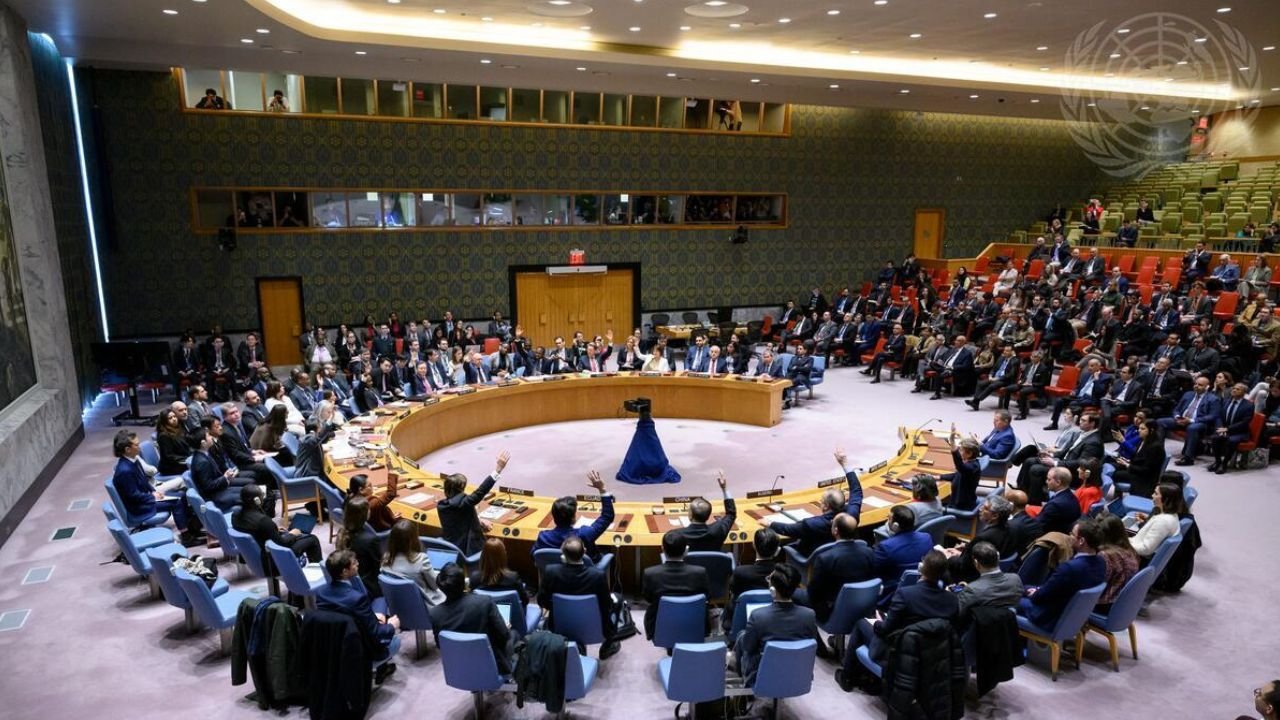
    It meant that the resolution, which demands an “immediate ceasefire” for the ongoing Muslim holy month of Ramadan that leads to a “lasting” truce, went through with all other 14 Security Council members voting yes.

    The resolution drew applause in the usually staid council and also demands that Hamas and other militants free hostages they seized, though it does not directly link a release to the ceasefire.

    The Gaza war broke out with Hamas’s unprecedented attack of October 7 which resulted in about 1,160 deaths in Israel, mostly civilians, according to an AFP tally based on official Israeli figures.

    Militants also seized about 250 hostages, of whom Israel believes around 130 remain in Gaza, including 33 presumed dead.

    Netanyahu’s failure to bring home the hostages has led to regular protests in Israel.

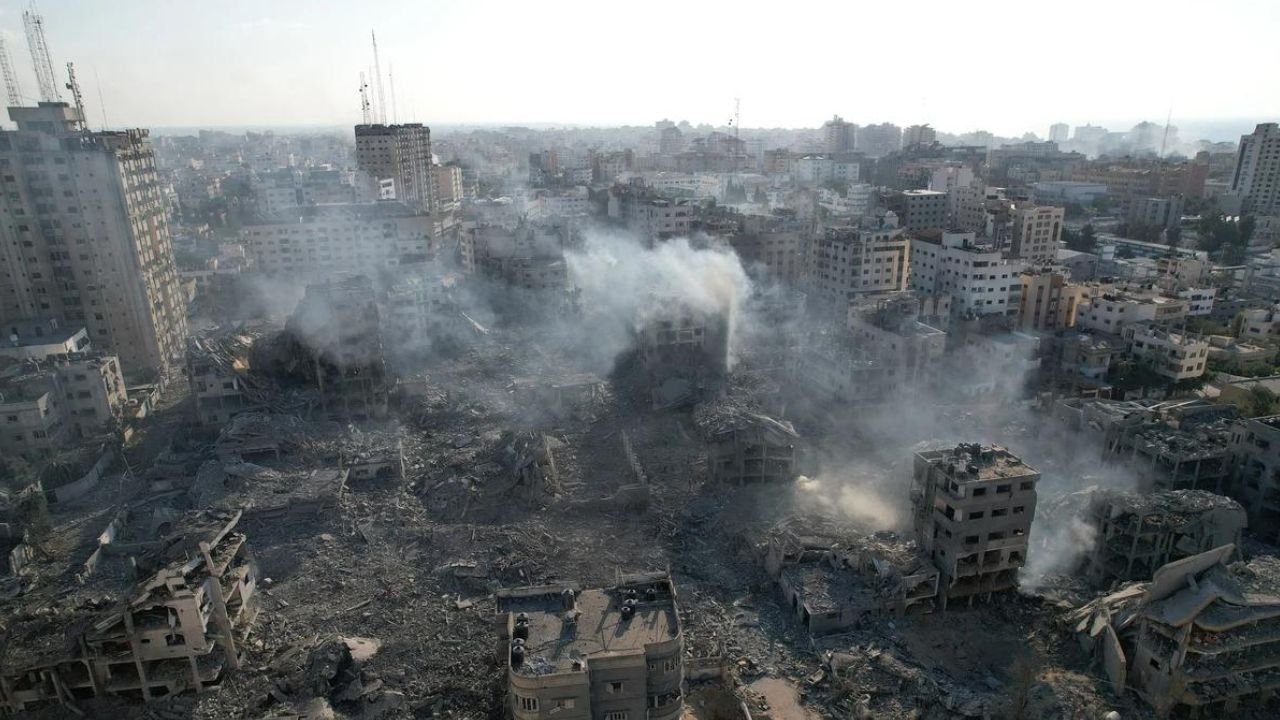
    Vowing to destroy Hamas and free the captives, Israel has carried out a relentless bombardment of the coastal territory and a ground invasion that began in Gaza’s north before moving southward.

    The health ministry in the Hamas-run Gaza Strip on Monday put the total Palestinian death toll at 32,333, most of them women and children.

    Hamas welcomed the Security Council resolution and said it was reaffirming its readiness to negotiate the release of hostages in exchange for Palestinian prisoners held by Israel.

    Member states are obliged to comply with resolutions passed by the Security Council, whose vote came while Israeli Defence Minister Yoav Gallant visited Washington.

    After the UN decision, Gallant said the war will go on.

    “We have no moral right to stop the war while there are still hostages held in Gaza,” he said.

    Tensions between the two allies have grown alongside US concerns about the humanitarian crisis in Gaza, where the UN says famine is imminent.

    Netanyahu’s determination to launch a ground operation in Rafah, the city on Gaza’s southern border where most of the territory’s population is sheltering, has become a key point of contention.

    Prior to the UN vote, US Vice President Kamala Harris told ABC TV that a Rafah invasion would be “a huge mistake”. Asked hether she would rule out “consequences” for Israel, Harris said: “I am ruling out nothing”.

    Before heading to Washington, Gallant said his focus would include “our ability to obtain platforms and munitions”.

    Hospital battles

    Troops and tanks have encircled Gaza City’s Al-Shifa Hospital, the territory’s biggest, for a week and more recently moved on Al-Amal Hospital in the main southern city of Khan Yunis.

    Israel has labelled its operations “precise operational activities” and said it has taken care to avoid harm to civilians, but aid agencies have voiced alarm about civilians caught up in the fighting.

    The Israeli military said it was battling militants around the two hospitals and reported around 20 militants killed around Al-Amal over the past day in close-quarters combat and air strikes.

    Palestinians living near Al-Shifa have reported hellish conditions, including corpses in the streets, constant bombardment and the rounding up of men who are stripped to their underwear and questioned.

    The Al-Shifa raid was in its eighth day and the military reported having detained a total of about 500 militants “affiliated with” Hamas and Islamic Jihad, another militant group.

    ‘We are suffering’

    Israel has signalled an extended presence at Al-Shifa which troops also raided in November, to an international outcry.

    At Al-Amal Hospital, the Palestinian Red Crescent said Israeli troops ordered staff and patients to evacuate, but the departing convoy got stuck due to debris on the road.

    The charity reported that Israeli troops opened fire on staffers who tried to clear the debris, wounding two — one of whom made it back to the convoy.

    Israel’s military did not immediately respond to a request for comment.

    The military said its Al-Amal operation included “raids on several terrorist infrastructure sites”, where they found explosive devices, rocket-propelled grenades and other military equipment.

    UN chief Antonio Guterres, on a visit to the Middle East, has pleaded for an end to the “non-stop nightmare” for the 2.4 million people trapped in Gaza’s worst-ever war and stalked by starvation.

    According to Gaza’s health ministry, at least 107 people were killed in a 24-hour period into Monday, and the Hamas government press office said more than 50 airstrikes rained down on the Gaza Strip.

    Israel’s armed forces gave a similar number and said its fighter jets and helicopters had struck about 50 targets.

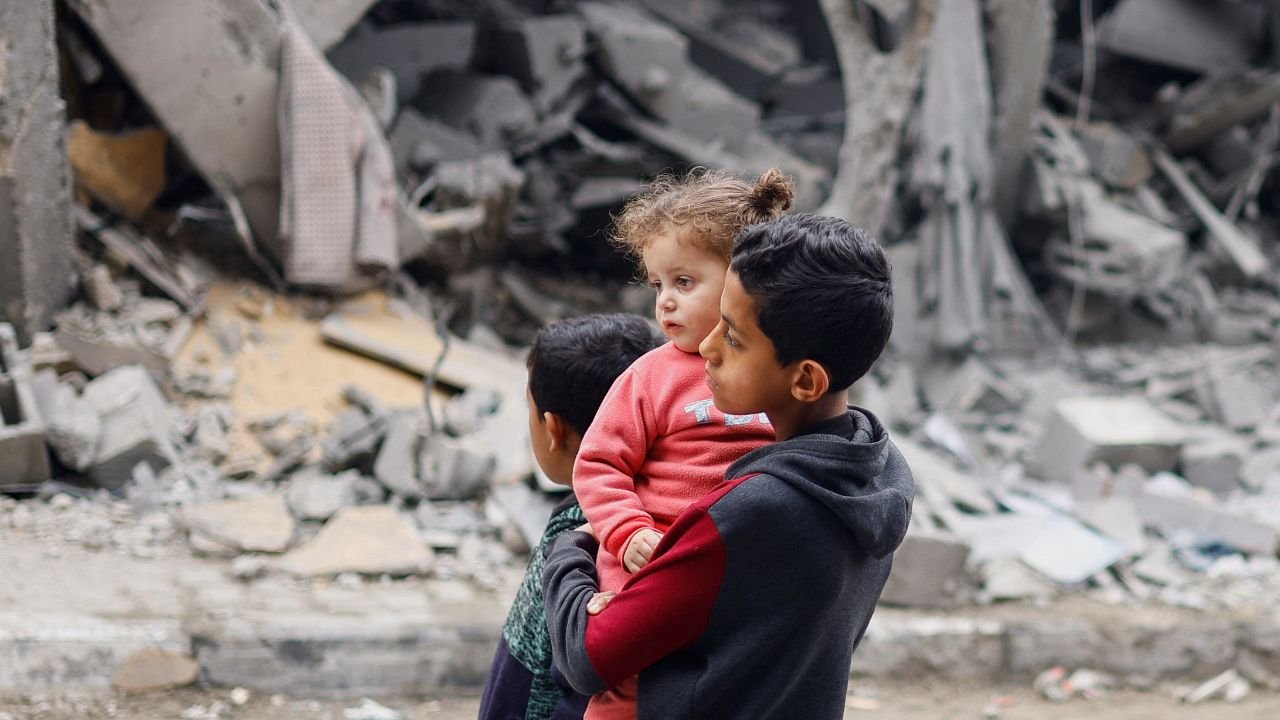
    Food and water shortages have deepened the suffering, especially in northern Gaza where residents, mostly women and children, waited in line to fill up jerrycans and buckets in Jabalia.

    “We don’t even have food to give us the energy to go to collect the water — let alone the innocent children, women and the elderly,” said one man, Bassam Mohammed al-Haou.

  • Countries call for swift implementation of UN ceasefire vote

    Countries call for swift implementation of UN ceasefire vote

    The UN Security Council on Monday called for an immediate ceasefire in Gaza five months into the grinding war, despite Israel’s ally the United States abstaining.

    Here are some reactions to the resolution to halt fighting over the Muslim holy month of Ramadan with an aim for a “lasting” truce, which drew rare applause at the Security Council:

    UN Secretary-General Antonio Guterres called for swift implementation of a ceasefire after Israel voiced anger over the resolution.

    “Failure would be unforgivable,” Guterres wrote on X, formerly known as Twitter.

    Hamas welcomed the resolution to halt fighting in Gaza while saying it was ready to negotiate the release of hostages in exchange for Palestinian prisoners.

    “We also affirm our readiness to engage in an immediate prisoner exchange process that leads to the release of prisoners on both sides,” the militant group said.

    Israeli Prime Minister Benjamin Netanyahu’s office said the UN vote “hurts both the war effort and the effort to release the abductees”.

    “It gives Hamas hope that international pressure will allow them to accept a ceasefire without the release of our abductees,” the statement said. It also took aim at the US abstention, calling it a “clear retreat” from its earlier position.

    Hussein al-Sheikh, minister for civilian affairs of the Palestinian Authority which has partial administrative control in the Israeli-occupied West Bank, hailed the resolution in a post on X.

    “We call for a permanent cessation to this criminal war and Israel’s immediate withdrawal from the Gaza Strip,” he wrote.

    Following the vote, the United States said a ceasefire can “only” be implemented once Hamas begins releasing hostages it still holds.

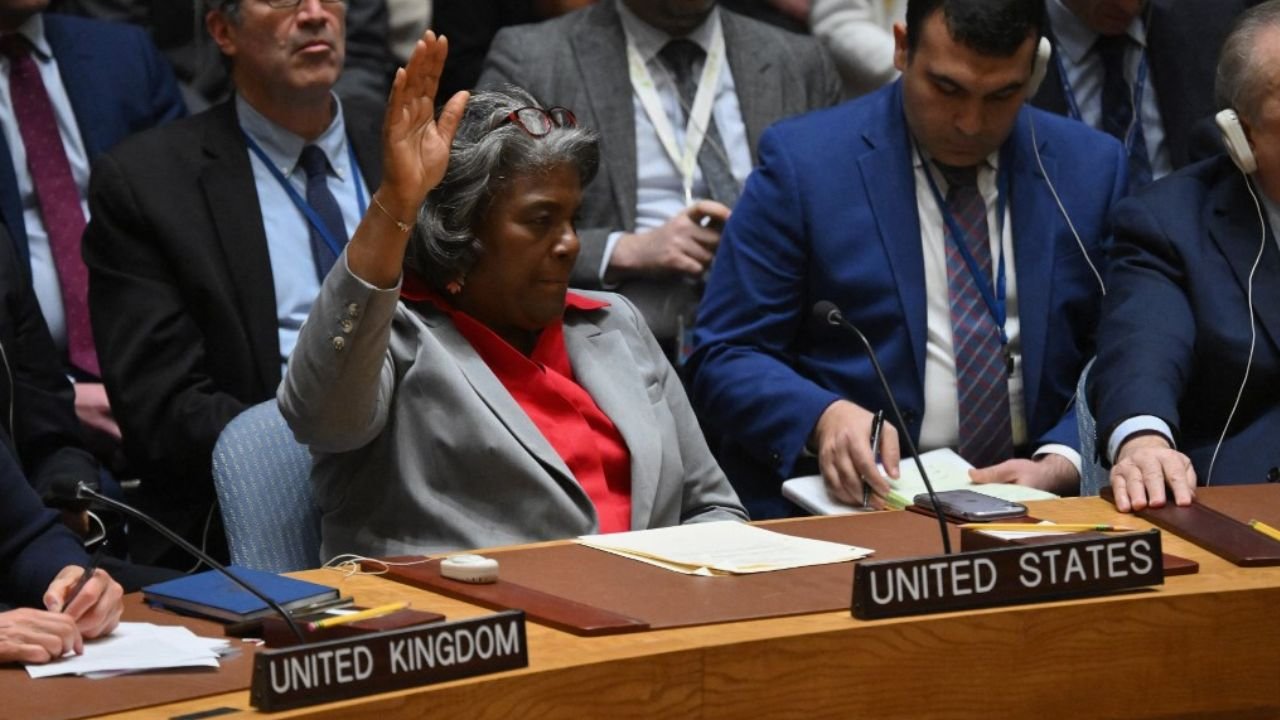
    “A ceasefire can begin immediately with the release of the first hostage,” US ambassador to the UN Linda Thomas-Greenfield said.

    After the United States vetoed previous drafts, National Security Council spokesman John Kirby told journalists that the US decision to abstain from Monday’s vote does not represent a “shift in our policy”.

    The Arab League’s Secretary-General Ahmed Aboul Gheit said the decision “comes late”.

    “The lesson now is to implement the decision on the ground, stop military operations and Israeli aggression immediately and completely,” he added.

    Top European Union officials welcomed the resolution, calling for a ceasefire and the unconditional release of all hostages.

    “Implementation of this resolution is vital for the protection of all civilians,” European Commission President Ursula von der Leyen wrote on X.

    The resolution “represents the first important and necessary step to stop the bloodshed,” the Egyptian ministry of foreign affairs said in a statement to the UN.

    The Brazilian government said it “hopes that the ceasefire will be implemented immediately, as stipulated by the resolution, and reiterated “the urgency of ensuring the effective entry of an expanded and regular flow of humanitarian aid into Gaza, as well as the release of all hostages”.

    France’s UN representative called for a sustained truce between Israel and Hamas beyond the ongoing month of Ramadan.

    “This crisis is not over,” said Nicolas de Riviere. “After Ramadan, which ends in two weeks, it will have to establish a permanent ceasefire.”

    German Foreign Minister Annalena Baerbock said she was “relieved by the adoption of the resolution”. “Every day counts,” she added.

    Baghdad’s foreign minister applauded the resolution in a statement and stressed “the importance for the parties to respect their obligations under international law”.

    Jordan’s foreign ministry expressed hope that the UN and international community would “take action to safeguard the two-state solution and ensure the establishment of an autonomous and sovereign Palestinian state”.

    Lebanese Prime Minister Najib Mikati hailed the “first stage in the process of ending Israeli aggression against the Gaza Strip.”

    He also called for a political solution “to end the conflict and give the Palestinians their rights”.

    Qatar said it hopes the resolution “represents a step towards a permanent cessation of fighting in the Strip”.

    The gas-rich emirate has been engaged in weeks of mediation between Israel and Hamas to secure a truce in Gaza and an exchange of hostages and prisoners.

    Foreign minister Naledi Pandor welcomed the resolution on public radio but stressed that “the ball is in the court of the Security Council”.

    Spanish Prime Minister Pedro Sanchez on X applauded the resolution, and said that “the realisation of two states, Israel and Palestine, living side-by-side in peace and security is the only realistic and viable solution for the region”.

    Outgoing Dutch Prime Minister Mark Rutte said the next step was “to stop the violence, free the hostages, immediately send in vastly more humanitarian aid to Gaza and find a lasting solution”.

    The country’s far-right leader, Geert Wilders, who swept to victory in recent polls, on X voiced support for Israel “against the dark forces of hate and destruction called Hamas”.

    Turkey called the resolution and prospective return of humanitarian access to Gaza “a positive step”.

    “We hope that Israel will comply with the requirements of this resolution without delay,” Turkish foreign affairs spokesman Oncu Keceli wrote on X.

    Chile’s foreign office said it was “necessary to progress the two state solution, in which Palestine and Israel can live in peace inside internationally recognised borders.”

    “I invite the world’s nations if Israel breaks this ceasefire to break diplomatic relations with this country,” said Colombian President Gustavo Petro on X.

    Amnesty International’s Secretary General Agnes Callamard said the resolution is “long overdue” and called for “an immediate and comprehensive arms embargo”.

    Human Rights Watch’s UN lead Louis Charbonneau called for Israel to halt “unlawful attacks”, for Palestinian armed groups to “immediately release all civilians held hostage”, and for the US and others to suspend “arms transfers to Israel”.

    Oxfam’s UN representative Brenda Mofya said the resolution should provide “much-needed respite from the relentless and devastating Israeli violence”.

  • UN expert accuses Israel of several acts of genocide in Gaza

    UN expert accuses Israel of several acts of genocide in Gaza

    A UN rights expert on Monday said there were “reasonable grounds” to determine that Israel has committed several acts of “genocide” in its war in Gaza, also warning of “ethnic cleansing”.

    Francesca Albanese, the UN special rapporteur on the rights situation in the Palestinian territories, said there were clear indications that Israel had violated three of the five acts listed under the UN Genocide Convention.

    “The overwhelming nature and scale of Israel’s assault on Gaza and the destructive conditions of life it has inflicted reveal an intent to physically destroy Palestinians as a group,” she said in a report, which was immediately rejected by Israel as an “obscene inversion of reality”.

    Albanese, an independent expert appointed by the UN Human Rights Council but who does not speak on behalf of the United Nations, said she had found “reasonable grounds to believe that the threshold indicating the commission of… acts of genocide against Palestinians in Gaza has been met”.

    The report, entitled “Anatomy of a Genocide”, listed those acts as: “killing members of the group; causing serious bodily or mental harm to the group’s members; and deliberately inflicting on the group conditions of life calculated to bring about its physical destruction in whole or in part”.

    Israel’s diplomatic mission in Geneva said the country “utterly rejects the report”, describing it as “simply an extension of a campaign seeking to undermine the very establishment of the Jewish State”.

    “Israel’s war is against Hamas, not against Palestinian civilians,” it said in a statement, slamming Albanese’s “outrageous accusations”.

    Israel has long been harshly critical of Albanese and her mandate, which the United States on Monday called “biased against Israel.”

    Washington is “aware” of Albanese’s report but has “no reason to believe Israel has committed acts of genocide in Gaza,” a US official told AFP.

    Last month Israel slapped a visa ban on her after she made comments denying that Hamas’s October 7 attack, which sparked the war in Gaza, was anti-Semitic.

    Israel’s relentless bombardment and ground offensive in Gaza has since killed more than 32,300 people, mainly women and children, according to the health ministry in Gaza.

    South Africa has already filed a complaint against Israel before the International Court of Justice, alleging its assault on Gaza amounts to a violation of the genocide convention.

    The court has yet to rule on the underlying issue, but earlier this year ordered Israel to do everything it could to prevent genocidal acts during its campaign and also to allow in humanitarian aid.

    In Albanese’s report, which she is due to present to the Human Rights Council on Tuesday, she maintained that Israel’s “genocidal acts” followed “statements of genocidal intent”.

    Statements by some senior Israeli officials spelling out an intent to forcibly displace Palestinians and replace them with Israeli settlers, she said, indicated that “evacuation orders and safe zones have been used as genocidal tools to achieve ethnic cleansing”.

    The report also found that Israel was treating all Palestinians and their infrastructure “as ‘terrorist’ or ‘terrorist-supporting’, thus transforming everything and everyone into either a target or collateral damage”.

    “In this way, no Palestinian in Gaza is safe by definition,” it said.

    “This has had devastating, intentional effects, costing the lives of tens of thousands of Palestinians.”

    The report also stressed that Israel’s mistreatment of the Palestinians had not begun on October 7.

    “Israel’s genocide on the Palestinians in Gaza is an escalatory stage of a longstanding settler colonial process of erasure,” it said.

  • Two out of five Yemeni children out of school: aid group

    Two out of five Yemeni children out of school: aid group

    Dubai: Nearly a decade into Yemen’s brutal war, some 4.5 million of its children are not attending school, the charity Save the Children said Monday.

    The figure underlines how precarious daily life remains in the Arabian Peninsula’s poorest country, despite relative calm since an April 2022 ceasefire.

    “Two in five children, or 4.5 million, are out of school, with displaced children twice as likely to drop out than their peers,” the group said in a report.

    “One third of families surveyed in Yemen have at least one child who has dropped out of school in the past two years despite the UN-brokered truce,” it added.

    The conflict in Yemen began when Iran-backed Houthi rebels seized the capital Sanaa in September 2014, prompting Saudi Arabia to lead a coalition to prop up the internationally recognized government months later.

    Economic insecurity amid the war has plunged two thirds of Yemen’s 33 million inhabitants below the poverty line, the charity said, while also displacing about 4.5 million people.

    “Displaced children are twice as vulnerable to school dropouts,” Save the Children said.

    “Nine years into this forgotten conflict, we are confronting an education emergency like never before,” said Mohammed Manna, Save the Children’s interim country director in Yemen.

    “Our latest findings must be a wake-up call and we must act now to protect these children and their future.”

    The report said 14 percent of families interviewed by the aid group pointed to insecurity as the reason behind their children dropping out.

    But a larger majority — some 44 percent — pointed to economic reasons, in particular the need to support family incomes. Some 20 percent said they were unable to afford regular school costs.

    “The impact of the education crisis on Yemen’s children and their future is profound,” the charity said.

    “Without immediate intervention, an entire generation risks being left behind.”

  • More than 50 arrested in crackdown against kite flyers following orders from Maryam Nawaz

    More than 50 arrested in crackdown against kite flyers following orders from Maryam Nawaz

    Chief Minister Punjab Maryam Nawaz ordered a crackdown against people making, selling and buying metal strings in kite flying.

    After the order, local police have arrested more than 40 accused in the crackdown against the kite flyers in Hafizabad, Vehari and Khushab.

    According to the police, kites, spinning wheels and metal strings were recovered from the possession of the accused.

    Meanwhile, 13 suspects were arrested after recovering 30,000 kites from kite-making factories in Faisalabad, and six kite-making machines and 5,000 spinning wheels were seized.

  • Visa woes; Arslan Ash, PUBG stars miss major E-Sports events

    Visa woes; Arslan Ash, PUBG stars miss major E-Sports events

    Tekken champion Arslan Ash, along with PUBG stars Teams Agonxi8 and 7th Elements, were unable to participate in major E-Sports events of 2024 due to visa issues caused by Pakistani policies.

    Despite their talent and dedication, the players faced obstacles in obtaining necessary travel documents, preventing them from competing on the international stage. The E-Sports community expressed disappointment over the missed opportunities and called for solutions to facilitate the participation of Pakistani players in global tournaments.

    Pakistan’s PUBG Mobile, one of the best team Agonxi8 and Seventh Elements have miss out the opportunity to play PUBG Mobile Global Open (PMGO) Brazil. PMGO is an offline tournament and the offline qualifiers of this event start from 28 March to 30 March.

    These teams didn’t get their visas on time due to Pakistan visa policies.

    The Pakistani government is not supportive of eSports. There is no platform to grow our eSports community.

    The government should take serious notice of this problem because eSports is a huge income source for many players.

    Read More: Pakistani PUBG players facing sponsor and visa issues for PMGO Brazil

  • Bushra Ansari changed after devastating family loss

    Bushra Ansari changed after devastating family loss

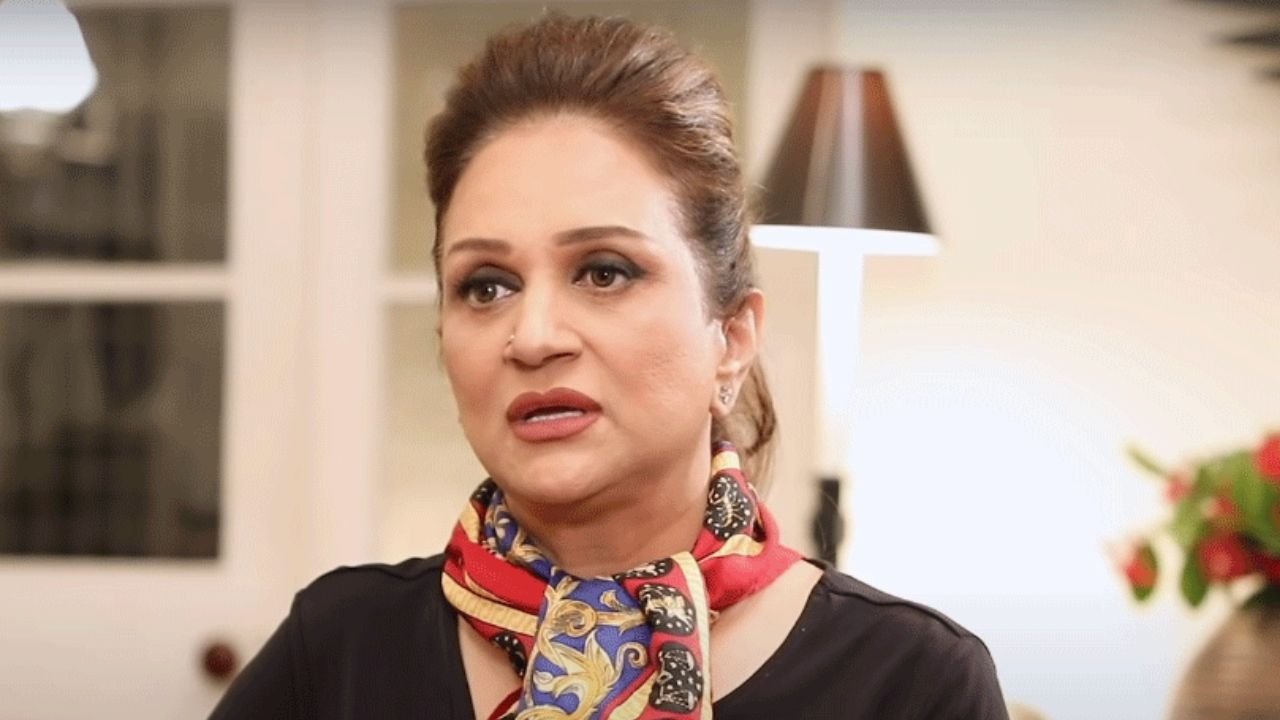
    Veteran actor Bushra Ansari and her family went through devastating family losses in recent years.
    Recently, she was a guest on Ramazan transmission Life Green Hai, where she discussed her life, daily routine, and project choices.
    She said, “My life has changed a lot after losing my family,” Bushra Ansari shared. “Losing my sister Sumbul Iqbal during the Covid era was a big shock. We had lost our nephew (Sumbal’s son) before that. Then, shortly after losing my sister, my mother passed away. All this grief has changed a lot in my mindset.”

    Bushra Ansari said, “Losing my sister and nephew made me understand that things we own aren’t so important. I don’t care about houses or fancy things anymore,” she added. “When I was stuck in Canada during Covid, I worried about who would handle everything if I passed away. So, I sold my big house and bought a small apartment to make things easier for everyone.”

  • Pakistan to review trade ties with India, says FM Dar

    Pakistan to review trade ties with India, says FM Dar

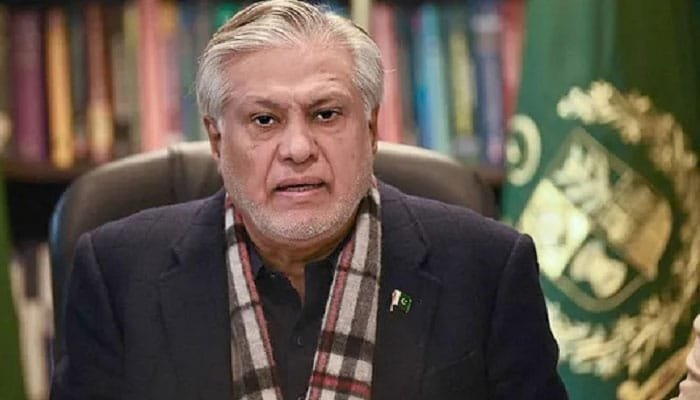
    Foreign Minister Ishaq Dar has stated that Pakistan will think about re-establishing trade relations with India, suspended since August 2019, when the Narendra Modi-led government ended the special status of Indian Illegally Occupied Jammu and Kashmir (IIOJK).

    “Pakistani businessmen want trade with India to resume,” the foreign minister said while addressing the media at the Pakistan High Commission in London at the end of his visit to the UK and Europe on Saturday.

    In August 2019, the Modi-led government unilaterally changed the special status of the occupied valley, causing Pakistan to downgrade its ties with India.

    In February 2021, despite the strained relationship between the two neighbours, Pakistan and India both agreed to renew the 2003 ceasefire agreement along the Line of Control (LoC). Pakistan has connected its choice to improve relations with India to the reinstatement of the special status of the Indian Illegally Occupied Jammu and Kashmir (IIOJK).

    Recently, Indian Prime Minister Narendra Modi congratulated Shehbaz Sharif on becoming of prime minister of Pakistan.

    “Congratulations to [Shehbaz Sharif] on being sworn in as the prime minister of Pakistan,” Modi wrote in a brief message on X, formerly Twitter.