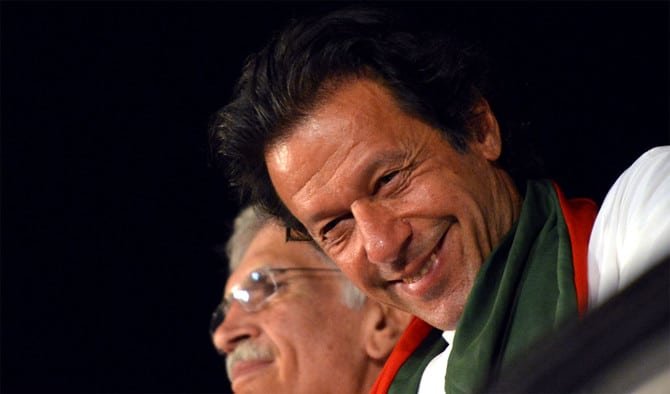
To understand the culture of fast bowling in Pakistan, look no further than Imran Khan — once a feared quick, and now the country’s prime minister.
Not all of Pakistan’s pacemen will fly so high, but Prime Minister Imran’s rise underlines a tradition where speed is king, and the blistering pace is essential for any team.
As if to reinforce the point, Pakistan have eight quicks in their 20-man squad for the three-Test series against England, starting on Wednesday, ready to unleash their trademark pace and swing.
They carry the baton passed by predecessors such as Khan, left-arm great Wasim Akram and his destructive partner Waqar Younis, the unassuming Aaqib Javed, and Shoaib Akhtar, the feared “Rawalpindi Express” who is considered the fastest bowler in history.
The current generation includes the precocious Naseem Shah, still only 17, Shaheen Shah Afridi and Wahab Riaz, and the accurate Mohammad Abbas.
The production line is so consistent that when one player goes, another is ready to take over — as seen in 2010 when Mohammad Amir and Mohammad Asif, banned for spot-fixing, were replaced by Junaid Khan, Riaz, Mohammad Irfan, Ehsan Adil and Rahat Ali.
Even Amir’s decision to retire from Tests at just 27 did not slow Pakistan, as Shaheen became the spearhead and Naseem announced himself with a stunning Test hat-trick.
But the steady emergence of quicks — left-armers, right-armers, even one who is ambidextrous — raises an obvious question: how does Pakistan keep doing it?
Former fast bowler Sarfaraz Nawaz, regarded as the pioneer of reverse swing in the 1970s, said the factors included Muslim Pakistan’s meaty diet — unlike mainly vegetarian India, once known for its spinners.
“We are a nation obsessed with fast bowling,” Nawaz told AFP. “We eat meat which strengthens the body, we love wickets clattering and the batsman shivering so it’s natural that we produce fast bowlers.”
Nawaz passed on his reverse-swing skills to Khan under whose tutelage Wasim and Waqar became “The Two Ws”, a menacing partnership in the 1980s and 1990s.
Wasim said he followed Imran’s legacy, and that pace bowling matches the Pakistani mentality.
“I think it’s the culture [to become a fast bowler], especially this generation of Waqar and I and then Akhtar, we all had a role model in Khan,” he said.
“Generally, when we talk about cricket it’s mostly about the fast bowlers, they get batsmen caught napping. We are aggressive people in nature and that’s what helps.”
Wasim often holds camps to train emerging fast bowlers, swelling Pakistan’s ranks.
“When I came, I always wanted to be a fast bowler and then a crop of fast bowlers came, and now we have Naseem, Shaheen, Mohammad Hasnain and Musa Khan who bowl at 140-150 kph (87-93 mph),” he said.
However, perhaps the most decisive factor is Pakistan’s legion of tape-ball players, who play in parking lots and disused patches of land using tennis balls wrapped in electrical tape to make them heavier, putting the onus on pace rather than spin.
Lahore Qalandars, a Pakistan Super League (PSL) franchise which has been at the forefront of nurturing fast bowlers in recent years, received more than 350,000 applicants for their talent-hunt programme — nearly half of them tape-ball players, including the ambidextrous pace marvel Yasir Jan.
“We give them a platform in our development programme and send them to Australia to hone their talent,” said head coach Aaqib Javed.
According to Wasim, fast-bowling is so deeply ingrained that Pakistan’s stocks will never run out.
“Many natural resources will dry up, but not Pakistan bowling’s reservoirs,” he said. “Our fast bowling future is secure as they follow footsteps and run-ups.”
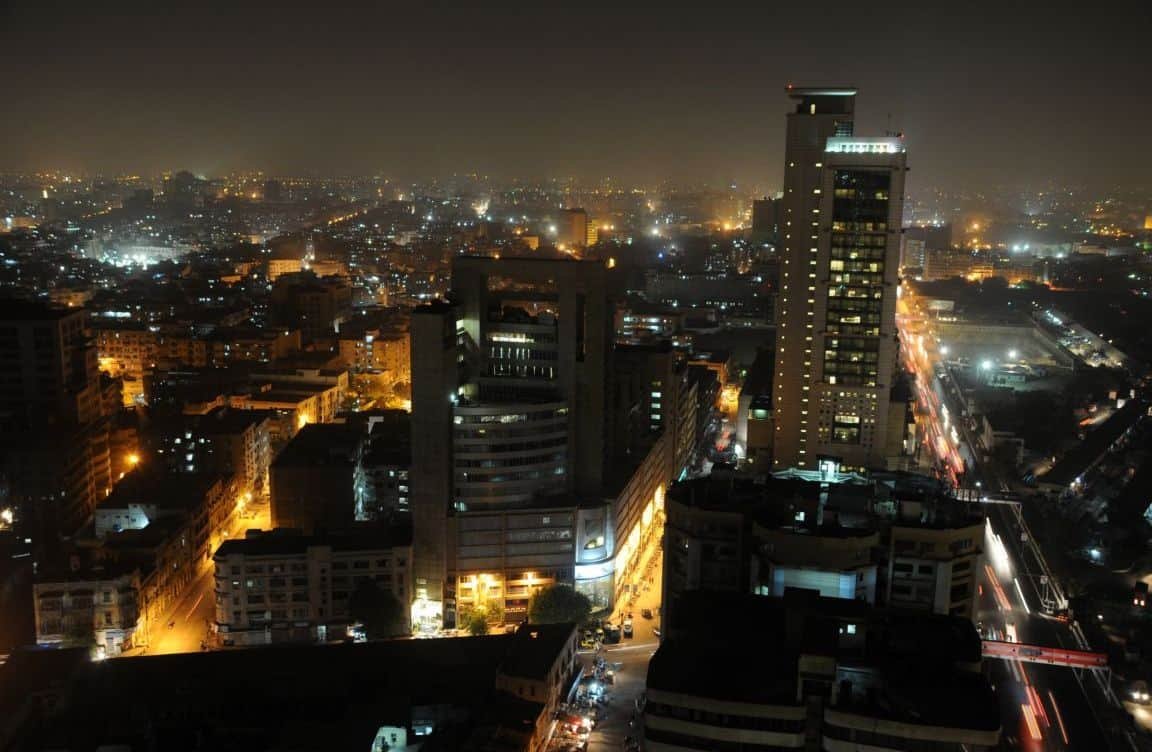
The Pakistan Meteorological Department (PMD) has predicted rain with thundershowers in Karachi and Hyderabad on August 7 and 8 (Friday, Saturday).
According to the MET office report, heavy rain in Karachi and Hyderabad may result in urban flooding and authorities have been directed to remain alert to control over the situation.
The weather in Karachi will remain partly cloudy today, while the maximum temperature can rise upto 36 degree centigrade. 70% humidity was recorded in the morning.
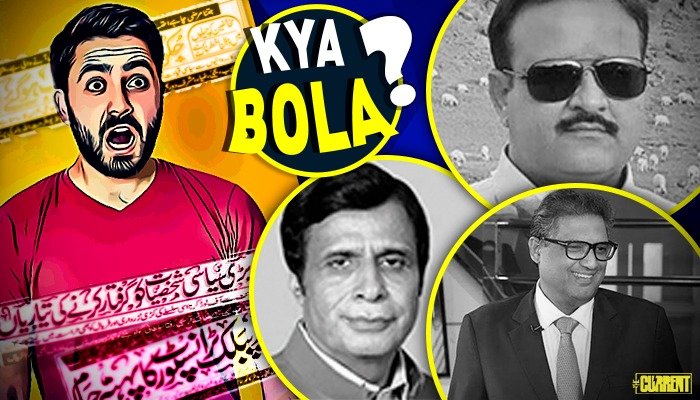
Following are some snippets that stood out from Urdu newspapers on August 4, 2020, which The Current takes no responsibility for.
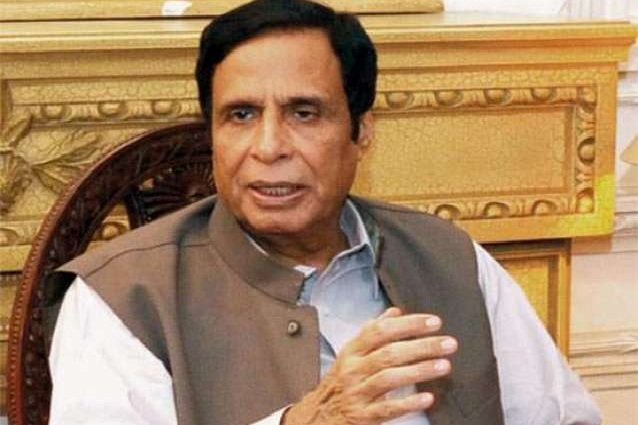
‘Wazire Aala Pervaiz Elahi’
It has been reported by Daily Jang that the participants of a meeting chaired by Pakistan Muslim League (PML) chief Chaudhry Shujaat Hussain, believe, ” Agar Usman Buzdar ko hataya gya to Pervaiz Elahi ko umeedwar hona chaheye.”
‘Imran Khan Ki Walida Ka Khat‘
Senior journalist and analyst Suhail Warraich, in his column for Daily Jang, has cited a fictitious letter by the mother of Prime Minister Imran Khan, wherein she told her son, “Tumharay siyaasi hareefon k ghar khushiyan manai jaa rahi hain. Dono khandaan khush hain k Imran Khan ne 2 saal se koi siyaasat nahi ki.”
‘Murad Ali Shah Ko Usman Buzdar Se Seekhna Chaheye’
Daily Dunya has quoted Punjab Information Minister Fayazul Hasan Chohan as saying, “Baat baat pr tanqeed karnay walay Bilawal aur Murad Ali Shah, Usman Buzdar sr governance k gurr seekhein. Safai k behtareen intezaamat pr hazaaro logo ne Usman Buzdar aur Punjab intezaamia ki tareef ki.”
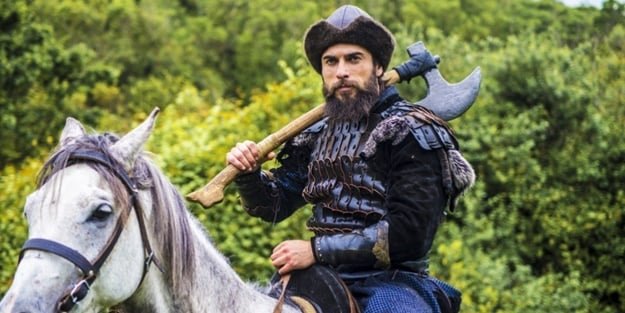
Turkish actor Cengiz Coşkun, who plays Turgut Alp, in the superhit Turkish historical series Diriliş: Ertuğrul, has revealed that he got to know of the show’s popularity in Pakistan after he started receiving marriage proposals from the country on Instagram.
In a candid conversation with Waseem Badami and Shahid Afridi, Coşkun said that has been receiving several marriage proposals from Pakistan and joked “I cannot marry everyone”. However, during the course of the interview, Coşkun also revealed that he was unmarried, but committed.
Coşkun also expressed his desire to visit the country and said that he wants to try the biryani here. When the Lahore vs Karachi biryani debate started, Coşkun said he will come and judge which one is better to which Afridi replied that he will host Coşkun whenever he comes to the country.
In the interview, the actor also said that he wants to learn cricket from Afridi and that he would love to work in the Pakistan film industry if he finds an “interesting character” to play. He also thanked Prime Minister Imran Khan for recommending the series to Pakistan because the response he received from Pakistanis was phenomenal.
To express his love for his Pakistani fans, Coşkun towards the end of the interview, also sang ‘Dil Dil Pakistan‘.
Set in 13th century Anatolia and based on the struggle of Ertuğrul Gazi, father of Osman I – the founder of the Ottoman dynasty, Diriliş: Ertuğrul has been trending in Pakistan ever since its first episode aired on PTV Home. Pakistanis are loving the drama series and it has become a sensation in the country. According to details, more than 58 million people viewed the first episode on PTV’s YouTube channel in two months, and the entire show has had more than 250 million views. PTV’s YouTube channel has also registered an exponential rise in its viewership with more than 7 million subscribers and episodes trending every day on the social media platform.
Coşkun plays Turgut Alp in the series, who was one of the early warriors of the Ottoman Empire. He was also a close friend of Ertuğrul Gazi and his son Osman Gazi.
In an exclusive interview with The Current, Pakistan Tehreek-e-Insaf (PTI) Senator Faisal Javed Khan revealed that Turkish President Recep Tayyip Erdoğan had gifted the drama series to Pakistan as a goodwill gesture.
The Madhya Pradesh High Court ruled that an accused molester who forced entry into a woman’s house could be granted bail on grounds that he agrees to get a rakhi tied by her on the day of Rakshabandhan. The court also asked the man to give Rs 11,000 to the woman as part of a customary offering made by brothers to sisters on the occasion and seek her blessings.
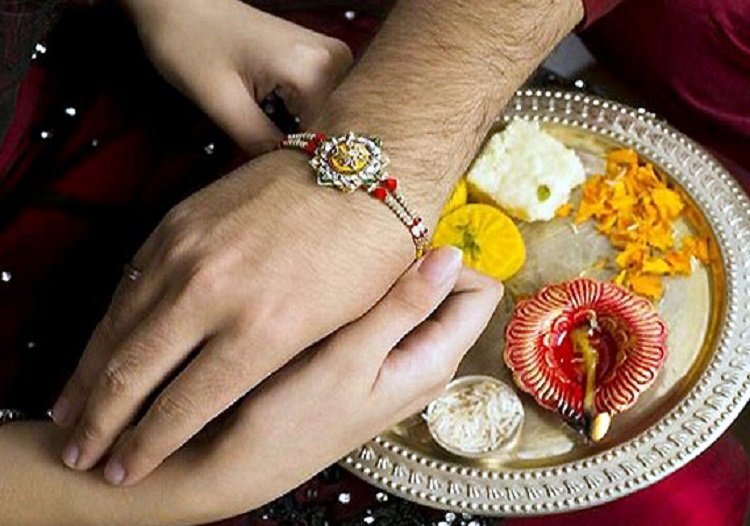
Rakshabandhan is an Indian ceremony during which a sister ties a bracelet to her brother’s wrist to honour the relationship between brother and sister.
In the order, the court said, “The applicant, along with his wife, shall visit the house of the complainant with a rakhi (thread/band) on August 3 at 11 am with a box of sweets and request the complainant to tie the rakhi band to him with the promise to protect her to the best of his ability for all times to come.”
The man named Vikram Bagri is accused of entering the 30-year-old woman’s house in Ujjain on April 20. Bagri has also been ordered to give Rs 5,000 to the complainant’s son to buy clothes and sweets.
The bizarre order sparked outrage on social media.
“The applicant, along with his, wife shall visit the house of the complainant with Rakhi thread on August 3, 2020, at 11 AM with a box of sweets and request the complainant to tie the Rakhi band to him…”
The court is sending the molester to the *victim’s* house.
A rakhi can’t stop the molester from molesting her again(life isn’t Bollywood). This is disgusting. Imagine how that girl will feel while tying rakhi to that devil. But again what else to expect from an Indian court.
Six members of the ruling Pakistan Tehreek-e-Insaf’s (PTI) digital media cell have been appointed at top positions in the Ministry of Information & Broadcasting, a notification issued on Monday by the Establishment Division confirmed.
According to the Establishment Division’s notification, one officer would be appointed at the Management Pay-II (MP-II) pay scale and five at the MP-III level. The MP-II and MP-III appointments would be equivalent to Grade-21 and Grade-20 civil servant jobs, it added.
Imran Haider Ghazali was hired at the MP-II scale, whereas Shahbaz Khan, Muhammad Muzammil Hassan, Usman bin Zaheer, Naeem Ahmed Yasin, and Syeda Dhanak Hashmi at the MP-III scale.
According to reports, following months of candidate assessments and interviews, Imran Ghazali was appointed the general manager of the Digital Media Wing (DMW).
This March, the federal cabinet approved a supplementary grant of Rs42.791 million ($256,000) for the creation of a DMW, which aims to ostensibly counter fake news that damages the federal government’s repute among social media users. The DMW is meant to help the government formulate its policies on digital media and be helpful in countering the criticism the government is facing due to inflation and high electricity tariff.
Sources told Profit that the DMW will work as a strategic unit of the Government of Pakistan to provide results-oriented media content, digital public relations, and will give authentic government updates on digital media. As the general manager of the DMW, Ghazali has been tasked with leading a data-driven, growth-oriented team to further the interests of the State of Pakistan locally and internationally.
“DMW will also be responsible for curating the digital content for official social media assets of the government,” said a source. “It will also be organising and verifying social media accounts of all federal government ministries and will be enhancing their digital media presence.”
As the founding member of the PTI’s social media team, Ghazali is credited with creating the online presence of Prime Minister Imran Khan and led social media for the political party during the 2013 elections, while working with Starcom Pakistan. The Publicis agency went on to lead the 2018 media strategy that won PTI the elections on a $4.7 million media budget.
According to an Information Ministry statement in response to media reports that the appointments had been approved without any competition, the recruitment was done according to a procedure approved by Prime Minister Imran Khan for its ‘Digital Media Wing’ back in April 2020. The latest job vacancies, the ministry added, were also advertised in the newspapers as per law.
It said a total of 76 applications were received for the position of ‘General Manager’, whereas 67 for the ‘Digital Media Consultant’ vacancy. All in all, some 461 people applied to the jobs across seven MP scales, it added.
The recruitment in the digital media wing were made by a special selection board after it conducted interviews, the ministry noted, adding that a summary of the selected individuals was approved by the Prime Minister on July 20.
Those who have been hired would be paid Rs75,000 a month, it said. The candidates for the remaining 16 posts had been shortlisted, it added further.
Meanwhile, Focal Person to PM on Digital Media Dr Arsla Khalid said all successful candidates were top names from digital media industry.
Unfortunately not true.All successful candidates are top names from digital media industry & apart from @ImranGhazaliPK who worked with PTI SMT till 2016, none has any linkage to PTIhttps://t.co/9mmSCLcKDI
He went on to say that no other successful candidate than Imran Ghazali was affiliated with the PTI, and even Ghazali, like others was a professional.
According to sources, Imran Ghazali has 14 years of experience in the industry. He is also one of the pioneers of social media campaigning in Pakistan with over 120,000 followers on his personal accounts. He has been speaking as a social media strategist at various public events and has been consulting various global organisations on digital media.
There are many things on Dr Rehman Rasheed’s mind when he walks into his small, unassuming clinic tucked away in the north of Karachi, but the overriding concern of coming across a novel coronavirus patient has taken a backseat.
After drawing comparisons with Brazil, which is now seeing an average of 50,000 new cases daily, Pakistan has dramatically reversed course and brought its number of daily new coronavirus cases from a high of 6,850 on June 13, to less than a thousand reported cases on July 26. This was also the first time in almost three months, since May 2, when Pakistan’s daily new cases were in the three figures.
“When the pandemic started, and when there was a surge in cases, there were a lot of Covid-19 patients,” says the 58-year-old general practitioner who has been working in the sprawling locality of New Karachi for the last three decades.
“But now, since the surge has been curtailed, the number of Covid-19 positive patients has drastically gone down,” says Dr Rehman.
According to the latest census, the primarily low-income area of New Karachi is home to nearly 900,000 of Karachi’s population of around 20 million, with poor levels of education and income.
Dr Rehman says one reason for continuing his clinic was that the people of the area have limited access to healthcare due to the abysmal state of government hospitals and the presence of a large number of quacks in the area. But his greatest motivation stems from the Hippocrates Oath that is historically taken by physicians. “It gives me peace that I am of some use to the people of this area. Secondly, I love being a doctor.”
This is the reason that despite his age, he is at his clinic seven days a week, working at least six hours a day and seeing a patient every five minutes.
“On average, I see 100-150 patients daily,” says Dr Rehman. But he doesn’t let this compromise on his thoroughness when checking the patients, comprising primarily of daily-wage earners.
Because of the (New Karachi) area, he does not charge a lot. “I charge Rs120 per patient,” he says, which is less than a dollar.
“The charges are close to non-existent,” says Mrs Asif, who has been bringing her ten-year-old son to the clinic since he was six months old. “Dr Rehman is basically doing welfare as he charges a token amount.”
COVID CONCERN
With the high number of walk-ins, the threat of a Covid-19 patient infecting him or other patients was always high on his mind. This problem is compounded in neighbourhoods with densely populated residential pockets and informal settlements that have poor ventilation, with residents’ miseries compounded by poor system of hygiene and sanitation as is the case in this area.
The doctor says he takes all the necessary precautions like keeping the air-conditioner off and doors open while ensuring ventilation. “I have placed a pedestal fan in front (to disperse the viral load).”
He took off the N-95 mask on our request but wears it at all other times along with his face shield, gown and gloves. This means that the situation could become sweltering, particularly for the doctor wearing multiple layers.
He also urges all his patients to wear masks at least when coming to the clinic. “Some wear masks, others don’t.”
HAPPENSTANCE
Dr Rehman’s three decade long association with the area started by chance. He took over the already operational clinic in New Karachi a few years after his graduation from the city’s DowMedical College in 1986.
Back then, his family lived nearby. However, he later shifted to the central part of the city, almost 20 kms from the clinic, but continued with it as he had already developed a clientele.
Since then, it has blossomed into a love affair, with the doctor at his clinic come rain or shine. “I am very satisfied working over here, and I make enough from my practice to have a good life.”
His wife Sadia, who works at a children’s school, agrees. “We live comfortably enough and have been able to provide quality education for our three daughters,” she says, with the eldest also a doctor.
“I expose myself to the virus more than Rehman, who covers himself completely when venturing out,” she chides herself. “There is always the nagging concern that if one person gets infected, they will give it to everyone else. That is the scary part but we take all the precautions we can.”
FRONTLINER FEARS
Healthcare professionals are at a higher risk of contracting the virus due to their proximity with potential patients, and at least 60 medical doctors have lost their lives to the virus, says Dr Atif Hafeez Siddiqui of the Pakistan Islamic Medical Association, who also heads the ENT department at the Civil Hospital Karachi.
“Those who lost their lives died of a ‘blind bullet’,” he says, explaining that a doctor sitting in his clinic won’t know which patient is carrying the virus.
He blames the poor healthcare structure and the inadequate response from the government, including unavailability of personal protective equipment. The shortage became acute initially and particularly during the time of a spike in cases, making doctors more vulnerable.
But both doctors agree that the numbers are declining and the curve flattened and on a downward trajectory, which was corroborated by their personal experiences with patients, though Dr Atif noted that the numbers of tests had also decreased.
“Previously, every third patient seemed Covid-19 positive, which isn’t the case anymore,” says Dr Rehman.
But they warned against complacency while calling for strict enforcement of standard operating procedures (SOPs).
“The number of positive cases rose to 60,000 by the end of Ramazan (May). Then, there was a peak in June, with around 135,000 infected in that month only,” says Dr Atif, adding that the burden (on healthcare) isn’t as severe as it was a month or so ago, when ICU beds weren’t available.
“Previously, the positivity rate was 25%, but that has gone down to 5%, as per late July statistics,” he added.
LIVING WITH THE DISEASE
The case incidence might decline in Pakistan and globally but until there is a vaccine, the virus will not be eradicated, says Dr Rehman.
“Most probably, the vaccine won’t be available before February next year,” he says, adding that people must learn to live with the virus and take all the precautions till that time.
Dr Atif is worried about another potential surge, similar to the one in June when there was a spike post Eid. “We have another Eid, the festival of sacrifice, coming up. We had a peak post Eidul Fitr, which has since been curtailed. If we don’t follow necessary precautions, there can be an upsurge in cases.”
This concern about a potential spike was also voiced by Sindh Health Minister Dr Azra Pechuho. She said congregations during the Islamic months of Muharram and Rabiul Awwal could result in a second wave. “Moreover, the virus impacts lungs, so a peak is possible in winters as well.”
TEPID PERFORMANCE
Calling the government’s response inadequate, he called the pandemic another wake up call for those holding the reins of power.
“If the government did its job, we wouldn’t have had to step in,” he said, saying that his organization distributed personal protective equipment (PPEs) worth Rs125 million across the country.
Dr Rehman, who dealt with the local administration, had a similar story of lip-service. “Once, the district’s deputy commissioner came to my clinic, who offered to provide essentials and get the clinic sanitized. However, I never heard from him again.”
Dr Rehman credited pharmaceutical companies for support while Dr Atif said that philanthropists and organizations stepped in to plug the gaping hole left due to the inadequate healthcare system.
“There have been a lot of announcements regarding additional salary, risk allowance, etc. But all these things are on paper only,” added Dr Atif about the Sindh government, while calling for compensation to be provided for doctors and healthcare professionals who have either died or gotten infected with the virus.
While expressing hope that the government would be ready for the second wave, Dr Rehman urged people to be responsible. “If something happens to us, it will only be a statistic for the government. But for us, it impacts our life and family.”
VIDEO CREDITS
Producer: Muhammad Hussain & Adil Jawad Shoot: Noman Ali Edit: Noman Ali & Manaf Siddique
TikTok has helped reunite a man with his brother and other family members in Sukkur.
According to reports, the brother of the missing man recognised him after a video of his went viral on the video-sharing mobile application. He then approached the local police who helped him locate his missing brother, reuniting the missing person with his family.
SSP Sukkur told media outlets that a man came to them claiming that the person who posed as a beggar in the viral video was his brother and asked for their assistance in locating him. He said that the missing man was identified as Arz Muhammad and that he was missing for more than a year. Muhammad’s family had also earlier registered a complaint with the police over his disappearance.
TikTok is one of the most popular social media apps in the country. Recently, the Pakistan Telecommunication Authority (PTA) had issued a final warning to the app over obscene and immoral content. In a statement, the regulatory body said that complaints were received from different segments of society against immoral, obscene and vulgar content on social media applications particularly TikTok and Bigo.
It also blamed the apps for bringing negative effects on society in general and youth in particular.
On Sunday, Microsoft said they are “prepared to explore a purchase of TikTok in the United States”.
This is for the first time that Microsoft has confirmed they are in talks with ByteDance, the parent company of TikTok, for the acquisition of the video-sharing platform.
Microsoft has provided notice of their intent to purchase TikTok service in the countries like the US, Canada, Australia, and New Zealand, which would result in Microsoft owning and operating TikTok services in these markets.
It is not clear how Microsoft would divide market territories from other areas where TikTok operates, like Europe and Africa.
The blog post describes the discussions as “preliminary” but addresses privacy concerns, it said the company would “ensure that all private data of TikTok’s American users are transferred to and remains in the United States.
“To the extent that any such data is currently stored or backed-up outside the United States,” the post continues, “Microsoft would ensure that this data is deleted from servers outside the country after it is transferred.”
The recent development came after a conversation between Microsoft CEO Satya Nadella and President Donald Trump.
“Microsoft fully appreciates the importance of addressing the President’s concerns. It is committed to acquiring TikTok after the complete security review and providing proper economic benefits to the United States, including the United States Treasury,” says Microsoft.
The statement further says, “Microsoft wants to acquire TikTok in a matter of weeks, probably before September 15, 2020.”
Microsoft will not purchase the platform entirely on its own investment but will ask investors to participate in the purchase of the platform.
President Recep Tayyip Erdogan has assured Turkey’s support for Pakistan’s stance on the Kashmir dispute, President Dr Arif Alvi has said.
According to a statement by the President’s Office, the two counterparts held a telephonic conversation in which they “exchanged Eidul Azha greetings” besides discussing the Kashmir issue and the coronavirus pandemic.
President Alvi said that occupation regimes were continuing their “extreme repression” in Palestine and Indian occupied Kashmir even during the coronavirus pandemic.
“[The] Turkish president assured that his country would continue to support Pakistan’s stance on Kashmir as both brotherly countries have similar goals.”
Erdogan also invited Alvi to visit Turkey after the end of the pandemic.
While congratulating Erdogan on the reopening of Istanbul’s historical Hagia Sophia as a mosque after nearly nine decades, President Alvi “reiterated Pakistan’s steadfast support to Turkey on its legitimate interests and assured that Pakistan will continue its policy to provide Turkey with all possible support”.
The Turkish leader also called Prime Minister Imran Khan and the two leaders shared their views on a range of issues.
The prime minister too felicitated Erdogan on reopening of the Hagia Sophia for prayers and told him that “millions of Pakistanis watched it live on television”, according to a tweet by the Prime Minister’s Office (PMO).
During their conversation, Prime Minister Imran recalled Erdogan’s visit to Pakistan for the sixth session of the High-Level Strategic Cooperation Council (HLSCC) in February and reaffirmed Pakistan’s commitment to “further fortify bilateral cooperation” in all areas.
“Pakistan deeply appreciates Turkey’s steadfast support for the just cause of Kashmir, which President Erdogan reaffirmed during his address to the joint session of parliament in February 2020,” the PMO said.
Erdogan’s contact with the Pakistani leadership comes days before the world marks one year since India revoked the semi-autonomous status of occupied Kashmir and split it into two federal territories, causing further determination in New Delhi’s ties with Islamabad.