Category: Uncategorized

  • ‘My mother wants me to marry my cousin who is four years younger than me,’ Yashma Gill

    ‘My mother wants me to marry my cousin who is four years younger than me,’ Yashma Gill

    Yashma Gill, a famous actress in the showbiz industry, recently shared the qualities she looks for in a life partner.
    During a TV program, she was asked, when it comes to marriage, what qualities should your life partner have.
    In response, she said, “I want to marry someone who is a nice person, somebody who has good moral values, somebody who has good ethical values.”

    The actress emphasized the importance of her partner having fear of God, as it helps them understand how to care for others and present themselves with good manners.
    During the conversation, she also revealed, “My mother has completely different thoughts about my marriage and nowadays, she’s asking our employee for my friend’s number so she can convince my friend to marry my cousin.”
    Yashma Gill said that her mother wants her to marry her other cousin, who is four years younger than her, because he is becoming part of the modeling and showbiz industry.

  • Teacher arguing with Maryam Nawaz not fired, Geo Fact-Check reveals

    Teacher arguing with Maryam Nawaz not fired, Geo Fact-Check reveals

    Following Chief Minister Punjab Maryam Nawaz’s visit to an all-girls’ high school in Lahore, social media had a large number of posts claiming that one of the school teachers was dismissed after posing questions regarding Nawaz’s male security members.

    Geo FactCheck, however, deemed the claims as false.

    Samina Shahid, the public school teacher who went viral, was contacted by Geo Fact Check and she confirmed that she has not been sacked.

    Her claims were also verified through other government personnel.

    “The [social media posts] are false. There is no truth to them,” Geo Fact Check quotes Shahid who spoke to the team over the phone on March 15, “I am speaking to you right now sitting in my office.”

    Additionally, the chief executive officer of Lahore’s district education authority, Pervaiz Akhtar, also confirmed that no teacher was fired following the visit.

    Azma Zahid Bokhari, the information minister in Punjab, stated likewise.

    “No action against any teaching or non-teaching staff has been taken by school administration after the visit of the chief minister Punjab to the government pilot girls high school Lahore,” Bokhari told Geo Fact Check via messages.

  • English court jails first offender for ‘cyber-flashing’

    English court jails first offender for ‘cyber-flashing’

    London, United Kingdom – A court in eastern England on Tuesday became the first in the country to jail someone for a new cyber-flashing offence, sentencing a convicted sex offender to 66 weeks in prison.

    A judge at Southend Crown Court handed Nicholas Hawkes, 39, the jail term after he previously admitted to the newly designated offence at an earlier appearance.

    Cyber-flashing, which can involve offenders sending people an unsolicited sexual image on social media, dating apps or by other electronic communication, became a crime in England and Wales on January 31.

    It was part of the government’s Online Safety Act.

    Hawkes, from Basildon, east of London, pleaded guilty to two counts of sending a photograph or film of genitals to cause alarm, distress or humiliation.

    He had admitted the latest offences of sending unsolicited images to a 15-year-old girl and a woman on February 9.

    The woman took screenshots of the photograph on WhatsApp and reported him to police the same day.

    Hawkes was already on the sex offenders register after a conviction last year of sexual activity with a child under 16 years old and exposure, for which he also received a community order.

    On Tuesday he also pleaded guilty to breaching that order and breaching a suspended sentence for another sexual offence.

    Victims of the new cyber-flashing offence and other image-based abuses have lifelong anonymity from the moment they report it under the Sexual Offences Act.

    jj/phz/

    © Agence France-Presse

  • Entire Gaza population at ‘severe levels of acute food insecurity’: Blinken

    Entire Gaza population at ‘severe levels of acute food insecurity’: Blinken

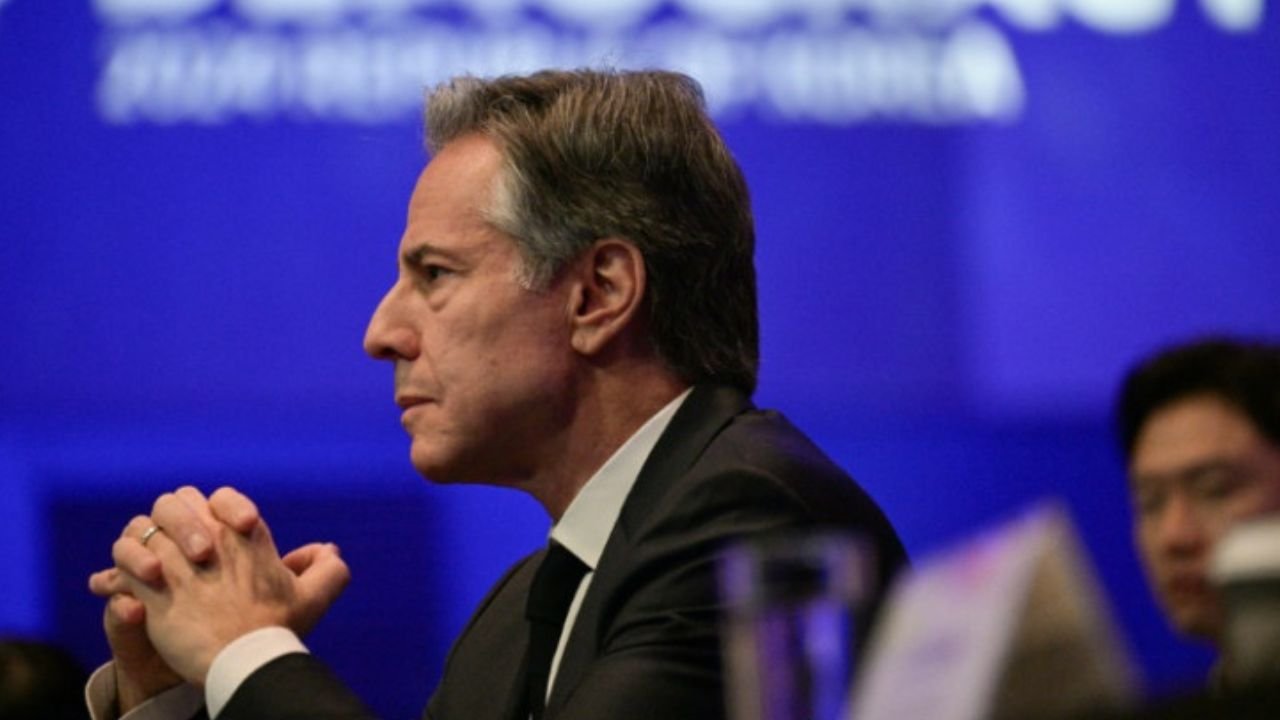
    The entire population of Gaza is experiencing “severe levels of acute food insecurity”, US Secretary of State Antony Blinken said Tuesday, underscoring the urgency for increasing the delivery of humanitarian aid into the Palestinian territory.

    “According to the most respected measure of these things, 100 percent of the population in Gaza is at severe levels of acute food insecurity. That’s the first time an entire population has been so classified,” Blinken told a press conference in the Philippines where he is on an official visit.

    Blinken’s remarks came on the eve of his return to the Middle East, this time to Saudi Arabia and Egypt, to discuss efforts to secure a ceasefire in Gaza and ramp up aid deliveries.

    A United Nations-backed food security assessment warned Monday that half of Gazans are experiencing “catastrophic” hunger, with famine projected to hit the north of the territory by May unless there is urgent intervention.

    Martin Griffiths, the UN’s humanitarian chief, has called for Israel to allow unfettered aid into the besieged Palestinian territory, saying there was “no time to lose”.

    With aid agencies reporting huge difficulties gaining access to Gaza, particularly the north, the UN has warned for weeks that a famine is looming.

    Donors have turned to deliveries by air or sea, but these are not viable alternatives to land deliveries, UN agencies say.

    The Integrated Food Security Phase Classification partnership said Monday that while the technical criteria for a famine had not yet been met, “all evidence points towards a major acceleration of deaths and malnutrition”.

    Citing UN data, Blinken said 100 percent of the population in Gaza needed humanitarian assistance, compared with 80 percent in Sudan and 70 percent in Afghanistan.

    “This only underscores both the urgency, the imperative, of making this the priority,” Blinken said of aid deliveries.

    “We need more, we need it to be sustained, and we need it to be a priority if we’re going to effectively address the needs of people.”

    Blinken is in Manila as part of a brief Asia tour aimed at reinforcing US support for regional allies against China.

    During a joint press conference with his Philippine counterpart, Blinken was asked about steps he was taking to address the lack of access to Gaza for foreign journalists.

    “There are obviously profound security considerations in an active war zone and those have to be taken into account,” Blinken said.

    “But the basic principle of access for journalists is something we stand strongly behind.”

  • Do you know what were the top three most polluted countries in 2023?

    Do you know what were the top three most polluted countries in 2023?

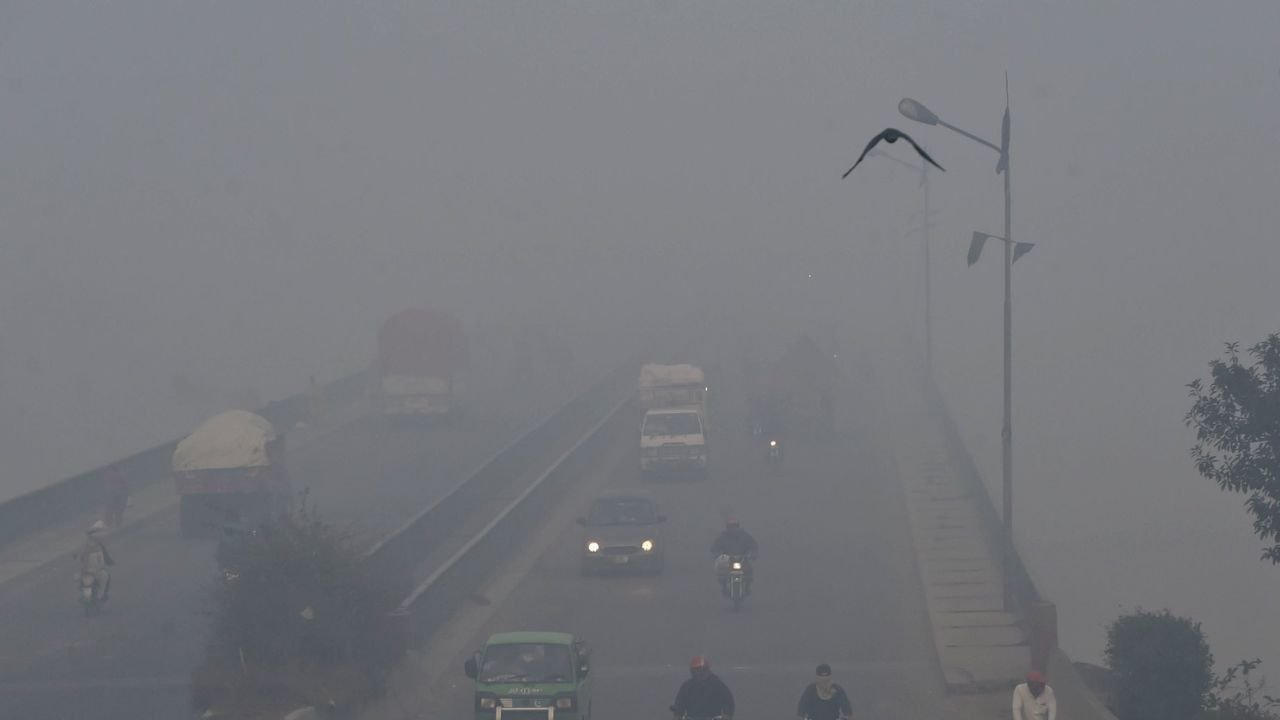
    IQAir, a Swiss air monitoring organisation, published its World Air Quality Report on Tuesday revealing troubling details of the world’s most polluted countries, territories, and regions in 2023.

    “IQAir’s annual report illustrates the international nature and inequitable consequences of the enduring air pollution crisis. Local, national, and international effort is urgently needed to monitor air quality in under-resourced places, manage the causes of transboundary haze, and cut our reliance on combustion as an energy source,” states Aidan Farrow, Sr. Air Quality Scientist, Greenpeace International.

    “In 2023, air pollution remained a global health catastrophe. IQAir’s global data set provides an important reminder of the resulting injustices and the need to implement the many solutions that exist to this problem.”

    The report revealed that Pakistan, alongside Bangladesh and India, remained among the top three countries with the highest levels of air pollution, particularly concerning particulate matter, in 2023.

    The concentrations of PM2.5, harmful airborne particles detrimental to respiratory health, surpassed recommended levels by a staggering margin, as indicated by the World Health Organization (WHO).

    In Bangladesh, the average concentration of PM2.5 reached 79.9 micrograms per cubic meter, while in Pakistan, it stood at 73.7 micrograms per cubic meter. These figures starkly contrast with the WHO’s guideline of no more than 5 micrograms per cubic meter.

    “Because of the climate conditions and the geography (in South Asia), you get this streak of PM2.5 concentrations that just skyrocket because the pollution has nowhere to go,” said Christi Chester Schroeder, air quality science manager at IQAir.

    “On top of that are factors such as agricultural practices, industry and population density,” she added. “Unfortunately, it really does look like it will get worse before it gets better.”

    In 2022, Bangladesh was ranked fifth for its air quality, with India in the eighth position. Approximately 20% of premature deaths in Bangladesh are attributed to air pollution, with related healthcare costs accounting for a substantial portion of the country’s GDP, according to Md Firoz Khan, an air pollution expert at Dhaka’s North South University.

    India also witnessed an escalation in pollution levels in 2023, with PM2.5 levels exceeding the WHO standard by about 11 times. Notably, New Delhi emerged as the worst-performing capital city, recording a PM2.5 level of 92.7 micrograms.

    China experienced a 6.3% increase in PM2.5 levels in 2023, marking a departure from five consecutive years of decline. Conversely, only a handful of countries, including Australia, Estonia, Finland, Grenada, Iceland, Mauritius, and New Zealand, met the WHO standards for air quality.

    The IQAir report, based on data from over 30,000 monitoring stations across 134 countries and regions, highlighted significant gaps in air quality monitoring, particularly in countries where the health impacts of pollution are most severe.

    Christa Hasenkopf, director of the Air Quality Life Index at the University of Chicago’s Energy Policy Institute, said 39pc of countries have no public air quality monitoring.

    “Considering the large potential benefits and relatively low cost, it’s stunning that we don’t have an organised global effort to deploy resources to close these data gaps, especially in places where the health burden of air pollution has been largest,” she said.

  • 5.4 magnitude earthquake hits Quetta

    5.4 magnitude earthquake hits Quetta

    Earthquake measuring 5.4 has hit Quetta and its neighbouring regions in Balochistan.

    The Pakistan Met Department reported that an earthquake measuring 5.4 jolted the area at 5:35 am.

    The epicenter was located 150 kilometres southwest of Quetta with a depth of 35 kilometres.

    This was followed by another earthquake at 06:24 am – a magnitude of 4.5 with epicenter located 120 kilometer southwest of Quetta and depth of 136 kilometers.

    There have been no reports of casualties or damage.

  • Sher Afzal Marwat denies Maryam Nawaz tried to assassinate him

    Sher Afzal Marwat denies Maryam Nawaz tried to assassinate him

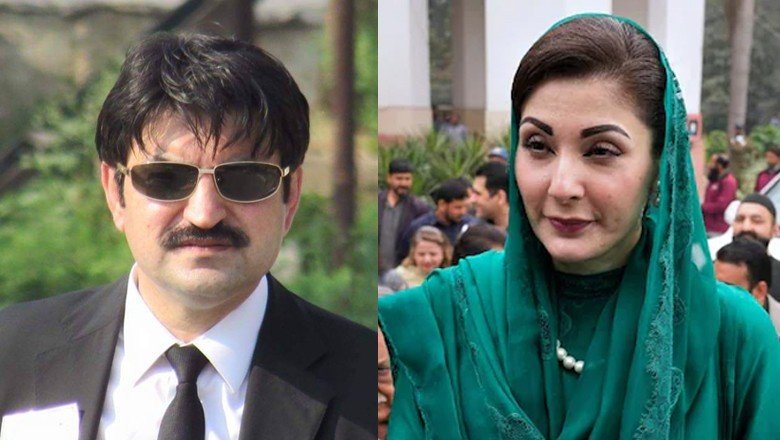
    Pakistan Tehreek-e-Insaf (PTI) leader Sher Afzal Marwat has taken a u-turn and told the Federal Investigation Agency (FIA) that Chief Minister (CM) of Punjab, Maryam Nawaz, didn’t plan his assassination. The News reported on Tuesday. 

    The PTI leader was summoned by the agency for questioning about a tweet on X, in which Marwat accused Maryam Nawaz of plotting his assassination.

    Pakistan Muslim League-Nawaz (PML-N) leader Barrister Aqeel Malik had filed a complaint against Marwat.

    Marwat told the FIA: “I didn’t name Maryam Nawaz as mastermind of the assassination plot but MNA Naseem Ali, who has concrete evidences about the plot, informed me.” 

    He also asked the FIA to summon MNA Naseem Ali for further investigation.

    On March 9, Marwat on X wrote: “It is imperative to publicly acknowledge that ‘Maryam Nawaz Sharif’ poses a threat to my life, as she has orchestrated an ‘assassination attempt against me,’ which can take place at any time.” 

    He added: “An amount of $100,000 has been allocated by Maryam Nawaz Sharif to these assassins for the “execution of my murder.”

  • Gaza world’s biggest ‘open-air graveyard’: EU’s Borrell

    Gaza world’s biggest ‘open-air graveyard’: EU’s Borrell

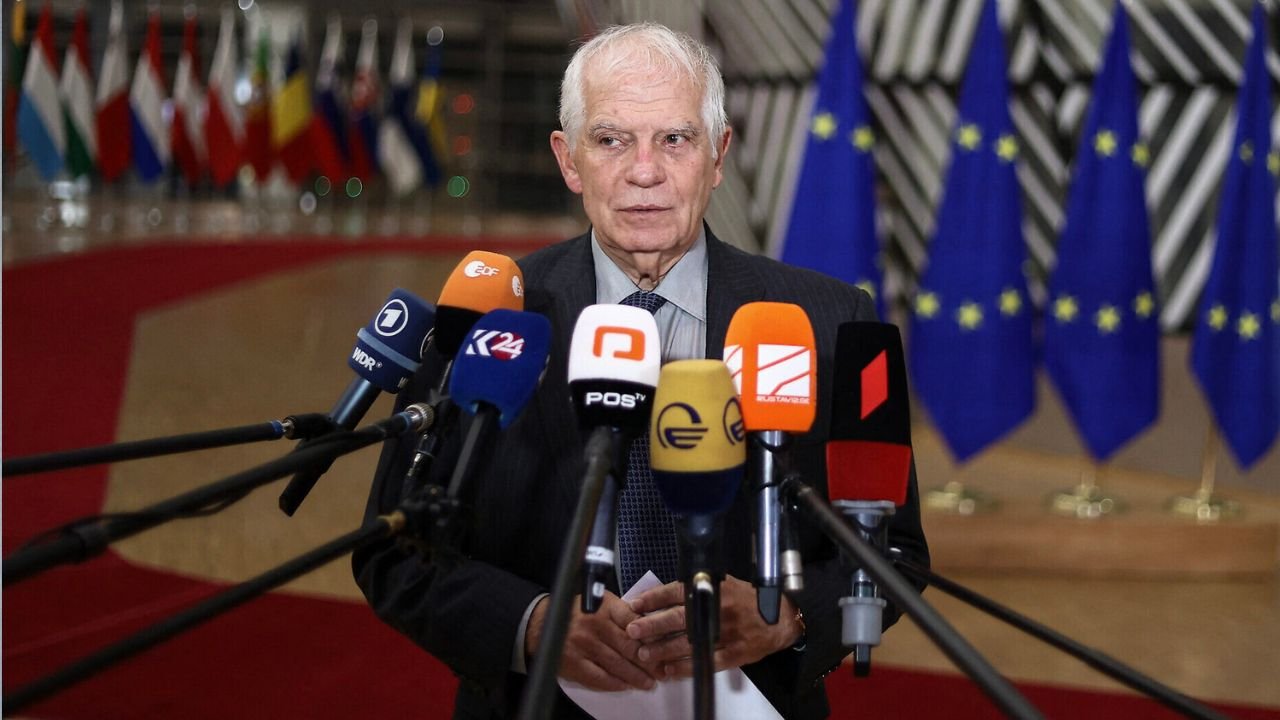
    EU foreign policy chief Josep Borrell said Monday that Israel’s military campaign in Gaza had turned the territory into the world’s biggest “open-air graveyard”.

    “Gaza was before the war the greatest open-air prison. Today it’s the greatest open-air graveyard,” Borrell said at a meeting of EU ministers in Brussels.

    “It’s a graveyard for tens of thousands of people and also a graveyard for many of the most important principles of humanitarian law.”

    Borrell on Monday also reiterated his accusation that Israel was using famine as a “weapon of war” by not allowing aid trucks into Gaza.

    “Israel is provoking famine,” he told a humanitarian conference.

    The Islamist militants also seized about 250 hostages, of whom Israel believes 130 remain in Gaza, including 33 who are presumed dead.

    Israel has carried out a relentless bombing campaign and ground offensive that Gaza’s health ministry says has killed at least 31,726 people, most of them women and children.

    The 27-nation EU has struggled to come up with a united response to the war in Gaza as some members firmly back Israel and others are more pro-Palestinian.

    EU ministers were set to discuss a proposal by Ireland and Spain to suspend a cooperation agreement with Israel, but that move was unlikely to get the support of all 27 countries.

    The bloc was however expected to agree on sanctions both against Hamas for sexual violence on October 7 and against violent Israeli settlers in the West Bank for attacking Palestinians.

    Britain and the United States have already imposed sanctions targeting a small number of “extremist” settlers.

  • TikTok and its ‘secret sauce’ caught in US-China tussle

    TikTok and its ‘secret sauce’ caught in US-China tussle

    Seoul (AFP) – As a US campaign to sever TikTok from its Chinese parent heads to the Senate, analysts say Beijing’s response to a forced sale of the app – and its ‘secret sauce’ algorithm – will be clear: Hands off.

    Under new legislation that passed the House of Representatives last week, TikTok could be banned in the United States if it does not cut all ties with Chinese tech giant ByteDance.

    But in the battle over TikTok’s future in the United States, what strikes many as a contradiction has emerged: while the company tries to convince Congress of its independence from Beijing, China has come out swinging in its defence.

    Beijing does not want a precedent to be set where a Chinese company is strong-armed into selling one of its most valuable assets, including an algorithm that is the envy of competitors, analysts say.

    “This kind of threat is like daylight robbery,” Mei Xinyu, a Beijing-based economist, told AFP. “All things considered, the Chinese government’s actions so far have been very mild.”

    “What the US government is proposing is way over the line.”

    US lawmakers and security agencies say TikTok presents a threat because China can access and use the vast troves of data the app collects for influence and espionage.

    TikTok has denied the allegations, saying it has spent around $1.5 billion on “Project Texas”, under which US user data would be stored in the United States.

    However, many lawmakers and bodies including the FBI remain unconvinced.

    Some critics have said the data itself is only part of the issue, and that the algorithm that produces personalised recommendations for TikTok users must also be disconnected from ByteDance.

    ‘The secret sauce’

    That ByteDance algorithm has helped drive TikTok’s stratospheric success since the app was launched for the international market in 2017.

    It crunches huge amounts of user data, such as their interactions on the app and their location, to provide more content tailored for them.

    Its precise details are a closely guarded secret, but it helped propel TikTok to one billion users in just four years. Facebook, by comparison, took more than eight years to reach that milestone.

    Other social media platforms also deploy tailored recommendations based on algorithms that analyse user data, but analysts say TikTok’s has been so successful that it is considered by some to be the company’s most precious asset.

    The algorithm is “valuable because TikTok is sticky. People spend more time on TikTok than they do on other social media”, James Andrew Lewis, a technology expert at the Center for Strategic and International Studies (CSIS), told AFP.

    “This is the secret sauce that makes TikTok a success.”

    The algorithm has been at the centre of discussions about any potential sale of TikTok since the administration of then US president Donald Trump sought to ban TikTok in 2020.

    That year, the Chinese government designated algorithms that provide recommendations based on user data analysis as a protected technology, meaning their export would require Beijing’s approval.

    While no specific app or firm was cited, the economist Mei said the move was “to a very large extent” because of US pressure against TikTok.

    TikTok has said that under Project Texas, its recommendation algorithm for US users is stored along with their data on Oracle servers in the United States.

    However, The Wall Street Journal reported in January that ByteDance employees in China updated the TikTok algorithm so frequently that Project Texas workers could not track all changes.

    TikTok did not respond to AFP’s questions about the Wall Street Journal report or about where its algorithm is updated.

    CEO Shou Zi Chew has said previously that TikTok will not be “manipulated by any government” and that it has never been asked by the Chinese government for US user data.

    ‘Commercial plunder’

    In Beijing, however, officials have not minced words in their opposition to the TikTok bill, saying China will take all necessary measures to protect its interests.

    “You’ve got the desire to protect the option for a relationship with the intelligence services, and you’ve got a little bit of nationalist pride because it’s so successful,” said Lewis at CSIS.

    “Some of it is just (being) annoyed with the Americans for trying to force them to sell. All of that puts Beijing right behind ByteDance.”

    Beijing wants to avoid a forced sale to protect Chinese firms, Zhang Yi, founder of the Guangzhou-based tech research firm iiMedia, told AFP.

    “Once the precedent is set, there may be countless other Chinese companies that will face a similar fate in the future.”

    Hu Xijin, a former editor of the nationalist Chinese newspaper Global Times, urged ByteDance not to give in to US pressure.

    “The essence of this matter is commercial plunder,” he wrote this month.

    “As long as ByteDance remains firm, willing to shut down TikTok rather than give up ownership, it will create reverse pressure on the passage of the bill.”


  • Karachi police officer involved in 90s operation faces death threats yet again

    Karachi police officer involved in 90s operation faces death threats yet again

    The family of Haider Ali Zaidi, a former police officer who played a pivotal role in the Karachi operation of the 1990s, is currently under threat from criminals, The News has reported.

    Haider is known for his contributions during the operation. He has been subjected to numerous terrorist attacks in the past and is once again receiving death threats, along with his family.

    One such incident occurred in 2013 near Safari Park, where Haider sustained severe injuries. Consequently, his brothers, Syed Shahid Ali Zaidi and Sultan Ali Zaidi, opted to leave the country due to persistent threats.

    Haider reported that his mother recently received a threatening call, warning of harm to her sons upon their return to Pakistan. The continuous threats prompted Haider and his brothers to relocate abroad for safety.

    Despite their desire to return home, they face renewed threats if they do so. Additionally, Haider’s younger brother Shahid was injured in a knife attack by terrorists in 2018 and was once again targeted in 2019.

    Furthermore, Haider’s sisters have been victims of terrorist attacks, while Sultan too, has faced threats. Their mother, battling cancer, has also been subjected to repeated threatening calls, adding to the family’s distress.