Category: Uncategorized

  • Wholesome quarantine life with kids

    Wholesome quarantine life with kids

    It’s been a month or so of this new reality. Social distancing and self-isolation has turned all our schedules upside down. And for parents of young kids, that means a whole lot of chaos and moods. However, there is a lot we can do to make sure our kids get a wholesome life experience even during this very surreal way of life.

    In this article I will go through the essentials that I include in a typical week to make my kids enjoy and learn from our days of social distancing.

    Follow a routine

    Children behave best when they know what to expect. The predictability of a routine or a set timetable gives them comfort and causes less anxiety. Hence try to start the day the same way and end it with a solid bedtime routine. Encourage kids to follow a timetable. For example, keep more educational activities in the first half when their minds are fresh, and more physical activities in the second half when you need to tire them out for bed! Repetition of this basic schedule helps children understand what is required and reduces tantrums considerably.
    Read more – Schools shut down? Here are some fun indoor activities for your kid

    Healthy Diet

    Since all of us are staying indoors and our activity levels have decreased quite a bit, avoiding junk and maintaining a healthy diet is essential. The healthier we eat, the more active and fresh we can be the whole day. Try your best to make majority food at home and keep all basic food groups covered throughout the day ranging from carbohydrates, meats, dairy, fats and starch to fruits and vegetables.

    Screen time

    Let’s admit screen time for kids translates to some me time for us adults, which is essential for our mental health. It is unrealistic to expect parents to engage with kids all the time without social lives or play dates. So revise your old rules and take each day at a time.

    Fun time

    It’s natural for children to want to jump around and create a mess whether that’s through arts and crafts or just free play. In these trying times don’t expect them to be robots. Let them create and imagine. In Pakistan, most houses have a garden so let them explore. And if you don’t have the great outdoors, create a space within the house which is safe for mess and fun.

    Exercise

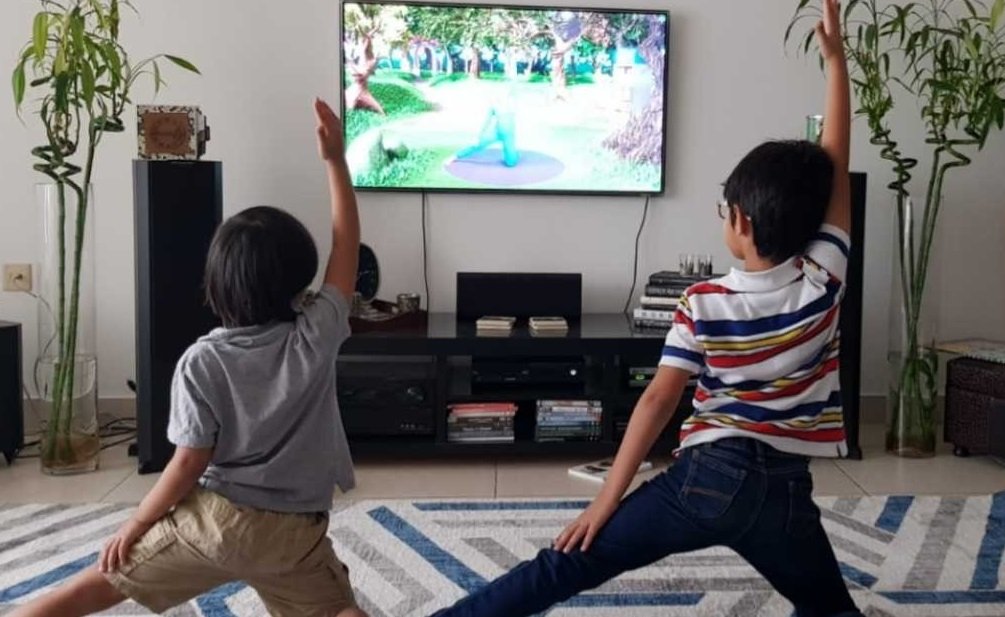
    I recommend some kind of physical exercise at home for all kids. It is the best way to get their bodies energised and fit. It also helps them get a good night’s sleep. YouTube channels are a great resource for this. Whether its cardio through dance, or yoga, be sure to spend at least 30 minutes exercising.

    Read more – Coronavirus: Six tips to manage self-isolation anxiety

    Family time

    Even though in theory us parents are with our kids day and night these days, are we really spending quality time with them all day? The answer is no and it’s normal. To think that every hour of the day will be filled with family bonding is unreasonable. In actuality, working parents are juggling between work, homeschooling, and daily chores. And stay at home parents are doing a lot of different tasks too. So take 30 minutes to an hour away from chores, work, and your mobile phones and give quality time to your kids. Whether that’s through board games or reading books together – the point is to give your children your undivided attention and make memories.
    Outdoor time

    Fresh air is a blessing now more than ever. Spending at least 15 to 30 minutes outdoors is known to increase happy hormones and relax anxious children and adults. So if you have a garden or any outdoor private safe space, use it! Go out for evening chai and snacks. And if you don’t, try to open your windows and sit by them for a little while to watch the blue skies. It will help your children feel better and appreciate a change in scenery.

    Staying connected to God

    One of the major advantages of being a Muslim is that we are reminded if the presence of a higher power at least 5 times a day. Use this opportunity to b teach your kids about Islam. Pray together if you can. Hope and faith are things that create positivity in all of us, so keep it alive as much as you can.
    Staying connected to friends and family

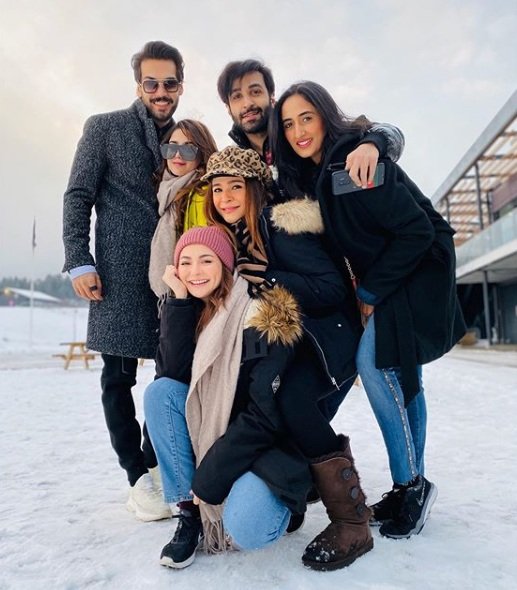
    Thanks to technology today, we can stay in touch with family and friends all over the world. Try to connect with your favourite people at least twice a week. This helps maintain relationships and helps children remember their old bonds. It creates a sense of sanity and reminds us that we are not in this alone.

    Helping hands

    The workload around the house has definitely increased for all of us since everyone is home all day and some of our temporary domestic help can also not come in. This means more food needs to be cooked, more laundry piles up, and in short more mess. In my opinion, these are all signs of life and laughter. So a family that uses and abuses the house together, should also clean and cook together. Encourage kids to help in all types of chores. This serves as an activity and helps pass the day in a productive way.
    Boredom

    Lastly, despite all of the above, there may be things you can’t manage. Some days may not have all the engagement mentioned and kids may say they are bored. To this I always say…it’s okay. Let them get bored. Boredom is actually good! It encourages them to think for themselves and sharpens their minds in more ways than giving them a well thought out activity.

    Zunaira is the author of a blog called From Dresses To Diapers. The part-time blogger and full-time mommy can be reached at her Instagram account.
  • Rethinking a post-COVID-19 future

    Rethinking a post-COVID-19 future

    “We should not go back to the old ways.”

    We are living through a global pandemic and life as we knew it will perhaps never be the same again, That’s the hope anyway. Because there are a lot of things about the way life was before that need rethinking — and COVID-19 has given us an opportunity to do this.

    In the 21st century, there was life before the virus, there is now lockdown and life during the virus and, at some point, there will be life after the virus — but will the latter be the same as our old way of living? There is much discussion now of ‘getting the economy going’ again, of getting things back to ‘normal’ again but is our plan just to restore the same economic model and the same old systems?

    Or is now the time to rethink the way we live?

    Several falsehoods about our lives have been exposed by the lockdown. Key among these is the myth that the old way of working and studying was the only way: fixed hours of attendance at sites you had to physically travel to. It turns out that this ‘hazri’ culture is not actually essential, and many of these ways of working were just constructs whose aim was to strengthen a type of corporate or darbari culture. Not allowing people to work from home stemmed perhaps from a reluctance to lose control of staff. The institutions that would hire expensive consultants to help them ‘save money’ and work efficiently told us that it was too expensive to have individual desks for staff and subjected them to the horrors of hotdesking. This apparently ‘saved’ some money yet these same organisations would be reluctant to allow staff to work from home routinely even though that would have saved even more money. The permission for ‘working from home’ was given not as the norm, but as some kind of great favour or concession which involved HR, applications and a degree of workplace politics.

    Well now nearly everybody’s working from home and we realise this has actually been possible for many, many years and that perhaps the workplace would have caught up with technology long ago if there weren’t so many dubious management practices and vested interests involved. Apart from the workplace, there is the question of the classroom and what it is — is it a physical reality or an intellectual one? In Britain, university education was once state-funded and all about education rather than businesses.

    “We’ll have to rethink education completely — especially university education.”

    But in the last decade universities have been turned into businesses which are less about education and more about profits. The students are called ‘clients’ and since university fees are now more than three times what they were ten years ago, they are saddled with crippling student debt (student loans are given by a private profit-seeking company). Students invest so much that they are afraid to challenge intellectual views of question anything professors say because they know that they need to get good grades because of their investment. Instead of concentrating on the wellbeing of their students, universities seem to have become more focused on marketing their brand in order to attract a maximum number of ‘customers’ or ‘clients’. But even when the riches poured in, it never seemed to be the academic staff who’d benefit but rather the ‘managers.’

    We’ll have to rethink education completely — especially university education. In Argentina, most young people get their first degree while working full time. Work by day and take evening classes. It might take longer but it definitely seems to be a more productive way to live. Oh, and state universities are free.  Of course, education can not all be virtually based but perhaps a large part of it does need to be.

    Then there’s the question of how society values work. Of how bankers are more highly paid and valued than ‘unskilled’ workers. How financial managers are much better paid than medical professionals. Now we realise who are the professionals that society really needs when in times of trouble: they are the medical professionals, the cleaners, the garbage collectors, the bus drivers, the police, the fire brigade, the people who run food shops and stack shelves. These are essential, these are the people we should value, these are the jobs we need to pay people well to do.

    We need to think of new businesses too. Instead of having an endless number of restaurants and coffee shops to ‘provide employment’ perhaps we should have more businesses whose goal is to contribute to community welfare employing people. We need more cooperative models of working and more localised businesses. Instead of manufacturing fast fashion and throwaway clothes which encourage frivolous spending and whose plastic fibres are clogging up the oceans and rivers, we perhaps should concentrate on businesses that produce food.

    “And guess who governments need to fund now? Not bigshot entrepreneurs and investment bankers, they need to support medical professionals, health workers and research scientists.”

    The virus and subsequent lockdown exposed a number of vulnerabilities in life as we were living it, and one of these was the matter of food production and supply. Perhaps now we need to have a national policy of localised production: local dairy farming, local livestock, locally grown fruit and vegetables. Apart from the fact that this will avoid the issue of complicated supply chains, many people in the health, economic and development sectors have long argued that this is a healthier and more sustainable way to live. This way food production would be organic and fresh – not shipped from the other side of the world. And in terms of food, we need to unlearn the mantra that endless choice is good. The illusion that the more choice you have in choosing, for example, a brand of chocolate shows how ‘free’ you are as people needs to be dispelled. And we need to move back to the idea of quality not quantity in the way we live.

    And new initiatives need to be set up to care for the environment. The enforced detox brought on by the lockdown has shown us bluer skies, clearer air and cleaner waters. We need to have a policy of setting up local initiatives to support this which are goal-oriented and not just motivated by a profit motive.

    And guess who governments need to fund now? Not bigshot entrepreneurs and investment bankers, they need to support medical professionals, health workers and research scientists. And they need to provide free broadband and digital access to all citizens because when push comes to shove this is something that will benefit the whole of society. We need more government spending, new frameworks and new initiatives based on a clear vision of what our priorities are now.

    People and governments need to come together and come up with a new way to live and a new model of economics, We can make a whole new sort of world; a world minus dodgy ‘outsourcing’, privatisation, unsound financial instruments, economic disparity and unbridled greed. But what’s needed is a lot of imaginative ideas and a bold new way of thinking. We need to be creative.

  • Did Sindh governor pass on coronavirus to an assistant commissioner?

    An assistant commissioner of Sindh’s Matiari district has tested positive for the coronavirus, according to lab reports.

    Saeedabad AC Ammar Hussain Rizvi was among the officials who had performed duties during the visit of Sindh Governor Imran Ismail, who tested positive for the virus earlier this week, to Matiari on April 22, Dawn reported.

    Rizvi, who is originally a resident of Hyderabad, has been quarantined in a facility located in his own office, an administration official said.

    Unconfirmed reports said he had come into contact with some pilgrims as well aside from being a part of the governor’s visit.

    Earlier, Governor Ismail confirmed on his Twitter account that he had tested positive for COVID-19.

    “I have just been tested Covid 19 positive, Allah Kareem inshallah will fight it out. @ImranKhanPTI taught us to fight out the most difficult in life and I believe this is nothing against what we are prepared for. May Allah give strength to fight this Pandemic inshallah,” he tweeted.

    The tweet was followed by Prime Minister (PM) Imran Khan wishing hi a speedy recovery.

    “Praying for Governor Imran Ismail’s speedy recovery from COVID19. May Allah grant him the strength to fight this,” the premier had tweeted.

  • Adnan Siddiqui regrets being on Aamir Liaquat’s show

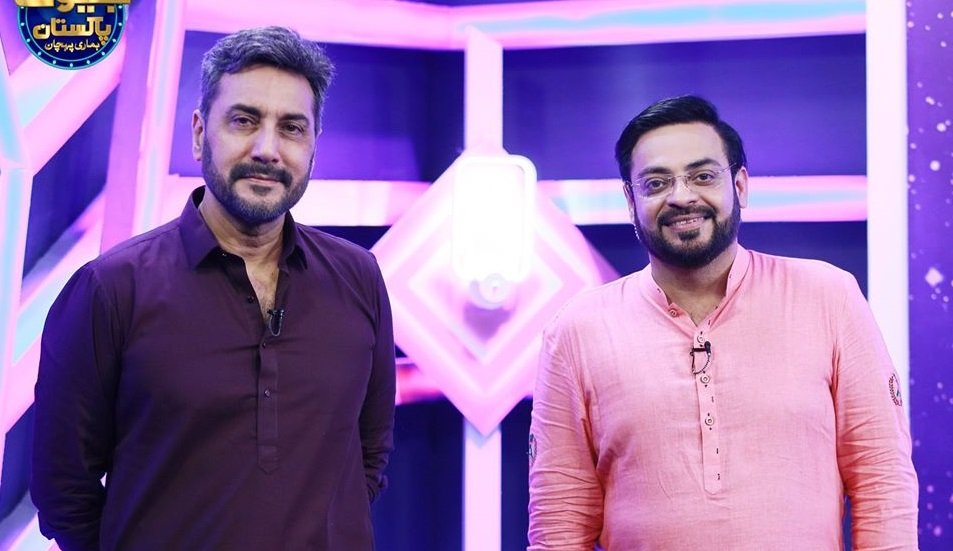
    Adnan Siddiqui regrets being on Aamir Liaquat’s show

    Adnan Siddiqui has said that he regrets being on Aamir Liaquat’s show and has apologised to Sri Devi and Irrfan Khan’s family on behalf of the host.

    VIDEO: Aamir Liaquat jokes about Irrfan Khan’s death on TV

    In a detailed note posted to social media, Adnan said, “I don’t know how to explain what I’m feeling right now or what to say. But this needs to go out.”

    He said that he was invited on Liaquat’s live chat show where the anchor joked how Adnan worked with Sri Devi and Irrfan Khan and both passed away.

    “You worked in Mom and Sri Devi died, you worked with Irrfan Khan as well and he passed away,” Liaquat had remarked on the show.

    He had further said, “You were offered roles in Mardaani 2 and Jism 2 but you declined, so the actors of those movies [Rani Mukherjee, Bipasha Basu] owe their life to you.”

    Adnan wrote, “The anchor joked about something extremely sensitive. Not only were they both close to me but also as a human, it was wrong on so many levels. I cannot even call it ‘hitting below the belt’.”

    Read more – Adnan Siddiqui recalls the last time he met Irrfan Khan

    Adnan stated that Liaquat comments were very callous and showed him and the country both in bad light. The actor then proceeded to apologise to the families of both the late actors. He said that he felt very uncomfortable with Liaquat’s comments and regrets being on the show.

    “I’ve learnt my lesson and I promise I will not tolerate such an act in future,” he added.

    https://www.instagram.com/p/B_qXys0HgfW/

    Meanwhile, following the backlash on social media, Aamir Liaquat also issued an apology.

    “Sometimes you lose control over your words,” said Liaquat in a video. “That happens in a live show. At the time it didn’t seem like a big issue but later when I thought about it, I realised my comments were inappropriate. So I’m really sorry. Keeping humanity in mind, this should not have been said. I made a mistake.”

    He added that if he doesn’t want to hurt the people of his country and wants to apologise to all those who were hurt by his comments.

  • Irrfan Khan’s wife pens a heartfelt note in his memory

    Irrfan Khan’s wife pens a heartfelt note in his memory

    Irrfan Khan’s sudden and unexpected death left millions of broken hearts across the world. The actor who had won hearts with his quiet demeanour and powerful performances left a gaping hole with his demise. Tributes poured in for the actor from across the world as his fans, colleagues and all those who worked with him remembered him.

    Read more – Adnan Siddiqui recalls the last time he met Irrfan Khan

    Two days after his passing, Irrfan’s wife, Sutapa Sikdar and sons, Babil and Ayaan have released an official statement in the form of a touching heartfelt note.

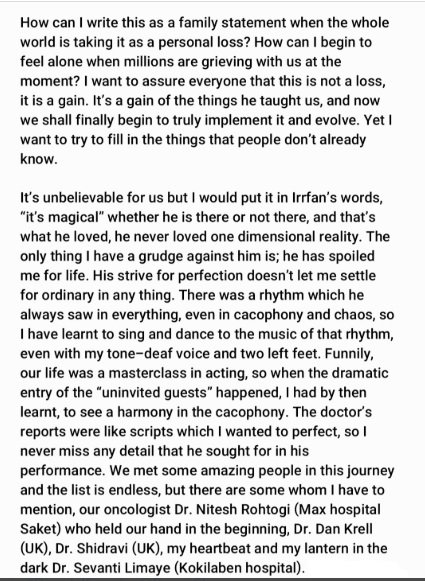
    Posted to Irrfan’s official Twitter account, the note celebrated the actor’s life and words. His wife Sutapa remarked that she didn’t feel alone and wanted to assure everyone that “it’s not a loss, it’s a gain”.

    “How can I write this as a family statement when the whole world is taking it as a personal loss?” read the statement. “How can I begin to feel alone when millions are grieving with us at the moment?”

    “I want to assure everyone that this is not a loss, it is a gain. It’s a gain of the things he taught us, and now we shall finally begin to truly implement it and evolve. Yet I want to try to fill in the things that people don’t already know.”

    “It’s unbelievable for us but I would put it in Irrfan’s words, ‘it’s magical’ whether he is there or not there, and that’s what he loved, he never loved one dimensional reality. The only thing I have a grudge against him is, he has spoiled me for life.”

    Read the full note below:

    Irrfan and Sutapa met at the National School of Drama in New Delhi and fell in love during their college days. They shared a common love for cinema and art. In February 1995, they tied the knot and were married for 25 years.

    In a recent interview, Irrfan had talked about how he wanted to live for his wife.

    “What to say about Sutapa? She is there 24/7. She has evolved into a care-giving and if I get to live, I want to live for her. She is the reason for me to keep at it still,” he had said.

    Sutapa, herself is a film dialogue writer, with films like Khamoshi, Shabd and Kahaani to her credit. She later turned producer with Madaari (2016) and Qarib Qarib Single (2017), both starring Irrfan in the lead.

  • Naya Pakistan: Govt starts paying unemployed people to plant trees

    Naya Pakistan: Govt starts paying unemployed people to plant trees

    When construction worker Abdul Rahman lost his job to Pakistan’s coronavirus lockdown, his choices looked stark – resort to begging on the streets or let his family go hungry.

    But the government has now given him a better option: Join tens of thousands of other out-of-work labourers in planting billions of trees across the country to deal with climate change threats, Reuters reported.

    Since Pakistan locked down starting March 23 to try to stem the spread of COVID-19, unemployed day labourers have been given new jobs as “jungle workers”, planting saplings as part of the country’s 10 Billion Tree Tsunami programme.

    Such “green stimulus” efforts are an example of how funds that aim to help families and keep the economy running during pandemic shutdowns could also help nations prepare for the next big threat: climate change.

    WATCH VIDEO:

    “Due to coronavirus, all the cities have shut down and there is no work. Most of us daily wagers couldn’t earn a living,” Rahman, a resident of Rawalpindi district in Punjab province, told the Thomson Reuters Foundation.

    He now makes 500 rupees ($3) per day planting trees – about half of what he might have made on a good day, but enough to get by.

    “All of us now have a way of earning daily wages again to feed our families,” he said.

    The ambitious five-year tree-planting programme, which Prime Minister (PM) Imran Khan launched in 2018, aims to counter the rising temperatures, flooding, droughts and other extreme weather in the country that scientists link to climate change.

  • Myth Buster: Can sitting in the sun save you from COVID-19?

    Myth Buster: Can sitting in the sun save you from COVID-19?

    Myths and misinformation related to COVID-19 are abundantly available on social media. This means that every piece of information you read regarding the virus may or may not be true. The best is to go to a trusted source like the World Health Organisation (WHO) to check any remedy or cure that might come up these days.

    Fact 1: Exposing yourself to the sun or temperature higher than 25C degrees does not prevent nor cure coronavirus.

    Fact 2: COVID-19 is not transmitted through houseflies.

    Fact 3: Spraying or introducing bleach or another disinfectant into your body will not protect you against COVID-19 and can be dangerous.

    Fact 4: 5G mobile networks do not spread COVID-19.

    Fact 5: Being able to hold your breath for 10 seconds or more without coughing or feeling discomfort DOES NOT mean you are free from the infection.

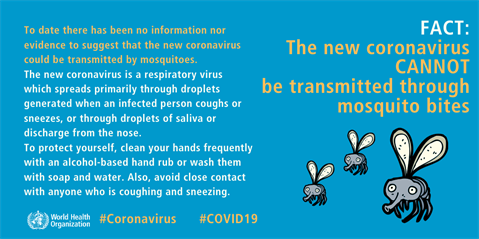
    Fact 6: The new coronavirus cannot be transmitted through mosquito bites.

    Fact 7: Taking a hot bath does not prevent the new coronavirus disease.

  • VIDEO: Sushmita Sen recites the Holy Quran

    VIDEO: Sushmita Sen recites the Holy Quran

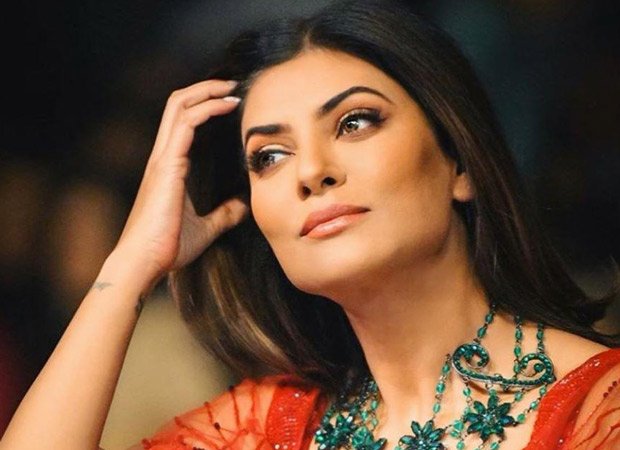
    A video of Bollywood actor Sushmita Sen fluently reciting a Surah from the Holy Quran has gone viral on social media.

    According to details, during an Instagram Live session, a fan requested Sushmita to recite a Surah from the Quran, following which the actor recited Surah Al-Asr. Her daughters, who were also part of the live session, joined her in reciting the verses.

    Watch video:

    During the session, Sushmita also recalled her visit to Pakistan. When a follower from Multan asked her when she will be visiting the country, the actor replied, “Soon I hope. I really really hope. I’ve been to Karachi three times and each time I have been received with a lot of love. It’s been a long time since I’ve visited.”

    Read more – Rishi Kapoor’s unfulfilled wish: a visit to Pakistan

    Meanwhile, other than the Holy Quran, Sushmita also recited prayers of other religions during the session.

  • VIDEO: Aamir Liaquat jokes about Irrfan Khan’s death on TV

    VIDEO: Aamir Liaquat jokes about Irrfan Khan’s death on TV

    Controversial televangelist and TV host Aamir Liaquat Hussain has made an insensitive comment about the death of Bollywood actor Irrfan Khan, who passed away in India on Wednesday.

    During a television programme, Liaquat, while speaking to Pakistani actor Adnan Siddiqui, commented on the Indian actor’s death in a way that made Siddiqui uncomfortable.

    Highlighting the career of the Pakistani actor, he said, “You worked in Mom and Sri Devi died, you worked with Irrfan Khan as well and he passed away.”

    “You were offered roles in Mardaani 2 and Jism 2 but you declined, so the actors of that movie owe their life to you,” he continued.

    WATCH VIDEO:

    https://youtu.be/XxLxeDtDHGM

    Siddiqui, who was taken aback by Liaquat’s comment merely said that it was not something to joke about.

    Aamir Liaquat, who is not new to controversy, has landed in hot water for his statements time and again.

    IRRFAN KHAN’S DEATH:

    Bollywood actor Irrfan Khan left the world mourning after he breathed his last at age 53 on Wednesday.

    After the news of his death broke, Bollywood bigwigs stepped forth to extend their deepest condolences for the veteran actor who represented the Indian film fraternity in the West with films like Life of PiThe Namesake and Slumdog Millionaire. 

    He was admitted to Mumbai hospital on Tuesday after his health deteriorated.

    Irrfan was diagnosed with a neuroendocrine tumor in 2018 and had been undergoing treatment in Britain.

    He had returned to India after recovering and wrapping his last movie, Angrezi Medium. The movie was shot immediately after his round of cancer treatment ended.

  • Rishi Kapoor’s unfulfilled wish: a visit to Pakistan

    Rishi Kapoor’s unfulfilled wish: a visit to Pakistan

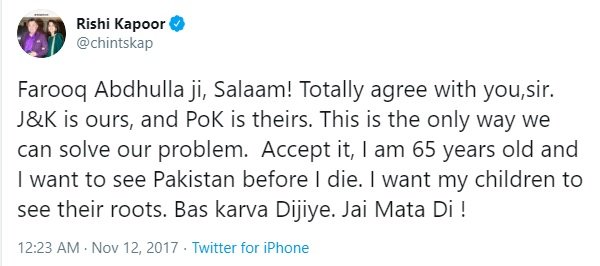
    With a heavy heart, the world has bid goodbye to veteran actor Rishi Kapoor, who breathed his last Thursday morning. A few hours after his death, an old tweet of the actor surfaced in which he expressed his desire to visit Pakistan so that his children can see their roots.

    IN PICTURES: Rishi Kapoor’s funeral

    In the tweet, shared in November 2017, Kapoor appeals to Kashmiri politician Farooq Abdullah to solve the Kashmir issue so that he can visit Pakistan before he dies.

    Unfortunately, the actor passed away before that could happen and the past couple of years has seen Indo-Pak relations go from bad to worse.

    Rishi, himself had strong ties with Pakistan. Not only are his ancestral roots in the country but he was also connected with the people here especially via social media and often engaged in heated debate with them.

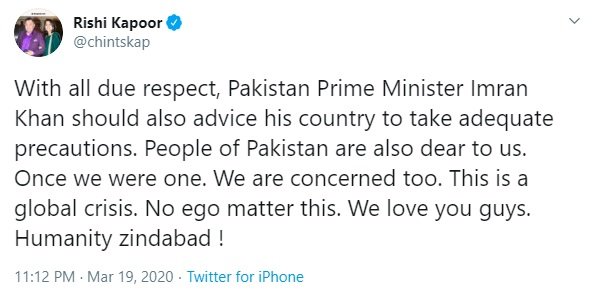
    A few weeks before his demise, Kapoor had asked Prime Minister Imran Khan to “advise his country to take adequate precautions.”

    “People of Pakistan are also dear to us,” the actor had written in a tweet.

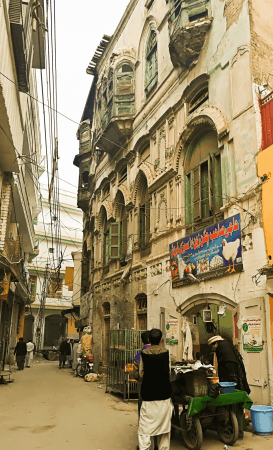
    Rishi’s ancestral home, popularly known as the ‘Kapoor Haveli’ is located in Qissa Khwani Bazar, in Peshawar Pakistan. Rishi’s father Raj Kapoor, grandfather and patriarch of the Bollywood royalty Prithviraj Kapoor and grand uncle Trilock Kapoor were all born in this building. According to details, the house was constructed between 1918 and 1922 by Dewan Basheswarnath Kapoor, father of Prithviraj Kapoor. However, after the partition the Kapoors’ migrated to India.

    The magnificent haveli has about forty rooms with exquisite overhanging balconies and astonishing floral motifs in its front.

    In 2019, Rishi had requested the Government of Pakistan to preserve his ancestral home and convert it into a museum.

    Minister of Foreign Affairs Shah Mahmood Qureshi, at that time, had said, “There was a call from Rishi Kapoor. He requested that his family’s home in Peshawar should be made into a museum or some sort of institution. We have accepted his request.”

    Similarly, Shehryar Afridi, who was serving as the Interior Minister at that time had shared that the actor had called him personally with his request.

    “He had called me and talked about making his ancestral home into a museum. Now the federal and provincial governments are working on this and will transform the house into a museum soon,” Afridi had stated.

    Rishi had last visited Pakistan with Shashi Kapoor and Randhir Kapoor in 1990. They had travelled to Peshawar to see their family’s house and also took some soil from the house to keep their heritage intact.

    Decades later, Rishi shared a picture from the visit on social media.

    Kapoor breathed his last a day after he was admitted to the hospital after he complained of breathing difficulties. The actor had been battling with cancer for a while now.

    Read more – Veteran Bollywood actor Rishi Kapoor passes away

    Announcing his demise, the actor’s family in a statement had said that he remained his jovial and entertaining self till the end and that he would “like to be remembered with a smile and not with tears.”