Category: Uncategorized

  • Nauman Ijaz proves yet again that he’s an excellent dancer

    Nauman Ijaz proves yet again that he’s an excellent dancer

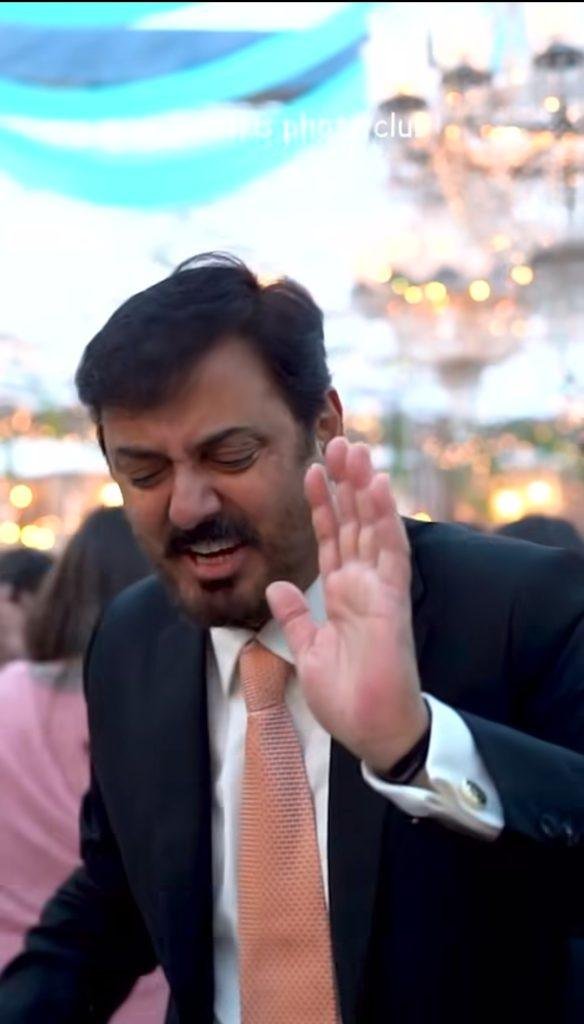
    Veteran actor Nauman Ijaz is known for his brilliant performances in many Pakistani dramas but do you know, the man can shake a leg too?

    Recently, he and his family were seen at a family member’s wedding where
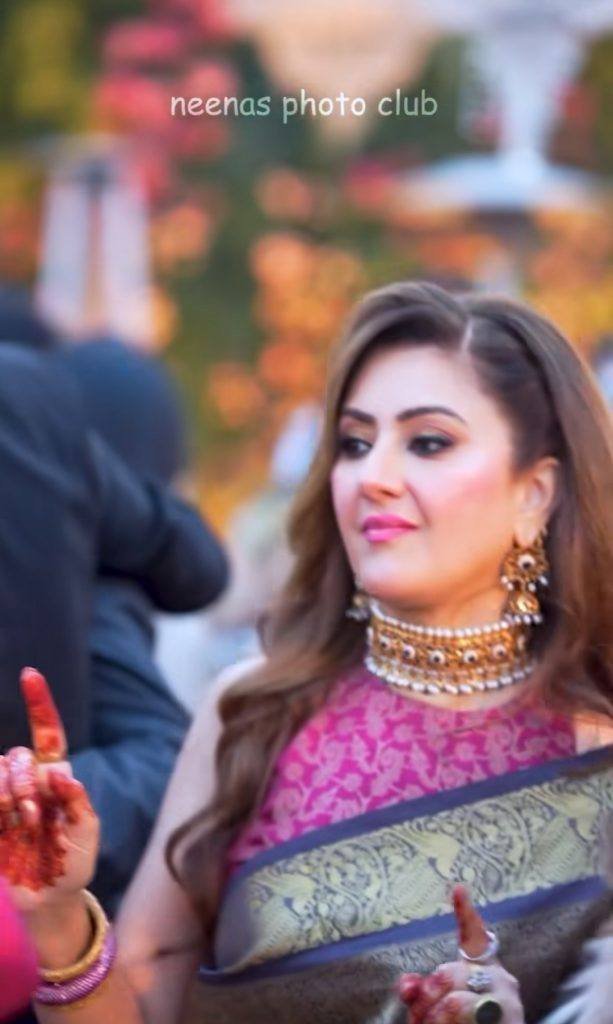
    Nauman along with his wife Rabia and their son Zaviyar, showcased their amazing dance moves. They were joined by other family members in the dance.
    Rabia Nauman looked stunning in a beautiful embellished formal outfit, while Zaviyar and Nauman looked dashing in their stylish attire.
    The dance video from the event, shared by Neena’s Photo Club, captures the joyful moments of the family’s performance. Fans of Nauman Ijaz always appreciate his phenomenal acting skills, and now they can also enjoy seeing his family’s fun-filled dance at the wedding.Nauman Ejaz also danced at a previous wedding, and people enjoyed it. Read more:https://thecurrent.pk/nauman-ejazs-adorable-dance-at-family-wedding-has-fans-in-rapture/

  • What do YouTubers do it for?

    What do YouTubers do it for?

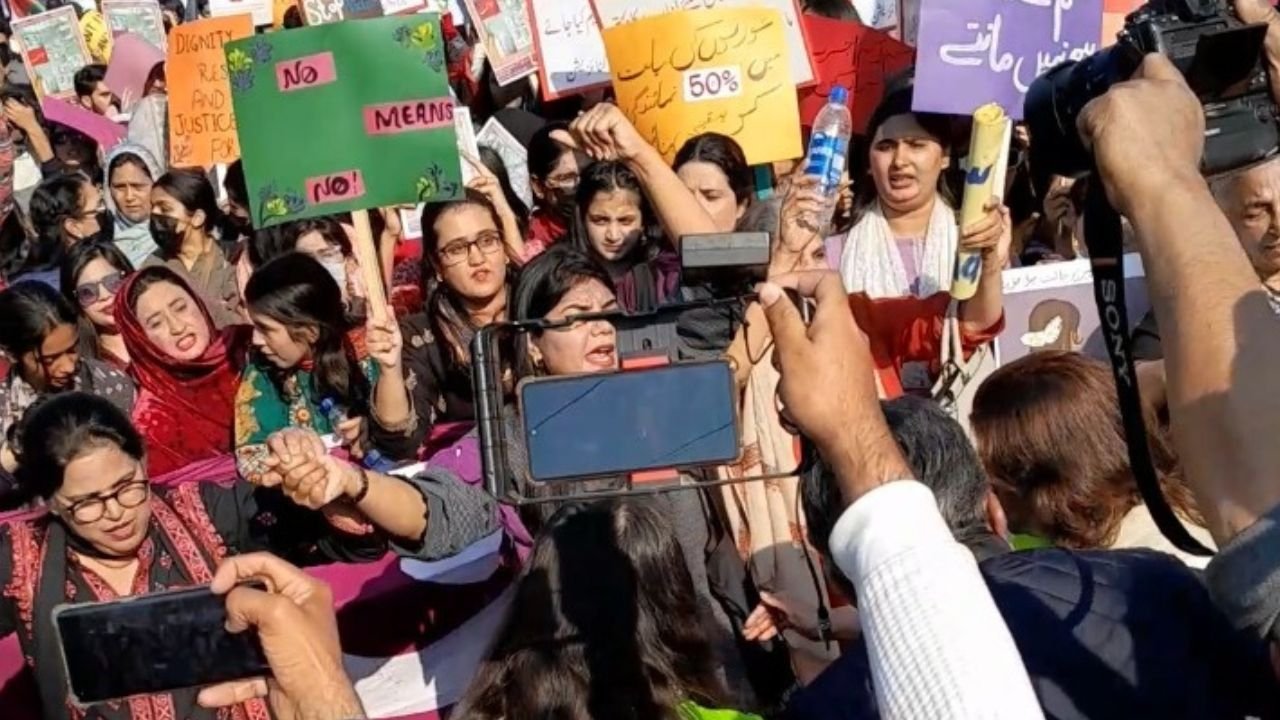
    Picture this: You’re eagerly anticipating a visit to a pristine beach, breathlessly savouring the joy it will bring you. But upon arrival, you find yourself in a forest of unsightly weeds, your view destroyed, your expectations shattered. This analogy encapsulates the experience of attending Aurat March since a couple of years.

    What promised to be a show of solidarity is marred by the presence of disruptive YouTubers.

    Aurat March is an annual gathering for women and gender minorities where they lay down their demands before the state as well as celebrate sisterhood. It is an extension of the long-fought struggle of Pakistani women, extending from the country’s birth to this day.

    But standing against the march is an extremist segment of society — a mindset further fueled by Youturbers and reporters from small news channels. With the monetization of YouTube, video creation has developed an appeal for many around the world. A number of vloggers have achieved financial success solely through their YouTube endeavours.

    You must have noticed that content creators often promise rewards or incentives for their viewers if they help them reach 1000 views. This metric, known as Clicks Per Mile (CPM), determines the earnings generated from these views, with one crucial factor being the geographic location of the audience.

    In Pakistan, YouTube offers lower payouts compared to other regions, ranging from 0.5 USD to 1 USD per 1000 views, particularly if the viewership is primarily Pakistani.

    While this may appear modest, the potential for increased earnings exists through attracting international viewership and maintaining a consistent upload schedule. With dedication and growing subscriber counts, Pakistani content creators on YouTube can unlock substantial earning opportunities over time.

    This is why, to get more views, Youtubers now resort to clickbait i.e. misleading headlines and captions while the content too, is deliberately sensational and controversial. For this, truth is compromised as reality is misquoted and misconstrued.

    And so, Aurat March has become a coffer of abundance for content creators.

    The March’s organisers have, time and again, received complaints from the attendees who are pestered by YouTubers who deliberately try to provoke the women with problematic questions. In a staunchly misogynistic society, even a slightly irritated woman is worth a few thousand views.

    This year, at Aurat March Lahore, a YouTuber made his way to the congregation for the first time. When asked why he came to cover the March, he counter-questioned, asking why women felt the need to come out on the streets since “women already have rights”.

    Not only was this YouTuber unwilling to listen to the people willing to list down the reasons why women march, it also showed that he had not read the charter of demands nor the manifesto — another common bad habit of Youtubers.

    “What problems do women have? Hasn’t your dad kept your mother happy? What about those men who aren’t happy because of the women in their lives?” another asked as he allied himself with his counterpart.

    “It seems like you come with preconceived notions about the March and the attendees, and an ill will to malign the voices altogether”, I asserted as the YouTuber then resorted to misinterpreting ‘Mera Jism, Meri Marzi’.

    In reply, their questions and comments only got more personal and extreme.  “Are you a Muslim,” he asked.

    “You should have your head covered because it is a compulsion in our religion,” he claimed, adding that women’s immodesty was the reason for increase in rape as he conveniently absolved men of all actions.

    With a limited understanding of the slogan, and basing it on attire and perceived vulgarity, YouTubers like these appear worryingly ignorant of everyday struggles women have to encounter from domestic spaces to state institutions like the court.

    Worse still, they hope to get clicks from the thousands of patriarchal followers they have amassed by bashing women. Only last month, former Prime Minister Imran Khan’s wife became a target in a courtroom where weightage was given to her opponent i.e. her ex-husband’s claims about her menstrual cycle rather than the woman herself. The court then annulled her marriage deeming her claims as lies. This sparked outrage across the country from civil society as it took away a woman’s agency from her own body while a man’s claim was taken into consideration for the judgement.

    This also made people reconsider their understanding of the slogan ‘Mera Jism, Meri Marzi’ — a phrase that merely demands the patriarchy to keep its hands off women’s bodily integrity.But the naysayers choose to keep their eyes and ears muffled.

    “We are disappointed that like every year, this year also YouTubers chose to come to the March as bad faith actors who resorted to harassing the marchers and disrupting our art installations for content when they couldn’t find any other fodder for their click-bait coverage”, said an Aurat March representative from Lahore.

    On the other hand, Yusra Khan from Multan narrates that while it was welcoming to see YouTubers and journalists covering the March this year and broadcast it for women who could not make it, it was concerning to see how their behaviour was troublesome for the attendees as well as the image of the March.

    “They tried asking some controversial questions but the women countered them very well, but their body-language was aggressive and they topped that with personal comments on the female interviewees which clearly showed that they wanted to create a controversy and add it to their YouTube thumbnail to increase the rating for their content”, she said.

    While women, as well as some men, countered the clickbait machine, many avoided them altogether. Khan recalls that their focused revolved around questions like: “You do not know anything regarding the March, then why are you here?What freedom do you need?”

    Adding that they seemingly came with the goal to spread negative propaganda on social media and like the previous years, make Aurat March a controversy.

    “But our spirits are undeterred. Marchers still had fun!”, reminds a representative of Aurat March Lahore amidst all the attacks.

    It is time that the journalist community unite against disinformation and malinformation. Above all, there is a need to draw a line between content creation and journalism.

    Till then, come what may, March tou har saal hoga!
  • Aid boat readied as Israeli attacks in Gaza rage before Ramadan

    Palestinian Territories – A boat laden with food for Palestinians in Gaza was “ready” to set sail from Cyprus, an NGO said Saturday, as Israeli military operations in Gaza raged.

    The sea route aims to counter aid access restrictions, which humanitarians and foreign governments have blamed on Israel, more than five months into the genocide which has left Gaza’s 2.4 million people struggling to survive.

    Hopes were fading fast for a pause in the fighting before Ramadan, which could begin as early as Sunday depending on the lunar calendar, as Israel accused Hamas of seeking to “inflame” the region during the Muslim fasting month.

    The United Nations has repeatedly warned of looming famine, particularly in north Gaza where no overland border crossings are open.

    In Rafah, in Gaza’s far south, “we can barely get water,” said displaced Palestinian woman Nasreen Abu Yussef.

    Roughly 1.5 million Palestinians have sought refuge in the city, where Atallah al-Satel said he wanted an end to the genocide.

    “We are just exhausted citizens,” said Satel, who had fled to Rafah from Khan Yunis.

    Spanish charity Open Arms said its boat, which docked three weeks ago in Cyprus’s Larnaca port, was “ready” to embark but awaits final authorisation.

    It would be the first shipment along a maritime corridor from Cyprus — the closest European Union country to Gaza — that the EU Commission hopes will open on Sunday.

    Open Arms spokeswoman Laura Lanuza told AFP that Israeli authorities were inspecting the cargo of “200 tonnes of basic foodstuffs, rice and flour, cans of tuna”.

    US charity World Central Kitchen, which has partnered with Open Arms, has teams in the besieged Gaza Strip who were “constructing a dock” to unload the shipment, Lanuza said.

    With ground access limited, countries have also turned to airdropping aid, although a parachute malfunction turned one delivery deadly on Friday.

    The health ministry in Gaza said three more children had died from malnutrition and dehydration, with the total number of such deaths now 23.

    ‘Only part of the solution’

    Another 82 people were killed in strikes over the previous day, the ministry said, bringing the number of deaths in Israel’s bombardment and ground offensive of Gaza to 30,960, mostly women and children.

    Israel’s campaign to destroy Hamas began after the movement’s October 7 attack on Israel resulted in about 1,160 deaths, mostly civilians, according to Israeli official figures.

    The UN’s World Food Programme has warned that the volume of aid that can be delivered by sea will do little if anything to stave off famine in Gaza.

    European Commission chief Ursula von der Leyen, in Larnaca on Friday, said a “pilot operation” would be launched in partnership with World Central Kitchen, supported by aid from the United Arab Emirates.

    A US effort for a “temporary pier” to receive aid off Gaza, which the Pentagon said would take up to 60 days to establish, builds upon the maritime corridor proposed by Cyprus, senior US officials said.

    Humanitarian workers and UN officials say easing the entry of trucks to Gaza would be more effective than aid airdrops or maritime shipments.

    The US military said it airdropped more than 41,000 meals into Gaza on Saturday, and Canada has said it too will join aerial aid delivery missions.

    But a steady flow of relief into Gaza was “only part of the solution”, said International Committee of the Red Cross chief Mirjana Spoljaric.

    The warring sides must do more to “safeguard civilian life and human dignity”, she said, decrying the “unacceptable” civilian death toll.

    ‘Tough’ truce talks

    After a week of talks with mediators in Cairo failed to produce a breakthrough, Hamas’s armed wing said it would not agree to a hostage-prisoner exchange unless Israeli forces withdraw.

    Israel has rejected such a demand.

    On Saturday, Prime Minister Benjamin Netanyahu’s office said Mossad spy agency chief David Barnea had met CIA director William Burns on Friday “as part of the ceaseless efforts to advance another hostage release deal”.

    US President Joe Biden acknowledged it would now be “tough” to secure a new truce deal in time for Ramadan.

    Saturday’s Israeli statement accused Hamas of “entrenching its positions like someone who is not interested in a deal and is striving to inflame the region during Ramadan”.

    Israeli military spokesman Daniel Hagari said Israel was preparing for “all possible operational scenarios” during the Muslim holy month.

    On the ground in southern Gaza, the Israeli army said fighting persisted in the area of Khan Yunis and Hamas authorities reported more than 30 air strikes overnight.

    Hamas chief Ismail Haniyeh called for the speedy distribution of aid to Gazans and for the full opening of border crossings “to end the siege of our people”.

    The war’s effects have been felt across the region, including off Yemen where Iran-backed Huthi rebels, who say they are acting in solidarity with Gazans, have repeatedly targeted ships plying the vital Red Sea trade route.

    US and allied forces shot down 28 one-way attack drones fired towards the Red Sea and Gulf of Aden on Saturday, the US military said, after one of the largest such rebel strikes.

    bur-srm/kir/ami

    © Agence France-Presse

  • Women’s Day: Palestinian Journalists that we need to know about

    Women’s Day: Palestinian Journalists that we need to know about

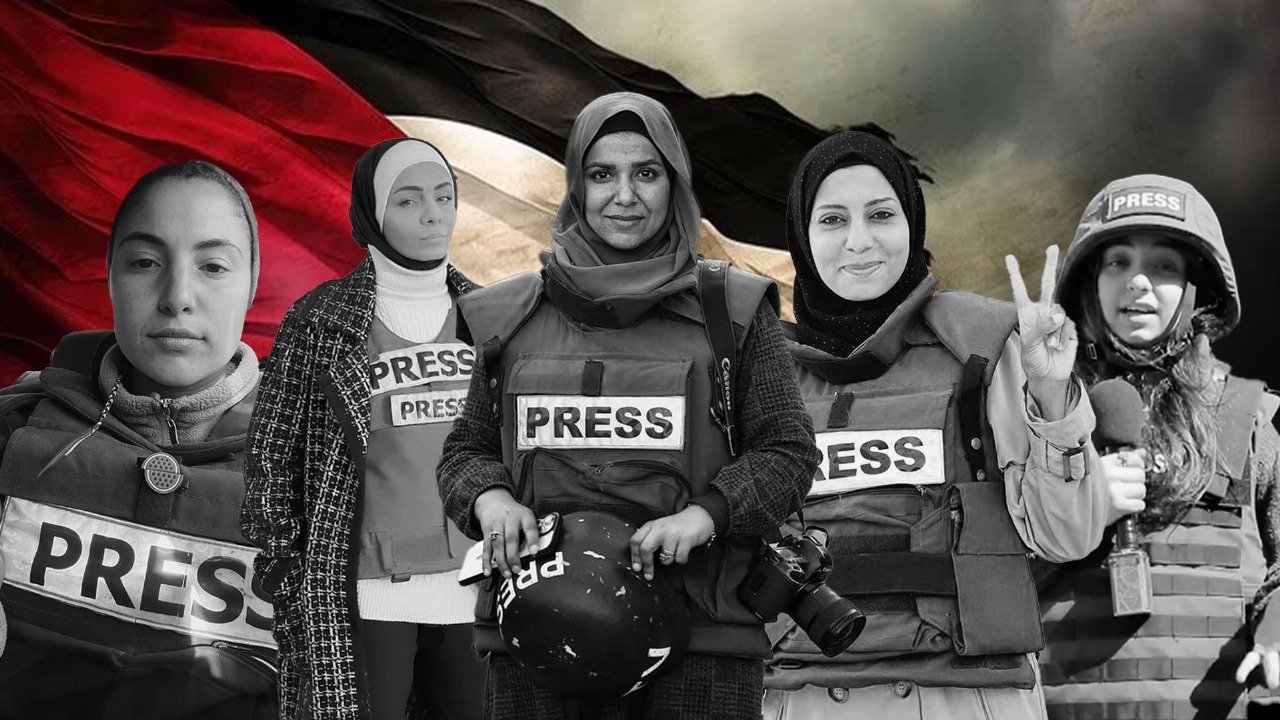
    Palestinian women in general and journalists, in particular, have set the bar with their resilience against what is now largely perceived as the most well-documented genocide of this century.

    This Women’s Day, the world paid tribute to their untiring efforts, yet it is important to mention here that it is not enough since the besieged strip has been wreaked for more than six months now.

    Palestinian journalists observed in real time the tragedy that women and children are experiencing due to the devastating war since October 7 last year.
    At least 63 women in Gaza are killed daily as a result of the Israeli war, with the majority being mothers, The UN Relief and Works Agency for Palestinian Refugees (UNRWA) reported on Friday.

    “On International Women’s Day, the women in Gaza continue to endure the consequences of this brutal war,” the agency shared. “At least 9,000 women have been killed, and many more are under the rubble,” the statement added.

    Hind Khoudary

    Hind Khoudary is one such face the world is now fully familiar with because of her on-ground reporting and the compassion she has shown over time. She was paid tribute to by her fellow journalist Ali Jadallah in an Instagram post where he praised her for her commitment to her profession and towards Gaza.

    However, he added, “As the ‘International Women’s Day’ is celebrated around the world on March 8th, Palestinian women start to work with the first hours of the day to provide for their families despite the difficulties experienced amid Israeli attacks.”

    Hind, 28-years-old, has been working in the media since 2017. In an interview with Anadolu, she pointed out that the current situation in the Gaza Strip affects all Palestinian women regardless of their professions.

    “While the world celebrates Women’s Day, Palestinian women are being displaced from their homes,” she said. “I am not just a journalist covering the war. Rather, I am a displaced person. I left my family and my husband and chose, despite the circumstances, to remain in Gaza and cover the war,” she added further.

    In one of her posts on Instagram, she shared how she doesn’t have clean clothes to wear anymore and how she struggles hard during her periods. “I am also wearing two pants above each other because I don’t have any joggers anymore. The last time I showered was ten days ago. On my period for the second time during the past 30 days and yet I am still standing despite all the cramps,” Hind wrote.

    Noor Hrazeen

    Noor is a TV presenter and a reporter who has been reporting about the ongoing situation in Gaza. She made a huge sacrifice by evacuating her children from Gaza just for them to be able to have food and water but she remained in Gaza to continue reporting about the havoc endured by Palestinians.

    In one of her posts, she wrote: “It’s hard to work in a location, where you know that there is dead bodies still stuck under the rubble. But it’s a story that should be told.”

    Roba Khaled

    Roba is a Palestinian journalist who has shown sheer commitment to her job even when her children were sick or when Israel was bombing buildings in real-time.

    Doaa Albaaz

    Doaa, 27, a photographer, reports the horrors befallen upon Gazans by the Israeli forces. “On International Women’s Day, we want to convey the image of women who are subjected to the most horrific massacres in Gaza,” she said in an interview with Anadolu.

    “During this war, the occupation targeted women, children, and innocent people,” she pointed out. “We lack everything, including privacy. There are no bathrooms, and we struggle to convey the real picture,” Baz asserted.

    Duaa Tuaima

    Duaa Tuaima is a photojournalist whose Instagram is a window that opens into the reality of the suffering in Gaza.

    She mostly documents the women and children of Gaza and how they are struggling to grapple with starvation and siege.

    Bisan Owda

    Bisan is another popular name. A storyteller and filmmaker by profession from northern Gaza, Bisan has been documenting the displacements, bombings, and genocide in Gaza from day one. Her vlogs and videos in collaboration with different platforms are raw and insightful. “Hi, this Is Bisan from Gaza and I am still alive” is the line she says at the beginning of every vlog and it is ironically sad and hopeful at the same time.

    In one of her videos, she featured an Israeli jet and said, “I grew up with this sound, it’s not new…”

    In another, she posted about living in fear since the war started. “For 150 days, I have been afraid of cement ceilings. I do not want to be crushed to death when a missile lands. I sleep in a tent, and I am like hundreds of thousands suffering cold at times, heat at times, and disease and hunger at other times,” she wrote in an Instagram post.

    Sumayya Wushah

    11-year-old war reporter Sumayya Wushah was featured in Al Jazeera’s videos as Gaza’s youngest journalist reporting about the destruction in a confident tone. She is inspired by Shireen Abu Akleh, the Al-Jazeera journalist who was killed by the Israeli army in 2022.

    The list could be longer. These journalists are inspiring women from all around the world for their strength and the cause they stand for.

  • Gold price closes week above Rs230,000 per tola

    Gold price closes week above Rs230,000 per tola

    In a notable development, gold prices in Pakistan witnessed a substantial increase, with the per-tola price surging by Rs1,600 in the local market.

    The gold rate climbed to a new height, reaching Rs230,200 in the domestic market, reflecting the ongoing economic dynamics.

    Specifically, the price of 10 grammes of 22-karat gold has also experienced an upward trend, trading at Rs180,913.

    This surge in gold prices is likely to impact various sectors of the economy, prompting investors and market observers to closely monitor the situation.

    Simultaneously, the Pakistan Stock Exchange (PSX) has marked a week of positive trends and significant growth in business activities following the recently held general elections.

    As the business week concluded, the KSE-100 index stood at 65,793 points, indicating a gain of 468 points, or 0.70 per cent. 

    Throughout the week, the KSE-100 index reached its peak at an impressive 66,150 points, underscoring the confidence of investors in the market.

    However, it is noteworthy that the index experienced fluctuations, with the lowest point recorded at 65,187.

  • Oath-taking of MNAs on reserved seats unconstitutional: Omar Ayub Khan

    Oath-taking of MNAs on reserved seats unconstitutional: Omar Ayub Khan

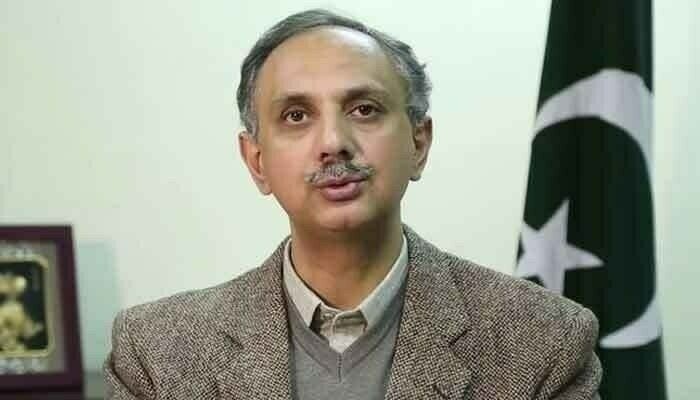
    Omer Ayub Khan, lawmaker backed by Pakistan Tehreek-e-Insaf (PTI) and Sunni Ittehad Council (SIC), strongly objected to the oath-taking of members of the National Assembly (MNAs) on reserved seats, calling it “unconstitutional.

    A group of newly elected lawmakers on reserved seats in the NA were sworn in. NA Speaker Ayaz Sadiq administered the oath to the MNAs amidst chanting by PTI-backed SIC lawmakers.

    Taking the floor, Ayub — Imran Khan’s pick for the leader of the opposition — said: “Today’s oath-taking of MNAs on reserved seats is illegal and has no [legal] standing.”

    Raising questions over the oathtaking, the PTI leader asked a country can be run without the rule of law. “The system cannot work like this.”

    The Peshawar High Court (PHC) has extended a stay order on the oath-taking ceremony for lawmakers who were supposed to take their oaths on reserved seats supported by the PTI-backed SIC. This extension lasts until March 13.

  • Pakistan’s women ‘Rowdy Riders’ take on traffic and tradition

    Pakistan’s women ‘Rowdy Riders’ take on traffic and tradition

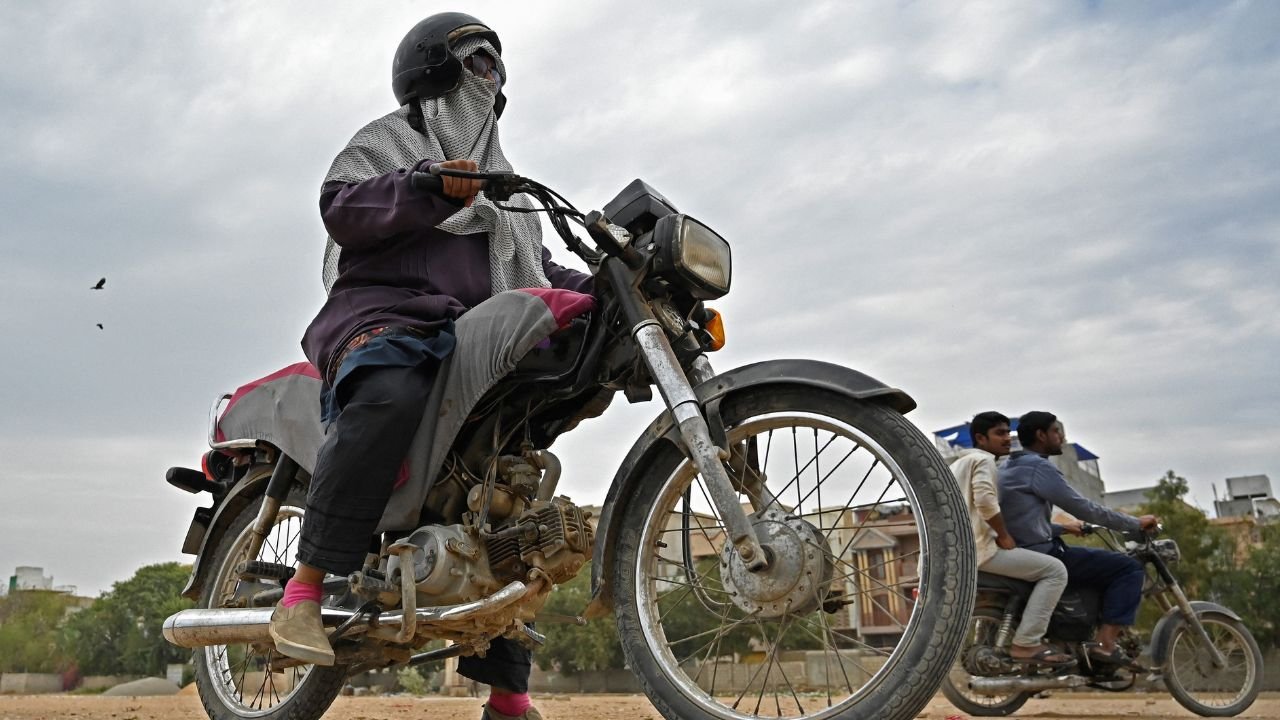
    Karachi (AFP) – Revving round a dusty oval in the heart of Pakistan’s largest city, women on motorbikes practise looping a row of safety cones, their helmets securing colourful headscarves in place.

    It is a rare sight in the culturally conservative country, where women are typically relegated to the back seats of cars or to riding side-saddle on motorbikes, ferried by a male relative.

    “Change is under way,” says Zainab Safdar, demonstrating how to mount a two-wheeler while cloaked in a pink body-covering abaya.

    The 40-year-old is an instructor for the “Rowdy Riders”, a women-only group teaching novices in Karachi everything from the basics of balancing on a bicycle to high-octane gear changing and negotiating traffic.

    Since being founded in 2017 by a handful of pioneering riders, the self-described “Rowdies” have swollen in number to more than 1,500 housewives, students and professionals.

    “In the past, there were misconceptions about girls riding bikes,” Safdar said, referring to doubts about their abilities.

    “Fortunately, with greater awareness, these notions have been dispelled.”

    Women’s participation in the workforce is impacted by the limited availability of public transport services that ensure their safety.

    In the sprawling megacity, granting women the skill and confidence to join legions of male bikers in the helter-skelter of congestion unlocks a new tier of freedom.

    Most of the riders hail from Karachi’s middle class, but rigid gender norms often still hold sway.

    University lecturer Shafaq Zaman said “it took a while to get permission” from her family to start classes to master a pedal bike two months ago.

    Among the few dozen bikers assembled under the mid-afternoon sun, she looks on with her seven-year-old daughter Aleesha as a convoy of women open up their engines and rip past in a haze of dust.

    “I am so inspired that now I have my own dream for me, that I want to ride on a heavy bike. I want to ride the whole of Pakistan,” 30-year-old Zaman said.

    Her story is not unusual. In Pakistan, very young boys are often seen steering motorbikes, but many of the “Rowdies” did not learn to ride a bicycle until well into adulthood.

    “There should be a bike in every house, and usually there is, but it’s rotting because men do not use it and women don’t know how to,” said Sana Kamran, sitting confidently astride a 110cc Suzuki.

    “If women can manage household responsibilities and earn a living, why can’t they ride a bike for their convenience?” the 41-year-old asked.

    Motorbikes are ubiquitous across Pakistan — most commonly red Honda models or cheaper Chinese reproductions, considered capable of mastering any terrain.

    The quest to conquer a bike has seen 26-year-old Farwa Zaidi suffer multiple bone fractures — but the injuries are a badge of honour she wears as proudly as the “Rowdy Riders” crest on her jacket.

    “Here I am, standing strong,” she said alongside her 70cc electric scooter.

    At four feet and six inches (137 centimetres) tall, Zaidi said her small stature made it difficult to claim a spot on crammed city buses.

    Learning to ride gave her a new sense of possibility.

    “Once we master cycling, it instils a new-found confidence in our ability to conquer other challenges,” she says.

  • 8th straight surge: Gold price increases to Rs228,600 per tola in Pakistan

    8th straight surge: Gold price increases to Rs228,600 per tola in Pakistan

    In a remarkable eighth consecutive session, the domestic bullion market has maintained its bullish trend, driving the price of 24-karat gold to new heights.

    The surge reached an impressive Rs13,800 per tola during this period, with today’s session witnessing a gain of Rs450 per tola, bringing the current trade value to Rs228,600.

    The Karachi Sarafa Association reported that the price of 10-gramme 24-karat gold has soared to Rs195,988 per tola, marking an increase of Rs386.

    Additionally, the price of 10-gramme 22-karat gold has experienced a notable rise, reaching Rs179,655.

    Contrastingly, silver prices have remained unchanged, with 24-karat silver maintaining its position at Rs2,600 per tola and Rs2,229.08 per 10-gramme.

    Internationally, the spotlight is on the global spot gold market, which is poised to record its most significant weekly jump in five months.

    Over the past eight sessions, spot rates have climbed by 6.7 per cent, or $136, spurred by remarks from FED Chair Jerome Powell that have solidified expectations for interest rate cuts later in the year.

    The inverse relationship between gold and bond yields has contributed to the precious metal’s robust performance.

    Additionally, the rally in procyclical asset classes, particularly equities, has provided further support to gold as investors seek to diversify their risk exposure.

  • ‘It took me 12–13 years to make my place in PML-N’, says Maryam Nawaz

    ‘It took me 12–13 years to make my place in PML-N’, says Maryam Nawaz

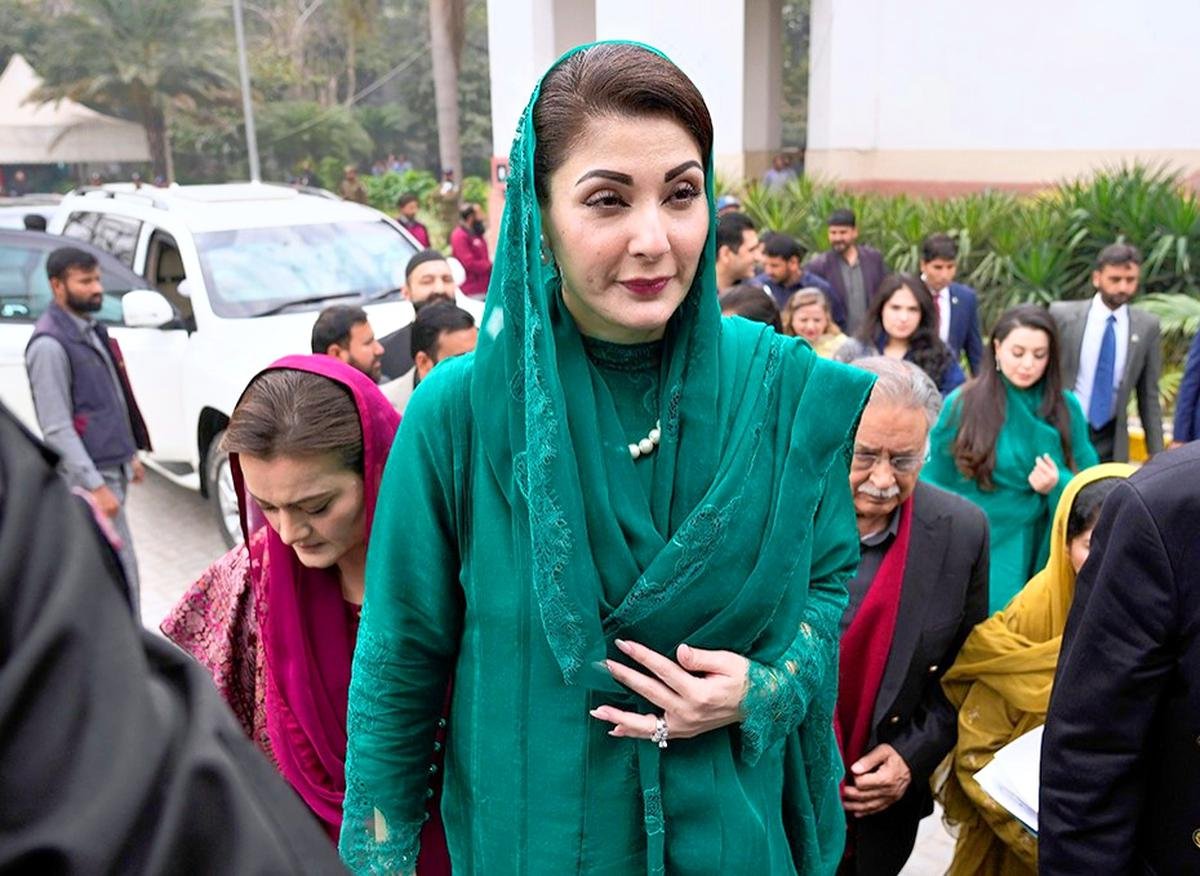
    Punjab Chief Minister Maryam Nawaz said on Friday that she struggled for 12 to 13 years to make her place in the male-dominated Pakistan Muslim League-Nawaz (PML-N).

    “My presence here is a message to mothers, daughters, and sisters that if you want to do something, then being a woman is not an obstacle in achieving your dreams,” Maryam said addressing an event related to the International Women’s Day in Lahore.

    The newly appointed chief minister expressed her wish for a woman to replace her in Punjab and also stated her desire for women to be elected to the chief executive’s office in other provinces as well.

    Maryam Nawaz took oath as the chief minister of an important province Punjab on February 26, and she is the first female chief minister in Pakistan.

    The PML-N vice president won the chief ministerial election after obtaining 220 votes in the provincial assembly.

  • Asif Zardari can win presidential polls easily

    Asif Zardari can win presidential polls easily

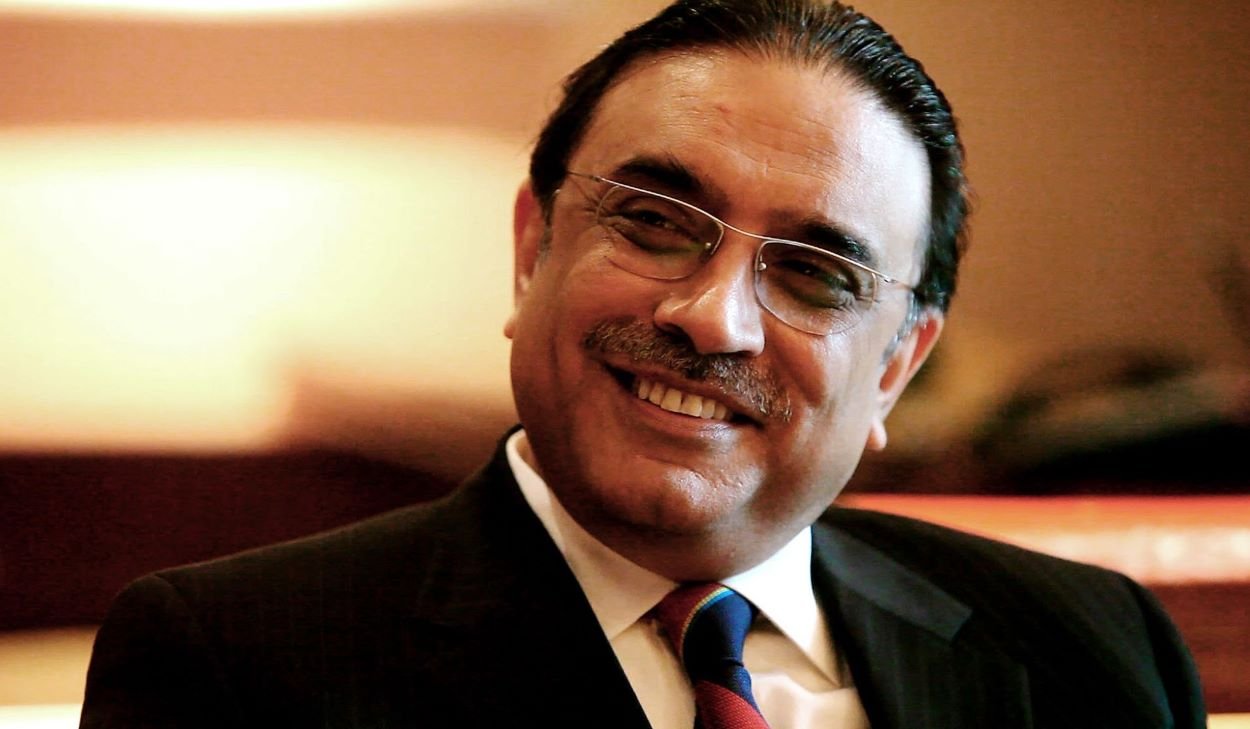
    The ruling coalition has calculated that its presidential candidate, Pakistan Peoples Party (PPP) co-chairman Asif Ali Zardari will get more than 400 votes as the upcoming presidential election is scheduled for Saturday, March 9. 

    Zardari is contesting against Pakhtoonkhwa Milli Awami Party (PkMAP) head Mahmood Khan Achakzai, who is the presidential candidate for the Pakistan Tehreek-e-Insaf (PTI)-backed Sunni Ittehad Council (SIC). 

    Senate and National Assembly members will use secret ballots to vote at the Parliament House for the presidential elections, whipe polling will also take place in the four provincial assemblies.

    As many as 325 members of the National Assembly, 91 senators, 354 members of the Punjab Assembly, 157 members of the Sindh Assembly, 117 members of the Khyber Pakhtunkhwa Assembly and 65 members of the Balochistan Assembly will cast their vote.

    The ruling coalition parties, the Pakistan Peoples Party (PPP), Pakistan Muslim League-Nawaz (PML-N), Pakistan Muslim League-Quaid (PML-Q), Istehkam-e-Pakistan Party (IPP), National Party (NP), Balochistan Awami Party (BAP), and Muttahida Qaumi Movement-Pakistan (MQM-P), have declared their support for Zardari while PTI-backed SIC and Majlis Wahdat-e-Muslimeen have assured their support to Achakzai.