Category: Uncategorized

  • Back to the 40s?

    Back to the 40s?

    While violence against the Muslim community of India is no longer an internal secret of our neighbour, it would be nothing less than hypocrisy to turn a blind eye towards the quality of life of minorities in Pakistan where a majority of them is equally vulnerable due to intolerance rooted in religion or ethnicity.

    When Saadat Hasan Manto finally decided to leave India amid growing communal violence back in the 40s, Indian actor Sunder Shyam Chadda wasn’t very happy with his friend’s decision.

    “Are you going to Pakistan because you think you are a Muslim?” Shyam asked Manto as the former removed the bottle of alcohol from their table.

    “I am a Muslim enough to get killed here,” Manto replied.

    Seven decades later — in the year 2020 — the world’s most populous democracy, under fascist Narendra Modi’s Bharatiya Janata Party (BJP), witnesses similar circumstances as those belonging to India’s minority communities, flee their homes in order to save their lives.

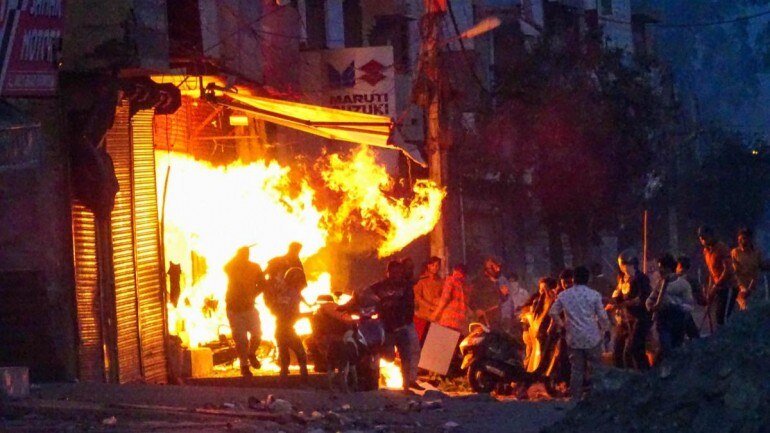
    The recent round of violence against Muslims in India by extremist Hindutva mobs has been the worst with over 40 innocent people losing their lives, mosques being set ablaze and properties of New Delhi’s Muslims being vandalised.

    The situation persisting across Pakistan’s eastern boundaries can be best explained through a mention of suzerainty, under which a single ideology asserts and maintains paramountcy or supremacy over the rest. But the problem in India is further accentuated by the fact that the state’s monopoly over violence has silently been delivered to the goons of the ruling BJP with the promise of targeting Muslims regardless of if they are at home or at a mosque.

    While violence against the Muslim community of India is no longer an internal secret of our neighbour, it would be nothing less than hypocrisy to turn a blind eye towards the quality of life of minorities in Pakistan where a majority of them is equally vulnerable due to intolerance rooted in religion or ethnicity.

    Although analyses suggest the factors that have led to the current upheaval in India are manifold, our focus, for now, will remain on religion since outside India, its importance has been rightly overshadowed by unfolding the neo-liberal agenda New Delhi is trying to implement; for which Hindutva serves as the best medium, and that too in disguise.

    It is nothing but Modi’s model from Gujarat, which is now expanding to Delhi and Ashoknagar.

    Nonetheless, the role of religion in itself cannot be undermined especially in the Indian subcontinent as both in Pakistan and India, religion has remained closely intertwined with politics since even before the partition. And from world-acclaimed statesman Gandhi to today’s fascist Modi, the combination has proved to be lethal while resulting in violence almost every time.

    The use of religion on state-level despite having a secular constitution is to achieve a purposive social order, which in other words is ‘national interest’ based on the exclusion of Muslims and inclusion of corporate and liberal values in society, surprisingly through the conservative ideology of RSS.

    Regardless of the intention behind employing religion in politics, its implications have not been desirable for the general masses, which brings into question the basic understanding of religion. Apart from politics, when religion is examined alone, the underlying principle of religion generally is expounded as that of peace and prosperity.

    Having said that, one inadvertently subscribes to the root word of religion as ‘lig’ and not ‘leg’ where the former means ‘to bind’ while the latter means ‘to gather.’

    Contrary to the broader agreement of religion to be in the greater interest of mankind by making people dependent on each other, the current predominant form of Hinduism in India is that of a certain mindset of people – the Rashtriya Swayamsevak Sangh (RSS) — coming together to serve a ‘holy purpose’ which in this case has become a national interest of BJP’s India.

    In this pretext, the use of religion on state-level despite having a secular constitution is to achieve a purposive social order, which in other words is ‘national interest’ based on the exclusion of Muslims and inclusion of corporate and liberal values in society, surprisingly through the conservative ideology of RSS, which ultimately benefits a handful of people in India by increasing their wealth and stay in power.

    Therefore, while mentioning the Citizenship Amendment Act (CAA), one should always mention its far-reaching effects in the lives of minorities other than Muslims, including Hindus with a working-class background.

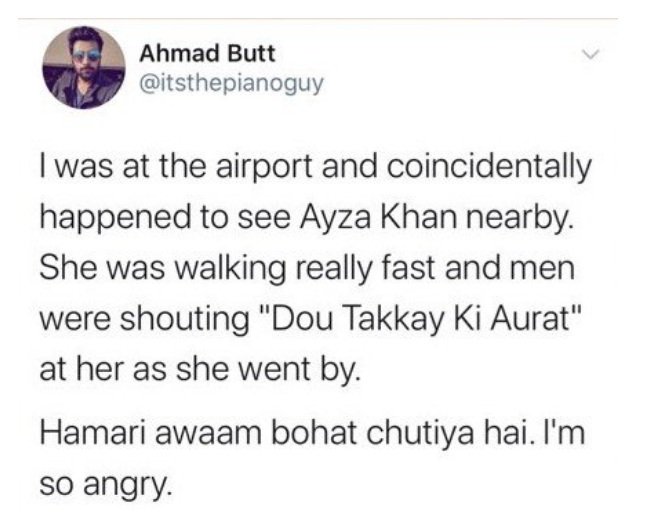
  • Ayeza Khan responds to being called ‘do takay ki aurat’ in public

    Ayeza Khan responds to being called ‘do takay ki aurat’ in public

    Meray Paas Tum Ho ended a month ago but the hype is still there and people are still making jokes and memes about it. Ayeza Khan has been immortalised as her character in the drama – the selfish, ‘do takay’ ki Mehwish so much so that the character follows her everywhere.

    Recently, a tweet went viral on social media in which the Twitter user had claimed that he was at the airport at the same time as Ayeza and a group of men had loudly called her a do takay ki larki referencing to her character in the drama serial. He added that the incident made Ayeza uncomfortable and she immediately walked away from the scene.

    Soon after the tweet went viral, Ayeza took to social media to share her side of the story. According to Ayeza, the incident never happened. She said that people loved her as Mehwish and continue to shower praises on her for her performance. Ayeza asserted that she is an actor and will continue to play different roles and characters.

    The Twitter user, identified as Ahmad Butt, has made his Twitter account private after the incident.

  • Punjab govt’s first-ever digital payment method collects Rs1 billion

    Punjab govt’s first-ever digital payment method collects Rs1 billion

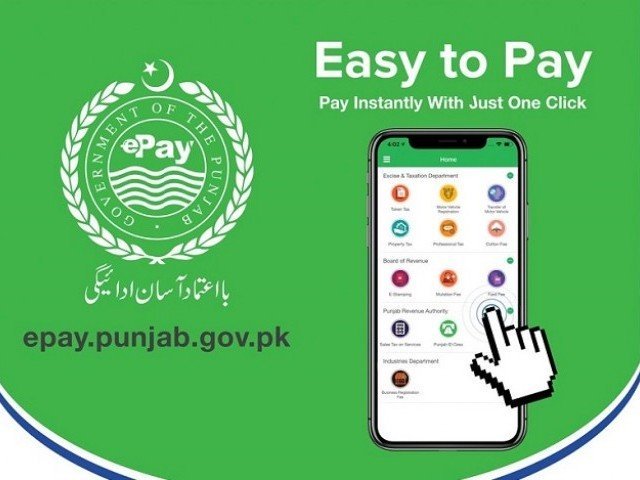
    Punjab government’s first-ever payment aggregator — a service provider that allows merchants to process mobile or e-commerce payments — called ePay and launched for citizen facilitation and ease of business, has collected over Rs1 billion in tax revenue, The Express Tribune reported.

    ePay was launched on October 4 last year in a collaborative effort between the provincial finance department and Punjab Information Technology Board (PITB).

    Read more: Realme unveils ‘Quad Camera BatteryKing 5i’, ‘Triple Camera Game Monster C3’

    This application provides the public with a stress-free and efficient method of paying taxes and making payments to the government through contemporary banking channels, without going through the ages-old exhausting process.

    Moreover, multiple new payment channels like debit/credit card, mobile wallets, TELCO agent networks and direct debit from the account are being added to further increase the payment options available to the citizens and businesses in the app.

    Read more: Study reveals: Excessive smartphone usage affects brain like drugs

    Additionally, it is also planned to include Government to Public (G2P) and Government to Business (G2B) payment models in future to broaden the horizon of the programme and also add tax/non-tax receipts like online admission fee for colleges/schools, driving license fee, e-challan, character certificate, domicile, fitness certificate (commercial vehicles) and agriculture income tax.

    Read more: Pakistan, US trade negotiation failed

    The initiative has proved to be a game-changer in the local fintech industry by playing a pivotal role in increasing tax revenue collection of the province and improving financial inclusion. In its first phase, 13 taxes/levies of five departments have been made part of the system.

    Excise & Taxation, Board of Revenue (BoR), Punjab Revenue Authority (PRA), Industries and Transport are the departments liaised with the system through which citizens can pay token tax, motor vehicle registration, transfer of motor vehicle, property tax, professional tax, cotton fee, e-stamping, mutation fee, fard fee and sales tax among others.

  • Senate body orders earliest opening of beauty salon for women parliamentarians

    Senate body orders earliest opening of beauty salon for women parliamentarians

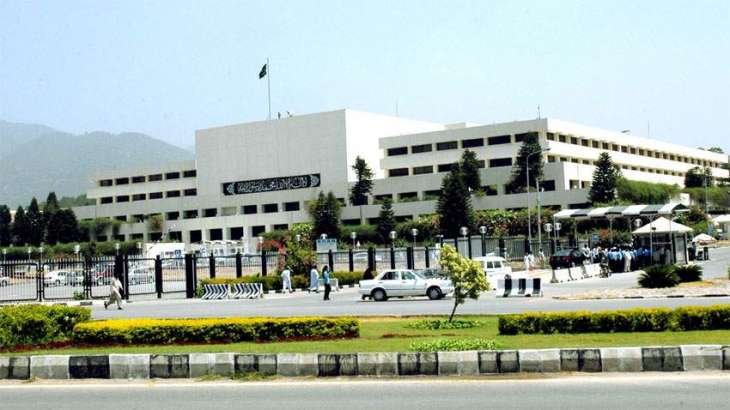
    The Senate House Committee has ordered the Capital Development Authority (CDA) to open a beauty salon at Parliament Lodges for women lawmakers “as soon as possible”, Associated Press of Pakistan (APP) reported.

    The committee, headed by Senate Deputy Chairman Saleem Mandviwalla, gave the directions after Senator Kulsoom Parveen said that despite clear directions from the convener of the committee to consult her and Samina Saeed for the allocation of a place for the salon in Parliament Lodges, the CDA officials had not bothered to contact either of them.

    The chairman directed CDA to solve the issue on priority with consultations of the two senators.

    Regarding complaints of different senators about their accommodation in Parliament Lodges, the Senate deputy chairman directed CDA officials to contact senators and solve their issues with immediate effect.

    He also reminded CDA that directions to make a financial plan about repair and maintenance work of the lodges were given but were not implemented.

    Regarding budget, the committee was informed that Rs319 million were allocated for repair and maintenance work of the lodges whereas the agency had spent Rs203 million so far.

    Senator Samina Saeed, while referring a media report, pointed out that water supply in the Parliament House and Parliament Lodges was substandard.

    She pleaded the Senate deputy chairman to direct CDA to ensure purified water supply and ensure the delivery of electricity bills to parliamentarians at least seven days ahead of the due date.

  • How to protect yourself from coronavirus at office

    How to protect yourself from coronavirus at office

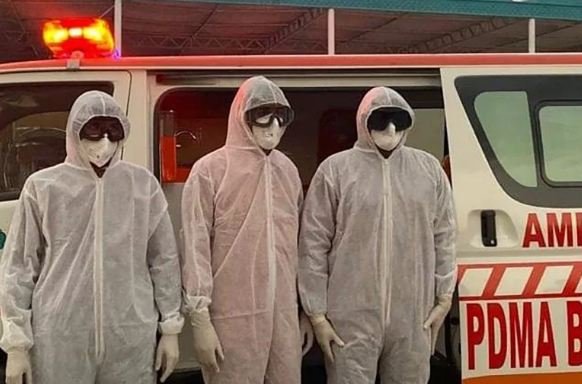
    The Khyber Pakhtunkhwa government’s Department of Relief, Rehabilitation & Settlement has released a list of directives for its employees to help prevent the spread of the novel coronavirus in shared workspaces.

    Here are the measures you can take to ensure a healthy environment for all employees:

    • Employees must be politely directed against hugging and shaking hands or coming into any needless physical contact with each other. This can help prevent the virus from being transferred to healthy employees from employees who may already have the virus but are not showing its symptoms.
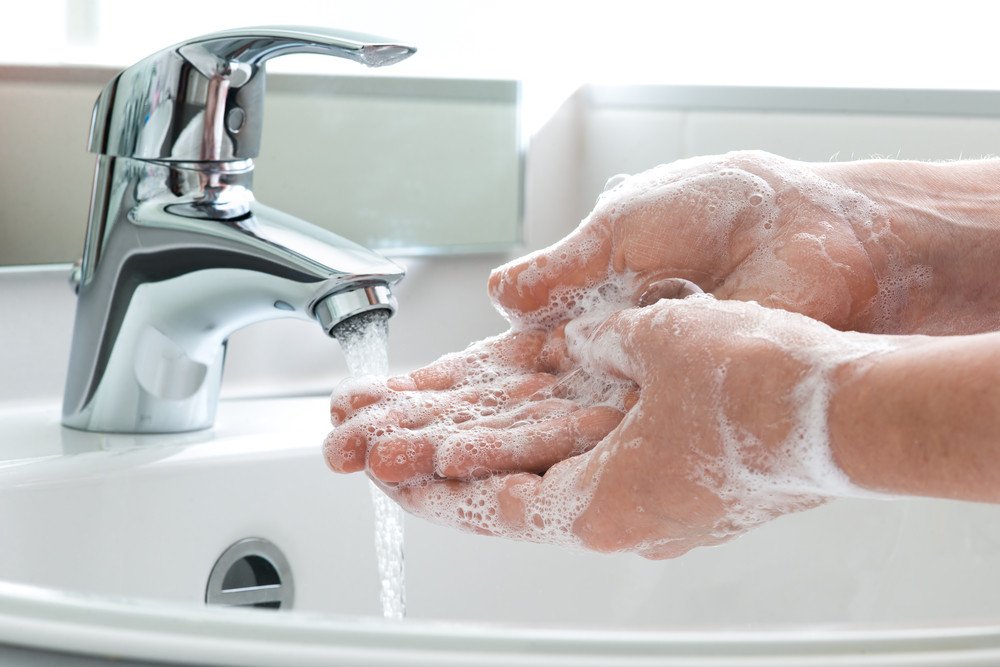
    • Employees must wash their hands at least three to four times a day with soap or an alcohol-based sanitizer
    • All towels in toilets should be changed frequently or replaced with disposable towels that can be trashed after first use.
    • Any tissues, once used, should be disposed of immediately in a trash bin.
    • Biometric attendance to be stopped with immediate effect. This can help prevent the virus from being transferred to healthy employees from a sick individual via biometric machines.
    • Any unnecessary contact with side railings and doors should be avoided.  Healthy employees can pick up the virus by touching surfaces that a sick employee has also touched.
    • Likewise, appropriate safety precautions must be taken when coming in contact with office machinery such as telephones, fax machines and computers.
    • In case of cough and flu, the employee must seek medical attention on first priority.
    • A mask should be worn by any person showing symptoms of cough and flu. This is to prevent the virus from spreading in the environment through coughing and sneezing.
    • Face-masks should be discarded after one day of use.
  • Pakistan, US trade negotiation failed.

    Pakistan, US trade negotiation failed.

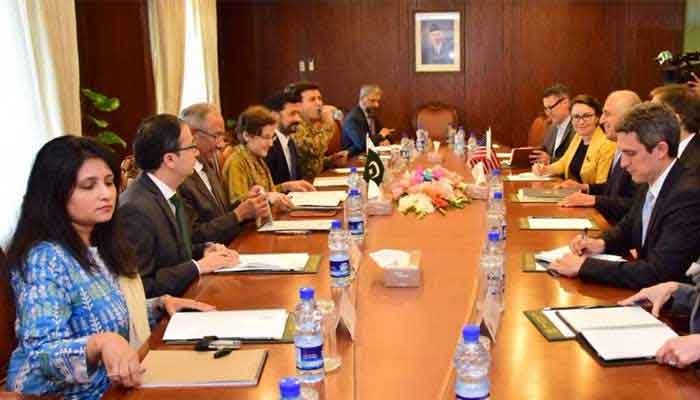
    Despite United States (US) Secretary of Commerce Wilbur Ross’s visit to Islamabad, Pakistan and the US have failed to achieve ‘breakthrough’ for promoting trade ties between the two countries, Geo reported.

    “This high-level visit proved a non-starter because the US did not make any firm commitments on three demands put forth by the Pakistani side on the negotiating table. It can be termed just a posturing visit as a balancing act in the wake of US President Donald Trump’s visit to arch-rival India,” the report said.

    It quoted top officials as noting that the Pakistani side put forward three demands before the US delegation. Pakistan seeks a Free Trade Agreement (FTA), but the US side replied that “they would look into it” and did not make a commitment.

    The delegation also disapproved Pakistan’s proposition to expand GSP Plus list for providing concession on export items from the US side, so it can once again become a non-starting area.

    Furthermore, the Pakistani side demanded moving towards Trade and Investment Framework Agreement (TIFA). However, the US authorities responded that they would see how things could proceed in future.

    Pakistani officials still seemed confident to believe that the US would respond positively on TIFA front in the coming future, but the optimism seems groundless because no commitments have been made.

    Keeping in view experience of the past many years, there have been several occasions when the US agreed to hold talks on TIFA and the Bilateral Investment Treaty (BIT), but it always proved a futile exercise after holding sessions for several years.

  • Coronavirus in Pakistan: Prices of face masks increase by 900%

    Coronavirus in Pakistan: Prices of face masks increase by 900%

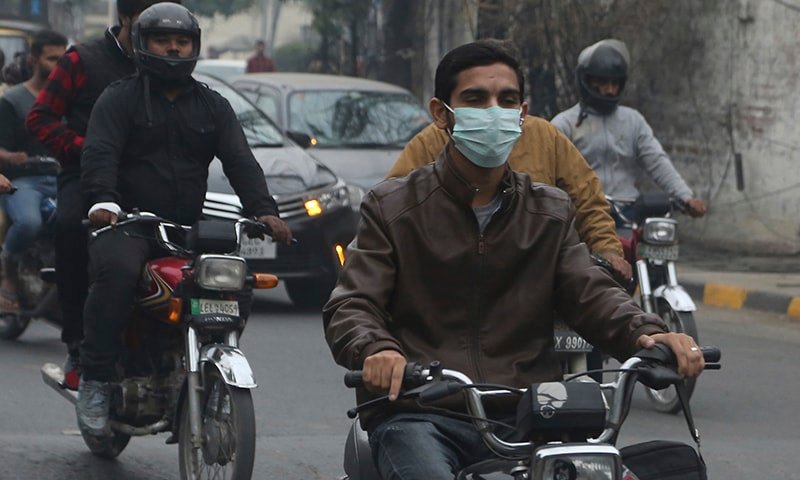
    With a couple of confirmed cases of the new coronavirus — COVID-19 — surfacing in the country, the prices of face or medical masks have increased by staggering 900% as local pharmacies also run out of what is said to provide some protection from the virus.

    While some experts say it provides modest protection against the virus that is new to science, others doubt the effectiveness of such masks for stopping COVID-19 transmission. United States (US) health officials say the virus spreads mostly between people who are in close contact with each other, and from respiratory droplets when an infected person sneezes or coughs.

    China is the world’s largest producer of the said masks, with a reported daily capacity of 20 million pieces, but by the estimate of its manufacturers, domestic demand alone is around 50 to 60 million per day. Amid the surge in demand, medical store owners are citing a shortage of the masks as the reason behind the increase in its price from Rs100 for a box to Rs1,000 for the same in markets across Pakistan.

    CORONAVIRUS IN PAKISTAN:

    First two cases of coronavirus in Pakistan were reported on Wednesday night, one of which was in the provincial capital of the country’s southeastern province of Sindh, and the other in the federal capital.

    While details of the case in Islamabad have not yet been made public, the first reported case is that of a 22-year-old man who, according to government sources, reached Pakistan from Iran by air and has a history of travel to Tehran “from where he acquired the virus”.

    It was also confirmed by Special Assistant to Prime Minister (SAPM) on Health Dr Zafar Mirza.

    “I can confirm first two cases of coronavirus in Pakistan. Both cases are being taken care of according to clinical standard protocols and both of them are stable. No need to panic, things are under control,” he tweeted.

  • Feroze Khan says TikTok is ‘cancer’

    Actor Feroze Khan took to Twitter to lash out at popular social media app TikTok. The actor posted the screenshot of the two controversial TikTok videos and wrote, “Tik Tok is cancer. I repeat, cancer !”

    Khan talked about the video that was recorded at Quaid e Azam mausoleum that shows a girl in Hijab dancing in front of the mausoleum. Khan also referenced another TikTok video that was recorded at a graveyard.

     Fans of the actor agreed with him on Twitter.

    https://twitter.com/imkakarotto119/status/1232693623080267779?s=20

    The Mazar-e-Quaid’s administration on Tuesday decided to approach the Federal Investigation Agency (FIA) for the removal of the viral video.

    Many people had protested after watching the TikTok video of the girl dressed in white clothes dancing in the vicinity of the shrine. They said that the incident has tarnished the sanctity of the historic place.

    https://www.instagram.com/p/B8_ffoQHV0Z/?utm_source=ig_web_copy_link
  • Kashmir, Kartarpur, Abhinandan, Humayun Saeed: ‘Ehd e Wafa’s finale will have it all

    Kashmir, Kartarpur, Abhinandan, Humayun Saeed: ‘Ehd e Wafa’s finale will have it all

    Ehd e Wafa’s last episode is coming to cinemas on March 14 and it appears that audiences will be in for a thrilling ride. At least, that’s what the trailer promises.

    To celebrate ‘Surprise Day’ – the day Abhinandan’s plane was shot down in Pakistani airspace – Momina Duraid Films released a trailer for the last episode of the super hit drama serial.

    The two-minute teaser doesn’t give away much but introduces two new characters in the drama – Major Humayun and Indian Airforce’s Wing Commander Abhinandan. It is likely that the episode will shed light on the retaliatory attack by the Pakistan Air Force (PAF) after India’s Balakot airstrike.

    Apart from that, there is also a glimpse of the Kartarpur Corridor which marked a monumental moment in Pakistan’s history and action on the Line of Control.

    The teaser ends with an injured Captain Saad (Ahad Raza Mir) trudging through the trees.

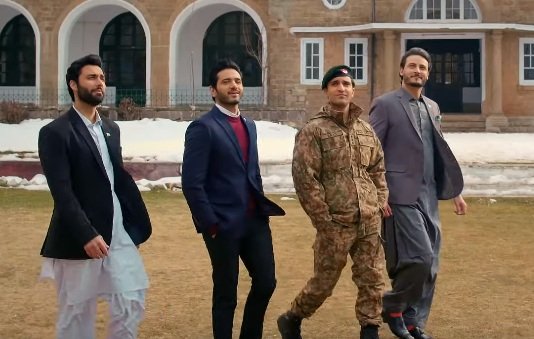
    Directed by Saifee Hassan and written by Mustafa Afridi, Ehd-e-Wafa is centered around the SSG, short for Secret ‘S’ Gang, consisting of Shehryar (Ahmed Ali Akbar), Shariq (Wahaj Ali), Saad (Ahad Raza Mir) and Shahzain (Osman Khalid Butt). The series won the hearts of the audiences because of its heartwarming storyline and great performances by the ensemble cast which also includes Alizeh Shah, Hajra Yamin, Vaneezah Ahmed, Zara Noor Abbas, Faraz Yahya, Syed Muhammad Ahmed and Adnan Samad Khan (Gulzar) among others.

    Read more – ‘Ehd-e-Wafa’ to release in cinemas one day before TV

    Watch the trailer here:

  • Coronavirus myths flooding your WhatsApp? Here’s what is actually true

    Coronavirus myths flooding your WhatsApp? Here’s what is actually true

    The WhatsApp inbox of almost every Pakistani user has been flooding with myths regarding the new coronavirus — COVID-19 — since first two cases of the disease in the country were confirmed by the government last night.

    While the World Health Organization (WHO) has already declared an emergency following the global outbreak of the novel virus that has so far claimed over 2,700 lives and left around 81,000 others infected, here are some myth busters you need to know while maybe ignoring all those forwarded messages on WhatsApp.

    Does the new coronavirus affect older people, or are younger people also at risk?

    According to the WHO, people of all ages can be infected by the new coronavirus (2019-nCoV). Older people and people with pre-existing medical conditions (such as asthma, diabetes, heart disease) appear to be more vulnerable to becoming severely ill with the virus. 

    WHO advises people of all ages to take steps to protect themselves from the virus, for example by following good hand hygiene and good respiratory hygiene.

    Are antibiotics effective in preventing and treating the new coronavirus?

    No, antibiotics do not work against viruses, only bacteria.

    The new coronavirus is a virus and, therefore, antibiotics should not be used as a means of prevention or treatment. However, if you are hospitalised for the COVID-19, you may receive antibiotics because bacterial co-infection is possible.

    Can eating garlic or putting on sesame oil help prevent coronavirus?

    Garlic is a healthy food that may have some antimicrobial properties. However, there is no evidence from the current outbreak that eating garlic has protected people from the new coronavirus.

    As for sesame oil, it does not kill the new coronavirus. There are some chemical disinfectants that can kill the 2019-nCoV on surfaces. These include bleach/chlorine-based disinfectants, either solvents, 75% ethanol, peracetic acid and chloroform.

    However, they have little or no impact on the virus if you put them on the skin or under your nose. It can even be dangerous to put these chemicals on your skin.

    Are there any specific medicines to prevent or treat the new coronavirus?

    To date, there is no specific medicine recommended to prevent or treat the new coronavirus, however, chloroquine phosphate — used for the treatment of malaria — has so far proven to be the most effective drug against the virus.

    Those infected with the virus should receive appropriate care to relieve and treat symptoms, and those with severe illness should receive optimised supportive care. Some specific treatments are under investigation, and will be tested through clinical trials. WHO is helping to accelerate research and development efforts with a range or partners.

    Can pets at home spread the coronavirus?

    At present, there is no evidence that companion animals/pets such as dogs or cats can be infected with the new coronavirus. However, it is always a good idea to wash your hands with soap and water after contact with pets. This protects you against various common bacteria such as E.coli and Salmonella that can pass between pets and humans.