Category: Uncategorized

  • Israeli military proposes ‘plan for evacuating’ Gaza civilians

    Israeli military proposes ‘plan for evacuating’ Gaza civilians

    Palestinian Territories – Israel’s military proposed a plan for evacuating civilians from the Gaza Strip, Prime Minister Benjamin Netanyahu’s office announced Monday, after he said a ground invasion of the Palestinian territory’s southern city Rafah was necessary for “total victory”.

    Foreign governments and aid organisations have repeatedly expressed fears that such an operation will inflict mass civilian casualties.

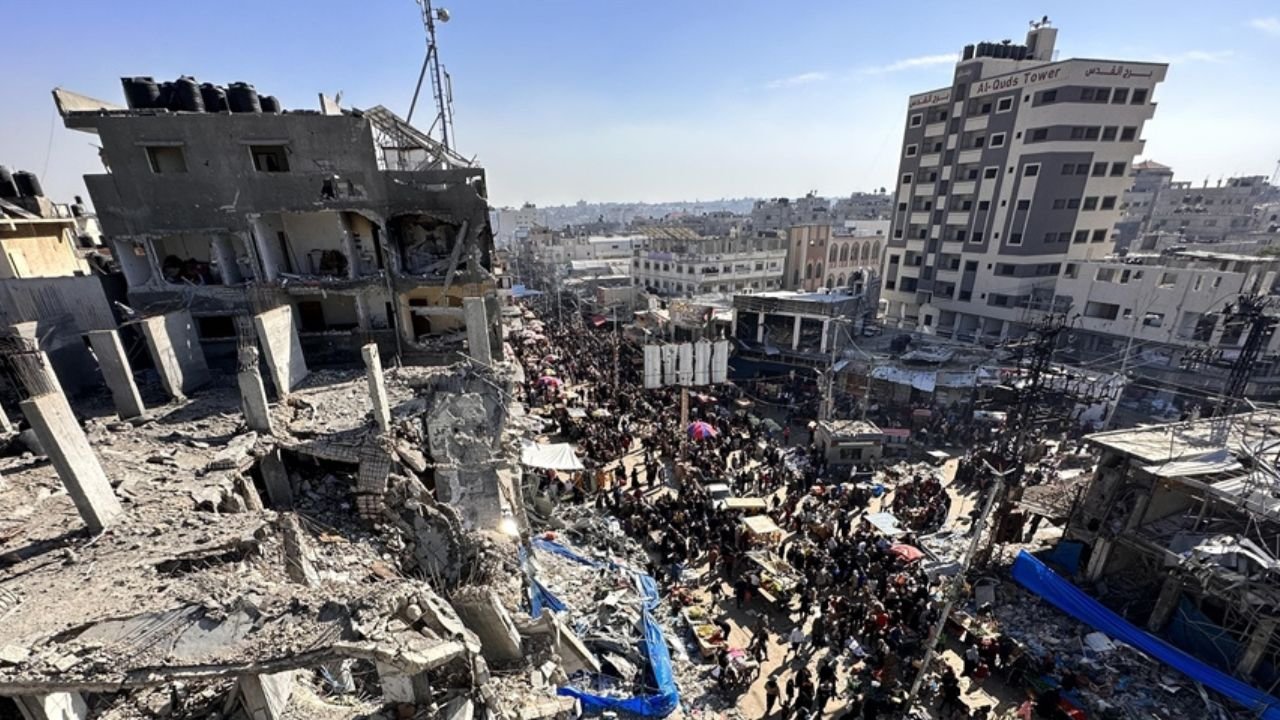
    More than 1.4 million Palestinians – most of them displaced from elsewhere – have converged on the last Gazan city untouched by Israel’s ground troops.

    It is also the entry point for desperately needed aid, brought in via neighbouring Egypt.

    Israel’s military “presented the War Cabinet with a plan for evacuating the population from areas of fighting in the Gaza Strip, and with the upcoming operational plan”, a statement in Hebrew from Netayahu’s office said Monday.

    The statement did not give any details about how or where the civilians would be moved.

    The announcement comes after Egyptian, Qatari and US “experts” met in Doha for talks also attended by Israeli and Hamas representatives, state-linked Egyptian media reported, the latest effort to secure a truce before the Muslim holy month of Ramadan.

    Israel’s ally the United States said ongoing mediation efforts produced “an understanding” towards a ceasefire and hostage release, while a Hamas source said the group insisted on the withdrawal of Israeli forces.

    But Netanyahu – who has dismissed the withdrawal demand as “delusional” – said a ground invasion of Rafah would put Israel within weeks of “total victory” over Hamas.

    “If we have a (truce) deal, it will be delayed somewhat, but it will happen,” he said of the ground invasion in an interview with CBS Sunday.

    “It has to be done because total victory is our goal and total victory is within reach — not months away, weeks away, once we begin the operation.”

    Amid a spiralling humanitarian crisis, the main UN aid agency for Palestinians urged political action to avert famine in Gaza.

    Dire food shortages in northern Gaza are “a man-made disaster” that can be mitigated, said Philippe Lazzarini, head of the UN agency for Palestinian refugees, UNRWA.

    “Famine can still be avoided through genuine political will to grant access and protection to meaningful assistance.”

    The UN has said it faces restrictions, particularly on aid deliveries to northern Gaza.

    ‘No aid’

    Nearly five months into the war, desperate families in Gaza’s north have been forced to scavenge for something to eat.

    “We have no food or drink for ourselves or our children,” Omar al-Kahlout told AFP, as he waited near Gaza City for aid trucks to arrive.

    “We are trapped in the north and there is no aid reaching us — the situation is extremely difficult.”

    Hundreds of Palestinians headed south whichever way they could, walking down garbage-strewn roads between the blackened shells of bombed-out buildings, said an AFP correspondent.

    Israeli forces continued striking targets across the Palestinian territory and battling militants in heavy urban combat centred on the southern city of Khan Yunis, near Rafah.

    The Israeli military campaign has killed at least 29,692 people in Gaza, mostly women and children, according to the Hamas-run territory’s health ministry.

    The war broke out after Hamas’s unprecedented attack, which killed about 1,160 people in Israel, mostly civilians, according to an AFP tally of official figures.

    ‘Expanding the conflict’

    Mediators have voiced hope that a temporary truce and a hostage-prisoner exchange can be secured before the start of Ramadan on March 10 or 11, depending on the lunar calendar.

    Jordan’s King Abdullah II warned fighting during the holy month “will increase the threat of expanding the conflict”, according to a royal statement.

    Qatar’s Emir Sheikh Tamim bin Hamad Al-Thani, whose country hosts Hamas leaders and had helped broker a one-week truce in November, is due in Paris this week, the French presidency said.

    Media reports suggest the warring parties are weighing a six-week halt to fighting and the initial exchange of dozens of female, underage and ill hostages for several hundred Palestinian detainees held by Israel.

    Hezbollah threat

    Across from overcrowded Rafah, neighbouring Egypt has kept its border closed, saying it will not help facilitate any operation to push Palestinians out of Gaza.

    But satellite images show it has built a walled enclosure next to Gaza, in an apparent effort to brace for the possible arrival of large numbers of refugees.

    Inside Israel, pressure has grown on Netanyahu from families of hostages demanding swifter action, and resurgent anti-government protests.

    Defence Minister Yoav Gallant said there would be no let-up in action against Hamas’s powerful Lebanese ally Hezbollah, whose militants have traded near-daily fire with Israeli forces since early October.

    burs-dhc/lb

    © Agence France-Presse

  • Israel to discuss ‘next steps’ in Gaza truce talks

    Israel to discuss ‘next steps’ in Gaza truce talks

    Palestinian Territories – Israel sounded a positive note Saturday on efforts to broker a new hostage release and ceasefire deal in its war on Gaza, as concern deepened over the growing humanitarian crisis in the war-torn Gaza Strip.

    As aid agencies warned of unprecedented levels of desperation and looming famine, dozens more Gazans were killed in Israeli strikes, the health ministry said.

    An Israeli delegation led by Mossad intelligence agency chief David Barnea travelled to Paris for a fresh push towards a deal over a ceasefire.

    National security advisor Tzachi Hanegbi said Israel’s war cabinet would meet later Saturday to hear an update after the delegation returned from the talks with mediators.

    “There is probably room to move towards an agreement,” Hanegbi told N12 News television in an interview, without elaborating.

    Prime Minister Benjamin Netanyahu said that Saturday’s meeting would discuss the “next steps in the negotiations”.

    As with a previous week-long truce in November that saw more than 100 hostages freed, Egypt, Qatar and the United States have been spearheading efforts to secure a deal.

    White House envoy Brett McGurk held talks this week with Israeli Defence Minister Yoav Gallant in Tel Aviv, after speaking to other mediators in Cairo who had met Hamas chief Ismail Haniyeh.

    As civilians in the besieged territory struggled to get food and supplies, the United Nations agency for Palestinian refugees warned Gazans were “in extreme peril while the world watches”.

    In northern Gaza’s Jabalia refugee camp, bedraggled children held plastic containers and battered cooking pots for what little food was available.

    – ‘Unprecedented desperation’ –

    Food is running out, with aid agencies unable to get into the area because of the bombing, while the trucks that do try to get through face frenzied looting.

    Residents have taken to eating scavenged scraps of rotten corn, animal fodder unfit for human consumption and even leaves.

    The World Food Programme said this week its teams reported “unprecedented levels of desperation” while the United Nations warned that 2.2 million people were on the brink of famine.

    The health ministry said on Saturday that a two-month-old baby identified as Mahmud Fatuh had died of “malnutrition” in Gaza City.

    Save the Children said the risk of famine would continue to “increase as long as the government of Israel continues to impede the entry of aid into Gaza”.

    Israel has defended its track record on allowing aid into Gaza, saying that 13,000 trucks carrying relief supplies had entered the territory since the start of the war.

    With tempers rising dozens of people in the Jabalia camp on Friday held an impromptu protest.

    “We didn’t die from air strikes but we are dying from hunger,” read a sign held by one child.

    ‘Bring them back’

    Following October 7 attack, Hamas took hostages, 130 of whom remain in Gaza, including 30 presumed dead, according to Israel.

    Israel’s retaliatory offensive has killed at least 29,606 people, mostly women and children, according to the latest tally from Gaza’s health ministry.

    Pressure has mounted on Netanyahu’s government to negotiate a ceasefire and secure the release of the hostages.

    A group representing their families held a rally in Tel Aviv on Saturday evening to demand swifter action.

    “We keep telling you: bring them back to us! And no matter how,” said Avivit Yablonka, 45, whose sister Hanan was captured on October 7.

    Hamas said Saturday that Israeli forces launched more than 70 strikes on civilian homes in Gazan cities including Deir al-Balah, Khan Yunis and Rafah over the previous 24 hours.

    The health ministry said at least 92 people were killed.

    More Rafah strikes

    An AFP reporter in Rafah said there had been at least six air strikes on the city on Saturday evening.

    At Najjar hospital in the city, AFP saw bodies carried from ambulances and placed in the courtyard of the hospital in body bags, while relatives grieved nearby.

    Inside the hospital, medics treated several wounded men who were laid out on the floor, one with his head wrapped in bandages.

    In Khan Yunis, which has seen heavy fighting in recent weeks, Israel’s military said it was “intensifying the operations” using tanks, close-range fire and aircraft.

    “The soldiers raided the residence of a senior military intelligence operative” in the area, a military statement said.

    With war still raging after more than four months, Netanyahu unveiled a plan for post-war Gaza this week which envisages civil affairs being run by Palestinian officials without links to Hamas.

    It also says Israel will continue with the establishment of a security buffer zone inside Gaza along the territory’s border.

    The plan has been rejected by both Hamas and the Palestinian Authority in the Israeli-occupied West Bank.

    Israel’s key ally the United States said it did not support a “reoccupation” or a “reduction of the size of Gaza”, and said “Palestinian people should have a voice and a vote… through a revitalised Palestinian Authority”.

    burs-rox/kir

    © Agence France-Presse

  • FIA grills Asad Toor for hours in probe into anti-judiciary campaign

    FIA grills Asad Toor for hours in probe into anti-judiciary campaign

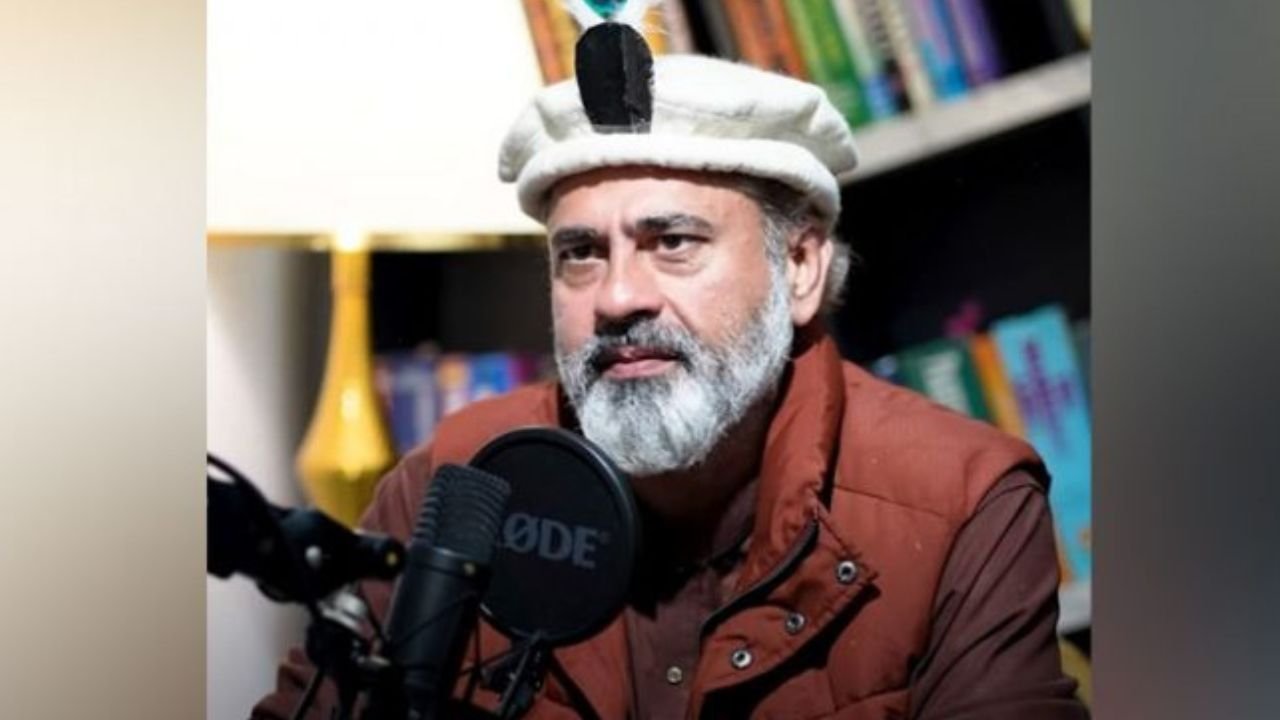
    The Federal Investigation Agency (FIA) interrogated vlogger Asad Ali Toor for hours about a social media campaign that criticized the superior judiciary. This happened after the Supreme Court (SC) made a decision regarding the Pakistan Tehreek-e-Insaf (PTI) ‘bat’ symbol, as reported by The News on Saturday.
    A five-member joint investigation team (JIT) of the FIA has been conducting an inquiry to ascertain the facts behind an ongoing “malicious” campaign against the honourable judges of the apex court.

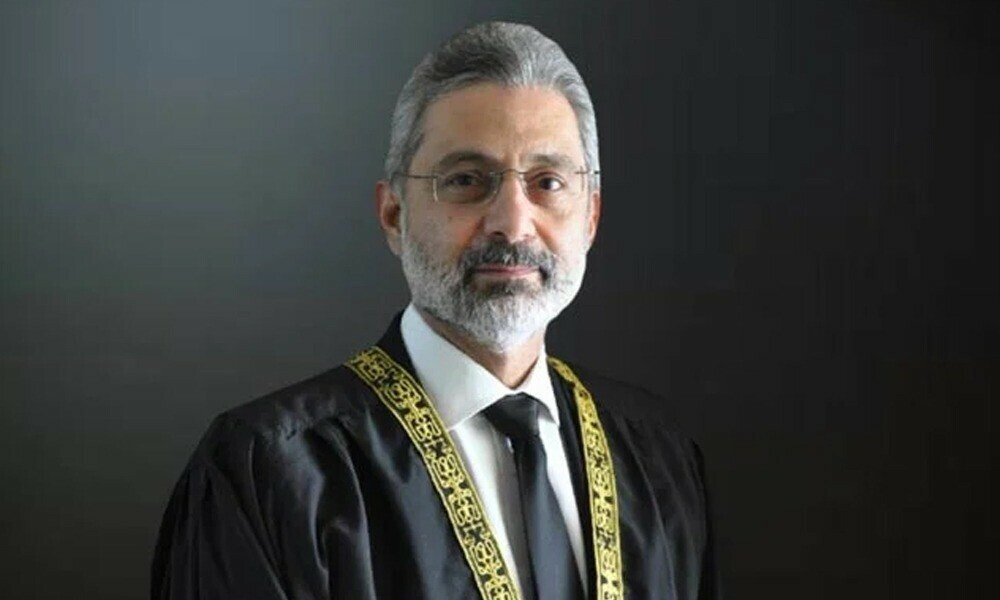
    JIT sources said on Friday that two bloggers, Asad Ali Toor and Imran Riaz, were found to be trolling judges of the top court, particularly Chief Justice of Pakistan (CJP) Qazi Faez Isa.

    “Asad Toor was rounded up for investigation on Friday and his statement was recorded about his motives behind the malicious campaign against the judges,” the sources said, adding that the journalist remained with the JIT at the FIA (Cybercrime Wing), along with his counsel and human rights lawyer Imaan Zainab Mazari-Hazir.

    Imaan Mazari posted on the social media platform X, formerly Twitter, saying that Toor and his legal team left the FIA Friday evening after his detention the same morning at 10:50am.

  • Gold price declines by Rs1,200 to Rs214,100 per tola

    Gold price declines by Rs1,200 to Rs214,100 per tola

    Gold rates in Pakistan experienced a significant decrease on Friday, mirroring the decline observed in the international market.

    According to the All Pakistan Gems and Jewellers Sarafa Association (APGJSA), the yellow metal was priced at Rs214,100 per tola after shedding Rs1,200 during the day.

    The 10-gram gold rate also witnessed a decrease, with prices dropping to Rs183,556 after a decline of Rs1,029, as reported by the APGJSA.

    This reversal follows a slight increase in gold prices on Thursday, where rates had gone up by Rs100 per tola in Pakistan.

    However, the international market experienced a decline of $11, resulting in a $20 premium on the international gold rate, which was set at $2,040 per ounce on Friday.

    The APGJSA further reported that the silver rate remained stable at Rs2,570 per tola in Pakistan.

    The fluctuation in gold prices is attributed to the dynamic nature of the global market, where various economic factors and geopolitical events can influence the demand and supply dynamics of precious metals. Investors and consumers are advised to stay updated on market trends and consult with financial experts for informed decisions.

    It is essential to note that gold and silver rates can be subject to change rapidly, and individuals are encouraged to monitor the market closely for real-time updates.

  • Imran Riaz is missing again: Three possible reasons why we don’t know where he is right now

    Imran Riaz is missing again: Three possible reasons why we don’t know where he is right now

    Youtuber Imran Riaz Khan is under arrest once again and Pakistanis have a lot to say

    The reason for YouTuber Imran Riaz Khan’s arrest is currently disputed. The journalist was arrested Thursday night.

    Here are three possibilities behind his arrest:

    1. Earlier, Federal Investigation Agency’s (FIA) Cybercrime Wing had summoned Khan and journalist Asad Toor, for allegedly being a part of an anti-judiciary campaign on social media platforms, calling them to appear on February 23.

    2. According to court reporter A. Waheed Murad, Imran Riaz has been summoned by Lahore court to present his defence for taking the Darabi Lake contract along with his father in Lahore court.

    3. While his detention is being condemned, he is being criticised for recently resharing an inflammatory post on X (formerly Twitter) regarding the Supreme Court of Pakistan’s decision to grant bail to a member of Ahmadiyya community which sparked severe backlash.

    Khan is being criticised for further inciting hate and violence by resharing a hateful post.

    Even though the original post was deleted, his apparent endorsement remains condemnable.

  • Suspect involved in social media campaign against CJP Qazi Isa arrested

    Suspect involved in social media campaign against CJP Qazi Isa arrested

    Authorities have arrested a social media user suspected of being involved in a threatening campaign against Chief Justice of Pakistan (CJP) Qazi Faez Isa, Geo reports.

    Sources of The News identified the suspect as a social media user named Abdul Wasay, who lives in Rawalpindi. They said he used social media to run a “threatening campaign” against CJP Isa, where he threatened the chief justice and tried to damage his reputation.

    “The rest of the people involved in the campaign will be identified and legal action will be taken against them,” the sources claimed.
    The government has formed a joint investigation team (JIT) to investigate people who have been spreading harmful information on social media about Supreme Court judges, the Election Commission of Pakistan (ECP), and government officers.

    The JIT has been tasked to investigate mainly three specific points, according to a notification.

    “To ascertain facts behind malicious social media campaign attempting to malign the image of honourable judges of the Supreme Court of Pakistan, to identify and to bring the culprits to book in accordance with the relevant laws and cause presentation of challans in the courts concerned, and to recommend measures for prevention against the occurrence of such incidents in future,” read the notification.

  • Islamophobia Soared In UK With Israeli Genocide in Gaza

    Islamophobia Soared In UK With Israeli Genocide in Gaza

    Anti-Muslim hate incidents in the UK more than tripled following the Israeli genocide in Gaza, a monitoring group said Thursday.

    Tell MAMA recorded 2,010 such cases in the four months since Hamas’s attack against Israel on October 7 which resulted in intensified Israel bombarding Gaza.

    That was the largest recorded number of cases in a four-month period, said a statement from the organisation, which was set up to monitor and report such incidents.

    The latest figures were up from 600 incidents over the same period in 2022-2023, a rise of 335 percent.

    “We are deeply concerned about the impacts that the Israel and Gaza war are having on hate crimes and on social cohesion in the UK,” said Tell MAMA director Iman Atta.

    “This rise in anti-Muslim hate is unacceptable and we hope that political leaders speak out to send a clear message that anti-Muslim hate, like anti-Semitism, is unacceptable in our country.”

    Tell MAMA said that 901 cases occurred offline while 1,109 were online. Most of the offline incidents took place in the British capital London, it added.

    They included abusive behaviour, threats, assaults, vandalism, discrimination, hate speech and anti-Muslim literature.

    Women were the target in 65 percent of cases, the group said.

    Earlier this month, a Jewish charity reported that anti-Semitic incidents in Britain hit record levels last year, with a surge after Hamas’s attack.

    The Community Security Trust (CST), which monitors anti-Semitism in Britain, recorded 4,103 “anti-Jewish hate incidents” in 2023, its highest annual tally since it began counting them in 1984.

    That represented a 147-percent increase on the 1,662 incidents recorded in 2022.

    Israel’s subsequent invasion of Gaza and sustained military campaign has killed at least 29,410 people, mostly women and children, according to the latest health ministry figures.

    pdh/jj

    The Barron’s news department was not involved in the creation of the content above. This article was produced by AFP. For more information go to AFP.com.
    © Agence France-Presse

  • 24-karat gold price rises by Rs100 per tola

    24-karat gold price rises by Rs100 per tola

    In the local market, the price of 24 karat gold witnessed a modest rise on Thursday, marking an increase of Rs100 per tola.

    The precious metal was traded at Rs215,300, compared to its previous rate of Rs215,200 during the last trading session.

    Similarly, the cost of 10 grammes of 24 karat gold experienced an uptick, registering a rise of Rs85 and reaching Rs184,585 from its previous value of Rs184,500.

    The All Sindh Sarafa Jewellers Association disclosed that the prices of 10 grammes of 22 karat gold also showed an increase, climbing to Rs169,203 from Rs169,124.

    However, the silver market remained stable, with the cost of per tola and ten-gramme silver remaining unchanged at Rs2,570 and Rs2,203.36, respectively.

    Internationally, the price of gold demonstrated a slight escalation, as it rose by $3 to $2,051 from its earlier value of $2,048, according to reports from the Association.

    Market analysts attribute these fluctuations to various factors, including global economic conditions, geopolitical events, and changes in investor sentiment.

  • No conflict with military, says Sher Afzal Marwat

    No conflict with military, says Sher Afzal Marwat

    Pakistan Tehreek-e-Insaf (PTI) leader Sher Afzal Marwat has said that the military and government should be seen as separate entities. He praised the military, stating that there’s no conflict with them. However, he expressed concerns about the Election Commission of Pakistan (ECP) involvement in seat issues, delays in cases, and alleged theft of mandate by other political parties.

    The PTI leader said, “Our intra-party elections are happening within 15 days. We need to mobilize our party. All PTI workers will participate in this election. I’ll support those who want to contest from our platform.”

    Talking about a recent raid at his house, he said that his employee has returned, stating he was treated well.

  • Over 95 Percent Of Sudanese Cannot Afford A Meal A Day: WFP

    Over 95 Percent Of Sudanese Cannot Afford A Meal A Day: WFP

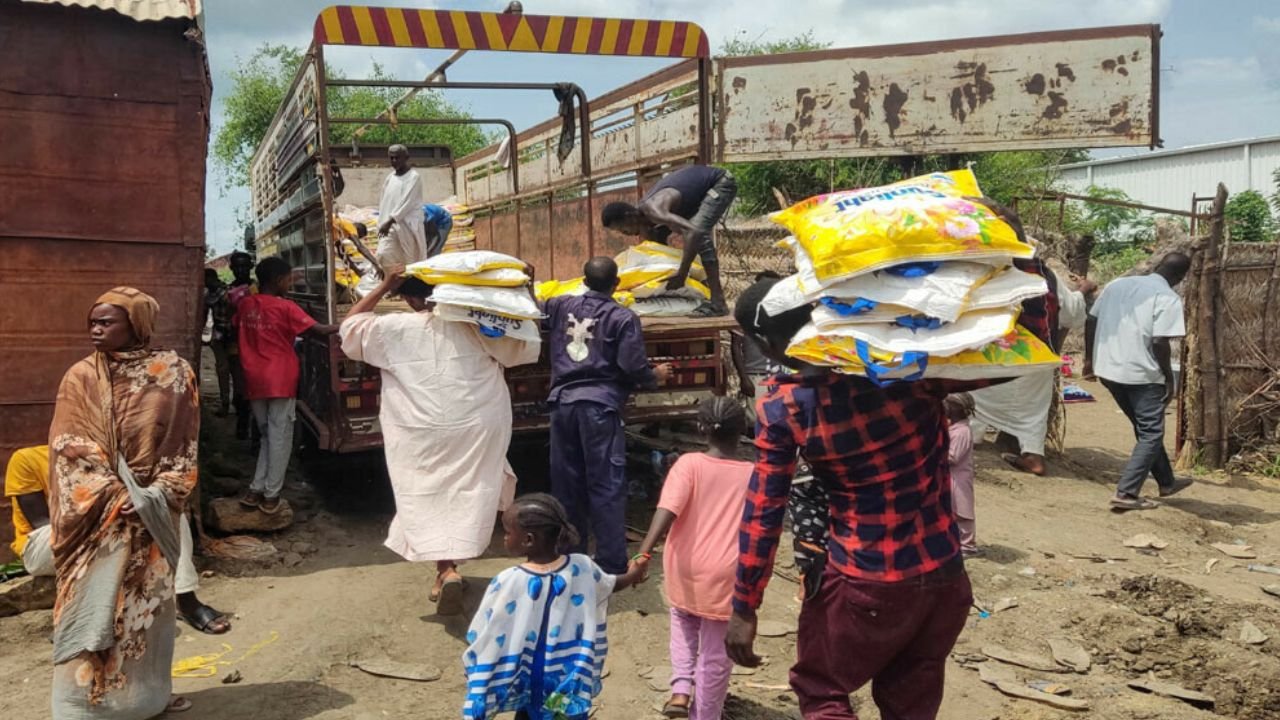
    Ten months into a war that has sent Sudan to the “verge of collapse”, the vast majority of its people are going hungry, the UN’s World Food Programme said Wednesday.

    “At this point, less than five percent of Sudanese can afford a square meal a day,” the WFP’s Sudan country director, Eddie Rowe, told reporters in Brussels.

    Since last April, Sudan has been gripped by fighting between the regular army and the paramilitary Rapid Support Forces, which has killed thousands and created what the United Nations calls “the world’s largest displacement crisis”.

    A combined 10.7 million people have been uprooted by the current war and previous conflicts, according to the UN.

    Nine million remain displaced within Sudan, where Rowe said a “lethal cocktail of continued conflict, stalled harvests and rampant and consistent displacement risks plunging millions more into a catastrophic humanitarian disaster.”

    Across Sudan, which the WFP says was already facing one of the world’s worst food crises before the war, 18 million people are facing acute food insecurity.

    Of those, Rowe said “close to five million are on the precipice of catastrophe” — enduring one of the worst emergency classifications the WFP uses, second only to famine.

    Aid groups have for months warned that as a result of hampered humanitarian access and severe underfunding, the spectre of famine looms over Sudan.

    But the same obstacles to aid delivery inhibit the ability to determine the extent of the catastrophe.

    According to Michael Dunford, WFP’s Eastern Africa regional director, there is a major issue in “the availability of the data to confirm one way or the other whether or not the thresholds (required to declare a famine) have been met”.

    With WFP only able to reach 10 percent of those in need, “there are large tracts of the country that we simply cannot access,” Dunford told reporters.

    Sudan’s most fertile regions could have helped ward off famine, if not for the fighting encroaching into the country’s agricultural heartlands.

    In December, a paramilitary advance brought the war to Al-Jazira state, just south of the capital Khartoum, which was set to produce the bulk of Sudan’s grains for the season.

    “Thousands of smallholder farms and even the large-scale schemes have been deserted, because people are on the move running away from the conflict,” Rowe said.

    “As we approach the hunger season,” he said, the crisis is only set to “further deteriorate”.

    The lean season, roughly from April to July, usually sees food prices run high as stocks dwindle ahead of the next harvest.

    With markets across the country already empty and an ongoing communications blackout hampering all transactions, Dunford says the future is bleak.

    “This is a country on the verge of collapse,” he said.