Category: Uncategorized

  • ChatGPT cranks out gibberish for hours

    ChatGPT cranks out gibberish for hours

    ChatGPT spewed nonsensical answers to user’s queries for hours Tuesday into Wednesday before eventually returning to its apparent senses.

    OpenAI did not explain what went awry with its generative artificial intelligence (AI) tool, considered the one to beat in the technology sector.

    “We are investigating reports of unexpected responses from ChatGPT,” OpenAI said on its status website when the software seemed to go wacky on Tuesday afternoon.

    ChatGPT was giving “peculiar” responses, generating nonexistent words, incomplete sentences and general gobbledygook, developers using the tool said in a discussion forum on the OpenAI website.

    “It gives me meaningless words followed by a bizarre list,” one developer lamented in the forum.

    “It feels as if my GPT is haunted or something has been compromised, either on my end or at OpenAI’s (end).”

    It wasn’t until more than 16 hours had passed that OpenAI updated the page with a message that ChatGPT was operating normally.

    The San Francisco based technology firm replied to an AFP query by directing it to the ChatGPT status page.

    OpenAI recently concluded a deal with investors that reportedly valued the start-up at $80 billion or more, after a roller-coaster year for the tech firm.

    The agreement, reported by the New York Times but not yet confirmed by OpenAI, would mean the value of the company — a world leader in generative AI — would have nearly tripled in under 10 months.

    OpenAI led a revolution in AI when it placed its ChatGPT program online in late 2022.

    The immediate success of the interface sparked tremendous interest in the cutting-edge technology, capable of producing text, sounds and images upon demand.

    OpenAI — which is also the maker of image-generating DALL-E — recently released a new tool named “Sora,” which can create realistic videos of up to a minute long via simple user prompts.

    Microsoft has invested some $13 billion in OpenAI, using the startup’s technology in Bing and other services.

    Microsoft is locked in fierce competition with Google to roll out new AI-infused tools, to the point that the US Federal Trade Commission in January launched an investigation into the enormous investments by Microsoft, Google and Amazon in such specialized start-ups.

  • Actress Bushra Ansari doesn’t like new TV show names

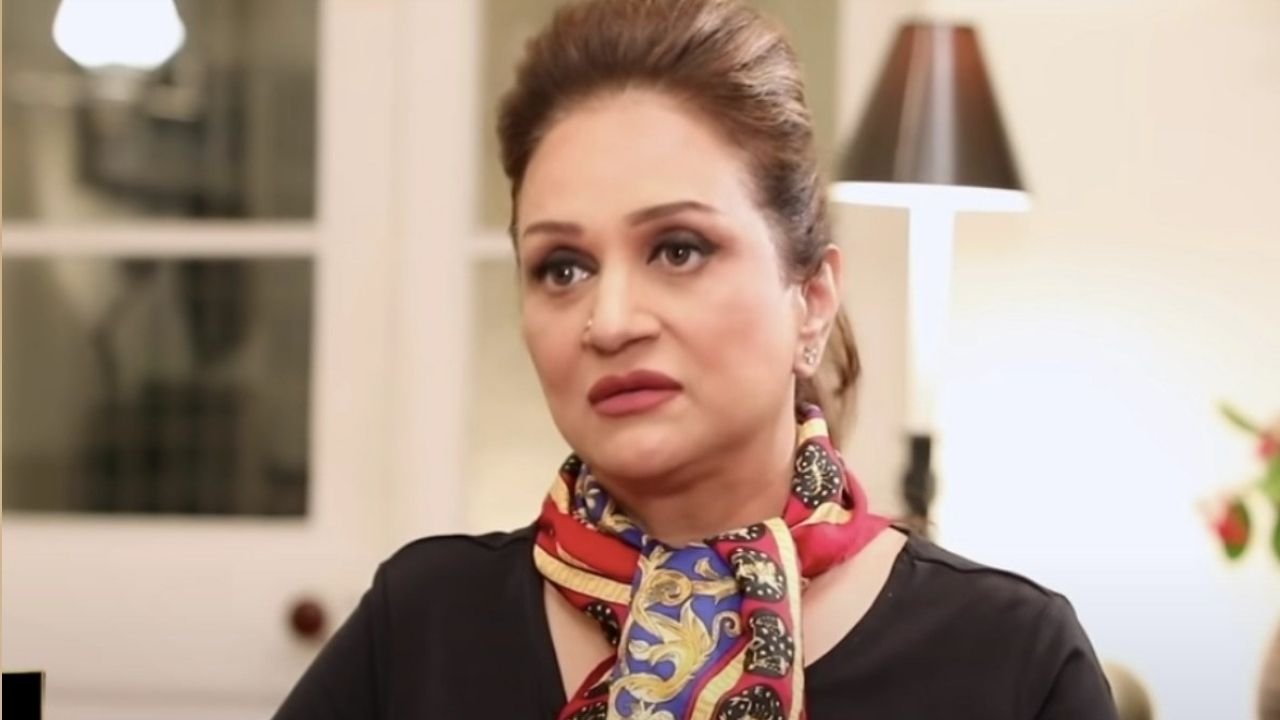
    Actress Bushra Ansari doesn’t like new TV show names

    Senior actress Bushra Ansari isn’t happy with the names of today’s TV dramas. A video of her sharing her dislike for the titles is doing the rounds on the internet.

    @galaxylollywood Bushra Ansari talks about the lack of thought and effort that’s put into naming dramas in today’s age, as compared to the olden days. #BushraAnsari #GalaxyLollywood #foryou #fyp ♬ original sound – Galaxy Lollywood

    “When shows were doing well, names mattered a lot. They chose titles carefully, thinking about the characters and the mood of the show,” she said.
    Ansari then opines that show titles nowadays are weird and don’t match the stories, citing ‘Kalmohi’ and ‘Badnaseeb’ as examples.

    “The names of dramas don’t seem to have anything to do with the story,” she commented.

  • If decision made on merit, Imran Khan will be PM of Pakistan: Asad Qaiser

    If decision made on merit, Imran Khan will be PM of Pakistan: Asad Qaiser

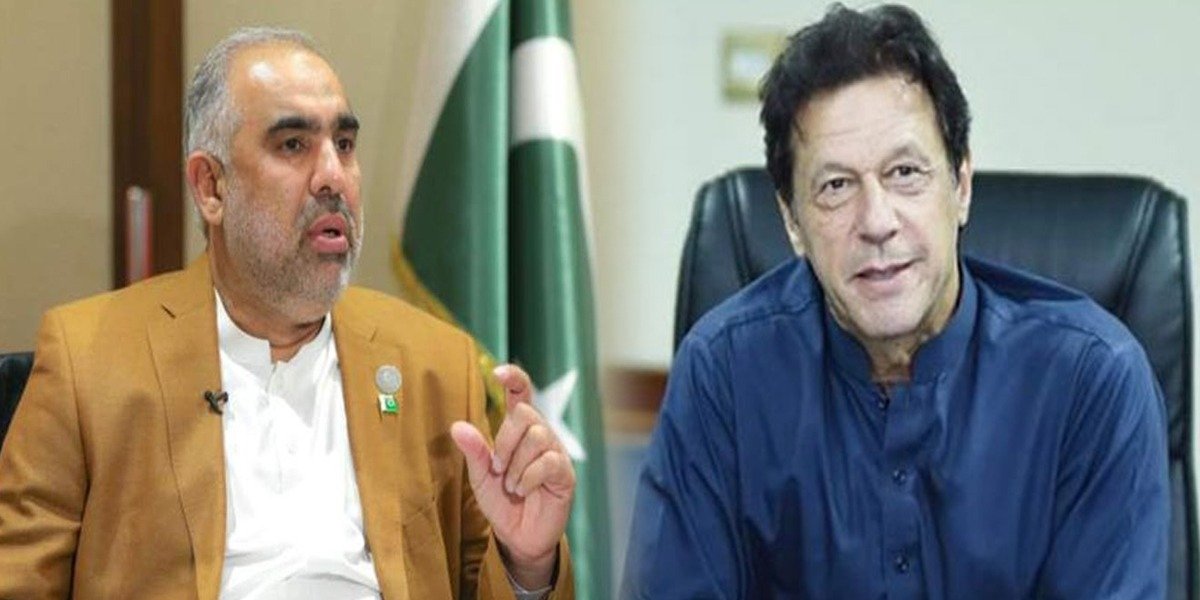
    Pakistan Tehreek-e-Insaf (PTI) leader Asad Qaiser said on Wednesday that if the decision is made on merit, party founder Imran Khan will be the prime minister of Pakistan.

    While speaking to the media outside of Adiala jail, Rawalpinid, Qaiser said that the Election Commission of Pakistan (ECP) has conducted the worst polls in the country’s history.

    “We still have hopes from the judicial system of Pakistan,” he remarked, adding that the party will continue its “legal struggle” against the people in power.

    The former speaker of the National Assembly (NA) also said that the Islamabad High Court (IHC) gave him permission to meet Imran Khan, but jail authorities didn’t allow him to do so, instead asking him to come tomorrow.

  • More than 200 Karachi buildings made with poor material

    More than 200 Karachi buildings made with poor material

    More than 200 multi-storied buildings in Karachi have reportedly been constructed using bad quality materials and poor planning.

    KMC has submitted a report to the Sindh High Court on the incidents of fire in multi-storied buildings of Karachi.

    The report highlights the lack of a fire fighting system, emergency exit and other necessary arrangements. It has also been stated that KMC’s suggestion was not taken into consideration while issuing NOC to buildings.

    According to the KMC report, building inspections were conducted on I.I. Chundrigar Road, Khalid Bin Waleed Road, Shahrah e Faisal.

    SBCA has issued completion certificates to these buildings, action is necessary against illegal constructions and NOC issuers, while anti-corruption has initiated action against involved SBCA officers and builders.

  • How many Afghans have left Pakistan so far?

    How many Afghans have left Pakistan so far?

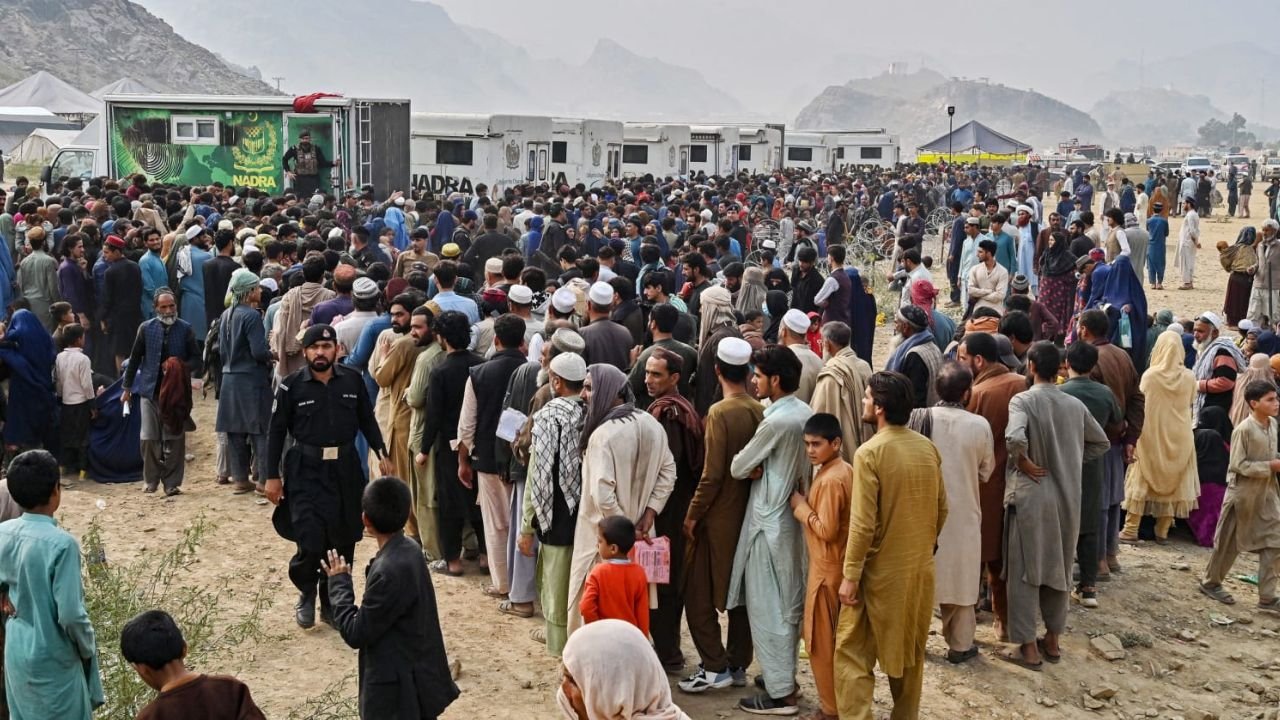
    The repatriation of Afghans living across Pakistan continues.

    According to official data, from February 15 to February 19, another 3,396 Afghans left Pakistan, including 1,245 men, 1,025 women, and 1,914 children. 210 families have reportedly been repatriated in 124 vehicles to Afghanistan.

    A large number of illegal Afghans have been returning to Afghanistan from Pakistan fearing arrest, even before the announcement by the government of Pakistan.

    According to official data released on February 19, a total of more than 493,000 Afghans have returned to their country as of yet.

  • Global operation smashes ‘most harmful cyber crime group’

    Global operation smashes ‘most harmful cyber crime group’

    LONDON: An international operation led by UK and US law enforcement has severely disrupted “the world’s most harmful cyber crime group”, the Russian-linked ransomware specialist LockBit, officials announced Tuesday.

    LockBit and its affiliates have targeted governments, major companies, schools and hospitals, causing billions of dollars of damage and extracting tens of millions in ransoms from victims.

    Britain’s National Crime Agency (NCA), working with the Federal Bureau of Investigation, Europol and agencies from nine other countries in Operation Cronos, said it had infiltrated LockBit’s network and taken control of its services.

    “We have hacked the hackers, we have taken control of their infrastructure, seized their source code, and obtained keys that will help victims decrypt their systems,” NCA director general Graeme Biggar told reporters in London.

    LockBit’s website — selling services that allow people to organise cyber attacks and hold data until a ransom is paid appears — was taken over on Monday evening.

    A message appeared on the site stating that it was “now under control of law enforcement”.

    “As of today LockBit is effectively redundant, LockBit has been locked out,” Biggar said.

    The US Justice Department (DOJ) said the agencies had seized control of “numerous public-facing websites used by LockBit to connect to the organization’s infrastructure” and taken control of servers used by LockBit administrators.

    The NCA added that it had obtained more than 1,000 decryption keys and will be contacting UK-based victims in the coming days and weeks to offer support and help them recover encrypted data.

    Biggar said the network had been behind 25 percent of all cyber attacks in the past year.

    Lockbit has targeted over 2,000 victims and received more than $120 million in ransom payments since it formed four years ago, according to the (DOJ).

    Those targeted have included Britain’s Royal Mail, US aircraft manufacturer Boeing, and a Canadian children’s hospital.

    In January 2023, US law enforcers shut down the Hive ransomware operation which had extorted some $100 million from more than 1,500 victims worldwide.

    Following that action, Lockbit had been seen as the biggest current threat.

    Hive and Lockbit are part of what cybersecurity experts call a “ransomware as a service” style, or RaaS — a business that leases its software and methods to others to use in extorting money.

  • PTI’s Faisal Javed appears in court after ‘hiding’ for months

    PTI’s Faisal Javed appears in court after ‘hiding’ for months

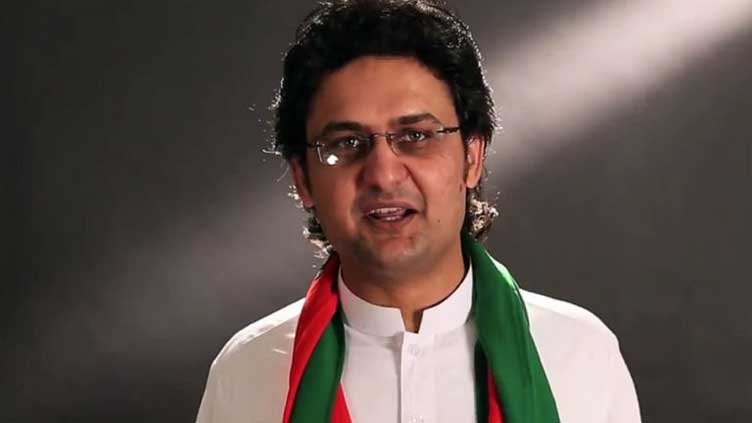
    On Monday, Senator Faisal Javed of Pakistan Tehreek-e-Insaf (PTI) appeared in  Peshawar High Court (PHC) after “hiding” for months and and secured transit bail. 

    PHC Chief Justice Mohammad Ibrahim Khan granted transit bail to the PTI leader, who hasn’t been seen in public since several months.

    The court granted bail against bonds worth Rs100,000 and ordered the PTI senator to appear before the concerned court.

    Talking to journalists outside the court, Faisal expressed joy over being granted bail and noted that, “Everyone is going through testing times. I hope that all the oppressed return home.”

    The judge approved also Ali Amin Gandapur’s transit bail petition for a case against him in Islamabad. Gandapur is the PTI nominee for Khyber Pakhtunkhwa chief minister.

  • ‘We will vote for PML-N on our own terms’: Bilawal Bhutto

    ‘We will vote for PML-N on our own terms’: Bilawal Bhutto

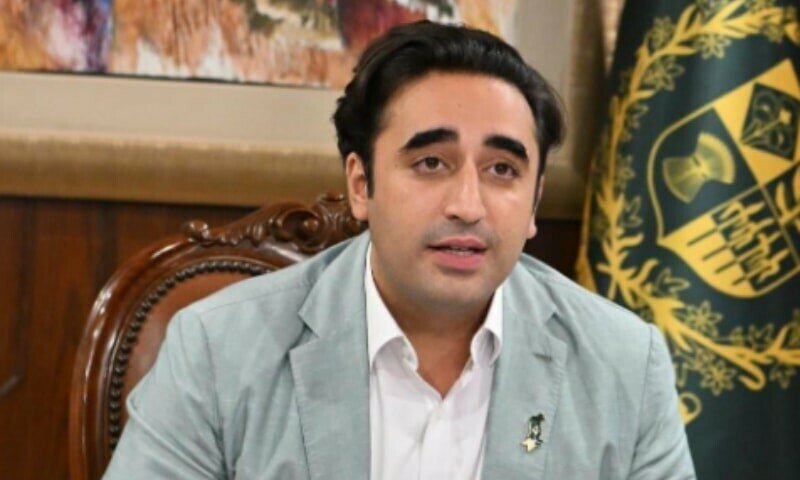
    Pakistan Peoples Party (PPP) Chairman Bilawal Bhutto Zardari has said that his party will vote for Pakistan Muslim League-Nawaz (PML-N) “on our own terms.”
    “Progress [in talks] can only be made if ‘someone’ is willing to change their position […] We stand by our position and will not change it,” Bilawal said without naming PML-N.

    He spoke to the media outside the Supreme Court (SC) on Tuesday afternoon after attending the hearing of a presidential reference challenging the death sentence of his grandfather, former Prime Minister Zulfikar Ali Bhutto.

    Bilawal’s remarks come as the coordination committees of the PML-N and PPP are set to hold a sixth meeting today to reach an agreement over the formation of the future government after both parties failed to secure National Assembly (NA) seats in sufficient numbers to form their government in the Centre.

  • Are populism & cults detrimental to democracy?

    Are populism & cults detrimental to democracy?

    Pakistani elections have proved to be an interesting study as we see the party that was unable to campaign come out strong even in a splintered state. Election results have once again hit false narratives of traditional parties as voters voted for a leaderless group of independents only because Imran Khan’s PTI supported them. This has revealed the will of the majority that are a direct hit at Pakistan’s political dynasties giving them a wakeup call to change what they are doing.

    Given a chance, the voter actually wants a change, and not necessarily Imran Khan and PTI which are the only options from the traditional parties. There are many reasons why voters opted for the independents but could cult following be one of them?

    Has Pakistan voted on populism, due to cult mentality or because they want a change?

    Most voters might feel offended and declare that their votes were cast to change the status quo and for a better future. But can they answer why they made the choice – really made the choices they did in 2024?

    If you ask voters why they didn’t vote for the major parties, some will say so and so party didn’t deliver in the past despite being in power for X number of years and they want to bring change. A logical reason. Why should voters vote for someone they know may probably not do anything if put back into power again?

    However, other voters will keep voting for the same parties they have been for decades based on a personality or family name. These voters are not concerned about what the party or leader has delivered; they are loyal no matter what.
    So, is Pakistani politics a form of political cult?

    It would seem so, as most parties are based around personalities and/or family names. Each one has a major poster personality without which the party loses its importance. For example, PMLN is Nawaz Sharif; PTI is Imran Khan; MQM was Altaf Hussain; PPP is Bhutto and Bibi.

    Remove any of these people or in PPP’s case the Bhutto name, will these parties survive? Well, recently we have seen the once formidable MQM crumble after its leader Altaf Hussain was removed. Similar predictions were made when Imran Khan was jailed, and we did see the party lose its momentum in the initial days of the PTI’s leader’s imprisonment.

    It was too early to extract Imran Khan from the political scenario since his ‘legacy’ was still strong among the followers who were grieving the loss of their party and the treatment of their beloved leader. Certain ill-timed decisions and steps by the powers that be right before elections didn’t help their efforts to make PTI and its leader redundant and instead backfired, ending up motivating his already devoted voters.

    Cult politics is a dangerous trend in a vulnerable country like Pakistan where democracy hasn’t been allowed to take root properly. Political cults are as dangerous as dictatorships. These cults revolve around the same orbit no matter what and continue to support the status quo without considering the short and long-term consequences.

    In his 2021 Oped “Why personality cults and democracy don’t mix” in The Washington Post, Brian Klaas – associate professor of global politics at University College London and the host of the award-winning Power Corrupts podcast – wrote:

    “At the extreme end, cults of personality are not just dangerous; they’re also absurd. As strange as they might seem, however, cults of personality are a rational mechanism to enforce control. They serve as loyalty tests that sort zealots from dissenters. Sometimes, they can be reasonably innocuous. But they morph into a dangerously authoritarian phenomenon when two criteria are met. First, if party members are required to publicly idolize a single political figure to be fully accepted, you have a problem. Second, if party members are punished for refusing to publicly parrot lies on behalf of that figure, things have gotten out of control.”

    Cults are defined as a “usually small group devoted to a person, idea, or philosophy” (Britannica). It is a movement based usually on religious beliefs opposing the dominant party or ideology however some studies show that the cults were integrated into the society. Sometimes other factors apart from religion are the driving force in cults.

    Other definitions explain cults as a group that has come together by a common ideological system based on a ‘we-they’ philosophy that has been developed and encouraged by a charismatic leader. The followers are in an echo chamber to drown out all other opinions and voices, they may be socially isolated from non-members including family to ingrain the cult’s doctrine into minds and the cult leader may be seen as a parental figure.

    It is interesting to know that “one of the most prominent Roman cults was the imperial cult, which was dedicated to the worship of deceased and deified Roman emperors and their deified family members. Imperial cult worship reinforced the power of the dominant political system, and most or all of pre-Christian Roman society had some degree of membership in it”.

    In an article published in The New York Times (1982 by Glenn Collins) ‘The Psychology of the Cult Experience’ Margaret T. Singer a professor of psychology at the University of California, Berkeley said: ”The techniques of many cults fall under the general rubric of brainwashing. Consciously and manipulatively cult leaders and their trainers exert a systematic social influence that can produce great behavioural changes.”

    Experts outline some signs of cultic behaviour which may lead to or are shared by autocratic leaders. Cults may propagate concentration in a single person, the leader of the party or group using constant propaganda that resonates with the many people who eventually become followers. The cults develop rallies or festivals to keep the followers devoted to the leader and engaged through discussions (or speeches) of simple solutions that may or may not be practical and workable. These cults identify someone to blame and keep repeating this until this becomes the mantra and then the belief of the followers.

    The followers believe only their leader is the one who can save them and others, and despite demanding democracy and rights, they are in danger of crossing the invisible line and accepting authoritarianism.

    Populism and political and religious cults have done more damage to the country’s democracy hence the stability and economic prosperity. Democracy which is still in its nascent stage as the country sweeps through one nazuk dor (delicate time) after another, will survive and hopefully prosper as the country achieves some form of stability in the future.

    Pakistan still needs to experience real democracy despite its dictators, autocrats, and democrats and although this is a long and arduous journey it will hopefully achieve this goal as the few but strong democratic voices keep speaking up for basic human rights regardless of a person’s affiliation.

  • Domestic violence victim Rizwana admitted to hospital again

    Domestic violence victim Rizwana admitted to hospital again

    The child victim of abuse at the hands of her employers, Rizwana has been admitted to Lahore General Hospital again.

    According to the General Hospital administration, Rizwana, a minor and a victim of domestic violence, was discharged after recovering a few months ago.

    Three weeks ago, however, Rizwana was again brought to the hospital due to pain in her arm. The doctors admitted her after examination.

    According to hospital administration, a surgery will be performed on the girls’ arm.

    Last year, in July, it was revealed that Rizwana, a young girl working at the house of a civil judge in Islamabad, was subjected to assault by her employers. The torture continued and when her condition worsened, the civil judge’s wife handed her over to her mother.

    Rizwana had torture marks all over her body. A wound on her head had rotted due to lack of treatment, becoming infected by worms.